Looking for beautiful Front Patio Decorating Ideas to transform your home’s entrance? The right combination of comfortable seating, colorful planters, outdoor lighting, and stylish accessories can make your front patio feel welcoming and elegant. Whether you have a small porch or a spacious outdoor area, simple decorating changes can create a beautiful first impression.
These Front Patio Decorating Ideas will help you create a cozy outdoor space that reflects your personal style. Choose weather-resistant furniture, add greenery in decorative pots, and use soft lighting to make your patio inviting during the day and evening.
Some projects involve fire, water, electricity, or structures. Check local rules and permits, and hire licensed pros where needed.
Quick Answer: How Do You Decorate a Front Patio?
Follow these five steps for a patio that works and looks great:
- Define the purpose. Decide whether you want a relaxing spot, a dining area, or a social space.
- Pick a comfortable seating setup. Match the furniture to the size of your patio.
- Layer in lighting. Add soft light for evenings and safe light for steps.
- Add greenery and color. Use planters, vines, and a simple palette.
- Finish with texture. Use rugs, cushions, and a few decor pieces.
Before You Start: Plan Your Front Patio
A little planning prevents costly mistakes.
- Measure your space. Sketch the patio and note doors, steps, and walkways.
- Leave a clear path. Keep at least 36 inches free for walking.
- Check the sun. Notice where you get shade and where the sun is strongest.
- Think about privacy. Consider how visible you are from the street.
- Check the rules. Home associations and local codes may limit structures, fire features, and fences.
- Set a budget. Plan for furniture, lighting, plants, and any hardscape work.
1. Set Up a Seating Area front patio Decorating Ideas
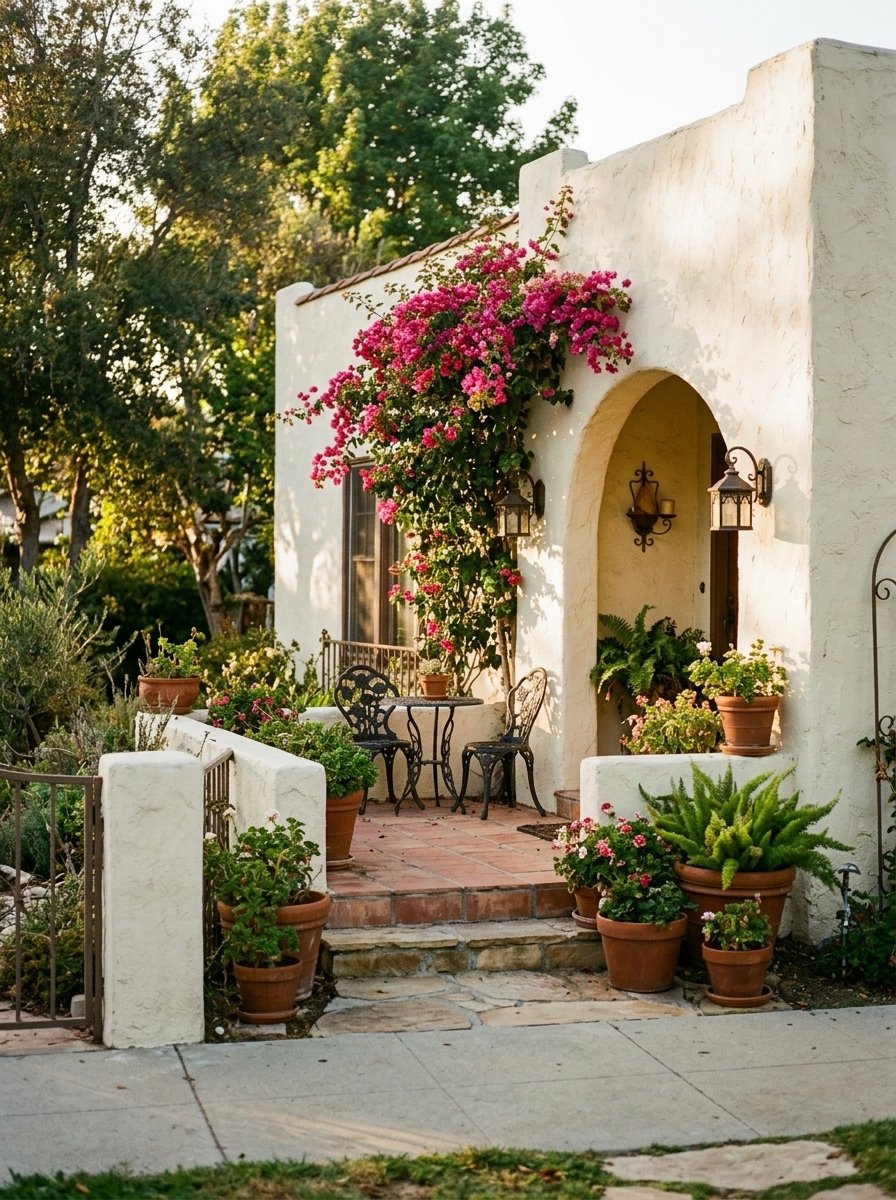
Seating turns a patio into a place you want to be. Start with the basics: two chairs and a small table are enough for a compact space.
For larger patios, create a conversation circle. Place chairs at angles so people can talk easily. Add a side table within reach of each seat.
Tips:
- Choose pieces that fit the scale of your patio
- Leave room to walk around the furniture
- Pick comfortable seats with cushions that dry quickly
Small patio tip: A loveseat and one accent chair often work better than a full sectional.
2. Plan Patio Ideas at Home With a Simple Layout
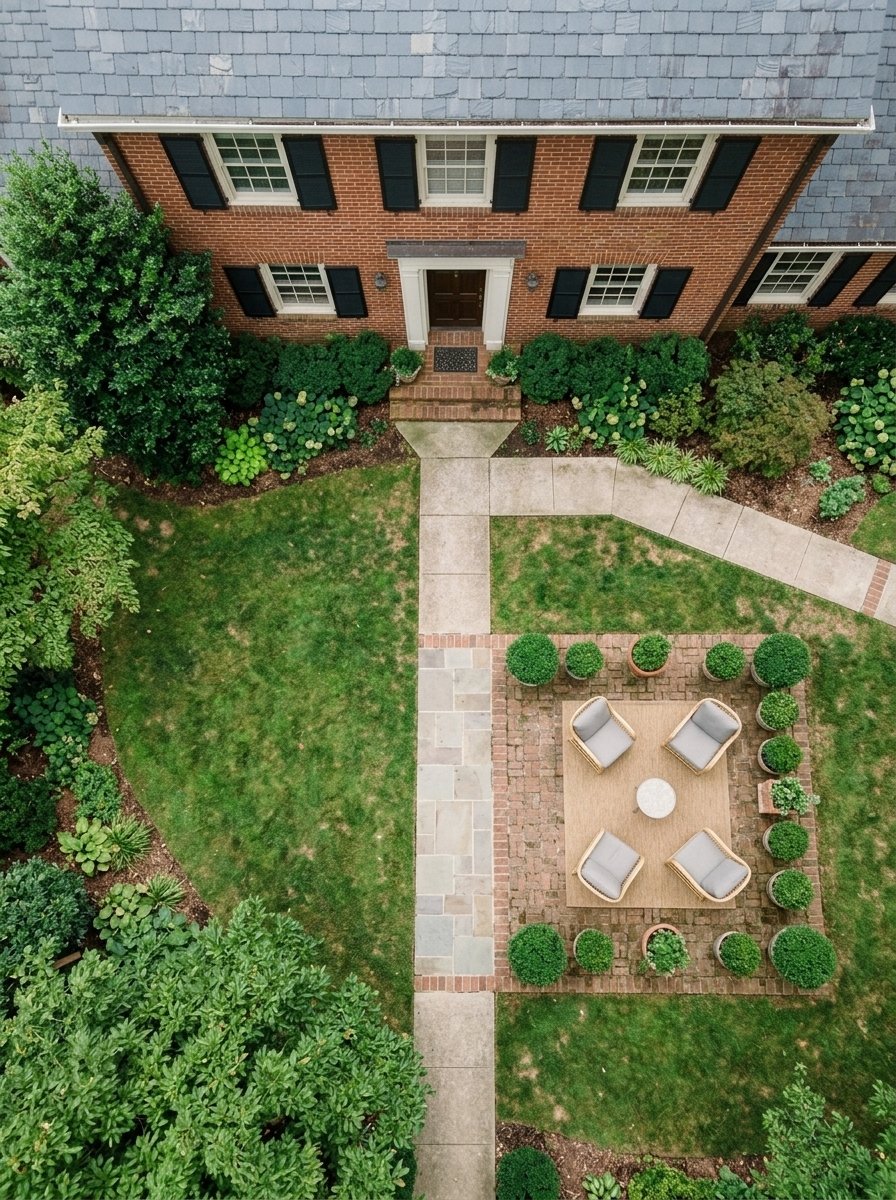
Before you buy anything, sketch the layout. A simple plan keeps the patio from feeling crowded and helps you spend wisely.
Divide the space into zones: a seating zone, a plant zone, and a path. Use rugs, planters, or changes in flooring to mark each zone. Start with the largest items first, then fill in the details.
Layout checklist:
- Place seating where you can enjoy the best view
- Keep the door swing and walkway clear
- Put tall plants at the edges to frame the space
- Leave open floor space so it feels roomy
Tip: Mark furniture sizes on the floor with painter’s tape. It shows you how the space will feel before you buy.
3. Cover With a Pergola
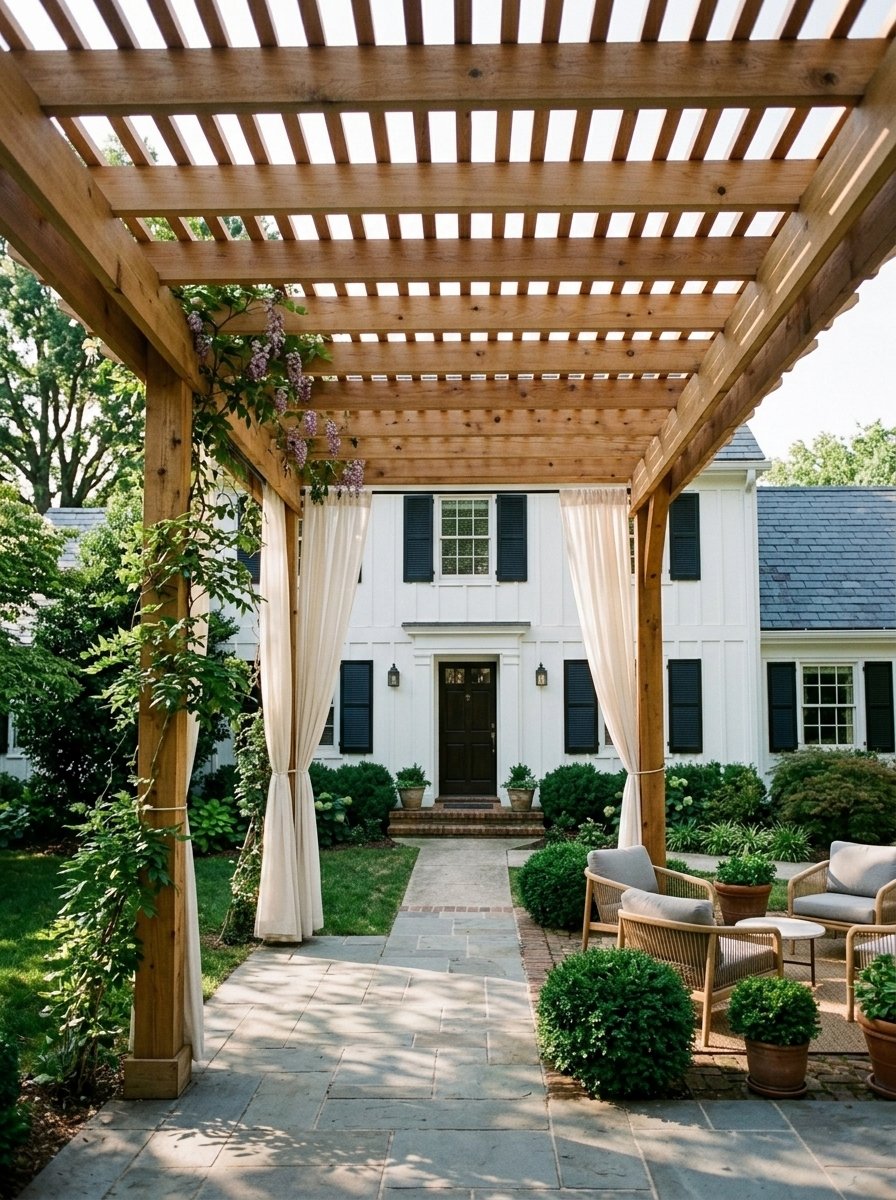
A pergola adds shade, structure, and a sense of enclosure. It makes the patio feel like an outdoor room.
Choose a style that suits your home. Wood feels warm and classic. Metal looks sleek and modern. Add outdoor curtains, a shade sail, or climbing plants for more cover.
What to check:
- Local permits and setback rules
- Strong anchoring to the ground or foundation
- Wind exposure in your area
Budget tip: Pergola kits cost less than custom builds and often go up in a weekend.
4. Source Vintage Furniture
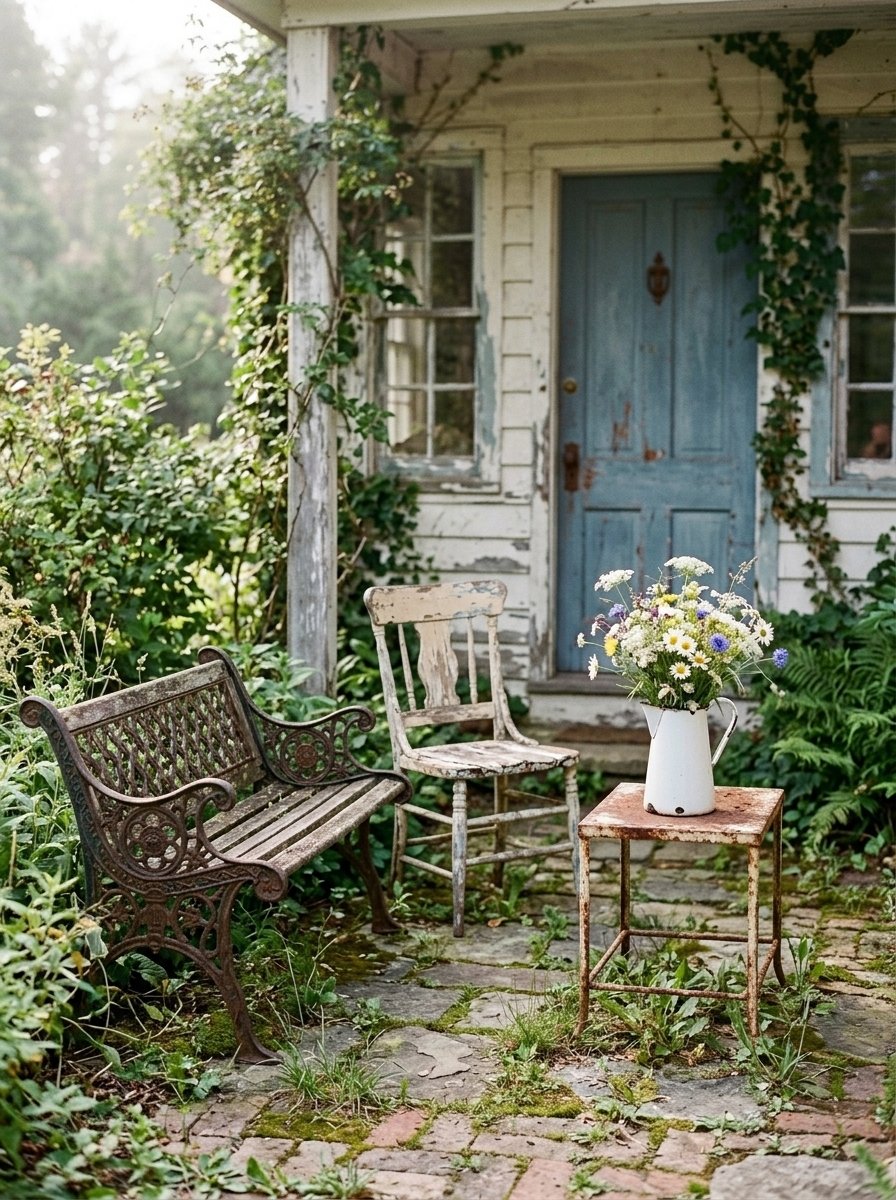
Vintage pieces add character that new furniture can’t match. A weathered wooden bench, an iron bistro set, or an old wicker chair can make your patio feel personal.
Shop flea markets, estate sales, and thrift stores. Look for sturdy frames and avoid rot, deep rust, or wobbly joints.
Care tips:
- Sand and refinish old wood with an outdoor-rated sealer
- Treat rust with a rust converter, then repaint
- Add new cushions in weather-resistant fabric
Safety note: Old painted furniture may contain lead paint. Test before sanding, and use proper protection.
5. Fill in With Gravel
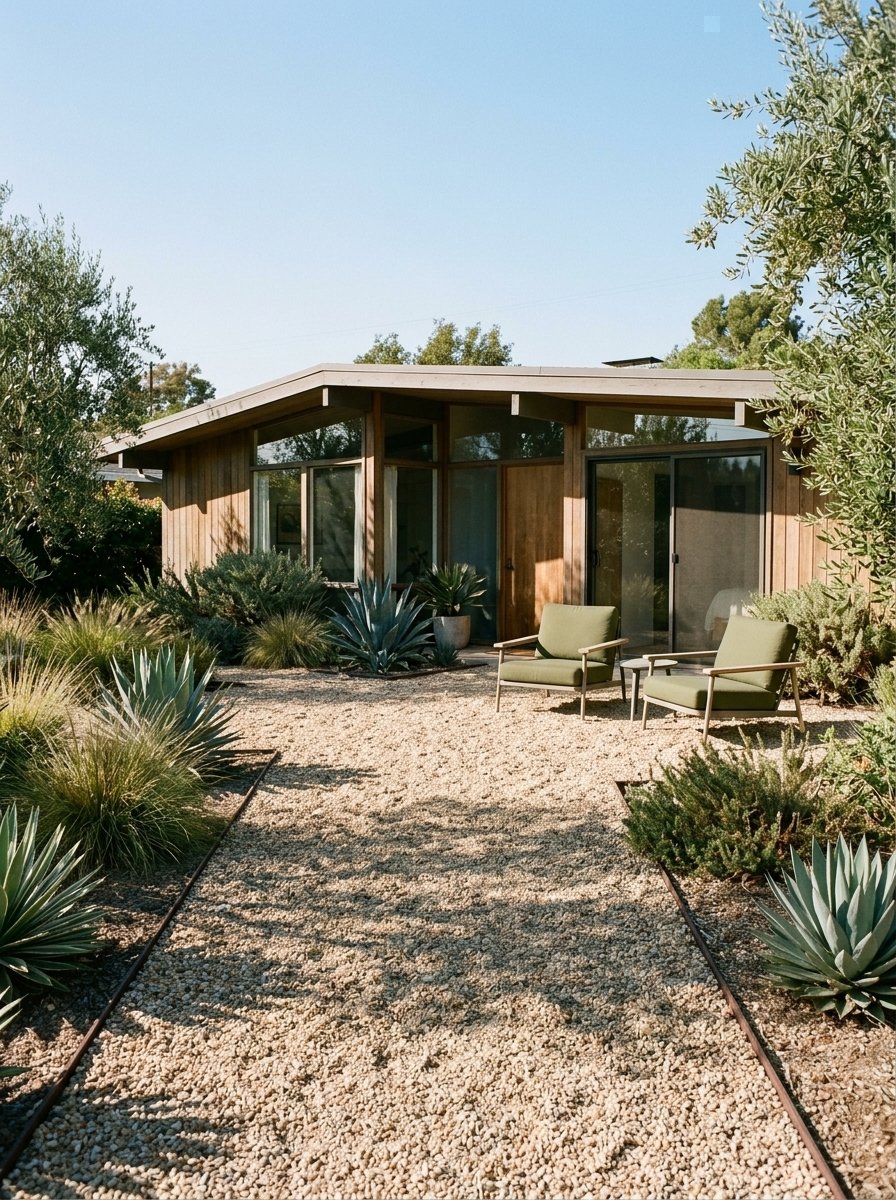
Gravel is one of the cheapest ways to define a patio. It drains well, looks relaxed, and works with many styles.
Use pea gravel or crushed stone, and lay it over landscape fabric to stop weeds. Edge the area with steel, brick, or stone so the gravel stays in place.
Pros and cons:
- Pros: low cost, great drainage, easy DIY
- Cons: can be hard to walk on in heels, and furniture legs may sink
Tip: Add a layer of compacted base stone first for a firmer surface. Choose larger, angular stones for better stability.
6. Tile the Floor

Tile gives a patio a finished, polished look. Porcelain tile is a popular choice because it’s durable and resists moisture.
Choose tile rated for outdoor use, and pick a textured finish for grip when wet. Light colors reflect heat, while dark tiles can get hot in full sun.
Installation notes:
- The base must be solid and sloped slightly for drainage
- Use proper outdoor adhesive and grout
- In cold climates, choose frost-resistant tile
Tip: Large-format tiles have fewer grout lines, which makes the patio feel bigger and easier to clean.
7. Hang Sconce Lighting
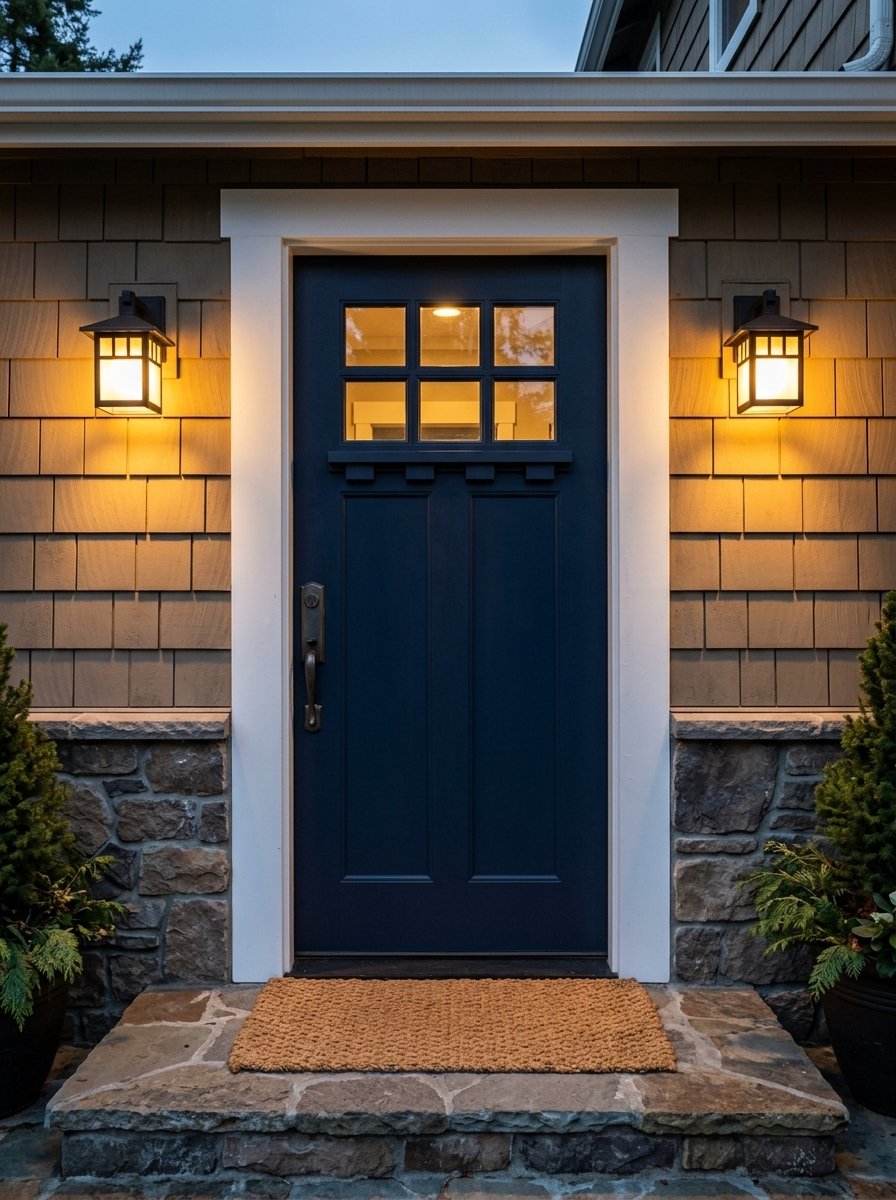
Wall sconces add warm light without taking up floor space. They also make the entrance feel safe and welcoming after dark.
Place sconces on either side of the door or along a wall. Choose fixtures rated for outdoor use, and use warm white bulbs for a cozy glow.
Lighting tips:
- Space sconces evenly for balance
- Hang them around eye level
- Use dimmable bulbs or a timer for flexibility
Safety: Outdoor wiring must meet code. Hire a licensed electrician for new fixtures or outlets.
8. Celebrate Midcentury Style

Midcentury design suits a front patio well. It’s simple, friendly, and full of clean lines.
Pick furniture with slim legs and warm wood tones. Add geometric planters, breeze-block style screens, and a pop of color like mustard or teal. Keep decor minimal.
Midcentury touches:
- A slatted wood bench
- A sputnik or globe-style outdoor light
- A bold front door color
- Low, simple planters
Tip: Repeat one shape, like circles or squares, so the patio feels cohesive.
9. Finish With Decking
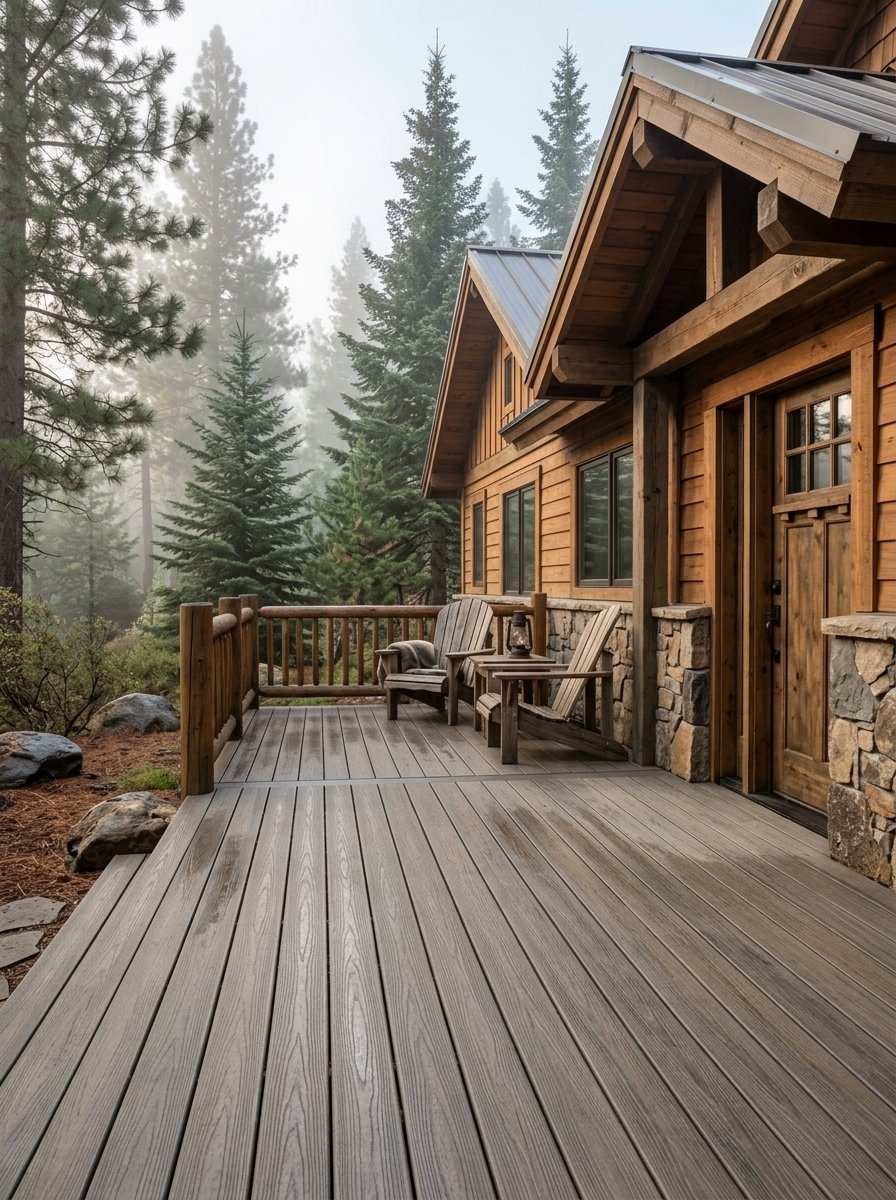
Decking adds warmth and a natural look. It works well on uneven ground and can raise the patio slightly above the soil.
Choose pressure-treated wood, cedar, or composite boards. Composite resists rot and needs less upkeep, while wood has a classic feel.
What to know:
- Decks may require permits, depending on height and size
- Leave small gaps between boards for drainage
- Seal wood regularly to protect it
Slip warning: Wet boards can get slippery. Choose grooved boards or add outdoor mats near steps.
10. Choose Modern Furniture
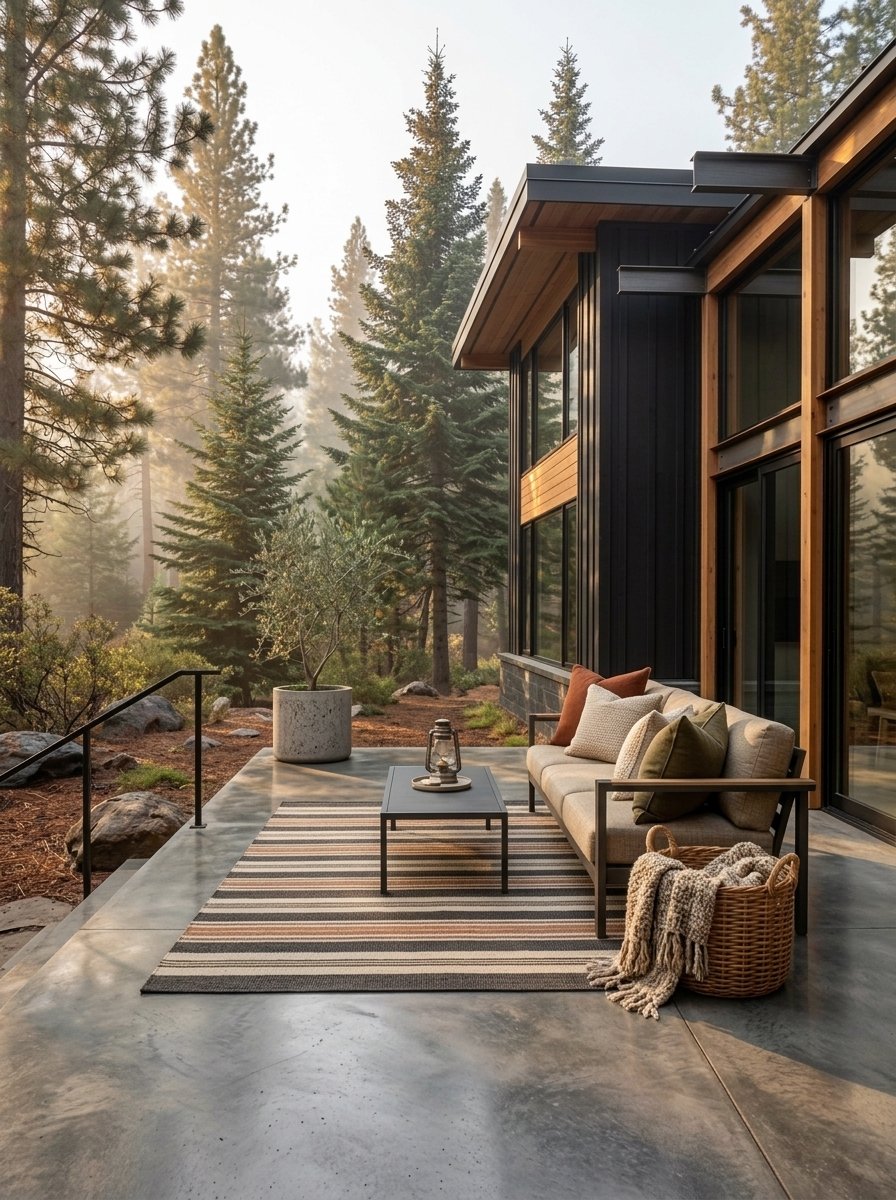
Modern outdoor furniture is clean, sleek, and easy to maintain. Think low-profile sofas, simple tables, and neutral colors.
Look for weather-resistant materials such as powder-coated aluminum, teak, or high-quality resin wicker. Choose a restrained palette of gray, white, black, or sand.
Style tips:
- Add one bold accent, like a colorful pillow or planter
- Keep accessories minimal
- Choose modular pieces you can rearrange
Care tip: Cover furniture or store cushions during harsh weather to extend their life.
Small Front Patio Decorating Ideas on a Budget
You don’t need a large budget to create a beautiful outdoor space. Simple Front Patio Decorating Ideas include adding colorful cushions, arranging potted plants, using an outdoor rug, and decorating the entrance with seasonal flowers. These affordable touches can make even a small patio look cozy and stylish.
11. Add Beautiful Patio Decor With Textiles and Accents

Decor brings personality and comfort. Layer soft textiles and a few meaningful accents, and the patio feels like part of your home.
Use an outdoor rug to define the seating area. Add throw pillows, a blanket, and a few lanterns. Mix textures like woven baskets, ceramic pots, and soft fabrics.
Easy decor ideas:
- A rug in a pattern that hides dirt
- Lanterns with LED candles
- A tray with a small plant or candle
- Wall art made for outdoor use
Tip: Stick to two or three colors so the patio looks calm, not cluttered.
12. Hang Privacy Curtains
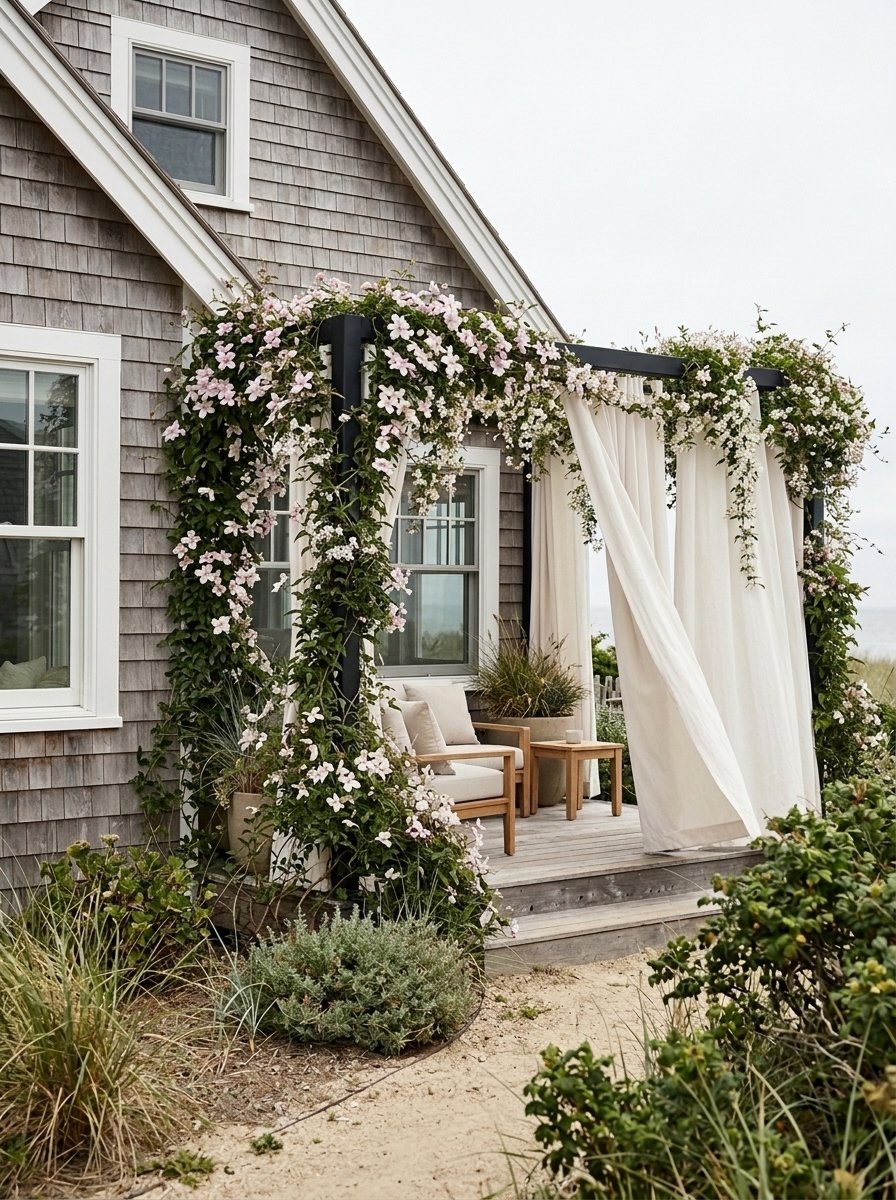
Outdoor curtains create instant privacy and a soft, resort-like feel. They also block sun and wind.
Choose fabrics made for outdoor use, such as solution-dyed acrylic or polyester. Hang them from a pergola, a rod, or a cable system, and use tiebacks to open them.
Tips:
- Pick light colors for a breezy look
- Add weights to the hems so they don’t blow around
- Keep curtains away from open flames and heaters
Care note: Wash curtains regularly to prevent mildew.
13. Plant Some Vines

Vines soften hard edges and add privacy and shade. They also make a patio feel lush and established.
Good choices include clematis, jasmine, climbing roses, and honeysuckle. Give them a trellis, wire, or pergola to climb. Check which plants grow well in your climate.
Tips:
- Install a trellis a few inches from the wall to protect siding
- Avoid aggressive vines like English ivy, which can damage walls and spread
- Prune regularly to keep the patio tidy
Pet note: Check that your plants are safe for cats and dogs.
14. Embrace Symmetry

Symmetry creates a calm, polished look. It suits traditional homes and formal entrances.
Place matching planters on either side of the door. Use identical lanterns or sconces. Line up chairs and tables evenly along the patio. A centered path leading to the front door adds to the effect.
Symmetry tips:
- Repeat plants in pairs
- Use the front door as the center point
- Add one asymmetrical touch, like a vase, to avoid a stiff look
15. Accent With Tile
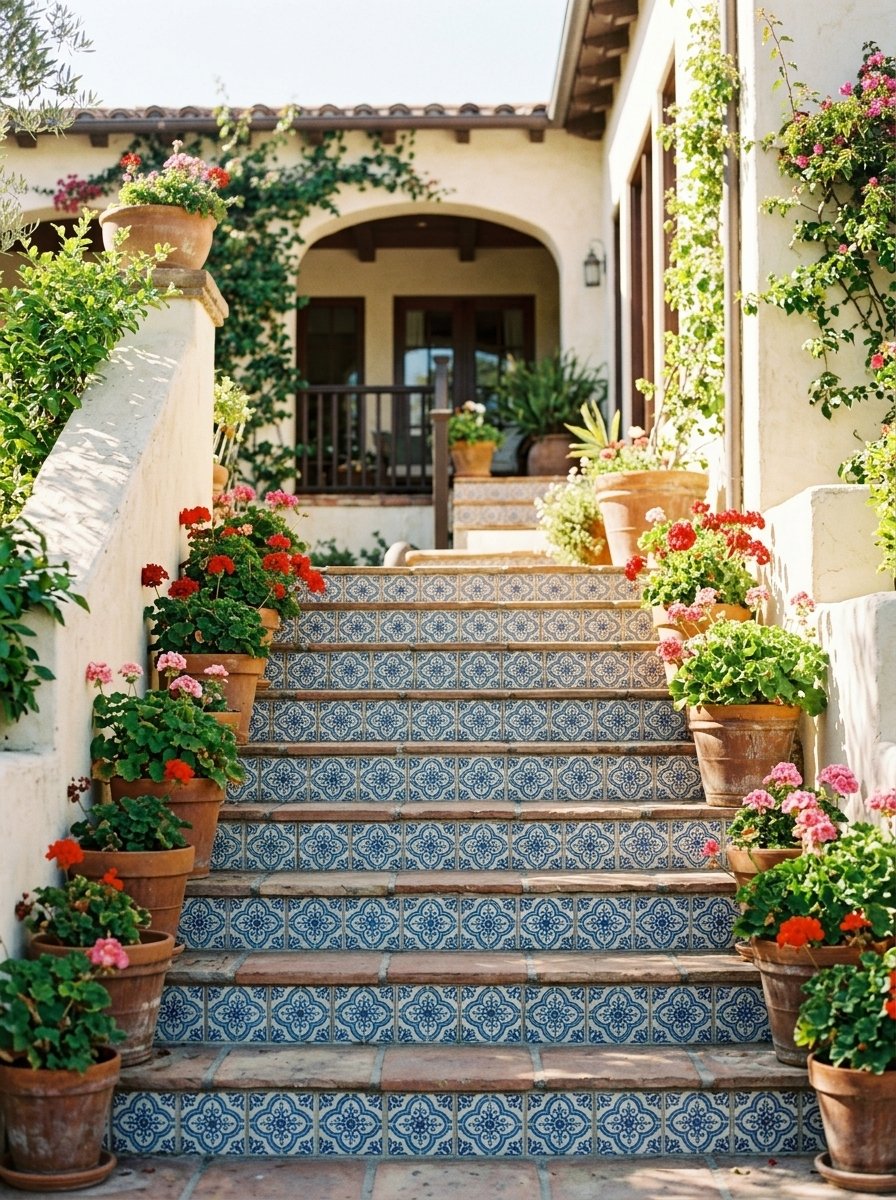
Sometimes you don’t need to tile the whole patio. A tile accent adds color and personality in a small area.
Try a patterned tile border, a tile-topped table, or tiled steps. Moroccan-style or cement-look tiles work especially well in outdoor spaces.
Where to use tile accents:
- Stair risers
- A small mosaic inset in the floor
- A garden wall or planter
Tip: Choose frost-resistant and slip-resistant tiles for outdoor steps.
16. Set Up a Fire Pit Area
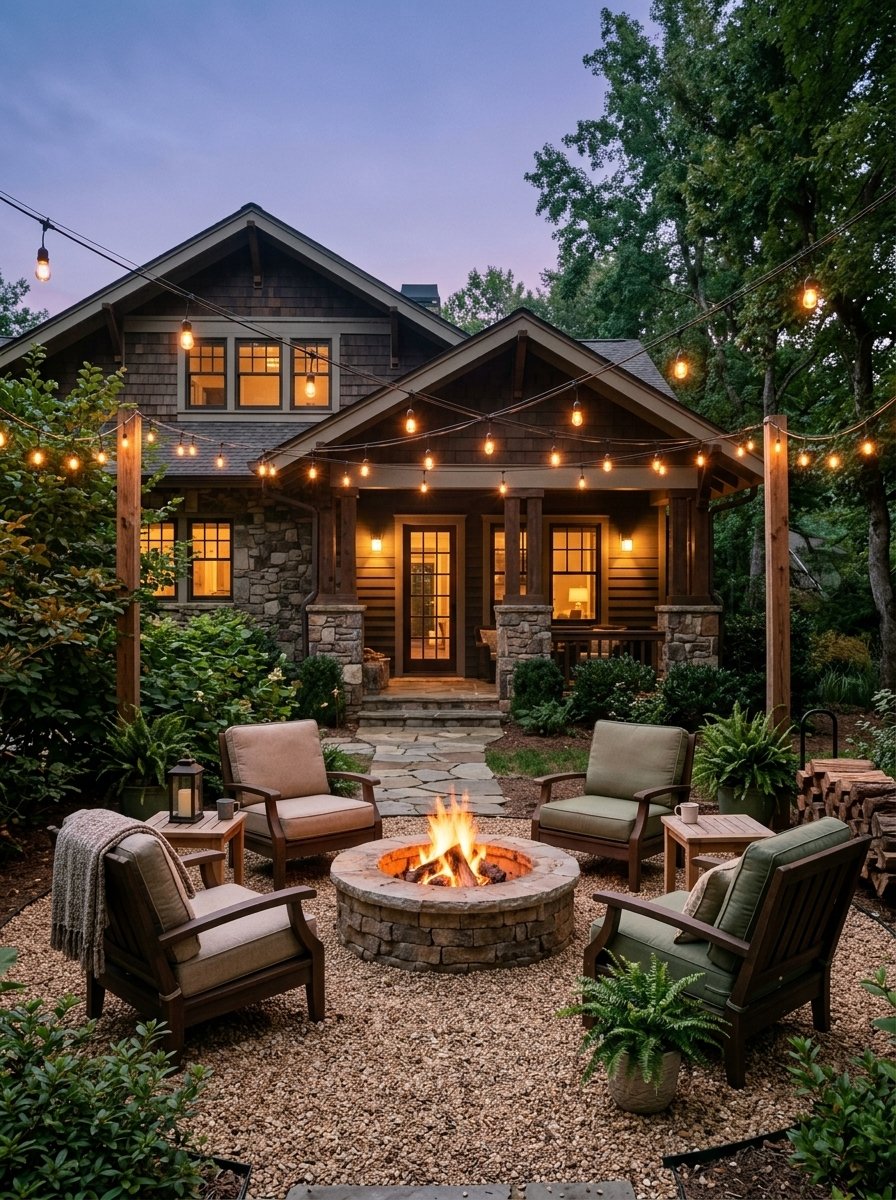
A fire pit extends the season and gives your patio a warm gathering point. Place seating around it in a circle.
Choose from wood-burning, propane, or tabletop models. Propane and gas types are easier to control and produce less smoke.
Safety first:
- Follow local rules and burn bans
- Keep the fire pit well away from the house, trees, and overhead structures
- Never leave a fire unattended
- Keep water or a fire extinguisher nearby
- Hire a licensed pro for permanent gas lines
Style tip: A gravel or paver base under the fire pit helps protect the ground.
17. Incorporate a Water Feature
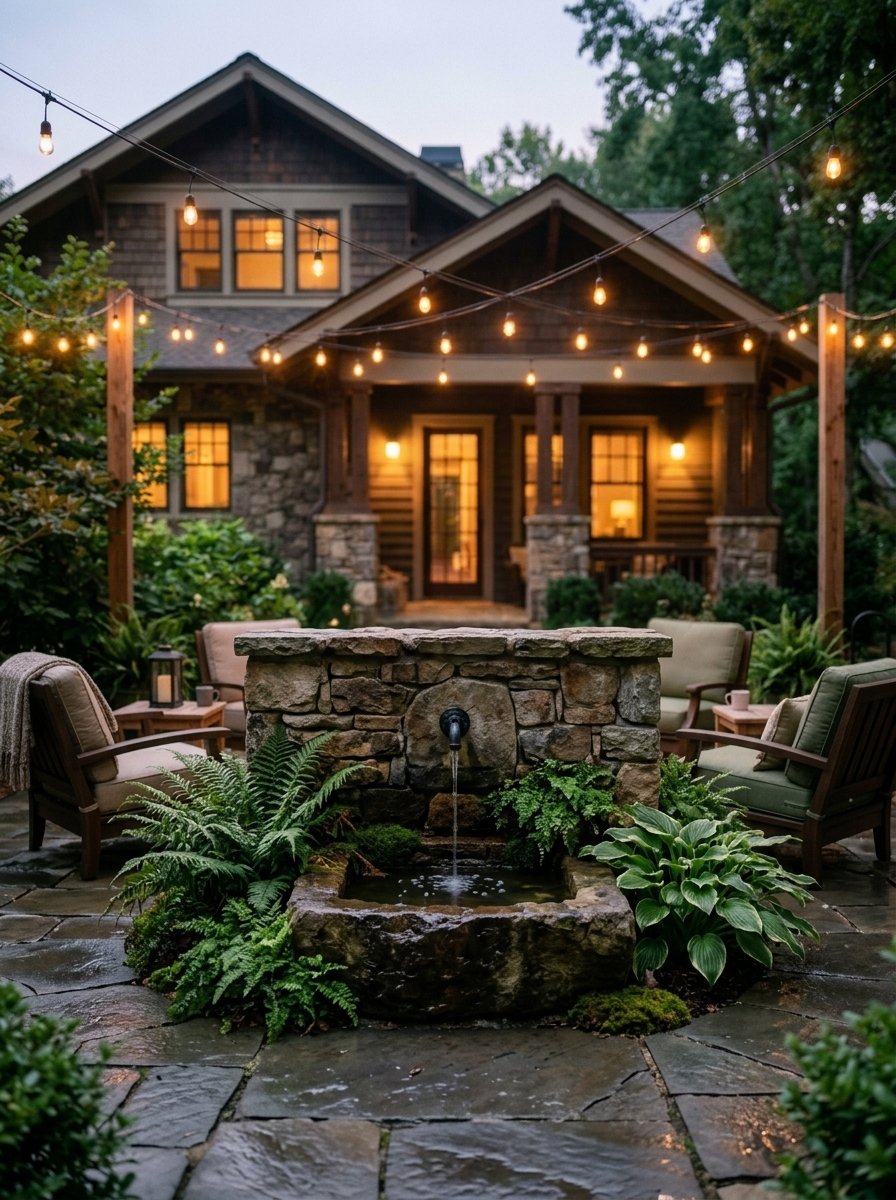
The sound of water makes a patio calm and private. It also masks street noise.
A small tabletop fountain, a wall spout, or a bubbling urn works well for compact spaces. Choose a recirculating pump so you don’t waste water.
What to consider:
- Use outdoor-rated, GFCI-protected power
- Keep water shallow and safely placed if children visit
- Clean the feature regularly to prevent algae and mosquitoes
Budget option: A solar-powered fountain needs no wiring and costs little.
18. Install a Garden Bench
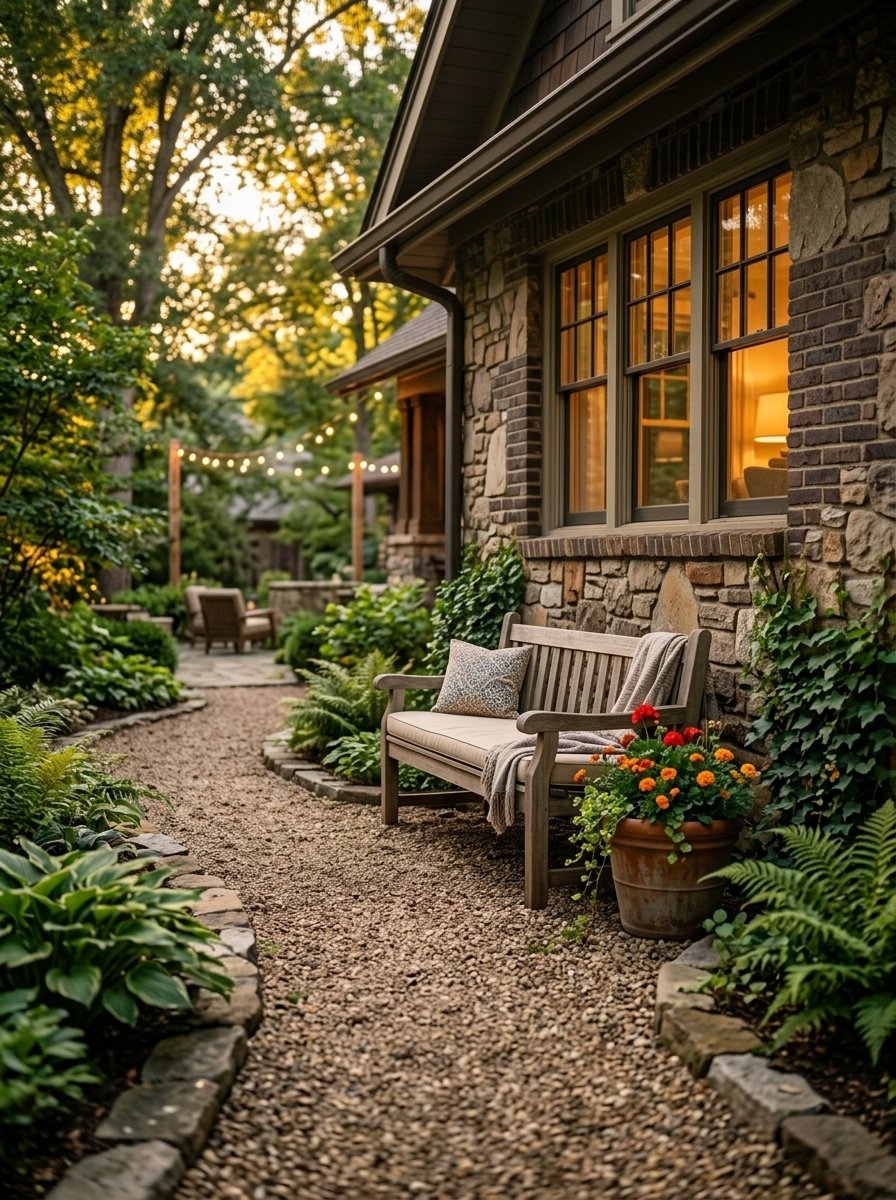
A garden bench gives you a simple, charming place to sit. It also works as a pause point on a long walkway.
Place it against the house wall, under a window, or at the end of a path. Wood, stone, and metal benches all work. Add a cushion for comfort and a pot of flowers beside it.
Tips:
- Choose weather-resistant materials such as teak or cast iron
- Anchor heavy benches on a level surface
- Pick a style that matches your home
19. Use Brick Pavers
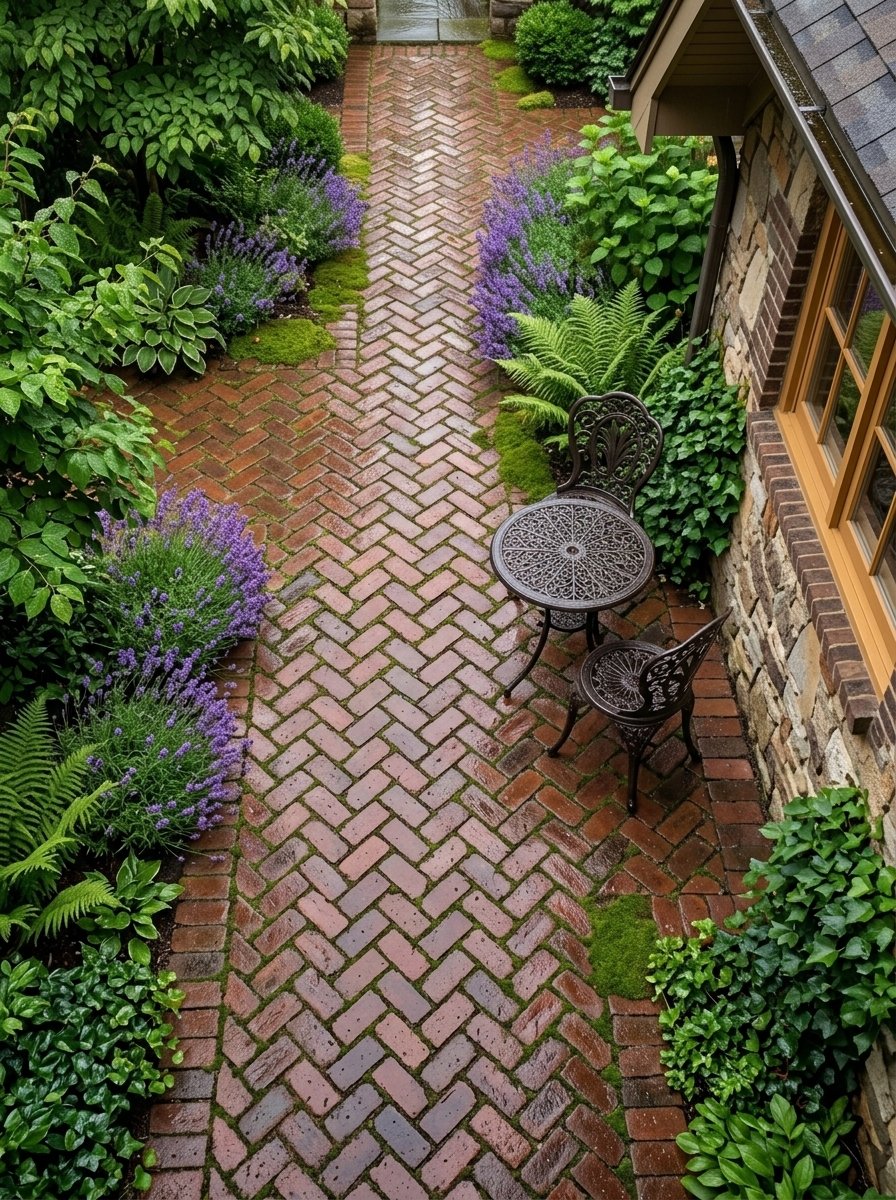
Brick pavers give a front patio a timeless, warm look. They suit colonial, craftsman, and cottage homes.
Pavers install in patterns such as running bond, herringbone, or basket weave. Each has its own character. A proper base of compacted gravel and sand keeps them level.
Pros and cons:
- Pros: durable, repairable, good grip when wet
- Cons: weeds can grow in joints, and installation takes time
Tip: Use polymeric sand in the joints to reduce weeds and keep pavers stable.
20. Convert the Driveway
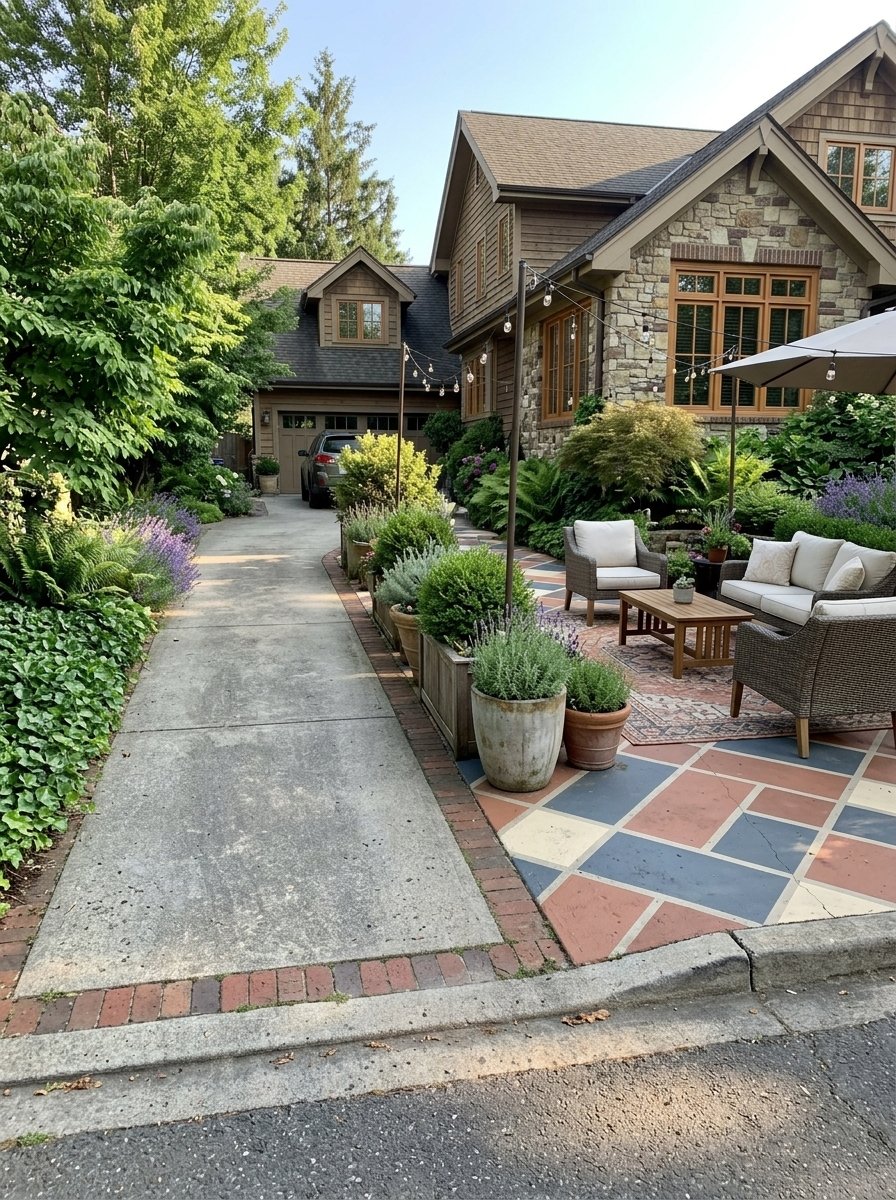
If your driveway is large or underused, you can turn part of it into a patio. This works well for homes with extra paved space.
Paint or stain the concrete, add pavers over it, or mark out a seating zone with rugs and planters. Keep a clear, safe path for cars and walkers.
Considerations:
- Check local rules about changing driveway use
- Keep access for emergency vehicles and deliveries
- Add a border of planters to separate the patio from the car area
Safety: Never place seating where vehicles may back up or turn.
21. Match Flooring With Walkway

When the patio flooring matches the walkway, the whole entrance feels planned. It also visually enlarges the space.
Use the same stone, brick, or concrete finish on both. If you can’t match exactly, repeat a color or pattern. A border of the same material can tie things together.
Design tips:
- Keep joints and patterns consistent
- Use the same edging for walkway and patio
- Add a small step or change in height only when needed
22. Choose Colorful Planters
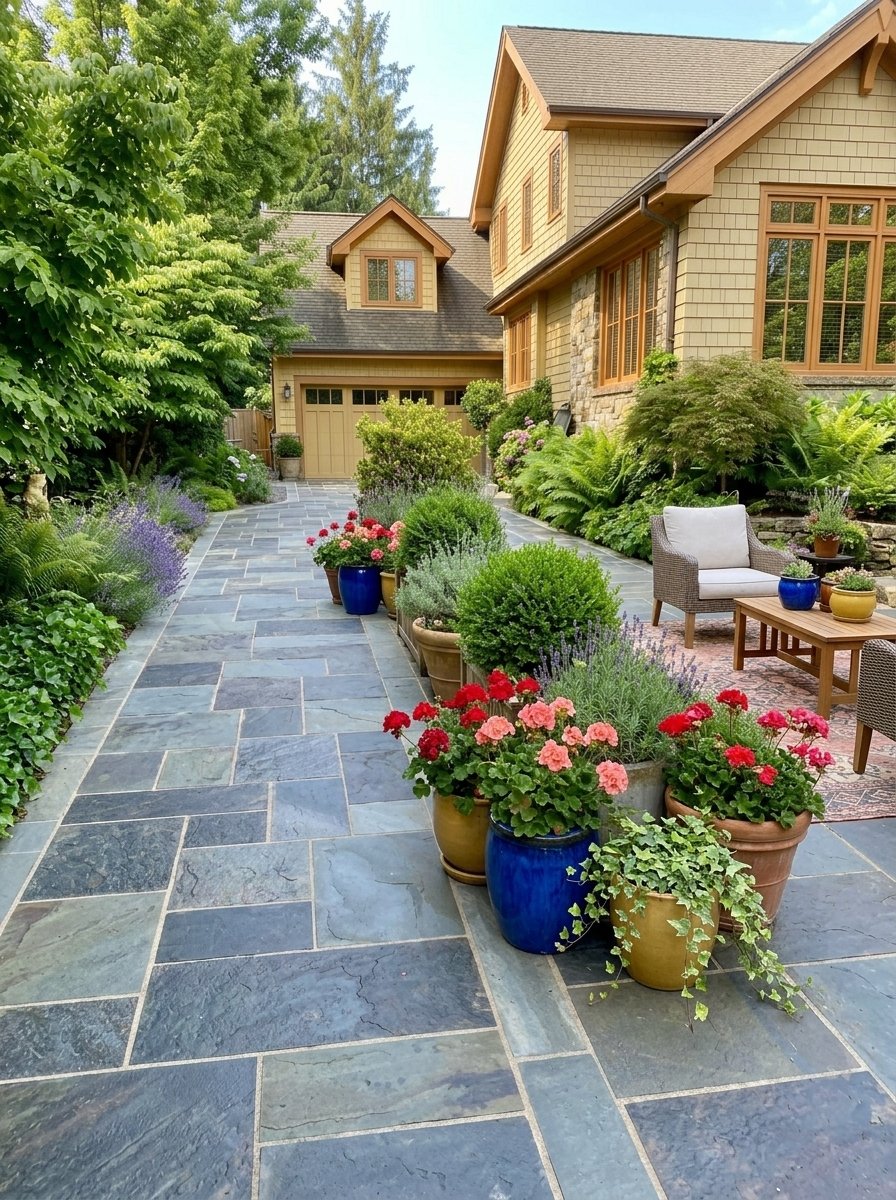
Colorful planters bring instant cheer. They work on any surface and are easy to change with the seasons.
Pick pots in a bold color like cobalt, terracotta, or mustard, and group them in odd numbers. Vary the heights so the display looks natural.
Planter tips:
- Choose pots with drainage holes
- Use a quality potting mix
- Match the plant to the sun conditions
- Set heavy pots on plant stands or casters if needed
Idea: Plant herbs in a few pots near the door. They look good and smell wonderful.
23. Install a Floating Deck
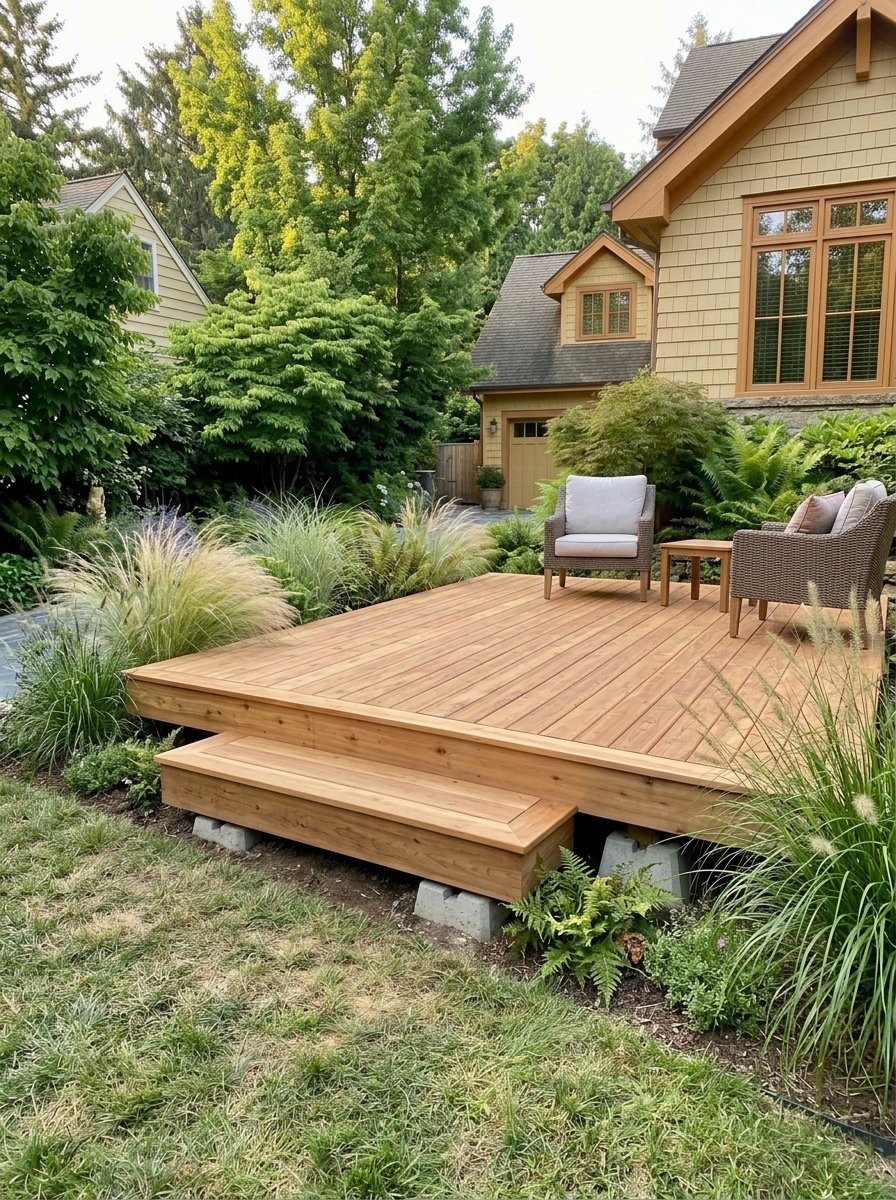
A floating deck sits on blocks or footings rather than being attached to the house. It’s a flexible option for uneven or poorly drained ground.
This style is often simpler than a fixed deck, and it can lift the patio slightly above the soil. Use pressure-treated lumber or composite boards, and keep the surface level.
What to know:
- Low floating decks may not need a permit in some areas, but rules vary
- Use proper footings and drainage
- Add railings if the height requires them
Tip: Leave airflow beneath the deck to prevent rot.
24. Choose Weather-Resistant Materials
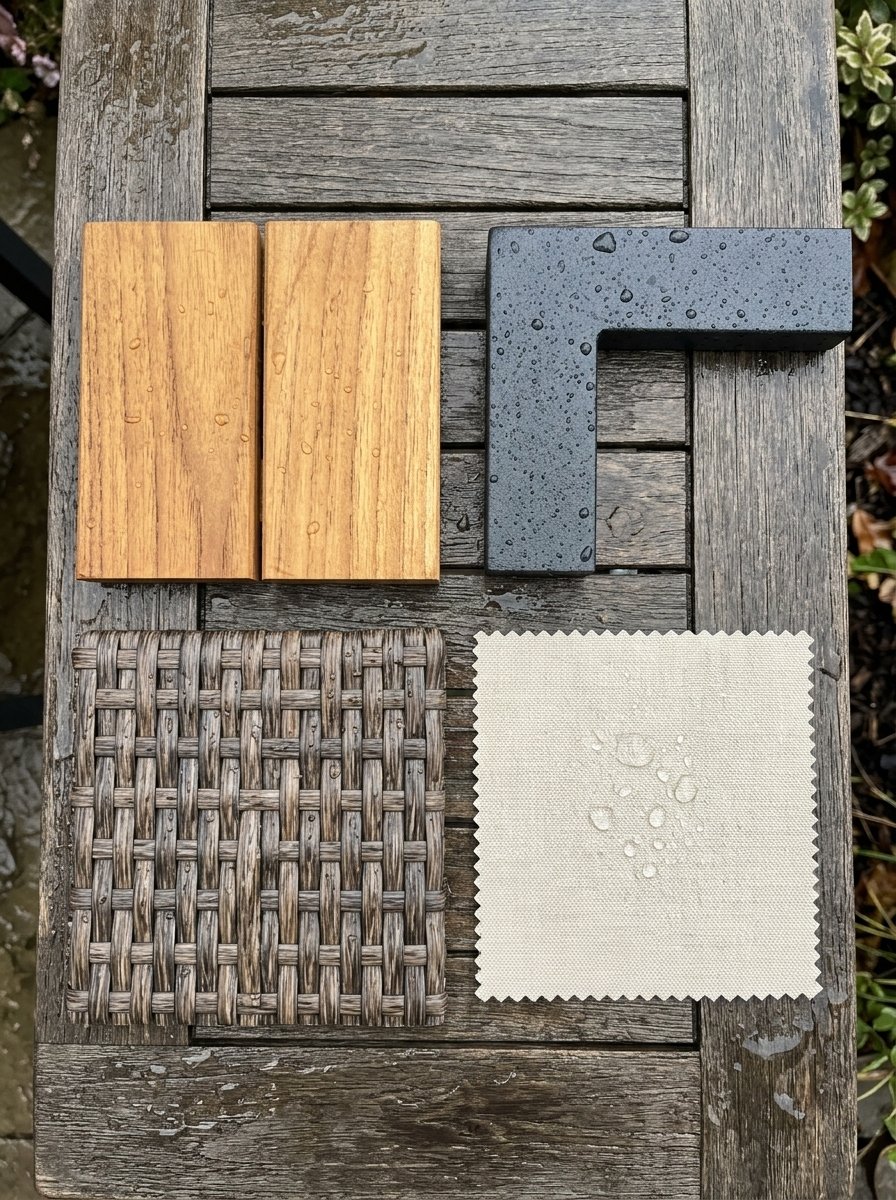
Outdoor decor takes a beating from sun, rain, and wind. Choosing the right materials saves money and effort.
| Material | Strengths | Watch Out For |
|---|---|---|
| Teak | Durable, weathers to silver | Higher cost |
| Powder-coated aluminum | Light and rust-resistant | Can dent |
| Resin wicker | Low maintenance | Quality varies |
| Cast iron | Heavy and sturdy | Can rust |
| Solution-dyed fabric | Resists fading | Needs occasional cleaning |
Tip: Store cushions during storms and winter to extend their life.
25. Style a Small Front Patio With Space-Saving Furniture
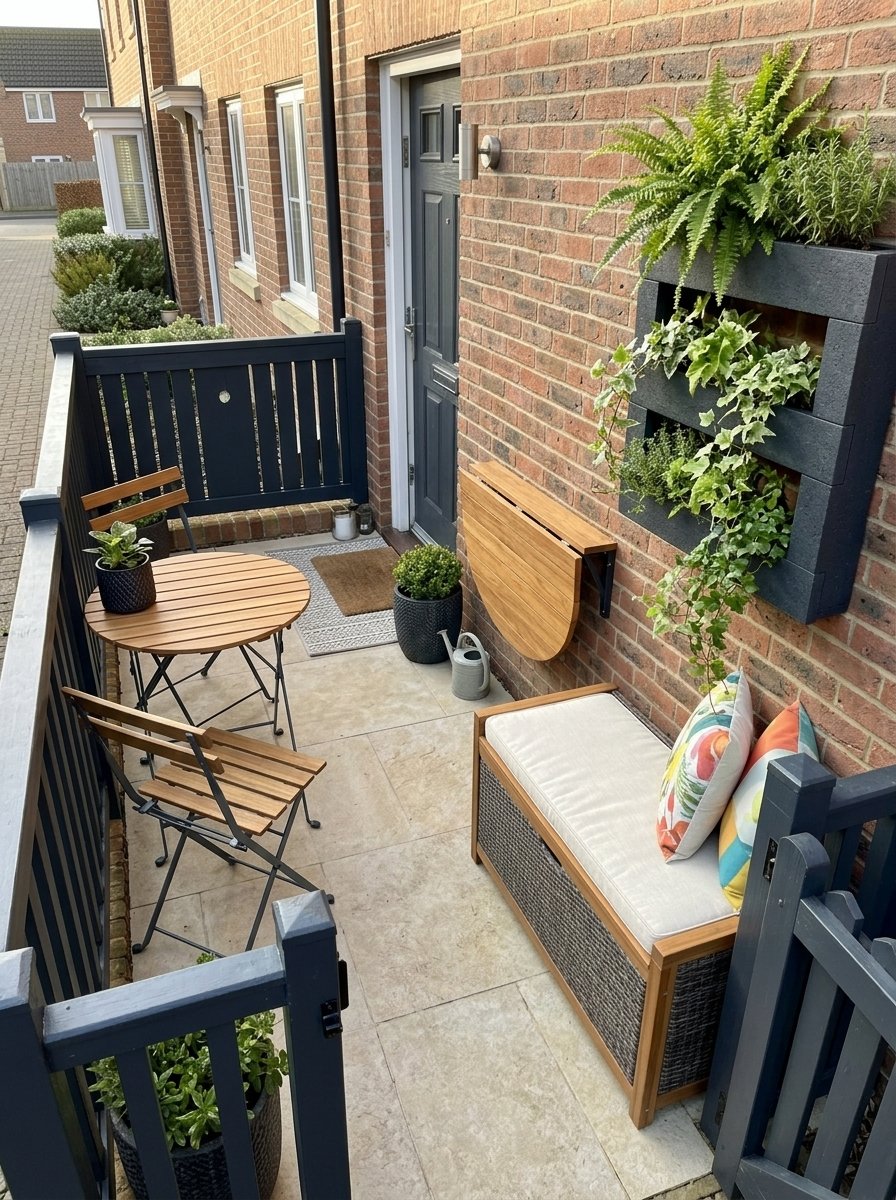
Small patios can still feel generous. The key is to choose multi-purpose furniture and keep the layout open.
Try a bench with storage, a bistro set, folding chairs, or a wall-mounted drop-leaf table. Use vertical planters and wall hooks to save floor space.
Small-space checklist:
- Pick light-colored furniture and flooring
- Use a mirror made for outdoor use to bounce light
- Keep decor minimal and purposeful
- Choose a rug that fits within the seating area
Front Patio Flooring at a Glance
| Flooring | Look | Upkeep | Best For |
|---|---|---|---|
| Gravel | Relaxed, casual | Low | Budget projects, cottage styles |
| Tile | Polished, modern | Medium | Warm climates, modern homes |
| Decking | Warm, natural | Medium | Uneven ground |
| Brick pavers | Classic, timeless | Medium | Traditional homes |
| Poured concrete | Clean, simple | Low | Modern designs |
Costs and durability vary by region and installer, so get a few quotes before you decide.
Common Front Patio Mistakes to Avoid
- Crowding the space with too much furniture
- Skipping lighting, which makes the patio unsafe after dark
- Ignoring drainage and letting water pool
- Choosing furniture that isn’t weather-resistant
- Forgetting local rules and permits
- Placing fire features too close to the house
- Choosing too many colors and patterns
- Blocking the walkway or door
Conclusion
A well-decorated front patio makes your home feel welcoming from the first glance. You don’t need to do everything at once. Start with seating and lighting, then add plants, textiles, and a few accents over time.
Choose three or four ideas from this list that fit your space and budget. Plan for safety, check local rules, and pick durable materials. Soon, your front patio will be a spot you actually use, and one that neighbors notice.
FAQs
How do I decorate a front patio?
Start with comfortable seating and good lighting. Then add plants, a rug, and a few accents.
What is the best flooring for a front patio?
Brick pavers, tile, and gravel all work well. Choose based on your climate and budget.
How can I make a small front patio look bigger?
Use light colors and space-saving furniture. In addition, keep the layout open.
How do I add privacy to a front patio?
Hang outdoor curtains or plant vines. Alternatively, add a screen or tall planters.
Do I need a permit for a front patio?
Often, yes. Rules vary, so check with your local building office first.
What lighting works best for a patio?
Warm outdoor sconces and string lights work best. Choose fixtures rated for outdoor use.
Can I put a fire pit on a front patio?
Sometimes. First, check local rules and keep it far from the house and trees.
What furniture lasts outdoors?
Teak, powder-coated aluminum, and resin wicker last longest. Also, store cushions during bad weather.
How do I decorate a front patio on a budget?
Shop thrift stores and use gravel for flooring. Meanwhile, grow plants from seeds or cuttings.
What plants suit a front patio?
Herbs, climbing vines, and potted flowers all do well. Match each plant to your sun and climate.