Red creeping thyme is a low, fragrant ground cover that turns crimson-pink in late spring and early summer. It needs full sun, well-drained soil, and very little water once it settles in. It works well between stepping stones, along borders, on sunny slopes, and even as a small lawn alternative.
This guide explains everything in plain steps. You will learn what red creeping thyme is, how to plant it, and how to care for it through every season. You will also see lawn pros and cons, a red vs purple comparison, and tips for Colorado and other dry climates.
Quick Facts About Red Creeping Thyme

| Feature | Details |
|---|---|
| Common names | Red creeping thyme, crimson thyme, mother of thyme |
| Botanical name | Sold as Thymus praecox ‘Coccineus’ (some nurseries list Thymus serpyllum ‘Coccineus’) |
| Height | About 2 to 4 inches |
| Sun | Full sun (at least 6 hours) |
| Soil | Lean, well-drained, even rocky or sandy |
| Bloom time | Late spring to early summer |
| Hardiness | Commonly grown in USDA zones 4 to 9 |
| Wildlife | Bees and butterflies visit; deer usually leave it alone |
What Is Red Creeping Thyme?
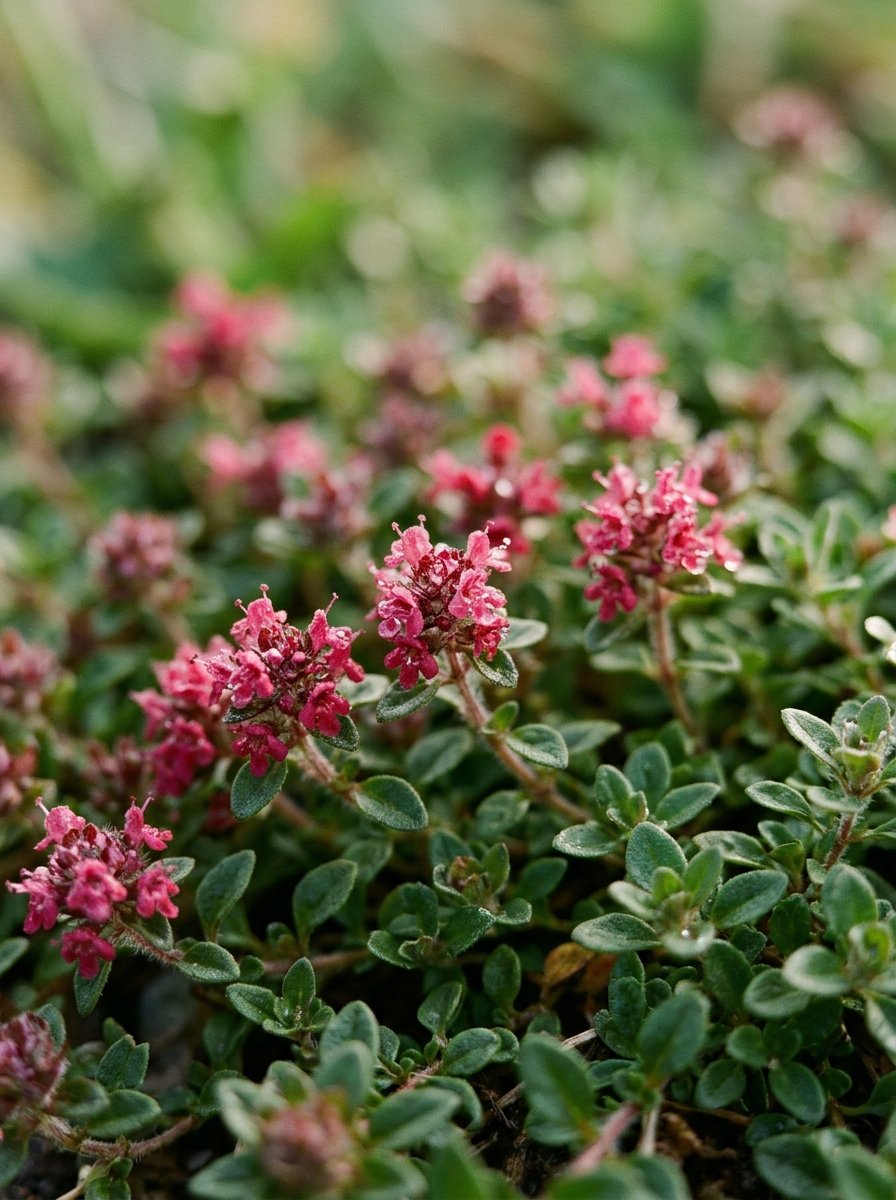
Red creeping thyme is a low, mat-forming perennial in the mint family. Its tiny leaves are dark green, and its stems root as they spread. Over time, a few small plants knit together into a dense carpet.
When it blooms, the mat becomes a sheet of deep pink-red flowers. The leaves also release an herbal scent when you brush or step on them.
Why the Botanical Name Is Confusing
You may see two names on plant tags. Some growers sell it as Thymus praecox ‘Coccineus’. Others label it Thymus serpyllum ‘Coccineus’. Thyme classification is messy, and nurseries often use these names loosely.
Here is the easy rule. Look for ‘Coccineus’ on the tag. That cultivar name tells you the flowers are the deep red-pink type you want.
Why Red Creeping Thyme Is So Popular
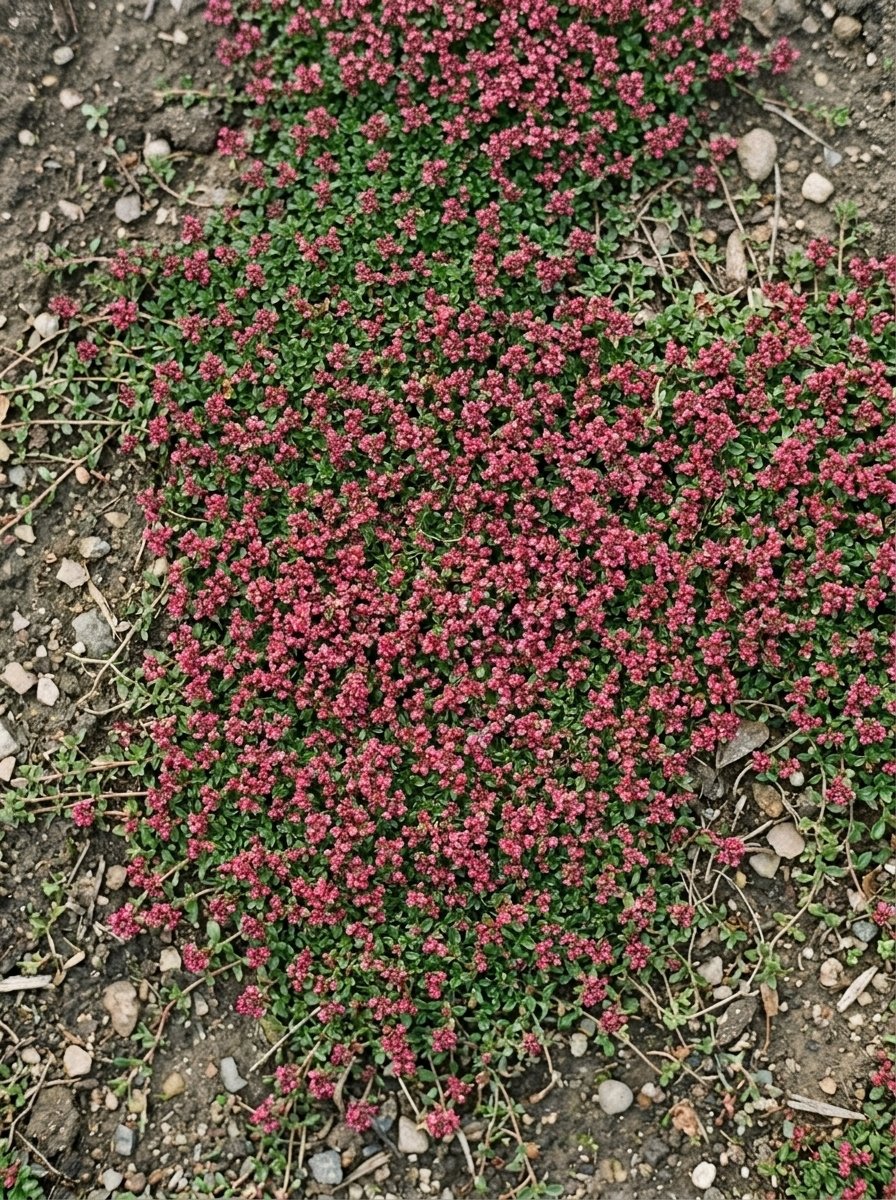
Gardeners love this plant for good reasons.
- Color: The bloom is richer than most ground covers.
- Low water use: Once established, it handles dry spells well.
- Weed control: A thick mat leaves little room for weeds.
- Pollinator support: Bees and butterflies visit the flowers.
- Fragrance: Stepping on it releases a fresh, herbal scent.
- Deer resistance: Deer usually avoid thyme, although no plant is completely deer-proof.
- Flexible use: It fits pavers, rock gardens, containers, and slopes.
It also suits current home decor trends. Low-water gardens, natural textures, and pollinator-friendly yards are all popular right now.
Red Creeping Thyme vs Purple Creeping Thyme

Both are low-growing, sun-loving thymes. However, they look different in bloom.
| Feature | Red Creeping Thyme | Purple Creeping Thyme |
|---|---|---|
| Flower color | Deep crimson-pink | Purple to lavender-pink |
| Look | Bold and warm | Softer and cooler |
| Sun needs | Full sun | Full sun |
| Water needs | Low once established | Low once established |
| Best for | Eye-catching color patches | Gentle, classic cottage look |
Plant tags vary a lot, so always check the cultivar name. You can also mix both in separate drifts. Keep each color in its own patch, so the shades stay clear.
Other Creeping Thymes Worth Knowing
- Pink Chintz: Salmon-pink blooms that appear slightly early.
- Elfin: Very tiny and tight, great between pavers.
- Woolly thyme: Silver-gray foliage with fewer showy flowers.
- Purple Carpet: A purple-pink bloomer grown mostly as an ornamental.
Where Red Creeping Thyme Grows Best
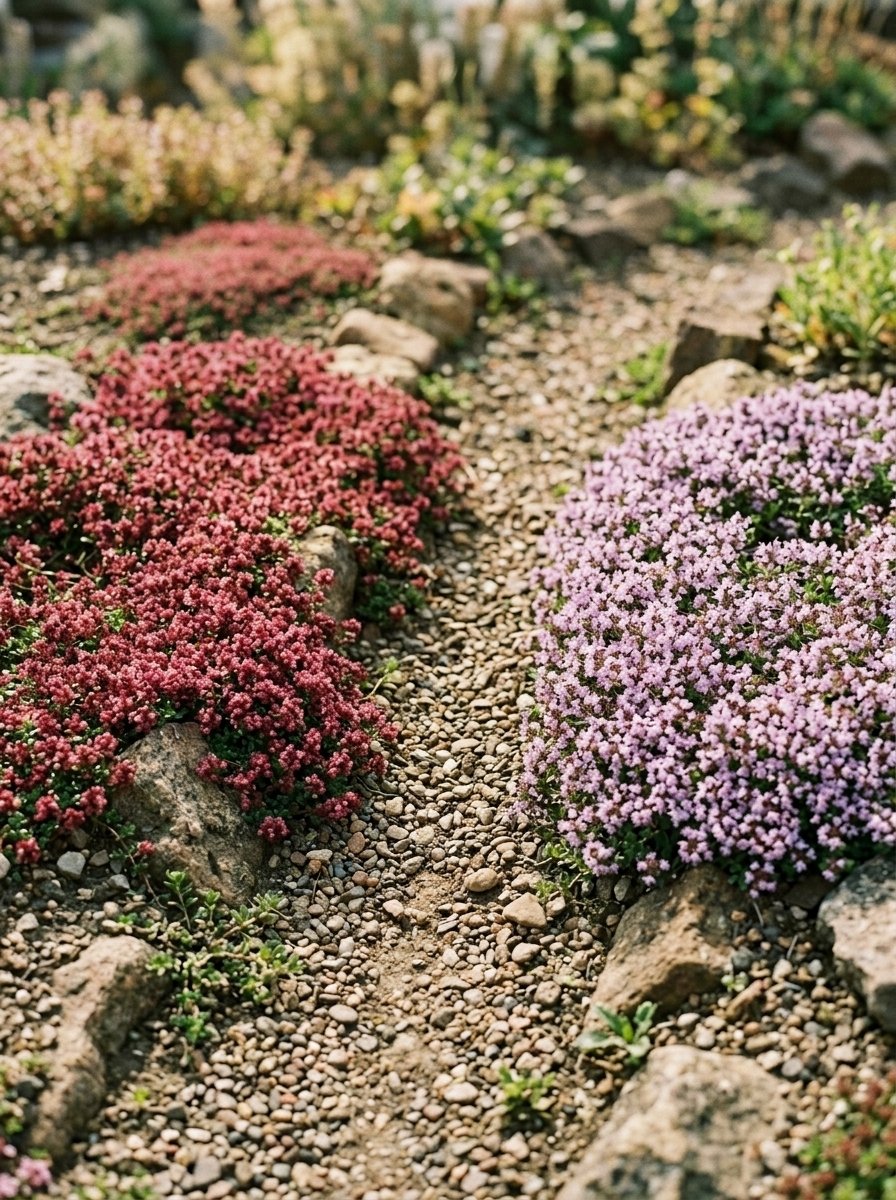
Three things matter most: sun, drainage, and zone.
Sun
Aim for at least six hours of direct sun. More sun means denser growth and more flowers. Red creeping thyme can tolerate light, partial shade, but it often blooms less and grows thinner.
Soil
Thyme loves lean, gritty soil. In fact, it often grows better in poor, rocky ground than in rich garden loam. Heavy, soggy clay is the real problem. If your soil holds water, mix in coarse sand or fine gravel. Raised beds and gentle slopes also help.
Zones
Red creeping thyme is commonly grown in USDA zones 4 to 9. Check your zone on the USDA map before you buy. Then ask a local nursery about varieties that suit your area.
How to Plant Red Creeping Thyme in 7 Easy Steps
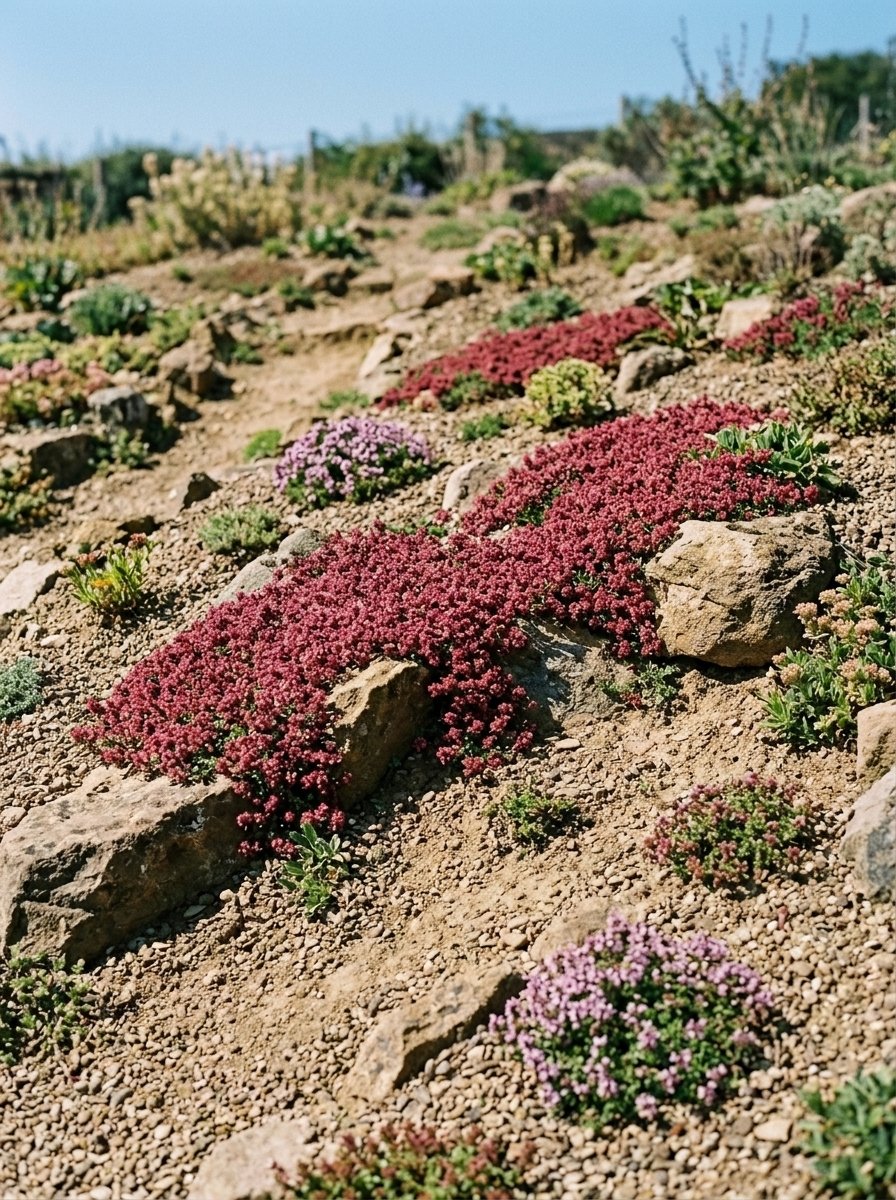
Step 1: Pick the Right Time
Plant in spring after the last frost. Early fall also works, since roots can settle before winter. Avoid extreme summer heat, because young plants dry out fast.
Step 2: Choose a Sunny, Draining Spot
Look for a bright area where water does not pool after rain. Southern and western exposures usually work well.
Step 3: Prepare the Soil
Remove weeds and grass first. Then loosen the top few inches of soil. If your soil is heavy, mix in coarse sand or fine gravel. Skip rich compost and heavy fertilizer, since thyme prefers lean soil.
Step 4: Space the Plants
Set plugs or small pots about 8 to 12 inches apart. Closer spacing fills in faster. Wider spacing costs less but takes longer.
Step 5: Plant at the Right Depth
Dig a hole as deep as the root ball. Keep the crown level with the soil surface. Do not bury the stems. Then firm the soil gently around the roots.
Step 6: Water Well at First
Water deeply right after planting. For the first few weeks, water whenever the top inch of soil feels dry. Do not keep the soil constantly wet.
Step 7: Add a Thin Layer of Gravel
A thin layer of fine gravel helps reduce weeds and keeps the crown dry. Avoid heavy bark mulch, because it holds moisture around the stems.
Red Creeping Thyme Seeds vs Plugs vs Division
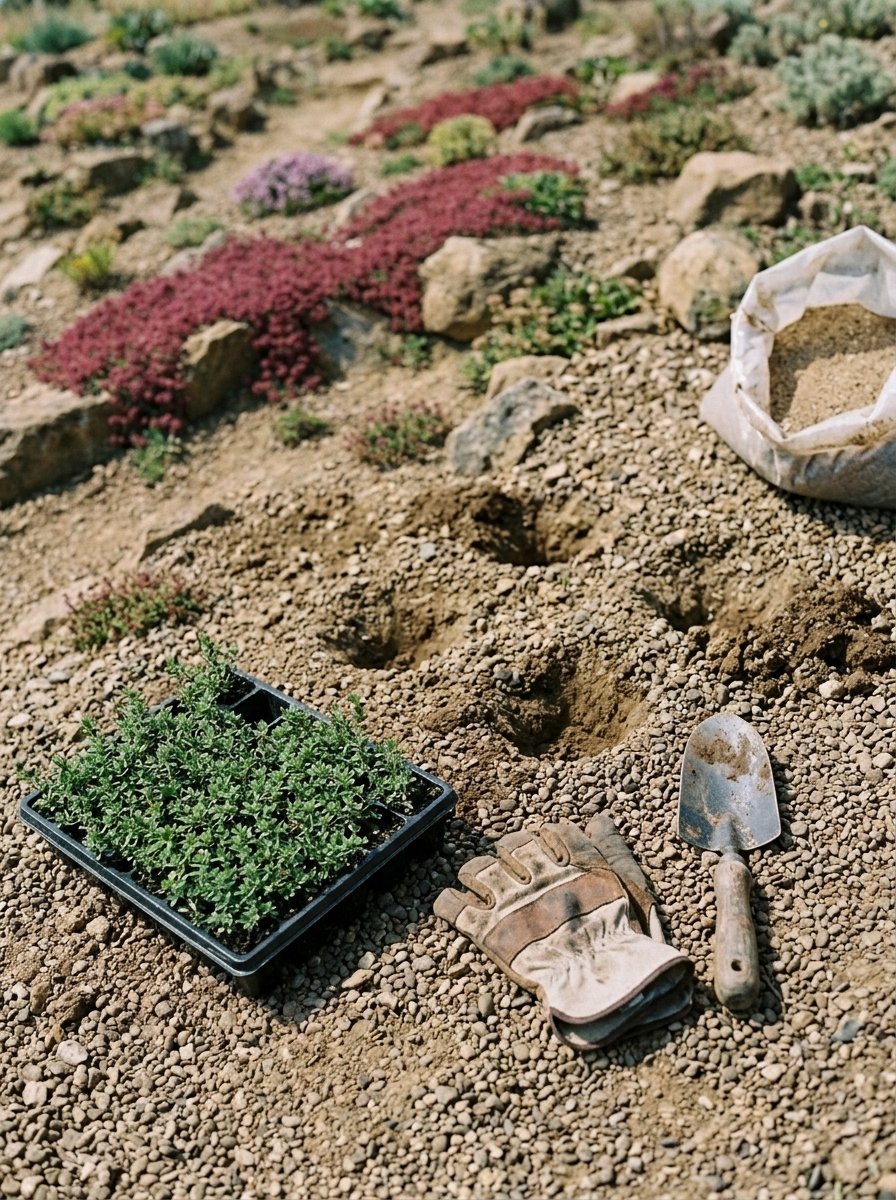
You have three ways to start. Each has trade-offs.
| Method | Pros | Cons |
|---|---|---|
| Seeds | Cheapest for large areas | Slow; results are less reliable; color may vary |
| Plugs or small pots | Faster coverage; true to the named cultivar | Costs more |
| Division | Free if you already own plants | Needs mature plants |
Growing From Seed
Seeds are tiny and need light to sprout. Sow them on the soil surface, and press them in gently. Keep the area lightly moist until they germinate. Germination can be slow and inconsistent, and seedlings stay small for a while. Also, seed-grown plants may not match the exact ‘Coccineus’ color.
Growing From Plugs
For a reliable result, most gardeners buy plugs or potted plants. This is the best route for a lawn or a visible front-yard bed.
Growing From Division or Cuttings
You can propagate by dividing healthy clumps or by taking stem cuttings. Divide in spring, replant right away, and water until the roots take hold.
How to Care for Red Creeping Thyme
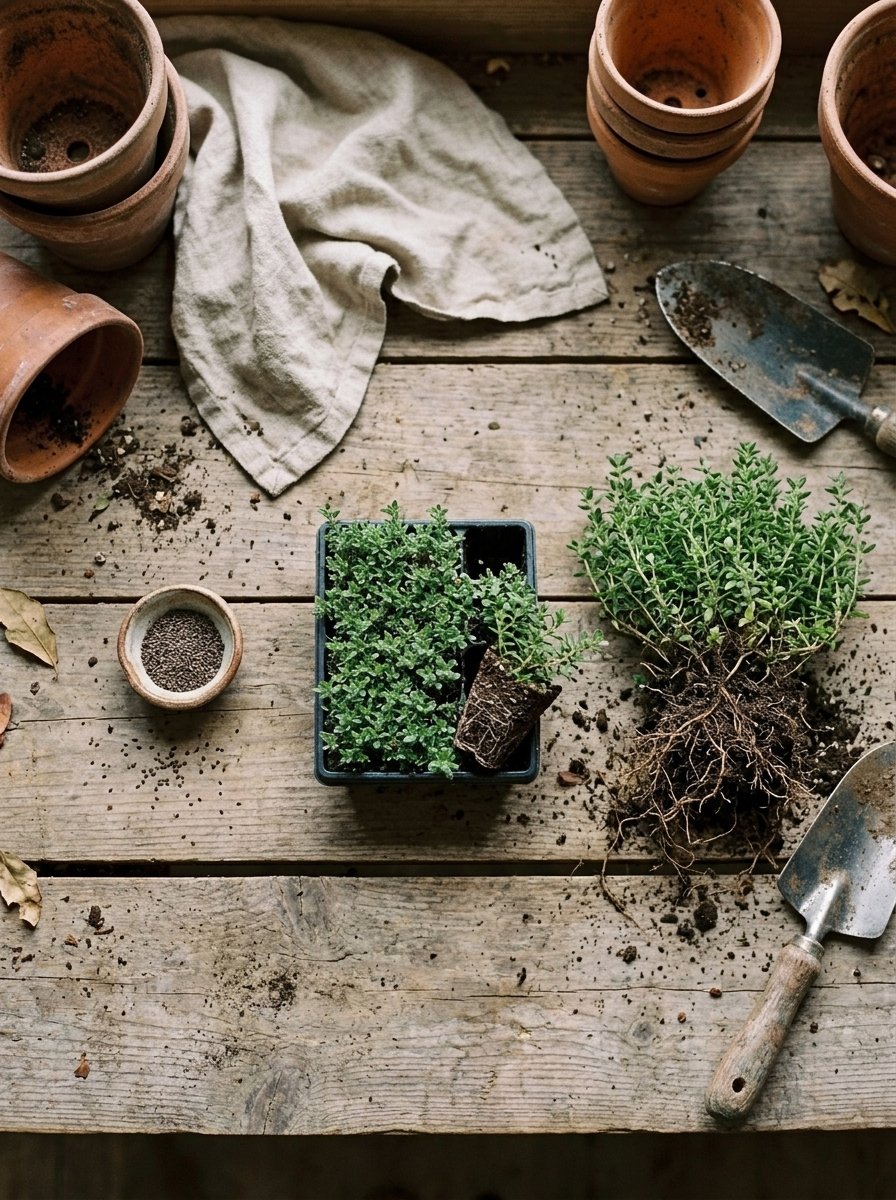
Care is simple. Still, a few habits make a big difference.
Watering
Water new plants regularly until they root in. After that, water only during long dry spells. Let the soil dry between waterings. Overwatering is the most common reason plants fail.
Feeding
Thyme grows best in lean soil. Too much fertilizer makes it leggy and weak. If growth looks pale, apply a light dose of balanced fertilizer in spring.
Pruning
Trim your plants to keep them dense and flowering. Many gardeners shear them lightly twice a year. Do one trim right after the bloom ends. Do a light tidy-up in early spring before new growth starts. Cut only the soft green growth. Avoid cutting deep into old woody stems.
Weeding
Weeds are the biggest challenge in year one. Pull them by hand while the thyme fills in. After the mat thickens, weeds drop off sharply.
Winter Care
In cold zones, wet soil causes more damage than cold temperatures. Good drainage is the best winter protection. In warmer zones, red creeping thyme often stays evergreen.
Renewing Old Plants
Red creeping thyme can get woody and patchy over time. To refresh it, divide healthy sections in spring. Then replant them into bare areas and water until they root. This simple step keeps a lawn or border looking full.
How Fast Does Red Creeping Thyme Spread?
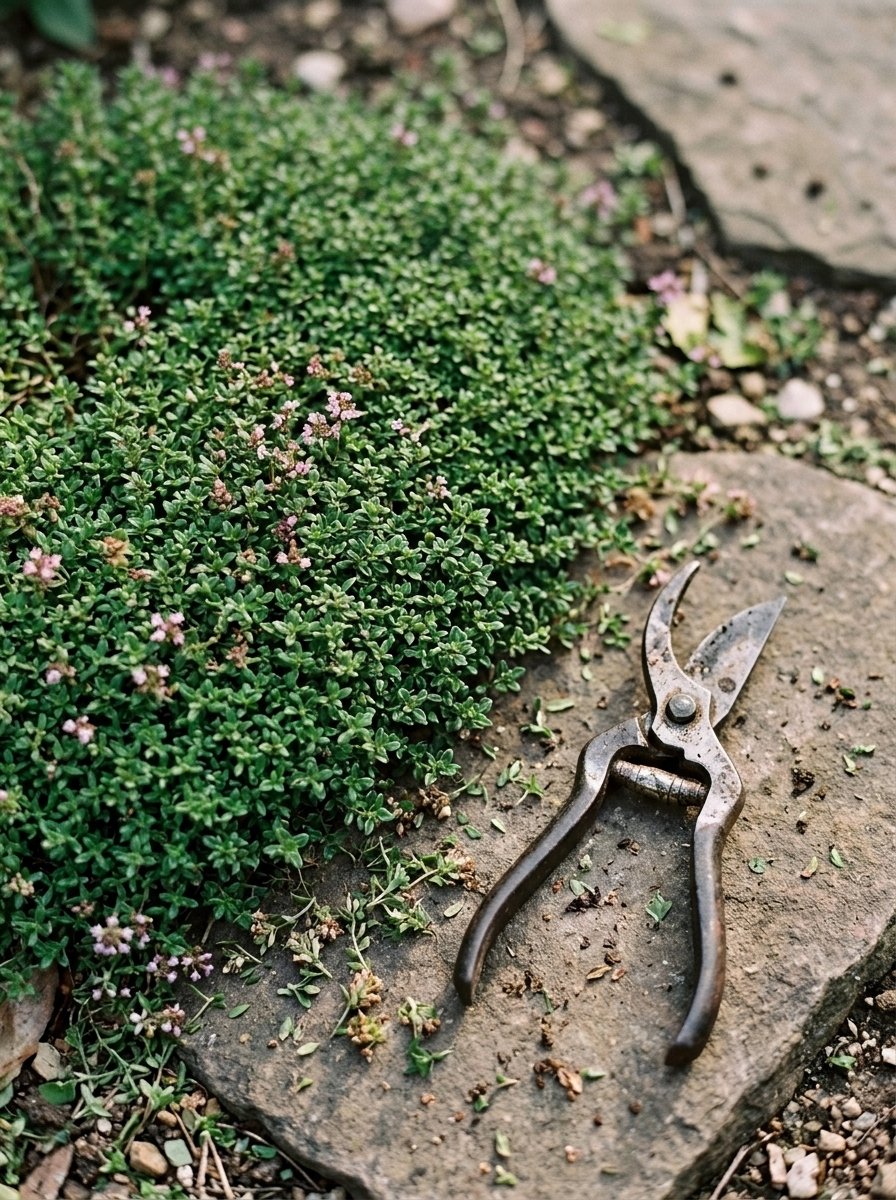
Red creeping thyme spreads steadily, not instantly. Most plantings need a full growing season or longer to knit together. Spacing, sun, and soil all affect the speed. Closer planting and good light speed things up. Poor drainage slows everything down.
If you want a quick result, plant more plugs and weed often in the first year.
Can You Walk on Red Creeping Thyme?
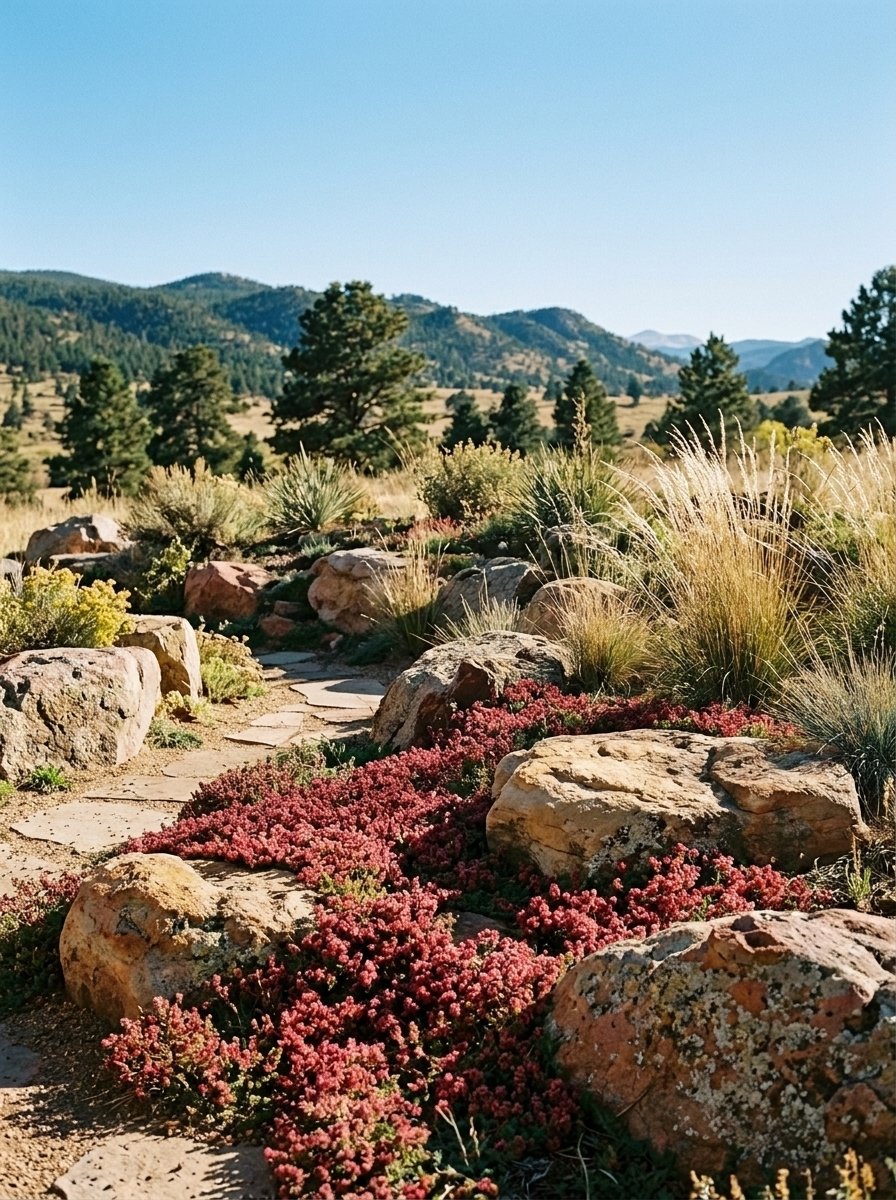
Yes, but only to a point. It handles light foot traffic, so it works well between stepping stones and on occasional paths. However, it is not a good replacement for a play lawn. Constant running, sports, or heavy pet traffic can thin the mat.
Red Creeping Thyme Lawn: Should You Try It?
A red creeping thyme lawn looks stunning and saves water. Still, it works best in small, sunny, low-traffic areas.
Pros of a Red Creeping Thyme Lawn
- Low water use: It needs far less irrigation than turf once established.
- No weekly mowing: It stays short.
- Color and scent: You get blooms and fragrance instead of plain green.
- Pollinator support: Bees and butterflies use the flowers.
- Weed suppression: A dense mat blocks many weeds.
- Fewer inputs: It generally needs little fertilizer.
Cons of a Red Creeping Thyme Lawn
- Cost: Plugs for a large area add up.
- Slow to fill in: Expect patience and early weeding.
- Limited foot traffic: Heavy use causes thin spots.
- Needs sun and drainage: Shade and wet soil lead to problems.
- Bees in bloom: This matters if someone at home has a bee allergy.
- Patchiness with age: Older plants can turn woody.
How Many Plants Do You Need?
Use this quick math. At 12-inch spacing, you need about 1 plant per square foot. At 8-inch spacing, you need about 2 plants per square foot. So a 100-square-foot area needs roughly 100 plants at 12 inches, or about 225 plants at 8 inches.
A smart middle path is to replace only part of your lawn. For example, plant thyme along a path, on a sunny slope, or in a side yard you rarely cross.
Red Creeping Thyme in Colorado and Other Dry, Cold Climates
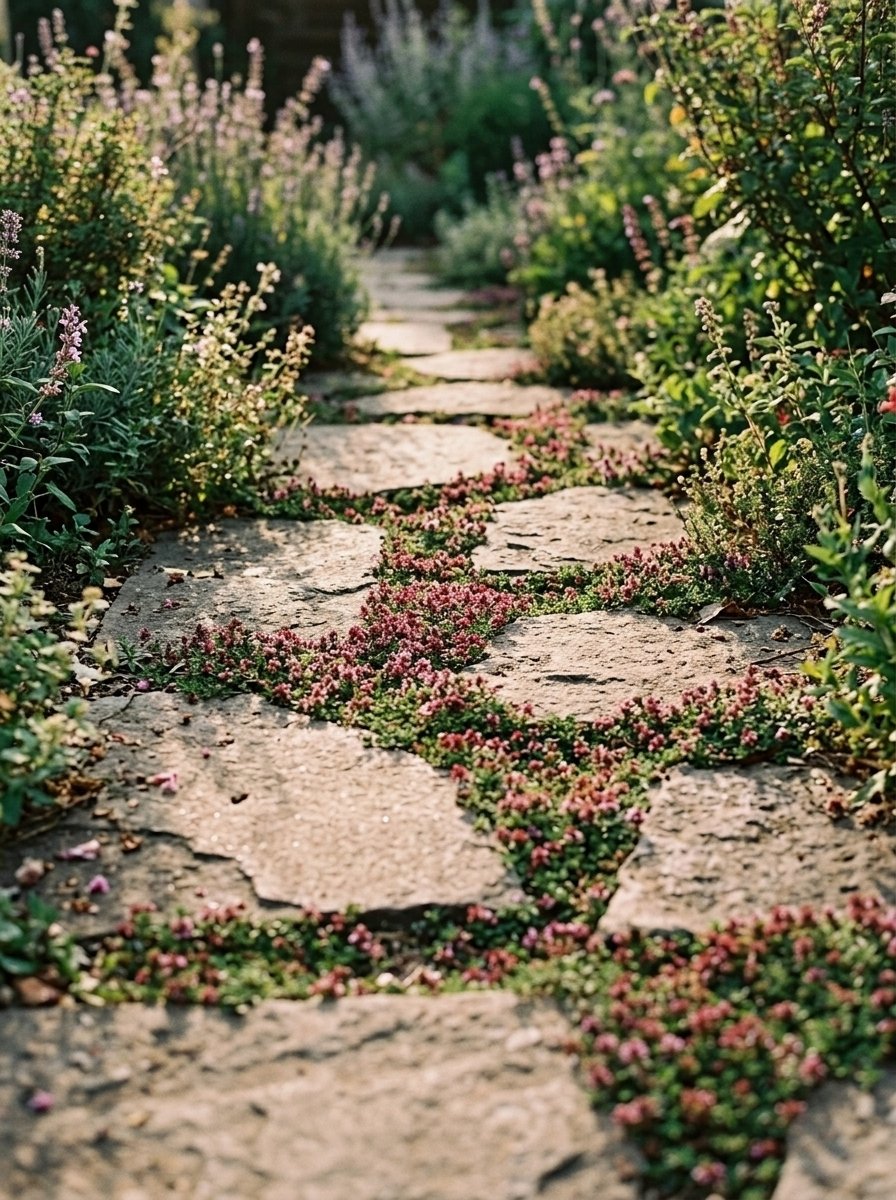
Many people search for red creeping thyme in Colorado, and it makes sense. The plant likes sun, dry air, and lean soil. Colorado also has many zones, so check yours before you buy. Front Range yards and mountain yards can be very different.
Use these tips:
- Fix clay soil. Add grit or gravel before planting.
- Plant in spring or early fall. This helps roots settle before extreme weather.
- Pick the sunniest spot. South and west exposures usually work best.
- Water deeply but rarely. Strong sun dries soil fast, but wet winter roots still cause trouble.
- Avoid winter pooling. Make sure water drains away from the crown.
If your zone is colder than the plant’s usual range, test a small patch first. Then expand after it survives a full winter.
Common Problems and Easy Fixes
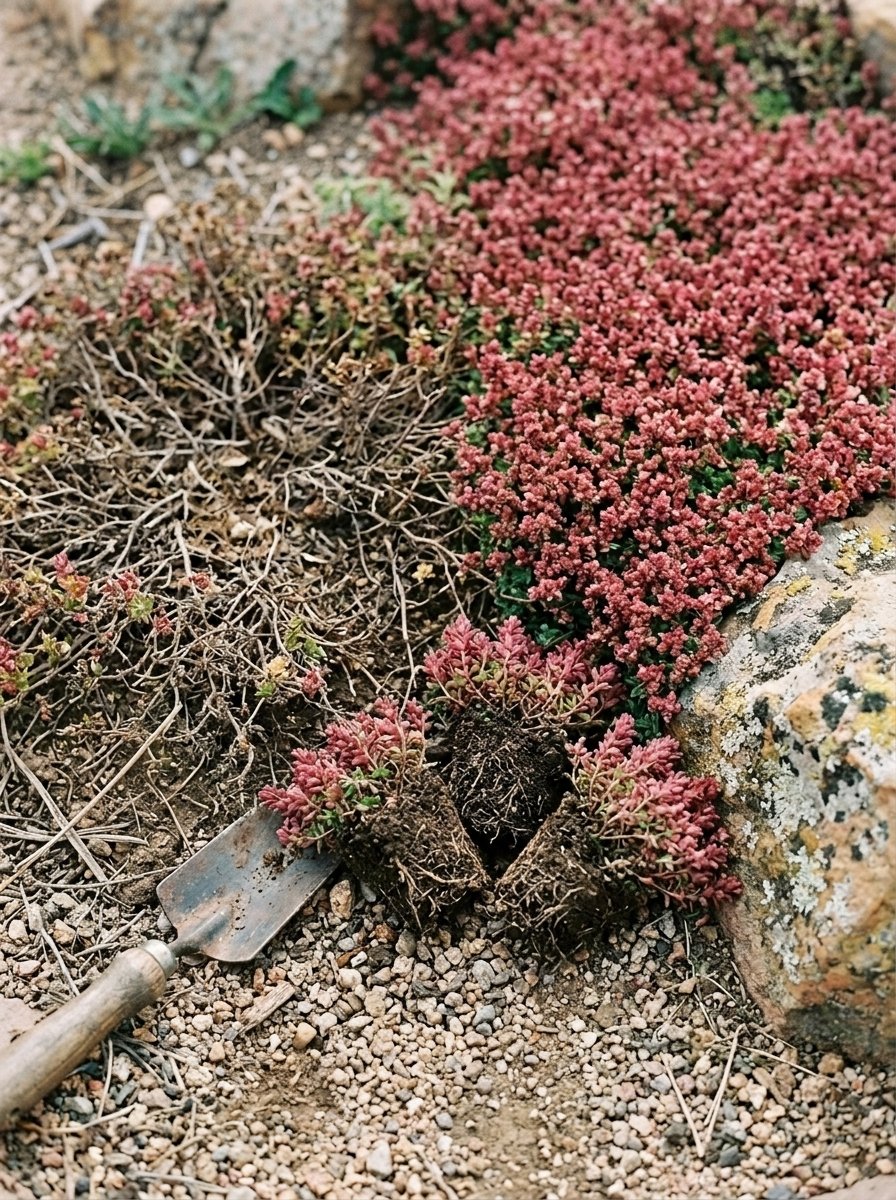
| Problem | Likely cause | Fix |
|---|---|---|
| Yellow or mushy plants | Too much water or poor drainage | Water less; add grit; improve drainage |
| Few flowers | Too much shade or too much fertilizer | Move to more sun; stop feeding |
| Leggy, woody stems | Age or no pruning | Trim after bloom; divide and replant |
| Bare patches | Foot traffic or aging plants | Replant divisions; reduce traffic |
| Tiny webbing and dull leaves | Spider mites in hot, dry weather | Spray plants with water; trim affected growth |
| Weeds taking over | Young planting | Hand-pull early; add gravel mulch |
Overall, red creeping thyme is generally pest and disease resistant. Most problems come from the wrong site, not from bugs.
Best Companion Plants for Red Creeping Thyme
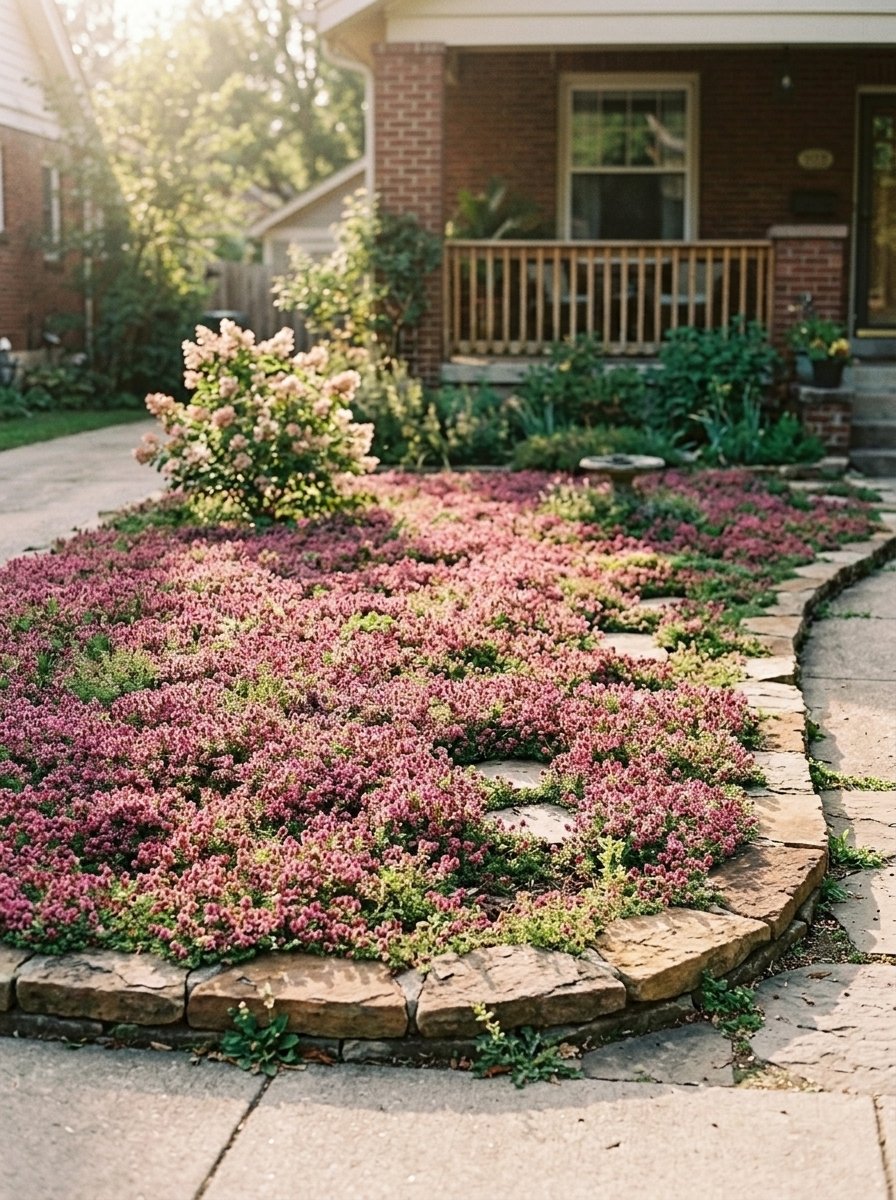
Pair it with plants that share the same sun and dry-soil needs:
- Sedum
- Lavender
- Yarrow
- Ornamental grasses
- Dianthus
- Russian sage
This mix gives you layers of color, texture, and bloom time with very little watering.
Creative Ways to Use Red Creeping Thyme
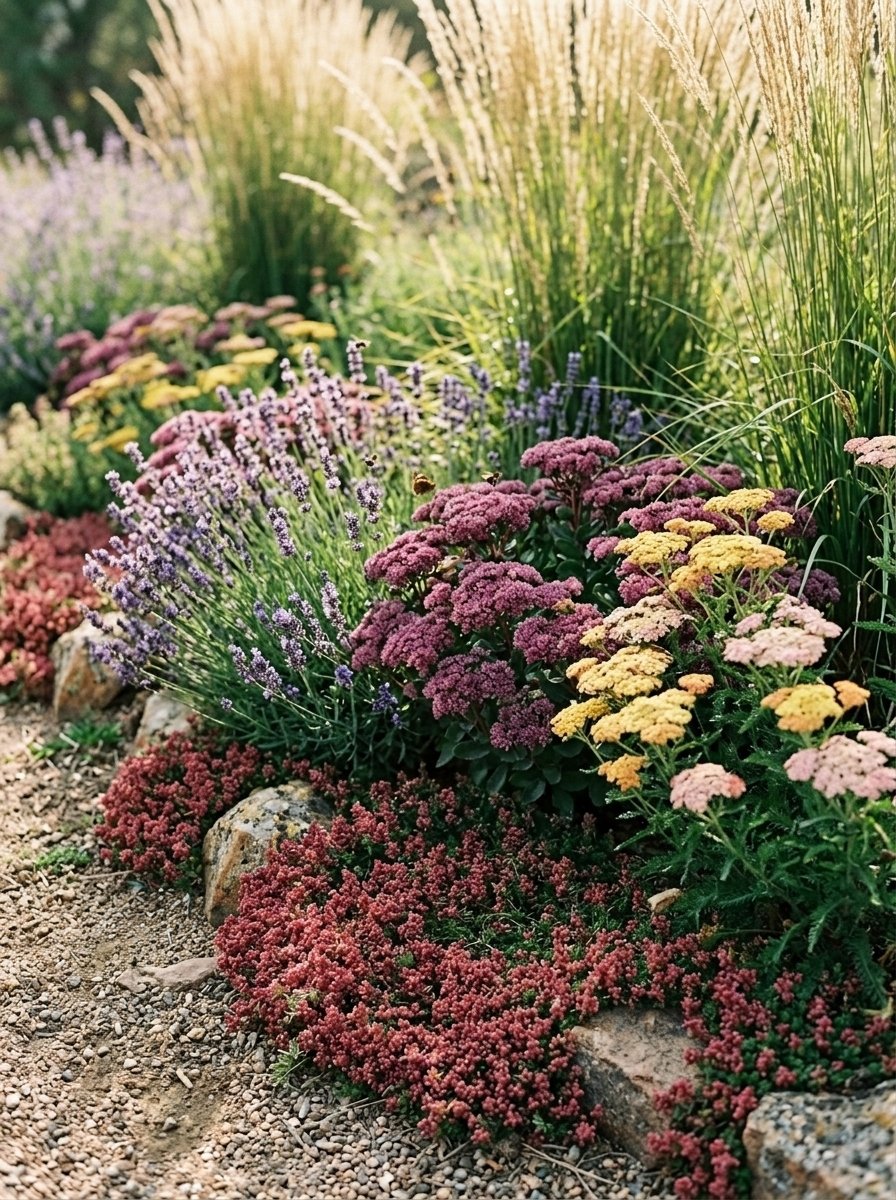
- Between stepping stones: It softens hard lines and smells wonderful underfoot.
- Rock gardens: It spills over stones in a natural, cascading way.
- Garden borders: It makes a neat, low edge along beds.
- Patio containers: It trails over the sides of terracotta pots.
- Slopes and banks: It covers sunny slopes and helps hold soil.
- Between pavers: Choose it for gaps that see light traffic.
Is Red Creeping Thyme Edible?
Creeping thymes are in the herb family, and some people use them in the kitchen. However, ornamental varieties often have a milder flavor than culinary thyme. If you plan to cook with it, confirm with the seller that the plant is suitable for eating. Also, avoid using plants that were sprayed with chemicals not meant for edibles.
Where to Buy Red Creeping Thyme
- Local nurseries: Staff can confirm the variety and suggest what grows well in your area.
- Garden centers: Many carry plugs and small pots in spring.
- Online plant shops: These suit larger areas and bulk plugs.
- Seed suppliers: Choose these only if you accept slower, less predictable results.
Buying Tips
- Check that the tag says ‘Coccineus’.
- Choose plants with healthy green leaves and no brown, mushy spots.
- Buy a few extra plants, since some may not survive year one.
- Compare plug size and price before you order a large quantity.
Frequently Asked Questions
Is red creeping thyme deer resistant?
Generally, yes. Deer usually avoid thyme because of its strong scent. Still, hungry deer may nibble almost anything, so no plant is completely deer-proof.
How fast does red creeping thyme spread?
It spreads at a steady, moderate pace. Most plantings need a full season or more to fill in. Closer spacing and full sun speed up coverage.
Can red creeping thyme grow in shade?
It prefers full sun. It can tolerate light, partial shade, but it often blooms less and grows thinner there.
Does red creeping thyme come back every year?
Yes, it is a perennial. In suitable zones, it returns each spring. Good drainage helps it survive winter.
Does red creeping thyme stay green in winter?
In warmer zones, it often stays evergreen. In colder zones, the mat may look thinner or bronze until spring.
Can I grow red creeping thyme in pots?
Yes. Use a pot with drainage holes and a gritty, fast-draining mix. Water only when the top inch of soil feels dry.
Is red creeping thyme invasive?
It spreads along the ground, but it is not usually considered aggressive. Rules vary by region, so ask your local extension office if you are unsure.
How long does a red creeping thyme lawn last?
It can last for years, but older plants may turn woody and patchy. Dividing and replanting every few years keeps it fresh.
Does red creeping thyme attract bees?
Yes. The flowers attract bees and other pollinators during bloom.
What is the difference between red and purple creeping thyme?
The main difference is flower color. Red creeping thyme has deep crimson-pink blooms, while purple types lean lavender or purple-pink. Growing needs are very similar.
Conclusion
Red creeping thyme gives you color, fragrance, and low-water beauty in one small plant. Give it full sun, lean and well-drained soil, and a light hand with water. Then plant it with patience and trim it after it blooms.
Start with a small sunny patch this season. Once it thrives, expand it along paths, borders, or slopes. Have you grown red creeping thyme before? Share your tips in the comments.