Your front yard is the first thing people see, and spring is the best time to improve it. The soil is workable, plants are waking up, and you still have a full growing season ahead. A few smart changes can lift your curb appeal without a huge budget or a designer.
This guide shares 30 beautiful front yard landscaping ideas for every style, from tidy modern beds to relaxed cottage borders. You’ll see what each idea looks like, which plants and materials make it work, and how much upkeep to expect. Along the way, you’ll find planning tips, a quick comparison table, and answers to common questions.
Plant choices depend on your climate, so check your USDA hardiness zone and your local nursery’s advice before buying anything.
Quick Answer: What Makes a Front Yard Look Great?
Most standout front yards follow the same five rules:
- Match your home’s style. A cottage looks best with soft, mixed beds. A modern house suits clean lines.
- Create layers. Use tall plants at the back, medium in the middle, and low ones in front.
- Guide the eye to the door. Use a clear path, lighting, and planting that frames the entrance.
- Repeat plants and colors. Repetition looks planned and calm.
- Choose plants that suit your site. Sun, shade, soil, and climate decide what thrives.
Get those five right and almost any layout will look good.
Front Yard Styles at a Glance
| Style | Look | Maintenance | Best For |
|---|---|---|---|
| Modern minimalist | Clean lines, few plants | Low | Contemporary homes |
| Cottage | Mixed flowers, soft paths | Medium to high | Older or small homes |
| Farmhouse | Evergreens, simple shapes | Low to medium | Farmhouse and ranch homes |
| Craftsman | Symmetry, structure | Medium | Craftsman and bungalow homes |
| Woodland | Shade plants, ferns, bulbs | Low | Shady lots |
| Drought-tolerant | Gravel, succulents, grasses | Very low | Dry climates |
| Pollinator garden | Native flowers | Low to medium | Eco-minded homeowners |
Use this as a starting point, then mix ideas to suit your home.
Before You Start: Plan Smart
A little planning prevents expensive mistakes.
- Check HOA and local rules. Some areas limit fence height, lawn removal, or plant types.
- Call before you dig. In the U.S., dial 811 to have underground utilities marked for free.
- Know your sun. Watch the yard through the day and note full sun, part shade, and full shade.
- Think about size at maturity. A cute shrub can swallow a window in three years. Read the plant tag.
- Keep sight lines clear. Don’t let plants block the view at driveways or street corners.
- Set a budget. Plan in phases if you need to. Start with the entrance and walkway.
1. Modern Yet Colorful Minimalism
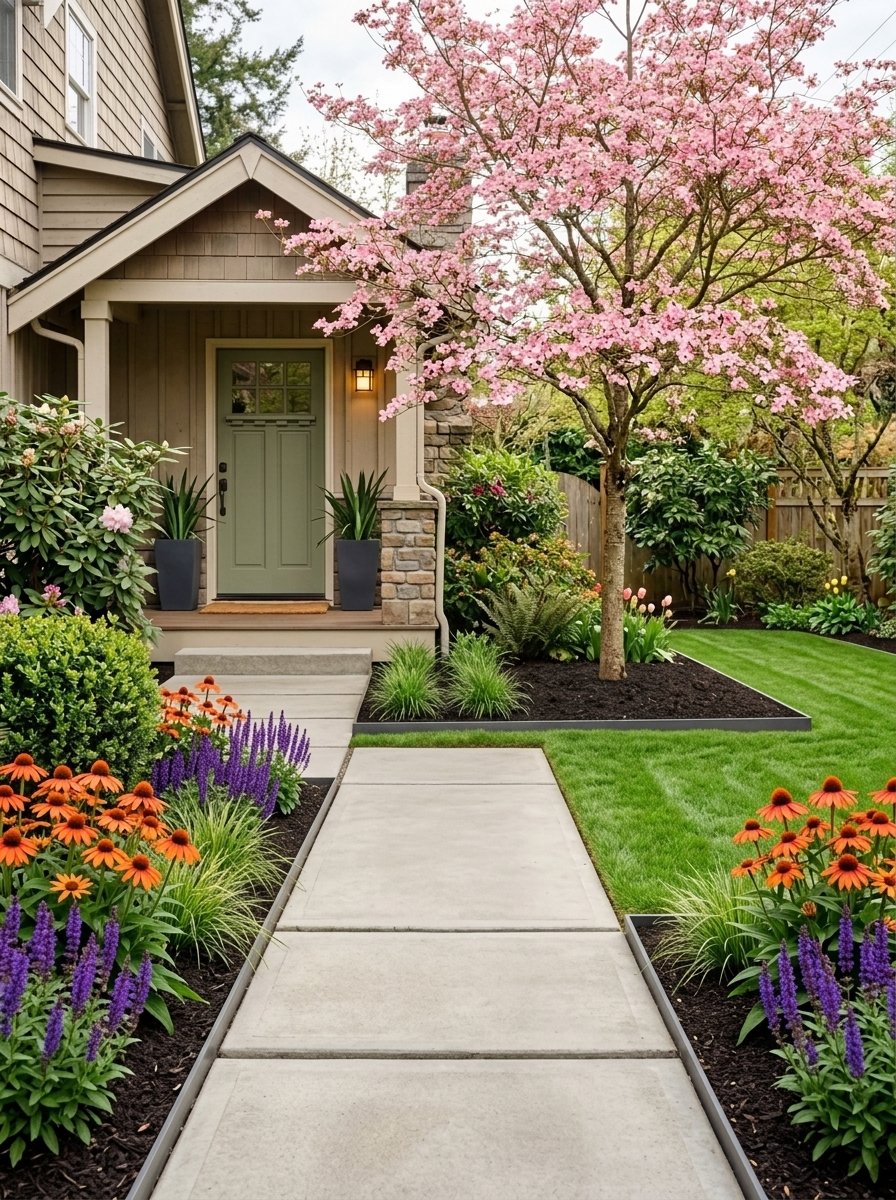
Minimalism doesn’t have to mean gray and boring. Pair clean lines with a few bold color hits for a front yard that feels fresh and current.
Start with simple geometry. Use a straight walkway, a crisp lawn edge, and rectangular planting beds. Then choose one or two vibrant plants and repeat them in drifts. Think orange coneflowers, purple salvia, or yellow black-eyed Susans against a backdrop of dark mulch and evergreen shrubs.
Keep it minimal:
- Limit your palette to three colors
- Use matching planters on either side of the door
- Choose a simple house number and modern lighting
Maintenance: Low to medium. Clean edges need a trim a few times each season, but fewer plants mean less work overall.
2. Cottage Style Curb Appeal
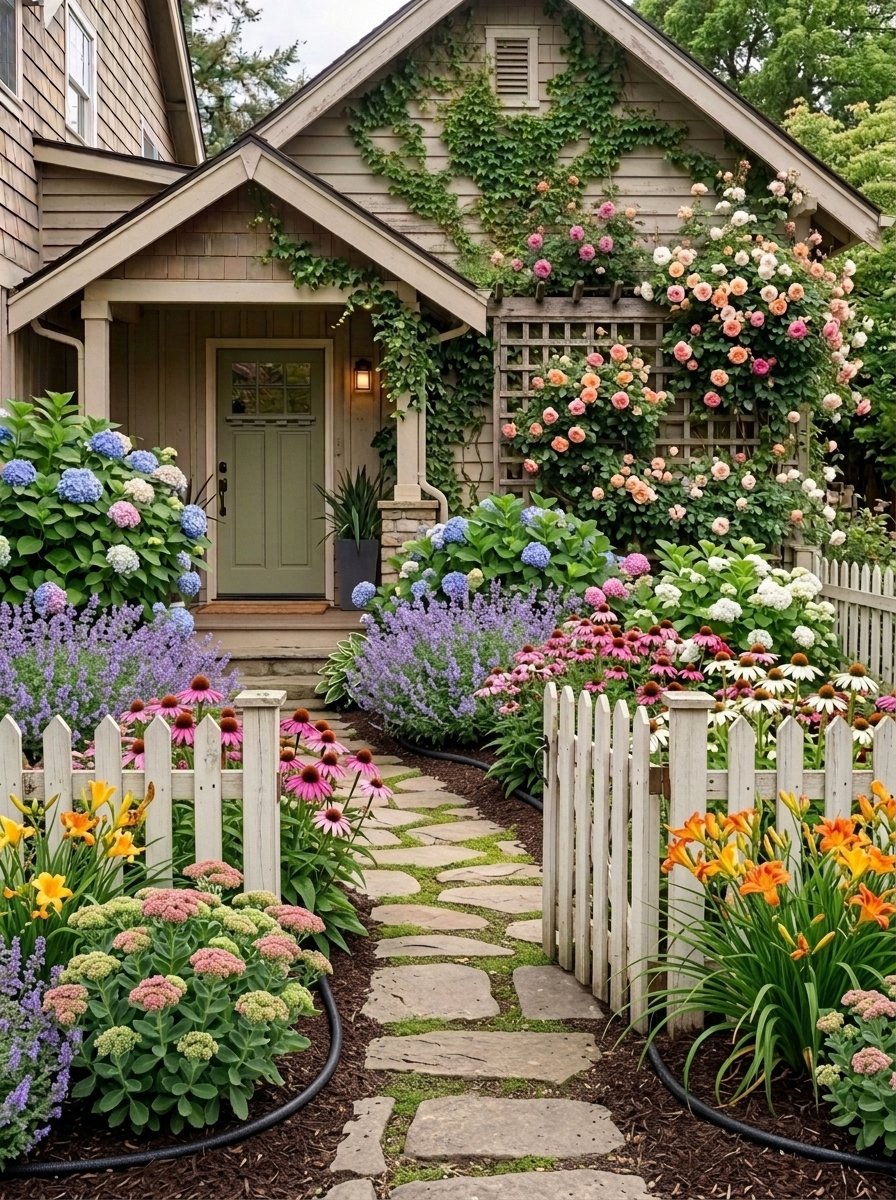
Cottage gardens feel warm, a bit wild, and full of life. They suit small homes, older houses, and anyone who loves flowers.
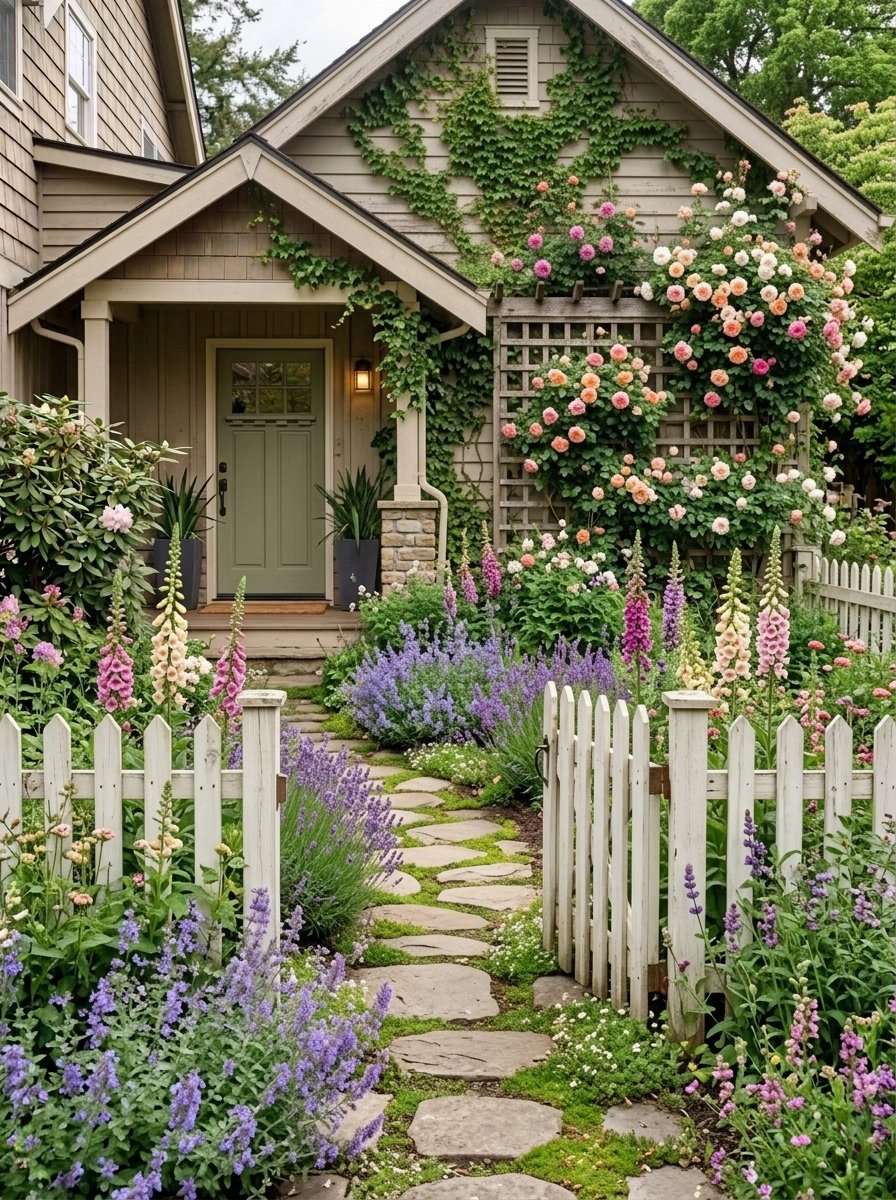
Build the look with loosely packed perennials and a winding path. Classic cottage plants include roses, delphinium, foxglove, peonies, lavender, and catmint. A low picket fence or a rustic arbor gives the garden structure.
Cottage essentials:
- A curved or stepping-stone path
- Climbing roses or clematis on a trellis
- Mixed heights and soft, overlapping colors
- A bench or birdbath as a focal point
Maintenance: Medium to high. Deadheading, staking, and dividing take time, but the payoff is a romantic, welcoming yard.
3. Layered Foundation Planting
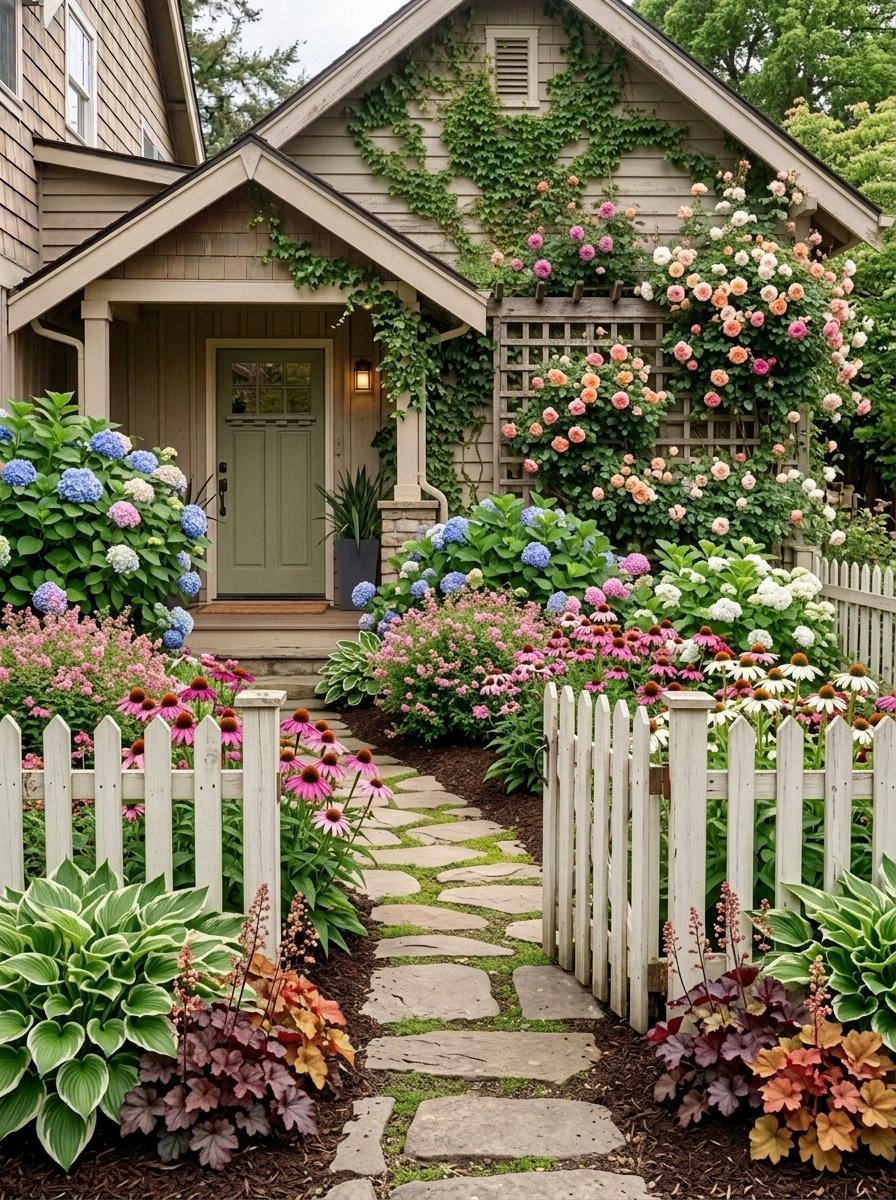
Foundation planting is the bed along the front of your house. When it’s layered well, it softens the walls and ties the house to the yard.
Use three levels:
- Back: Taller shrubs or small ornamental trees, like hydrangea or dwarf Japanese maple
- Middle: Medium shrubs or tall perennials, like spirea or coneflower
- Front: Low plants and groundcovers, like creeping thyme, hosta, or heuchera
Set shrubs far enough from the wall for air to move and for you to reach the siding. Leave room under windows so plants don’t grow over the glass.
Pro tip: Mix evergreens and deciduous plants so the bed looks good in every season.
4. Low-Maintenance Perennial Walkway
Perennials come back each year, which saves money and effort. A walkway edged with hardy perennials gives you color from spring through fall with minimal replanting.
Choose tough, long-blooming plants such as catmint, sedum, daylilies, coneflower, and salvia. Plant them in groups of three or five along both sides of the path for a rhythm that guides visitors to your door.
Make it easy:
- Add 2 to 3 inches of mulch to cut weeds and hold moisture
- Install drip irrigation or a soaker hose
- Pick plants that don’t flop onto the walkway
Maintenance: Low. Cut back in late winter or early spring and divide crowded clumps every few years.
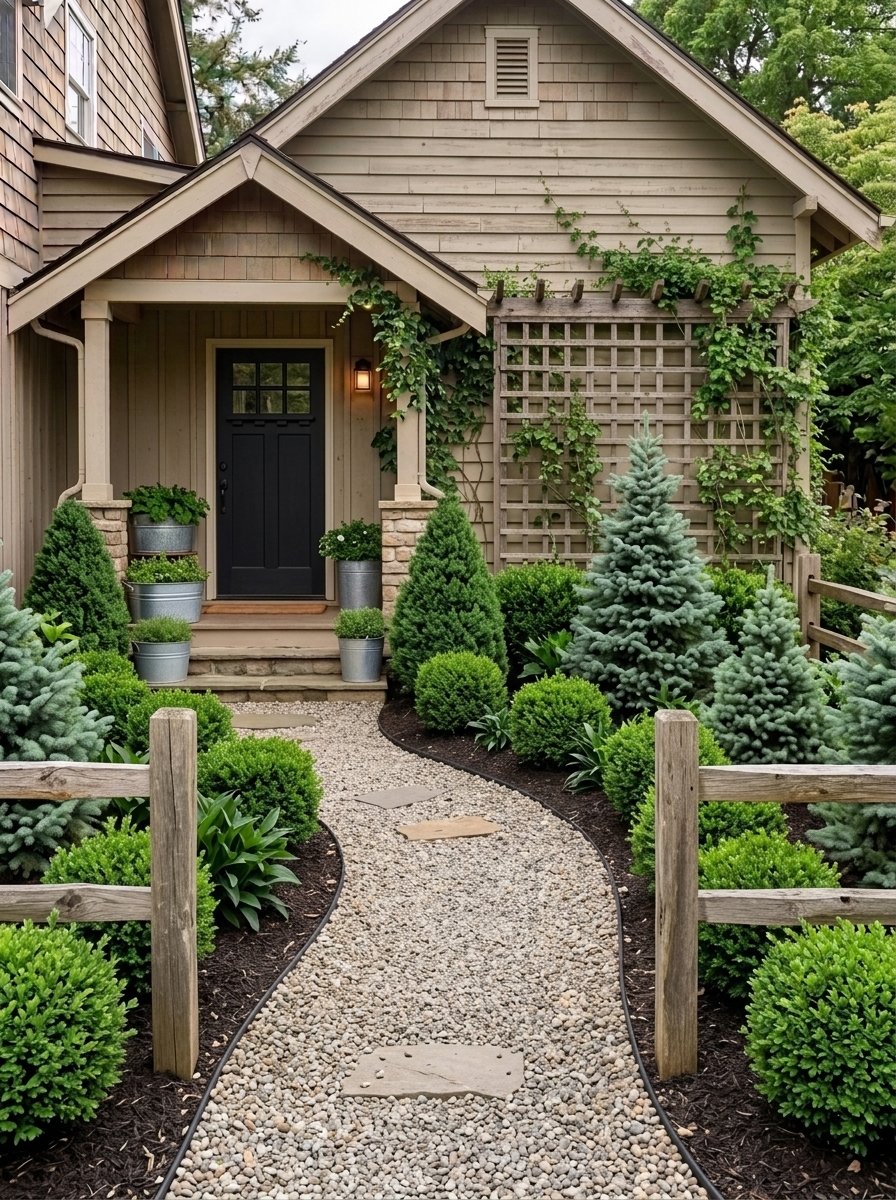
5. An Evergreen Farmhouse Front Yard
Farmhouse style is practical, simple, and calm. Evergreens give the yard structure all year, so it still looks good in winter.
Use boxwood, dwarf spruce, juniper, or arborvitae in simple shapes. Add a gravel or stone path, a white or black front door, and a few pots with seasonal color. A split-rail or picket fence adds a country touch.
Farmhouse touches:
- Wooden planters or galvanized tubs
- A porch swing or rocking chairs
- Lantern-style lights near the door
Maintenance: Low to medium. Evergreens need little more than occasional shaping and watering during dry spells.
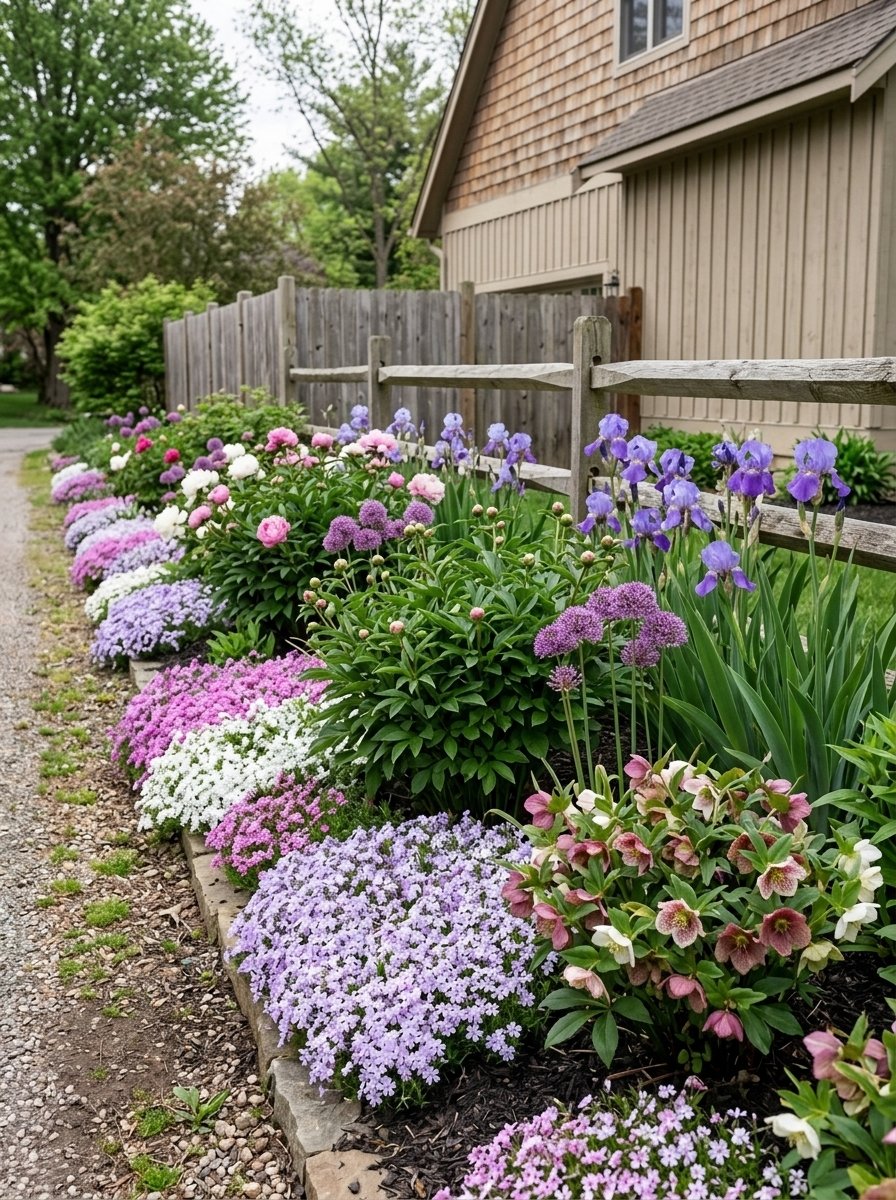
6. Colorful Perennial Border
A perennial border is a long, narrow bed that frames the yard along a fence, driveway, or sidewalk. It gives you a lot of color in a small amount of space.
Plan for bloom times so something is flowering from spring to fall. For example:
| Season | Plant Ideas |
|---|---|
| Early spring | Hellebore, creeping phlox, daffodils |
| Late spring | Peony, iris, alliums |
| Summer | Coneflower, bee balm, daylily |
| Fall | Sedum, aster, ornamental grasses |
Place taller plants at the back and shorter ones at the front. Repeat a few key plants along the length so the border feels unified.
Maintenance: Medium. Weed regularly and deadhead to extend blooms.
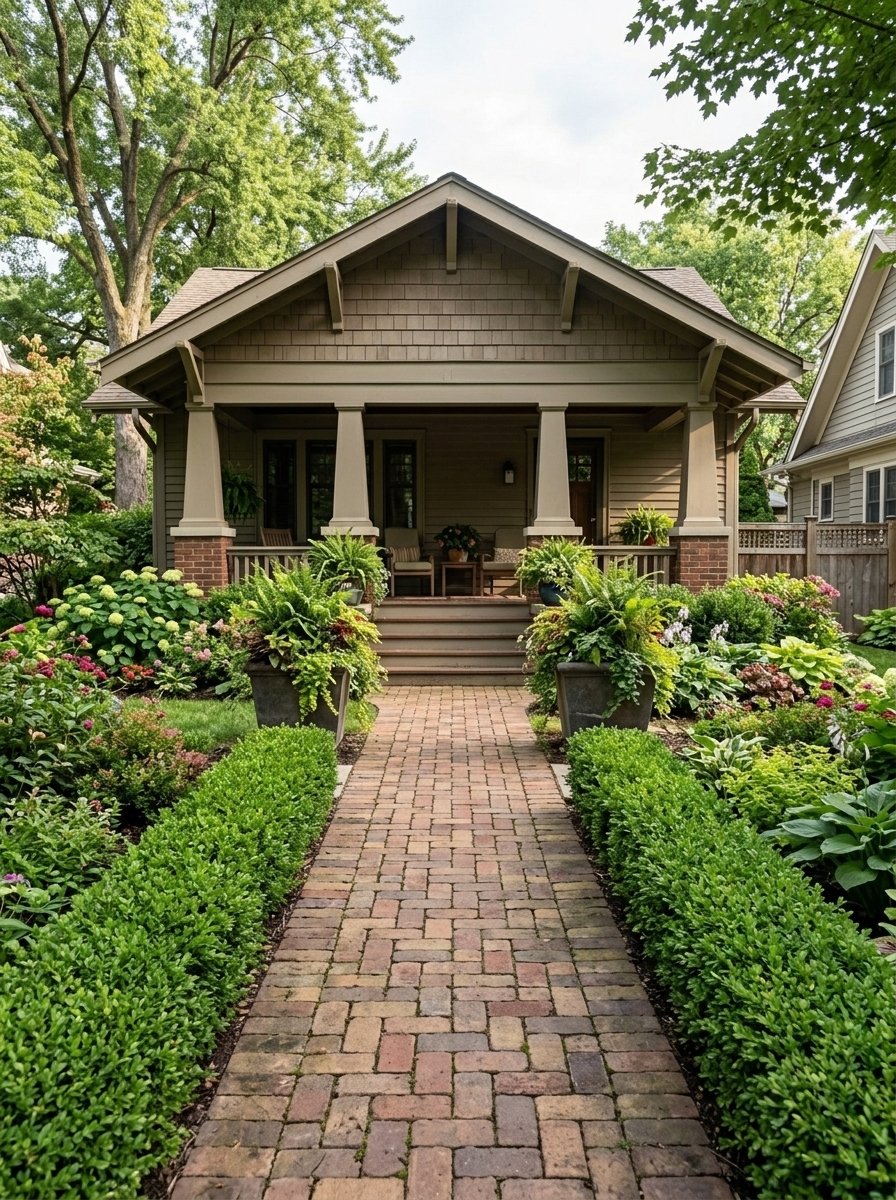
7. Symmetrical Craftsman Front Yard
Craftsman and bungalow homes look best with balanced, tidy landscaping. Symmetry reflects the architecture and feels welcoming and stable.
Mirror plantings on either side of the walkway. Use matching shrubs, like boxwood or dwarf holly, and repeat flowers in the same pattern. Add square or rectangular planters flanking the porch steps.
Design details:
- A straight path with brick or stone pavers
- Low hedges that frame the porch
- Natural materials like wood, stone, and brick
- Warm, earthy colors in the plants and mulch
Maintenance: Medium. Formal shapes need regular trimming to stay crisp.
8. A Front Yard Sculpture Garden
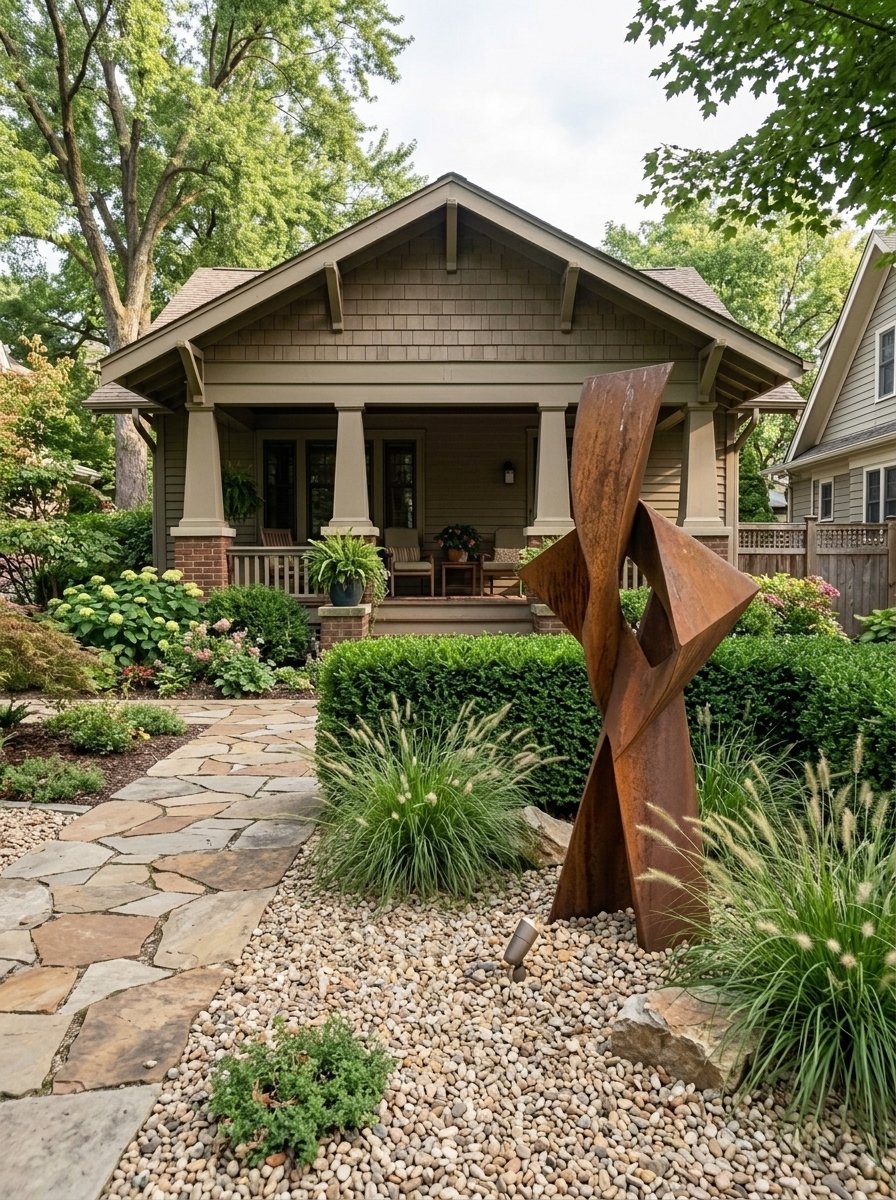
If you love art, turn your front yard into an outdoor gallery. A few well-chosen sculptures add personality and a focal point.
Pick a piece that suits the scale of your yard. A single large sculpture can look stronger than many small ones. Set it against a simple backdrop, like a clipped hedge, gravel bed, or a row of ornamental grasses, so it stands out.
Tips:
- Light the sculpture at night with a small uplight
- Use weather-resistant materials like metal, stone, or concrete
- Leave open space around it so it can breathe
You can find affordable pieces at art fairs, salvage yards, and local studios. Check your HOA rules first, since some neighborhoods limit yard art.
9. Low-Maintenance Hosta Bed
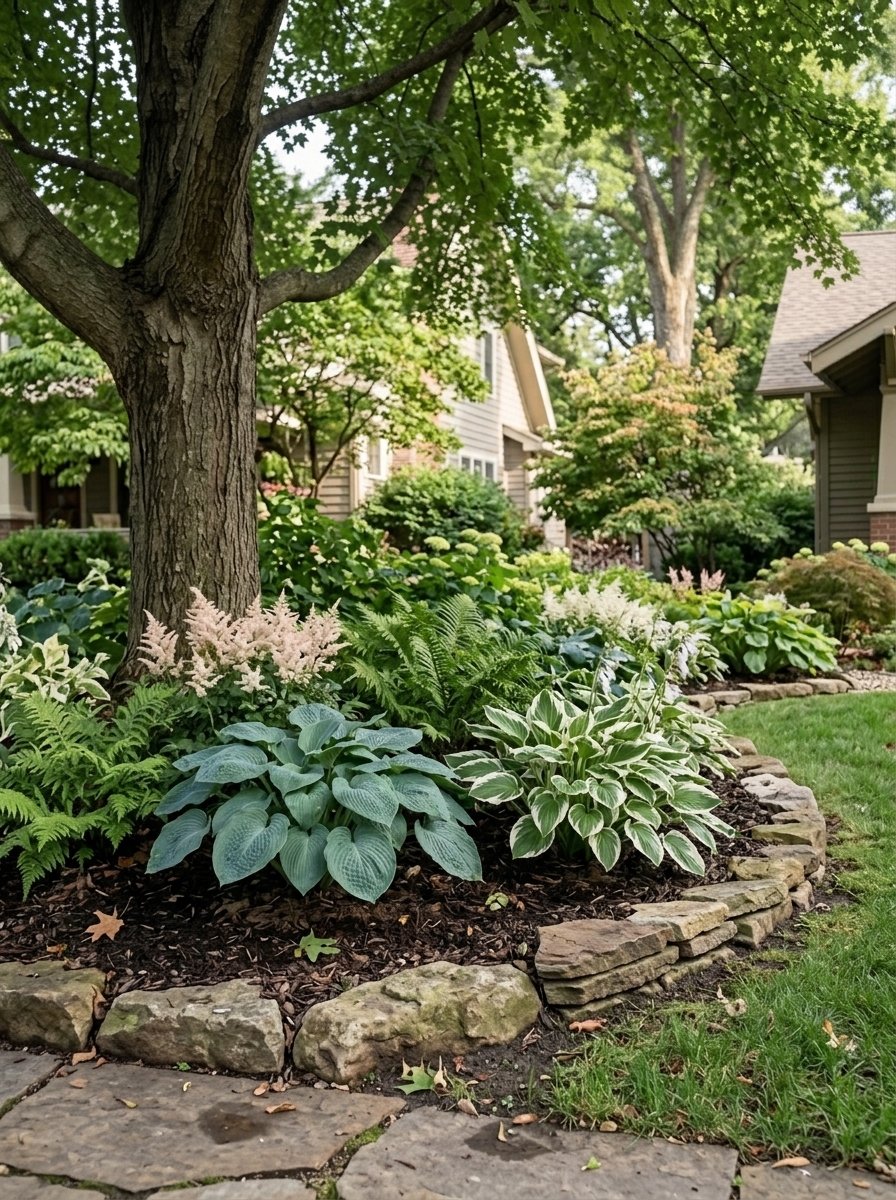
Hostas are among the easiest shade plants you can grow. They come in dozens of sizes and leaf colors, from deep blue-green to creamy variegated, and they return reliably every spring.
Plant a mix of large and small hostas under a tree or along the shady side of the house. Pair them with ferns, astilbe, or heuchera for contrast in shape and color.
Care notes:
- Plant in part to full shade with rich, moist soil
- Mulch to hold moisture
- Watch for slugs and snails, which love hosta leaves
- Deer also eat hostas, so use a deterrent if they’re common in your area
Maintenance: Low. Cut back faded foliage in fall or spring and divide clumps every few years.
10. Spring Bulb Garden
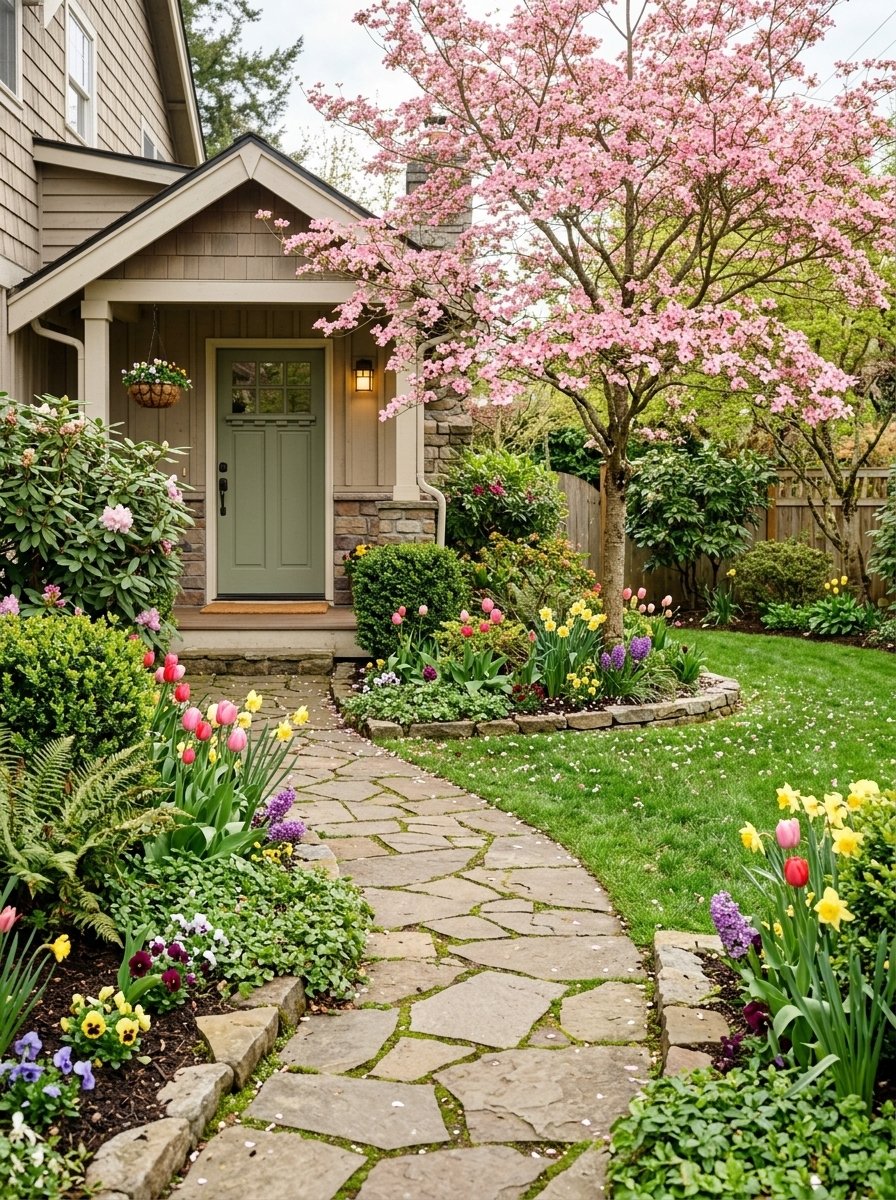
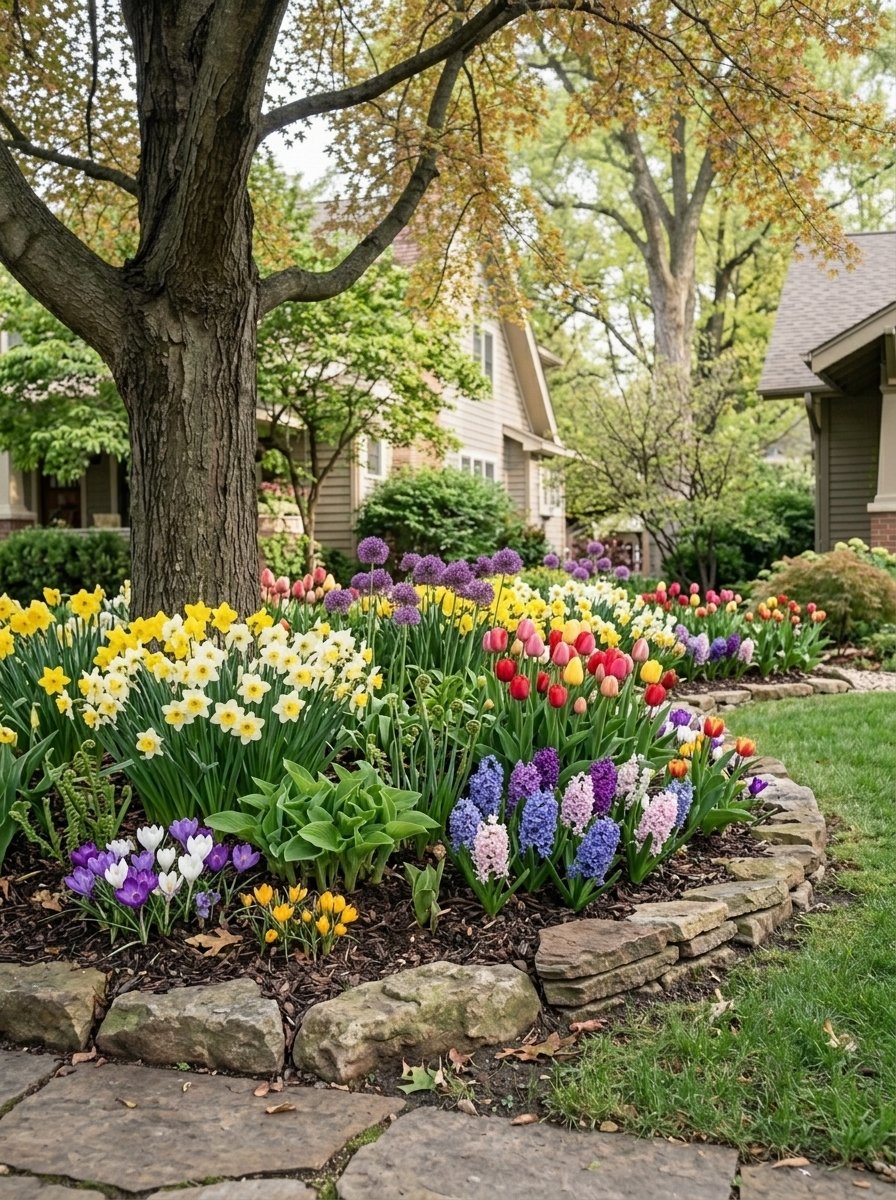
Nothing says spring like a yard full of blooming bulbs. Daffodils, tulips, crocuses, hyacinths, and alliums add bright color just when the garden needs it.
Bulbs are planted in fall, so this is a plan-ahead idea. If you’re reading this in spring, take notes and photos now. Mark where the gaps are and plant bulbs in autumn for next year’s show.
Planting tips:
- Plant in drifts of 10 or more, not single rows
- Layer bulbs that bloom at different times for a longer display
- Place perennials like hostas or daylilies nearby, so their growing leaves hide the fading bulb foliage
- Choose daffodils if rodents or deer are a problem, since they tend to avoid them
Maintenance: Low. Let the leaves die back naturally so the bulbs can store energy for next year.
11. A Simple, Classic Front Yard
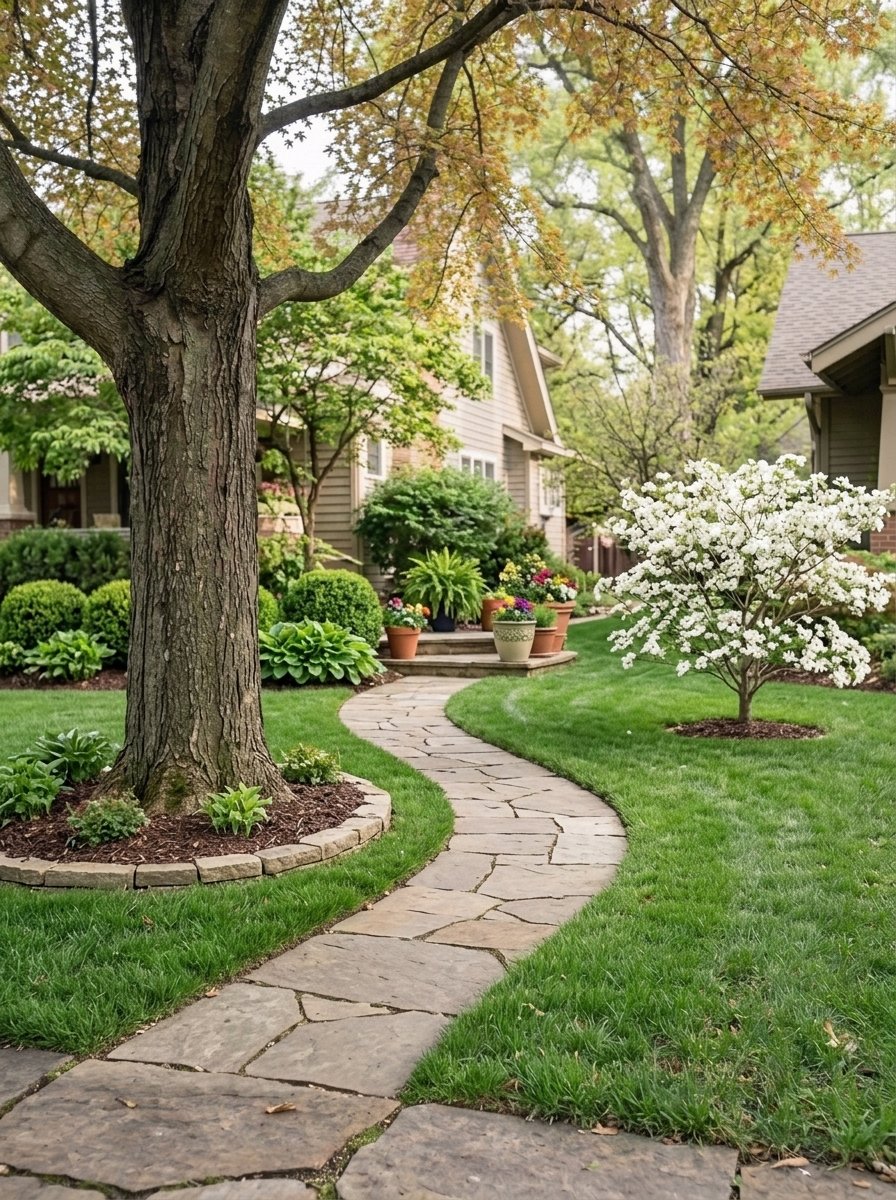
Not every front yard needs a big design. A simple, classic yard often looks the most polished.
Start with a healthy lawn, neat edging, a clear path, and a few foundation shrubs. Add a small ornamental tree, such as a dogwood or crabapple, for spring flowers. Finish with potted plants by the door.
The classic formula:
- Lawn or groundcover for open space
- Clean mulch beds with crisp edges
- Two or three plant types, repeated
- A well-kept walkway and lighting
The key is consistency. A simple yard that is trimmed and tidy beats a complicated one that’s overgrown.
Maintenance: Medium. Mowing, edging, and seasonal pruning keep it sharp.
12. Colorful Woodland Blooms
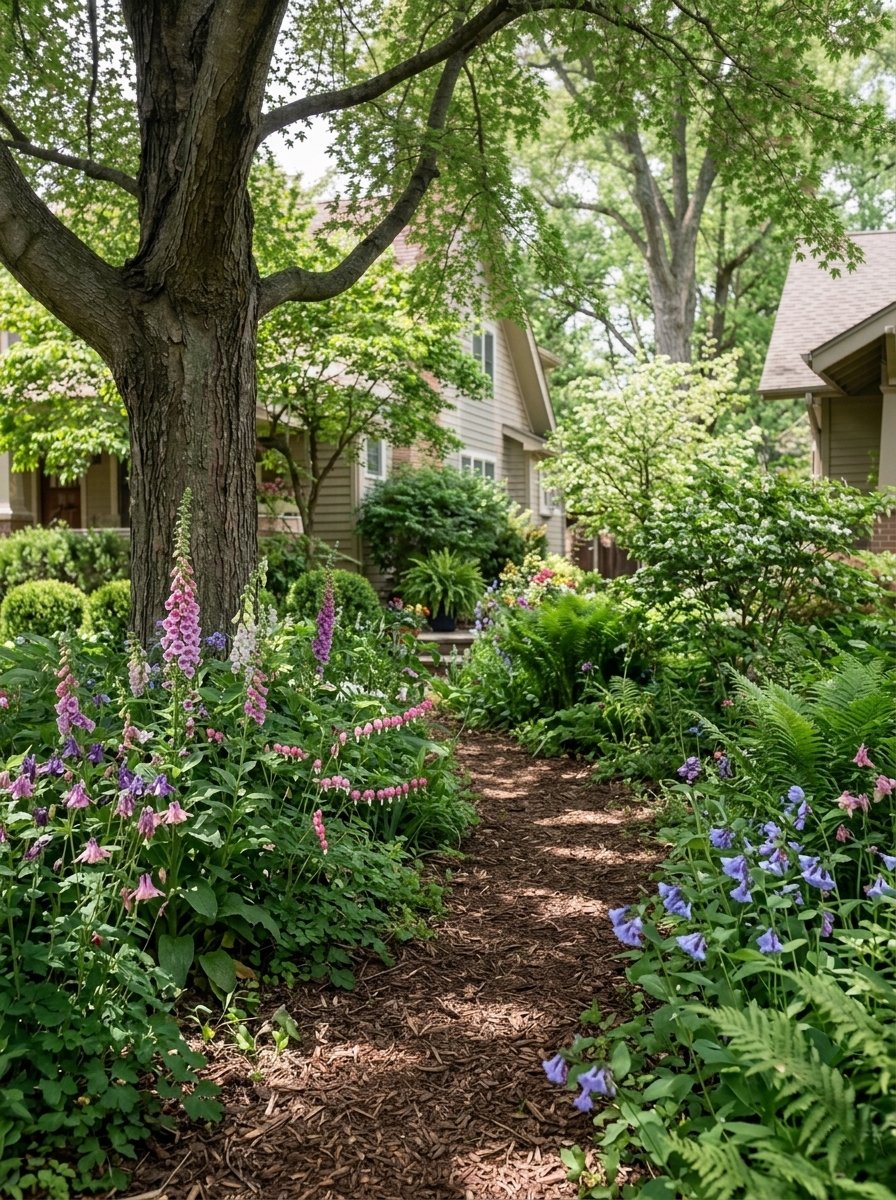
If your front yard has mature trees and dappled shade, lean into a woodland garden. It looks natural and needs less water than a sunny border.
Good woodland plants include foxglove, bleeding heart, columbine, Virginia bluebells, ferns, and trillium. In spring, they bloom beneath the tree canopy before the leaves fully fill in.
Create the look:
- Use a curved mulch path or stepping stones
- Plant in loose, irregular drifts
- Leave fallen leaves in garden beds as natural mulch where practical
Note: Avoid piling mulch against tree trunks. Keep a few inches clear to prevent rot and pests.
13. Japanese Water Feature
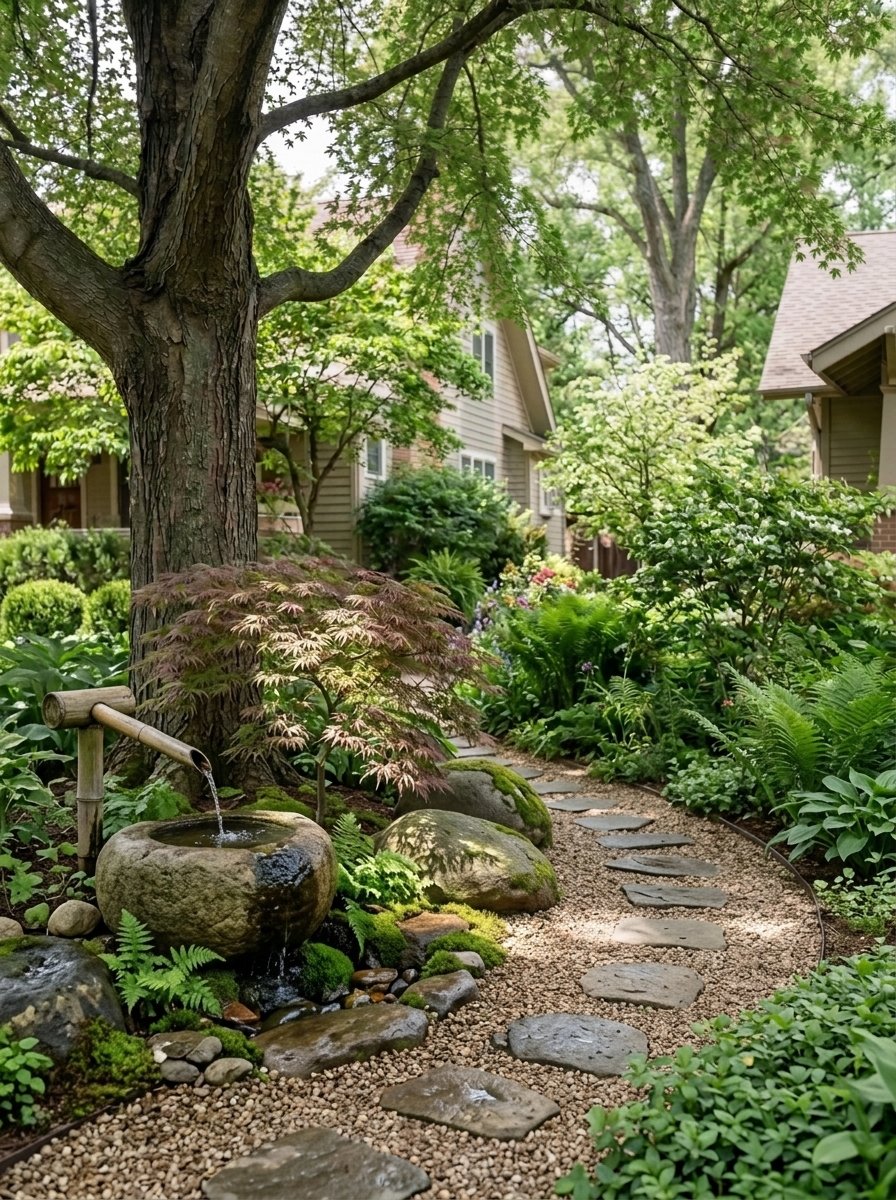
A small water feature adds sound, calm, and a sense of retreat. A Japanese-inspired design pairs water with stone, moss, and carefully placed plants.
The simplest version is a stone basin with a bamboo spout. Surround it with Japanese maples, dwarf conifers, mondo grass, and moss. Add a few smooth boulders and a gravel bed to complete the look.
Design ideas:
- A recirculating bamboo fountain near the entry
- A small stone lantern as a focal point
- A path of stepping stones through gravel
Good to know: Use a recirculating pump to save water, and keep the feature shallow and safely placed if children or pets visit. Check local rules for water features in front yards.
14. Eye-Catching Containers
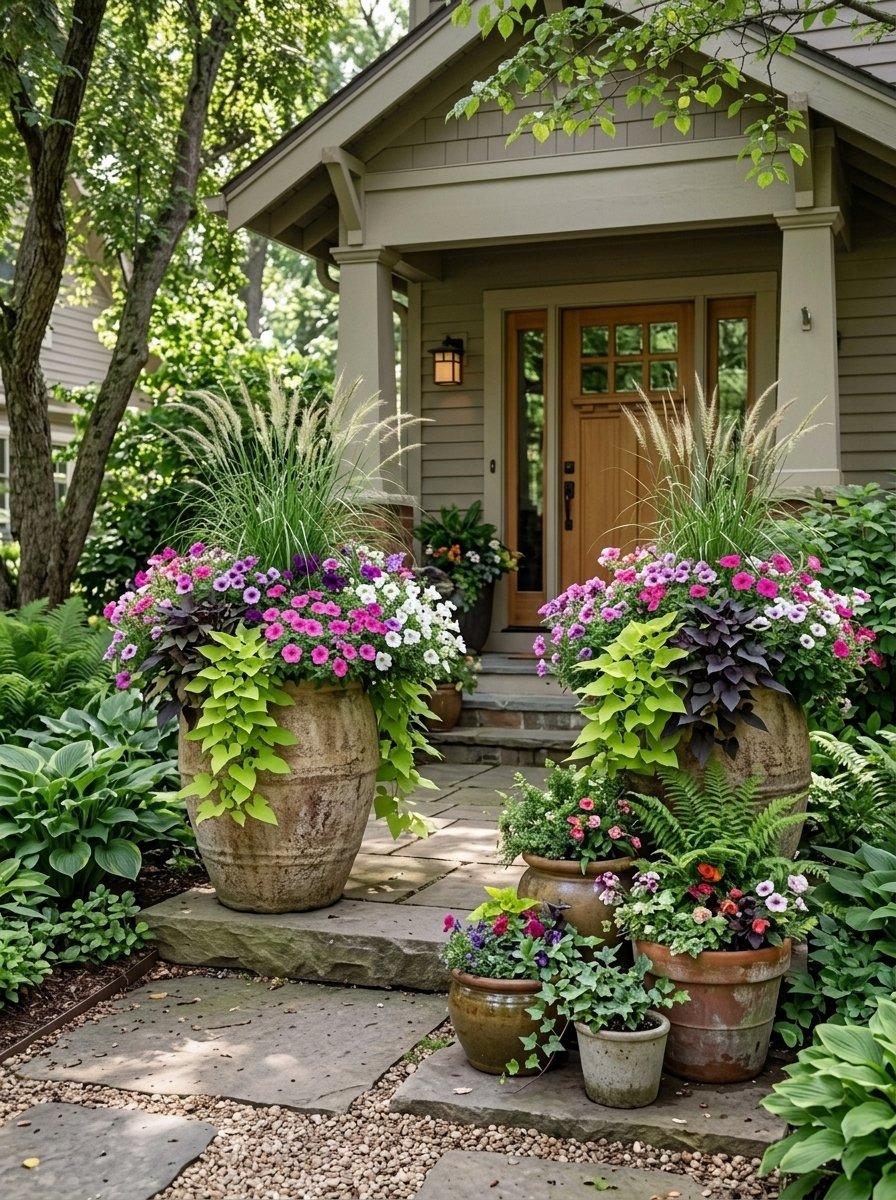
Containers are the fastest way to add color, and you can change them with each season. Place a pair of large pots by the door or cluster several in different sizes.
Use the “thriller, filler, spiller” formula for a full look:
- Thriller: a tall center plant, like a grass or canna
- Filler: mounding flowers, like petunias or geraniums
- Spiller: a trailing plant, like sweet potato vine or ivy
Container tips:
- Use pots with drainage holes
- Choose a high-quality potting mix, not garden soil
- Water often, since containers dry out fast
- Pick large pots, as small ones need constant watering
Maintenance: Medium. Watering and feeding are the main jobs.
15. Tropical-Style Window Boxes
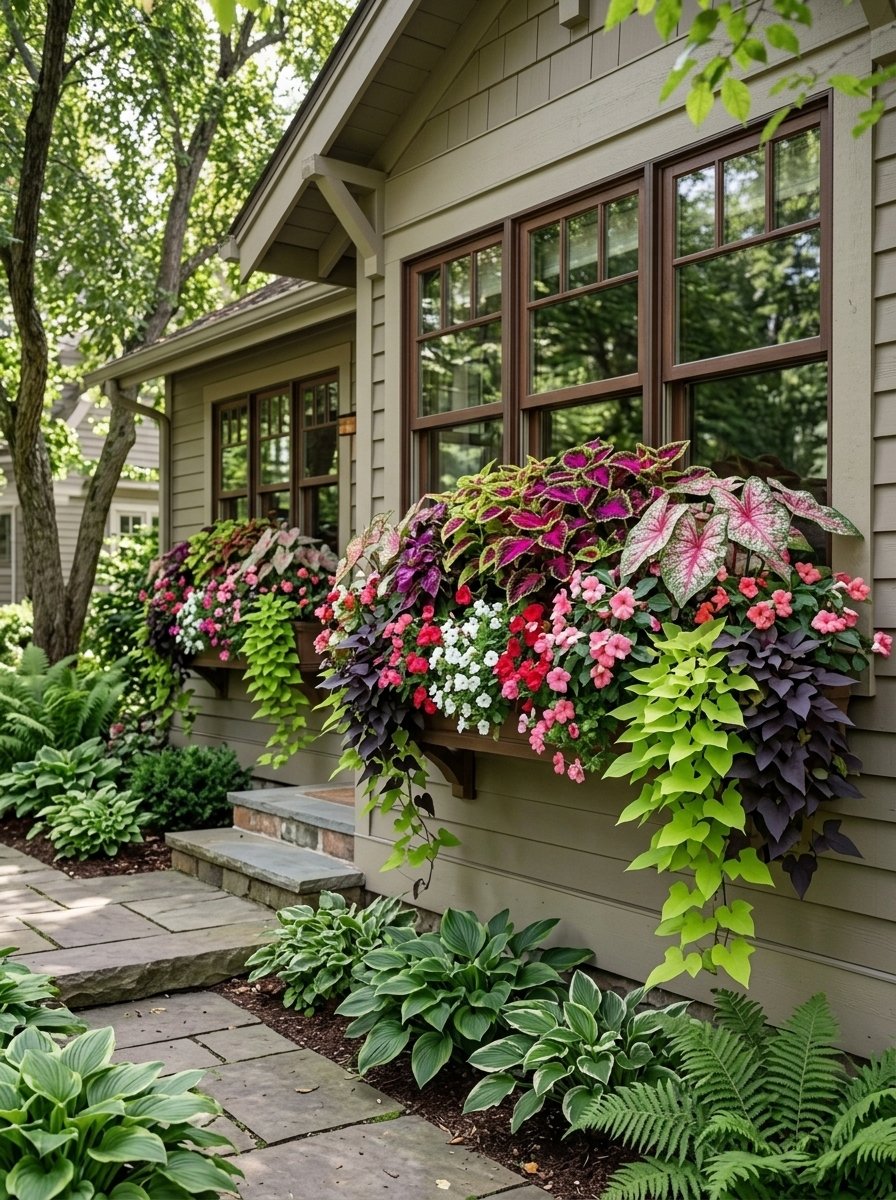
Window boxes bring color up to eye level and make small yards feel richer. A tropical mix of bold leaves and bright flowers makes them look lively all summer.
Try coleus, caladium, begonias, and trailing sweet potato vine. In warm climates, add elephant ear or canna lily for height. In cooler areas, treat tender tropical plants as annuals and replace them each year.
Install safely:
- Secure boxes firmly to the wall or sill
- Use lightweight potting mix to reduce weight
- Add a liner or drainage tray to protect siding
Maintenance: Medium. Water daily in heat and feed every couple of weeks.
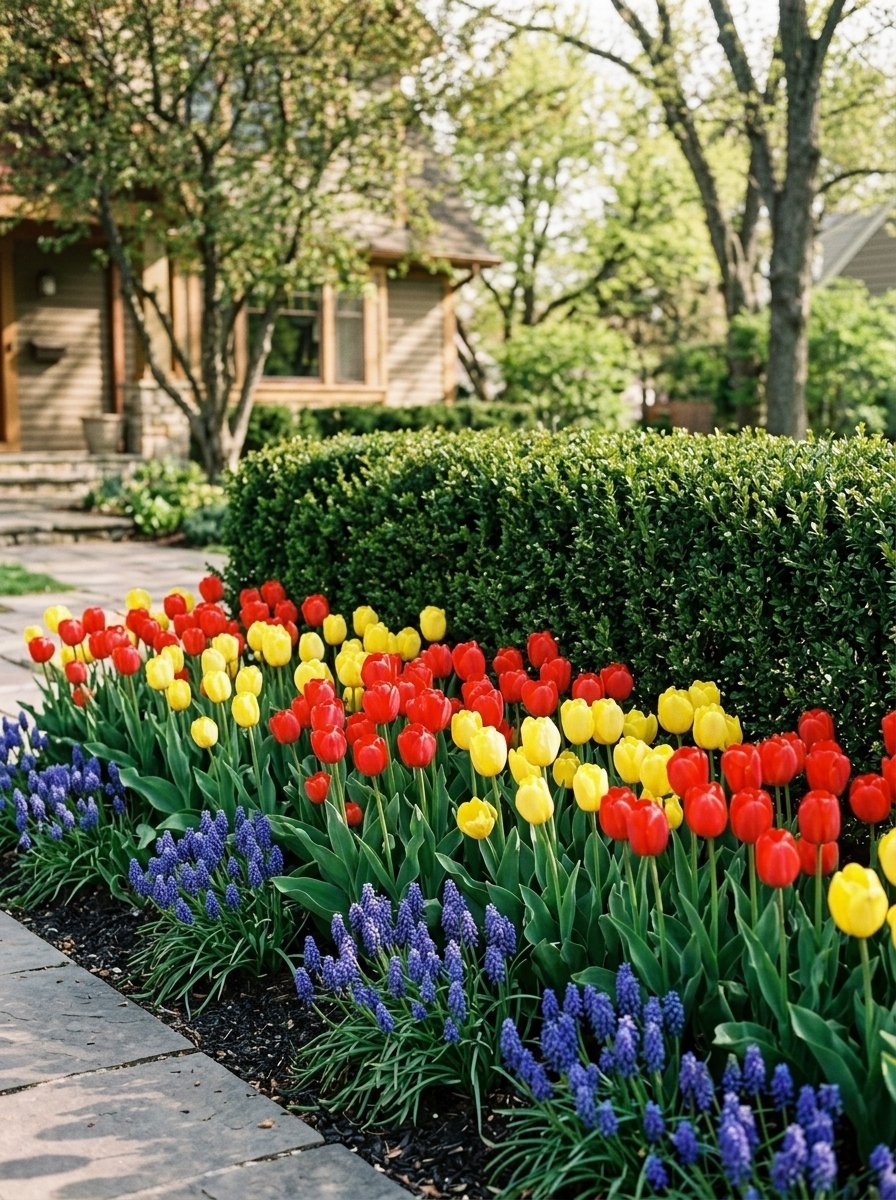
16. Classic Front Yard Tulip Garden
Tulips are a spring favorite for a reason. Their bold colors and clean shapes make a strong statement against evergreens or a stone wall.
Plant tulips in groups of the same color for the most impact. Red and yellow look cheerful, while white and pink feel soft and elegant. For a modern look, stick to a single color across a long bed.
Planting tips:
- Plant bulbs in fall, pointed end up
- Choose a sunny, well-drained spot
- Pair with grape hyacinth or forget-me-nots for a layered look
Good to know: Many tulips fade after a few years. Species tulips and Darwin hybrids usually return more reliably than fancy types.
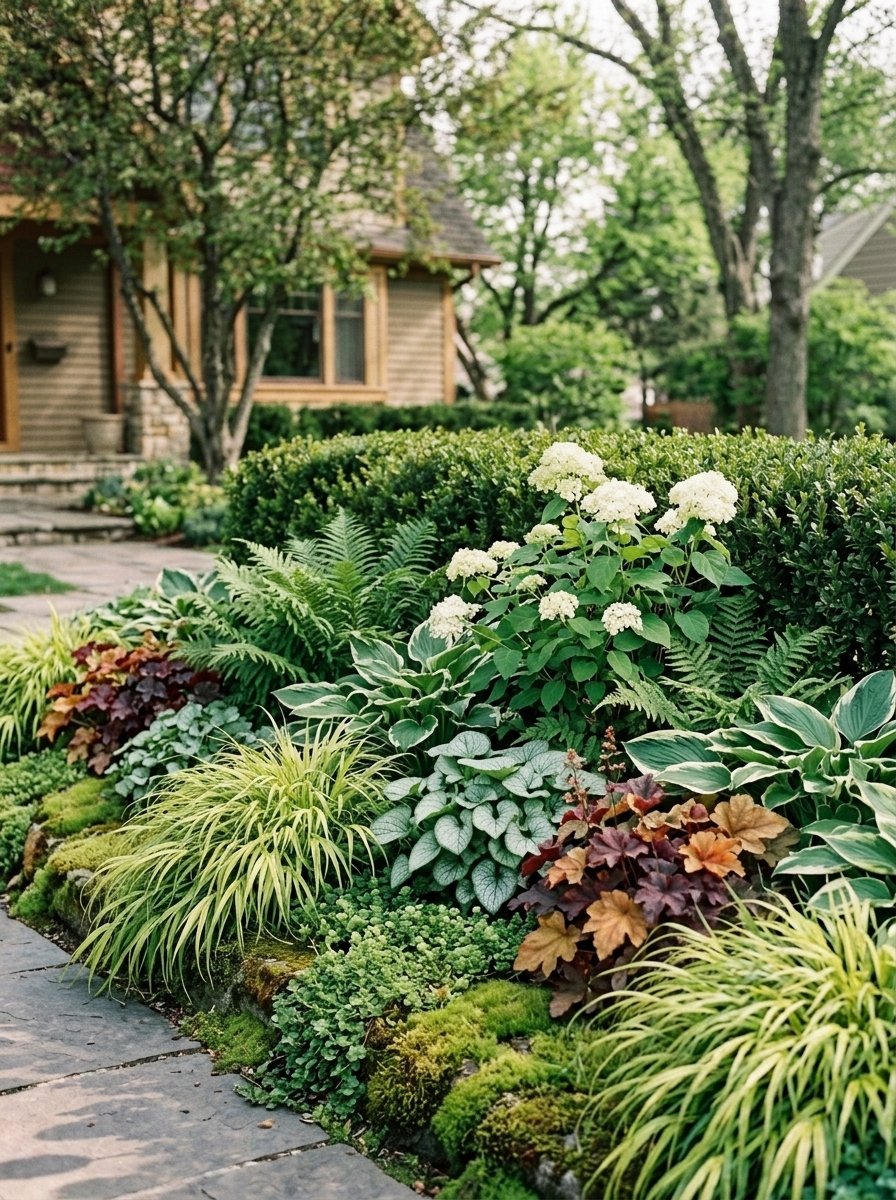
17. A Lush and Shady Yard
A shady front yard can be a gift. It’s cool, calm, and full of leafy texture.
Build layers of foliage in different shapes and shades. Use Japanese forest grass, ferns, hostas, brunnera, and coral bells. Add flowering shrubs like hydrangea or rhododendron where light permits.
Keep shade yards healthy:
- Prune lower tree branches to let in more light
- Choose moss or groundcover where grass struggles
- Improve soil with compost
Maintenance: Low to medium. Shade plants usually need less water than sun lovers, but they can be slow to fill in.
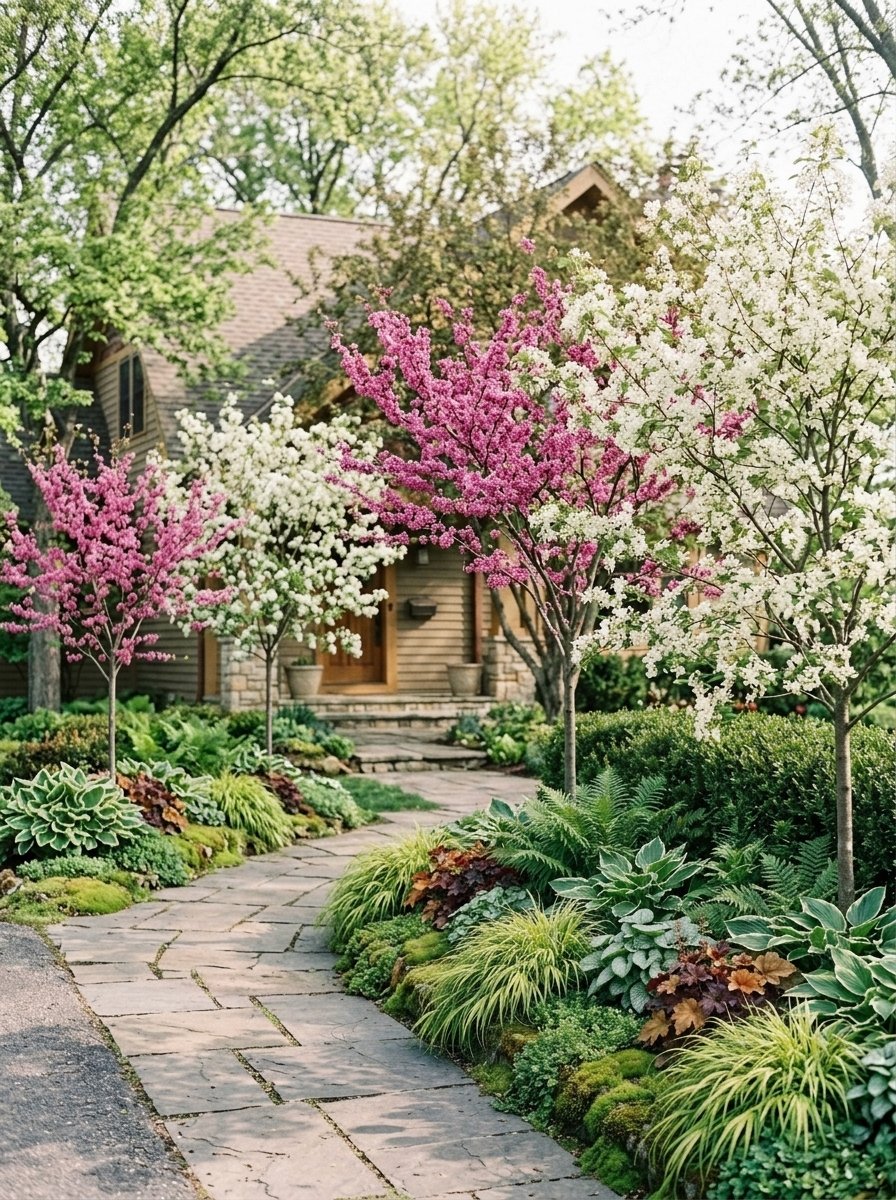
18. A Path of Small Trees
Small ornamental trees along a walkway create a welcoming tunnel and add height. They also give you flowers, fall color, or interesting bark.
Good choices include Japanese maple, serviceberry, dogwood, crabapple, and redbud. Space them evenly for a formal look, or stagger them for a relaxed feel.
Choose wisely:
- Check mature height and width before planting
- Keep roots away from foundations, sewer lines, and paving
- Choose trees suited to your hardiness zone
Maintenance: Low once established, but young trees need regular watering for the first couple of years.
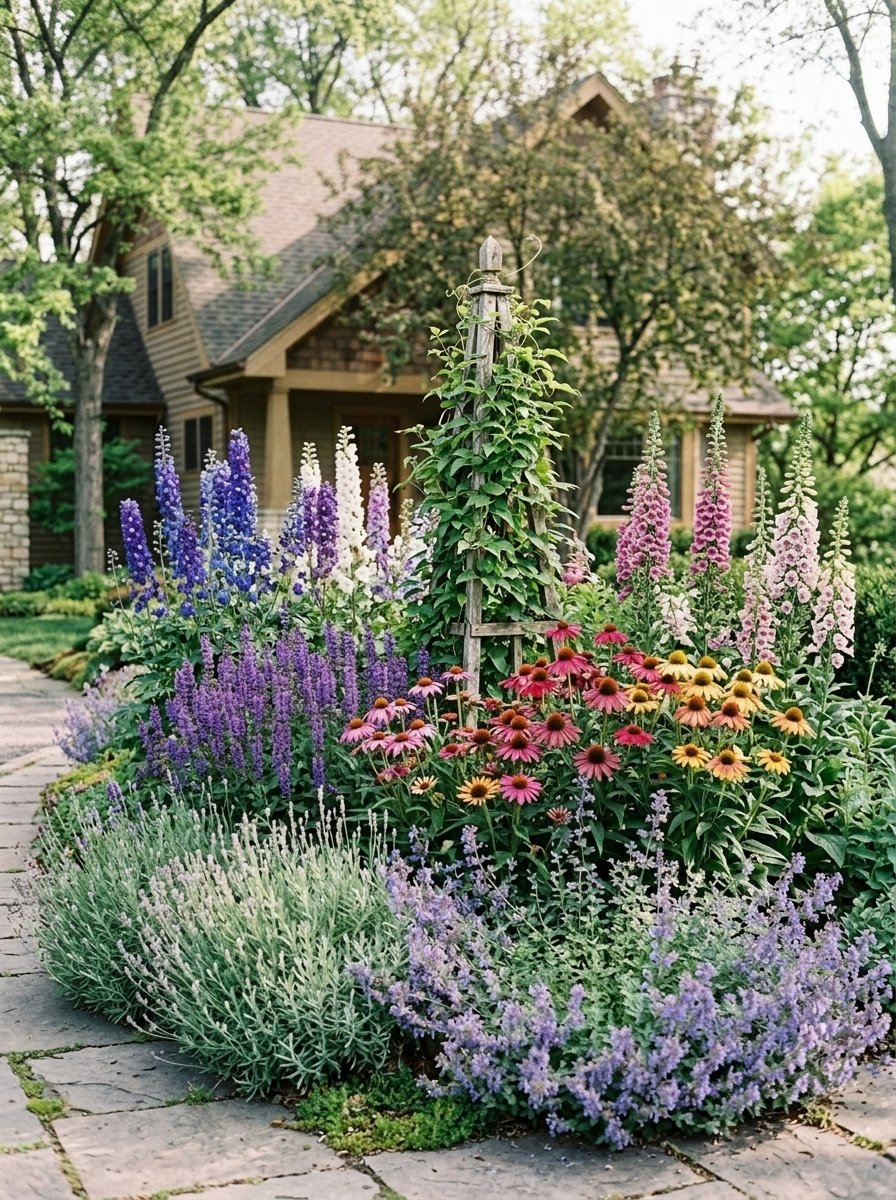
19. Colorful Heights
Vertical interest makes a small yard feel bigger and more layered. Combine plants with different heights so the eye moves up and across.
Use tall spires like delphinium or foxglove at the back. Add mid-height plants like salvia or coneflower in the middle. Finish with low mounds like lavender or catmint at the edge.
Height ideas:
- An obelisk or trellis with a climbing vine
- A tall ornamental grass as an accent
- A small tree with perennials beneath it
Repeat the same height pattern at both sides of the walkway for balance, or vary it for a more natural look.
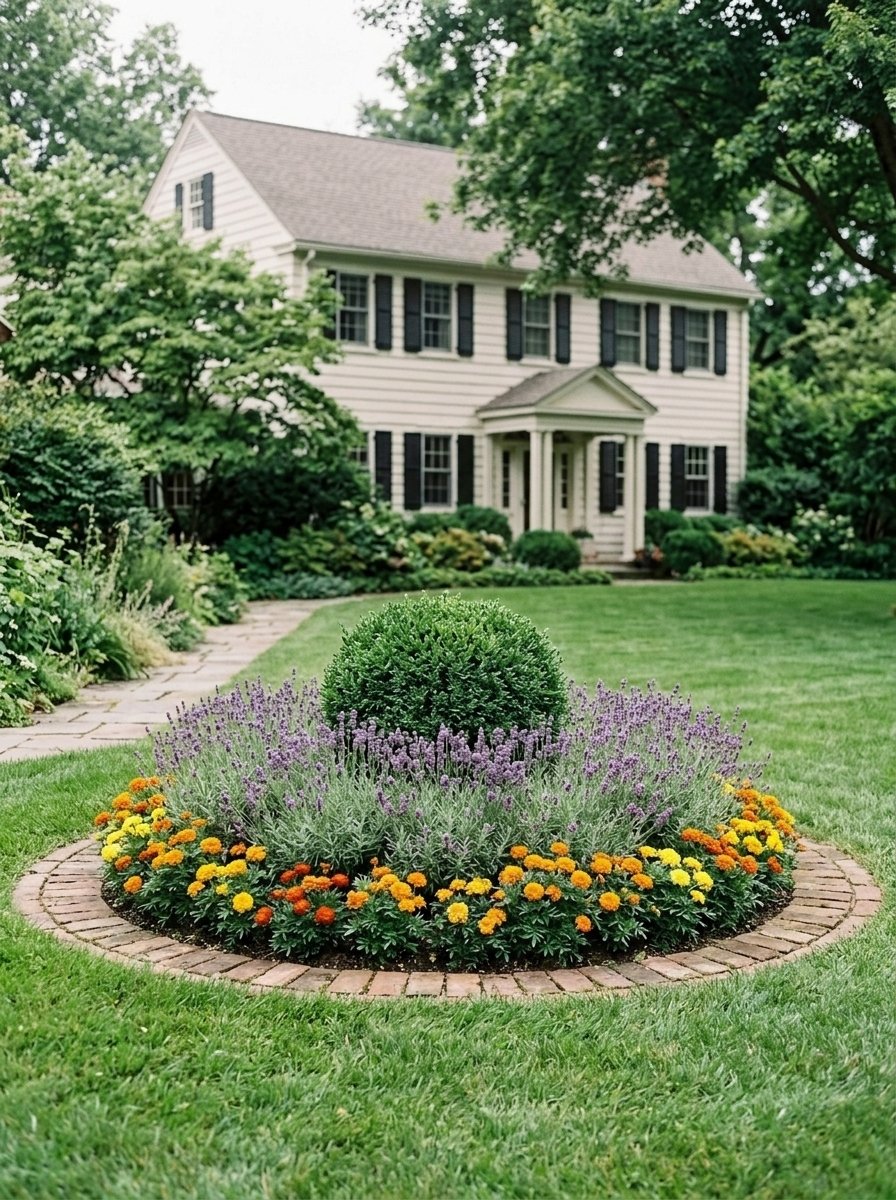
20. A Colonial s Round Flowerbed
A round flowerbed centered in the lawn is a classic feature of colonial-style homes. It gives you a bright focal point that’s visible from the street.
Place a small tree, tall grass, or decorative urn in the center. Surround it with a ring of low-growing flowers in a single color or two. Edge the bed with brick, stone, or steel for a tidy finish.
Plant ideas:
- Center: boxwood globe, ornamental grass, or a small standard rose
- Ring: marigolds, petunias, or lavender
- Edge: alyssum or creeping thyme
Maintenance: Medium. Round beds are easy to weed but need regular trimming at the edges.
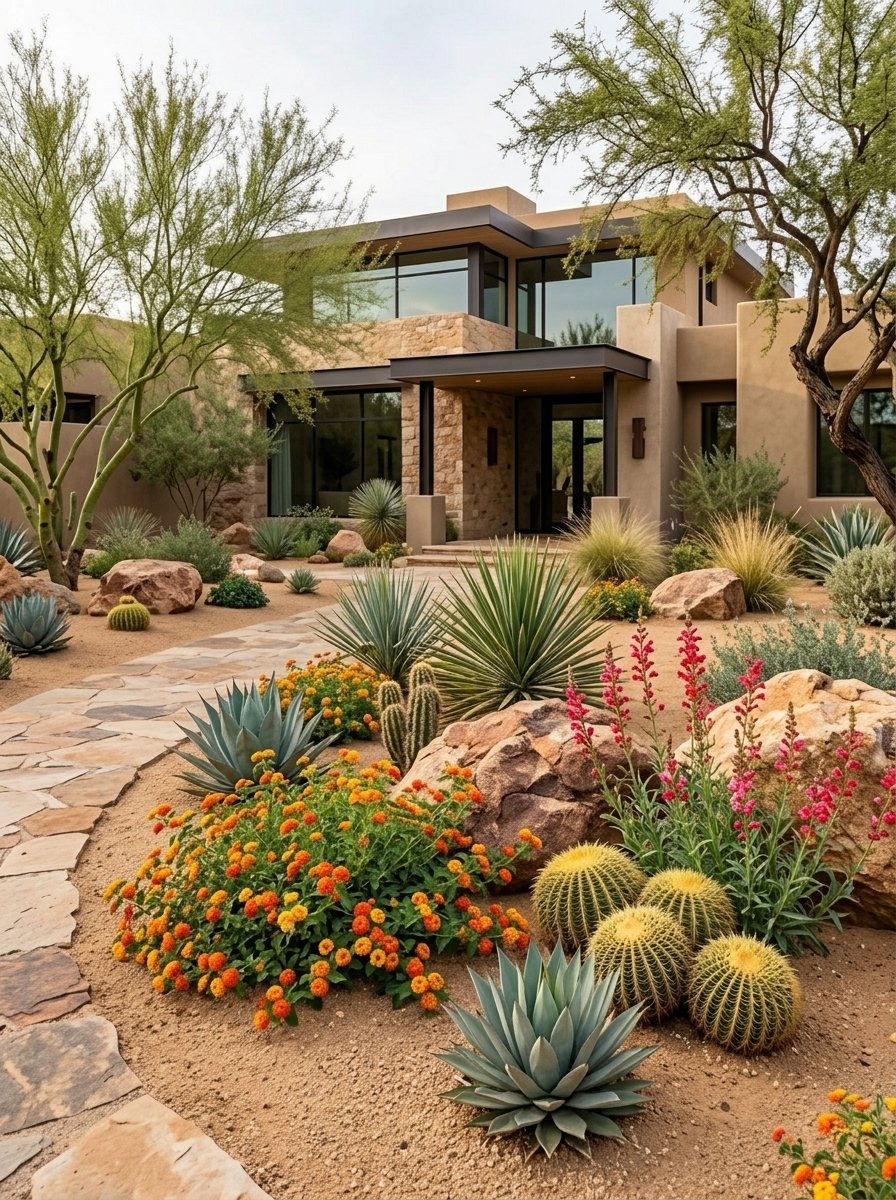
21. Modern Desert Brights
Dry climates don’t mean dull yards. A modern desert garden mixes sculptural plants with bright pops of color and clean hardscape.
Use agave, yucca, red yucca, barrel cactus, and blue fescue. Add color with lantana, penstemon, or desert marigold. Top beds with decomposed granite or crushed stone, and set a few large boulders for structure.
Design tips:
- Group plants with similar water needs
- Use a bright accent wall or a colorful pot as a backdrop
- Choose spineless or low-spine plants near walkways
Maintenance: Very low once established. Water deeply but rarely, and ask a local nursery which plants are native to your region.
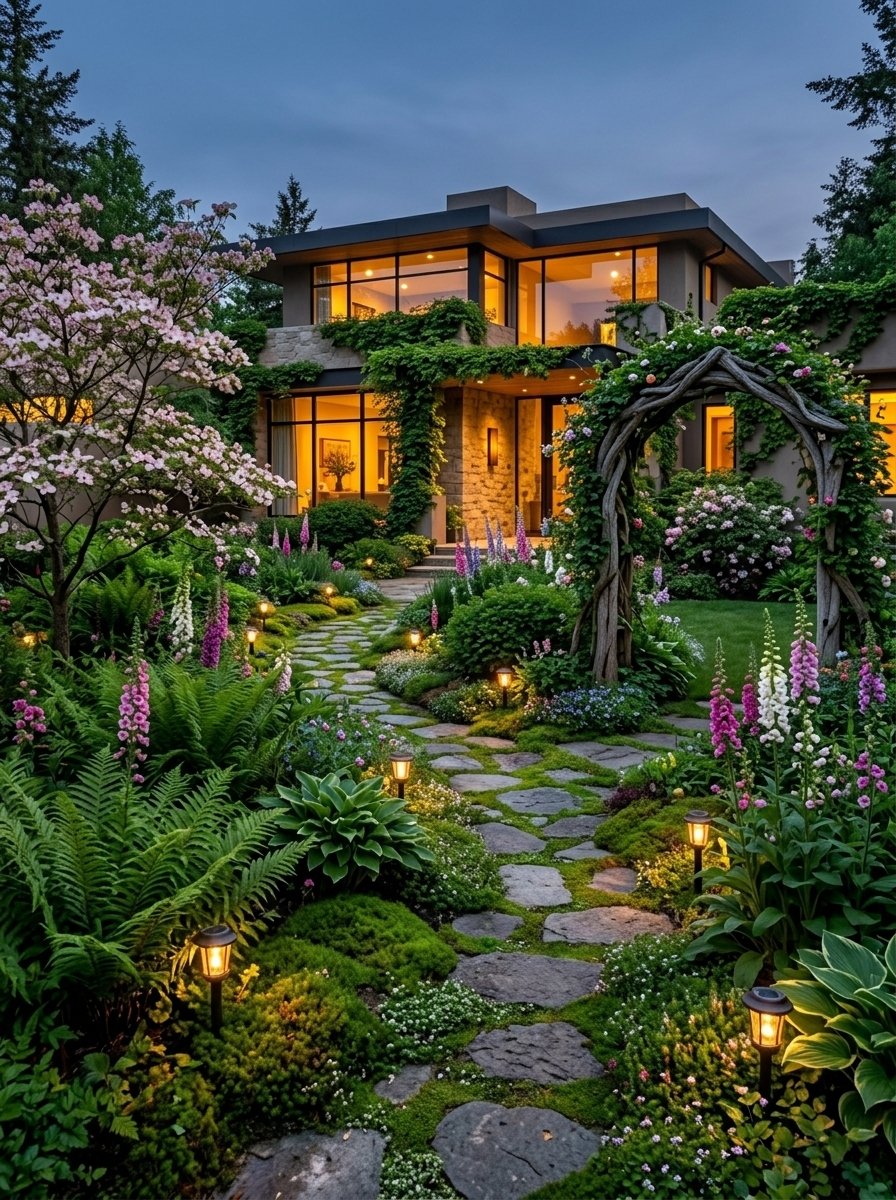
22. A Fairy-Tale Forest Setting
Want a front yard that feels like a storybook? Think winding paths, mossy stones, soft lights, and layers of leafy plants.
Use ferns, hostas, foxglove, columbine, and small flowering trees. Add a rustic arch, a stone bench, or a hidden birdhouse. Soft solar lights along the path make the yard glow at dusk.
Create the mood:
- Curve everything. Avoid straight lines.
- Layer plants densely so the yard feels enclosed
- Add mulch and fallen branches for a natural look
Keep it tidy: The “wild” look still needs a clean edge. A neat border keeps neighbors and HOAs happy.
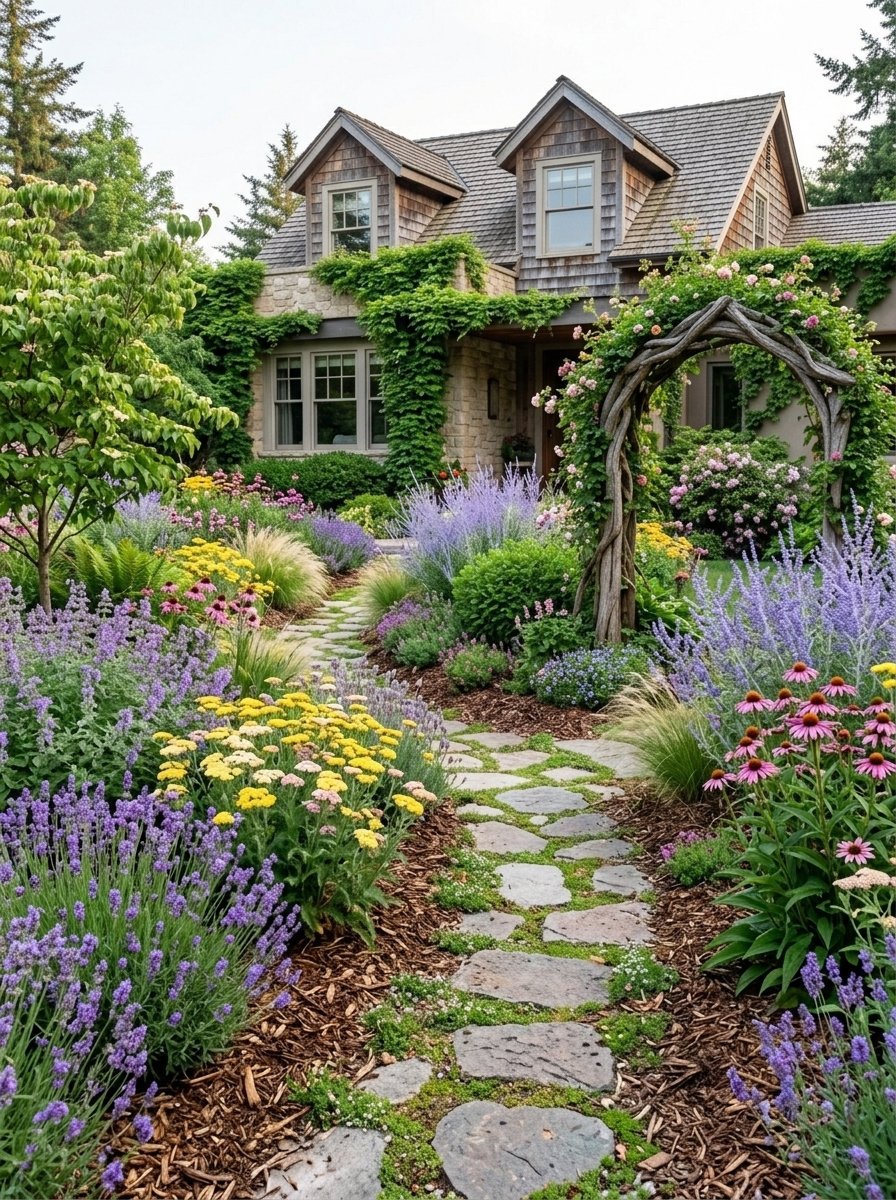
23. Drought-Tolerant Cottage Garden
You can have the soft, flower-filled look of a cottage garden without constant watering. The secret is choosing plants that handle dry spells.
Try lavender, yarrow, Russian sage, salvia, catmint, echinacea, and sedum. Add a few ornamental grasses for movement. Mulch generously to hold moisture.
Water-wise habits:
- Water deeply and less often to encourage deep roots
- Use drip irrigation instead of sprinklers
- Water early in the morning to cut evaporation
Maintenance: Low to medium. These plants thrive on a little neglect, and many are favorites of bees and butterflies.
24. Lawn-Free Front Yard
Giving up the lawn saves water, mowing time, and fertilizer. A lawn-free yard can look just as polished, and often more interesting.
Replace turf with groundcovers, perennials, gravel, mulch, or a mix. Low-growing options include creeping thyme, sedum, clover, and native groundcovers. Define the space with a strong path and clean bed edges so it looks designed, not neglected.
How to do it:
- Remove or smother the grass (sheet mulching with cardboard and mulch works well)
- Improve the soil if needed
- Plant in layers and mulch well
- Water new plants until they are established
Check first: Some HOAs and cities have lawn requirements. Confirm local rules before removing turf.
25. Front Yard Pollinator Garden
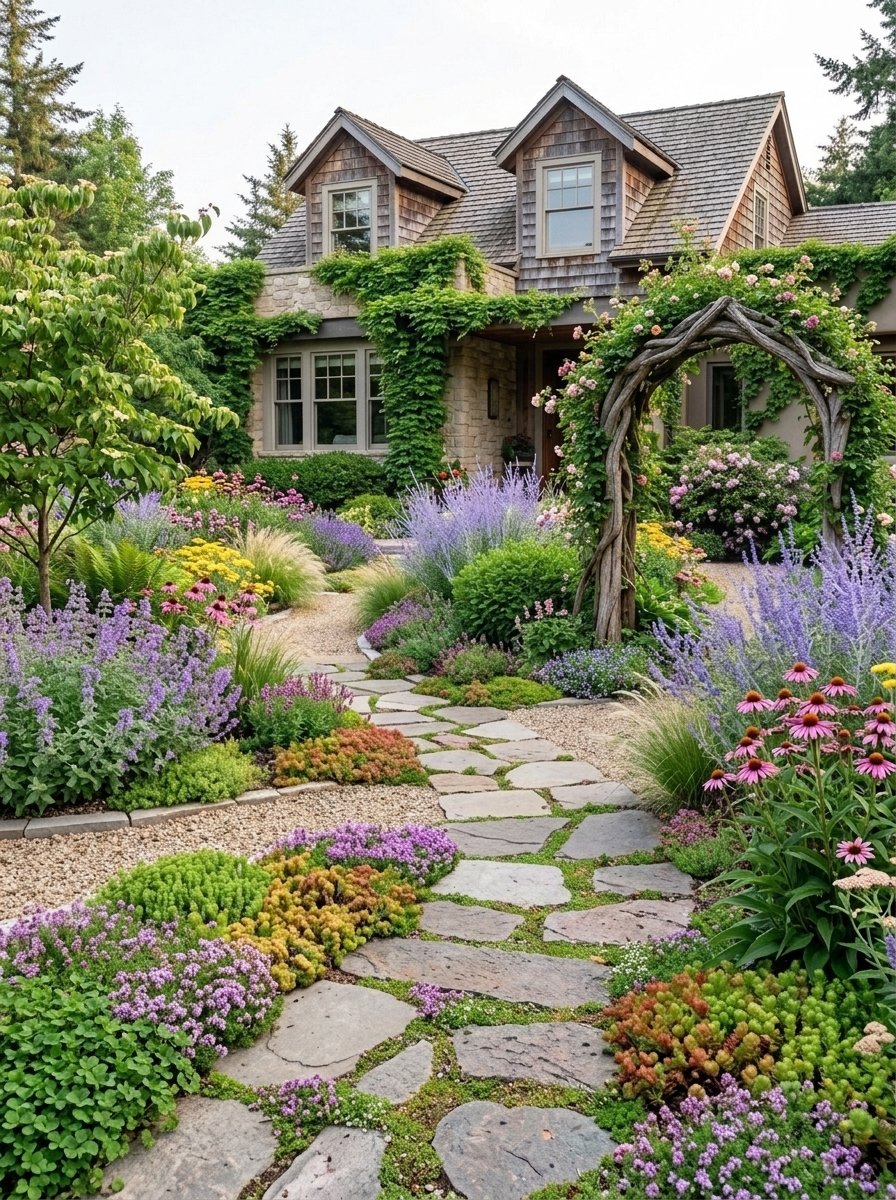
A pollinator garden brings in bees, butterflies, and hummingbirds, and it looks gorgeous doing it. Native plants are usually the best choice because they suit local conditions and support local wildlife.
Good options include milkweed, bee balm, coneflower, black-eyed Susan, asters, and native salvias. Aim for blooms from early spring through fall, so insects always have something to feed on.
Pollinator-friendly tips:
- Plant in clumps rather than single plants
- Avoid pesticides, especially insecticides
- Leave a shallow dish of water with stones for landing spots
- Keep a bit of bare soil or leaf litter for ground-nesting bees
Tip: A small sign saying “Pollinator Garden” helps neighbors understand a looser, more natural look.
26. Modern Minimalist Landscaping
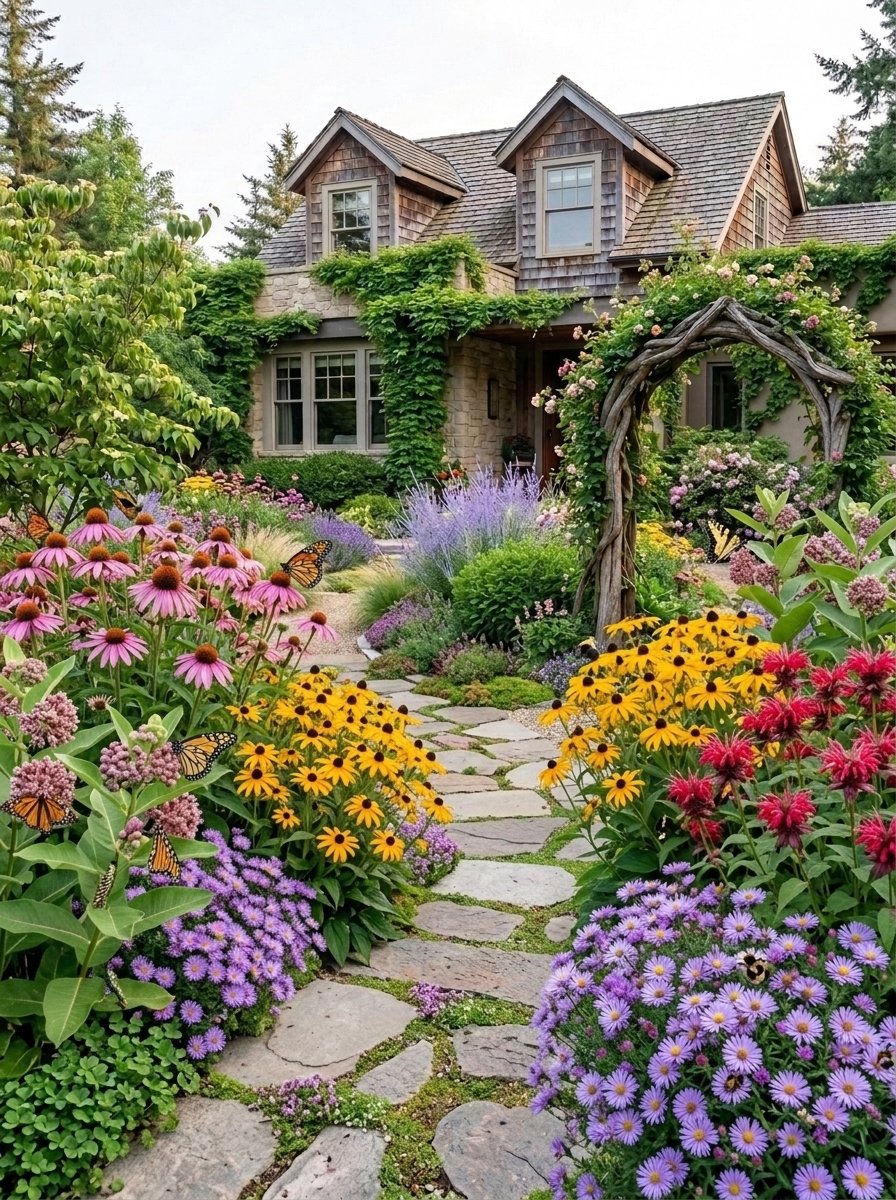
While Idea 1 uses bold color, this version leans on texture, shape, and restraint. It’s calm, architectural, and low effort.
Choose a mostly green and neutral palette. Use clipped boxwood or yew, ornamental grasses, a single specimen tree, and large concrete or stone pavers. Fill gaps with gravel or short groundcover.
The minimalist checklist:
- Three to five plant types, repeated
- Straight lines and clear geometry
- Simple, hidden lighting
- Plenty of open space
Maintenance: Low. Shape hedges once or twice a year and keep hardscape clean.
27. Colorful Autumn Hues
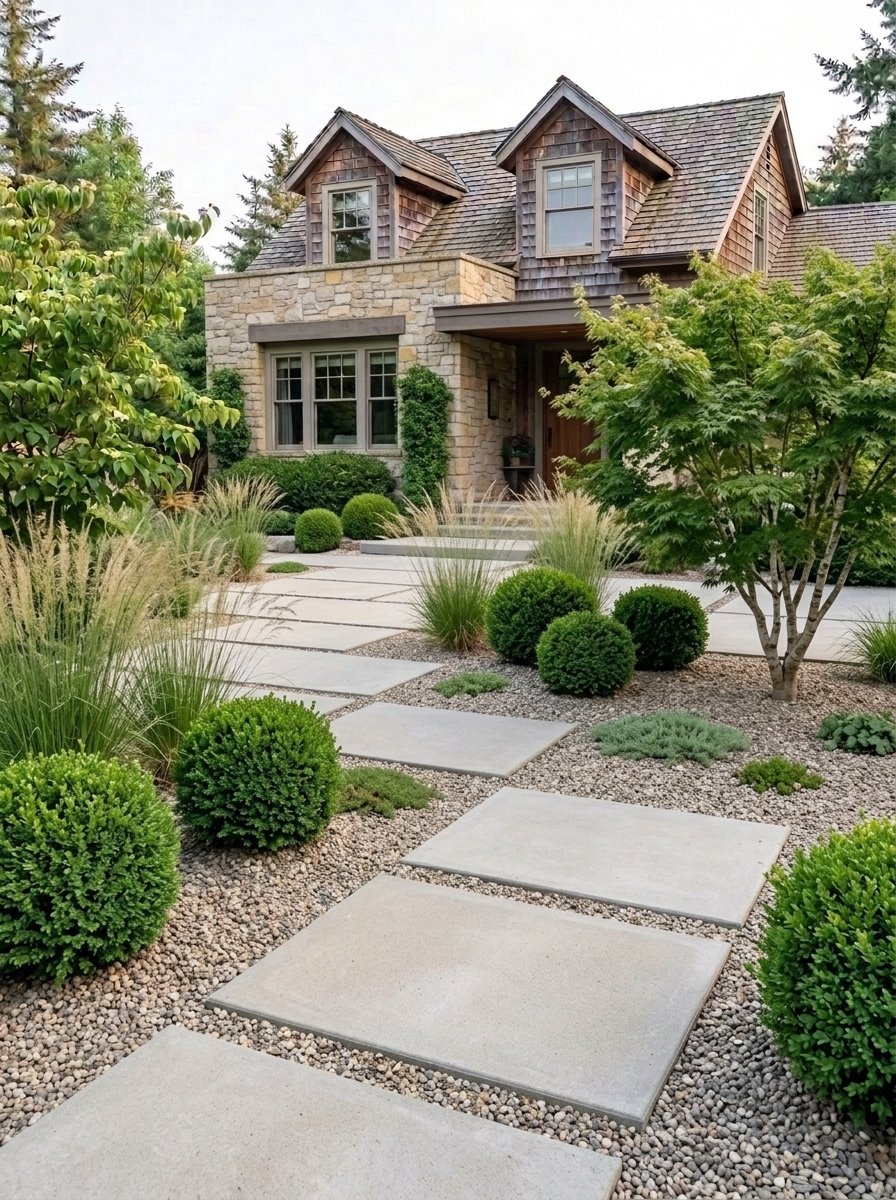
Spring may be the time to plant, but a good yard looks stunning in fall too. Plan now for rich color in autumn.
Choose trees and shrubs with fall color, such as Japanese maple, red maple, serviceberry, and viburnum. Add perennials like asters, sedum, and goldenrod, plus grasses that turn golden and bronze.
Fall design ideas:
- Pair red and orange foliage with deep purple heuchera
- Add pumpkins and mums in pots for seasonal color
- Leave seed heads for winter birds
This idea reminds you to think in seasons. A yard that offers something every month always looks intentional.
28. A Mediterranean-Inspired Wall Garden
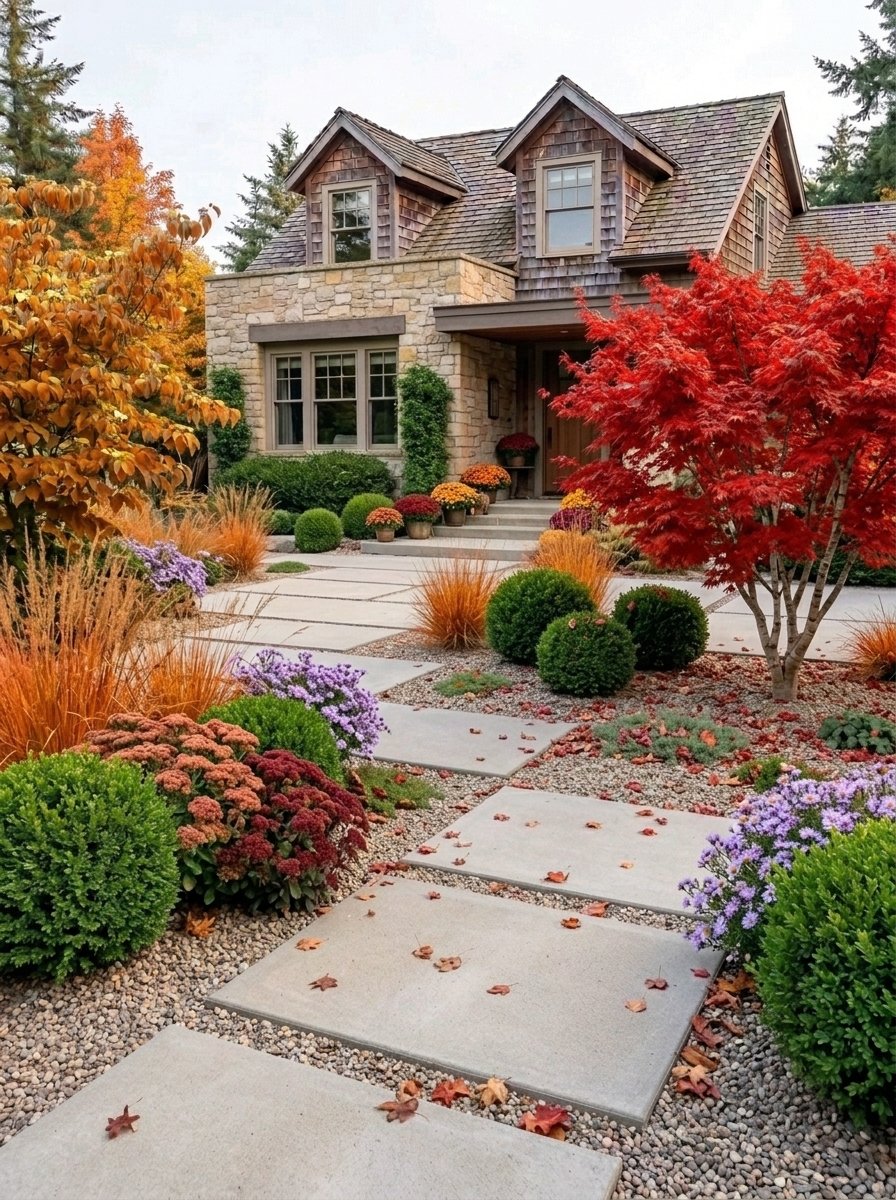
A low stone or stucco wall with plants spilling over it creates a sun-warmed, old-world look. It also defines the property line and can offer a little privacy.
Plant lavender, rosemary, thyme, and santolina along the base. Add an olive tree or Italian cypress where your climate allows. Terracotta pots and gravel paths finish the style.
Details to try:
- A trailing plant, like creeping rosemary, over the wall edge
- Terracotta containers with herbs
- Warm white or sand-colored walls
Build smart: Walls can need permits, and height limits vary. Check local rules, and hire a pro for anything taller than a basic garden wall.
29. Ornamental Grass Garden
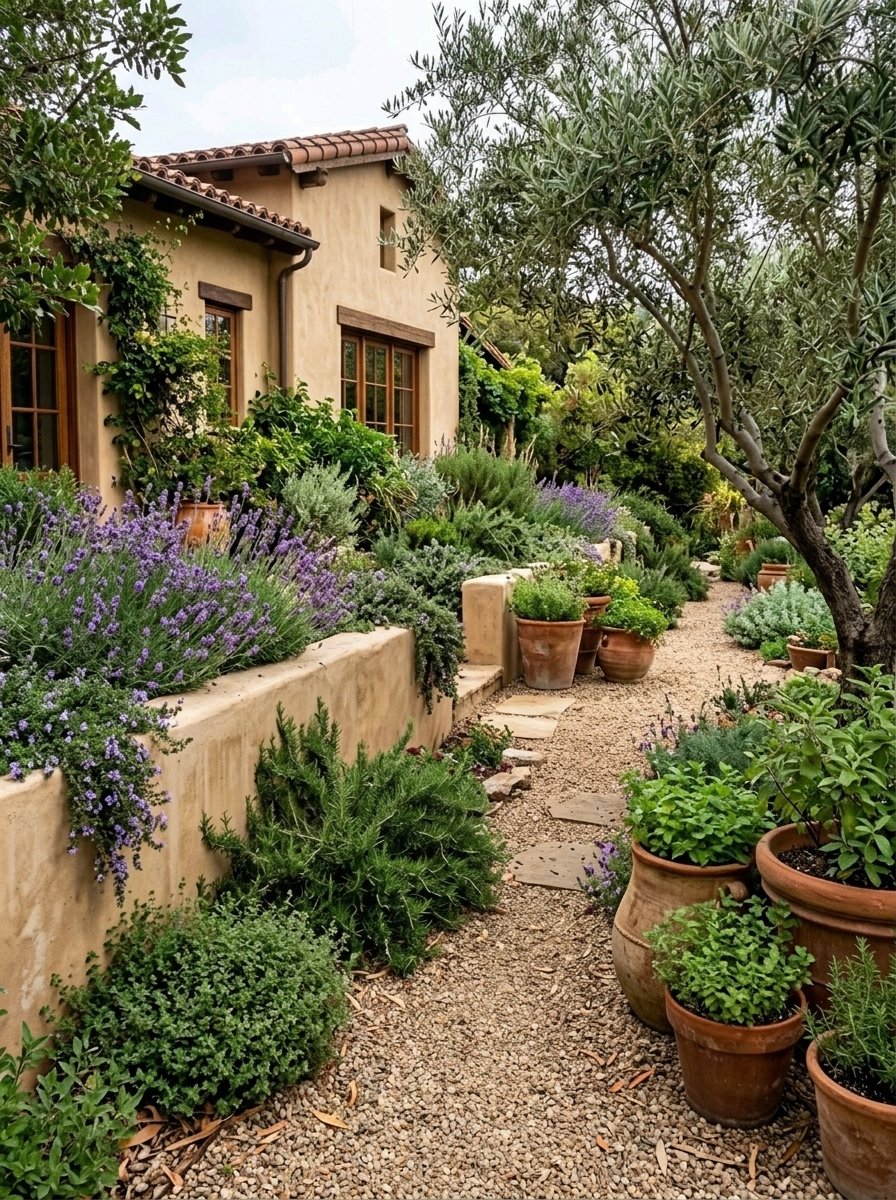
Ornamental grasses add movement, texture, and four-season interest. They sway in the breeze and catch light, especially in the evening.
Good choices include feather reed grass, little bluestem, fountain grass, switchgrass, and muhly grass. Pair them with coneflowers, sedum, and salvia for a naturalistic look.
Grass tips:
- Choose clumping types, not aggressive spreaders
- Cut back to a few inches in late winter
- Leave plumes standing through winter for structure
Maintenance: Low. One big annual cutback is often all they need.
30. Lush Layers of Colorful Flowers
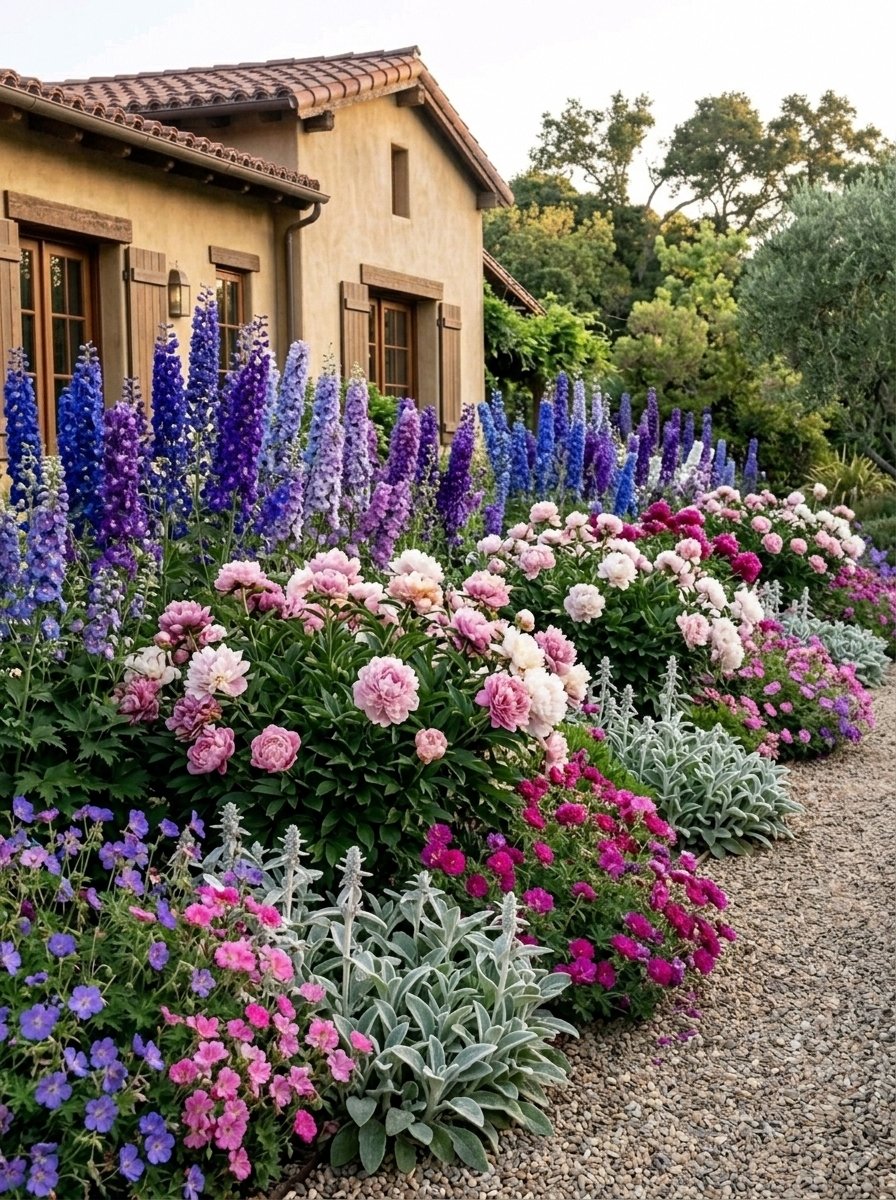
For maximum impact, go big on layered flowers. Plant tall, medium, and low bloomers in generous swathes so the bed looks full and abundant.
Mix perennials with a few annuals to fill any gaps. For example, pair tall delphiniums with mid-height peonies and low lamb’s ear or geraniums. Repeat colors across the bed so it feels cohesive, not chaotic.
Keep it lush:
- Feed with compost or slow-release fertilizer in spring
- Deadhead often to encourage new blooms
- Divide perennials every few years to keep them vigorous
Maintenance: Medium to high, but the reward is a bright, welcoming display.
Spring Front Yard Checklist
Use this simple list to get your yard ready:
- Clean up. Rake debris, cut back last year’s stems, and remove dead plants.
- Edge beds. A crisp edge instantly makes the yard look tidy.
- Test the soil. A basic soil test shows what your plants need.
- Add compost and mulch. Spread 2 to 3 inches of mulch, keeping it away from trunks and stems.
- Prune. Trim spring-flowering shrubs after they bloom, and prune summer bloomers now.
- Plant. Add perennials, shrubs, and trees once the soil is workable and frost risk has passed.
- Check irrigation. Fix leaks and set timers before the heat arrives.
- Add finishing touches. Update house numbers, lighting, and planters.
Budget Guide: Where to Spend and Where to Save
| Item | Approach | Why |
|---|---|---|
| Trees and large shrubs | Spend | They set the structure and last for years |
| Hardscape (paths, edging) | Spend where it counts | Poor installation is expensive to fix |
| Perennials | Save by dividing and swapping | Plants multiply over time |
| Annuals and containers | Save | Easy to change each year |
| Mulch | Save by buying in bulk | Large quantities cost less per yard |
| Lighting | Mid-range | Good fixtures last, cheap ones fail fast |
Prices vary by region and supplier, so get a few local quotes for bigger projects.
Common Front Yard Landscaping Mistakes to Avoid
- Planting too close to the house or walkway
- Ignoring the mature size of trees and shrubs
- Choosing plants that don’t suit your sun or soil
- Using too many different plants with no repetition
- Skipping lighting and walkway visibility
- Piling mulch against tree trunks (the “mulch volcano”)
- Forgetting about winter interest
- Not checking HOA or local rules first
Conclusion
A beautiful front yard doesn’t need a big budget or a landscaper’s license. It needs a clear plan, plants that suit your site, and a style that matches your home.
Start small. Pick one or two of the ideas above, perhaps the entryway, a border, or a few containers, and build from there. Spring is the perfect moment to begin, and each season will make your yard look better.
Take a few photos of your yard today. By summer, you’ll see how far it’s come.
FAQs
What is the cheapest way to improve a front yard?
Fresh mulch, clean edging, and a few container plants give the biggest boost for the lowest cost.
What are the best low-maintenance front yard plants?
Hostas, sedum, daylilies, ornamental grasses, boxwood, and native perennials are all easy to care for.
How do I landscape a small front yard?
Keep the design simple, use fewer plant types, add vertical interest with a trellis or tree, and use containers.
When is the best time to landscape a front yard?
Spring and fall are ideal, since mild weather helps new plants root. Plant spring bulbs in fall.
How do I make my front yard look good without grass?
Use groundcovers, perennials, gravel, and mulch, with a clear path and neat edges.
How much mulch should I use?
Spread about 2 to 3 inches, and keep it a few inches away from trunks and stems.
What plants are best for a shady front yard?
Hostas, ferns, astilbe, heuchera, hellebore, and Japanese forest grass do well in shade.
Do I need permission to change my front yard?
Possibly. Check HOA rules and local codes, especially for lawn removal, fences, and walls.
What front yard plants attract pollinators?
Milkweed, bee balm, coneflower, black-eyed Susan, and native salvias attract bees and butterflies.
How can I add curb appeal quickly?
Paint the front door, add planters, update the house numbers, and trim shrubs and edges.