Some design styles chase the moment. Midcentury modern doesn’t. It took shape in the 1940s through the 1960s, and it still looks fresh in kitchens, living rooms, and especially bathrooms. The clean lines, warm wood, playful color, and honest materials suit a small room that has to work hard every day.
A midcentury modern bathroom feels relaxed and confident at the same time. It isn’t fussy, and it doesn’t shout. Instead, it mixes simple shapes with a few well-chosen details, like a brass mirror, a terrazzo floor, or a vintage-inspired sconce.
This guide shares 30 midcentury modern bathroom ideas you can borrow whether you’re planning a full remodel or a weekend refresh. You’ll find ideas for tile, wood, lighting, wallpaper, color, and layout, plus practical tips on moisture, safety, and budget. Each idea includes what it looks like, how to do it, and what to watch out for.
Bathroom work often involves plumbing, electrical wiring, and waterproofing, so check local codes and hire licensed pros where required.
Quick Answer: What Defines a Midcentury Modern Bathroom?
Most midcentury modern bathrooms share these traits:
- Clean, simple lines. Flat-front cabinets, slim legs, and uncluttered shapes.
- Warm wood. Teak, walnut, and oak tones, often on a floating vanity.
- Geometric forms. Squares, circles, hexagons, and starburst shapes.
- Earthy and retro colors. Olive, mustard, rust, teal, and soft pastels.
- Metal accents. Brass, black, and chrome in small, deliberate doses.
- A link to nature. Plants, daylight, and natural materials.
If your bathroom has four or five of these, it will read as midcentury.
Midcentury Bathroom Essentials at a Glance
| Element | Midcentury Choice | Why It Works |
|---|---|---|
| Vanity | Floating or tapered-leg wood vanity | Light, airy, and warm |
| Mirror | Round, sunburst, or asymmetrical | Adds a graphic shape |
| Tile | Square, hex, or terrazzo | Geometric and retro |
| Lighting | Globe, dome, or brass sconces | Soft glow, iconic shape |
| Color | Olive, mustard, teal, terracotta | Earthy and warm |
| Hardware | Brass or matte black | Clean and refined |
| Wallpaper | Geometric, botanical, or retro | Personality in a small room |
Before You Start: Plan for Moisture and Safety
Bathrooms are tough on materials. A few smart choices protect your design.
- Ventilate well. A good exhaust fan reduces mold and protects wood, paper, and paint.
- Choose damp or wet-rated lighting. Fixtures near a shower or tub need the right rating. Ask an electrician.
- Seal wood. Use marine-grade or bathroom-rated finishes on vanities, shelves, and slats.
- Use moisture-resistant wallpaper. Look for vinyl or washable bathroom wallpaper, and keep it away from direct spray.
- Add GFCI protection. Outlets in bathrooms need ground-fault protection by code in most areas.
- Mind slips. Pick floor tile with a slip-resistant finish, especially for wet areas.
- Check permits. Plumbing, electrical, and structural changes often require them.
1. Repurpose a Vintage Vanity

A vintage dresser or credenza makes a stunning bathroom vanity. The teak or walnut grain, the tapered legs, and the sliding doors all bring authentic midcentury charm that new furniture often can’t match.
To convert one, a plumber or skilled DIYer cuts a hole in the top for a sink and adjusts the drawers to make room for the trap and supply lines. A vessel sink is the easiest option because it sits on top, so you cut less.
How to do it well:
- Seal the wood with several coats of water-resistant finish, including inside and underneath
- Use a waterproof top protection or a stone or quartz top fitted to the piece
- Keep the original hardware if possible, and polish it
- Add felt or rubber feet to protect the wood from standing water
Watch out for: Old finishes can contain lead paint. Test before sanding, and follow safe practices if the piece is painted.
2. Try Terrazzo Tile
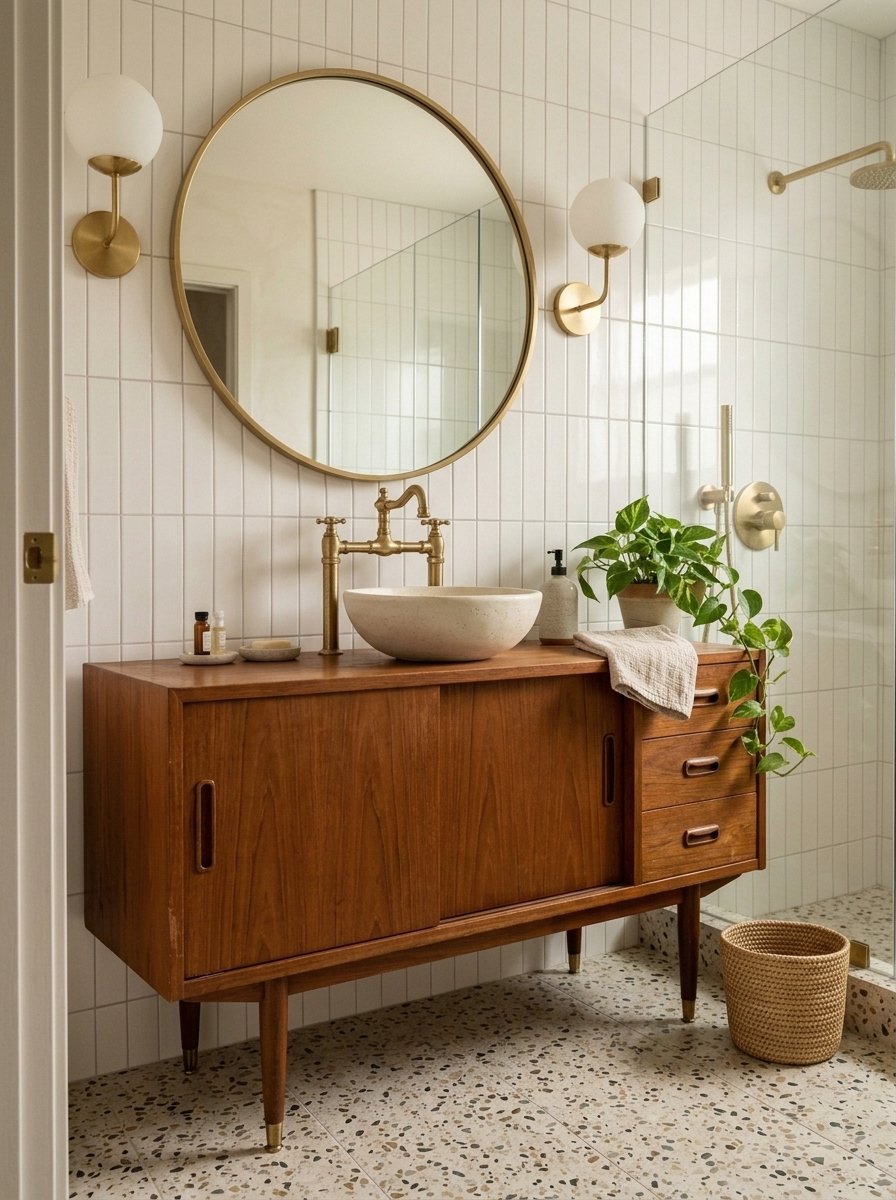
Terrazzo is a midcentury classic. It’s a mix of small stone or glass chips set in a base, polished to a smooth finish. It adds speckled color and a subtle retro feel without looking busy.
You can choose real terrazzo for floors, or porcelain tiles that mimic the look at a lower cost and with easier care. Large-format terrazzo-look tiles work well in small bathrooms, since fewer grout lines make the room feel bigger.
Design ideas:
- A terrazzo floor with simple white walls
- Terrazzo on a shower floor or bench
- A terrazzo vanity top for a bold, cohesive look
Care notes: Cement-based terrazzo needs sealing. Polished surfaces can be slippery when wet, so choose a honed or textured finish for floors.
3. Hang a Brass Mirror

A brass mirror adds warmth, shine, and shape in one simple move. Round mirrors suit the geometry of midcentury design, while sunburst mirrors give you that iconic atomic look.
Hang the mirror so its center sits at about eye level, roughly 57 to 60 inches from the floor. Pair it with a wood vanity for a classic combination.
Brass tips:
- Unlacquered brass develops a soft patina over time, which many people love
- Lacquered brass stays shiny, but the finish can wear in humid rooms
- Wipe splashes away to prevent water spots
Safety note: Mirrors are heavy. Anchor them into studs or use wall anchors rated for the weight, and use backing that resists moisture.
4. Use Earth Tone Colors
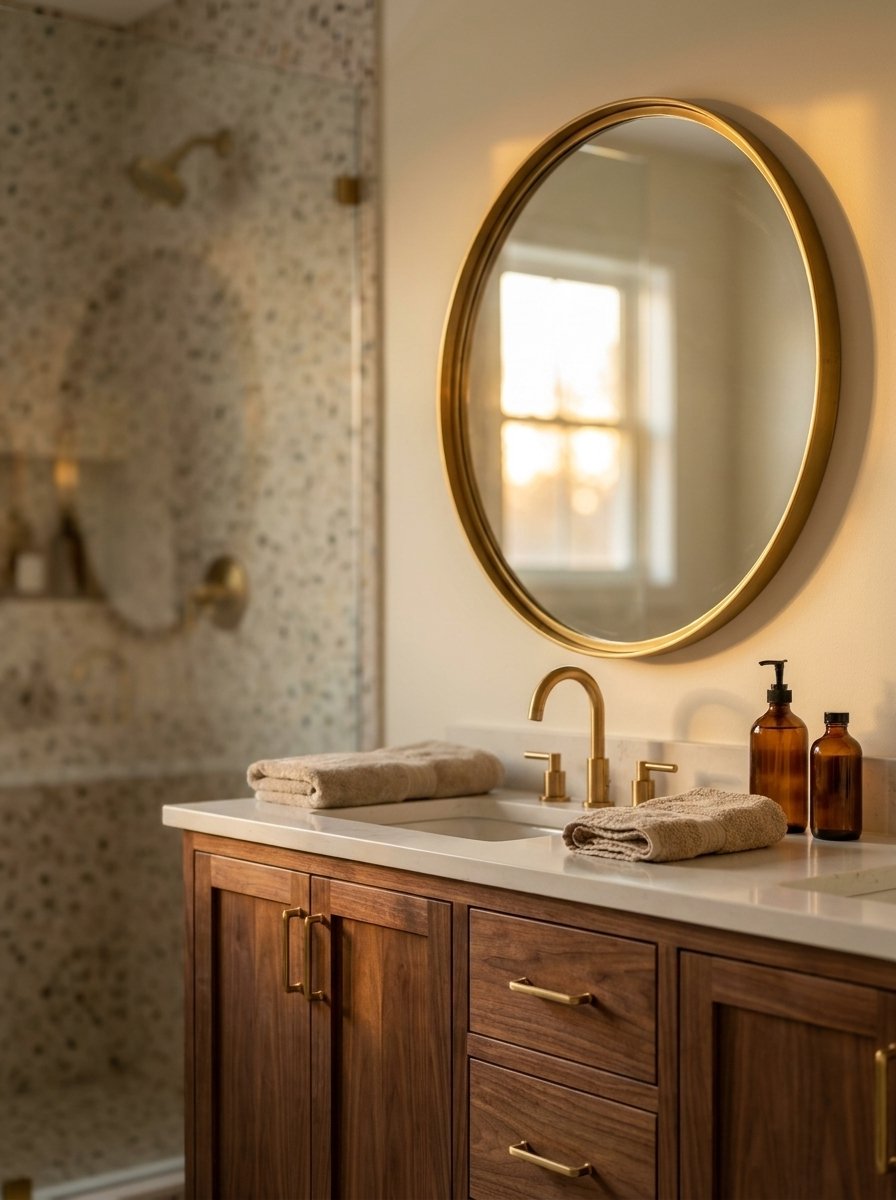
Earthy colors define the midcentury palette. Think olive green, mustard yellow, burnt orange, terracotta, warm brown, and soft teal. These shades feel organic and cozy, and they pair beautifully with walnut and brass.
A good formula is 60-30-10. Use a neutral for about 60 percent of the room, a main earth tone for 30 percent, and an accent for the last 10 percent. For example, cream walls, an olive vanity, and mustard towels.
Paint tips:
- Choose satin or semi-gloss paint, which handles humidity better than flat
- Look for mildew-resistant bathroom paint
- Sample colors on the wall and check them under your bathroom lights
Keep it modern: Use muted versions of the colors rather than bright, saturated ones, so the room feels current.
5. Choose Midcentury Lighting

Lighting is the jewelry of a midcentury bathroom. Globe pendants, dome fixtures, cone-shaped sconces, and sputnik-style lights all echo the era’s space-age optimism.
Place sconces on either side of the mirror at about eye level for even, flattering light. A pendant over a freestanding tub or in the center of the ceiling can act as a focal point.
Lighting checklist:
- Choose fixtures rated for damp or wet locations when needed
- Use warm white bulbs around 2700K for a cozy glow
- Pick bulbs with a high color rendering index (CRI) for accurate skin tones
- Add a dimmer for relaxing baths
Hire a pro: Wiring in a bathroom is a safety issue. Use a licensed electrician for new fixtures or switches.
6. Use Square Tiles
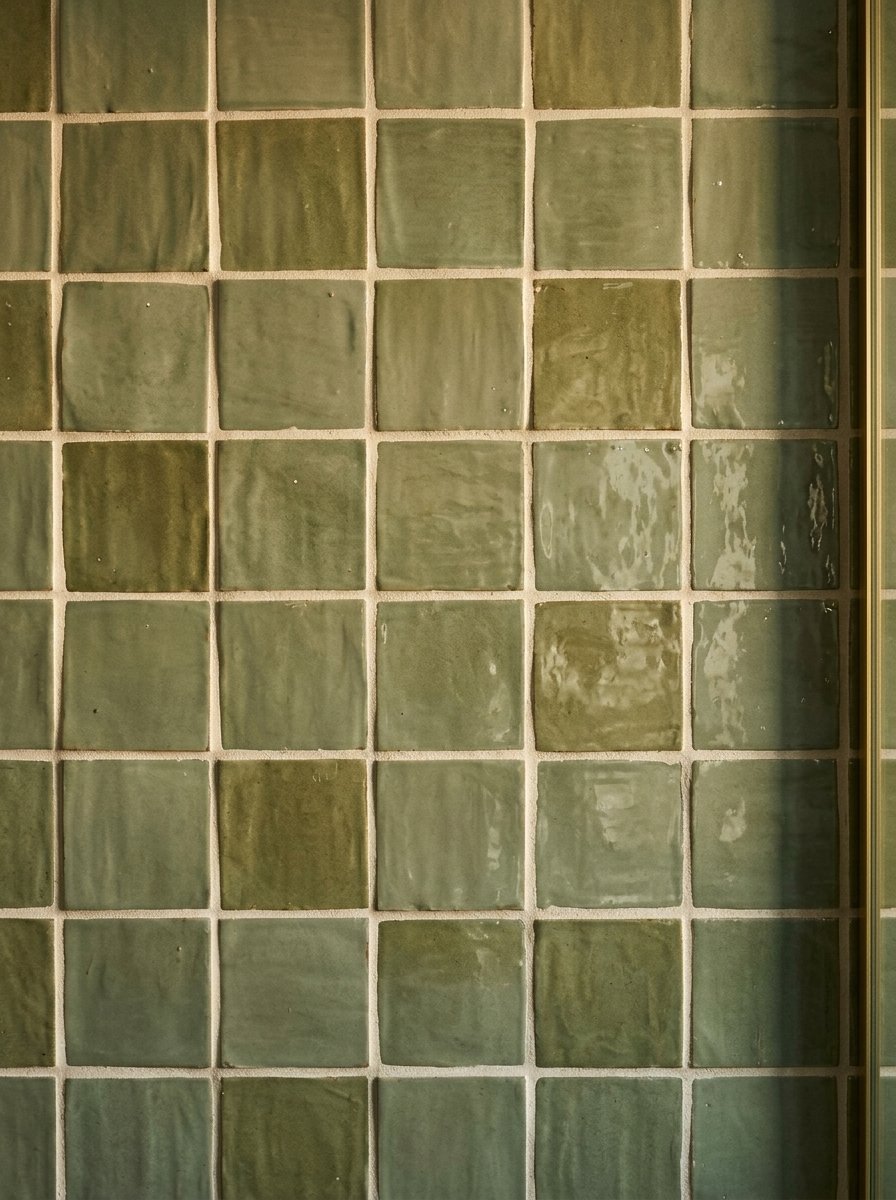
Simple square tiles are a quiet favorite of midcentury design. A grid of 4-inch or 6-inch squares looks neat and graphic, and it suits small spaces well.
Choose glossy glazed tiles in soft colors like sage, powder blue, or cream. Stack them in a straight grid rather than offset for a clean, geometric look. Contrasting grout in a darker or lighter shade makes the pattern pop.
Where to use them:
- A full wall behind the vanity
- Around the tub or shower
- A checkerboard floor with two colors
Grout tip: Use an epoxy or stain-resistant grout in wet areas, and seal cement-based grout to prevent discoloration.
7. Add Rattan Details
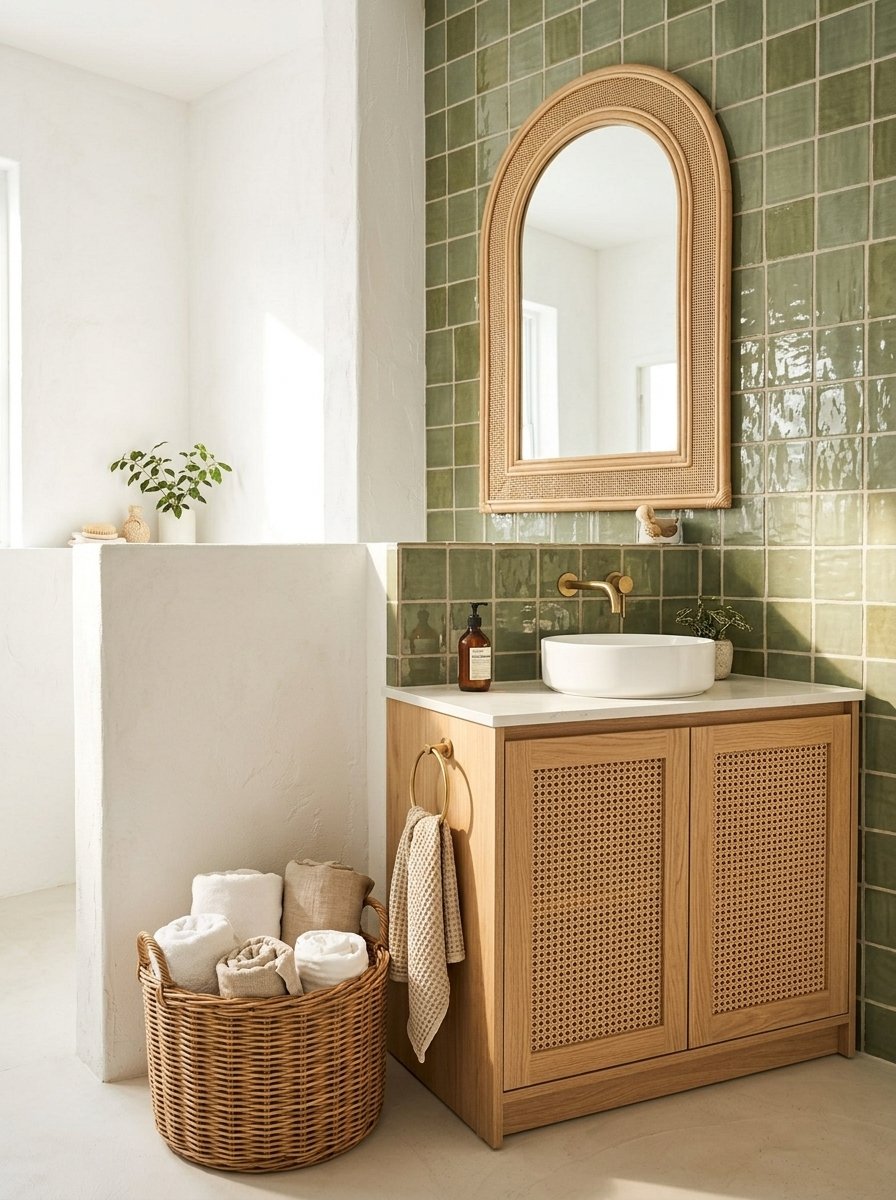
Rattan and cane add texture and a relaxed, natural touch. They soften the hard surfaces of a bathroom and bring in the organic side of midcentury style.
Try a rattan-framed mirror, a woven basket for towels, a cane-front storage cabinet, or a wicker laundry hamper. A small rattan stool next to the tub makes a handy perch for a towel or drink.
Rattan tips:
- Natural rattan can swell or mold in damp rooms, so keep it away from direct water
- Choose sealed or synthetic woven materials for humid spaces
- Let the bathroom air out after showers
Style tip: Pair rattan with white walls and a wood vanity for a light, airy look.
8. Favor Warm Wood Tones
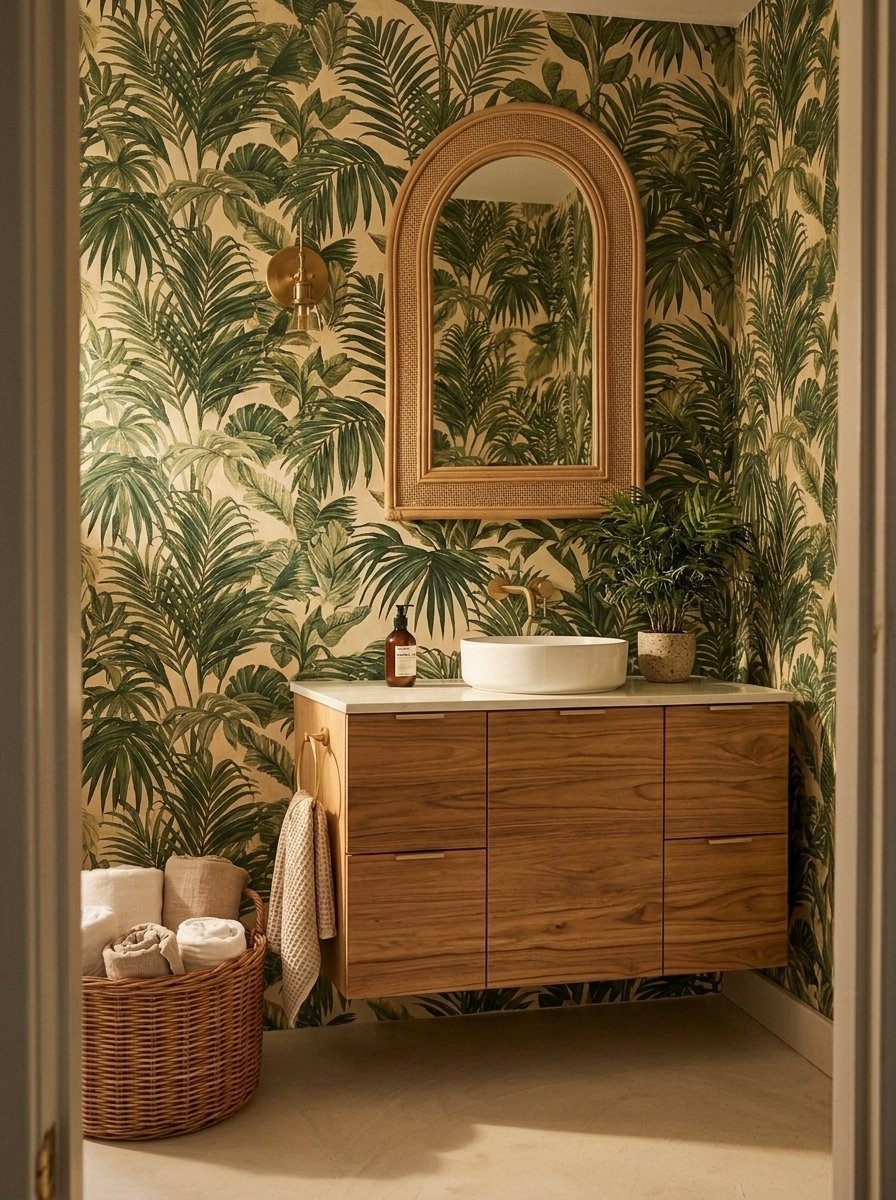
Wood is the heart of midcentury style. Teak, walnut, and rich oak bring warmth to a room that’s otherwise full of hard, cool surfaces like tile and glass.
The easiest way in is a wood vanity. A floating wood cabinet with flat fronts and slim finger pulls looks sleek and keeps the floor visible, which makes small bathrooms feel larger. You can also add a wood shelf, a bench, or a framed mirror.
How to use wood in a bathroom:
- Choose water-resistant species or engineered wood with a protective finish
- Seal cut edges and the underside of any wood near water
- Keep wood out of direct shower spray
- Match tones. Stay within one warm family so the room feels planned
Care tip: Wipe up puddles quickly, and use a fan during and after showers to reduce moisture.
9. Hang Palm Print Wallpaper

Palm and banana leaf prints carry a sun-soaked, retro-resort feel that fits midcentury design well. A bold leafy wallpaper turns a small bathroom or powder room into a lush getaway.
Choose deep green leaves on a cream background for a classic look, or try a darker backdrop for drama. Pair the wallpaper with simple fixtures, a wood vanity, and brass touches so the pattern stays the star.
Wallpaper tips:
- Pick vinyl or a product labeled washable and suitable for bathrooms
- Prepare the wall well, and use a primer made for wallpaper
- Avoid placing paper close to showers or tubs where water splashes
- Run the fan during and after showers
Powder room bonus: Powder rooms have less moisture than full baths, so they’re the best place to use more delicate or dramatic papers.
10. Choose Colorful Floor Tile

Floors are a great place for color and pattern. A patterned or colorful tile floor can set the whole mood of a midcentury bathroom.
Consider geometric patterns, bold checkerboards, or soft hexagon mosaics in terracotta, sage, or teal. A simple hexagon or square tile in a pastel shade looks cheerful without being loud.
Tile tips:
- Use porcelain tile for durability and low water absorption
- Choose a slip-resistant finish, especially near the shower
- Keep walls simple when the floor has pattern
- Consider heated floors for comfort if your budget allows it
Practical note: Small mosaic tiles have more grout lines, which grip better underfoot but need regular cleaning. Use a sealed or epoxy grout.
11. Hang Groovy Wallpaper

The 1960s loved groovy patterns: circles, waves, and abstract shapes in bright colors. A modern take on these designs adds energy and personality.
Choose a design with soft, rounded forms in muted retro colors, like orange, olive, and cream. Hang it on one wall, such as behind the vanity or the toilet, and keep other walls plain. The result is playful but still balanced.
Style tips:
- Use just one patterned wall in a small space
- Pair with simple white or wood fixtures
- Match one color in the wallpaper to a towel or accessory
Renter-friendly option: Peel-and-stick wallpaper makes it easy to try bold patterns. Test a small patch first and check how it handles humidity.
12. Hang a Colorful Retro Sconce

A colorful sconce can be a tiny piece of art. Look for glass or enamel shades in orange, mustard, teal, or green, in dome or cone shapes that recall vintage lighting.
Place a pair beside the mirror, or hang a single one above a small vanity. The colored glass casts a warm, soft glow on the wall, which is flattering and cozy.
What to check:
- Is the fixture rated for damp locations?
- Does the bulb type produce enough light for grooming?
- Is the shade easy to clean and free of hidden moisture traps?
Tip: If you find a vintage sconce, have it rewired to current safety standards by a qualified electrician before installing it.
13. Favor Geometric Forms
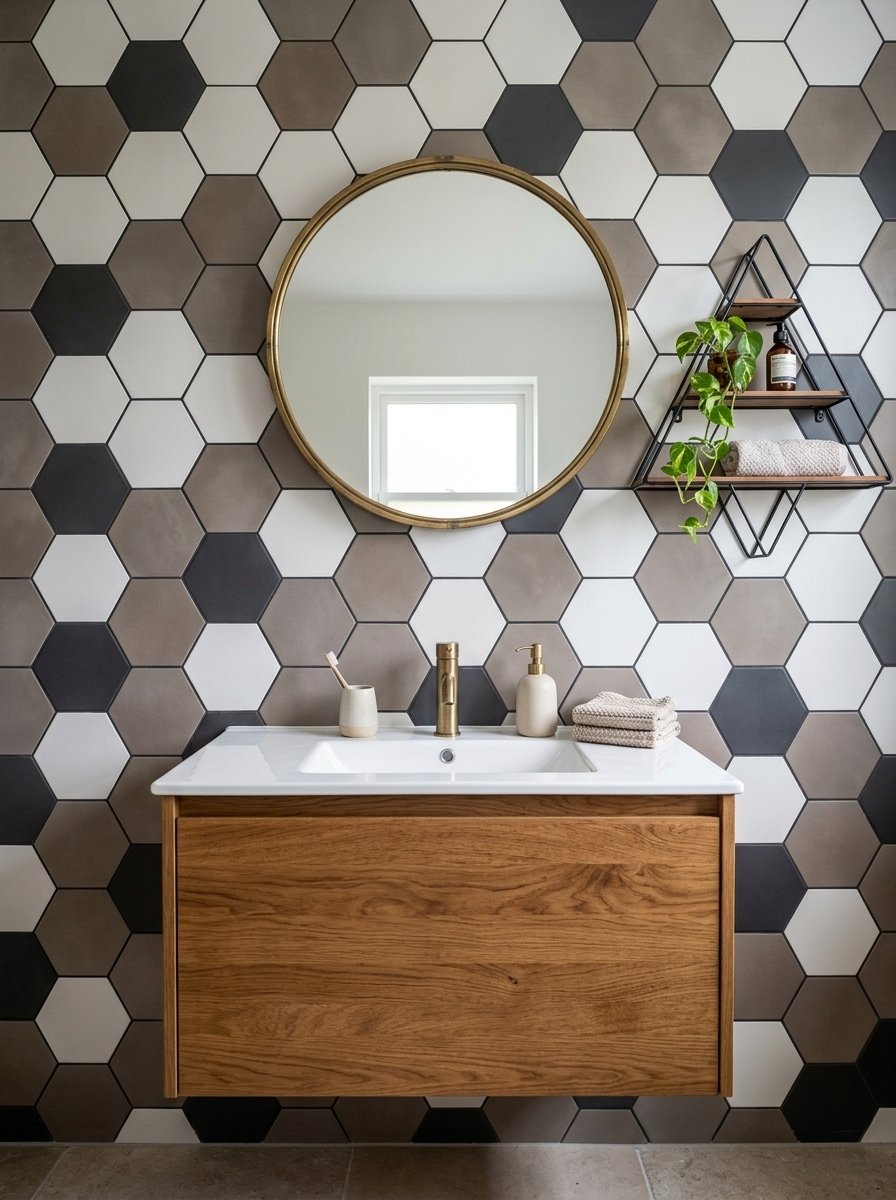
Geometry is everywhere in midcentury design. Circles, triangles, hexagons, and angular lines create rhythm and a sense of order.
You can bring geometry into your bathroom through tile layout, mirror shape, cabinet design, or shower niches. A round window, a hexagonal wall tile, or an angled shelf adds interest without clutter.
Easy ways to add geometry:
- A hexagon tile accent wall
- A round mirror above a rectangular vanity
- A triangular wall shelf
- Graphic shower tile in a simple repeating pattern
Balance tip: Combine curved and straight shapes. Too many angles can feel harsh, while soft curves keep the room friendly.
14. Favor Indoor-Outdoor Living

Midcentury architects loved connecting homes to nature with big windows, courtyards, and glass walls. You can bring that feeling into a bathroom through views, plants, and natural materials.
If you have a window or a door to the outside, let it shine. Frame a garden view with simple window treatments. Use natural stone, wood, and plants to continue the outdoors inside.
Ideas to try:
- A large window or sliding glass door to a private patio
- A planter or hanging plant near the tub
- Pebble flooring in the shower
- A teak shower mat or bench
Privacy note: Use frosted film, privacy glass, or a fence outside if neighbors can see in.
15. Incorporate Wood Slats

Vertical wood slats add rhythm and texture, and they feel unmistakably midcentury. They can cover a wall, hide a closet or storage, or frame a mirror.
In a bathroom, slats look great behind a vanity or on a wall that doesn’t get much water. A slatted partition can also separate the toilet from the rest of the room without needing a solid wall.
Installation tips:
- Use moisture-resistant wood or composite slats, sealed on all sides
- Leave gaps behind slats for airflow, and use a waterproof backing
- Keep slats away from direct shower spray
Style tip: Add a soft LED strip behind slats for a warm glow at night. Use fixtures rated for damp areas, and have a pro handle the wiring.
16. Hang an Asymmetrical Mirror

Midcentury designers loved free-form shapes inspired by nature and art. An asymmetrical mirror, with soft, uneven curves like a pebble or an amoeba, adds a sculptural look that’s very much of the era.
A mirror like this works as wall art, so give it space. Hang it over a simple vanity with clean lines, and keep the surrounding decor quiet. Pair it with a plain wall color so the shape stands out.
Hanging tips:
- Center the mirror on the sink or slightly off-center if it’s very organic
- Keep the lowest edge about 5 to 10 inches above the faucet
- Use a wide wall or a plain backdrop to avoid clutter
Check the size: Make sure the mirror is large enough for daily grooming. A decorative piece that’s too small becomes frustrating.
17. Mix Wood and Brass
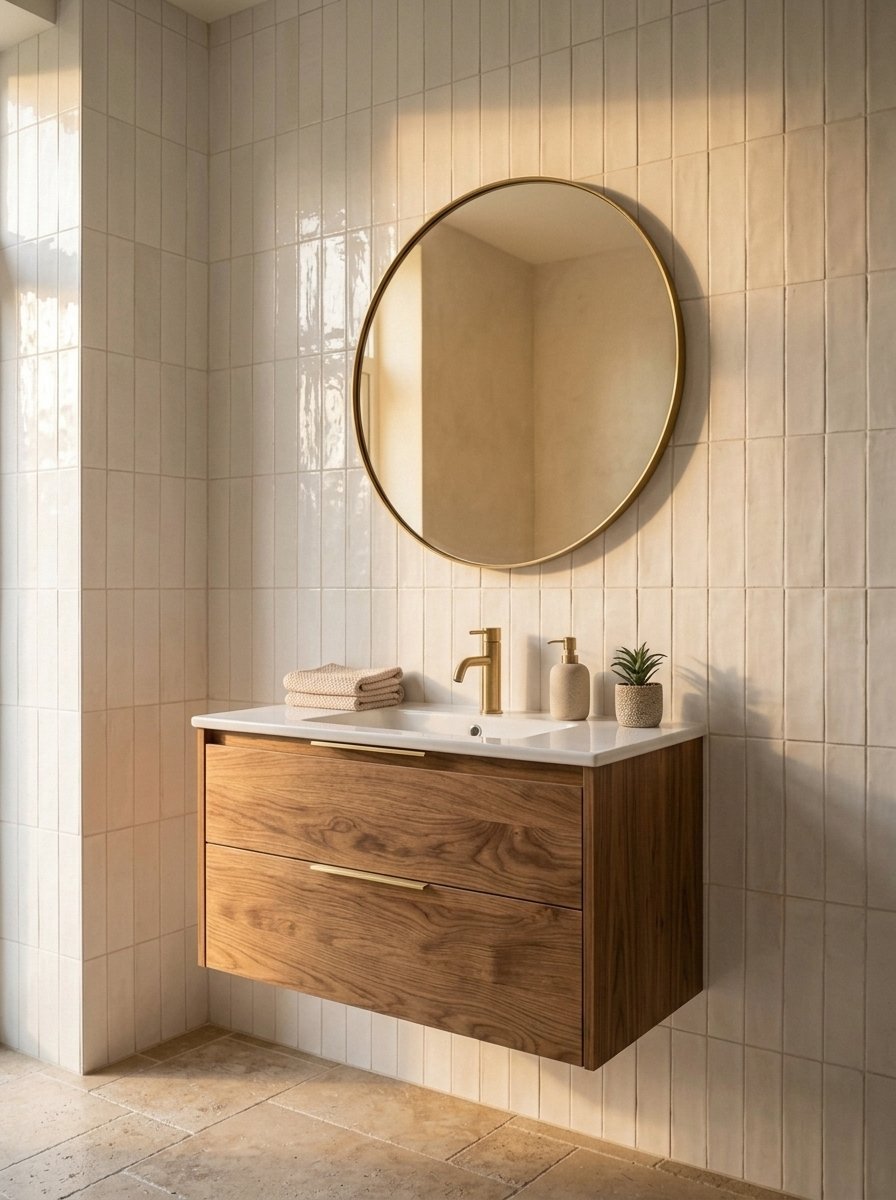
Wood and brass are a signature midcentury pairing. The warm glow of brass sits perfectly against the grain of teak or walnut, and each makes the other look richer.
Try a walnut vanity with slim brass pulls, a brass faucet, and a round brass-framed mirror. Add a wooden stool or shelf for balance. Keep the rest of the room simple so these two materials lead.
How to mix them well:
- Let wood be the larger element and brass the accent
- Repeat brass in three or four places, such as faucet, pulls, mirror, and light
- Add a third neutral like white tile or soft gray
Finish note: Brushed or satin brass hides water spots better than polished brass, which makes it a smart choice for busy family bathrooms.
18. Add Color and Pattern
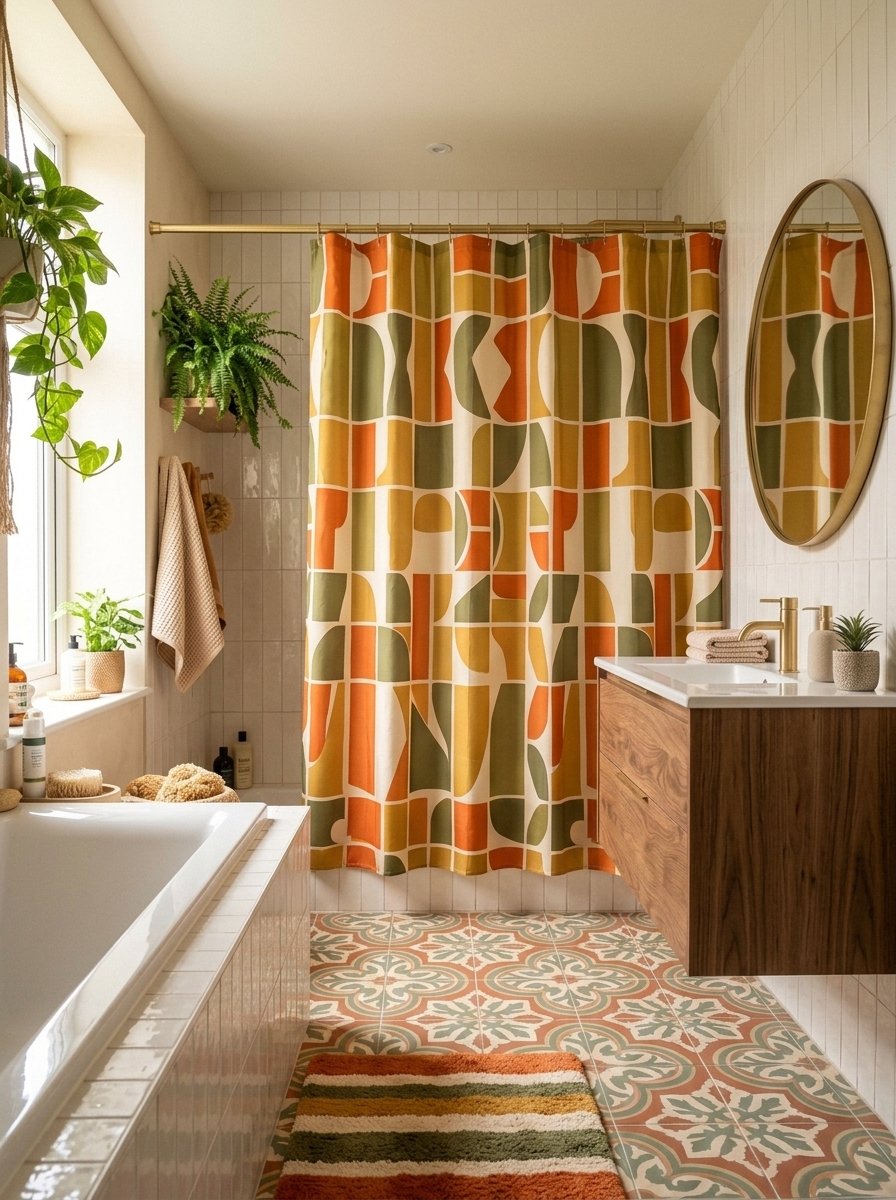
Midcentury design isn’t afraid of color. It treats bold hues and playful patterns as part of the fun, and a bathroom is a small space where you can try them out.
Pick one main pattern, such as geometric tile, a graphic shower curtain, or a patterned rug. Then pull one or two colors from it for towels, art, and accessories. The pattern becomes the anchor, and the rest of the room supports it.
Pattern ideas:
- A geometric shower curtain in orange and olive
- A patterned cement-style tile floor
- A bold wallpaper in one corner or accent wall
- A striped bath mat in retro colors
Keep it controlled: Choose two or three colors from the same warm family, and balance busy patterns with plain surfaces.
19. Favor Brass Accents
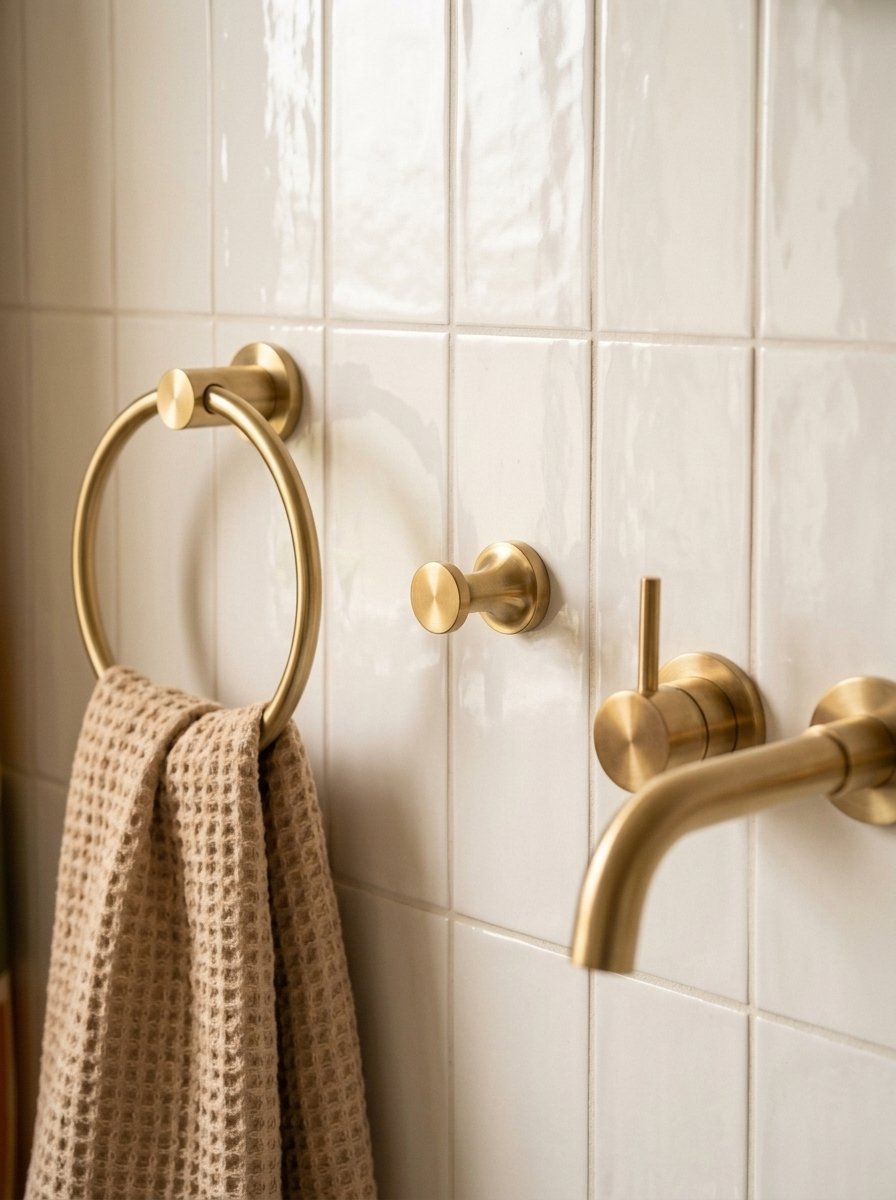
Brass accents are an easy way to add polish without a full renovation. Even small swaps, like new cabinet pulls or towel bars, can shift a bathroom toward a midcentury look.
Beyond mirrors, consider brass faucets, a shower head, towel rings, a toilet paper holder, and a robe hook. Choose simple, slim shapes with clean lines for the most authentic effect.
Brass finish guide:
| Finish | Look | Care |
|---|---|---|
| Polished brass | Bright, shiny | Shows water spots |
| Brushed brass | Soft, matte glow | Hides fingerprints |
| Unlacquered brass | Develops a patina | Changes over time |
| Brass-look (PVD) | Durable and consistent | Easy to clean |
Buying tip: Match finishes within the same area. Mixing slightly different brass tones can look accidental.
20. Mix Old and New

Midcentury style works beautifully in a mix. Combine genuine vintage finds with modern fixtures, and the room gains character and comfort.
For example, pair a vintage mirror with a modern freestanding tub, or a retro sconce with a sleek contemporary faucet. Use new plumbing and electrical for safety, and keep vintage pieces for decor and furniture.
Smart mixing rules:
- Keep a consistent color palette across old and new
- Use vintage for the “personality” pieces, and new for the working parts
- Check any old item for cracks, rust, and safe wiring before using it
Where to shop: Estate sales, antique shops, and salvage yards are good places to find period pieces. Always verify items are safe for bathroom use.
21. Install a Skylight
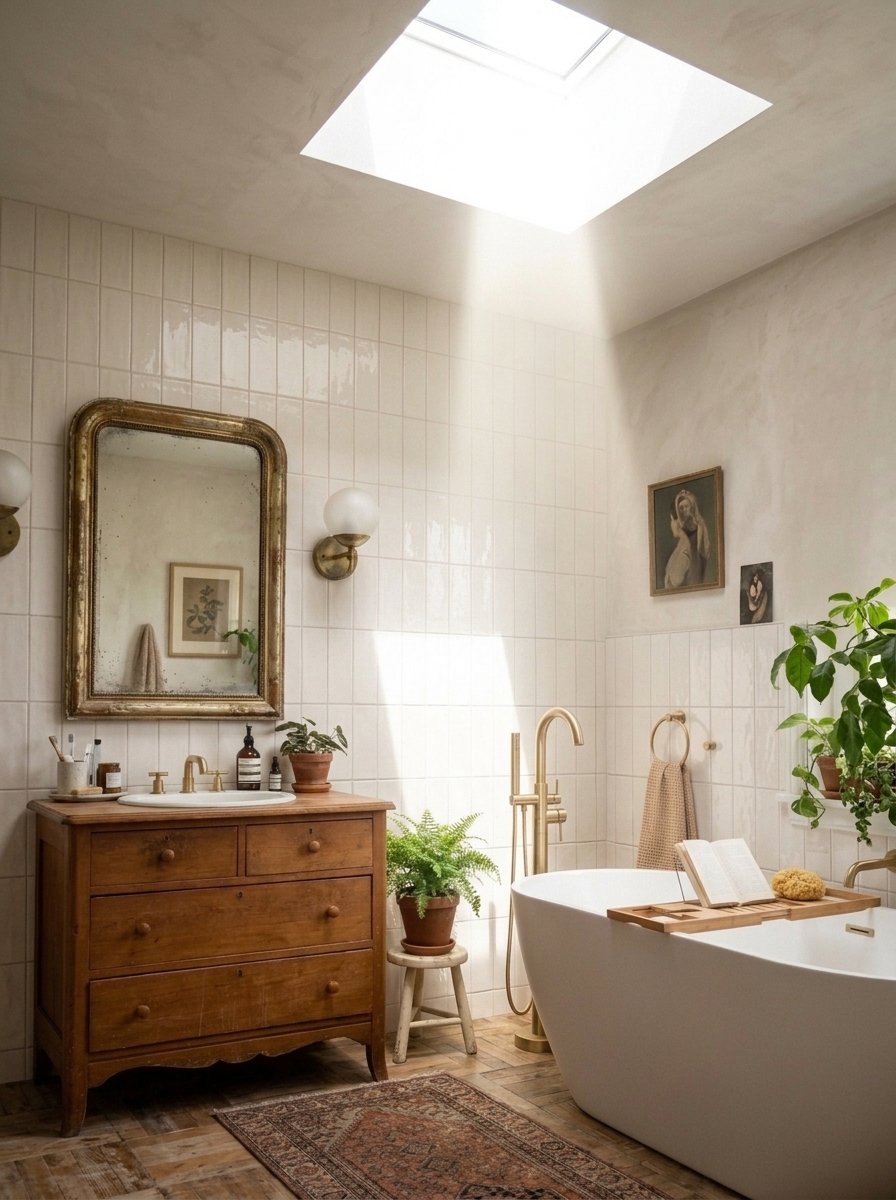
A skylight pours natural light into a bathroom, which is a very midcentury way to connect with the outdoors. It adds warmth during the day and a view of the sky or tree branches.
It’s especially useful in interior bathrooms with no windows. A well-placed skylight can make a small room feel brighter and more open.
What to consider:
- Choose a moisture-resistant, well-insulated unit
- Make sure flashing is professionally installed to prevent leaks
- Consider a vented skylight to help release humid air
- Check privacy if your roofline is visible from nearby buildings
Hire a pro: Cutting into a roof is serious work. Use a licensed roofer or contractor, and confirm permit requirements before you start.
22. Energize With Pop Art Colors

Pop art colors, like bright red, sunny yellow, and electric blue, brought a burst of fun to midcentury design. In a bathroom, a little pop can go a long way.
Try a vivid vanity, a bright tile accent, or a bold piece of art. Keep the walls and floor neutral so the color has room to shine. A small powder room is the perfect place to be bold.
How to use pop color:
- Paint a vanity or door in one bright shade
- Add a colorful shower curtain or towels
- Hang a bold print or poster in a moisture-safe frame
- Pair with white and wood for balance
Tip: Test bright colors in the room’s actual lighting. Strong shades can look different under bathroom bulbs than in a store.
23. Lay Hardwood Flooring

Wood floors in a bathroom feel warm underfoot and unmistakably midcentury. Walnut, oak, or teak flooring continues the home’s wood theme into the bath.
However, wood and water don’t always get along. If you choose hardwood, pick engineered wood with a strong finish, seal the edges, and use a good bath mat. Powder rooms are lower risk than rooms with tubs and showers.
Alternatives that keep the look:
- Wood-look porcelain tile, which resists moisture
- Luxury vinyl plank rated for bathrooms
- Teak bath mats or duckboard inserts
Care notes: Wipe puddles fast, ventilate well, and avoid letting wet towels sit on the floor.
24. Hang an Octagonal Mirror

An octagonal mirror brings a crisp, graphic shape that sits between round and square. It looks sharp above a wood vanity and gives a nod to the angular forms of midcentury art.
Pick one with a slim brass, black, or wood frame. Hang it above a single sink, or hang two side by side over a double vanity for a rhythm of shapes. The eight sides catch light in interesting ways.
Style tips:
- Repeat the shape in a small tile detail or a wall shelf
- Choose a frame finish that matches your hardware
- Pair with sconces on either side for balanced light
Tip: A shaped mirror needs a plain wall. Skip busy wallpaper behind it, or the shape gets lost.
25. Decorate With Wood Grain

Wood grain is natural pattern, and midcentury designers celebrated it. Instead of hiding the grain, let it show. Walnut with bold swirls, teak with straight lines, and oak with tight rings each have a distinct personality.
Choose one wood grain and let it repeat in a few places: the vanity, a shelf, a framed mirror, and a small stool. Book-matched veneer, where two pieces mirror each other, creates a striking symmetrical pattern on cabinet doors.
Grain tips:
- Use a clear matte or satin protective finish to show the grain
- Avoid heavy stains that hide the natural lines
- Align grain direction across cabinet fronts for a premium look
Water note: Always seal wood well, including edges and hidden surfaces, to protect it from humidity.
26. Incorporate Scandi Style
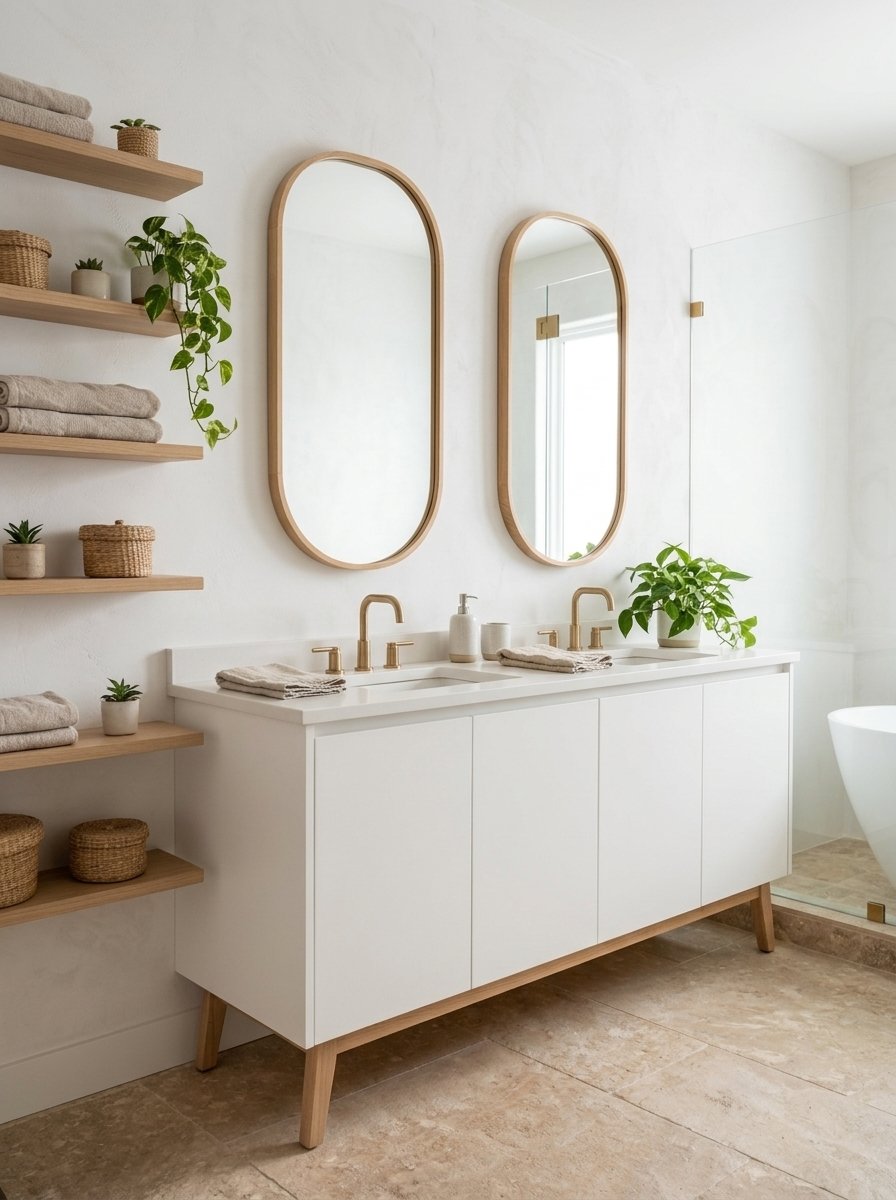
Scandinavian design and midcentury modern are close cousins. Both value simplicity, natural materials, and function. Blending them gives you a bathroom that feels bright, calm, and warm.
Start with white walls and light wood. Add a simple white vanity with oak legs, matte black fixtures, linen towels, and a plant. Keep decor minimal, and focus on texture, such as wool, cotton, and ceramics.
Scandi touches:
- Pale oak or ash shelving
- White subway or square tile
- A woven basket for towels
- Soft, diffused lighting
Keep it midcentury: Add a splash of retro color, like a mustard towel or a terracotta pot, so the space doesn’t tip into plain minimalism.
27. Add Retro Wall Tile
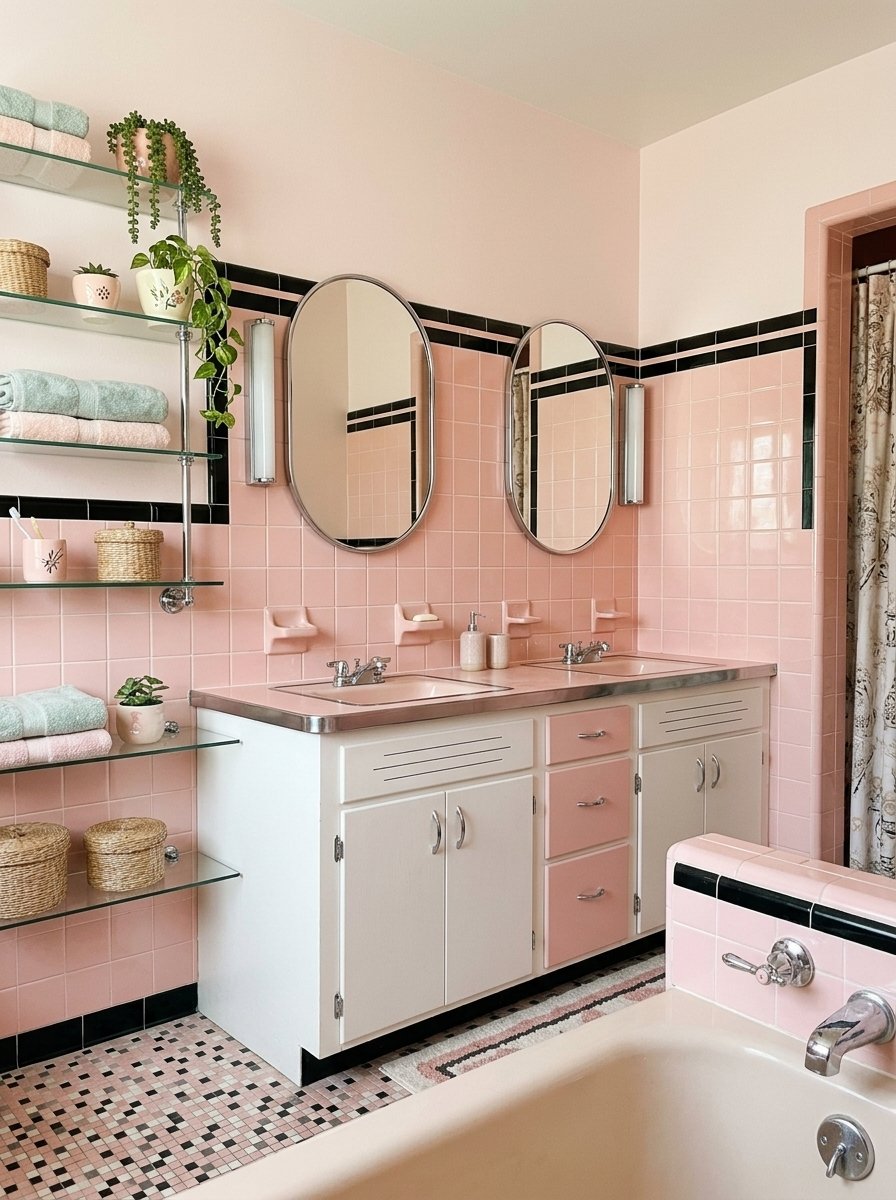
Retro tile can take you straight to the 1950s. Think glossy rectangles and squares in pastel pink, mint green, powder blue, or butter yellow, often with a contrasting trim line.
A full-wall tile treatment behind the tub or around the vanity looks charming and cohesive. If you want the classic look, add a border row in a darker color, or finish the edge with bullnose tiles.
Retro tile ideas:
- A pastel pink or mint wall with a black trim line
- Two-tone walls with tile halfway up and paint above
- Small mosaic tiles on the floor in a matching color
Tip: Pick a grout color on purpose. White grout looks crisp and classic, while colored grout adds a modern twist.
28. Mix Patterns
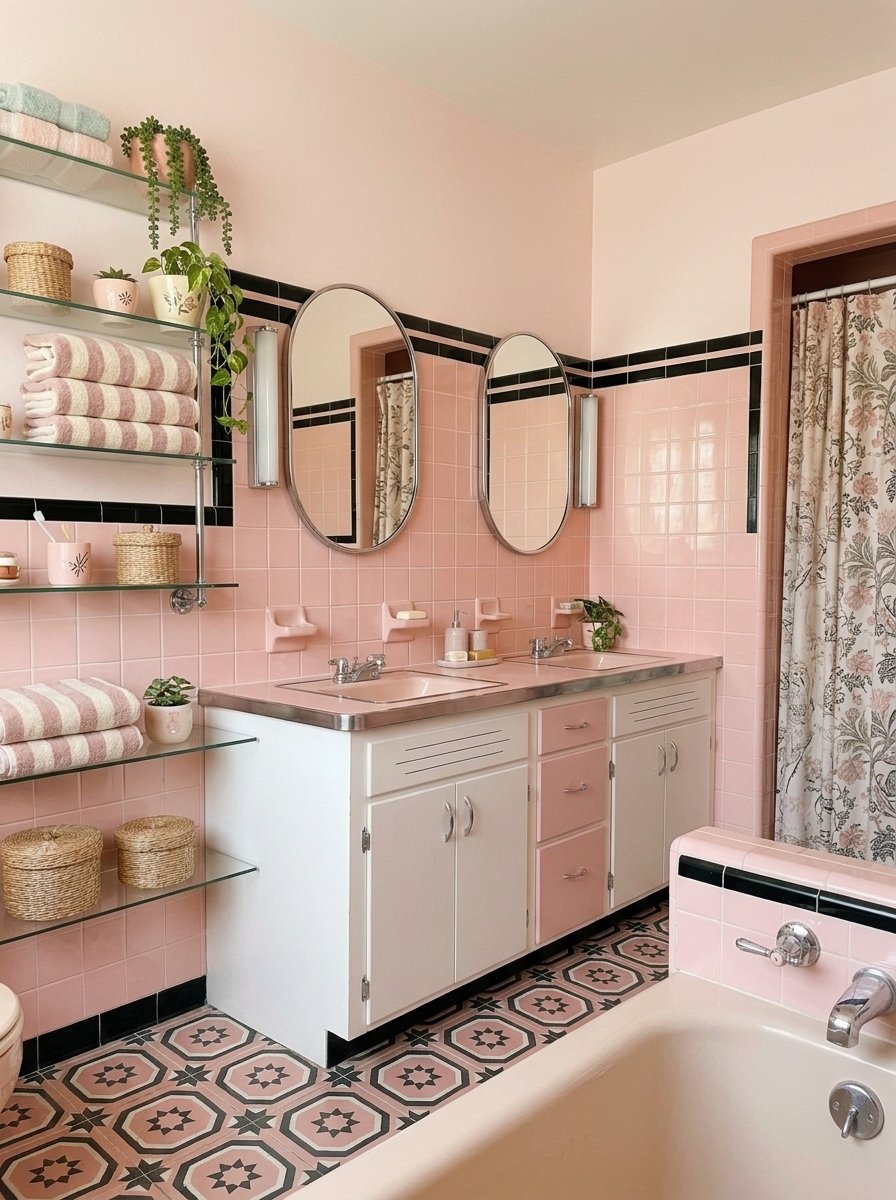
Mixing patterns can look rich and layered, as long as you follow a few rules. Midcentury style does it well because its patterns share a similar scale, color, or geometric language.
Try combining a geometric floor tile with a striped towel and a botanical shower curtain. Choose a common color to tie them together, and vary the pattern sizes so they don’t compete.
Pattern-mixing rules:
- Pick one large-scale pattern as the leader
- Add a medium pattern and a small one
- Keep one color in common across all patterns
- Rest your eyes with at least one plain surface
Don’t overdo it: In a small bathroom, two or three patterns are plenty.
29. Keep Windows Bare
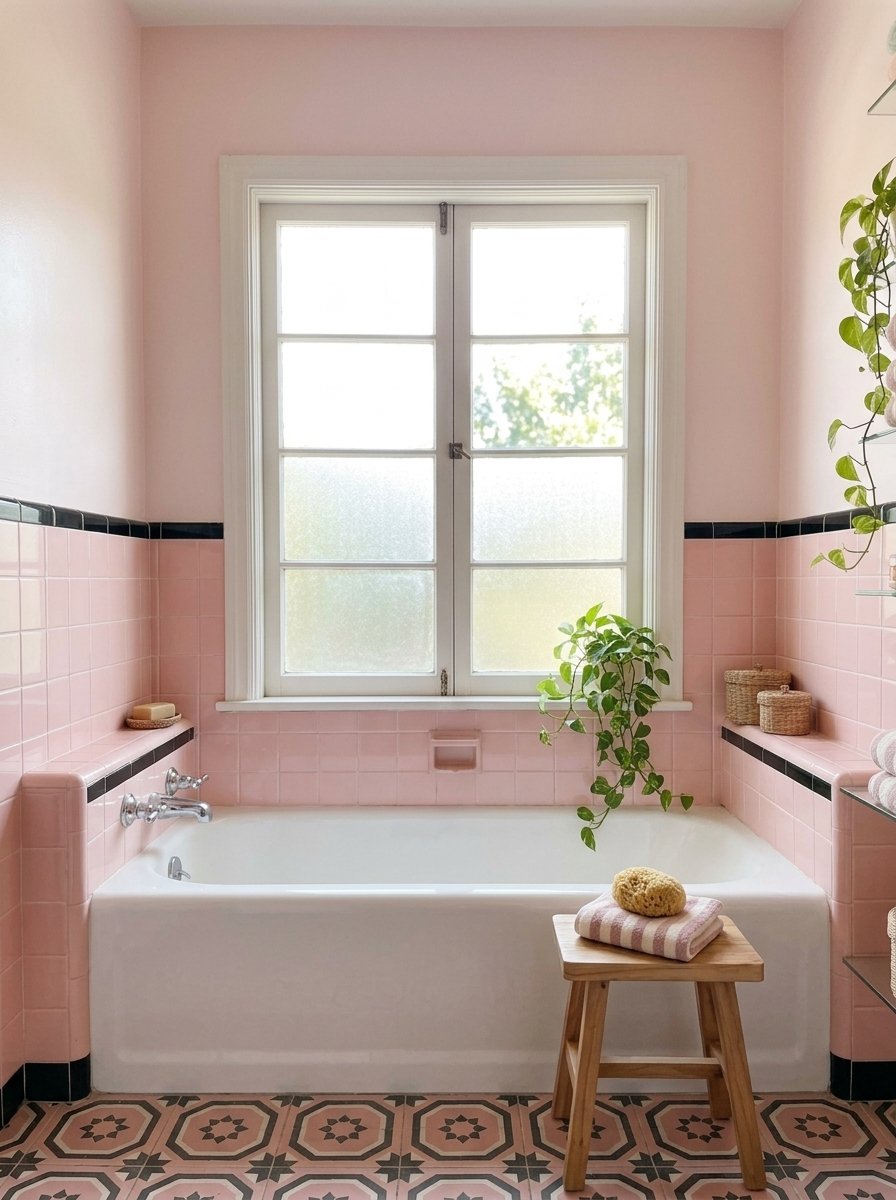
Midcentury homes often have big, uncluttered windows that frame the view and let in light. In a bathroom, leaving windows bare can feel clean, modern, and open.
This works best when privacy isn’t an issue. If you do need privacy, choose frosted or textured glass, or a window film that lets light in but blocks views. High clerestory windows, placed above eye level, give you light and privacy together.
Options:
- Frosted or obscure glass in the lower half
- A privacy film you can apply and remove
- A plain, slim roller shade you can lower when needed
Moisture note: Wipe window sills and check for condensation regularly. Bare wood frames need a waterproof finish.
30. Hang Vintage-Inspired Wallpaper

Vintage-inspired wallpaper captures the charm of old patterns with updated materials. Look for atomic starbursts, abstract shapes, bold florals, and retro geometrics in colors from the era.
Choose a washable, moisture-friendly paper, and keep it on walls that don’t get splashed. Pair it with a simple vanity and clean fixtures so the pattern is the star.
Tips for success:
- Order a sample and hang it temporarily to check scale and color
- Prepare and prime the wall properly
- Use a bathroom-rated adhesive
- Keep the fan running to limit humidity
Pattern note: Large patterns look dramatic in small rooms, but they also reveal seams, so make sure your wall is straight and smooth.
Midcentury Bathroom Color Palettes
Not sure where to start? Use one of these palettes as a shortcut.
| Palette | Colors | Mood | Best Paired With |
|---|---|---|---|
| Warm earth | Terracotta, mustard, cream | Cozy and sunny | Walnut and brass |
| Retro garden | Olive, sage, mushroom | Calm and natural | Teak and rattan |
| Atomic pastel | Mint, blush, powder blue | Light and playful | White and chrome |
| Moody modern | Charcoal, black, teal | Dramatic and sleek | Wood and brass |
| Pop art | Red, yellow, blue | Bold and fun | White and black |
How to Style a Small Midcentury Bathroom
Midcentury design suits small rooms because its furniture and forms are slim and light.
- Go floating. A wall-mounted vanity shows more floor and makes the room feel larger.
- Choose one statement. Pick tile, wallpaper, or a bold color, not all three.
- Use light wood. Pale oak or ash brightens small spaces.
- Add a big mirror. Light bounces around and expands the space.
- Keep storage simple. Use baskets, a slim shelf, or a recessed niche.
- Pick glass over curtains. A clear glass shower door keeps sight lines open.
Budget Guide: Where to Spend and Where to Save
| Item | Approach | Why |
|---|---|---|
| Plumbing and waterproofing | Spend | Hidden work that must last |
| Vanity | Mid-range or vintage find | Big impact on the look |
| Tile | Spend on a focal area, save elsewhere | Tile is costly to redo |
| Lighting | Mid-range | Rated fixtures are worth it |
| Mirrors and decor | Save | Easy to swap later |
| Paint | Save | Cheapest big change |
| Wallpaper | Mid-range | Choose washable options |
Prices vary widely by region and materials, so get several quotes for larger projects.
Common Midcentury Bathroom Mistakes to Avoid
- Using untreated wood near water
- Skipping ventilation, which leads to mold and peeling paper
- Choosing too many retro elements and creating a theme-park look
- Mixing too many metal finishes
- Using lighting that isn’t rated for bathrooms
- Picking floor tile that’s slippery when wet
- Ignoring the size of the room when choosing bold patterns
- Forgetting storage
Step-by-Step: How to Plan Your Midcentury Bathroom
- Collect inspiration. Save images of tile, vanities, and lighting you love.
- Set a budget. Include a cushion for surprises.
- Choose your palette. Pick two main colors plus an accent.
- Pick the vanity. Decide between vintage, custom, or ready-made.
- Select tile and flooring. Check slip resistance and moisture ratings.
- Plan lighting. Choose damp-rated fixtures and a layout.
- Choose finishes. Select brass, matte black, or chrome and stay consistent.
- Hire pros for plumbing and electrical work. Confirm permits.
- Install and seal. Waterproof surfaces and seal wood properly.
- Style. Add mirrors, plants, textiles, and a few retro accessories.
Conclusion
Midcentury modern bathrooms stay popular because they balance simplicity and personality so well. Warm wood, geometric shapes, gentle color, and a touch of brass can turn even a small bathroom into a calm, stylish retreat.
You don’t need to copy every idea. Pick three or four that match your space and budget. Maybe start with a wood vanity and a round mirror, then add a retro sconce or a bold tile. Protect your choices with good ventilation, sealed wood, and rated fixtures, and your bathroom will look good for years.
Trust the style’s best rule: keep it simple, and let a few details do the talking.
FAQs
What is a midcentury modern bathroom?
It’s a bathroom inspired by 1940s to 1960s design, with clean lines, warm wood, geometric shapes, and retro colors.
What colors are used in midcentury modern bathrooms?
Earthy tones like olive, mustard, and terracotta are common, along with teal, soft pastels, and warm neutrals.
What tile is best for a midcentury bathroom?
Square, hexagon, and terrazzo tiles are classic choices. Glossy pastel tiles also give a retro look.
What kind of vanity suits midcentury style?
A floating or tapered-leg wood vanity with flat-front drawers fits best. Vintage dressers also work well.
What lighting is best for a midcentury bathroom?
Globe pendants, dome fixtures, and brass sconces are popular. Use bulbs around 2700K and fixtures rated for bathrooms.
Can I use wood in a bathroom?
Yes, if it’s sealed and ventilated well. Keep wood out of direct spray.
How do I make a small bathroom midcentury?
Use a floating vanity, a large mirror, light wood, and one bold feature like tile or wallpaper.
Is wallpaper okay in a bathroom?
Yes, if it’s washable or vinyl and kept away from direct splashes. Run the fan to control humidity.
What metal finish works best?
Brushed or unlacquered brass is classic. Matte black also works for a more modern midcentury look.
Is midcentury modern still in style?
Yes. Its simple shapes and natural materials keep it popular, and it suits many home styles.