Guests form an opinion about your home in the first few seconds. They haven’t seen the living room, the kitchen, or your favorite chair yet. All they have is the entryway, and that small space sets the tone for everything behind it.
A modern entryway doesn’t need much square footage. It needs a clear purpose, a calm look, and a few well-chosen pieces. Done right, it welcomes visitors, hides the daily pile of shoes and bags, and gives you a tidy place to drop your keys.
This guide shares 22 modern entryway ideas you can use whether you have a grand foyer, a narrow hallway, or a tiny landing by the front door. You’ll find ideas for color, lighting, storage, materials, and style, plus practical tips on sizing, safety, and budgeting.
Quick Answer: What Makes an Entryway Look Modern?
Most modern entryways share these five traits:
- Clean lines. Simple furniture shapes with no heavy ornament.
- Smart storage. A place for shoes, coats, and keys, so clutter stays out of sight.
- A limited palette. Two or three main colors, plus one accent.
- Layered lighting. A ceiling fixture plus a lamp or sconce for warmth.
- A few statement pieces. One mirror, one artwork, or one bold light, not ten small items.
The rule of thumb is less, but better.
Modern Entryway Essentials at a Glance
| Element | Purpose | Modern Tip |
|---|---|---|
| Console table or bench | Drop zone and seating | Choose slim legs and a simple profile |
| Mirror | Last-look check and light bounce | Go oversized or round |
| Lighting | Welcome and function | Layer a pendant with a table lamp |
| Rug | Warmth and floor protection | Pick a low-pile, washable style |
| Storage | Hide shoes and bags | Use closed baskets or a cabinet |
| Art | Personality | One large piece beats a cluster of small ones |
| Plant or branches | Life and softness | Place in a sculptural pot |
Before You Start: Plan Your Entryway
A few measurements and checks save money and frustration.
- Keep a clear path. Aim for about 36 inches of walking space so people can enter comfortably. Don’t block the door swing.
- Measure depth. Many entryway console tables are 10 to 14 inches deep. Narrow ones fit tight halls better.
- Check the traffic. Think about who uses the space and how: kids with backpacks, pets, a stroller, a bike.
- Note the light. See whether the area gets daylight. Dark entries need more lamps and lighter colors.
- Think safety. Keep exits clear, anchor heavy mirrors and shelves to studs, and use non-slip pads under rugs.
- Set a budget. Start with the highest-impact items: lighting, a mirror, and a console or bench.
1. Incorporate Seating
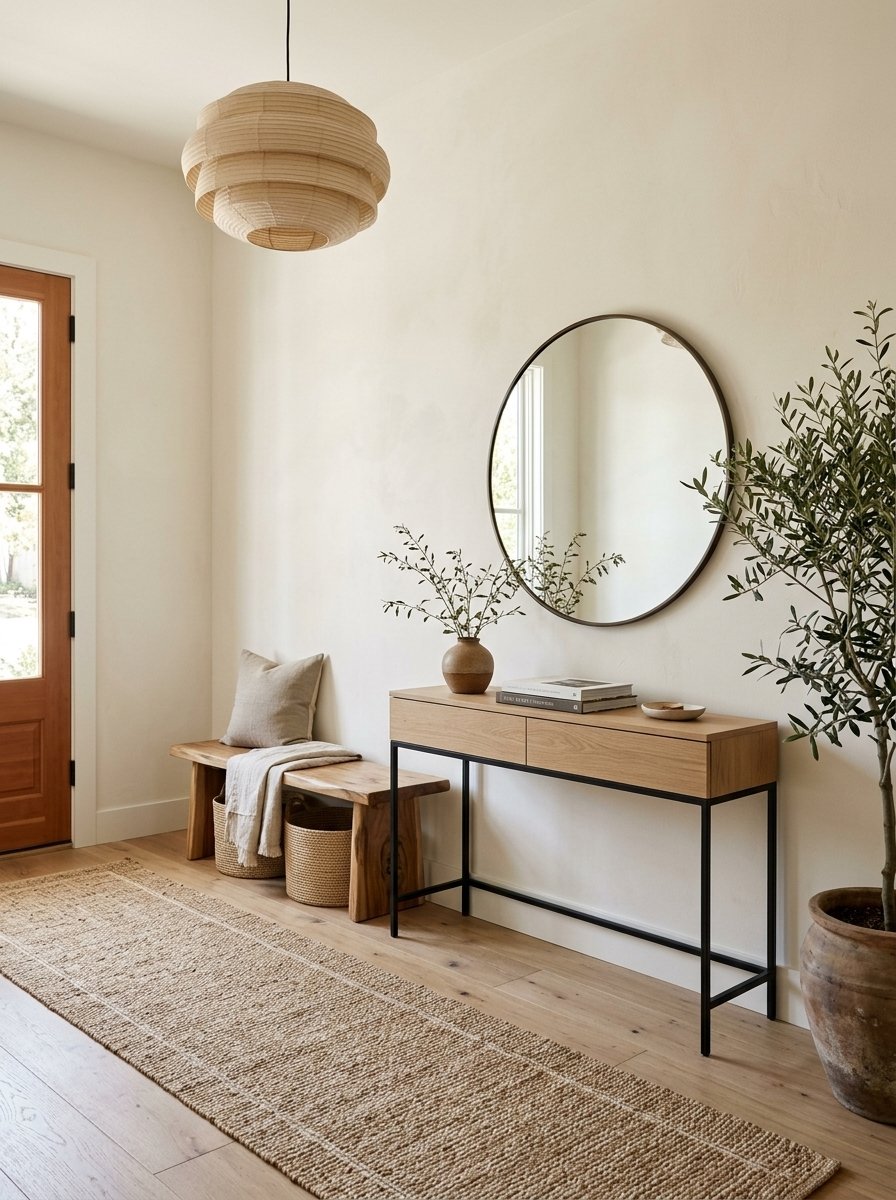
A place to sit makes an entryway genuinely useful. You can pull on boots, set down grocery bags, or wait while someone finds their keys.
A slim bench works in most layouts. For a modern look, choose clean lines, a wood or metal frame, and a simple cushion or leather seat. If floor space is tight, try a wall-mounted floating bench, which keeps the floor visible and the space feeling open.
Smart seating options:
- A bench with shoe storage underneath
- A compact ottoman that slides under a console
- A pair of small stools that tuck away
- A bench with a cushion in a stain-resistant fabric
Tip: Leave about 18 inches of height for comfortable sitting, and keep the seat at least a hand’s width from the door swing.
2. Anchor the Space With a Console Table
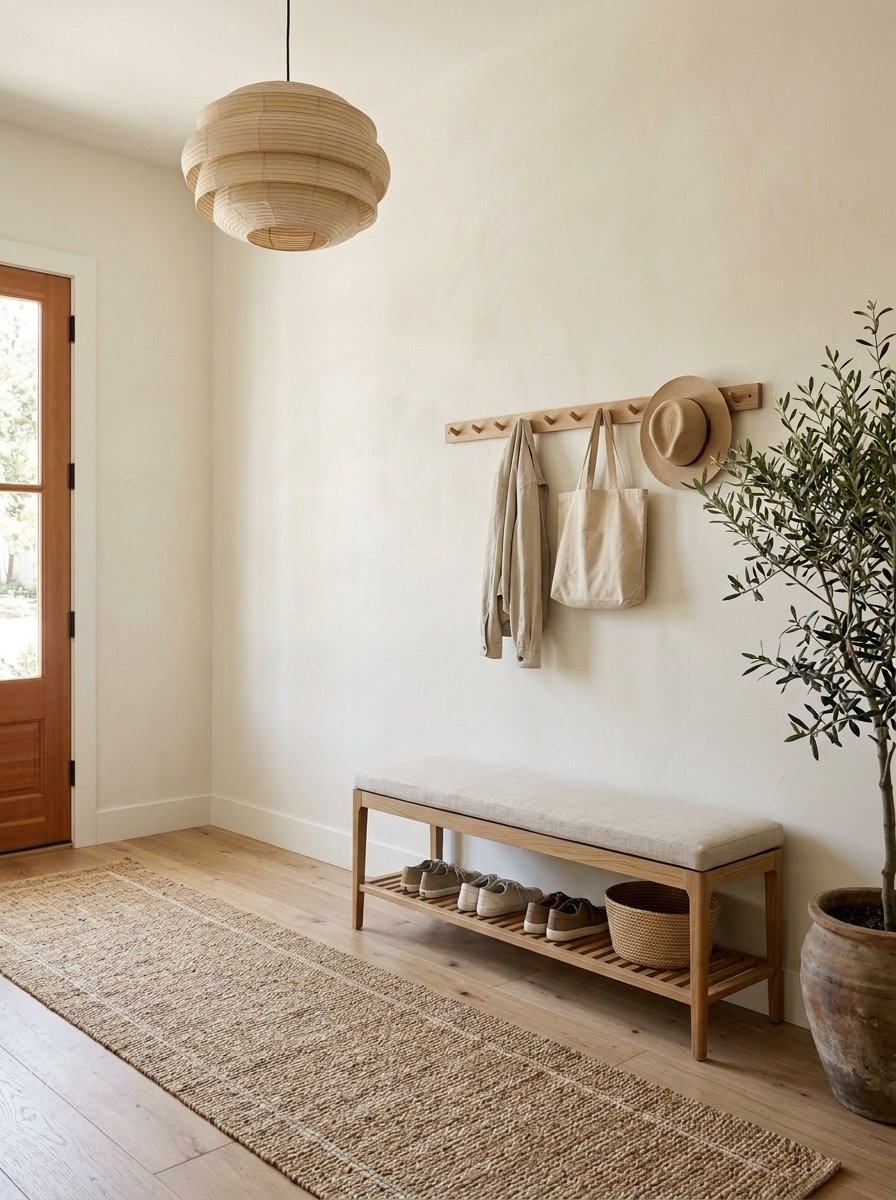
A console table is the backbone of most modern entryways. It gives you a surface for keys, mail, and a lamp, and it gives the wall something to build on.
Pick a slim, simple design. Metal frames with a wood or stone top look crisp and modern. If your hall is narrow, choose a shallow console, since many are slim enough to fit tight corridors.
Style it in layers:
- A lamp for soft light
- A tray or bowl for keys and small items
- A small plant or branch in a vase
- A stack of books or one sculptural object
Keep the top mostly clear. An uncluttered surface looks intentional, and it’s easier to keep tidy.
Budget tip: A narrow desk or a floating wall shelf can work as a console at a lower cost.
3. Add Bold Color
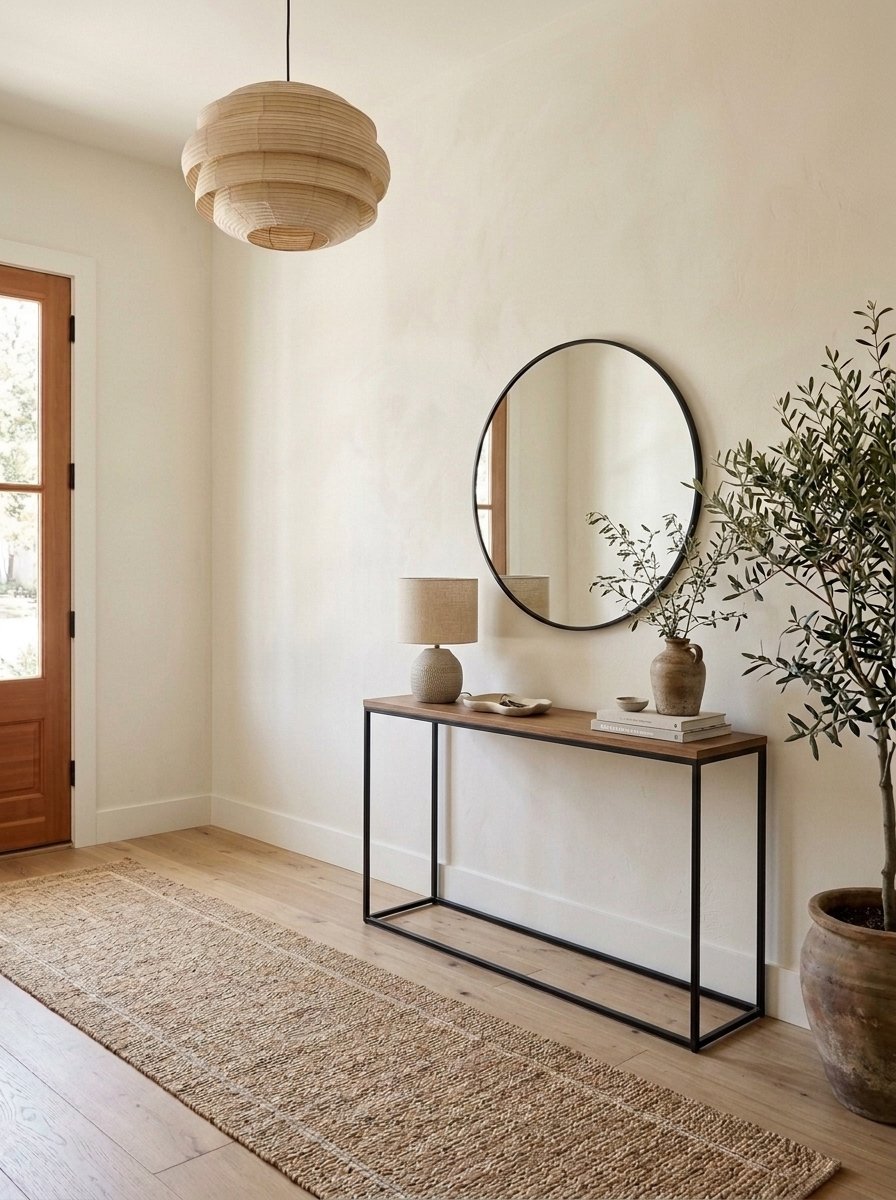
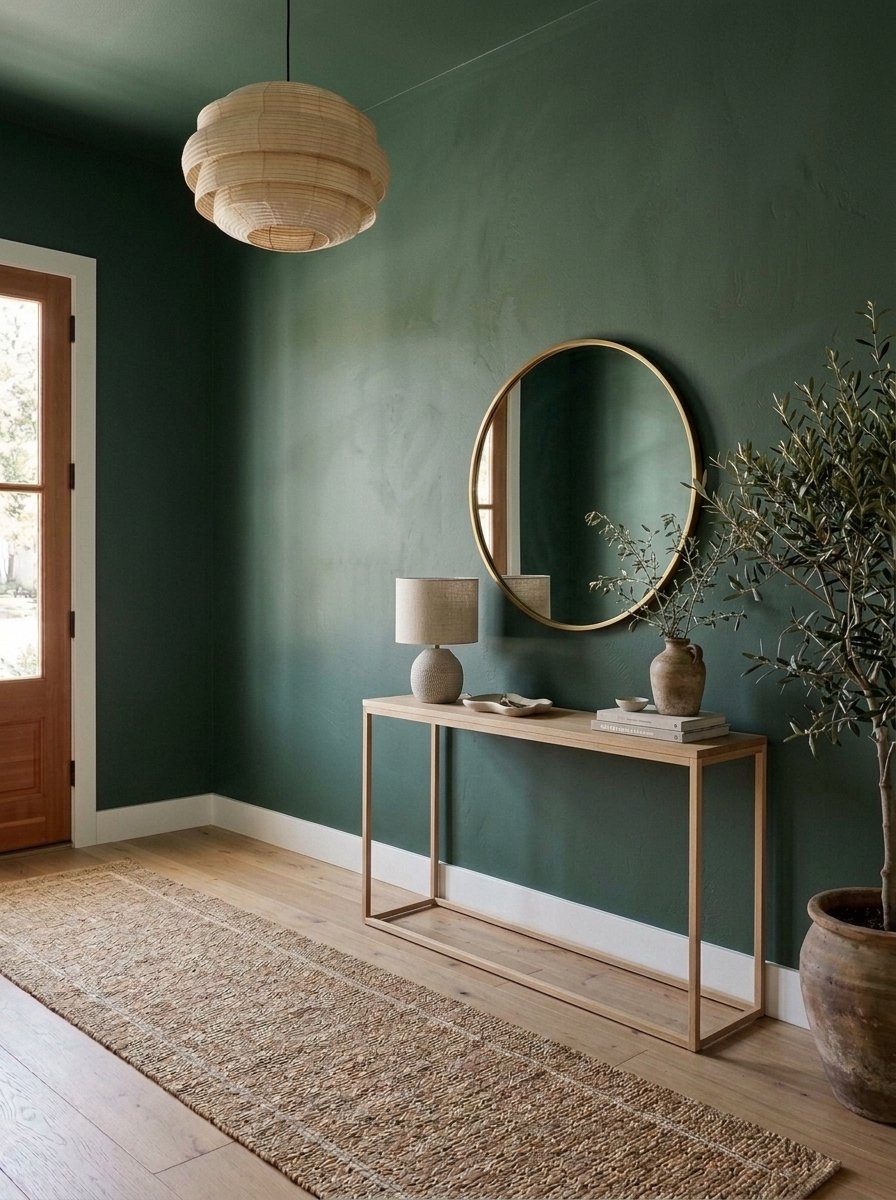
If the rest of your home is quiet, the entryway is a great place to be brave. Because the space is small, a strong color feels like a surprise, not an overload.
Try a deep green, rich navy, terracotta, or even a vivid yellow on the walls. Paint the ceiling the same color for a wrap-around effect. Or keep walls neutral and add color through a lacquered console, a bright door, or a vibrant artwork.
How to keep it modern:
- Choose one bold color, not three
- Pair it with clean white trim or neutral flooring
- Use matte or eggshell paint for a soft, current finish
Test first: Paint a large sample board and check it morning and night. Entryways often have unusual light.
4. Use Underfoot Storage
Floor clutter is the fastest way to ruin a modern entryway. Underfoot storage keeps shoes and bags out of sight and off the floor.
Look for benches with shoe cubbies, cabinets with tilt-out drawers, or a low credenza that hides everything behind closed doors. For small spaces, a slim shoe cabinet can sit against the wall and double as a console.
Options to consider:
- Closed shoe cabinets with flat fronts
- Woven baskets that slide under a bench
- Pull-out drawers for seasonal items
- A boot tray for wet weather
Maintenance tip: Give shoes some airflow, and avoid storing wet footwear in sealed cabinets, which can trap moisture and odors.
5. Create Compartments
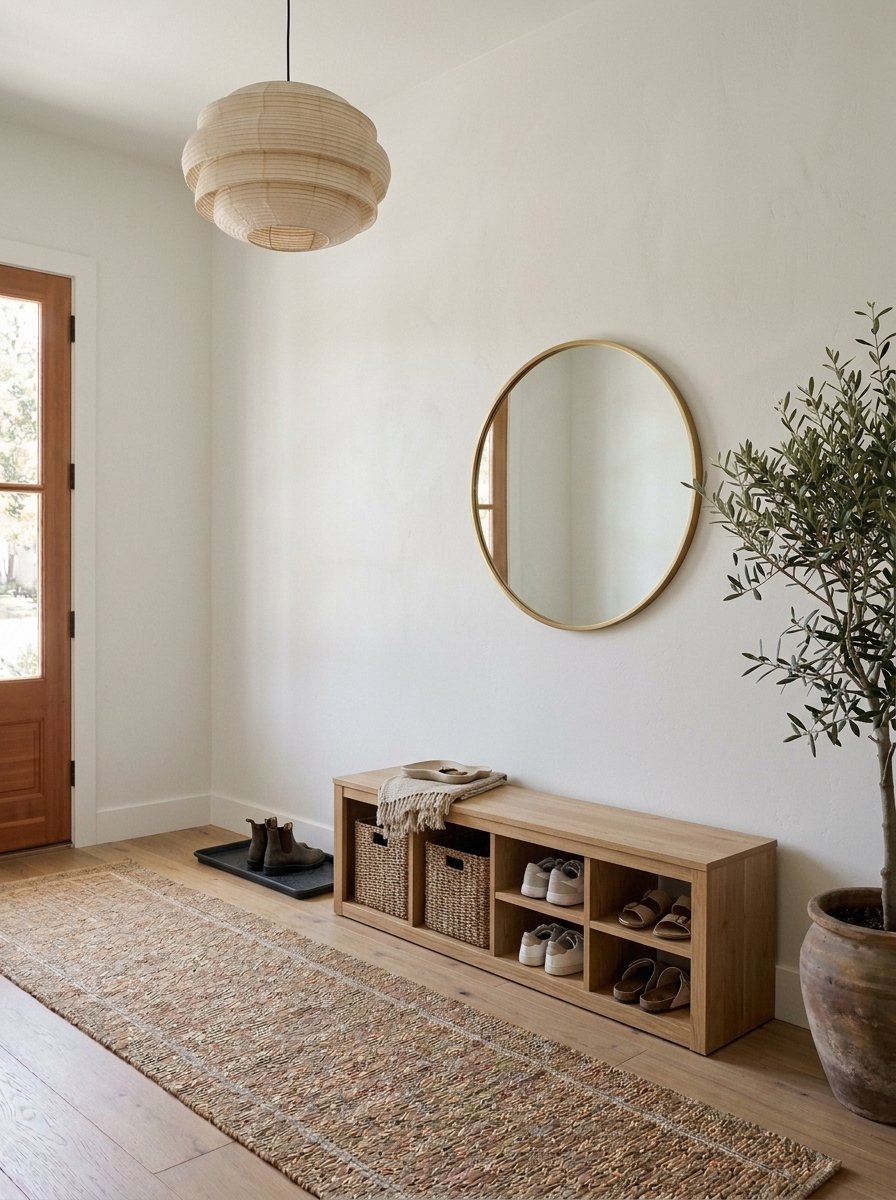
Organization looks good when it’s organized by person or purpose. Compartments give every item a home, so the entryway stays tidy even on a busy morning.
Try cubbies, labeled bins, or a wall unit with separate hooks and shelves for each family member. A simple wall-mounted organizer with a shelf, hooks, and a small basket handles keys, bags, and hats without crowding the floor.
Ideas that work:
- A row of hooks at two heights for adults and kids
- A narrow shelf above for baskets and hats
- A small tray for sunglasses and wallets
- A “launch pad” for mail and chargers
Keep the system simple. If it takes more than a few seconds to use, people won’t use it.
6. Use Natural Materials

Modern doesn’t mean cold. Natural materials add warmth and texture to clean lines.
Wood, stone, linen, wool, jute, and leather all look good in a modern entry. A solid oak bench, a stone-topped console, or a woven jute rug can soften a minimalist space.
Pairing ideas:
| Material | Where to Use | Feel |
|---|---|---|
| Oak or walnut | Bench, console, shelf | Warm, grounded |
| Stone or marble | Console top, tray | Cool, polished |
| Linen or wool | Cushion, throw | Soft, calm |
| Leather | Bench seat, hooks | Rich, durable |
| Jute or sisal | Rug, baskets | Earthy, textured |
Mixing two or three materials is plenty. Let one lead and the others support.
7. Display Contemporary Decor
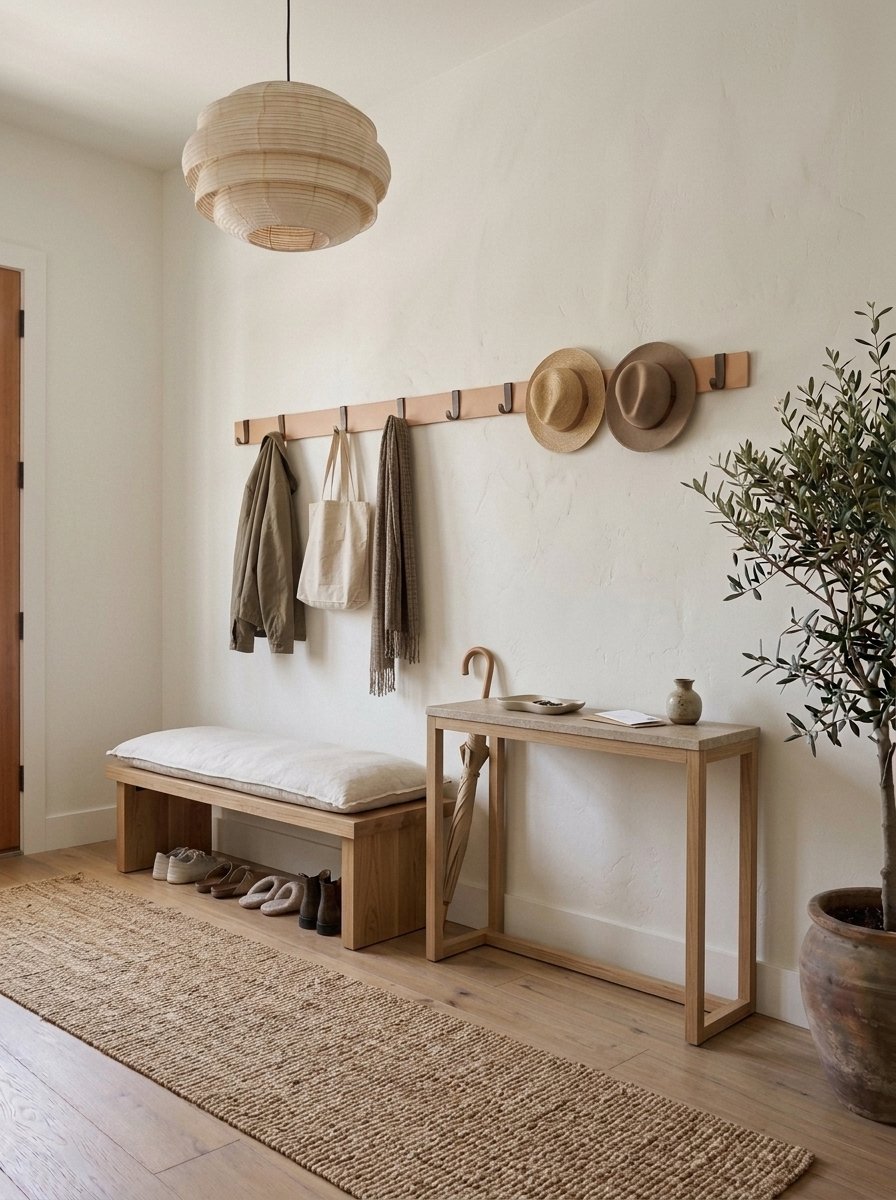
Decor in the entryway should be simple and meaningful. Aim for a few pieces with strong shapes instead of a crowded display.
Good choices include a sculptural vase, an abstract ceramic bowl, a small metal sculpture, or a minimalist clock. Group items in odd numbers and vary the heights. Leave empty space around each piece so they can be noticed.
Contemporary touches:
- A single oversized vase with branches
- A matte black bowl for keys
- A geometric object in brass or stone
- A framed print that echoes your color palette
Rule of thumb: If you can’t remember why an object is there, it probably doesn’t belong.
8. Infuse Gold Accents
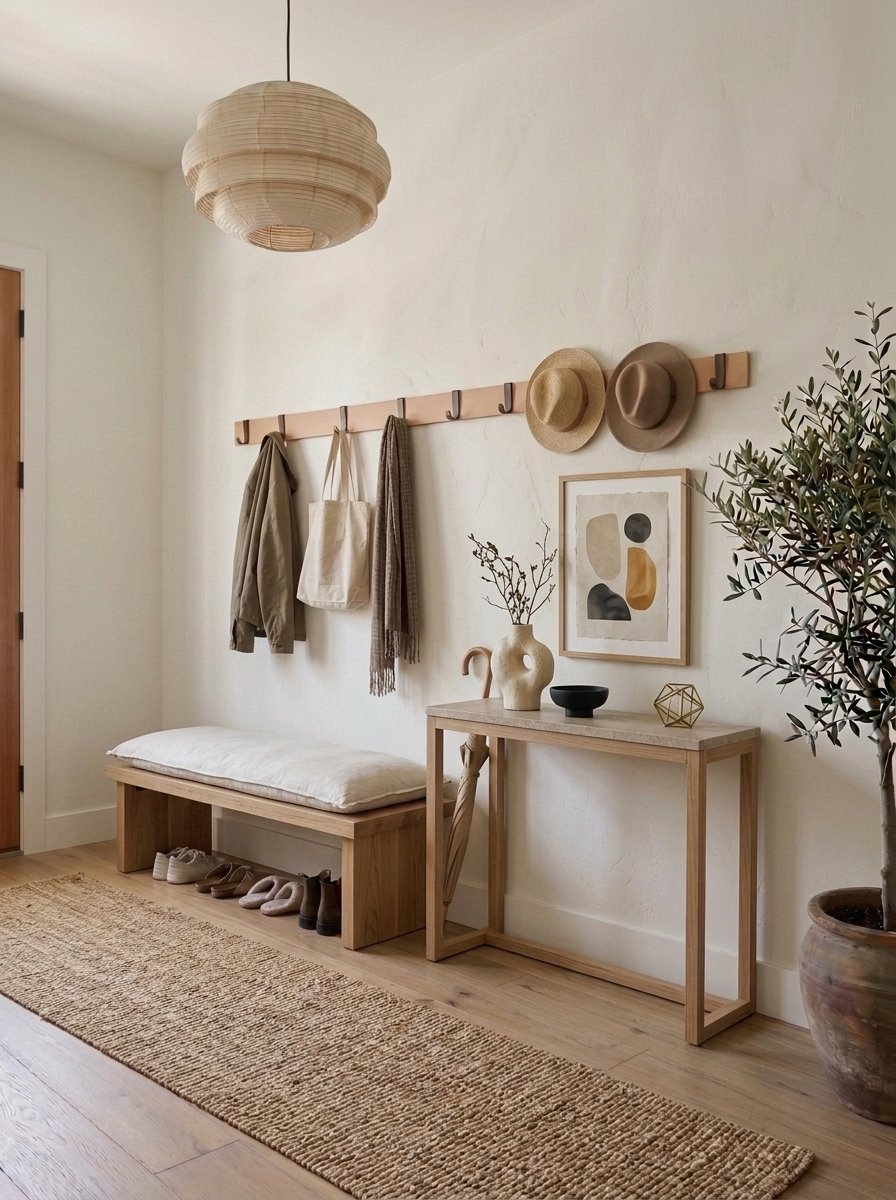
A little gold adds glow and a hint of luxury. In a modern entryway, subtle brass or champagne tones look warm without feeling flashy.
Try gold hardware on a cabinet, a slim brass frame on a mirror, a brass lamp base, or gold hooks along the wall. Brushed or satin finishes look more modern than high-polish ones.
Keep it balanced:
- Use gold in three or four small touches
- Repeat it at different heights
- Pair with black, white, or deep green for contrast
Don’t mix too many metals. If you have black hardware on the door, keep gold as your one accent metal and let the black frame the rest.
9. Mix Materials

Contrast gives a modern entryway its character. When you mix materials, the space feels collected and layered rather than flat.
Pair warm with cool, rough with smooth, and matte with shiny. A wood bench against a smooth plaster wall, a glass vase on a stone console, or a black metal frame with a woven basket all create contrast.
Easy combos:
- Wood and black metal
- Marble and brass
- Concrete and linen
- Glass and rattan
Keep control: Choose a dominant material and use the others as accents. A 70/20/10 split is a good guide: 70 percent of the main material, 20 percent of the second, and 10 percent of the third.
10. Include a Mirror
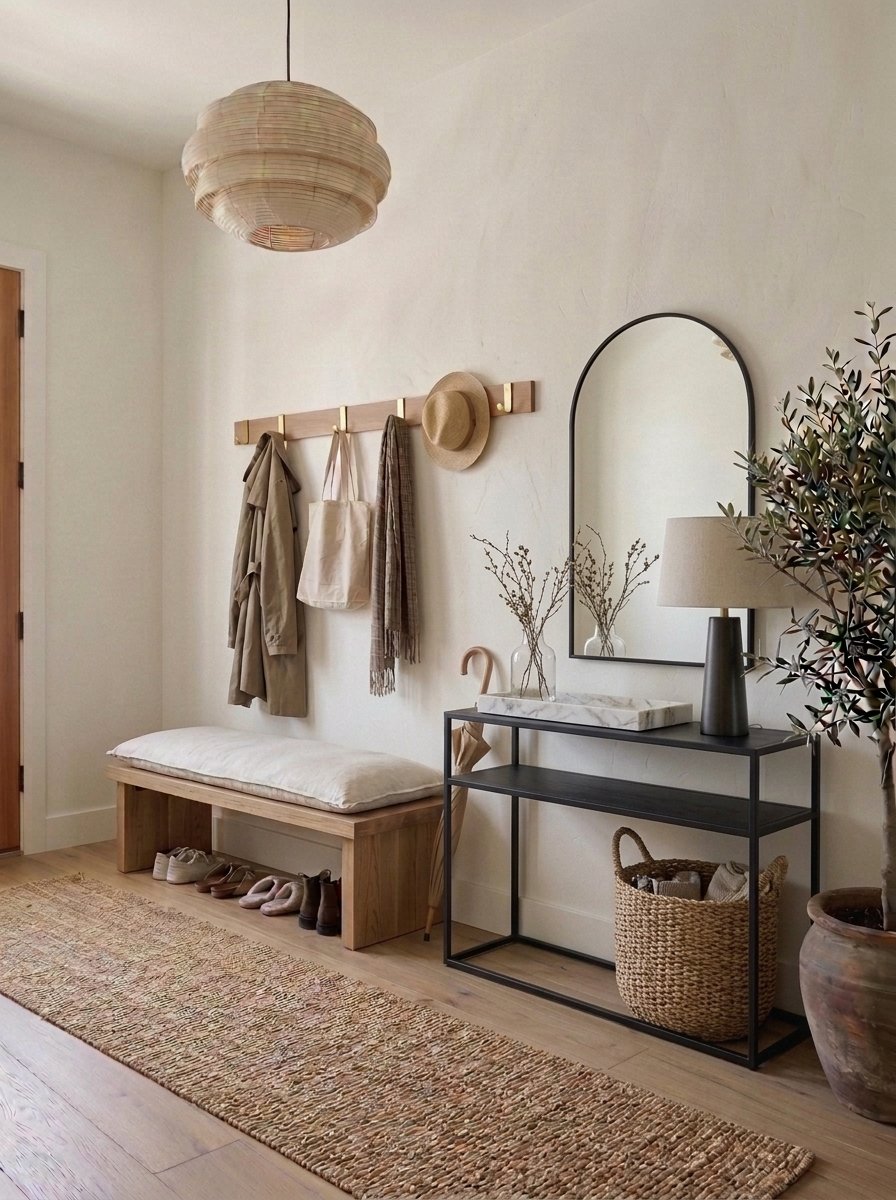
A mirror is the hardest-working piece in a modern entryway. It bounces light, makes the space look larger, and gives you a place for a last check before heading out.
Choose a shape that suits your style. Round mirrors soften straight lines. Tall rectangular or arched mirrors add height. An oversized leaning mirror feels relaxed and current.
Placement tips:
- Hang it above a console or bench
- Center it around eye level, roughly 57 to 60 inches from the floor
- Place it across from a window or light source to reflect daylight
- Avoid facing it directly at the front door if you’d rather not reflect clutter
Safety note: Mirrors are heavy. Anchor them with proper hardware into studs or use wall anchors rated for the weight, and secure leaning mirrors with a safety strap.
11. Add Statement Artwork
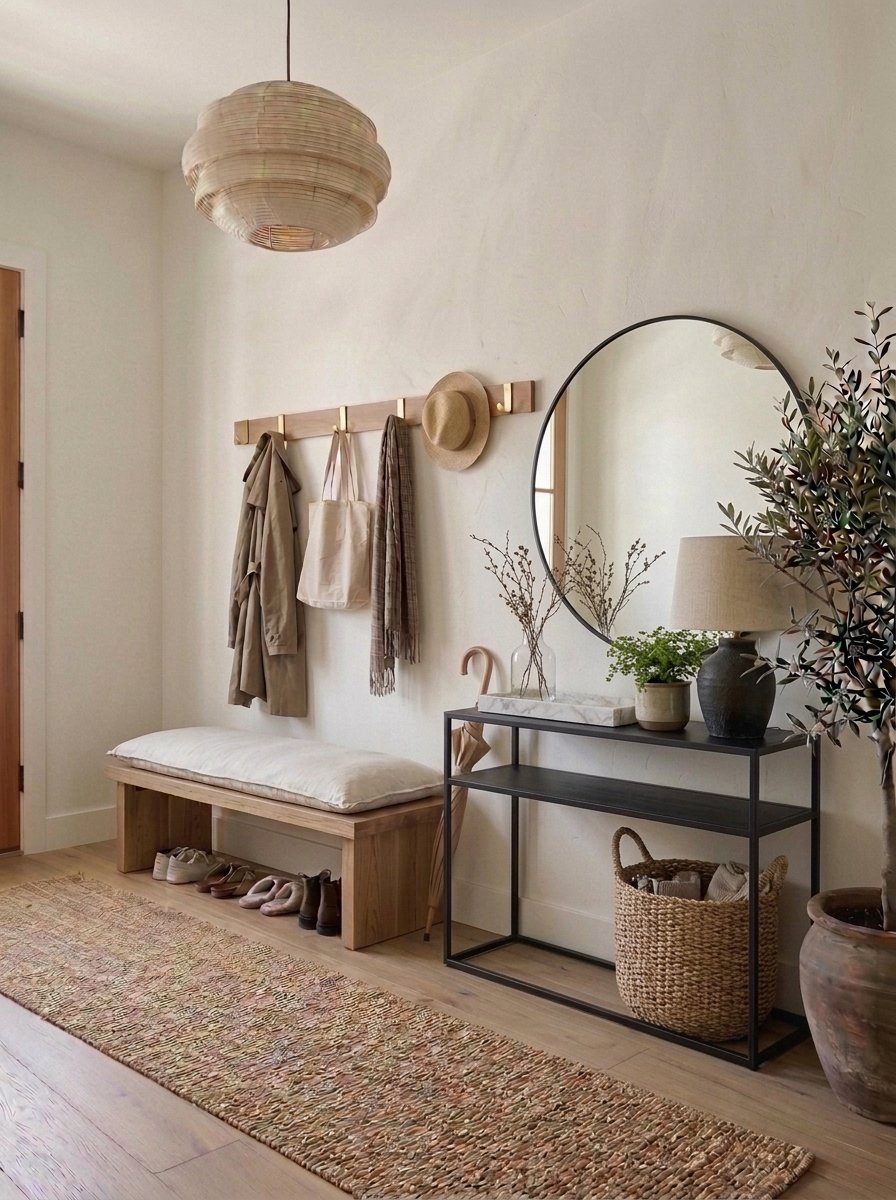
Art is your home’s first conversation. In a modern entryway, one large piece usually looks stronger than a cluster of small frames.
Pick artwork with bold shapes, strong color, or striking texture. Abstract paintings, large photographs, and oversized prints all work well. Choose a frame that matches your finishes, such as thin black, light oak, or a gallery-style float frame.
Hanging guidelines:
- Center the artwork at about 57 to 60 inches from the floor
- If it hangs above a console, leave 6 to 8 inches between the two
- Make the artwork about two-thirds the width of the furniture below
Budget tip: Print your own photography or buy digital art and have it framed locally. Large prints can cost much less than gallery pieces.
12. Opt for Neutrals
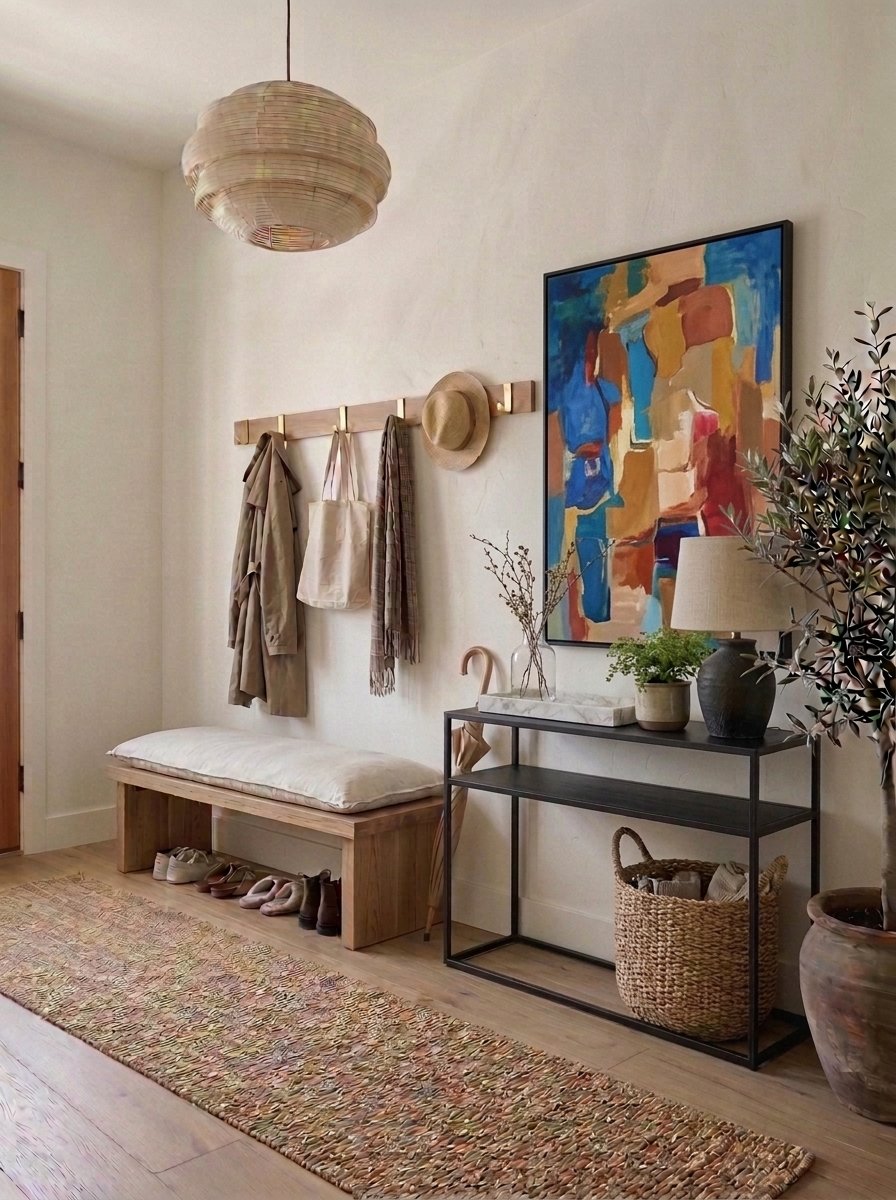
Neutral entryways feel calm, clean, and timeless. White, cream, greige, taupe, and soft gray create a quiet backdrop that lets texture and shape do the talking.
To keep a neutral palette from feeling flat, layer in different tones and textures. Try a warm white wall, a taupe bench, a cream wool rug, and a black frame for contrast.
Keep neutrals interesting:
- Mix warm and cool neutrals carefully (stay in one temperature family)
- Add texture with linen, wool, wood grain, and ceramics
- Include one dark accent for depth, like black hardware or a charcoal vase
Neutrals also help small entryways feel larger, since they reflect light and don’t compete for attention.
13. Incorporate Dramatic Lighting
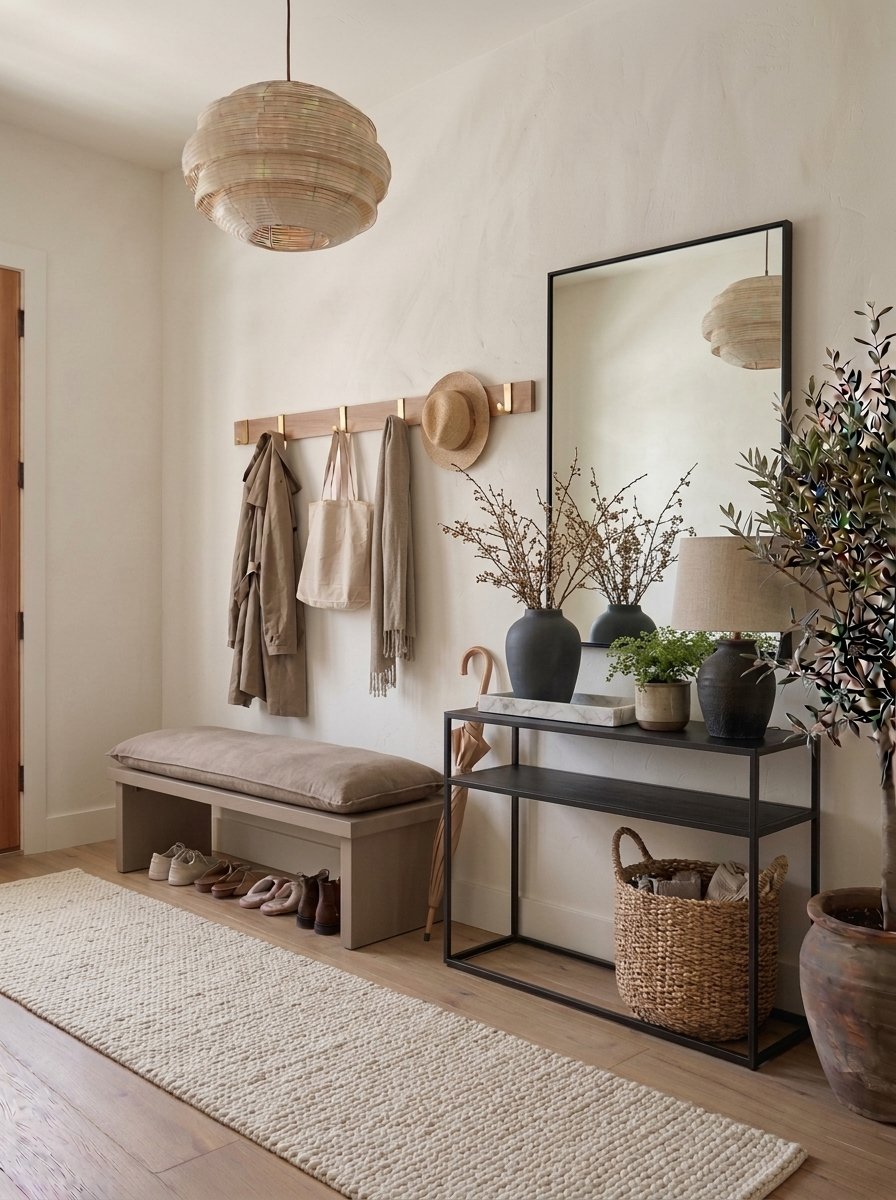
Lighting turns an entryway from a pass-through into a welcome. A bold fixture adds drama right at the door.
Consider a sculptural pendant, an oversized globe light, a cluster of small pendants, or a pair of sleek wall sconces. If your ceiling is tall, a statement chandelier makes a strong first impression.
Lighting layers:
| Layer | Example | Purpose |
|---|---|---|
| Ambient | Pendant or flush mount | Overall light |
| Task | Table lamp on console | Reading mail, finding keys |
| Accent | Picture light or sconces | Highlighting art |
Use warm white bulbs, roughly 2700K, and add a dimmer so you can lower the light in the evening.
Safety tip: Keep pendant bottoms at least 7 feet above the floor in walkways, and hire a licensed electrician for new wiring.
14. Use Organic Elements
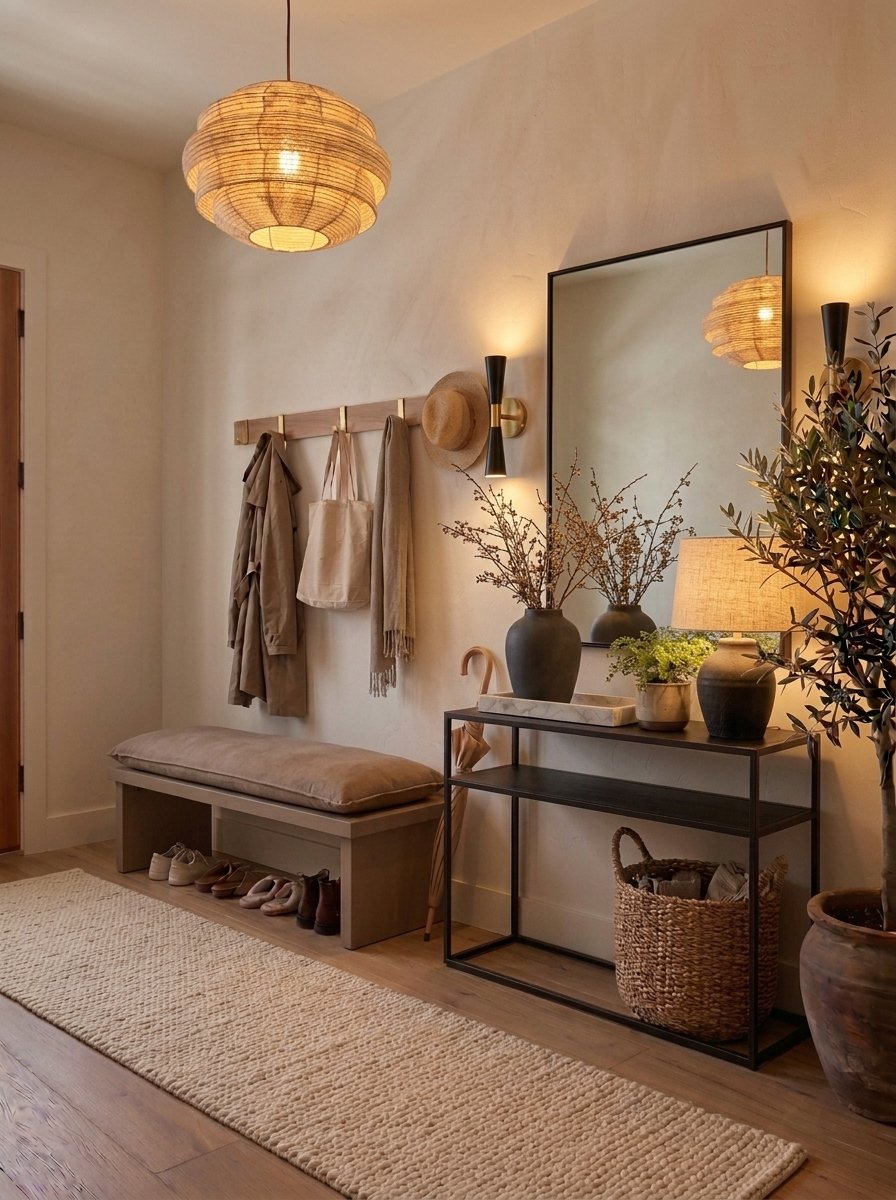
Plants and natural shapes soften modern lines and bring life to the entryway. Even a single branch in a tall vase adds movement.
Choose plants that suit the light you have. Snake plants, ZZ plants, and pothos handle low light. For bright entries, try a fiddle leaf fig or olive tree. If light is poor, quality faux stems or dried branches work well.
Organic ideas:
- A tall floor plant in a sculptural pot
- A bowl of river stones on the console
- A bundle of dried pampas or eucalyptus
- A woven wall basket as art
Pet note: Some common houseplants are toxic to cats and dogs, so check before buying if you have pets.
15. Add Metallics
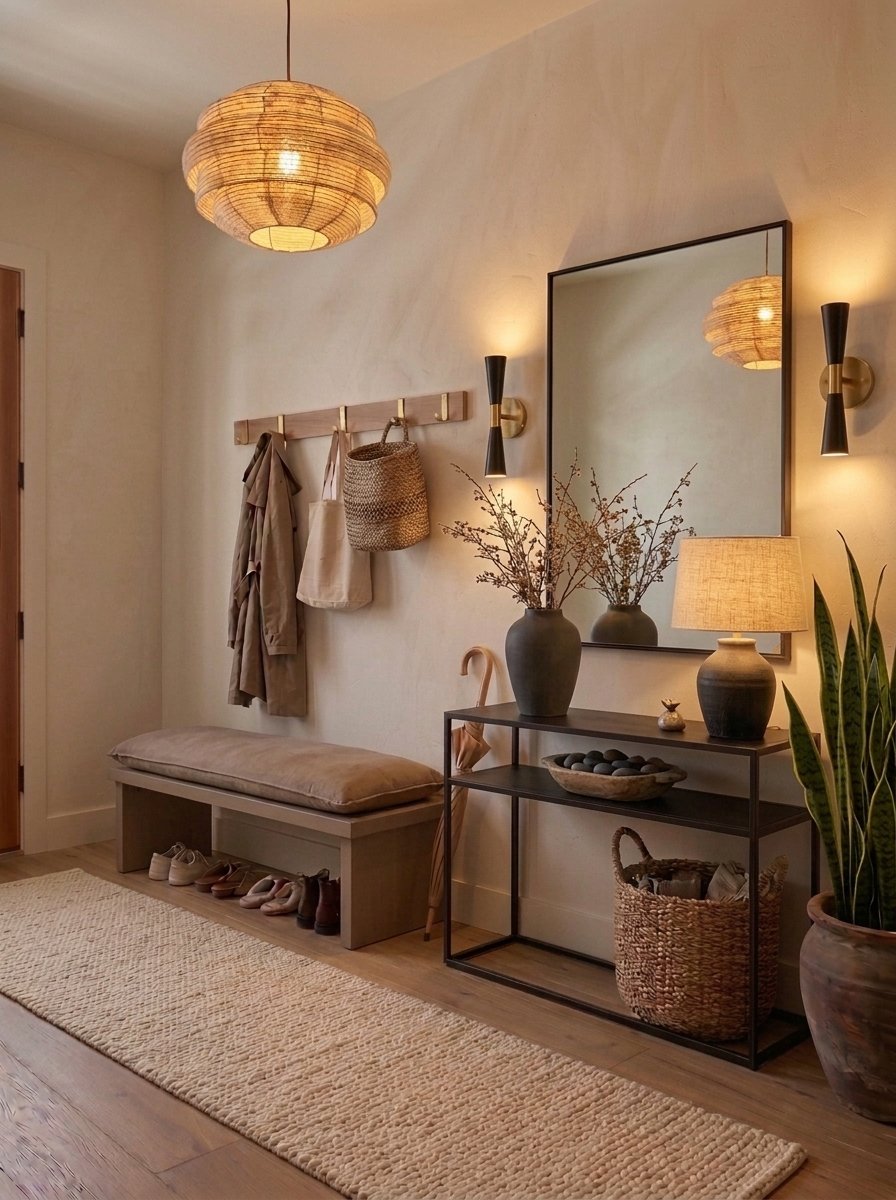
Metallic finishes catch light and add polish. In small doses, they lift a modern entryway from plain to refined.
Brushed brass, matte black, polished nickel, and copper all work. Use them on hooks, mirror frames, lamp bases, and cabinet pulls. Pick one main metal and let a second show up lightly.
How to mix metals:
- Repeat each metal at least twice so it looks intentional
- Match the finish (all brushed, or all polished)
- Use black as a neutral that goes with everything
Tip: Metallic surfaces show fingerprints. Choose a brushed finish in busy family entryways.
16. Make Your Floors Pop
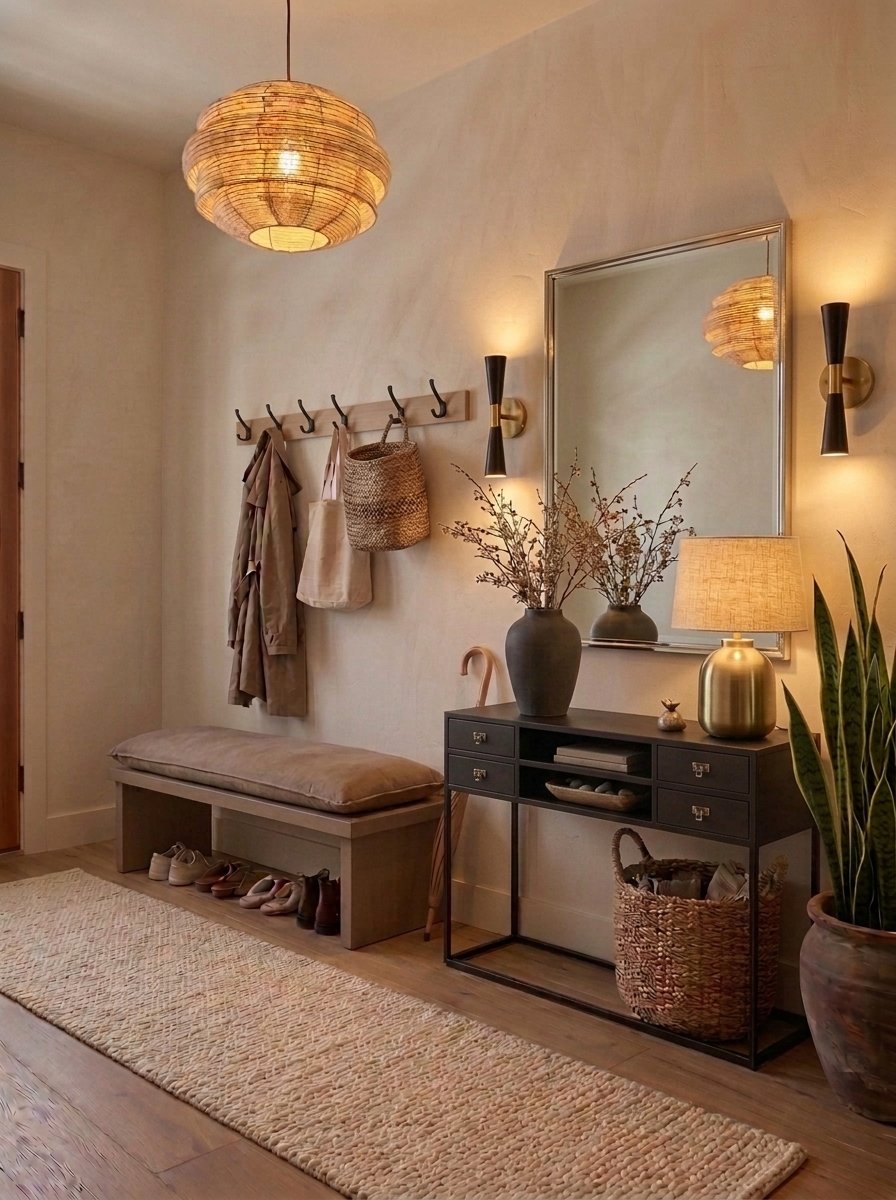
The floor takes the most abuse and sets the biggest tone. A good floor makes the entryway feel finished.
Tile is a top pick because it handles water and dirt well. Large-format porcelain looks sleek, patterned cement-style tile adds personality, and checkerboard in black and white feels classic yet modern.
If you can’t replace the floor, add a runner or a large rug. Keep the rug low-pile and easy to clean, and use a non-slip pad underneath.
Floor ideas:
- Large-format porcelain tile for a clean look
- Black and white checkerboard for contrast
- Patterned tile for a bold statement
- A painted floor with a durable floor paint for a budget refresh
Safety note: Wet tile can be slippery. Choose a textured, slip-resistant finish for entryways that see rain and snow.
17. Play With Pattern
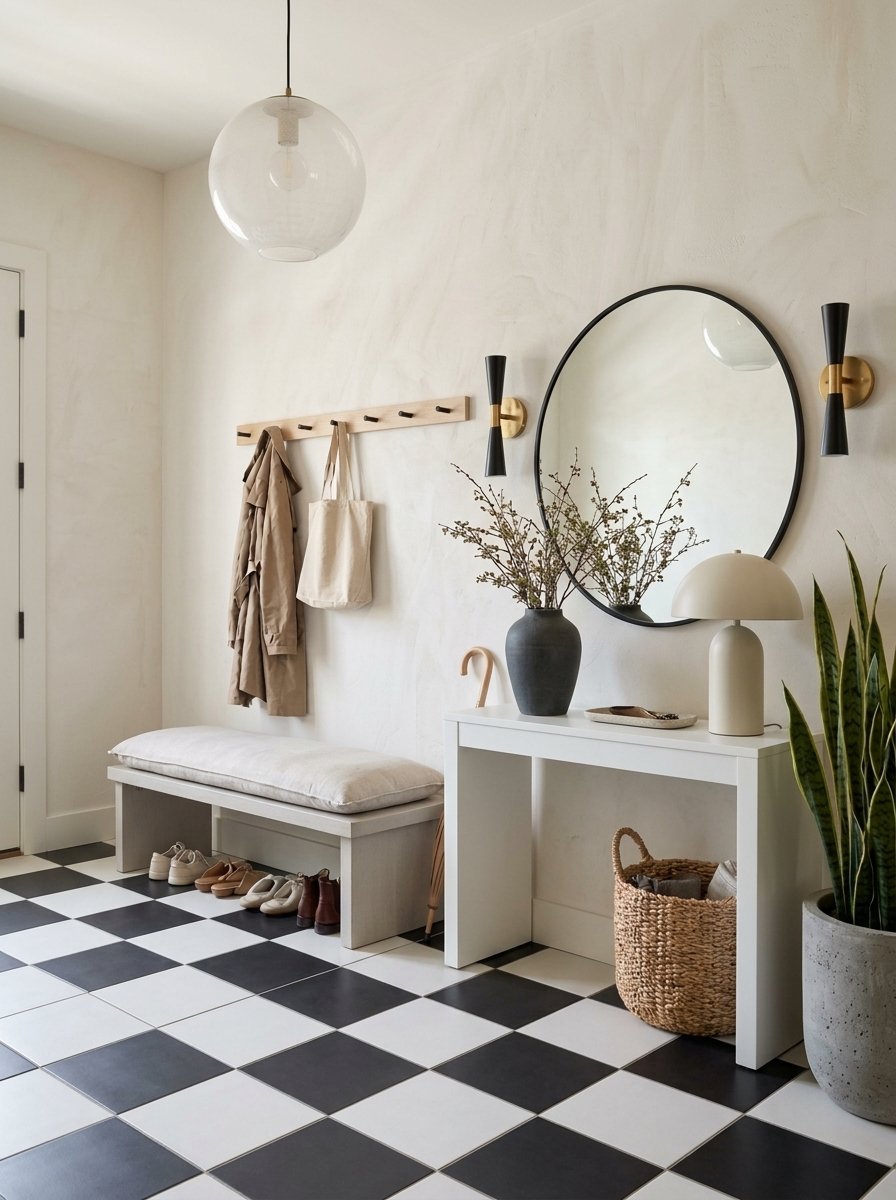
Pattern brings energy to a small space. In an entryway, it works especially well because guests only pass through, so a bold choice won’t tire the eye.
Try a graphic wallpaper on one wall, a striped runner, a geometric rug, or a patterned tile floor. Keep the rest of the room calm so the pattern stands out.
Pattern rules:
- Choose one hero pattern and keep other surfaces solid
- If you mix patterns, vary the scale (one large, one small)
- Stick to a shared color palette so the patterns feel related
Renter tip: Peel-and-stick wallpaper is an easy, removable way to add pattern. Smooth the wall first, and test a small area to make sure it won’t harm the paint.
18. Soothe the Senses

An entryway should feel good, not just look good. Think about sound, scent, and touch as well as sight.
A soft rug quiets footsteps. A diffuser or candle adds a gentle scent. Warm lighting makes the space feel welcoming. Keep surfaces clean and clutter-free so the room feels calm.
Sensory ideas:
- A wool or cotton rug for softness underfoot
- A reed diffuser with a light, fresh scent
- A small bowl of smooth stones or a textured ceramic piece
- A lamp on a dimmer for a soft glow
Safety note: Never leave candles burning unattended, and keep them away from curtains and paper. Some people are sensitive to strong fragrances, so choose scents gently.
19. Layer Cushions

Cushions make a bench inviting. They add color, softness, and a place to sit comfortably.
Choose cushions in different textures but a shared palette. For example, pair a linen cushion with a wool one and a velvet accent. Use two or three on a bench, and avoid overstuffing, since an entryway still needs to be practical.
Fabric tips:
- Choose performance fabrics that resist stains
- Pick removable covers you can wash
- Use indoor-outdoor fabric for high-traffic homes with kids and pets
Styling idea: Place a folded throw over one end of the bench for a relaxed, cozy look.
20. Play Off Architectural Features
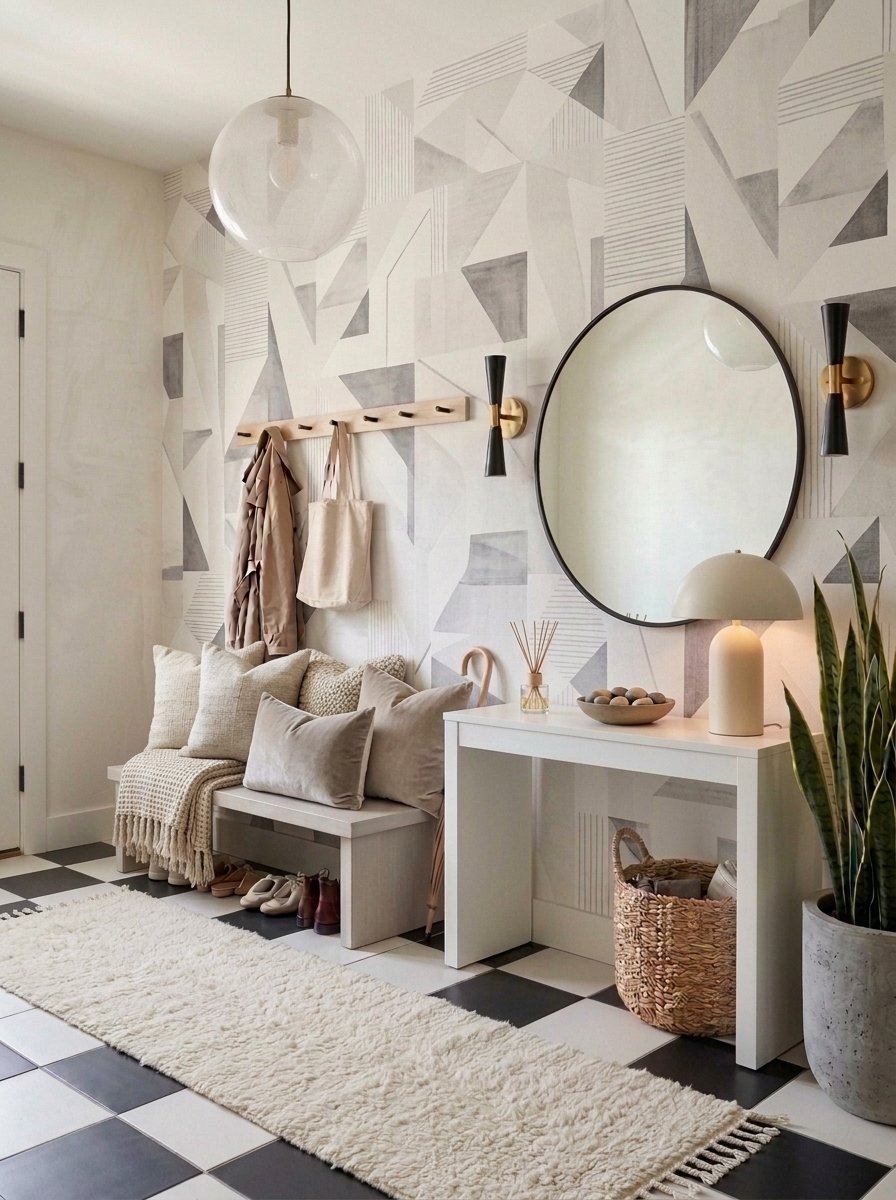
If your entryway has interesting architecture, show it off. A staircase, a high ceiling, a niche, an arched doorway, or exposed beams can all become focal points.
Highlight these features with paint, lighting, or simple styling. Paint a staircase black for a bold graphic look. Light a niche with a small LED strip and display a sculpture. Frame an arch with a plant on each side.
Feature ideas:
- A built-in niche for art or a vase
- Painted trim in a contrasting color
- A statement pendant in a tall stairwell
- A bench tucked under the stairs
If your entryway has no special features, create one: add wall paneling, a thin picture rail, or a painted arch on the wall.
21. Combine Rustic and Modern Decor
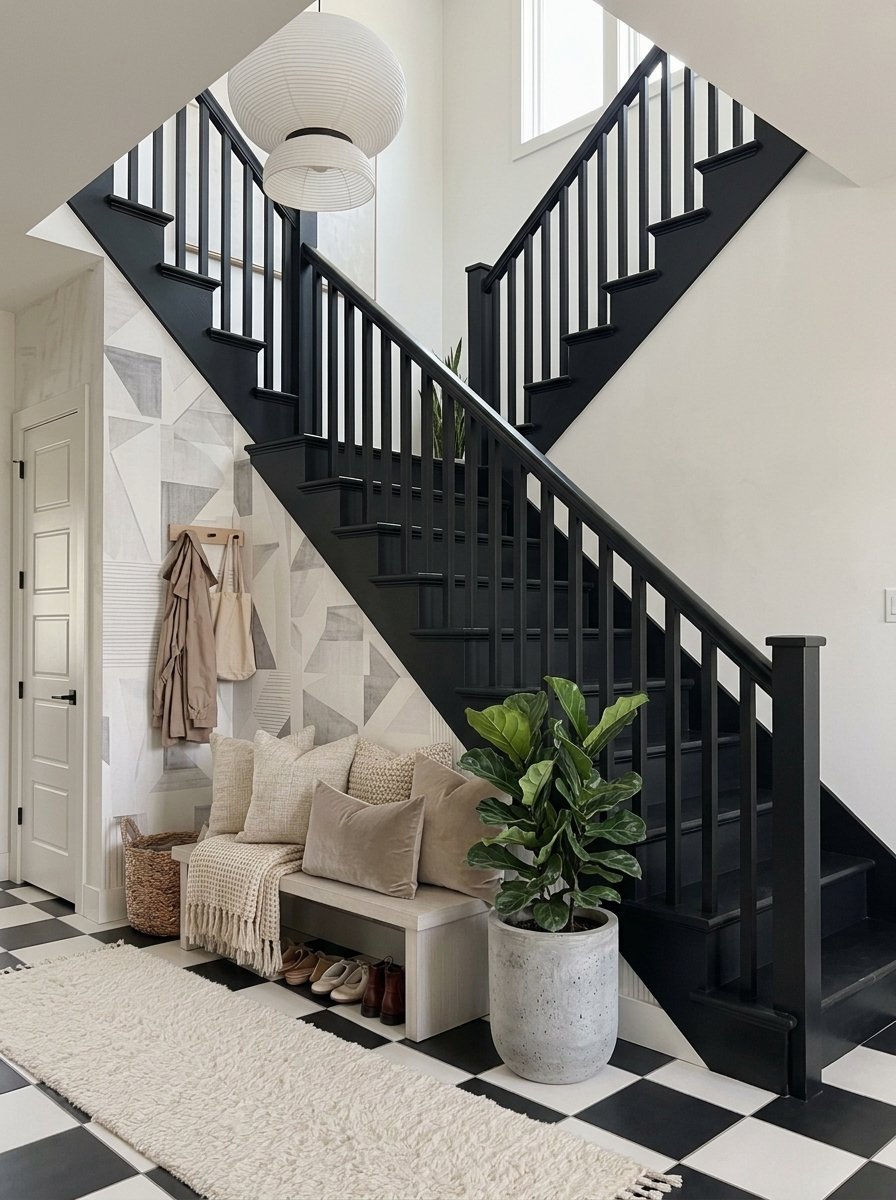
Rustic and modern make a good pair. The contrast keeps each style from feeling too heavy or too cold.
Start with clean modern furniture and add rustic touches like a reclaimed wood bench, a woven basket, or an aged brass lantern. Or use a rustic console with a sleek modern mirror and contemporary art.
Blend tips:
- Choose a neutral base so both styles sit comfortably
- Keep rustic pieces simple, not heavily distressed
- Add a modern accent, like a black metal frame or a geometric lamp
This style works nicely in farmhouses, cabins, and any home that wants warmth with a clean edge.
22. Riff Off the Outdoors
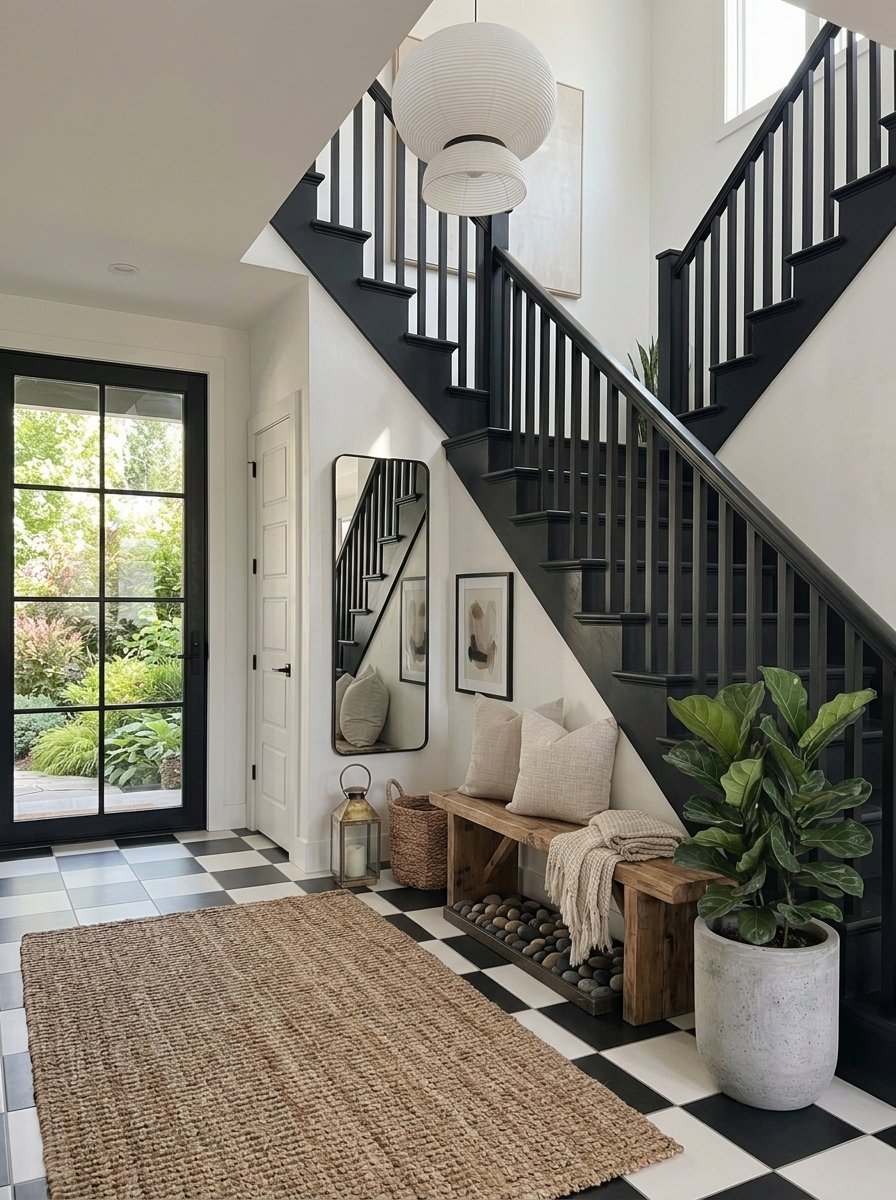
Your entryway sits between outside and inside, so it’s a natural place to bring nature in. Use colors and materials that echo the garden or landscape beyond the door.
Soft greens, sandy neutrals, and stone grays all look right. Add a bench made of natural wood, a planter by the door, and a nature print on the wall. A large window or glass door lets in daylight and a view.
Ideas to try:
- A bowl of pinecones or seasonal branches
- A woven jute rug that feels like the outdoors
- A shallow tray of river stones
- Fresh flowers from your own garden
Seasonal tip: Swap decor with the seasons: pumpkins and dried grasses in fall, branches in winter, tulips in spring.
Modern Entryway Styles at a Glance
Not sure which direction suits your home? Use this table to narrow it down.
| Style | Key Features | Colors | Best For |
|---|---|---|---|
| Minimalist | Few pieces, hidden storage | White, gray, black | Small entries |
| Scandinavian | Light wood, soft textiles | White, beige, pale gray | Bright homes |
| Mid-century modern | Tapered legs, warm wood | Walnut, mustard, olive | Retro lovers |
| Industrial | Metal, concrete, black | Charcoal, black, rust | Urban lofts |
| Modern farmhouse | Natural wood, black accents | White, black, wood | Family homes |
| Boho modern | Woven textures, plants | Earth tones | Relaxed homes |
How to Style a Small or Narrow Entryway
Small entries need extra care, but they can look just as stylish.
- Go vertical. Use wall hooks, tall mirrors, and shelves to save floor space.
- Choose slim furniture. A shallow console or wall-mounted shelf keeps the path clear.
- Pick light colors. Pale walls reflect light and make the area feel bigger.
- Use a runner. A long, narrow rug draws the eye forward.
- Edit ruthlessly. Keep only what you use daily by the door. Store the rest elsewhere.
- Add light. A sconce or a small lamp makes tight corners feel welcoming.
Budget Guide: Where to Spend and Where to Save
| Item | Approach | Why |
|---|---|---|
| Lighting | Spend a little more | It changes the whole mood |
| Mirror | Mid-range | Size and shape matter most |
| Console or bench | Spend on quality | It gets daily use |
| Art | Save | Prints and thrifted frames look great |
| Rug | Mid-range | Choose washable and durable |
| Decor and vases | Save | Easy to swap and update |
| Paint | Save | The cheapest big change you can make |
Prices vary by region and brand, so compare options before you buy.
Common Modern Entryway Mistakes to Avoid
- Overcrowding the space with too much furniture
- Skipping storage and letting clutter pile up
- Using one harsh ceiling light and nothing else
- Hanging art or mirrors too high
- Choosing a rug that’s too small or slippery
- Blocking the door swing or the exit path
- Mixing too many colors, metals, or patterns
- Ignoring the floor and wear from shoes and weather
Step-by-Step: How to Refresh Your Entryway in a Weekend
- Clear everything out. Remove items and decide what actually belongs here.
- Clean and repair. Patch holes, wipe walls, and clean the door.
- Paint. Choose a color and apply two coats if needed.
- Install lighting. Swap the fixture or add a lamp or sconce.
- Add furniture. Place the console or bench and check clearance.
- Hang the mirror and art. Measure first, and use proper anchors.
- Add a rug. Use a non-slip pad underneath.
- Style the surfaces. Keep it simple: a lamp, a tray, a plant.
- Set up storage. Add hooks, baskets, and a shoe solution.
- Step back and edit. Remove anything that feels extra.
Conclusion
A modern entryway doesn’t have to be big or expensive. It needs a clear plan, a calm palette, and a few pieces that work hard and look good. Start with the essentials: a place to sit or set things down, a mirror, good lighting, and smart storage. Then add personality with color, art, texture, and plants.
Pick two or three ideas from this list that suit your space. Try them out, adjust as you go, and keep the room uncluttered. Your front door is the first thing everyone sees, so it’s worth making that moment a good one.
FAQs
How do I make my entryway look modern?
Use clean-lined furniture, a limited color palette, layered lighting, and a few statement pieces. Keep surfaces clear.
What furniture does a modern entryway need?
A console table or bench, a mirror, and storage for shoes and bags cover the basics. Add a lamp for warmth.
How do I decorate a small entryway?
Use wall hooks, a slim console, a large mirror, and light colors. Keep only daily essentials by the door.
What color is best for an entryway?
Neutrals like warm white and greige feel clean and open. Bold colors like green or navy add drama in small spaces.
How big should an entryway rug be?
Choose a rug large enough to cover most of the floor while leaving a border. In a hall, use a runner that leaves a few inches on each side.
How high should I hang a mirror in an entryway?
Center it at about 57 to 60 inches from the floor, and secure it with proper wall anchors.
What lighting works best in an entryway?
Layer a ceiling fixture with a table lamp or sconces, using warm white bulbs and a dimmer if possible.
How do I keep an entryway organized?
Give every item a home with hooks, baskets, and a shoe cabinet. Clear the surfaces regularly.
Can I style an entryway in a rental?
Yes. Use freestanding furniture, removable wallpaper, plug-in lamps, and a large rug.
What can I put on an entryway table?
A lamp, a tray for keys, a plant or branch, and one sculptural object are enough.