Ever look at a floating shelf and just not know where to start? You put up a few books, a plant, maybe a candle, and somehow it still looks off. Good floating shelf decor ideas fix that exact problem, and it usually comes down to a handful of styling principles most people have just never been taught.
Floating shelves are deceptively simple furniture. No legs, no visible brackets in a lot of designs, just a clean line jutting out from the wall. But that simplicity means every single object you put on one is doing real visual work, there’s nowhere for a bad choice to hide. Let’s go through how to style them properly.
Why Floating Shelf Decor Is Harder Than It Looks
A bookshelf with doors hides its own mess. A floating shelf hides nothing. Every object is fully visible, which means the styling has to actually be intentional or the whole thing reads as cluttered no matter how nice the individual pieces are.
Good floating shelf decor ideas rely on a few consistent principles: varied height, restrained quantity, and enough negative space that the shelf itself, not just what’s sitting on it, remains part of the visual composition.
The Basics of the Shelf Itself
1. Floating Shelves Ideas for Any Room
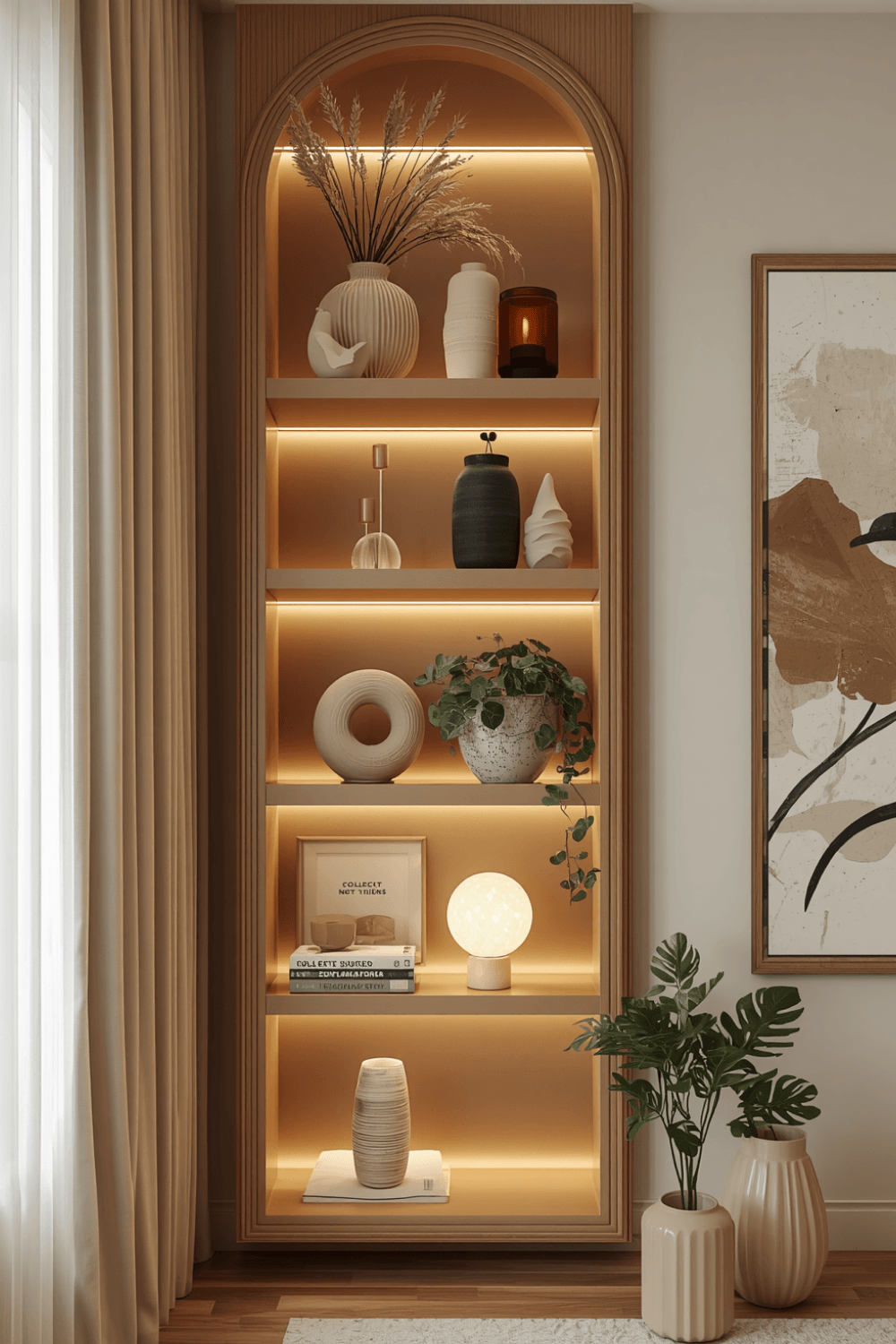
Floating shelves ideas work in nearly every room of the house, not just the living room, a kitchen for cookbooks and ceramics, a bathroom for towels and plants, a bedroom for a small curated display above a dresser. The styling principles stay consistent even as the room changes.
2. Modern Wall Shelves
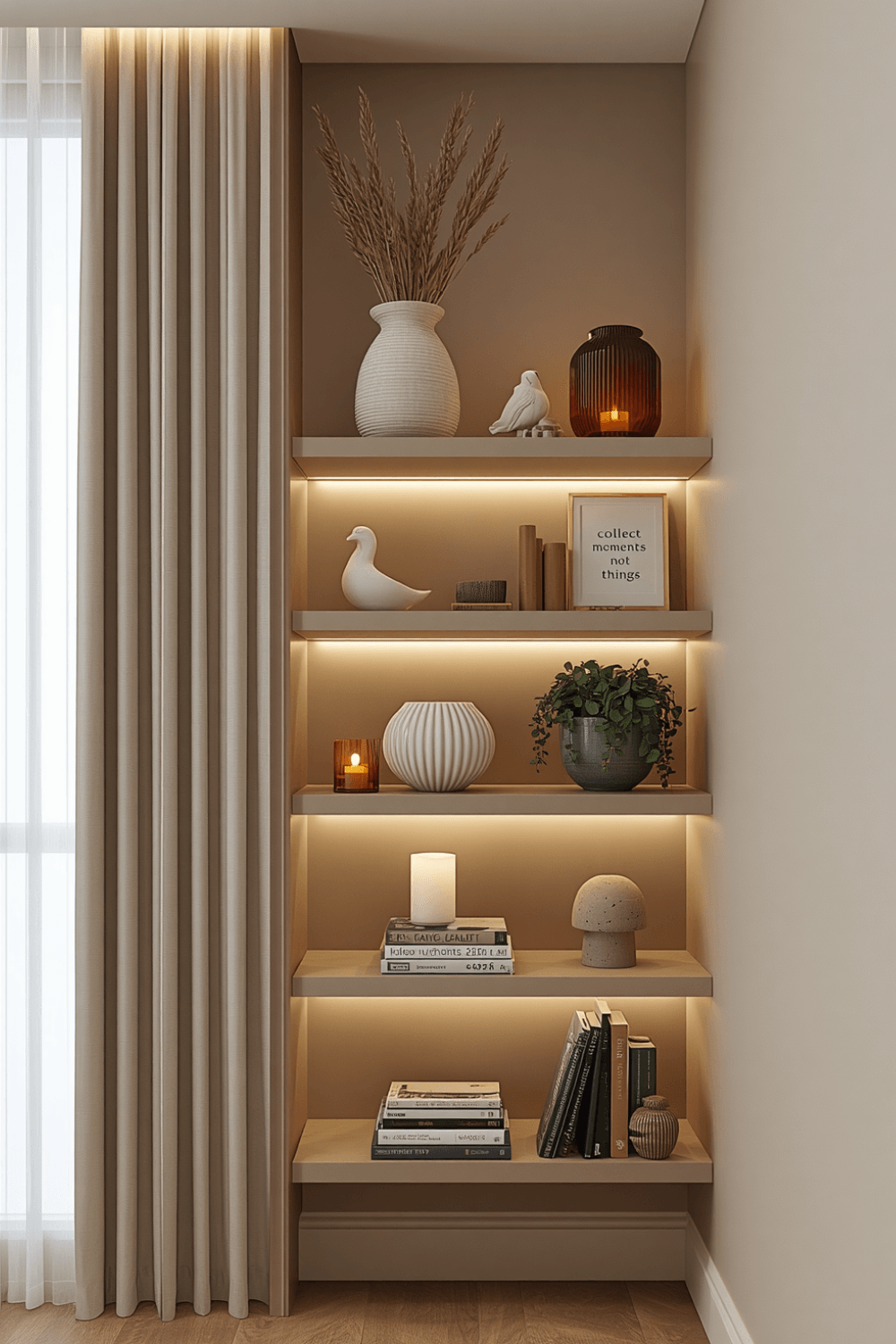
Modern wall shelves lean on clean, minimal brackets or a fully floating design with no visible hardware at all, letting the shelf read as a simple architectural line rather than obvious furniture.
3. Wall Shelf Decor Ideas Beyond the Basics
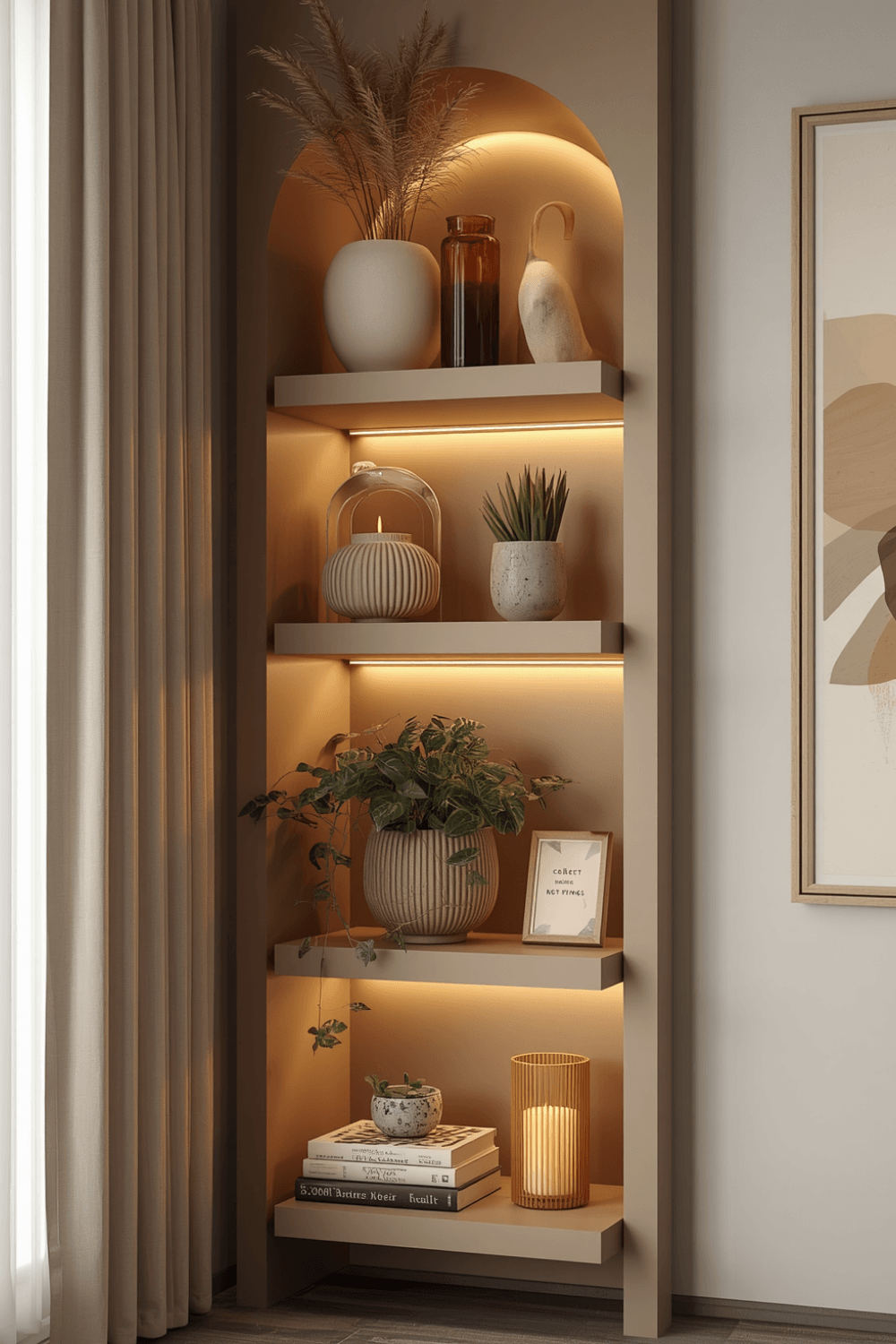
Wall shelf decor ideas that elevate a standard setup: varying the depth of shelves rather than using identical ones throughout, angling a single shelf slightly differently from the rest for visual interest, or pairing a floating shelf with a piece of wall art positioned just above it.
Built-In Alternatives
4. Built In Shelf Ideas
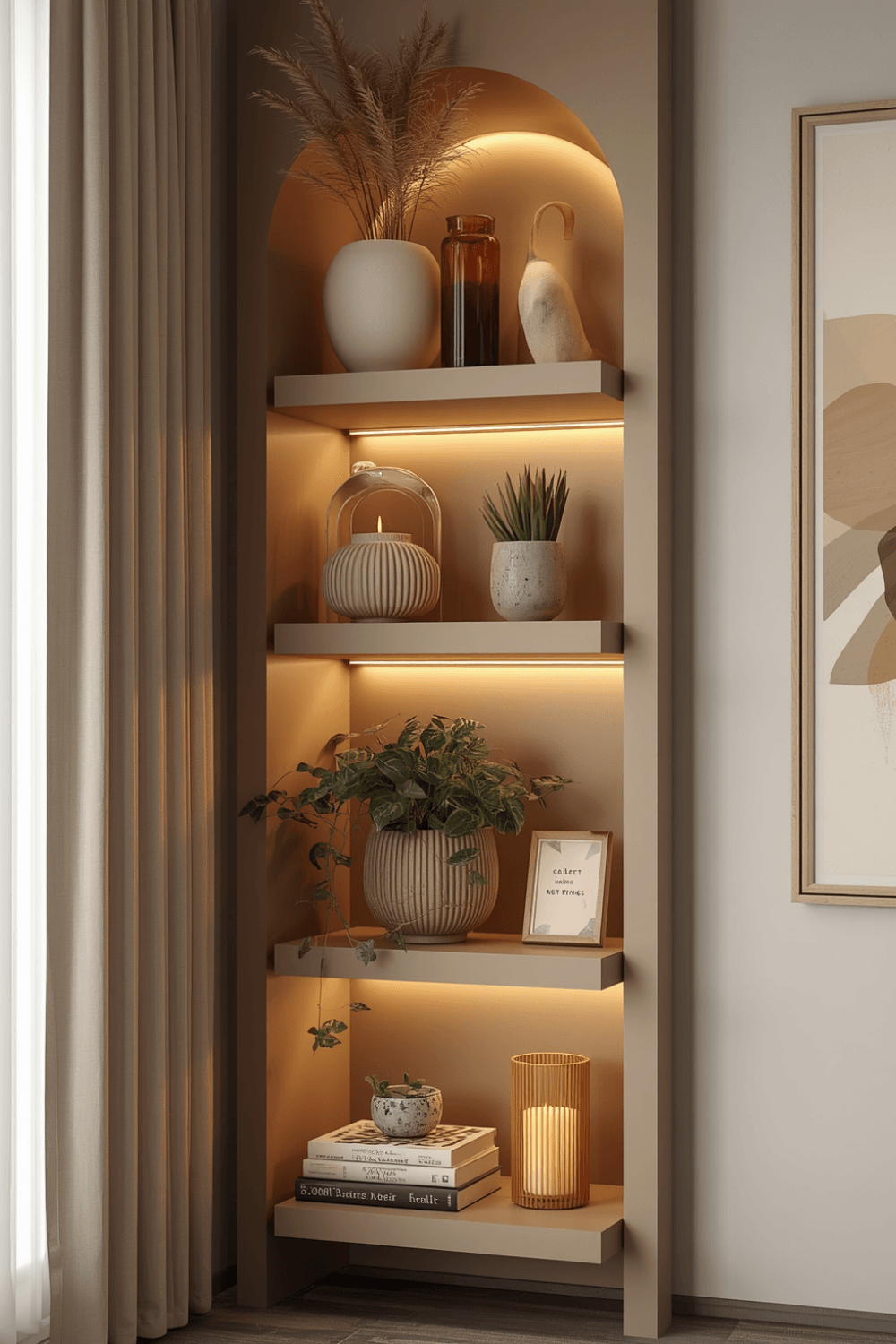
Built in shelf ideas take the floating shelf concept further into permanent architecture, custom-fitted to a specific wall or alcove so the shelving reads as part of the room’s original structure rather than something added later.
5. Built In Shelving Ideas for Larger Walls
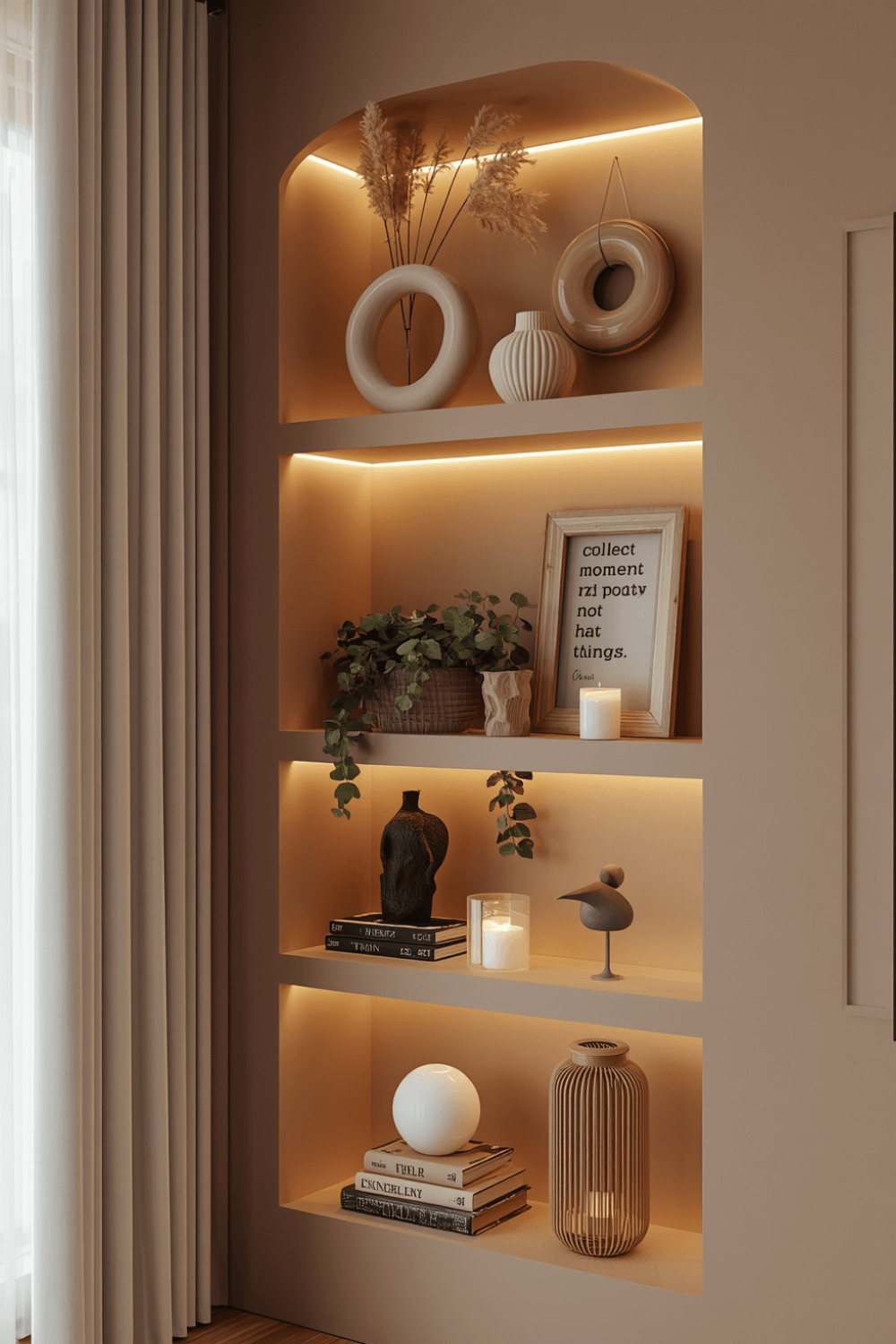
Built in shelving ideas for a full wall combine open shelf sections with the occasional closed cabinet, giving you both display space and hidden storage for the items that don’t need to be part of the visual display.
Styling Principles
6. Shelf Styling Ideas That Actually Work
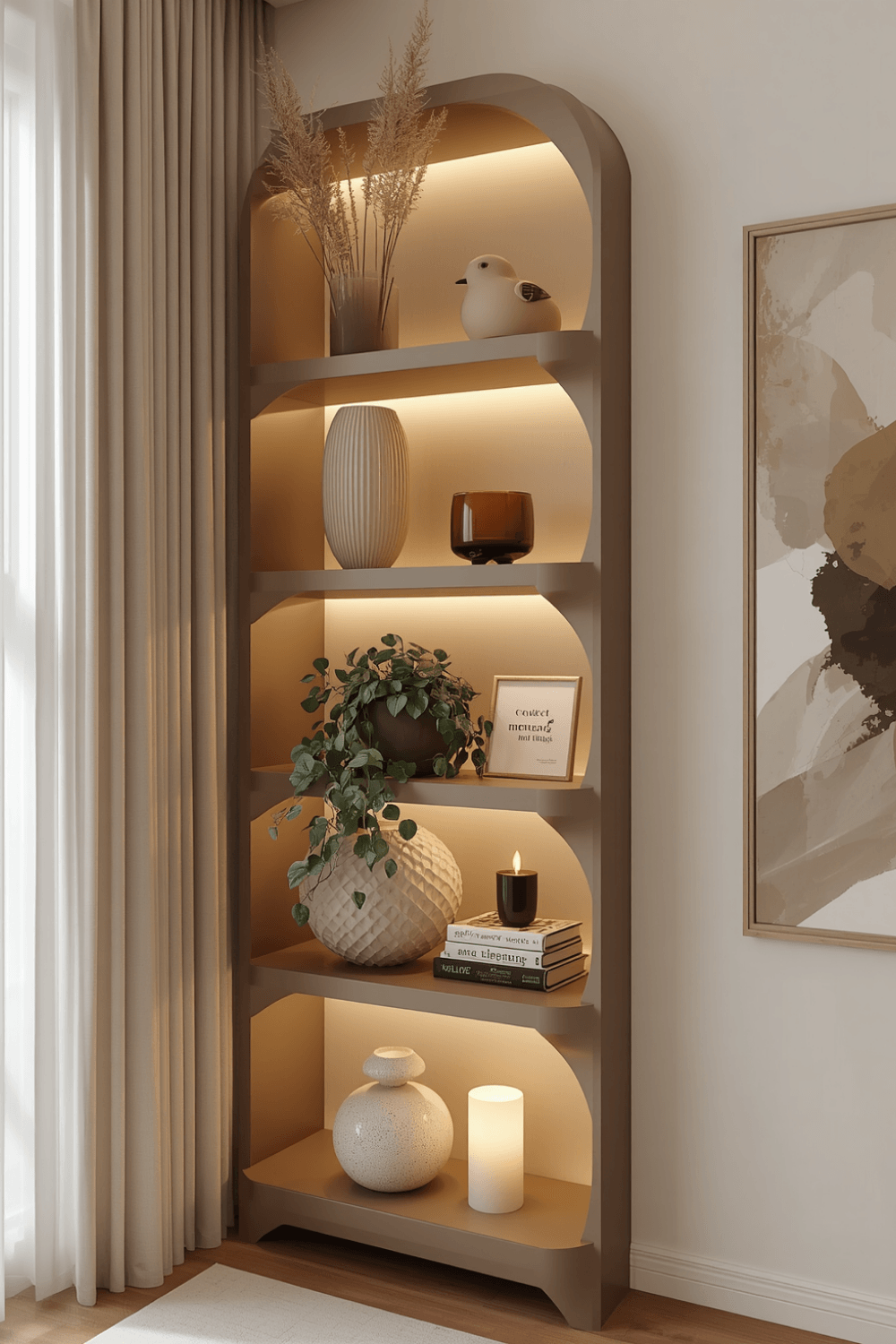
Shelf styling ideas that consistently succeed: group objects in odd numbers, vary the height within each grouping, and leave real negative space between clusters rather than spreading items evenly across the entire shelf length.
7. Decorative Shelving Ideas
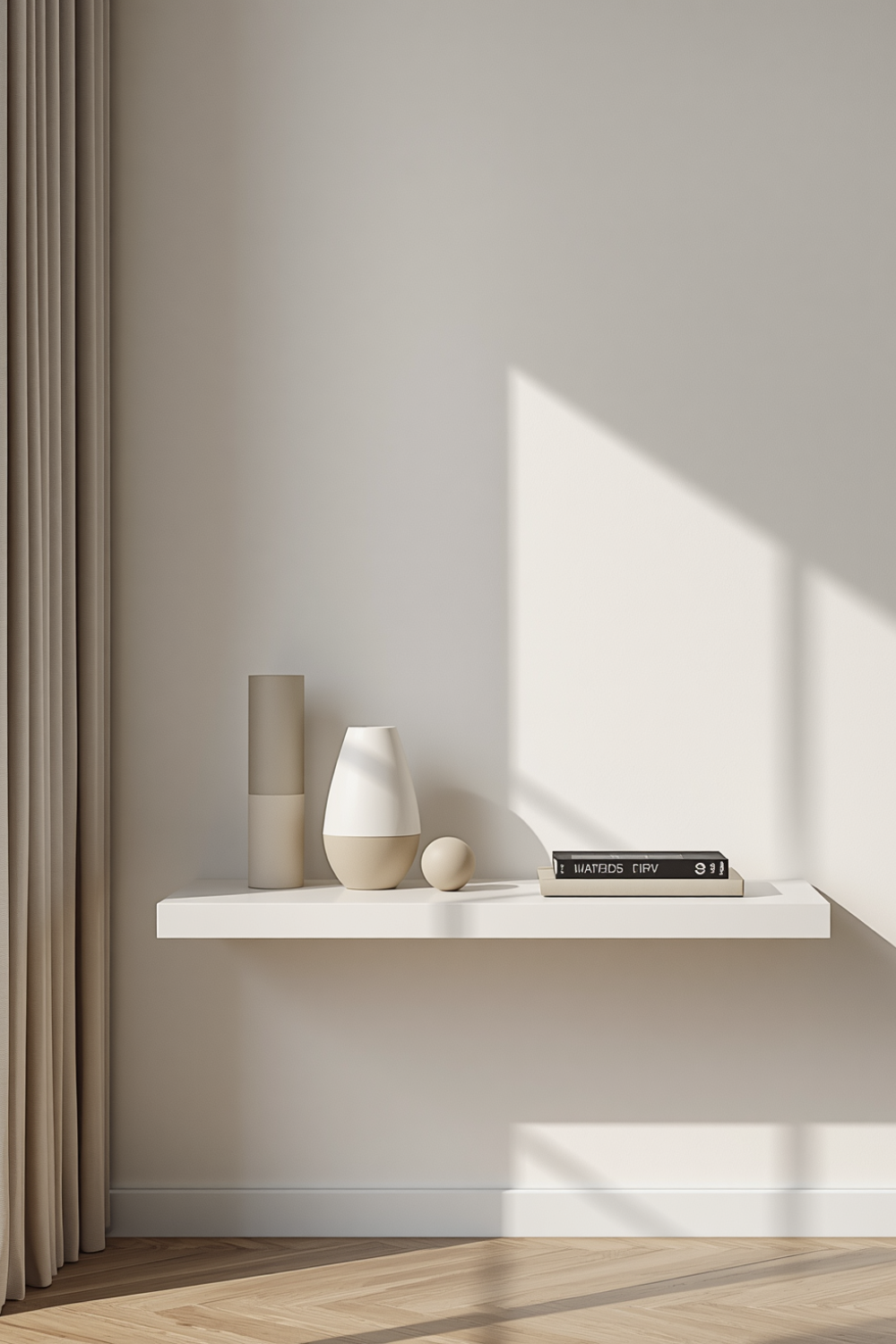
Decorative shelving ideas benefit from a mix of object types rather than repeating the same category over and over, books stacked both vertically and horizontally, one piece of ceramic, a small framed photo, layered together rather than lined up in a single row.
8. Corner Shelf Ideas for Awkward Spaces
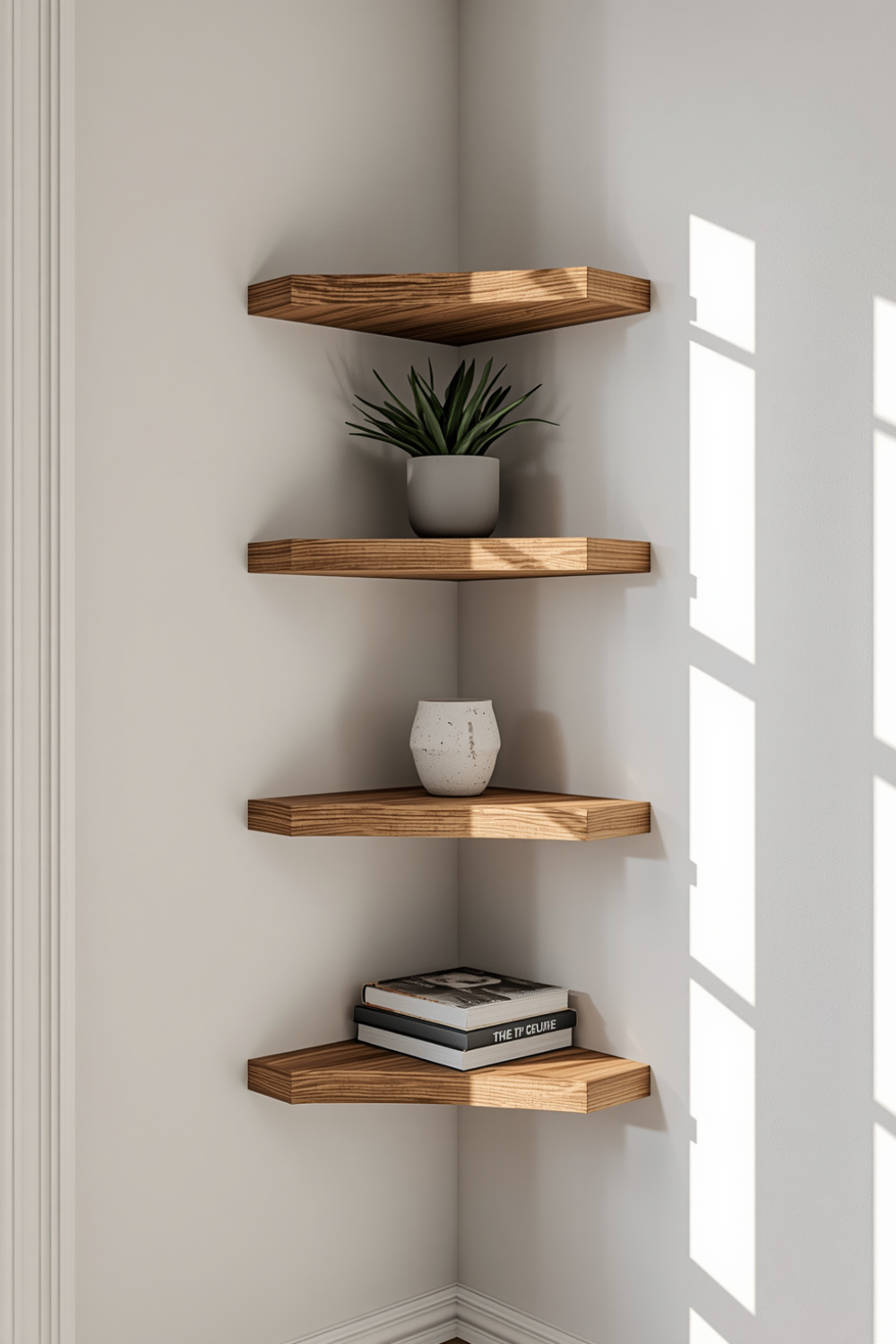
Corner shelf ideas solve a genuinely common problem, since corners are consistently the most underused space in most rooms. A set of angled corner shelves, styled with a few well-chosen objects rather than crammed full, turns dead space into a real display opportunity.
Style Directions
9. Minimalist Shelf Decor
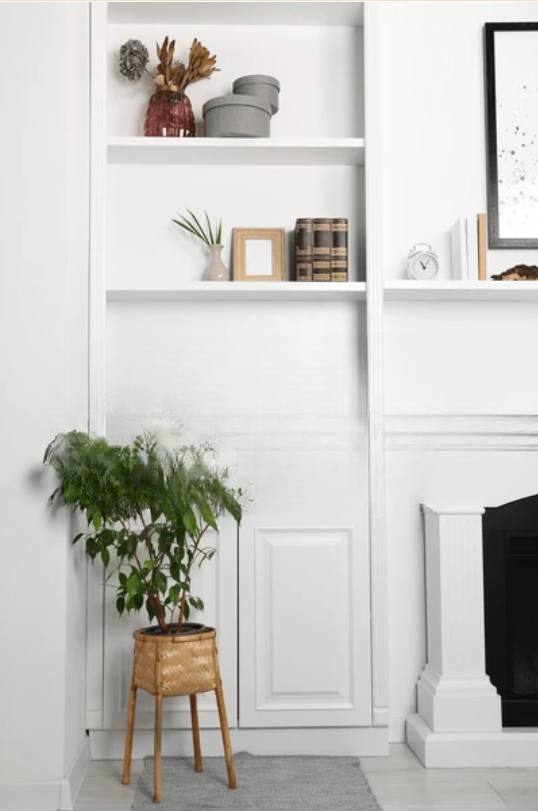
Minimalist shelf decor isn’t about having less stuff randomly, it’s about choosing on purpose. One good vase. A single stack of books. That’s it. The trick most people miss? Leaving space empty on purpose. A cluttered shelf feels stressful, an empty one feels calm. Pick pieces you actually love, then stop.
10. Minimalist Home Styling Beyond the Shelf
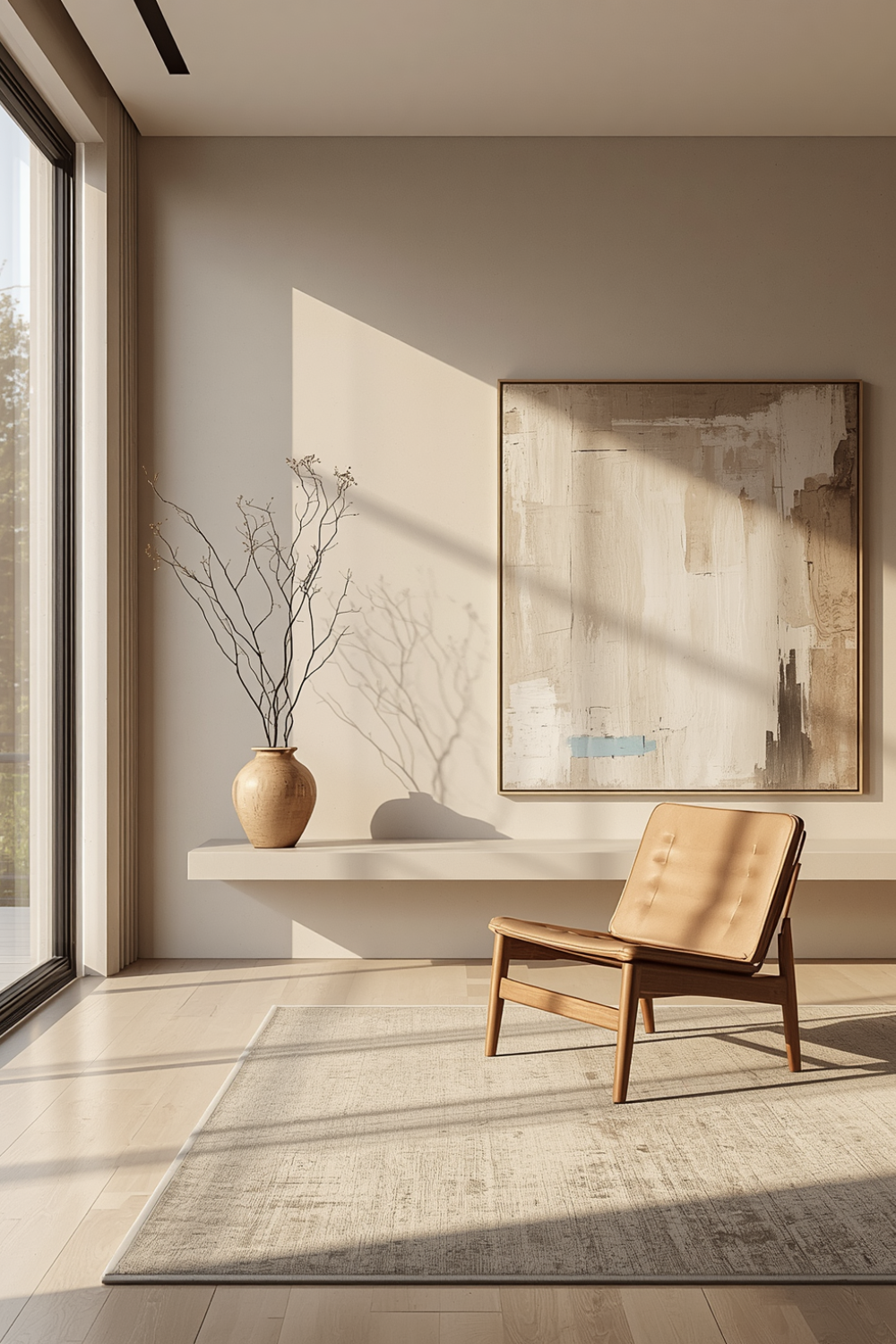
Minimalist home styling isn’t just about shelves, it spreads through the whole room. Fewer chairs, but better ones. One piece of art instead of five. The goal isn’t an empty house, it’s a house where everything present actually earns its spot. Less stuff, chosen carefully, always feels calmer than more stuff chosen randomly.
11. Modern Shelf Decor
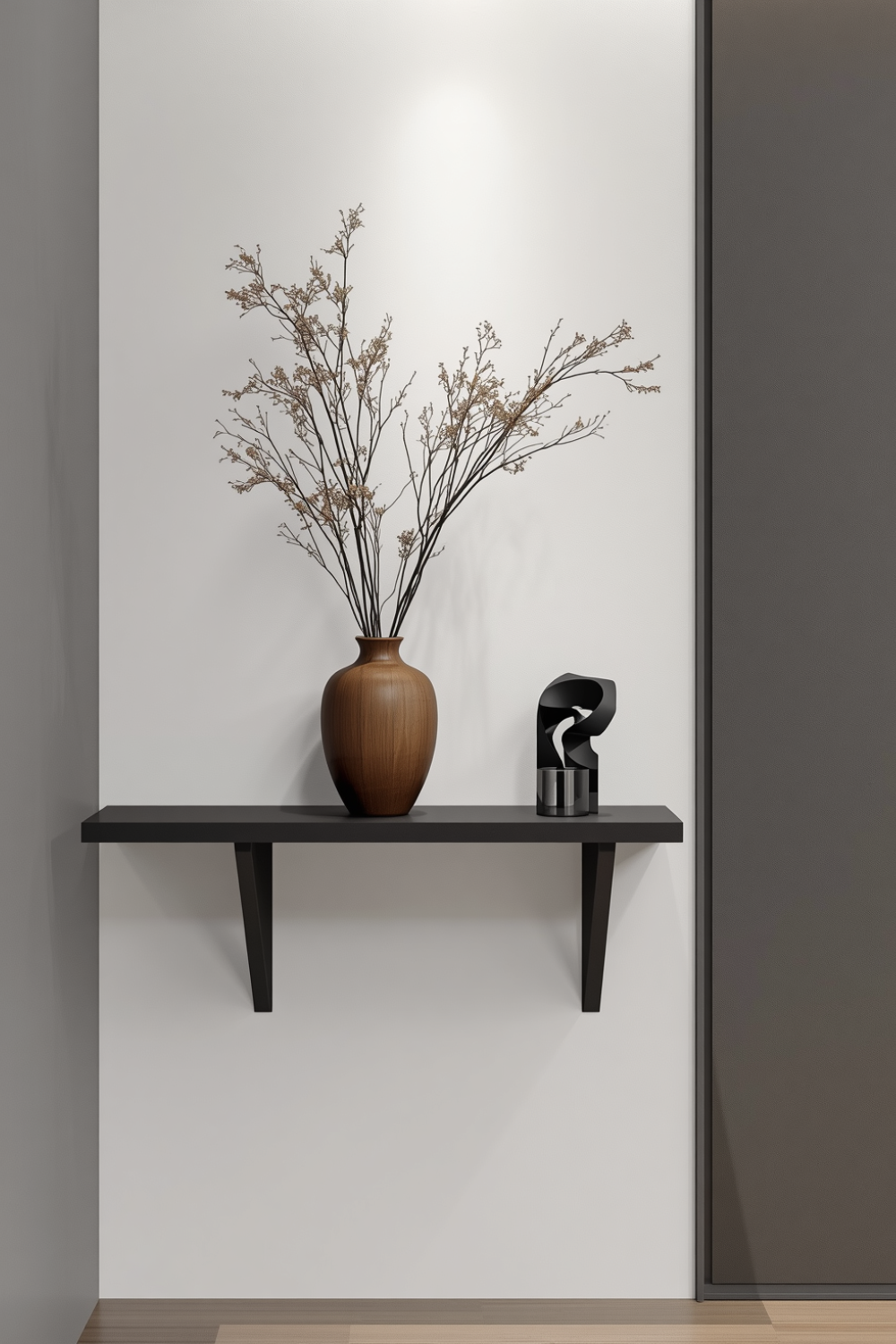
Modern shelf decor sticks to clean lines and a tight color palette, usually just one or two finishes repeated instead of a mismatched mix. Think matte black brackets, one wood tone, minimal ceramics. Nothing loud, nothing competing for attention. The sharp geometry does the talking. Simple, intentional, and never overcrowded, that’s the whole formula.
12. Japandi Shelf Decor
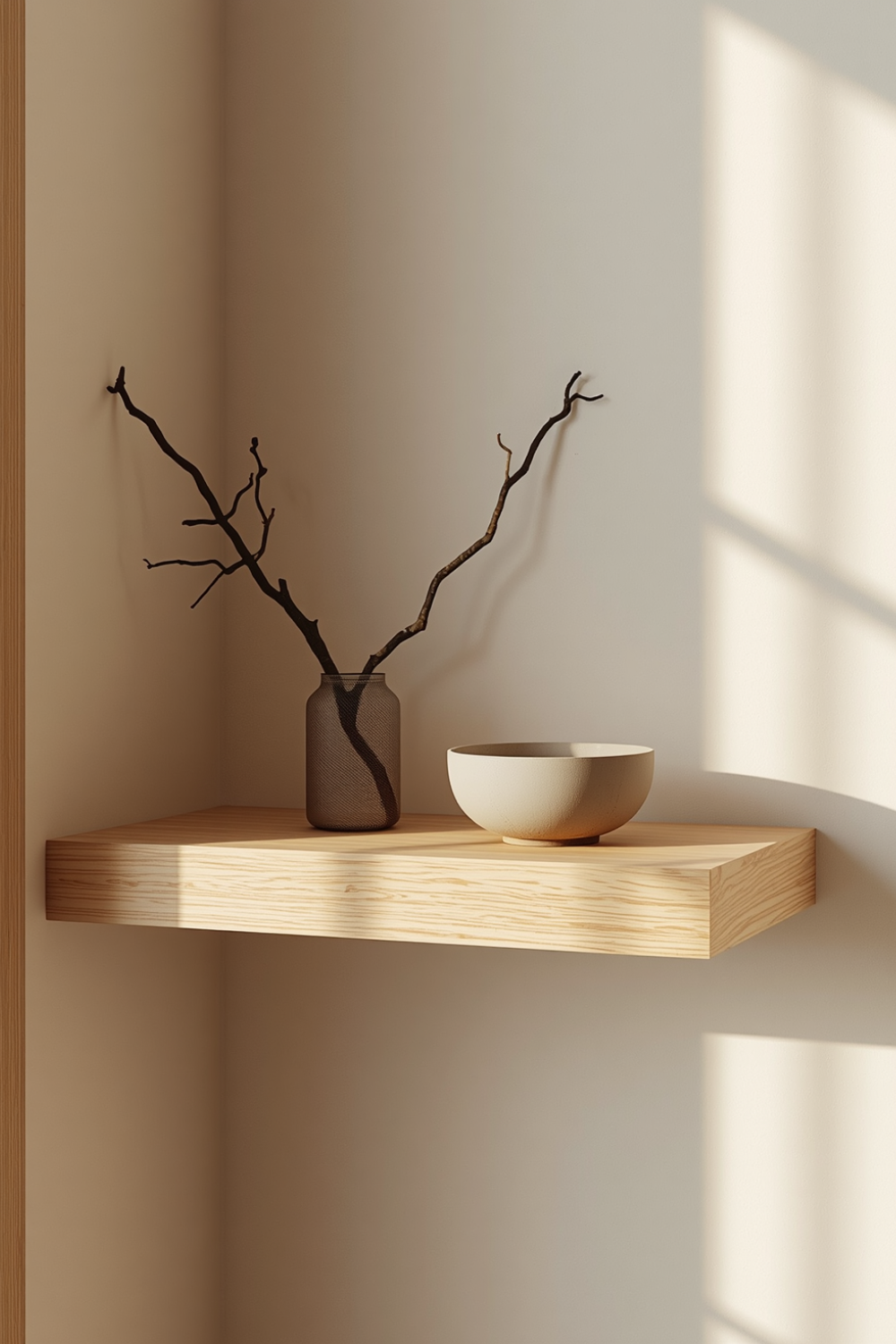
Japandi shelf decor blends Japanese minimalism with Scandinavian warmth: natural wood tones, a handful of ceramic or ceramic-adjacent objects, and a genuinely restrained amount of items per shelf rather than a fully packed display.
13. Organic Modern Decor
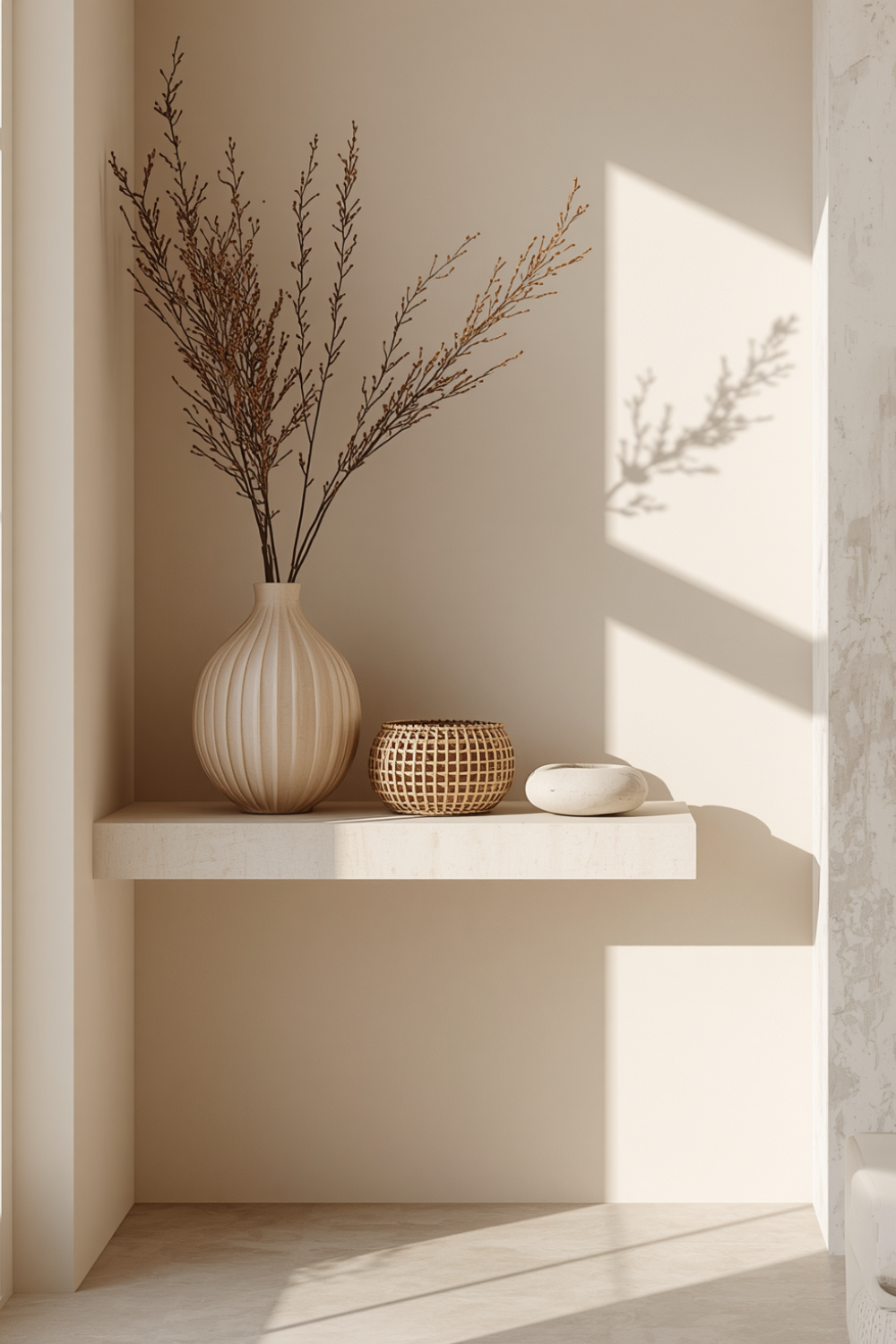
Organic modern decor softens the clean lines of modern shelving with curved object shapes, natural materials like woven baskets or stone, and a slightly warmer, less rigid overall feel than strict minimalism.
Warmth and Comfort
14. Cozy Shelf Decor
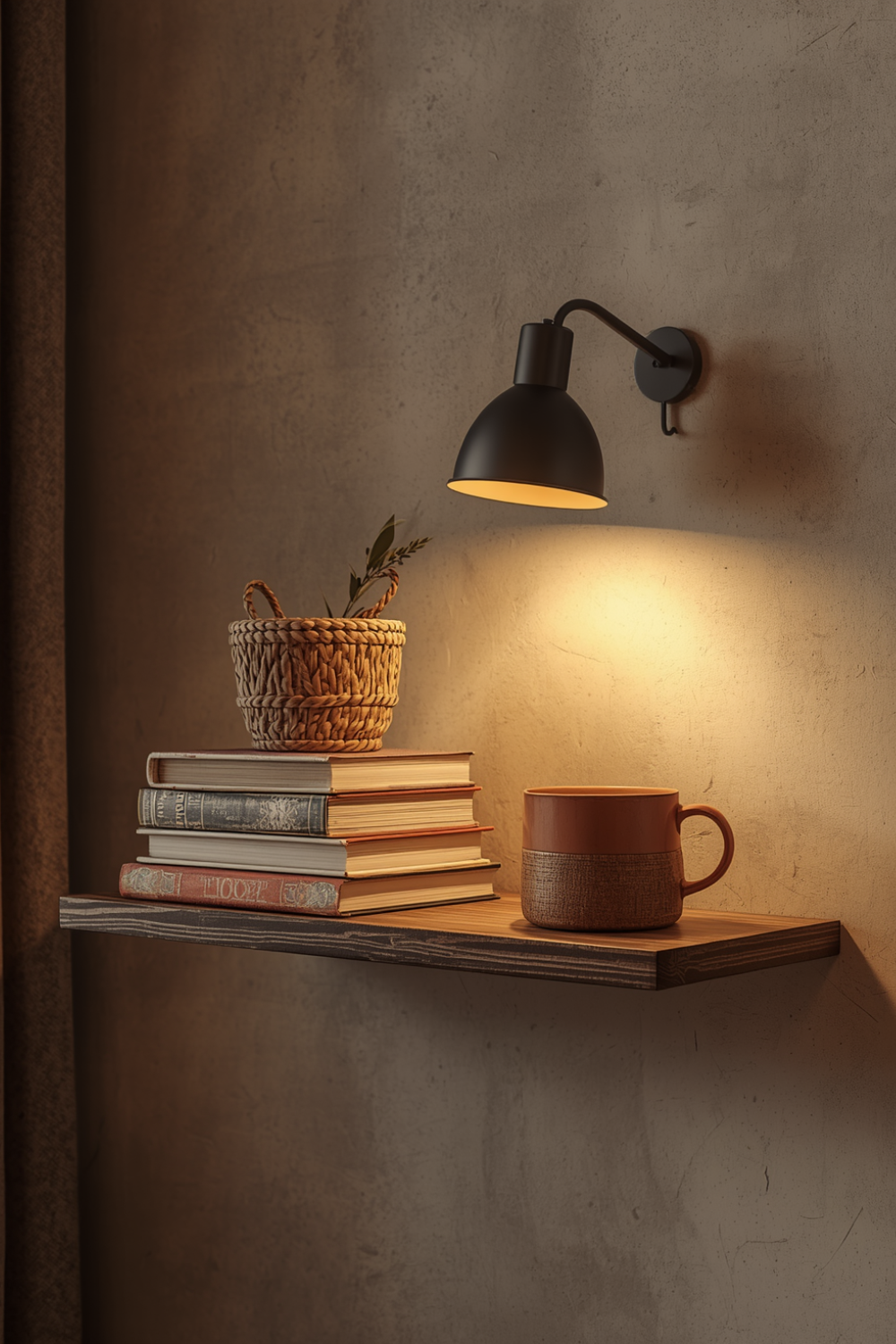
Cozy shelf decor leans into texture over trends. Think a stack of well-worn books, a woven basket, a warm ceramic mug catching soft lamp light. Nothing feels stiff or staged, it feels lived-in. Warm-toned lighting pulls the whole display together, making even simple objects feel intentional and inviting rather than sparse or cold.
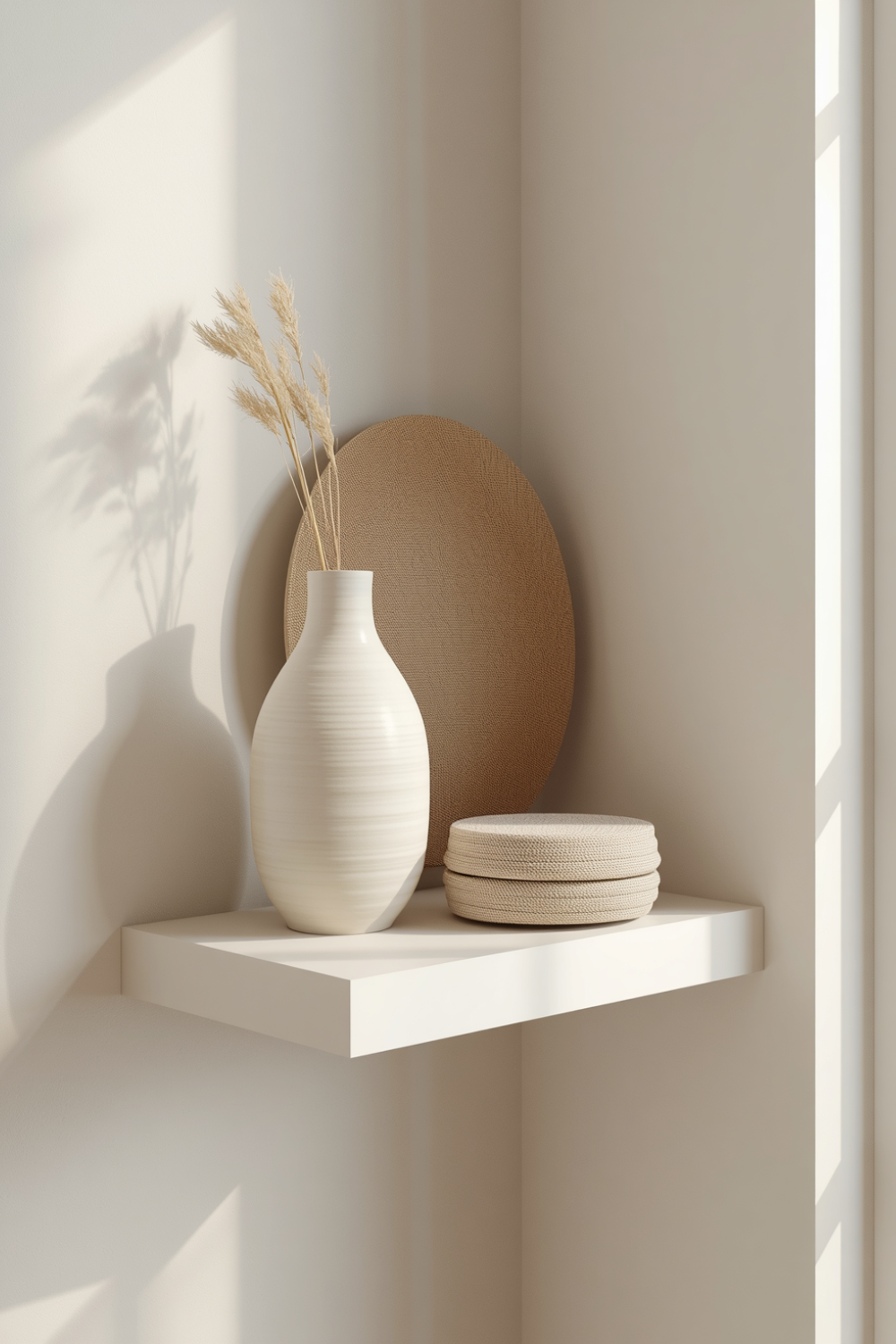
Neutral doesn’t mean boring, it means layered. Warm white, oatmeal, soft taupe, all sitting together instead of one flat matching shade. That variation is what keeps a neutral shelf or room from feeling lifeless. Mix textures too, linen, ceramic, wood. The subtlety is the whole point, quiet color done with actual intention.
Lighting
LED Shelf Lighting Ideas
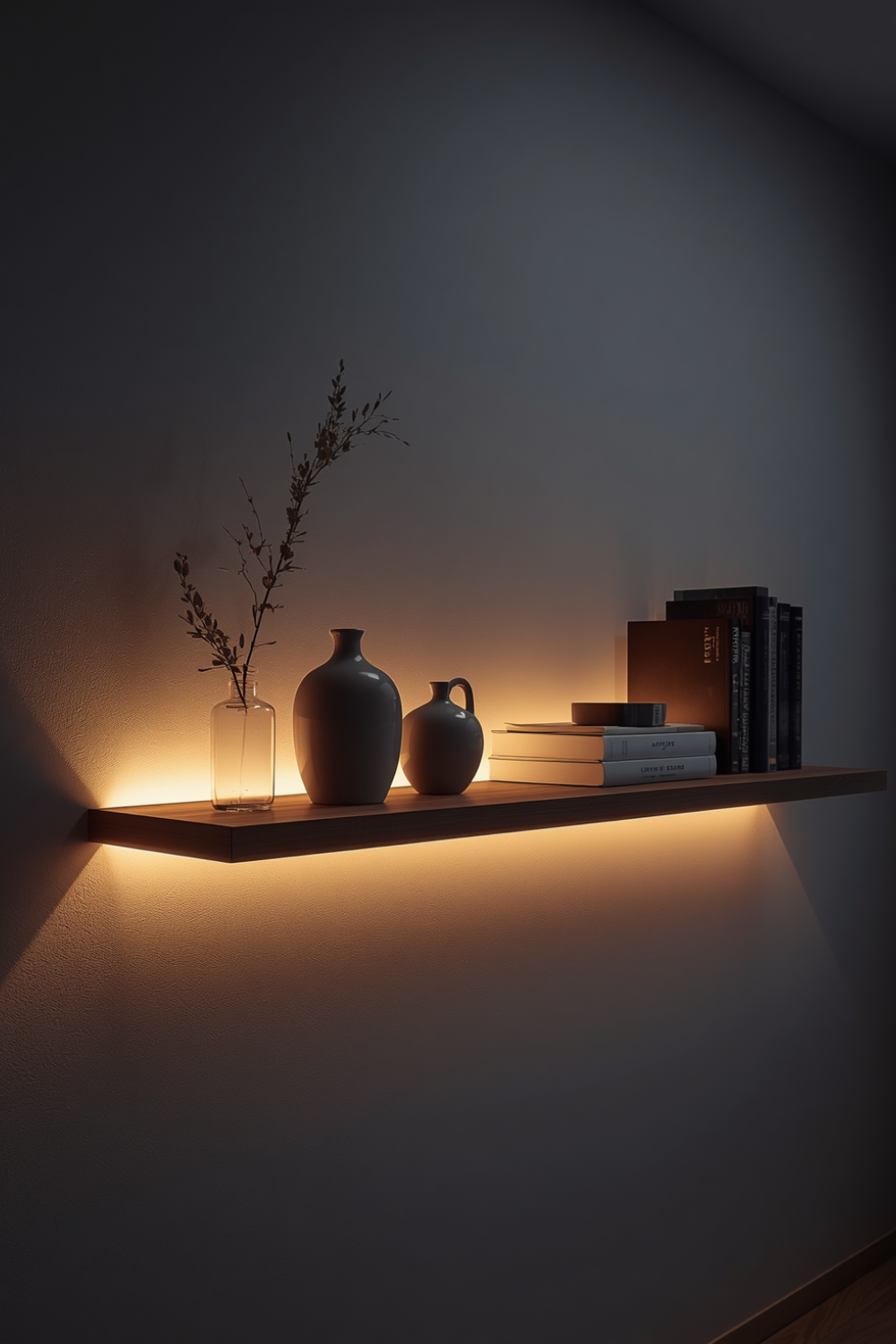
LED shelf lighting changes everything about how a display reads at night. A thin strip tucked under the shelf edge throws soft light down onto ceramics and books, giving depth the room’s overhead light never could. It’s subtle, not flashy. Warm white LEDs work best, cool light tends to flatten wood tones and make the whole display feel clinical.
Warm Lighting Decor Ideas
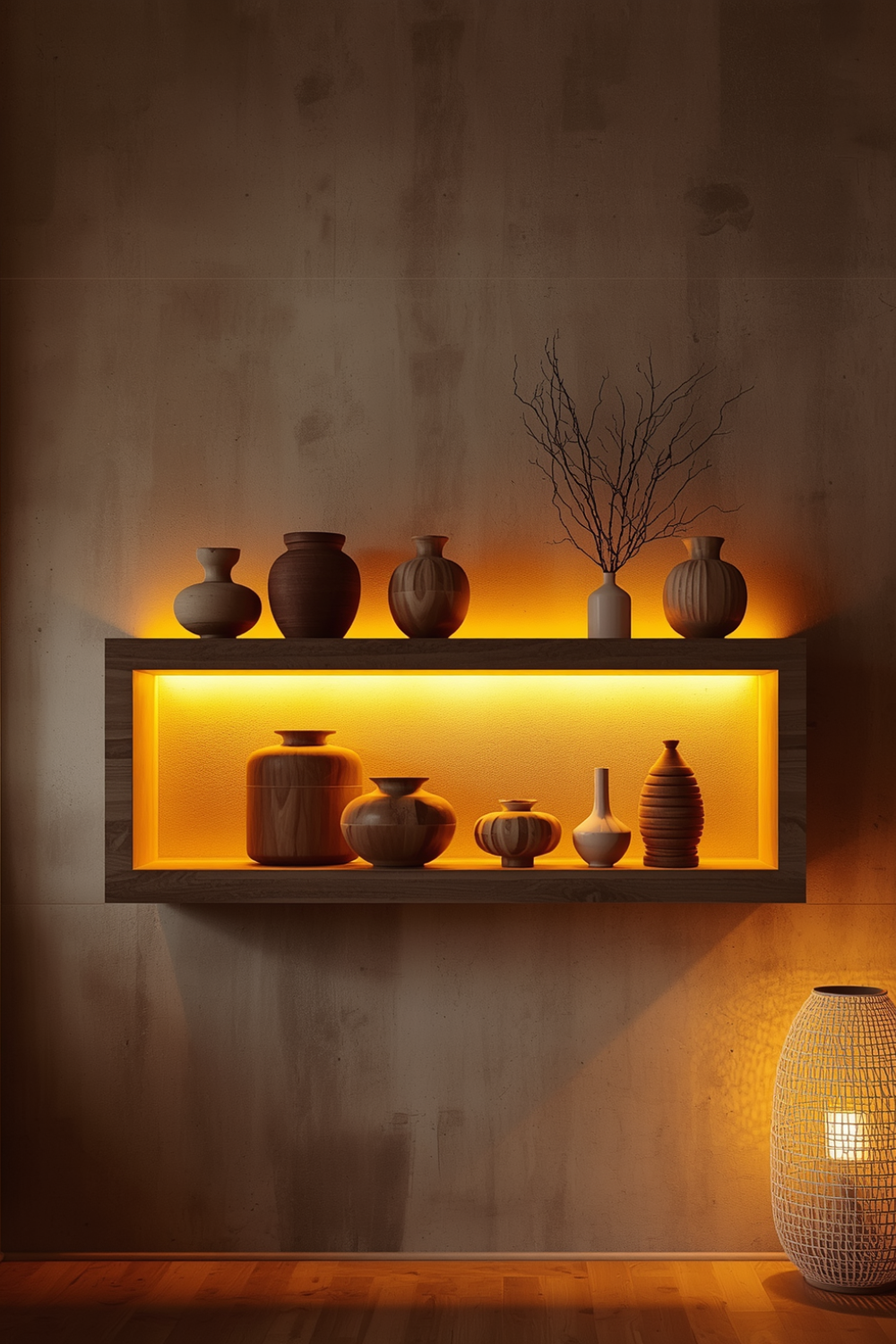
Warm lighting decor changes how every object on a shelf actually looks. A warm-toned bulb makes wood richer, ceramics deeper, books cozier, while cool white light flattens all of it into something clinical and flat. It’s a small swap that makes a bigger visual difference than most people expect, worth prioritizing before anything else.
Budget Floating Shelf Ideas
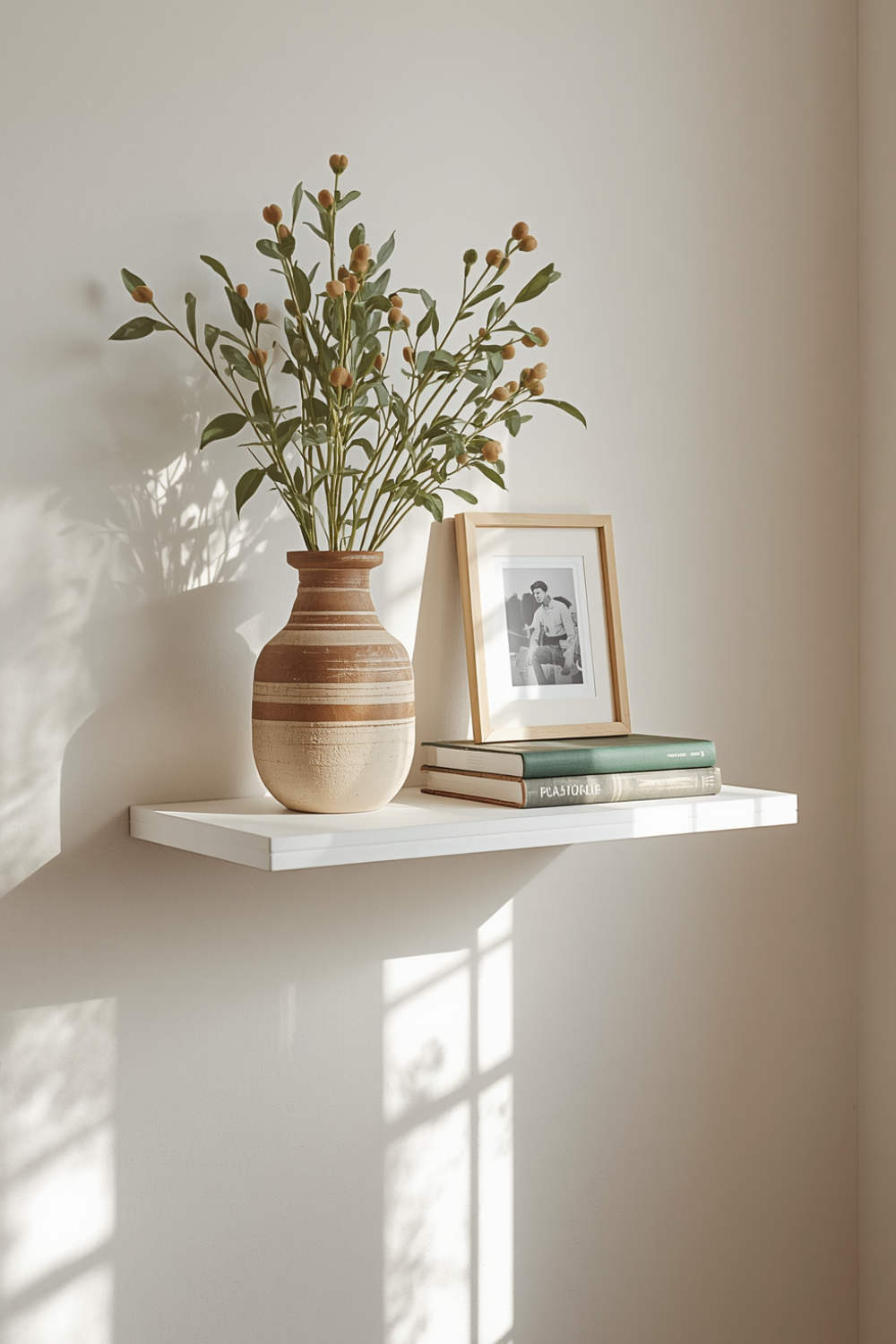
Budget floating shelf ideas don’t require sacrificing the look. A basic pine or MDF shelf with a simple bracket system costs a fraction of a solid walnut or oak floating shelf, and a coat of stain or paint can make the cheaper material read just as intentional. Thrifted frames, secondhand ceramics, and a single higher-quality anchor piece stretch a small budget further than buying everything new.
Floating Shelf Weight Limits and Installation Tips
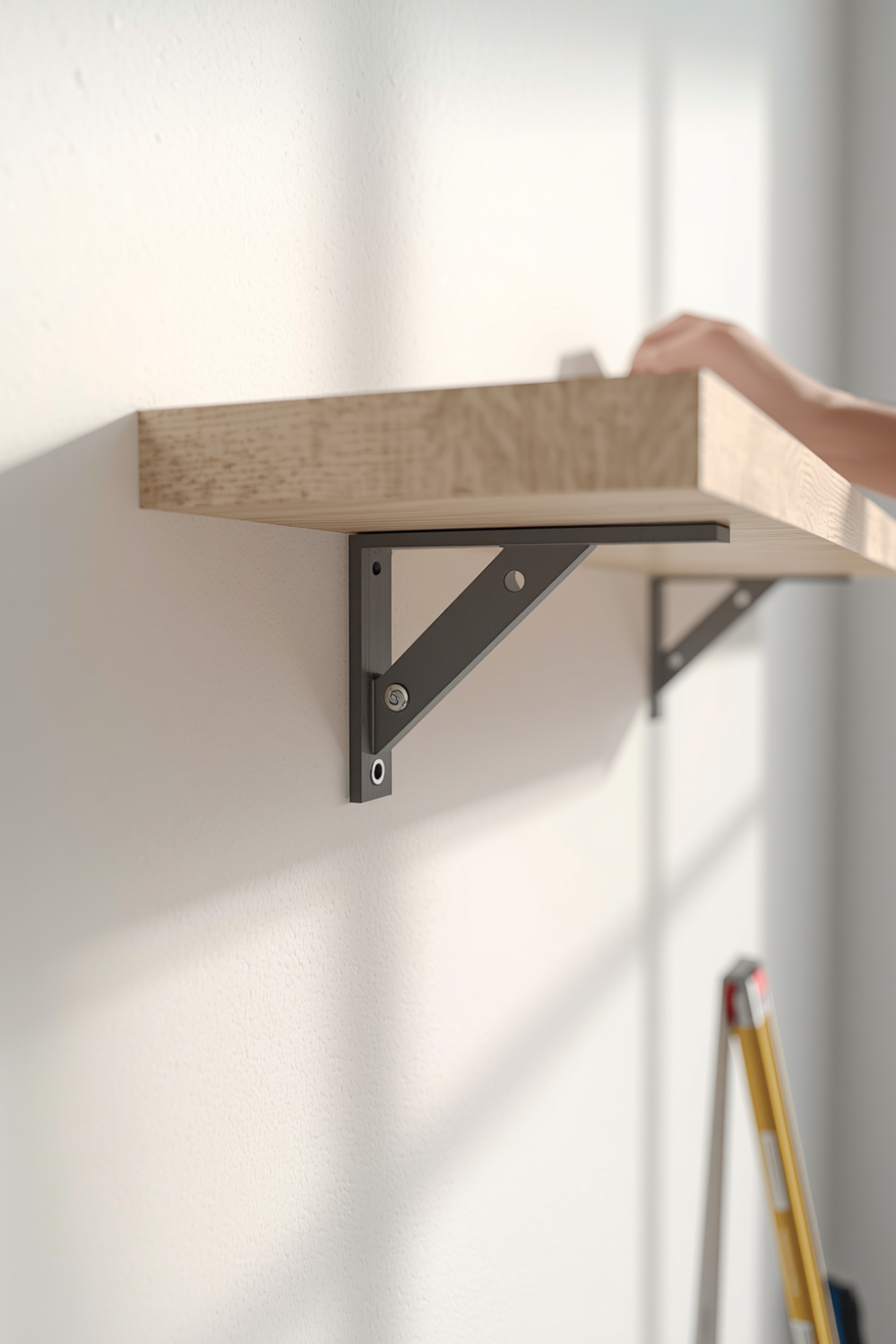
Floating shelf weight limits matter more than most people check before hanging one. Most standard floating shelves hold between 15 and 50 pounds depending on the bracket system and whether it’s anchored into a wall stud, so heavier items like stacked books or ceramics need proper stud mounting rather than drywall anchors alone. Always check the manufacturer’s weight rating before loading a shelf, and distribute heavier pieces toward the wall side rather than the outer edge to prevent sagging over time.
Kitchen Floating Shelf Ideas
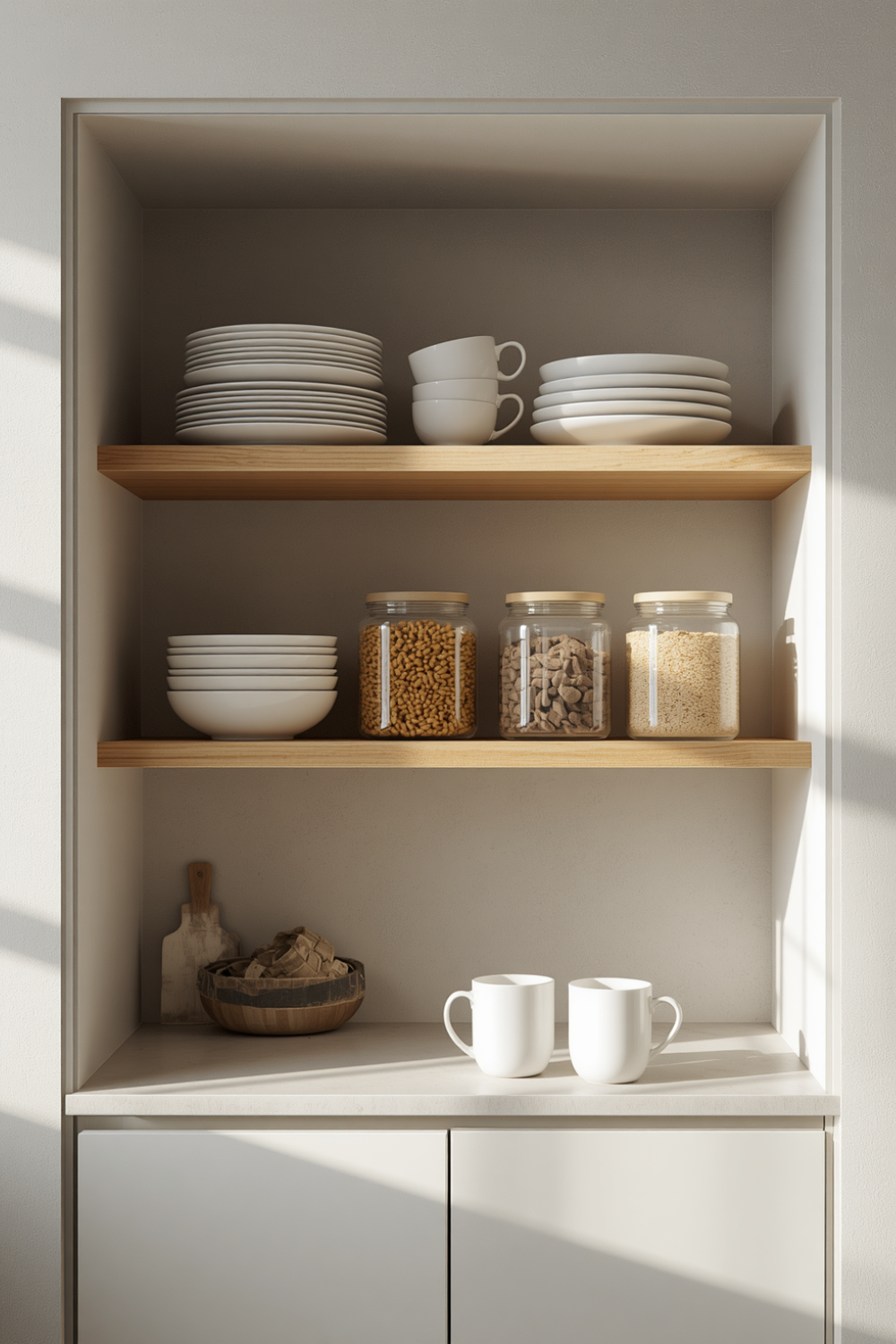
Kitchen floating shelf ideas work best when function and display share the space evenly. Open shelving near the stove or prep area holds everyday plates, mugs, and glass jars within easy reach, while a shorter run of shelving above a counter can display a few ceramic pieces or a small stack of cookbooks. Keeping frequently used items on the lower shelf and display-only pieces higher up keeps the setup both practical and visually clean.
Bathroom Floating Shelf Ideas
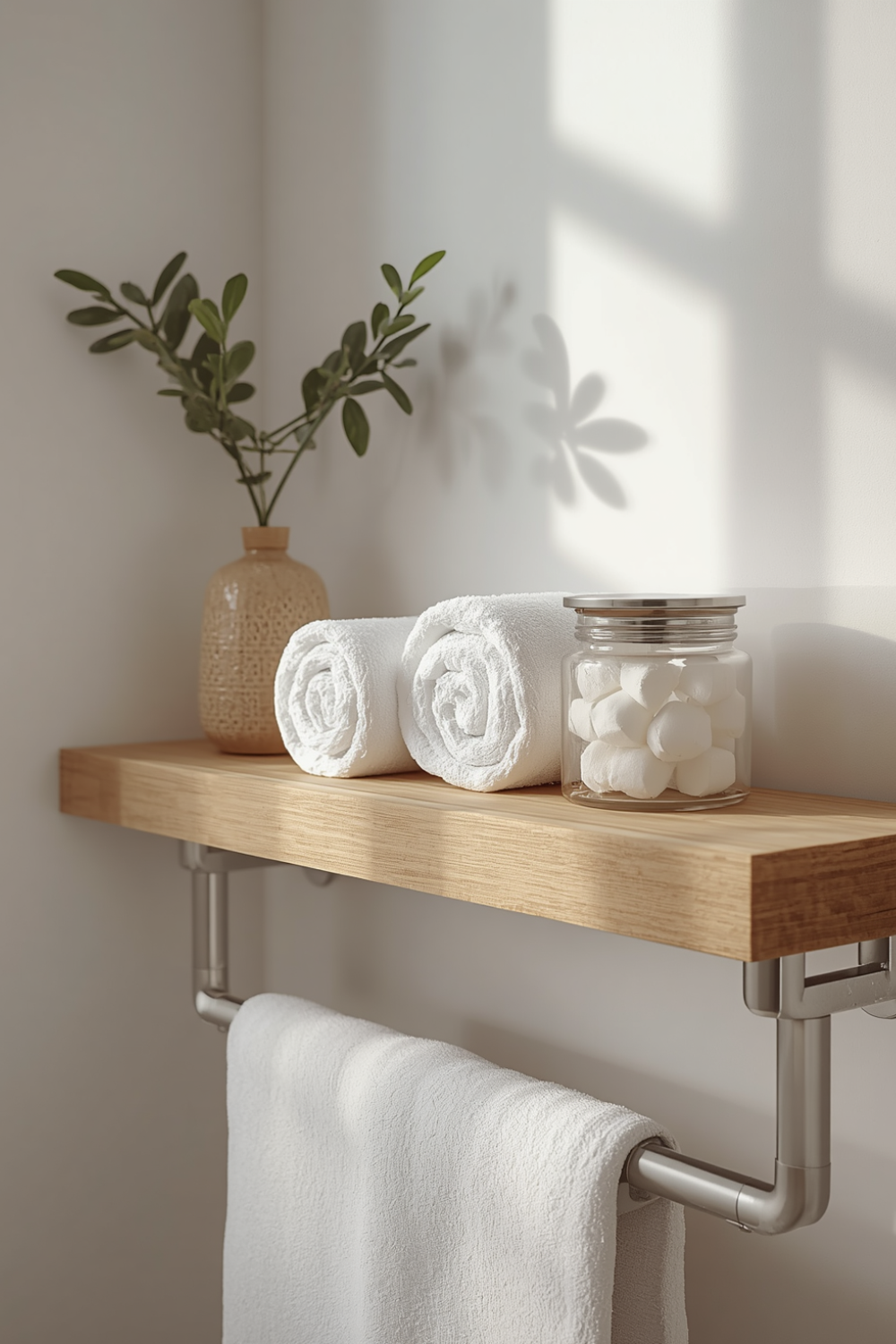
Bathroom floating shelf ideas need to account for moisture, so material choice matters more here than in any other room. Treated wood, sealed wood, or floating shelves made from stone-look composite hold up far better than untreated wood in a humid environment. Rolled towels, a small plant that tolerates humidity, and glass jars for cotton pads or bath salts make for a display that’s both useful and resistant to warping.
2026 Floating Shelf Trends
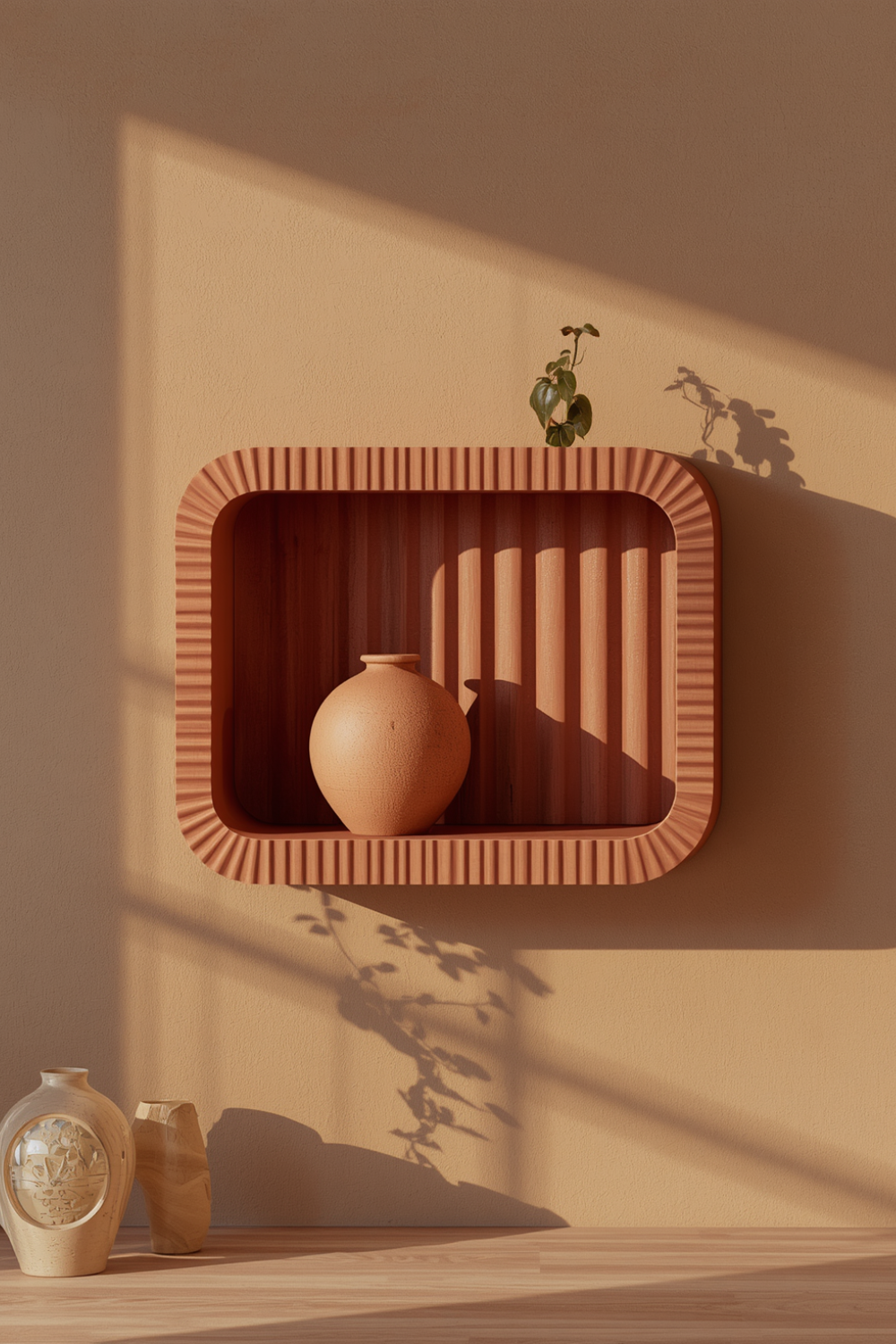
2026 floating shelf trends are leaning into warmer, more tactile materials, think curved-edge shelves, fluted wood detailing, and earthy finishes like terracotta or clay-toned brackets, moving away from the stark all-white minimalism that dominated the last few years. Chunkier, thicker-profile shelves are also replacing the thin, barely-there floating shelf look, giving displays a more grounded, substantial feel.
Quick Recap: Floating Shelf Decor Priorities
If you’re short on time, here’s the shortlist:
- Group objects in odd numbers with varied heights rather than a single flat row.
- Leave real negative space between groupings instead of filling the entire shelf edge to edge.
- Mix object types, books, ceramics, a small plant, rather than repeating one category.
- Choose a style direction, minimalist, Japandi, organic modern, and keep the palette consistent.
- Add warm lighting if the shelf design allows, it elevates the whole display noticeably.
Final Thoughts
Floating shelf decor ideas that actually work come down to restraint and intentional grouping, not filling every inch of available space. Vary the height, leave breathing room, and mix object types thoughtfully, then let warm lighting do the rest.
Take a fresh look at your current shelves this week. If they’re feeling cluttered or flat, try removing half of what’s currently on them and regrouping what remains in odd numbers with real space in between.
Frequently Asked Questions
How many objects should go on a floating shelf? There’s no fixed number, but grouping items in odd numbers, three or five, with varied heights, tends to look more intentional than either a single centered object or a shelf packed edge to edge.
What’s the best way to style a floating shelf with books? Mix vertical and horizontal stacking rather than lining every book upright in a single row. A short horizontal stack topped with one small decorative object adds height variation and visual interest.
Should floating shelves match the rest of my furniture?</strong> They don’t need to match exactly, but keeping the wood tone or finish within the same general family as nearby furniture helps the shelving feel intentional rather than randomly added.
How do I add lighting to floating shelves? LED strip lighting along the underside or back edge of the shelf is the most common approach, and it highlights displayed objects far better than relying on the room’s general ambient lighting alone.
What’s the difference between floating shelves and built-in shelving? Floating shelves are typically installed as standalone pieces, while built-in shelving is custom-constructed to fit a specific wall or alcove, becoming a permanent part of the room’s architecture rather than an added furniture piece.
How do I style a corner shelf without it looking crowded? Use fewer objects than you would on a straight shelf, since the angled space can visually crowd faster, and prioritize one or two taller pieces over several small ones competing for the limited depth.