Let’s be honest — a patchy lawn that needs watering twice a day isn’t doing your home any favors, especially if you live somewhere hot and dry. The good news? Desert landscaping has quietly become one of the most stylish front yard trends across the U.S., particularly in states like Arizona, California, Nevada, and Texas.
We’re not just talking about a few rocks and a sad-looking cactus. Modern desert front yard landscaping has evolved into something genuinely beautiful — layered textures, bold plant shapes, warm earthy tones, and designs that look just as good in July as they do in December. And because these yards work with the climate instead of against it, they save you real money on water bills every single month.
In this guide, you’ll find 20 curb appeal desert landscape front yard ideas that actually work. Whether you’re starting from scratch, trying to replace a dying lawn, or just looking for some fresh inspiration, there’s something here for every budget and every yard size.
Why Desert Landscaping Is Worth Considering
Before diving into the ideas, here’s the short case for making the switch.
The average American lawn uses around 30–60 gallons of water per square foot per year. In desert climates, that number only climbs. Xeriscaping — designing landscapes that need little to no irrigation — can cut outdoor water use by 50 to 75 percent. That’s not a small number.
Beyond the water savings, drought tolerant front yard landscaping is genuinely low maintenance. No weekly mowing, No fertilizer schedule, No patchy brown spots every August. Once established, most desert plants mostly take care of themselves.
And from a curb appeal standpoint? A well-designed desert front yard can increase perceived home value. Real estate agents in the Southwest increasingly note that xeriscape front yards are a selling point, not a compromise.
20 Curb Appeal Desert Landscape Front Yard Ideas
1. Go Big with a Statement Saguaro Cactus
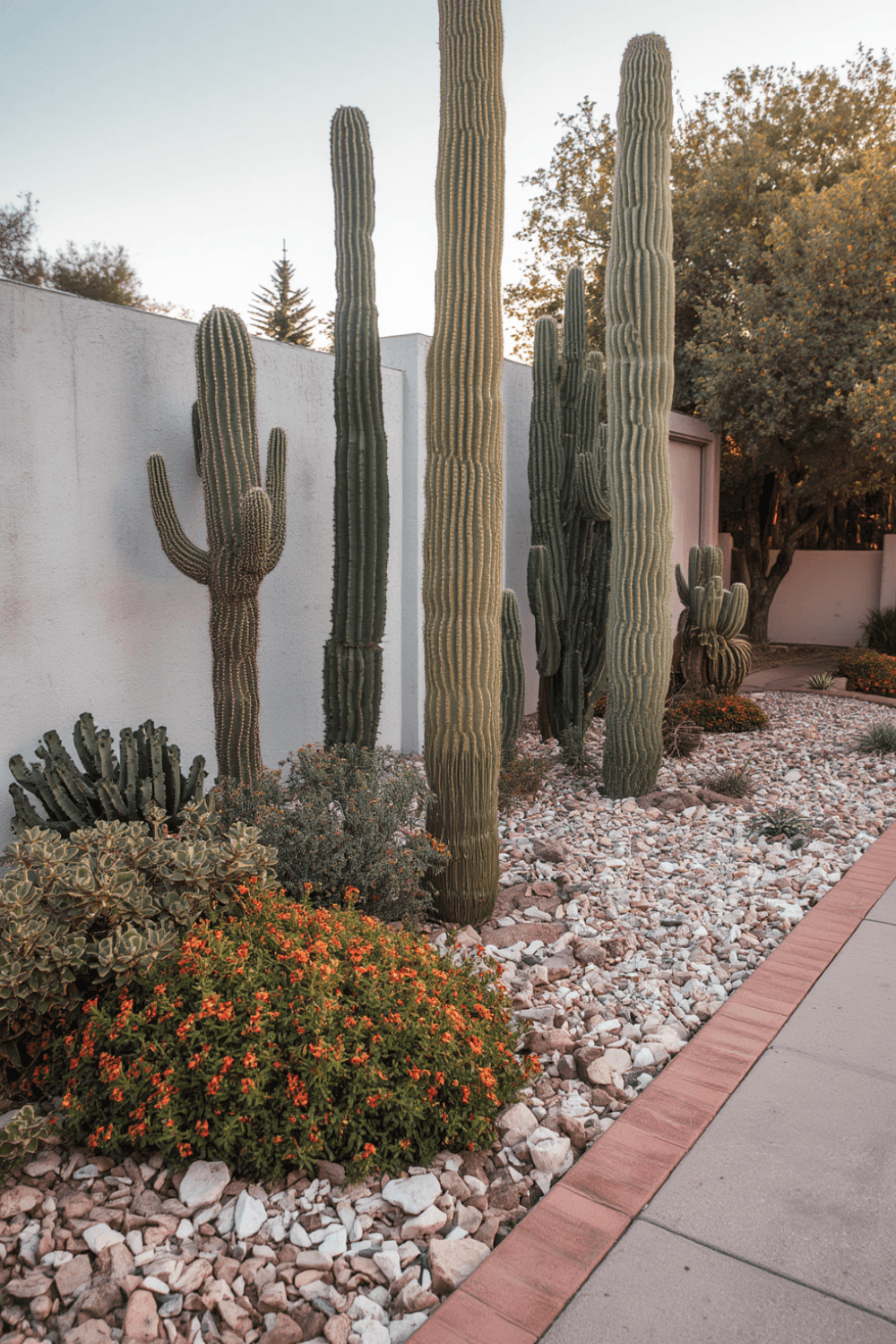
If you’re in Arizona or Southern California, a mature saguaro is the ultimate front yard anchor. It does the heavy lifting visually — you barely need anything else. Pair it with a spread of white gravel and a few low desert shrubs at its base, and you have a yard that looks intentional and striking.
Just know: saguaros are slow growers, and in Arizona they’re protected by state law. Buy from a licensed nursery and make sure it’s planted where it has room.
2. Use Decomposed Granite as Your Base Layer
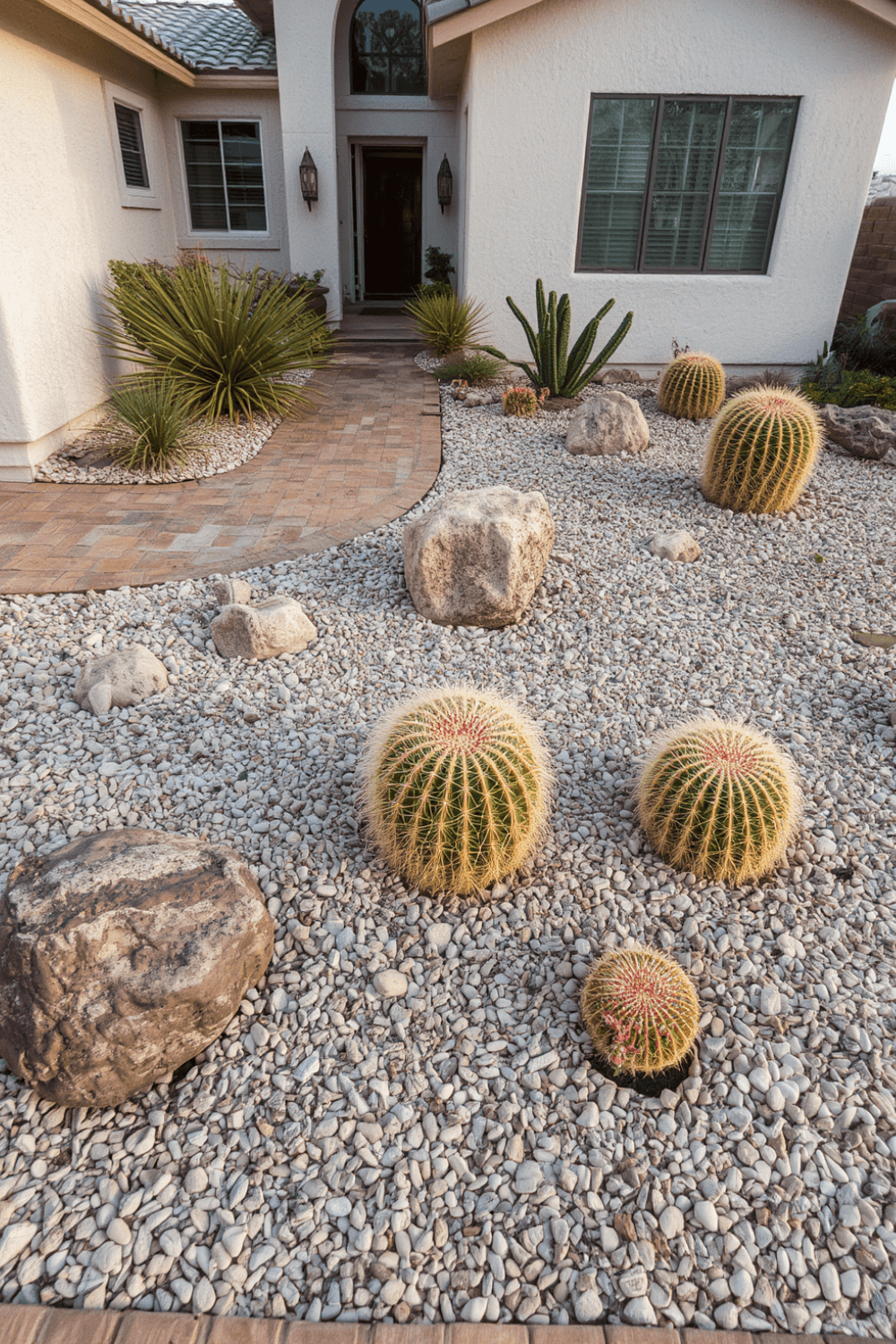
One of the most practical affordable desert landscaping ideas is replacing grass or bare dirt with decomposed granite (DG). It comes in warm tan, reddish-brown, and gray tones. It suppresses weeds, drains well, and gives the whole yard a clean, finished look.
Layer it at 3–4 inches deep, and it’ll stay put through wind and rain without washing away.
3. Create a River Rock Path to Your Front Door
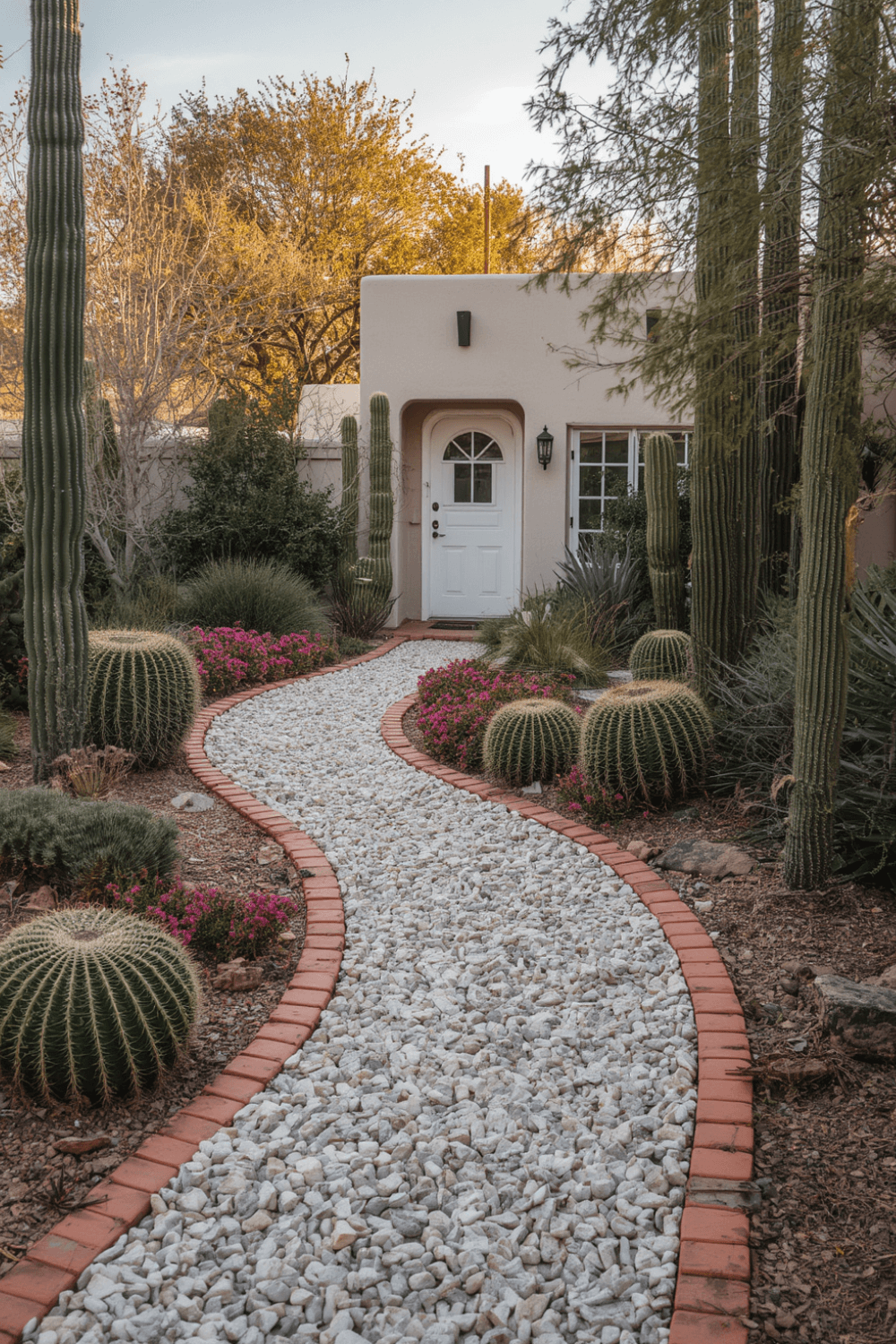
A winding path made from smooth river stones or larger cobble rocks draws the eye straight to your entrance. This is one of the simplest desert rock landscaping front yard upgrades you can do on a weekend with minimal tools and a $200 budget.
Use larger stones as edging to keep everything neat and defined.
4. Mix Cacti Heights for a Natural Look
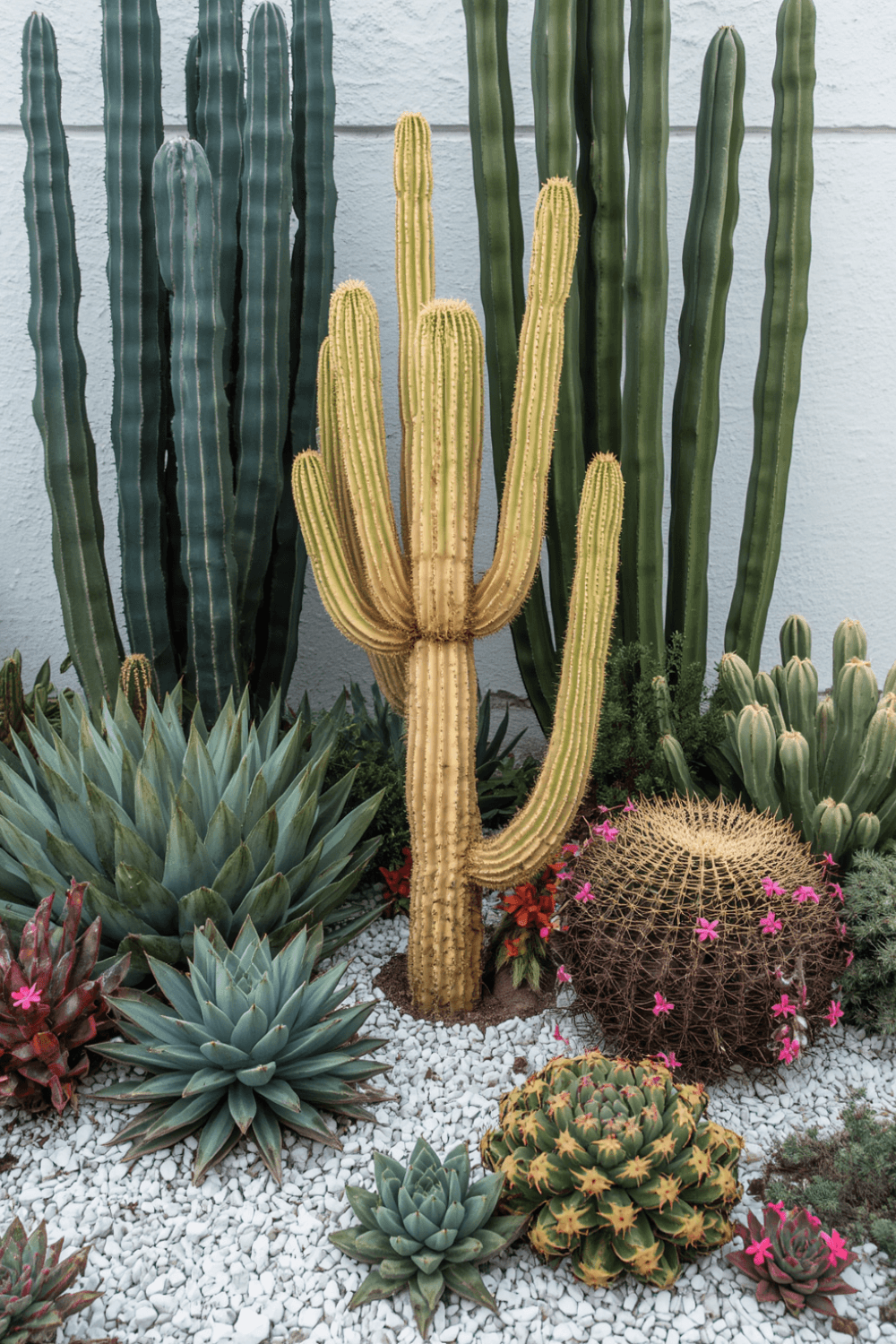
One thing people get wrong with cactus front yard landscaping ideas is planting everything at the same height. Nature doesn’t do that. Try layering: a tall columnar cactus in the back, mid-height barrel cacti in the middle, and low-growing prickly pear or cholla closer to the front.
The variation makes the whole design read as intentional — not like you just scattered plants around.
5. Add a Dry Creek Bed
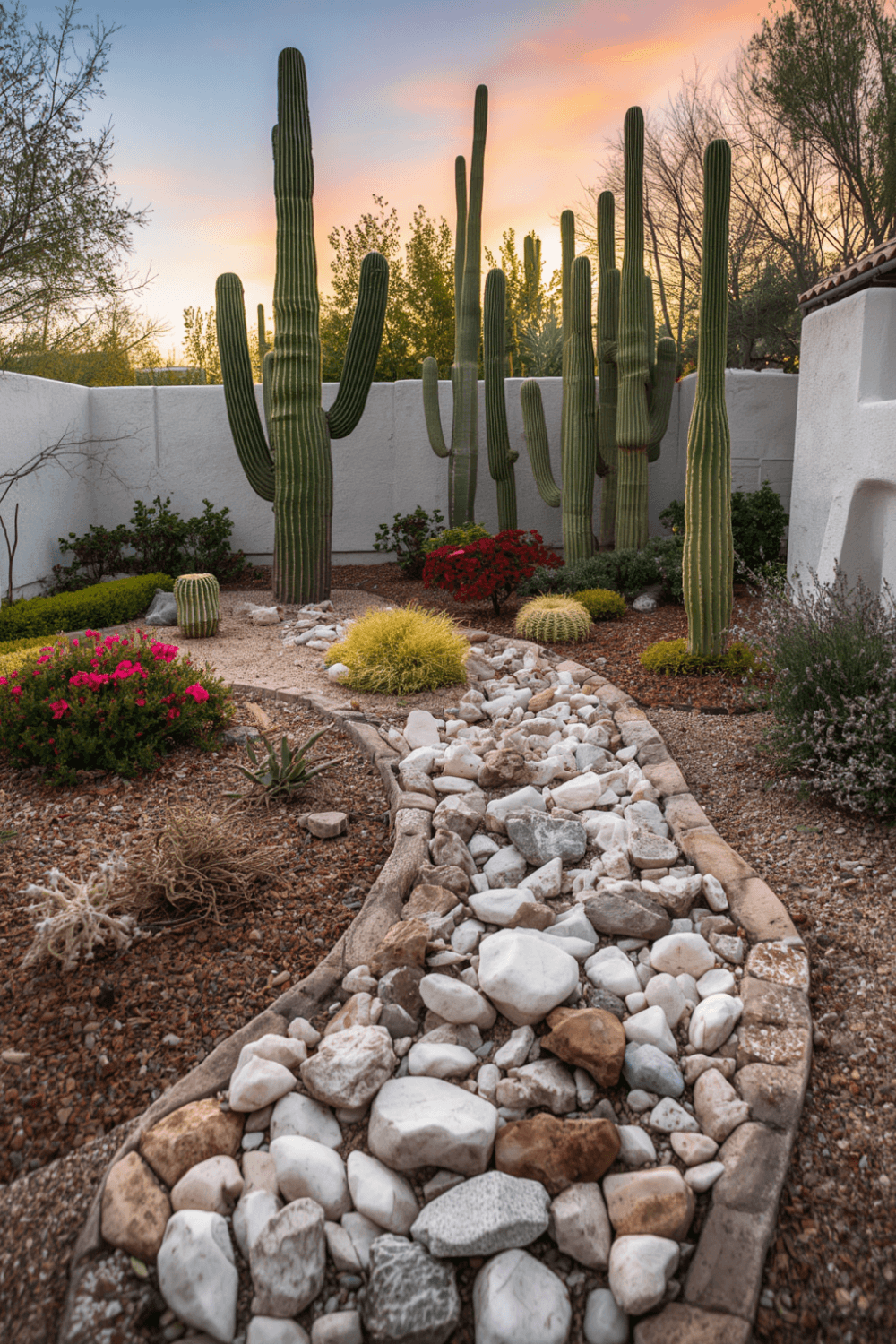
A dry creek bed is a smart and attractive way to handle storm water runoff. It’s also one of those desert landscape design for front yard ideas that looks like a professional did it, even when you do it yourself.
Use larger river rocks along the edges, smaller stones in the center to mimic a real streambed, and plant ornamental grasses or desert sage along the banks.
6. Choose a Focal Point Color with Bougainvillea
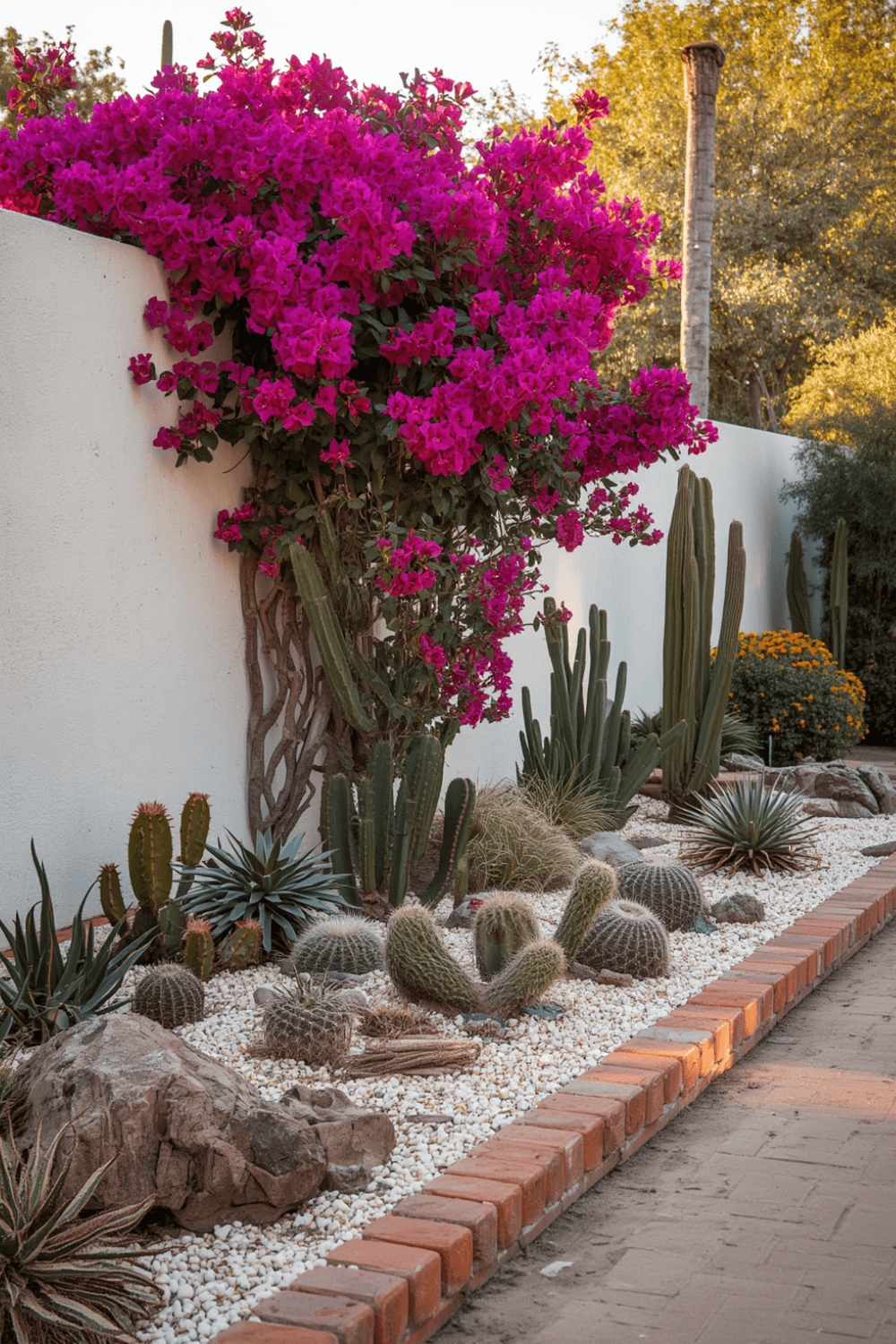
Desert landscaping doesn’t have to mean brown and beige. Bougainvillea is one of the most spectacular plants you can grow in a hot, dry climate — it thrives on neglect and puts on an outrageous show of magenta, orange, or red blooms.
Train it along a fence, up a trellis, or over an arbor near your entry. The color contrast against adobe walls or white stucco is something else.
7. Install Low Adobe or Concrete Walls for Structure
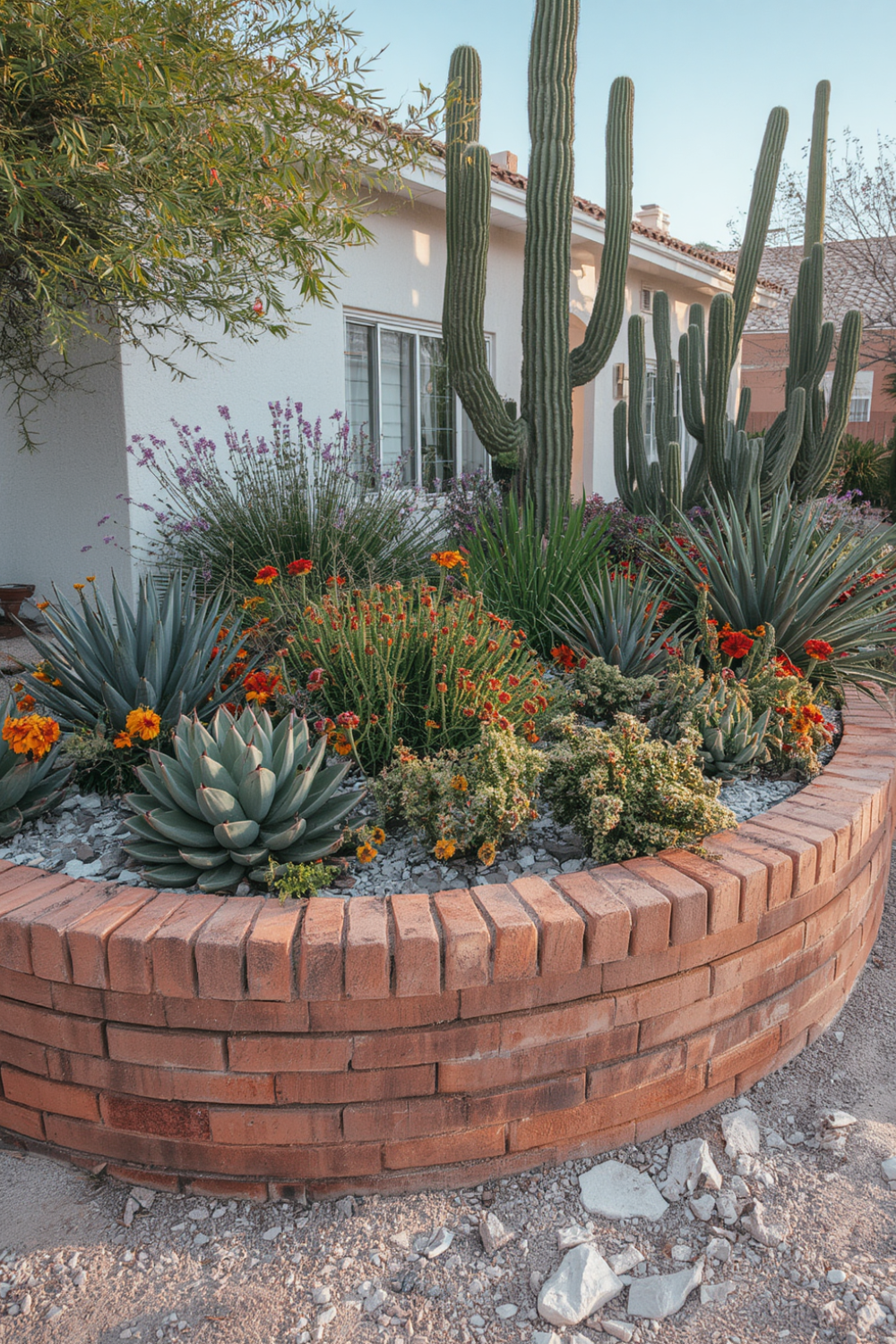
Front yard desert garden design really benefits from hard structure — low walls, raised planters, or defined borders that create visual organization. Adobe, stucco-covered concrete block, or natural stone all work well and stay consistent with a Southwest front yard landscaping aesthetic.
These walls also give you planting ledges where you can position succulents or trailing plants at eye level.
8. Try a Succulent Garden Cluster Near the Entry
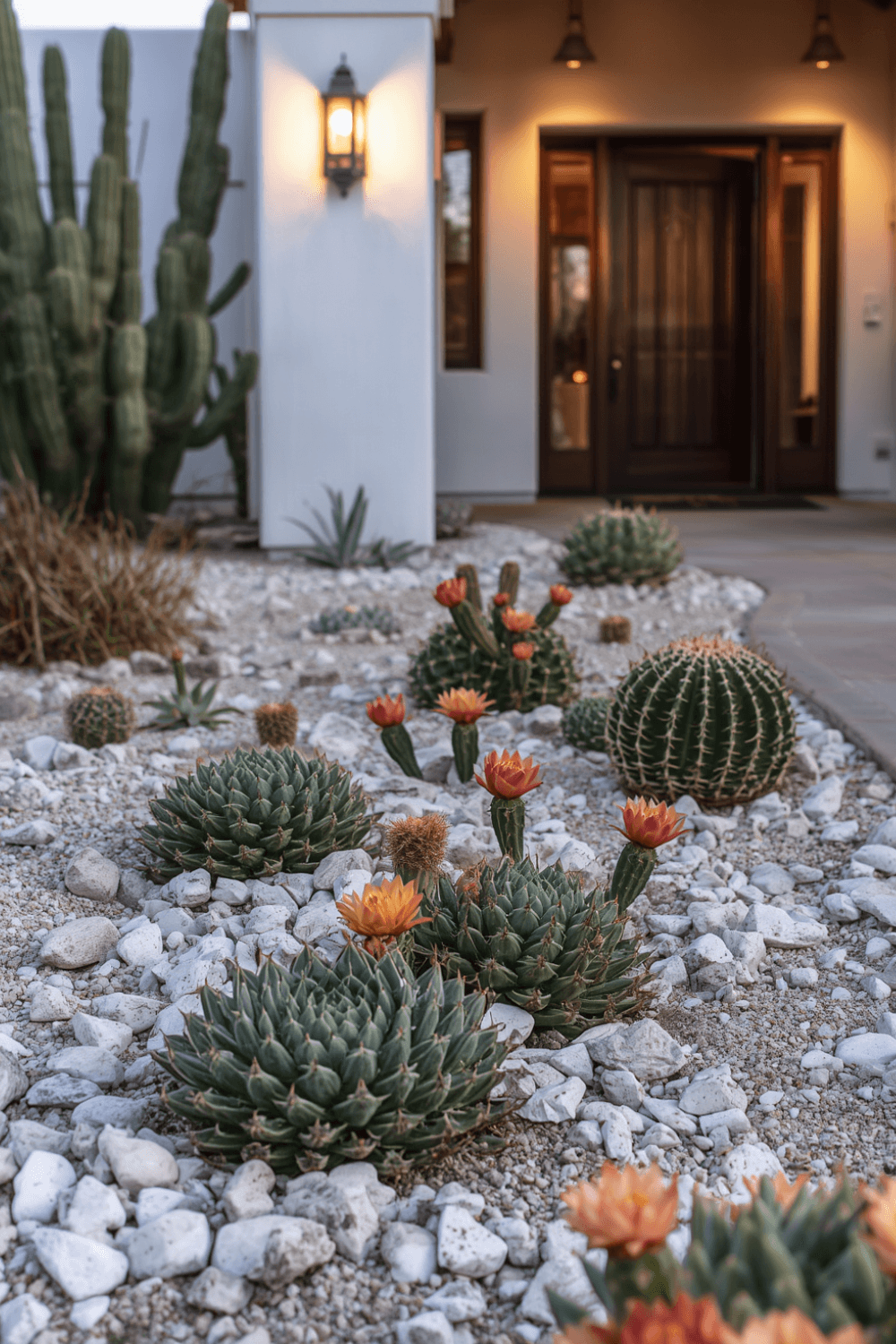
Succulents are ideal for desert landscaping ideas for small front yards because they make a big impact in a small footprint. Group them in clusters of three to five plants with varying textures — the rosette shapes of echeveria, the spikes of agave, the trailing strings of a sedum.
This works especially well in a raised planter box near your front steps.
9. Use Native Wildflowers for Seasonal Color
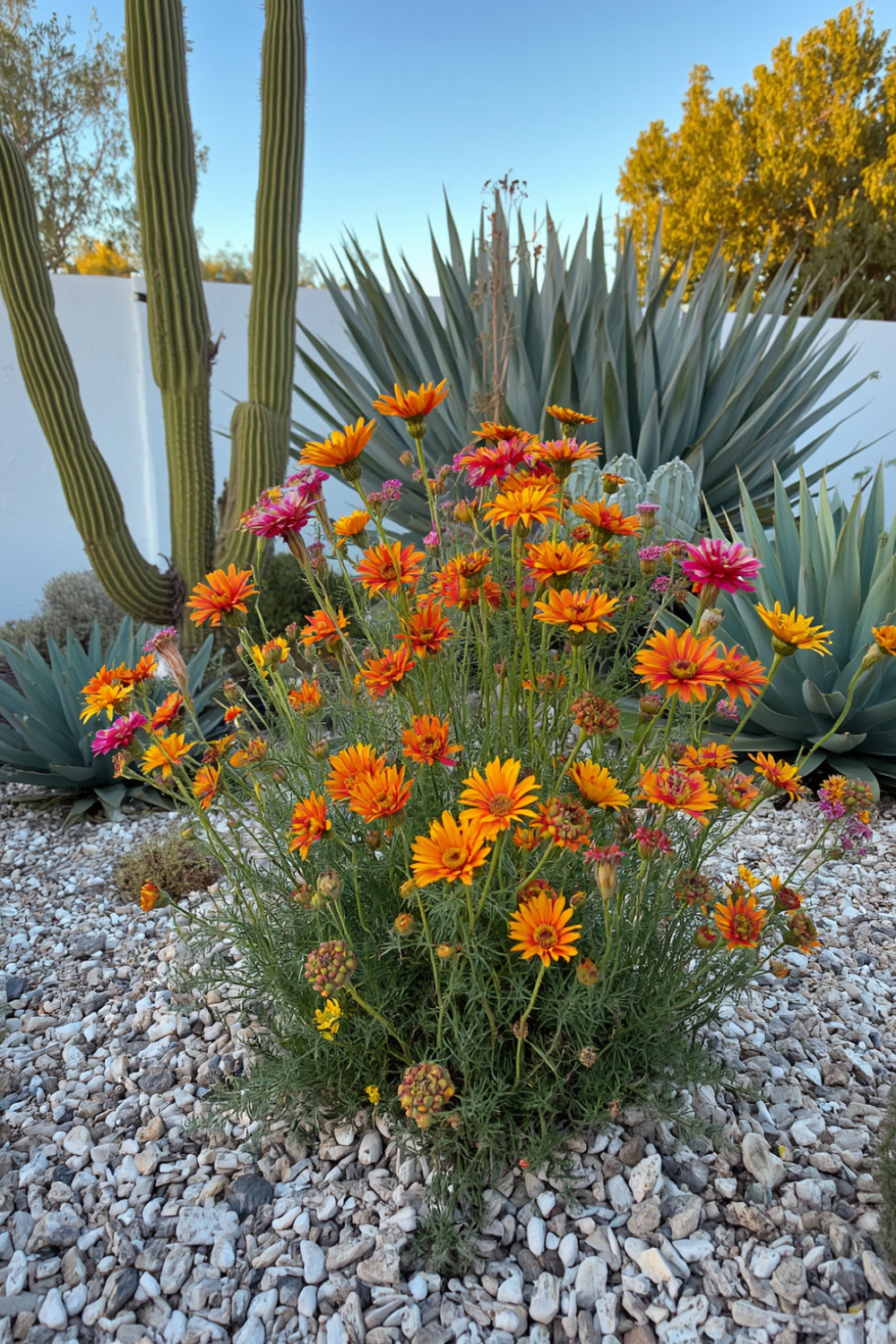
One of the most underused drought tolerant front yard landscaping moves is planting native wildflowers. Desert bluebells, California poppy, globe mallow, and brittlebush all come back year after year with zero irrigation once they’re established.
In spring, the color burst they produce is genuinely stunning — and it costs almost nothing to achieve.
10. Light It Up with Low Solar Pathway Lights
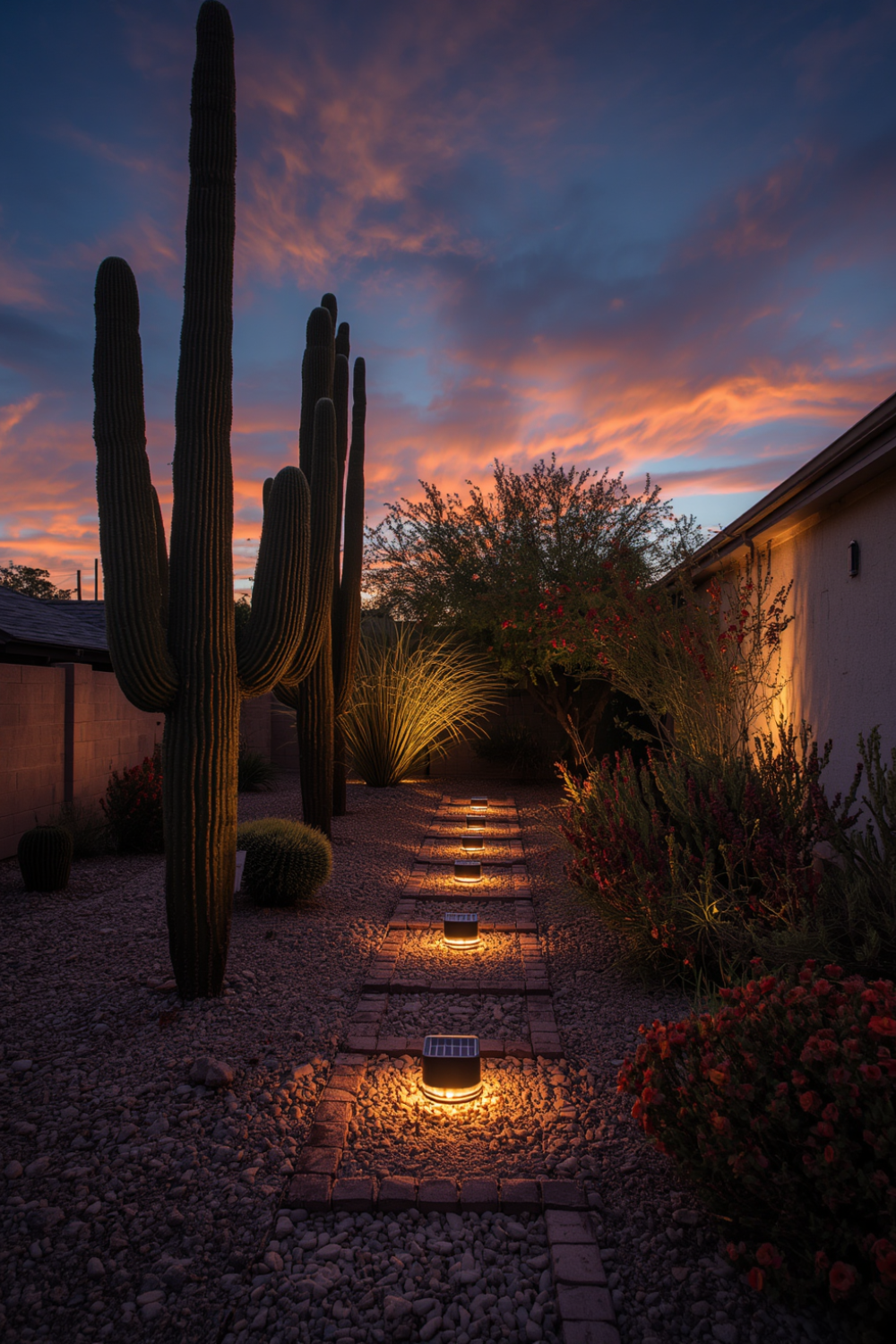
Good lighting turns a decent front yard into a great one after dark. Solar-powered pathway lights along a gravel or DG path are easy to install, cost nothing to run, and make the whole yard feel designed rather than just planted.
Warm white or amber tones work best with desert colors. Stay away from cool blue-white LEDs — they clash with the warm tones of rock and adobe.
11. Frame the Driveway with Agave Plants
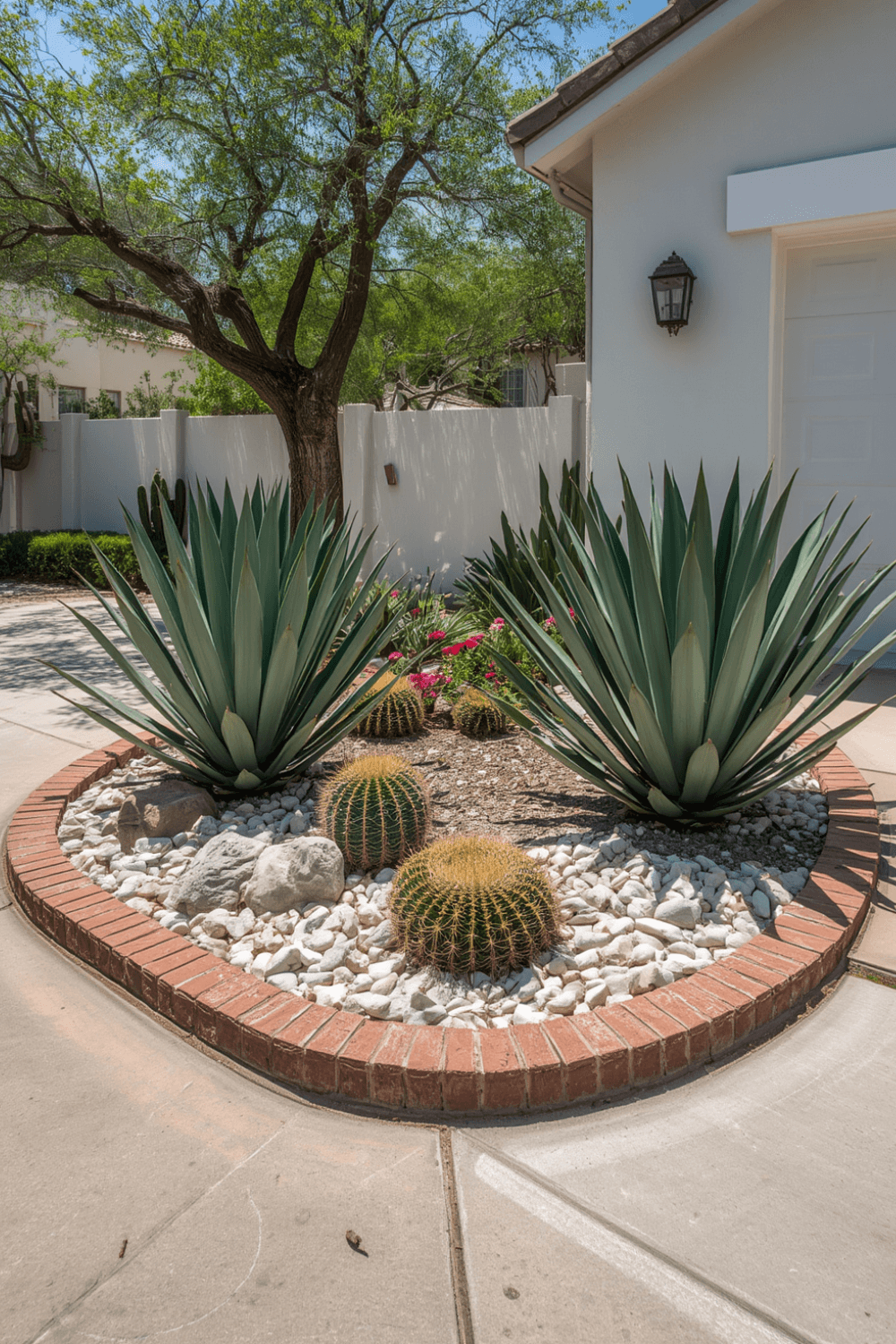
Agave is bold, sculptural, and practically indestructible. Planting matching specimens on either side of a driveway entrance creates an instant sense of arrival. It’s one of those modern desert front yard landscaping ideas that reads as high-end but costs very little to execute.
Blue agave, century plant, or agave Americana all work well in this role.
12. Create a Gravel Garden with Metal Edging
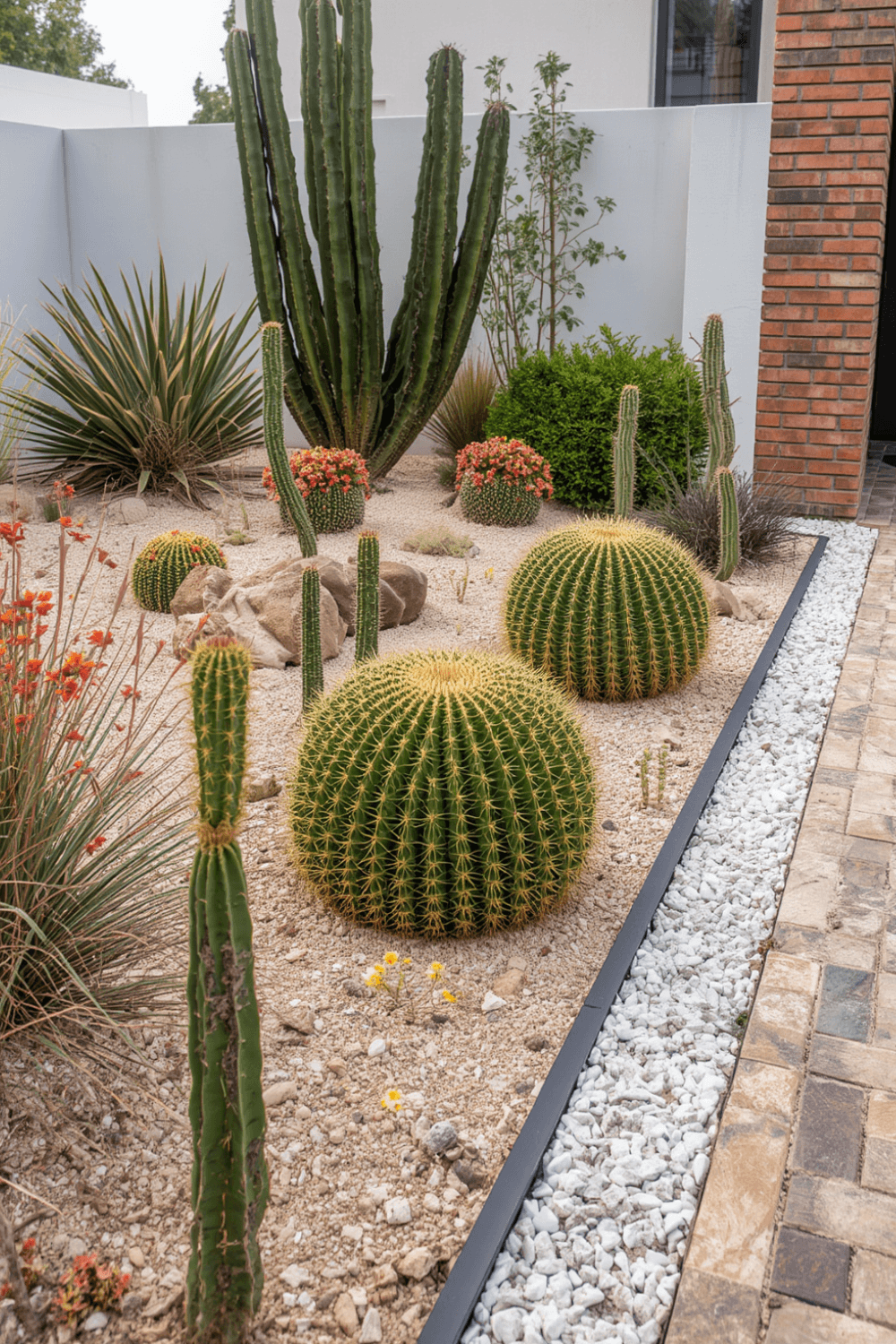
Steel or Corten edging strips are one of those small investments that make a big visual difference. They cleanly separate gravel areas from planted areas, hold DG in place, and add a modern edge to what could otherwise look rough.
This works particularly well for contemporary or modern desert front yard landscaping where clean lines matter.
13. Plant Ornamental Grasses for Movement
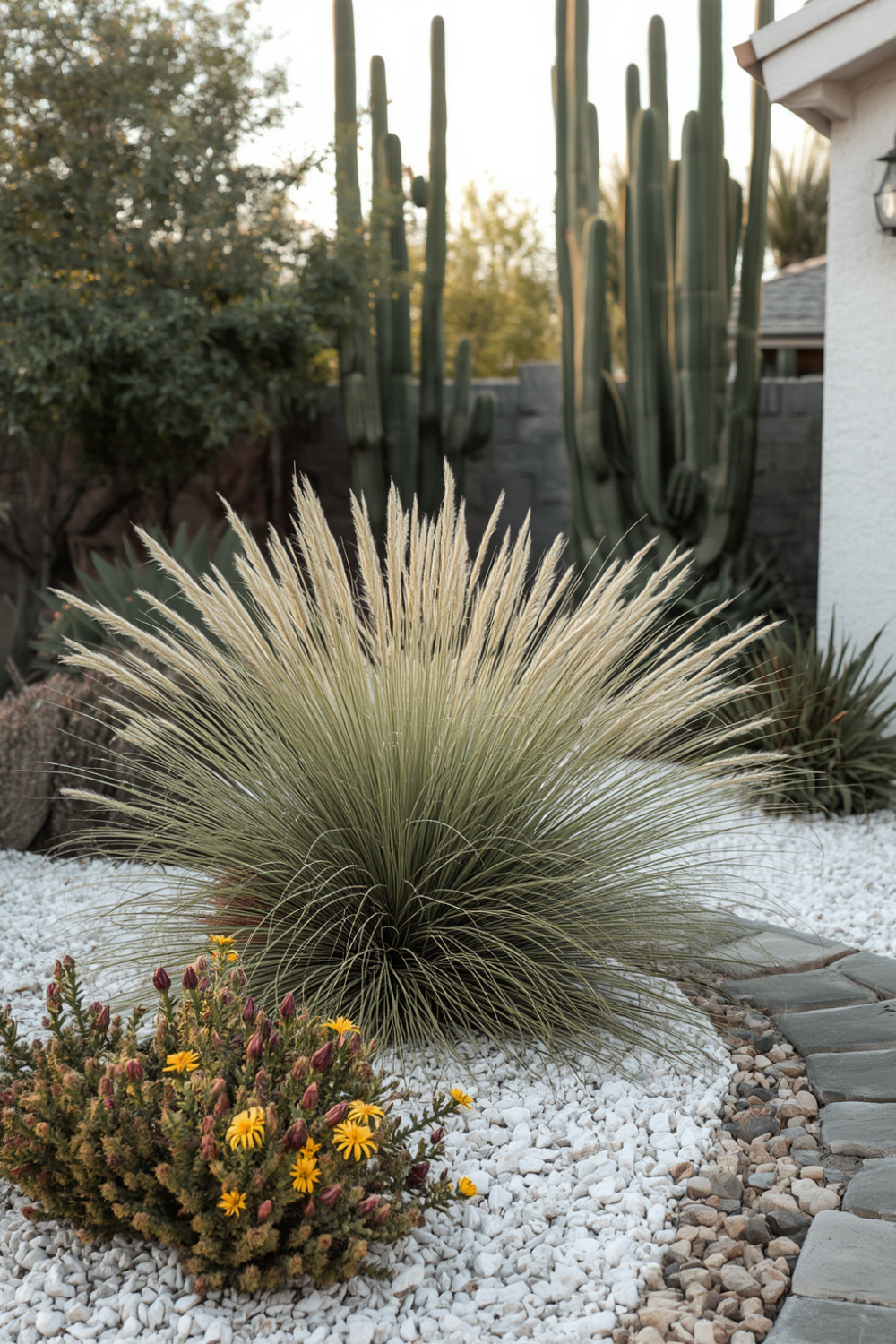
Desert landscaping can sometimes feel static. Ornamental grasses fix that. Mexican feather grass, blue oat grass, or desert muhly all move gently in the wind and add a softness that balances the spiky geometry of cacti and agave.
These grasses are drought tolerant and require almost no maintenance once established.
14. Incorporate a Water-Wise Drip Irrigation System
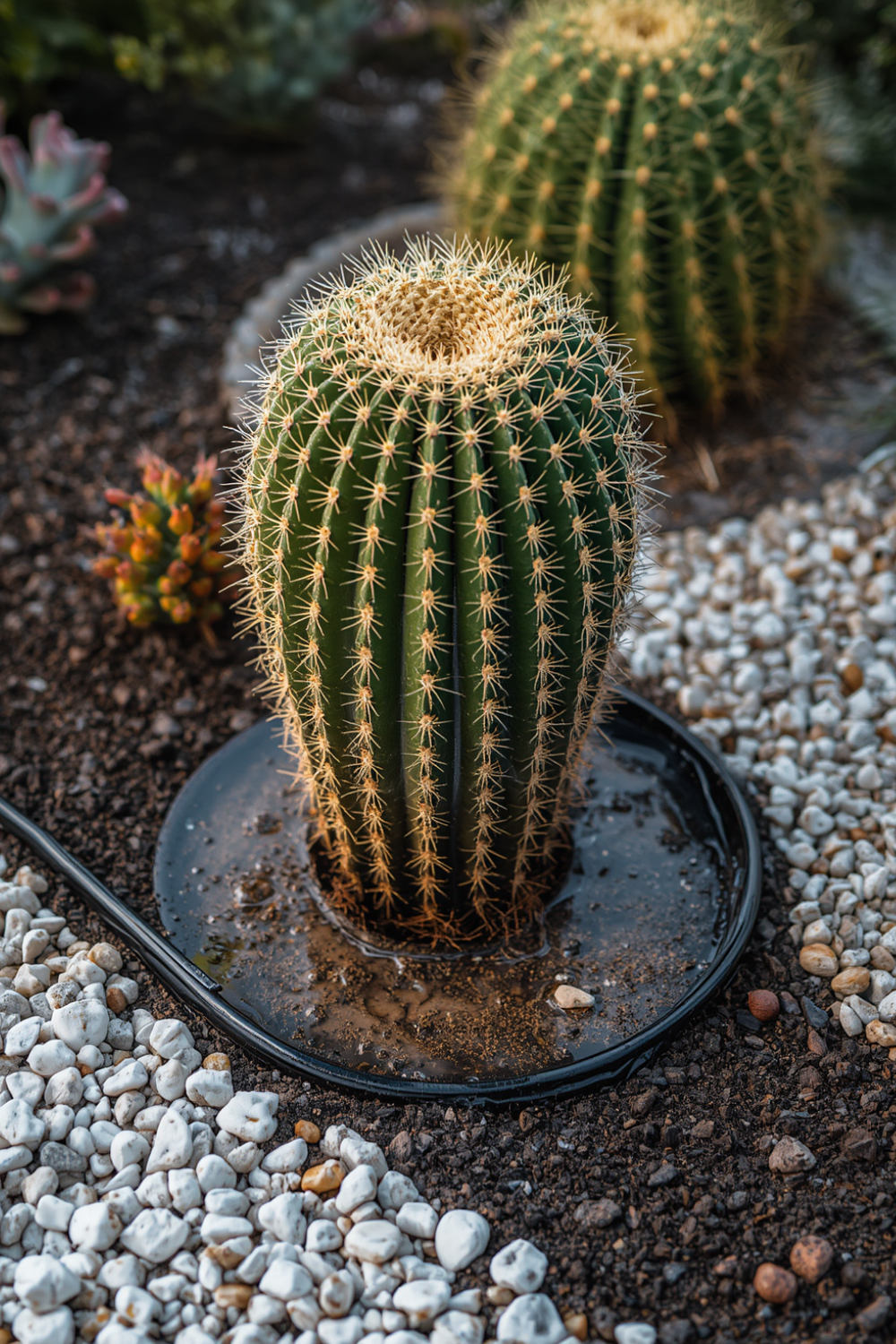
Even the most drought tolerant front yard landscaping needs some water during the establishment period — usually the first one to two years. A drip irrigation system delivers water directly to the root zone where it’s needed, losing almost nothing to evaporation.
Once your plants are established, you can dramatically reduce or even eliminate supplemental irrigation in many desert climates.
15. Build a Simple DIY Raised Planter
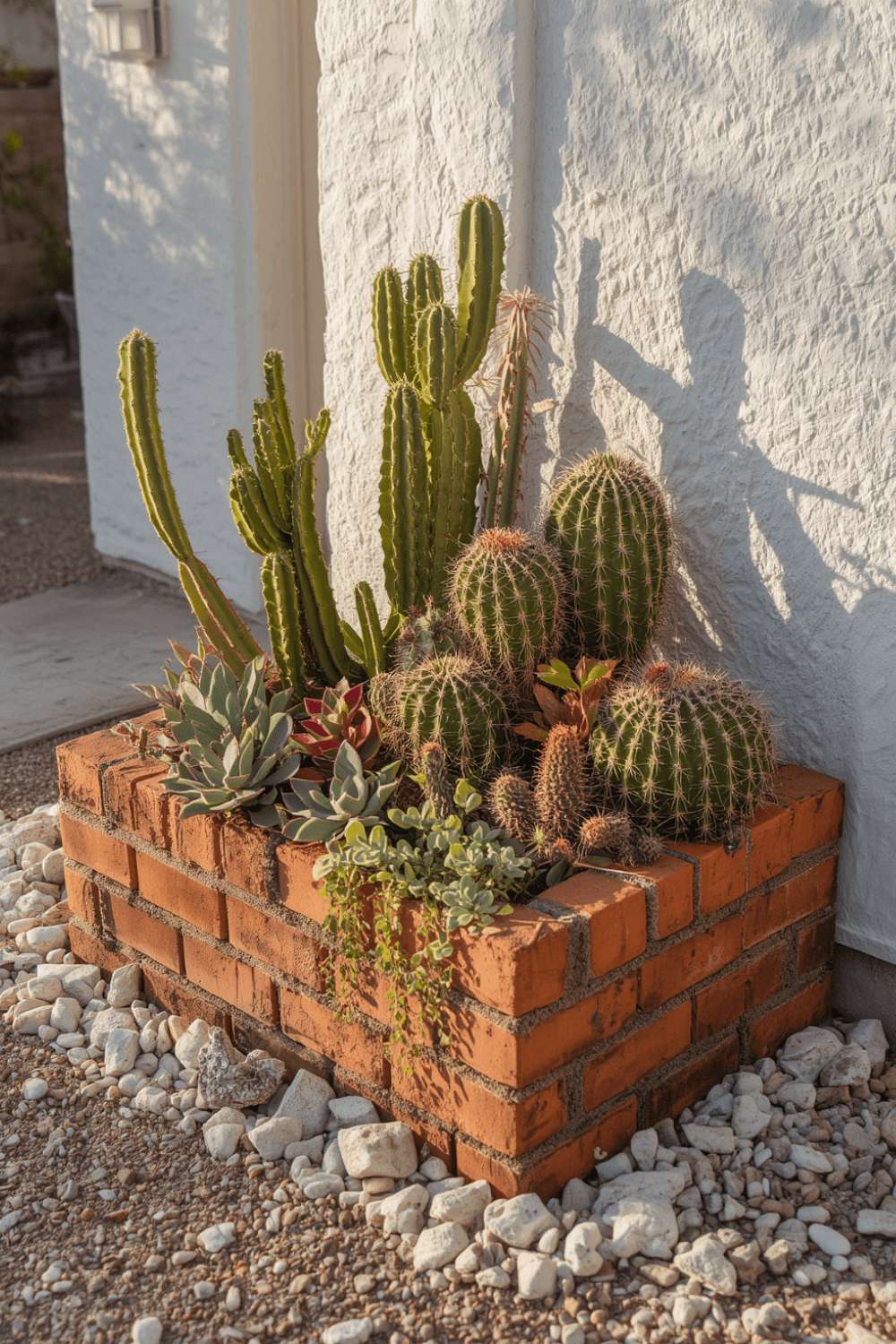
If you want easy desert landscaping ideas you can tackle yourself, a raised planter is a great starting point. Build a simple rectangle from cinder blocks, natural stone, or rough-cut lumber. Fill with well-draining desert soil mix. Plant with a mix of succulents, small cacti, and a trailing plant along the edge.
Cost: usually under $150 in materials and one Saturday afternoon.
16. Try Arizona Desert Front Yard Ideas with Terracotta Pots
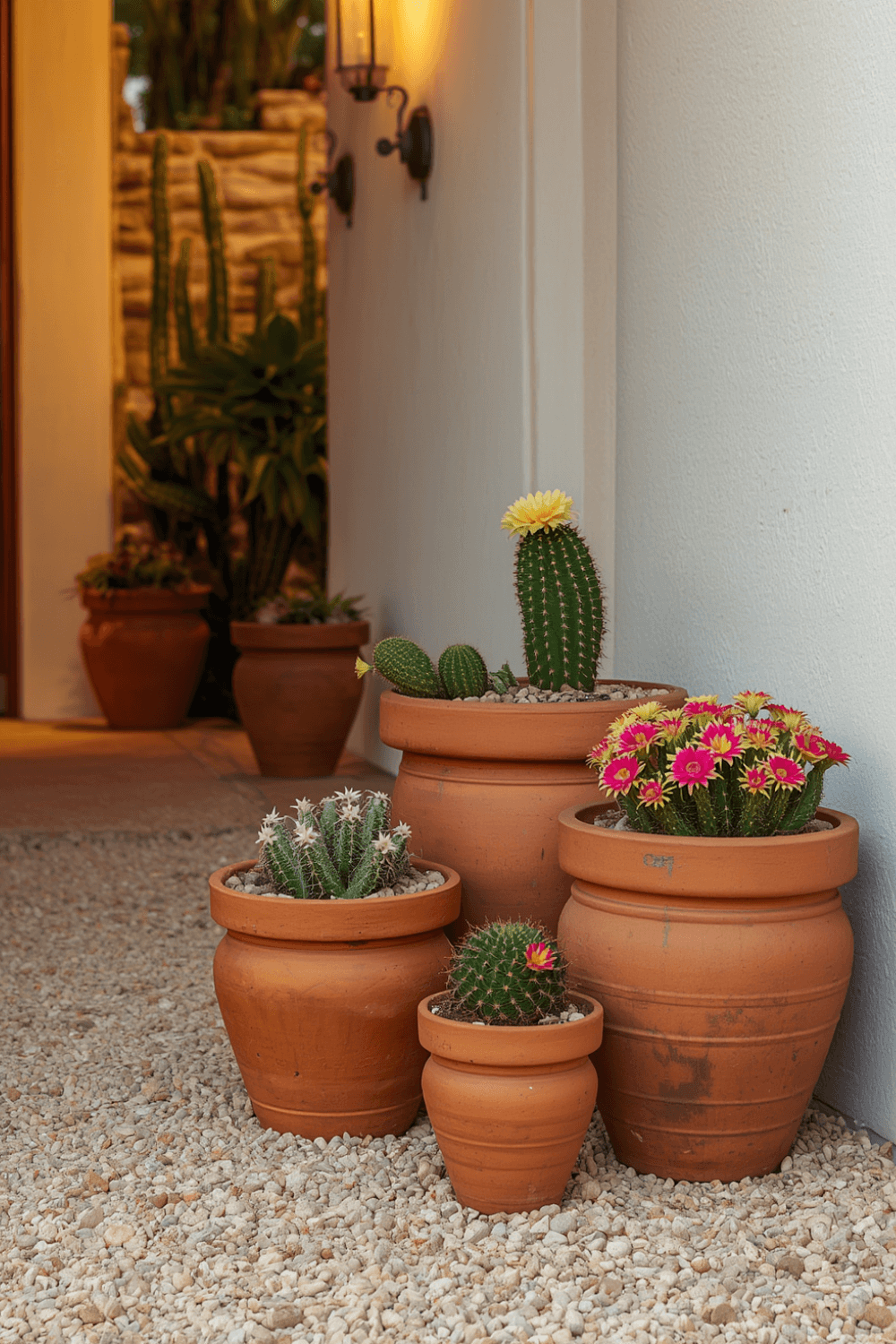
Large terracotta pots are a traditional Southwest design element that still works beautifully in desert front yards. Cluster three or five pots of varying sizes near your entry — odd numbers always look better than even — and fill them with colorful succulents or flowering desert plants.
This is a completely removable, renter-friendly approach to desert curb appeal.
17. Use Palo Verde or Desert Willow as a Shade Tree
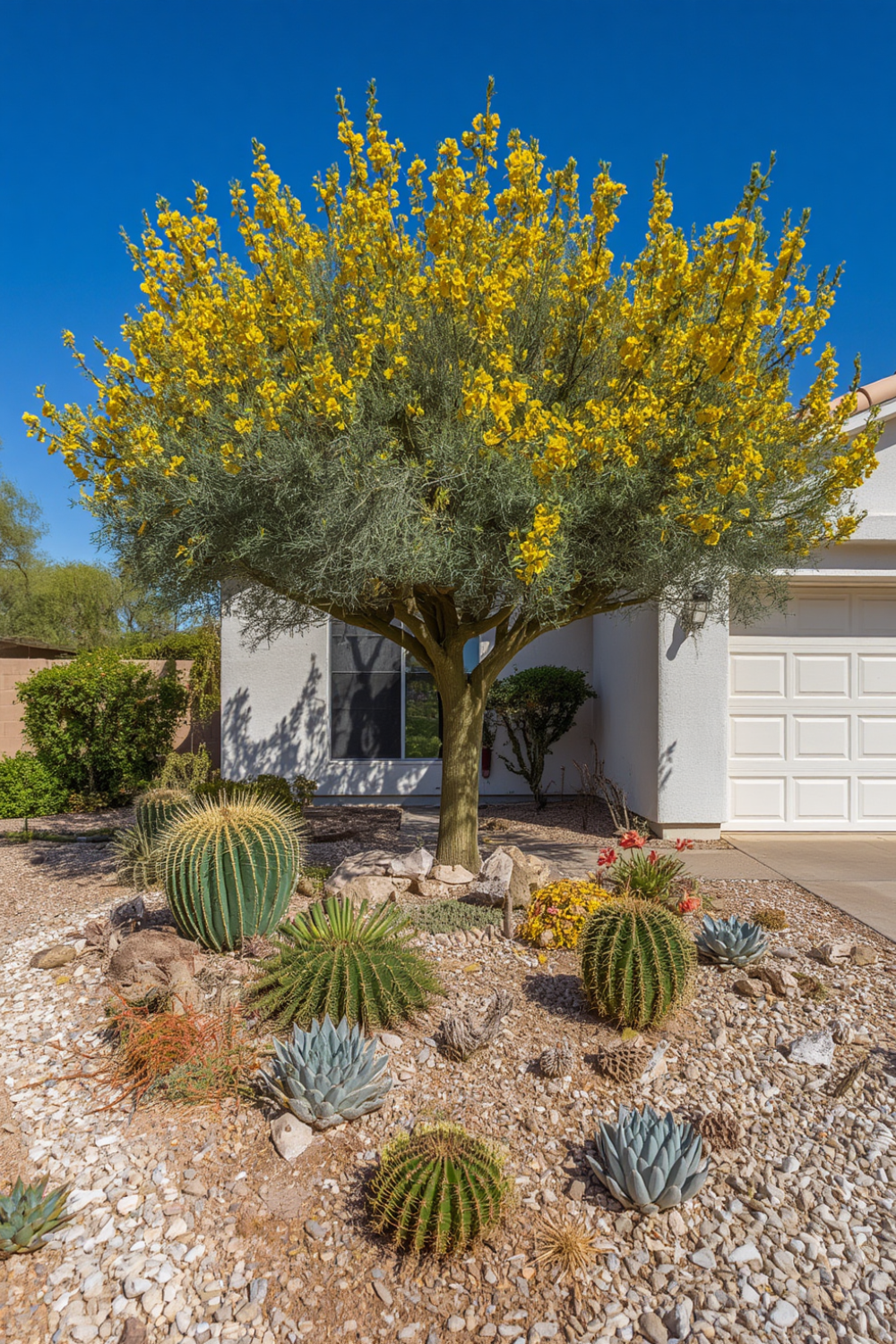
One of the common mistakes in desert landscaping is skipping shade trees entirely. Yes, the yard needs less water — but that doesn’t mean it needs to bake in direct sun with no canopy.
Palo Verde is the Arizona state tree for a reason. It’s fast-growing, drought tolerant, and produces a beautiful yellow flower bloom in spring. Desert willow is another option, with orchid-like pink or white flowers that attract hummingbirds.
18. Layer Mulch Around Desert Plants
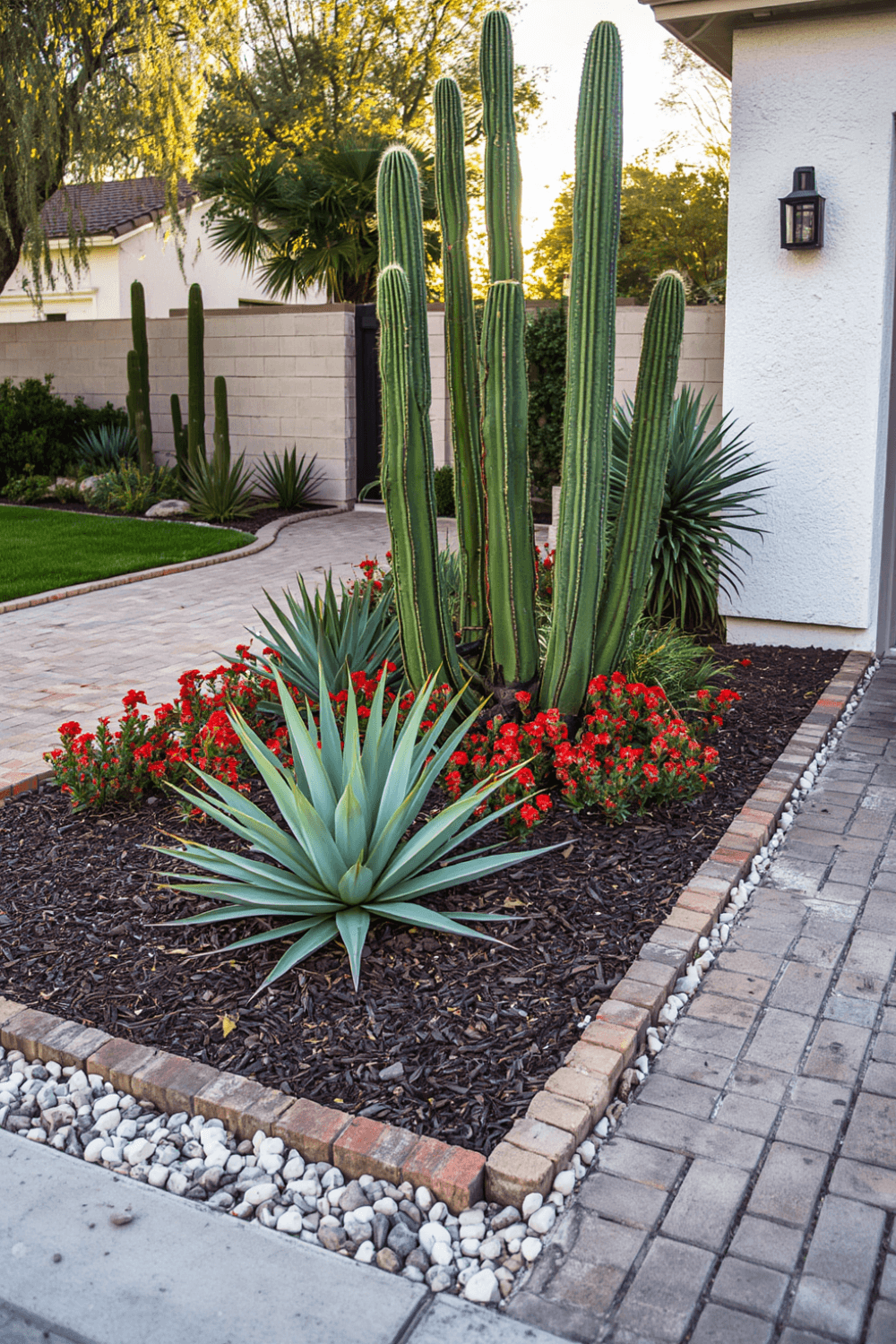
Organic mulch around desert plants isn’t just for looks — it retains soil moisture, regulates soil temperature, and slowly breaks down to improve soil quality. Use bark, wood chip, or pecan shell mulch in planted areas, and reserve gravel or DG for open pathways and borders.
This is an easy upgrade that helps plants establish faster and survive heat stress.
19. Go Monochromatic with White Gravel and White Walls
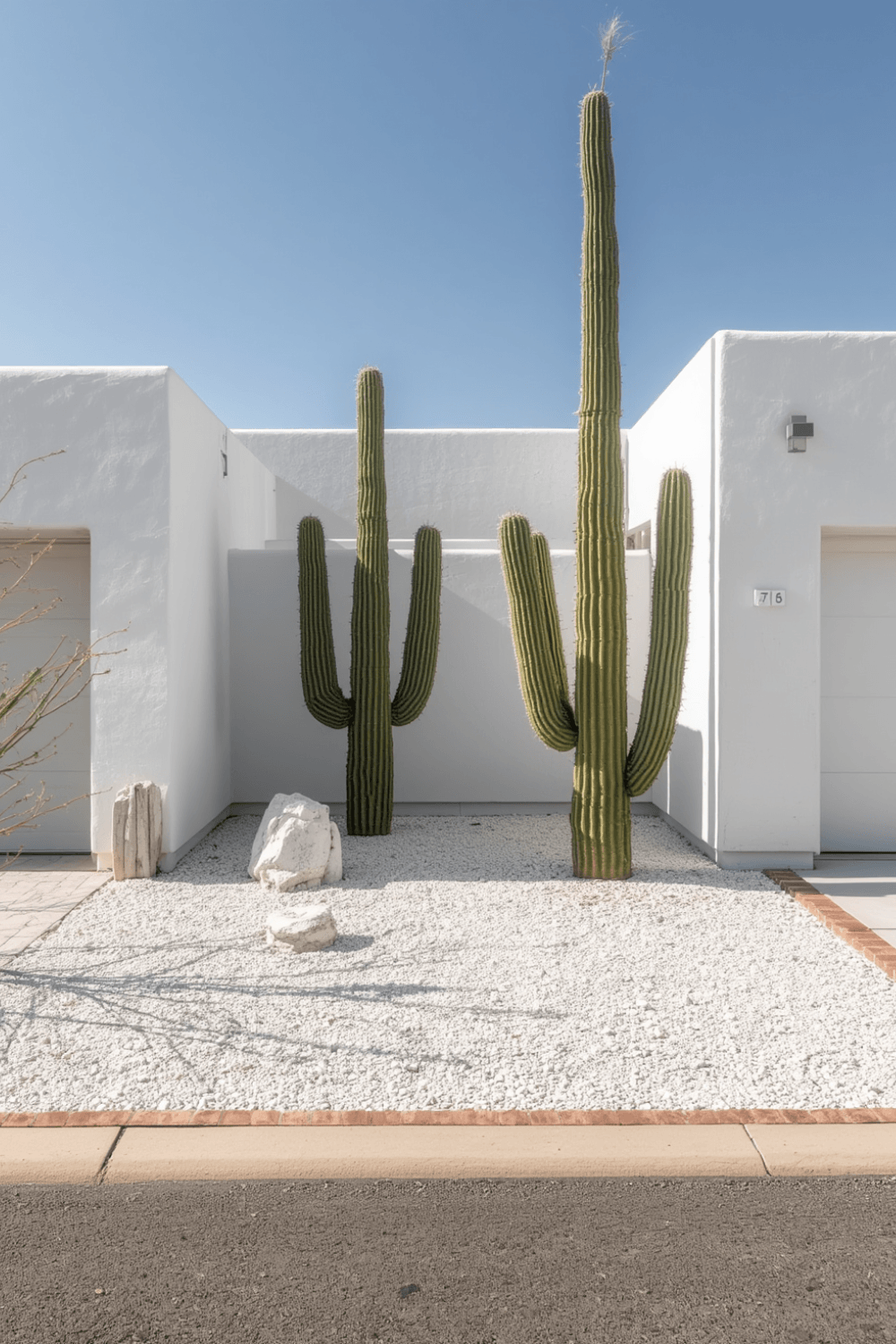
One of the most striking simple desert front yard ideas in the Southwest right now is the all-white or near-white approach: white stucco walls, white decorative gravel, white or pale gray cobble, with only plant color providing contrast. It photographs beautifully and looks clean from the street.
This works particularly well on modern or minimalist homes.
20. Add a Small Seating Spot Under a Shade Structure
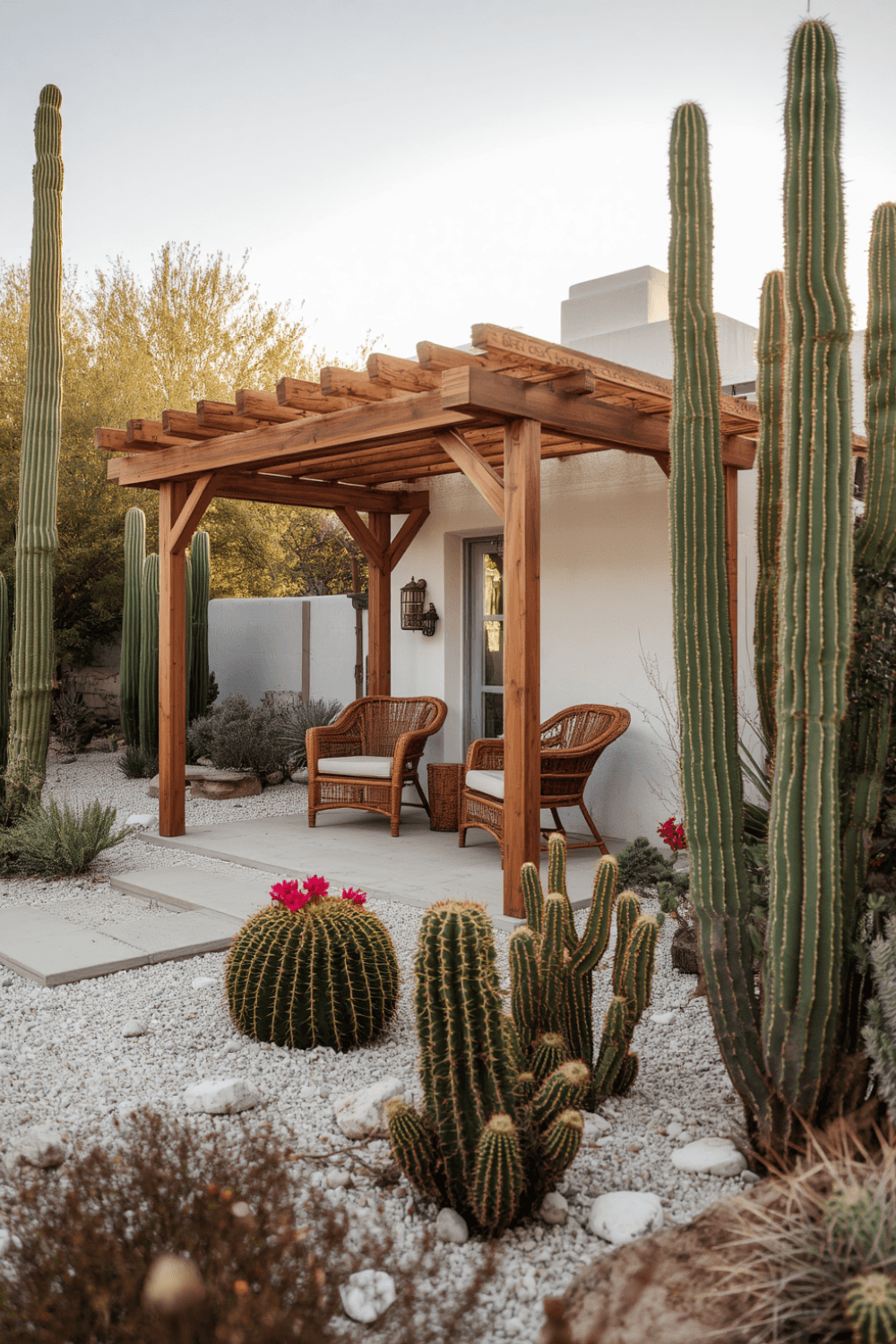
Front yards aren’t just for looking at — they can be lived in. A simple shade structure like a pergola or ramada, positioned near the entrance with two chairs and a small table, transforms your front yard into actual outdoor space.
Use a desert-colored shade sail for a more modern look, or go traditional with a wood-beam pergola draped with climbing desert plants.
How to Start Your Desert Front Yard Makeover
You don’t need to do all of this at once. Most homeowners who successfully redo their front yards start with one or two changes, see how they feel, and add more over time.
A reasonable starting sequence:
Step 1: Remove or kill existing lawn. Solarization (laying black plastic over the lawn for 4–6 weeks in summer) works without chemicals.
Step 2: Grade and prep the soil. Add a weed barrier fabric if you’re going heavy on gravel.
Step 3: Lay your base material — decomposed granite, river rock, or mulch depending on zones.
Step 4: Install plants. Start with anchors (a large cactus, an agave, a shade tree) and fill in from there.
Step 5: Add pathway edging, lighting, and decorative elements last.
If you’re in Arizona, New Mexico, Texas, or Southern California, check whether your local water utility offers a rebate program for replacing turf with xeriscape. Many do, and the cash back can offset a big chunk of your material costs.
2. Plant Comparison Table
| Plant | Water Need | Sun | Best For |
|---|---|---|---|
| Saguaro Cactus | Very Low | Full Sun | Statement anchor |
| Agave | Very Low | Full Sun | Driveway framing |
| Bougainvillea | Low | Full Sun | Color/vertical accent |
| Palo Verde | Low | Full Sun | Shade tree |
| Desert Willow | Low | Full Sun | Shade + hummingbirds |
| Mexican Feather Grass | Low | Full Sun–Partial | Movement/texture |
| Prickly Pear | Very Low | Full Sun | Small-space texture |
| Globe Mallow (wildflower) | Very Low | Full Sun | Seasonal color |
FAQs
How much does it cost to landscape a desert front yard?
It varies a lot depending on yard size and what you’re starting with. A basic DIY desert front yard with decomposed granite, weed barrier, and a handful of plants typically runs $500–$2,000 for a small to mid-size yard. Hiring a landscape contractor in the Southwest for a full xeriscape installation usually costs $3,000–$10,000 or more. The upside is that maintenance costs after year one are minimal.
What plants work best for curb appeal in a desert front yard?
Agave, saguaro and barrel cacti, bougainvillea, palo verde trees, desert willow, ornamental grasses like Mexican feather grass, and native wildflowers like globe mallow and desert bluebells all do well and look great. Succulents near the entry are also a reliable choice for color and texture without much effort.
Is desert landscaping the same as xeriscaping?
They overlap significantly but aren’t identical. Xeriscaping is a broader design philosophy focused on reducing water use through plant selection, soil prep, and efficient irrigation — you can xeriscape in a Pacific Northwest climate or a desert. Desert landscaping specifically uses plants and materials native or adapted to arid environments. Most good desert front yards incorporate xeriscape principles.
Can I do desert front yard landscaping on a tight budget?
Yes. Decomposed granite is inexpensive, native wildflower seeds cost next to nothing, and plants like prickly pear cactus and agave pups are sometimes available for free from neighbors. Focus on the structure first (paths, edging, gravel) and add plants gradually. A basic but well-designed yard beats an overcrowded, underfunded one every time.
Will desert landscaping really lower my water bill?
In most cases, significantly. Studies from water authorities in Phoenix and Las Vegas have shown turf replacement with xeriscaping reduces outdoor water use by 50–70%. For homeowners in desert climates who water a front lawn, the savings add up fast — sometimes $100 or more per month during peak summer months.
Conclusion: Your Front Yard Doesn’t Have to Fight the Climate
The best front yard landscaping works with where you live, not against it. In dry, sunny climates across the American Southwest, that means leaning into the beauty that’s already there — warm earthy colors, dramatic plant shapes, clean rock textures, and the kind of yard that actually gets better looking as temperatures climb.
Start small if you need to. Pull up a patch of lawn. Lay some DG. Plant one great agave. See how it feels. Most people who try desert landscaping end up wishing they’d done it sooner.
If this article gave you a few ideas worth trying, share it with someone who’s been staring at a patchy lawn and wondering what to do with it. And if you’re ready to go deeper, “check out our guide on Cheap Garden Path Ideas or DIY Pallet Wood Planter Box Ideas for more outdoor inspiration.”
21 Cheap Retaining Wall Ideas That Look Expensive
10+ White House With Black Trim Ideas for a Stylish Exterior