If your yard is sloping, eroding, or just plain ugly, a retaining wall can fix all of that. The problem? Most homeowners assume it’s going to cost a fortune. Contractors quote thousands of dollars. Professional stone walls and concrete block systems aren’t cheap. So people put it off — sometimes for years.
Here’s the truth: you don’t need to spend big money to get a wall that actually looks good and holds up. There are retaining wall ideas across a wide price range, and some of the best-looking ones cost surprisingly little. This article walks through 21 real options, from simple DIY builds using materials you can buy at any home improvement store to creative solutions that use what you already have on your property.
Whether you’re dealing with a small garden bed or a serious slope in your backyard, there’s something here for your budget and your skill level.
Why Retaining Walls Are Worth the Investment (Even on a Budget)
Before we get into materials and designs, it helps to understand what a retaining wall actually does. It holds back soil. That’s it. But that job becomes important fast when rain is washing your garden downhill, your lawn is uneven, or your landscaping beds keep collapsing into the walkway.
A well-built wall — even a cheap one — prevents erosion, creates usable flat space in a sloped yard, and adds definition to your landscaping. In many American homes, a simple backyard retaining wall also adds noticeable curb appeal and resale value.
The good news is that the function of the wall doesn’t require expensive materials. What it requires is good planning and decent installation. A $300 timber wall built correctly beats a $3,000 wall installed badly every time.
The Cheapest Retaining Wall Materials Available in the USA
What is the cheapest material for a retaining wall?
The cheapest retaining wall materials available in the U.S. are landscape timbers, large rocks, and concrete blocks. Landscape timbers typically cost $3–$8 per linear foot. Large rocks from a local quarry or your own yard cost very little or nothing. Standard concrete retaining wall blocks run $1–$3 each at most hardware stores.
Here’s a quick comparison:
| Material | Avg. Cost Per Linear Foot | DIY Friendly? |
|---|---|---|
| Landscape Timbers | $3–$8 | Yes |
| Natural Stone (fieldstone) | $5–$10 | Yes (with effort) |
| Concrete Blocks (standard) | $4–$12 | Yes |
| Gabion Baskets | $10–$20 | Yes |
| Poured Concrete | $20–$35 | No |
| Natural Boulders | $10–$30 | Yes (for small walls) |
If you’re on a tight budget, timber and concrete blocks are your best starting points.
21 Cheap Retaining Wall Ideas for Every Yard
1. Stacked Fieldstone Wall
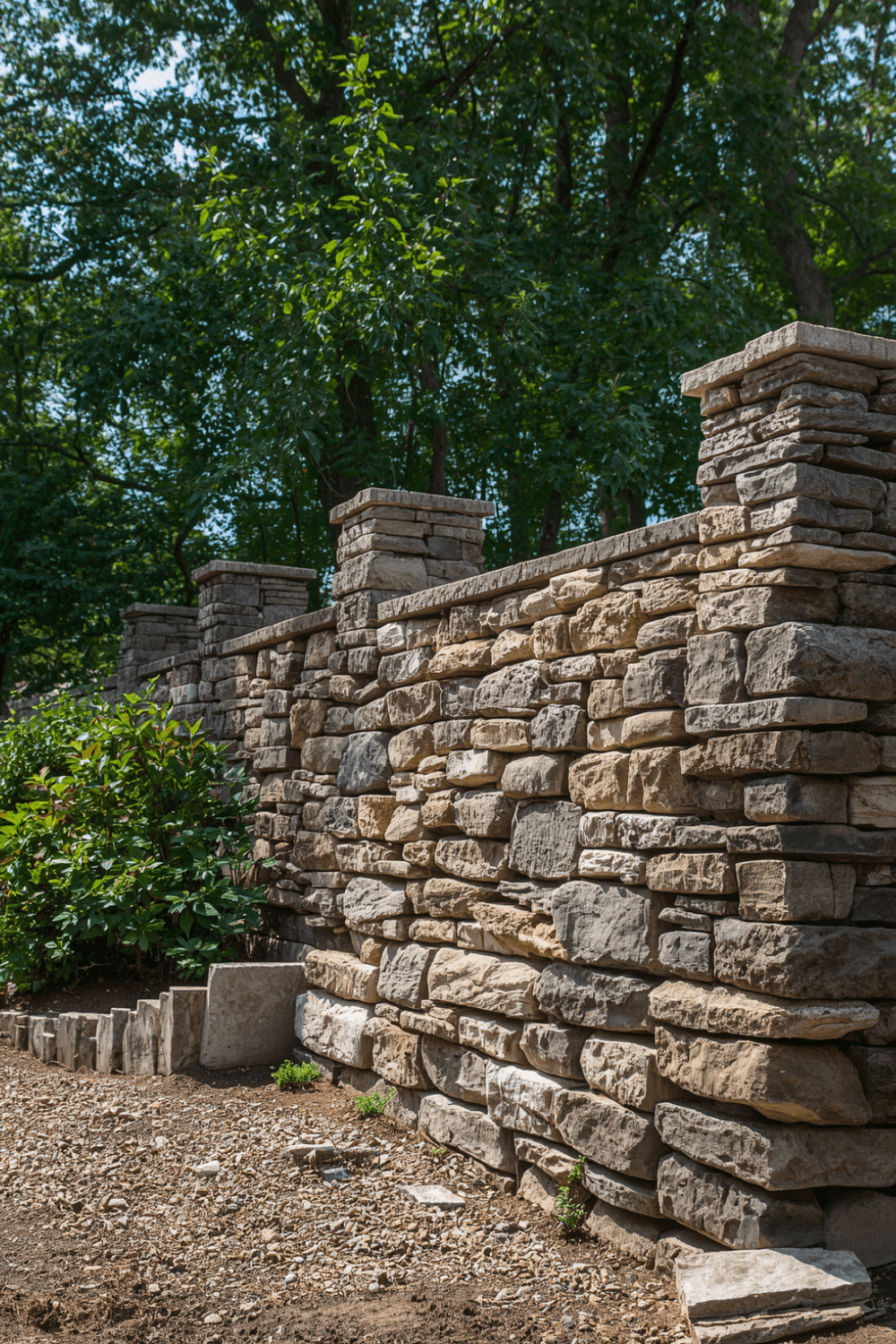
Fieldstone is sometimes free. If you live in a rural area or near any excavation work, you can often get stones pulled from fields or construction sites at no cost. Stacking them dry (no mortar) takes time and some physical effort, but there’s no material cost. Even if you buy fieldstone from a landscape supply yard, it’s one of the cheaper options per ton.
A dry-stacked fieldstone wall also drains naturally, which helps it last longer. Water pressure is one of the main things that destroys retaining walls over time.
2. Landscape Timber Retaining Wall
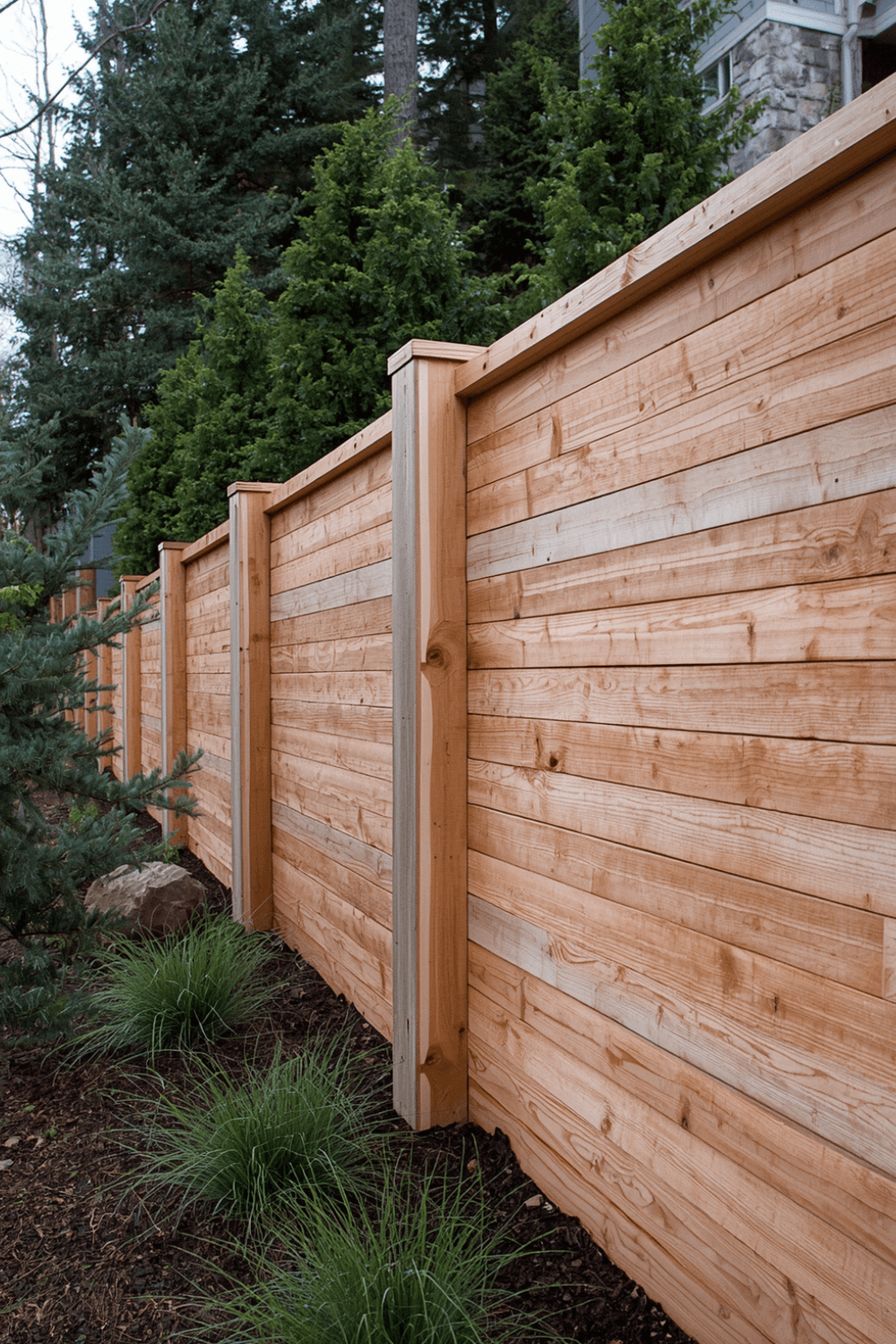
Pressure-treated landscape timbers are widely available at Home Depot, Lowe’s, and most lumber yards. For a basic small retaining wall under 3 feet, this is probably the most DIY-friendly option out there. You stack the timbers, offset the joints like bricks, and secure them with rebar or timber screws.
A 20-foot wall at 2 feet high can be done for under $200 in materials. That’s hard to beat.
3. Concrete Block Wall (Flat Cap Style)
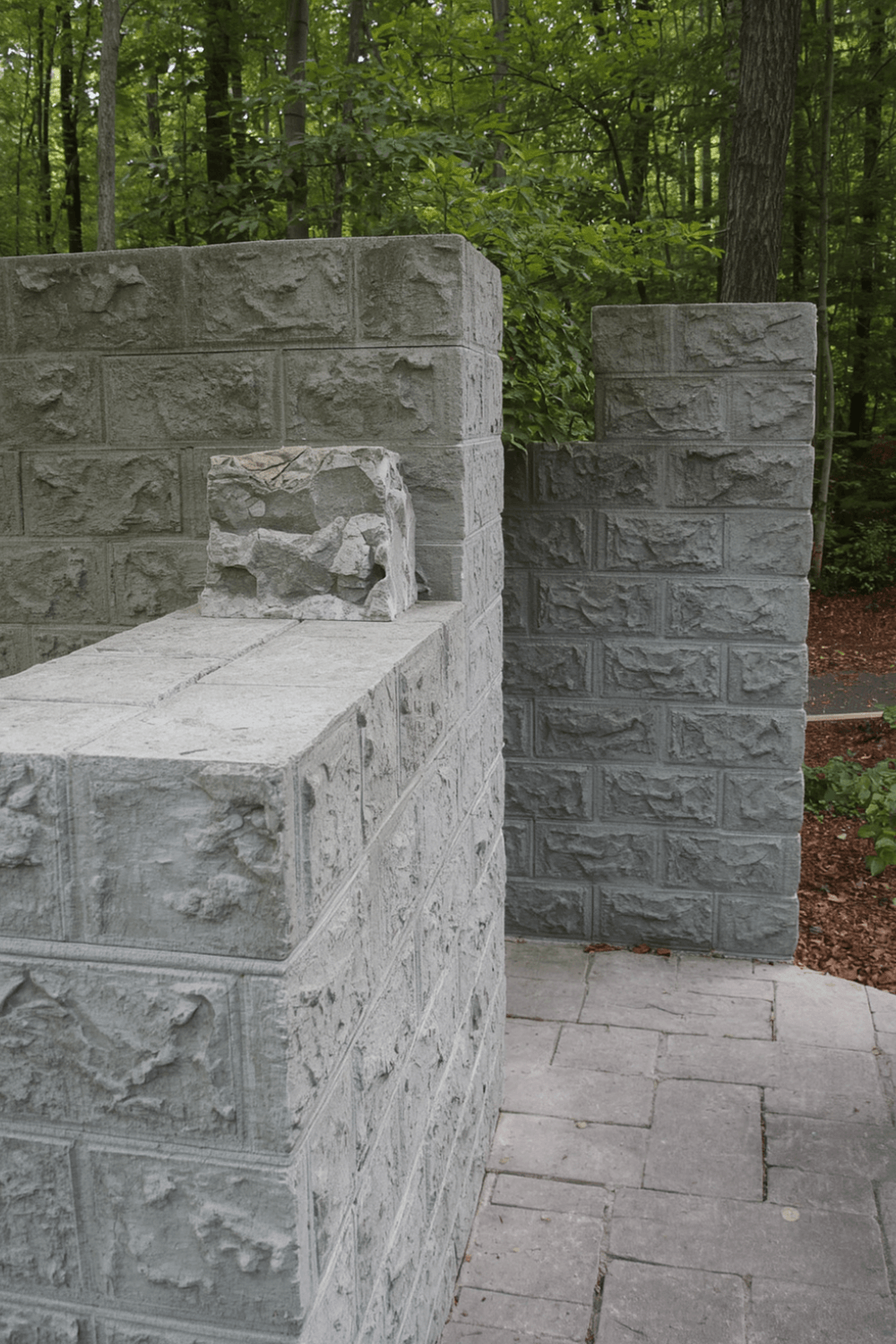
Standard grey concrete blocks aren’t glamorous. But if you cap them with flat stones or add a coat of paint, they clean up nicely. The blocks themselves are inexpensive and easy to find. This is a good option when you want a wall that’s neat, straight, and low-maintenance.
4. Pallet Wood Wall
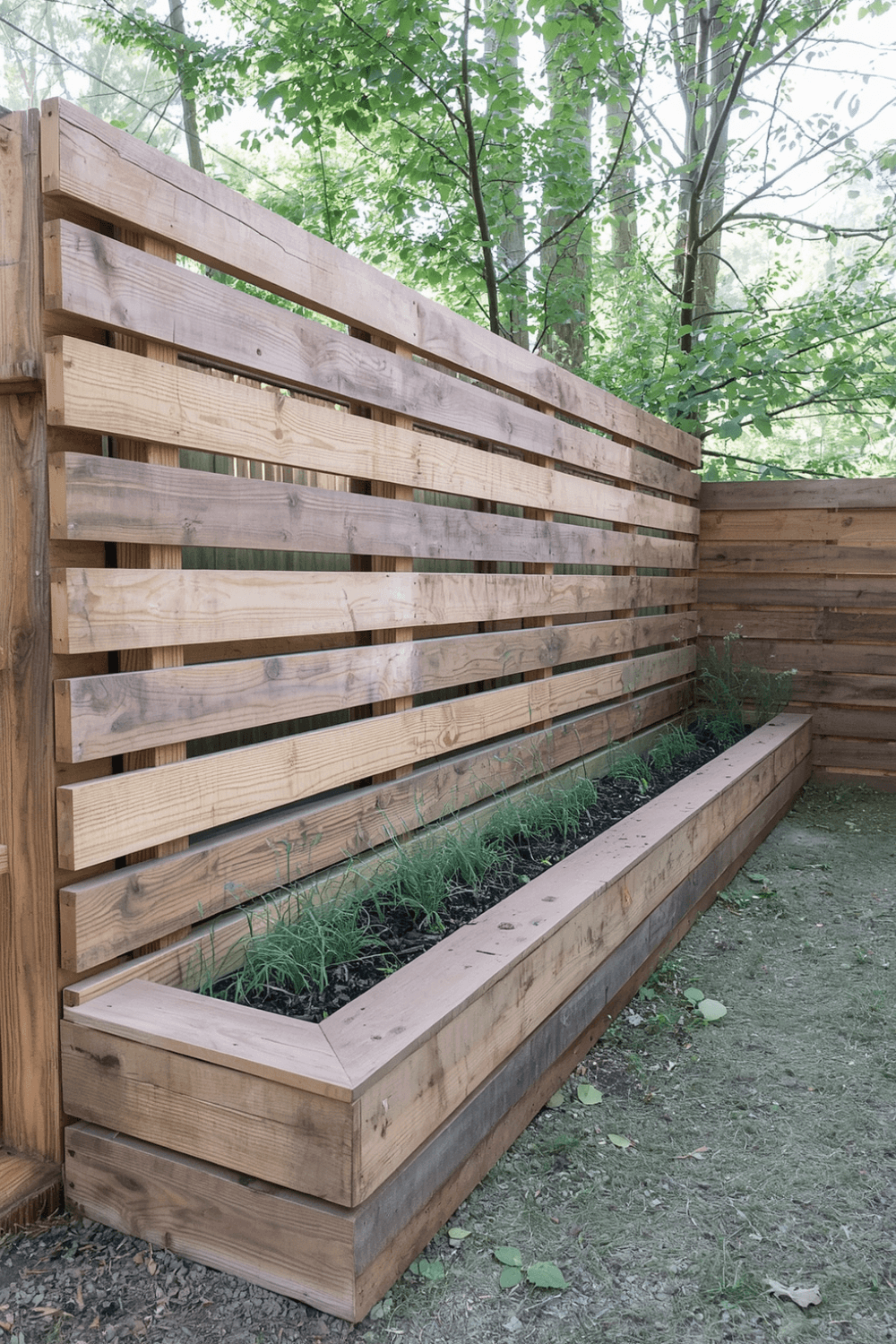
Old wooden pallets are often free or nearly free from local businesses, warehouses, or Craigslist. They can be broken down into planks and used to build a horizontal plank-style retaining wall. This works best for low garden beds (under 18 inches) rather than structural walls.
The look is rustic and intentional when done well. Seal the wood to extend its life outdoors.
5. Railroad Tie Retaining Wall
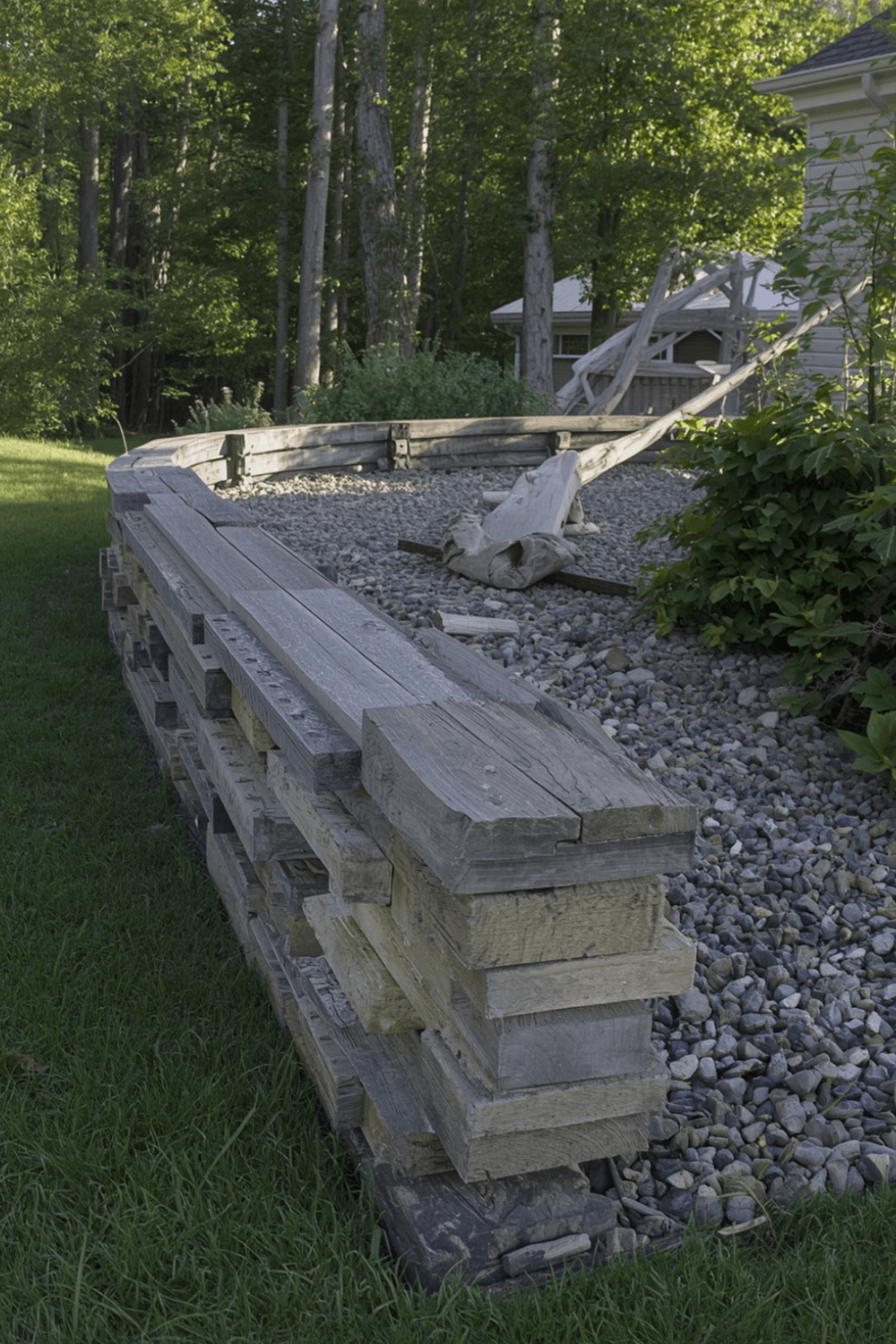
Used railroad ties are available at landscape supply companies and sometimes salvage yards. They’re heavy, dense, and extremely durable. A used tie costs less than a new timber and often lasts just as long.
One caution: older railroad ties were treated with creosote. Most people use them outdoors with no issues, but avoid them near vegetable gardens just to be safe.
6. Gabion Wire Basket Wall
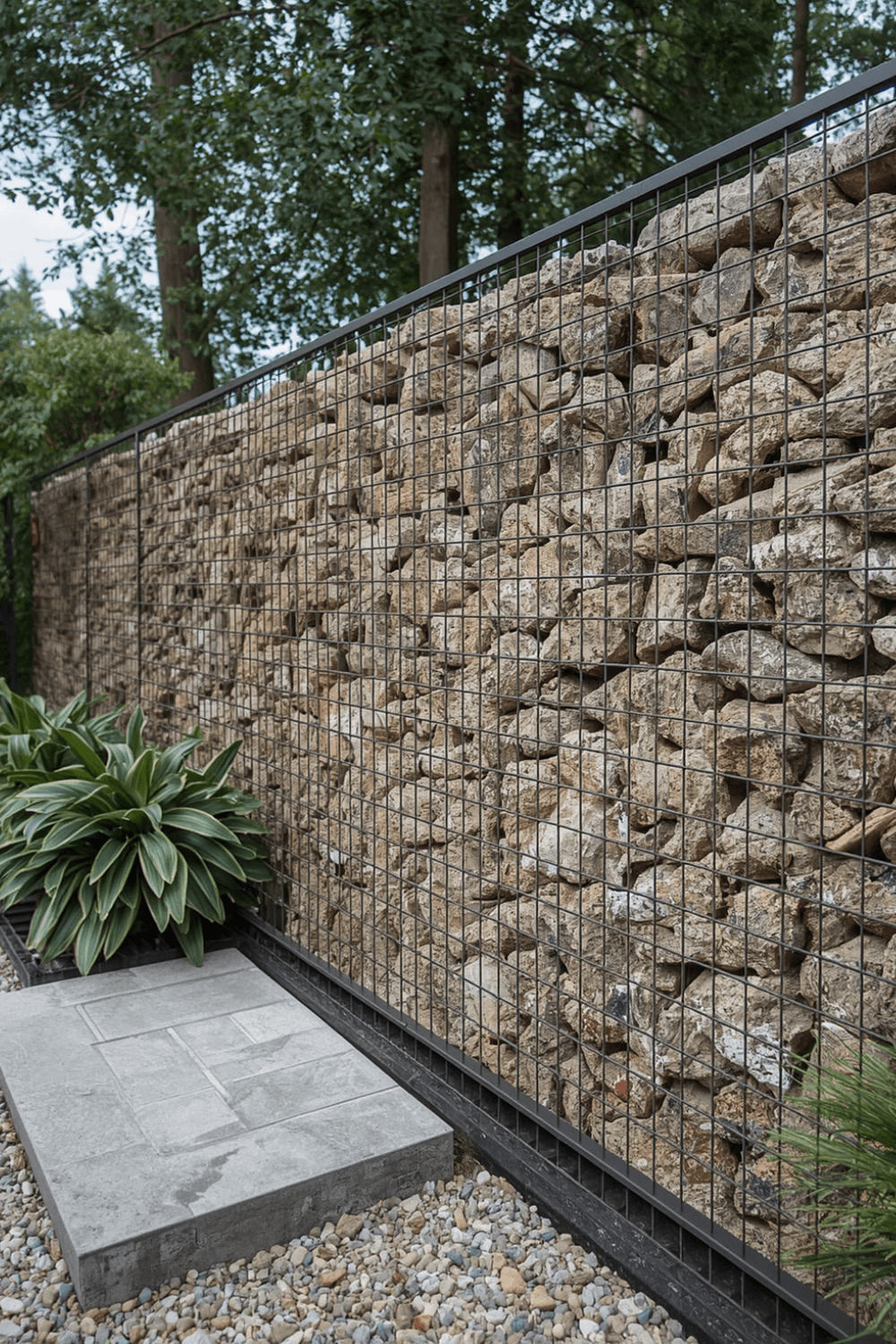
Gabion baskets are wire cages that you fill with rocks. The rocks can be anything: fieldstone, gravel, broken concrete, or even repurposed brick. The wire basket structure is what holds everything in place.
These walls have a modern industrial look that actually works beautifully in contemporary landscaping. They drain well, handle soil pressure efficiently, and can be built without any construction experience. The cost depends on whether you source your fill rocks or buy them.
7. Concrete Rubble and Broken Brick
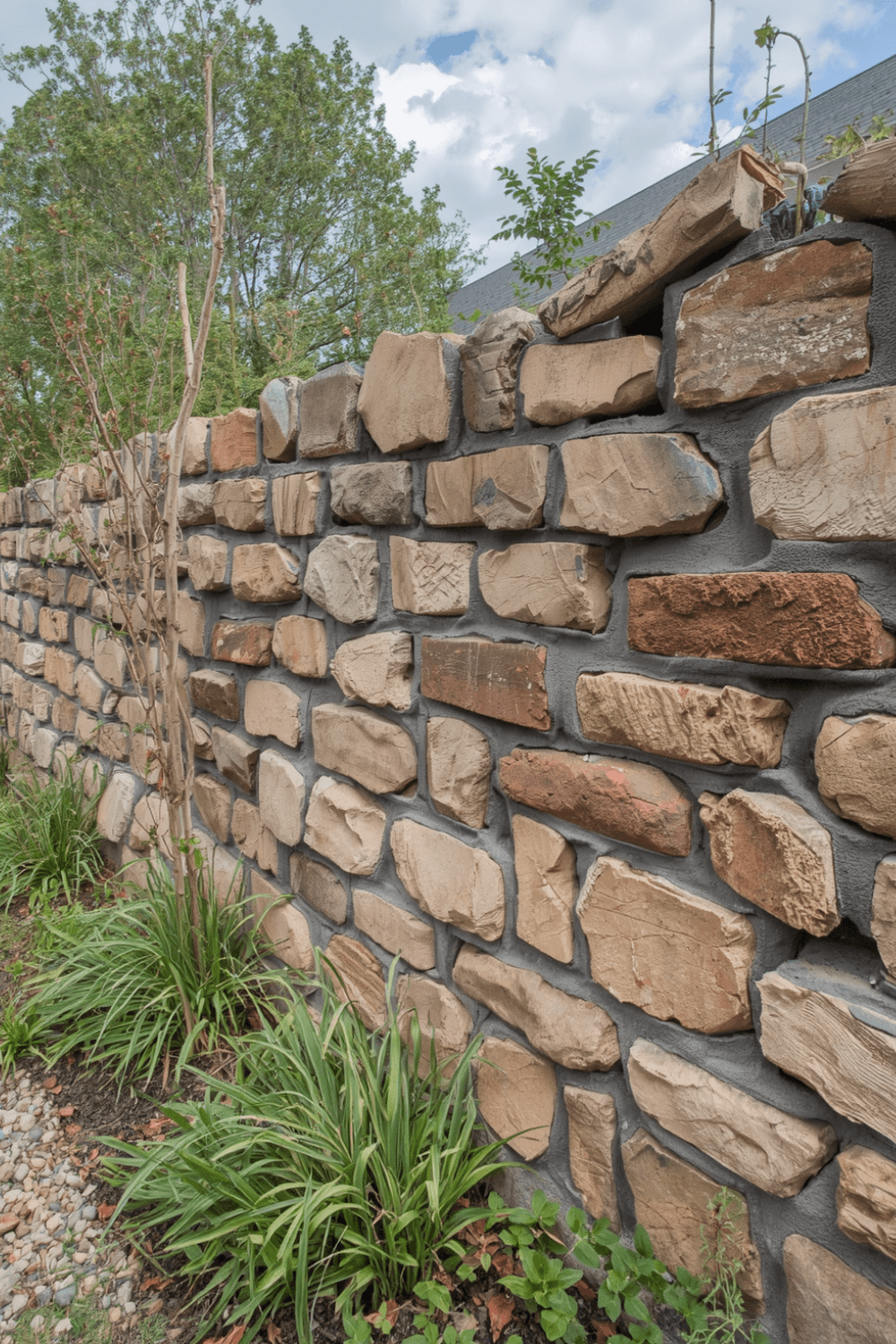
If you or a neighbor has old concrete, broken bricks, or demolition rubble, it can be stacked into a dry-laid wall. This is a zero-material-cost option for anyone willing to do the heavy lifting.
The look is rough and informal, which works in natural gardens, cottage yards, and woodland-style landscapes.
8. Stacked Concrete Retaining Blocks (Interlocking Style)
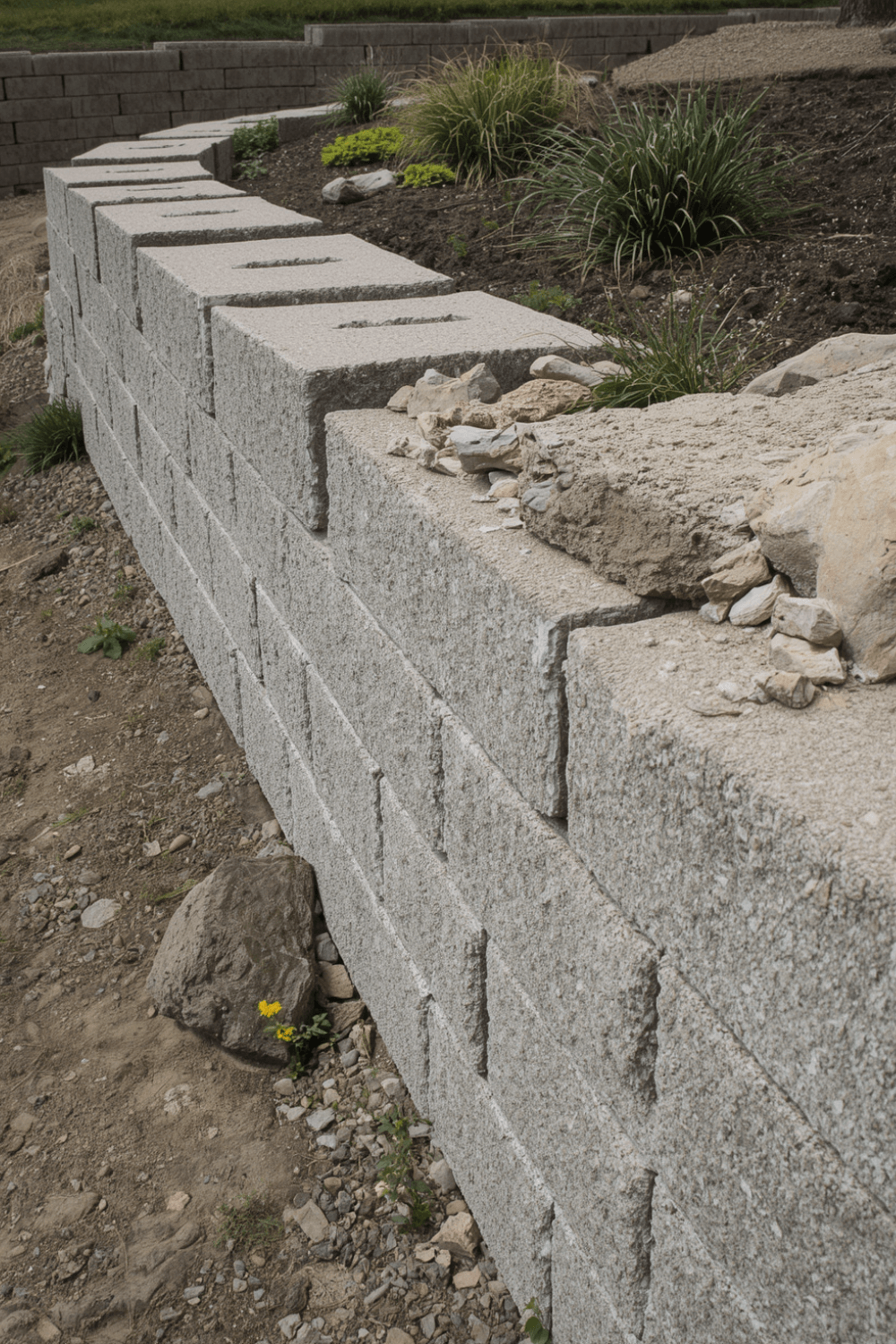
These are the slightly nicer version of flat concrete blocks — they’re designed with a lip on the back that automatically sets them at an angle as you stack them, creating a slight lean into the hillside. You don’t need mortar. The system is basically foolproof.
Brands like Versa-Lok and Allan Block are widely sold in the U.S. A wall under 3 feet can be built in a weekend with no special skills. Costs vary but typically run $6–$15 per block.
9. Corrugated Metal Edging Wall
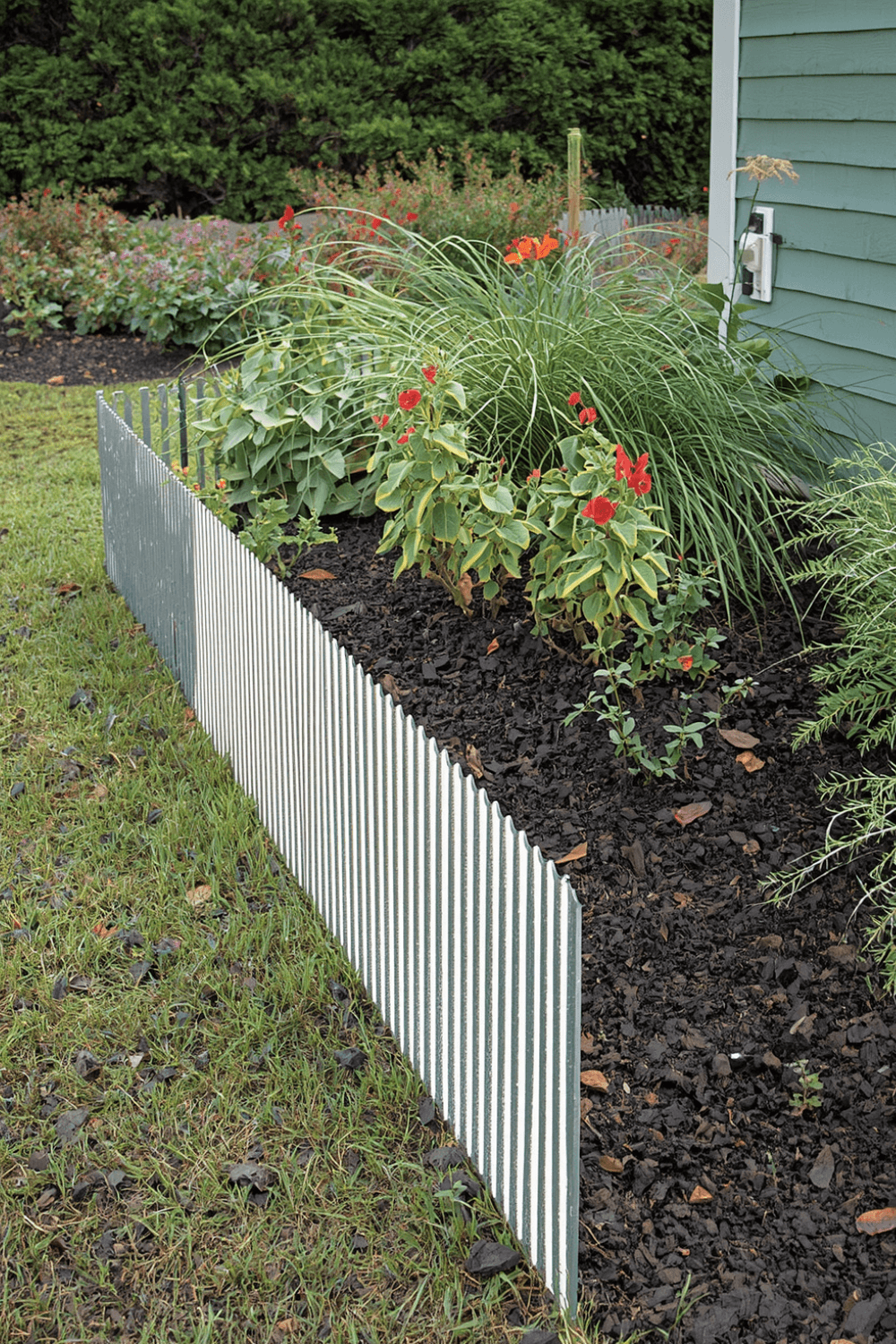
For very small raised garden beds or shallow slope corrections, corrugated metal edging creates a clean, modern look at minimal cost. It’s not for serious structural work, but for decorative garden retaining, it’s sharp-looking and inexpensive.
10. Sandbag Retaining Wall
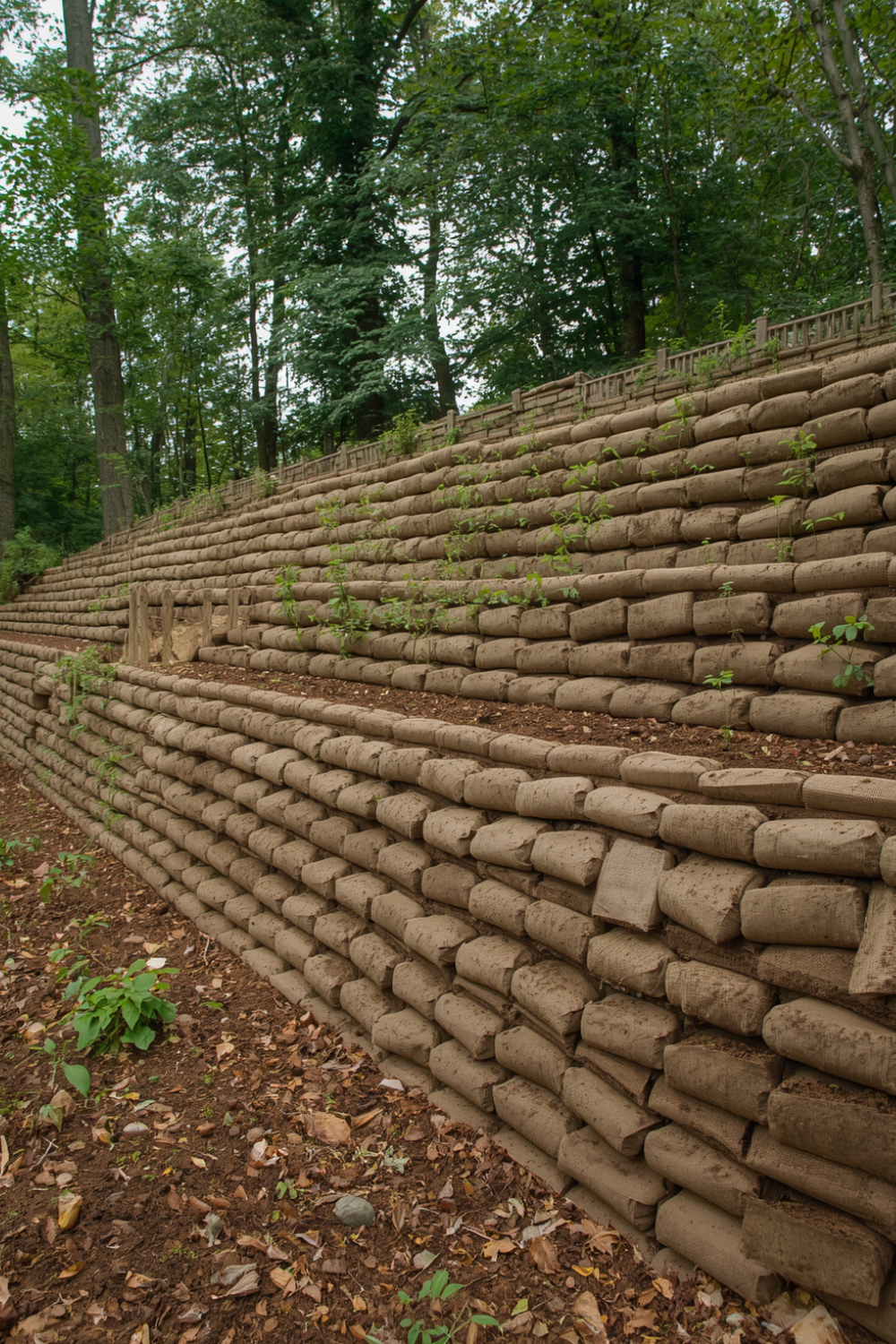
Sandbags are used in flood control for a reason — they hold back an enormous amount of weight and water pressure. For budget retaining walls in areas prone to erosion, stacked sandbags work. They’re not beautiful, but you can cover them with soil and plant ground cover or arrange stones in front.
This is more of a functional fix than a decorative one.
11. Repurposed Brick Wall
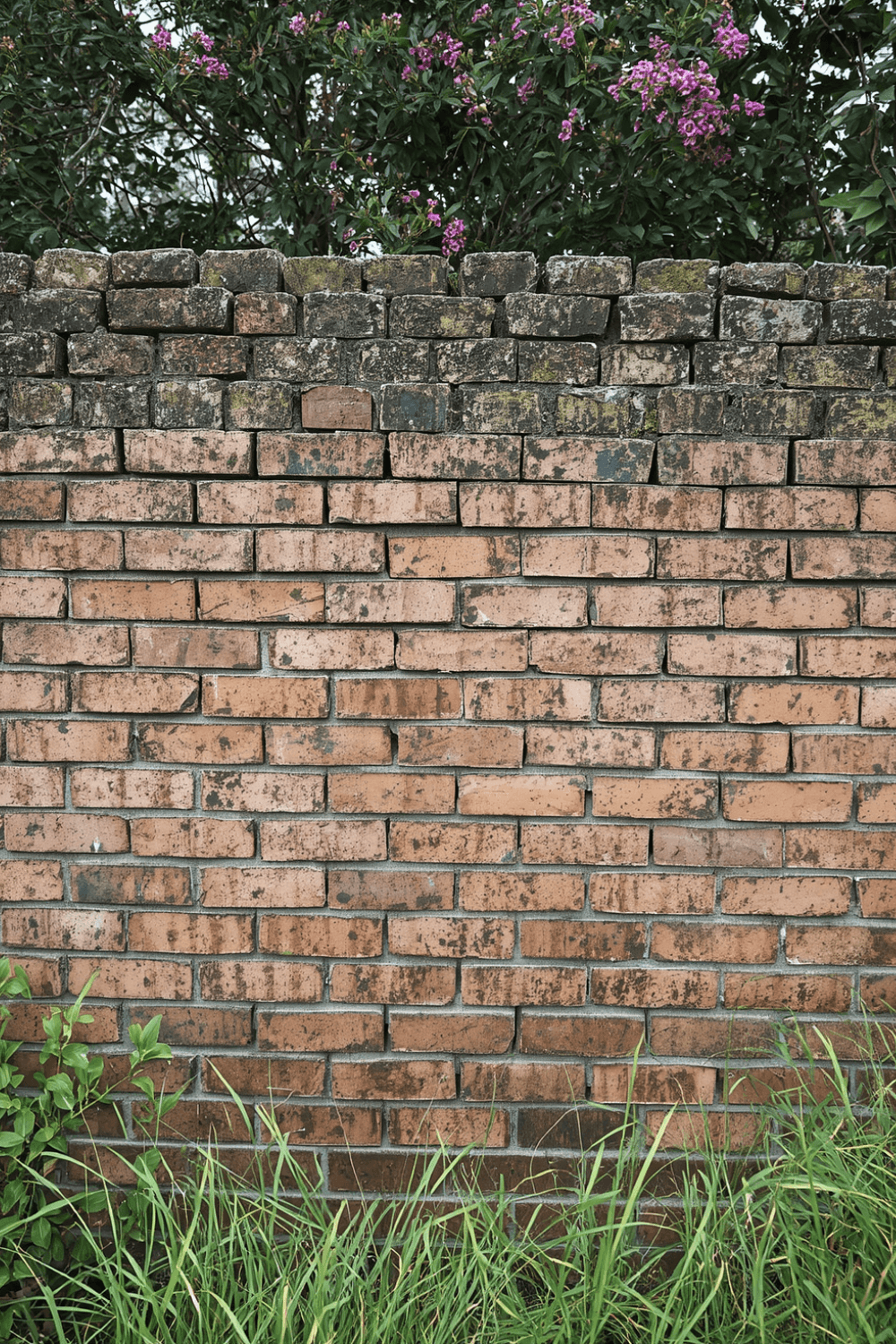
Old bricks from demolished structures show up constantly on Facebook Marketplace and Craigslist, usually free or very cheap. Stacking them into a garden wall is a good weekend project. Reclaimed brick has a warm, aged look that’s hard to fake with new materials.
12. Timber Sleeper Retaining Wall (Horizontal Stack)
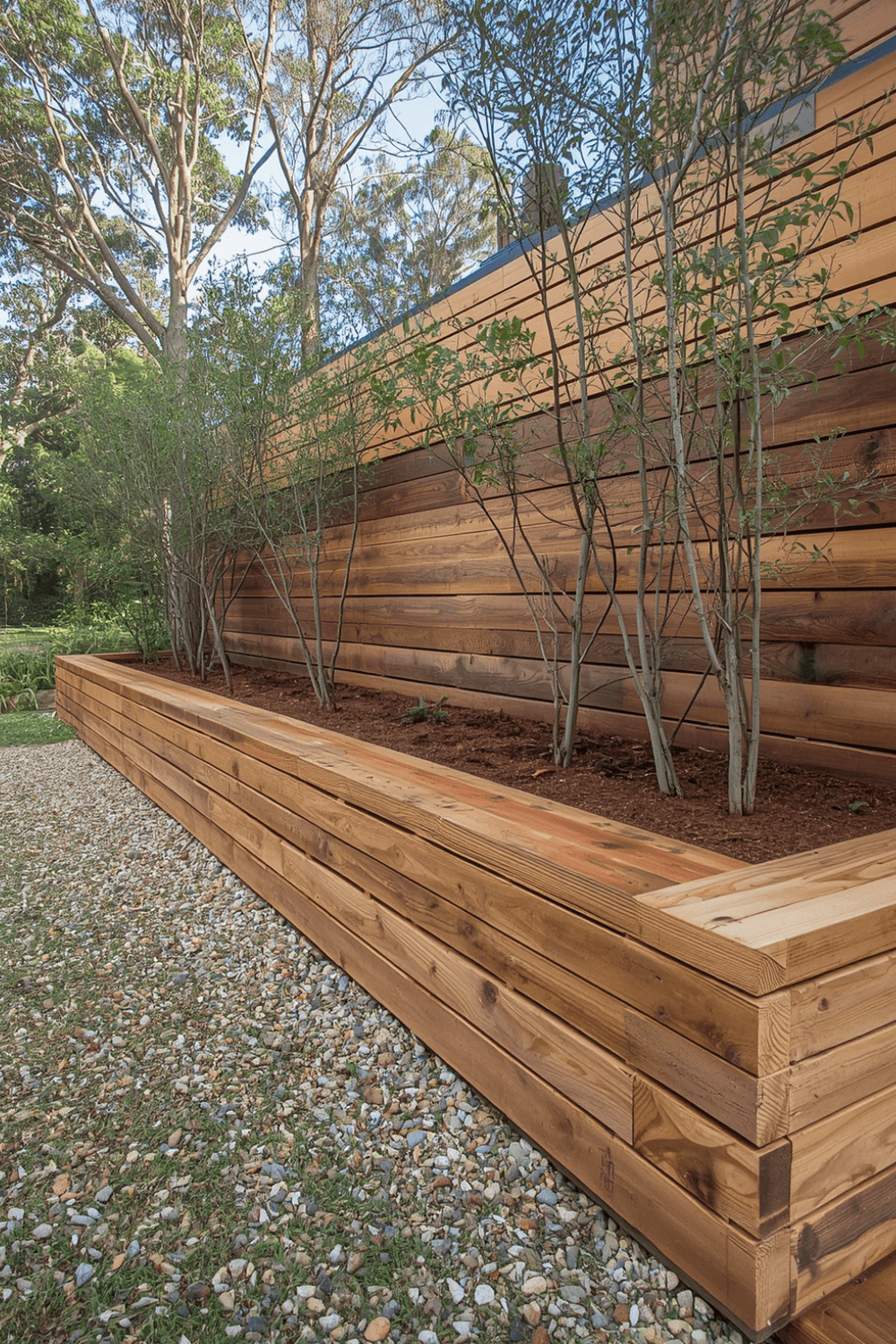
Timber sleepers — thick, rectangular pieces of treated wood — stacked horizontally create a clean, architectural look. This is a popular style in Australian and UK gardens, and it’s catching on in the U.S. You can buy new timber sleepers or source used railway sleepers at a discount.
13. Boulder Retaining Wall
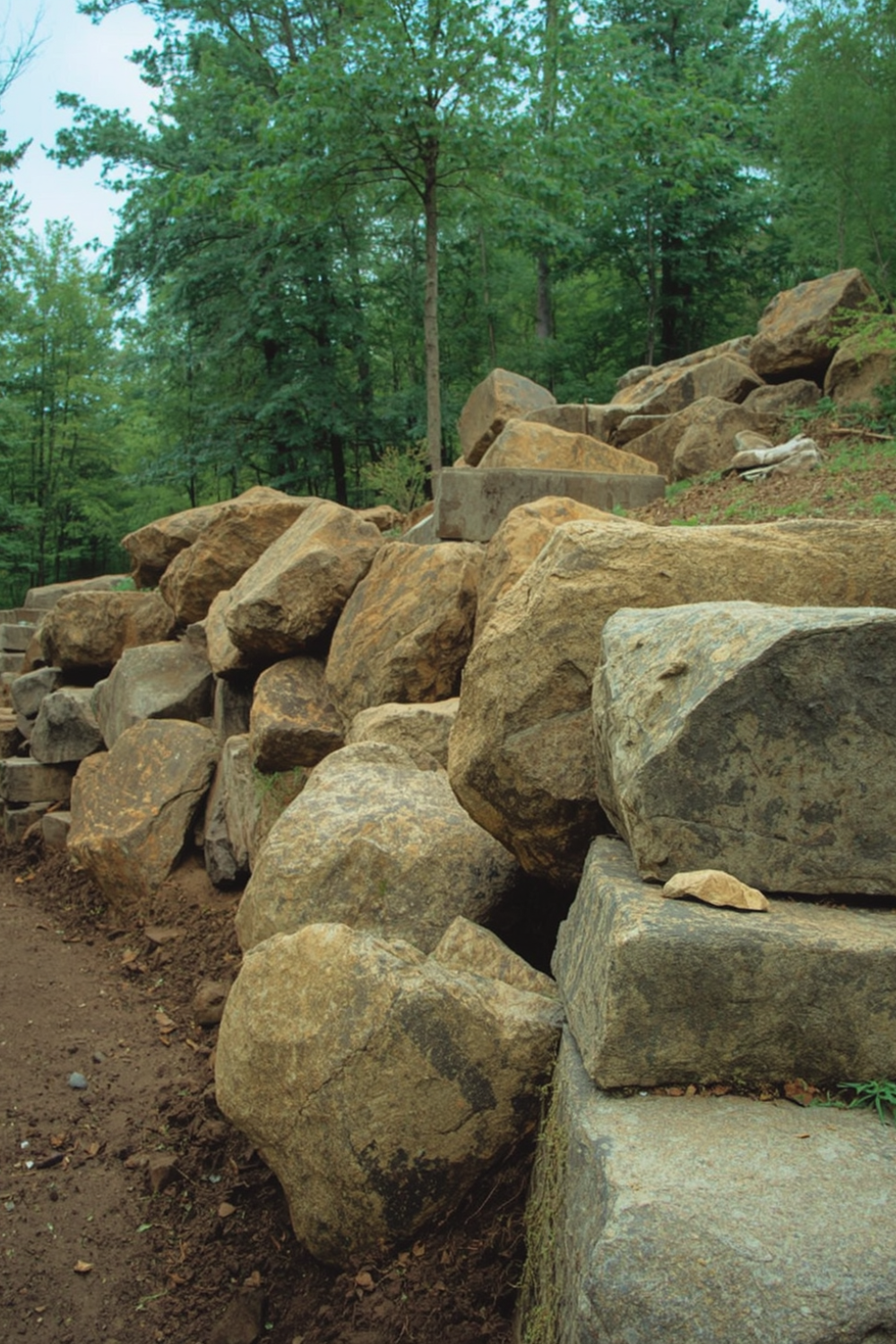
For slopes with significant soil movement, large natural boulders are one of the most effective retaining options. They’re extremely heavy, which means they resist pressure without needing mortar or mechanical fasteners. If you live near a quarry, boulder prices can be quite reasonable.
The look is natural and rugged — good for woodland-style yards, rock gardens, and properties with existing natural stone.
14. Cinder Block Wall with Stucco Finish
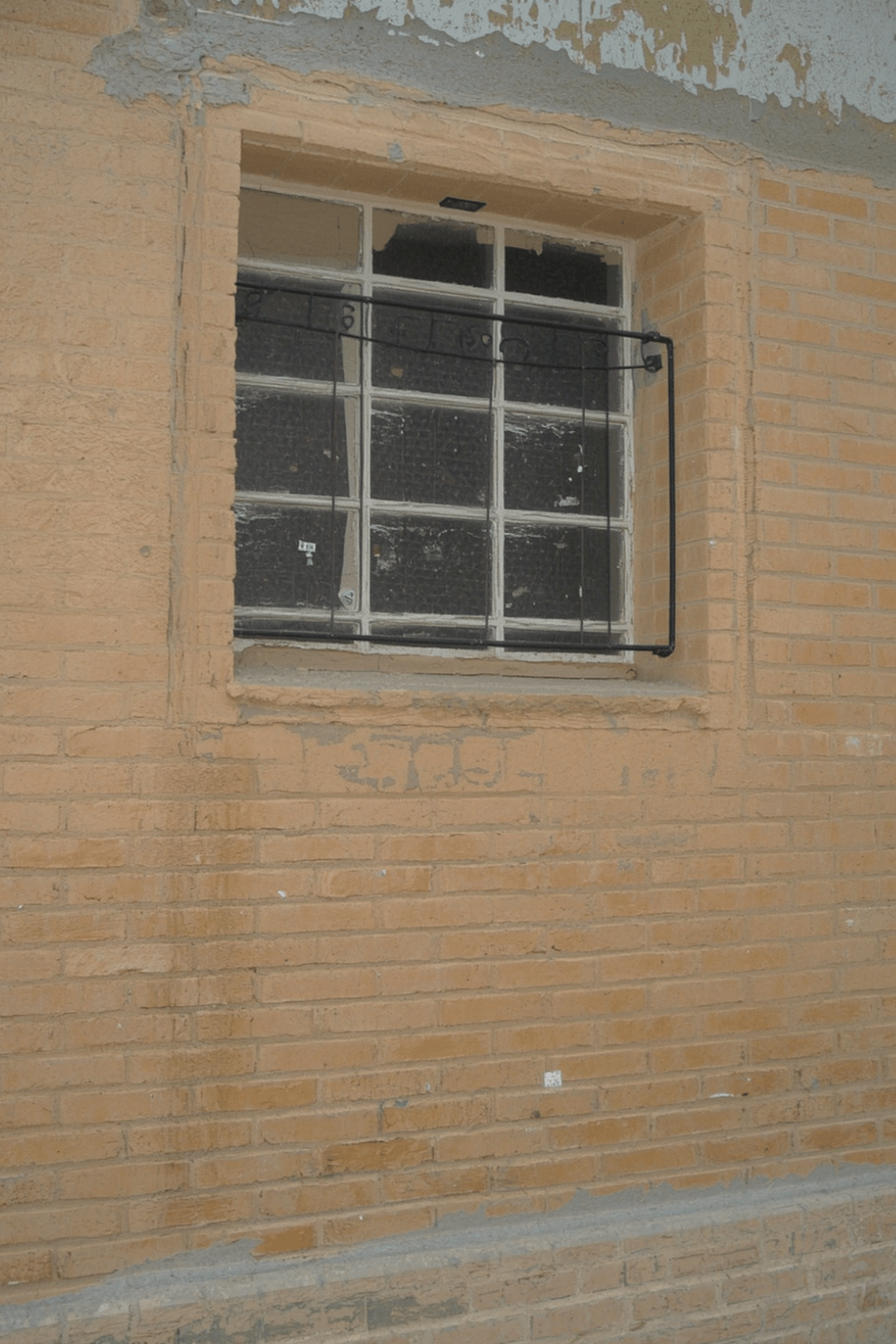
Standard cinder blocks are cheap. Plain-looking, yes — but once you coat them with stucco and paint, they look like a finished architectural wall. This takes more time and skill than just stacking blocks, but the result looks expensive even though the materials cost very little.
15. Tire Retaining Wall
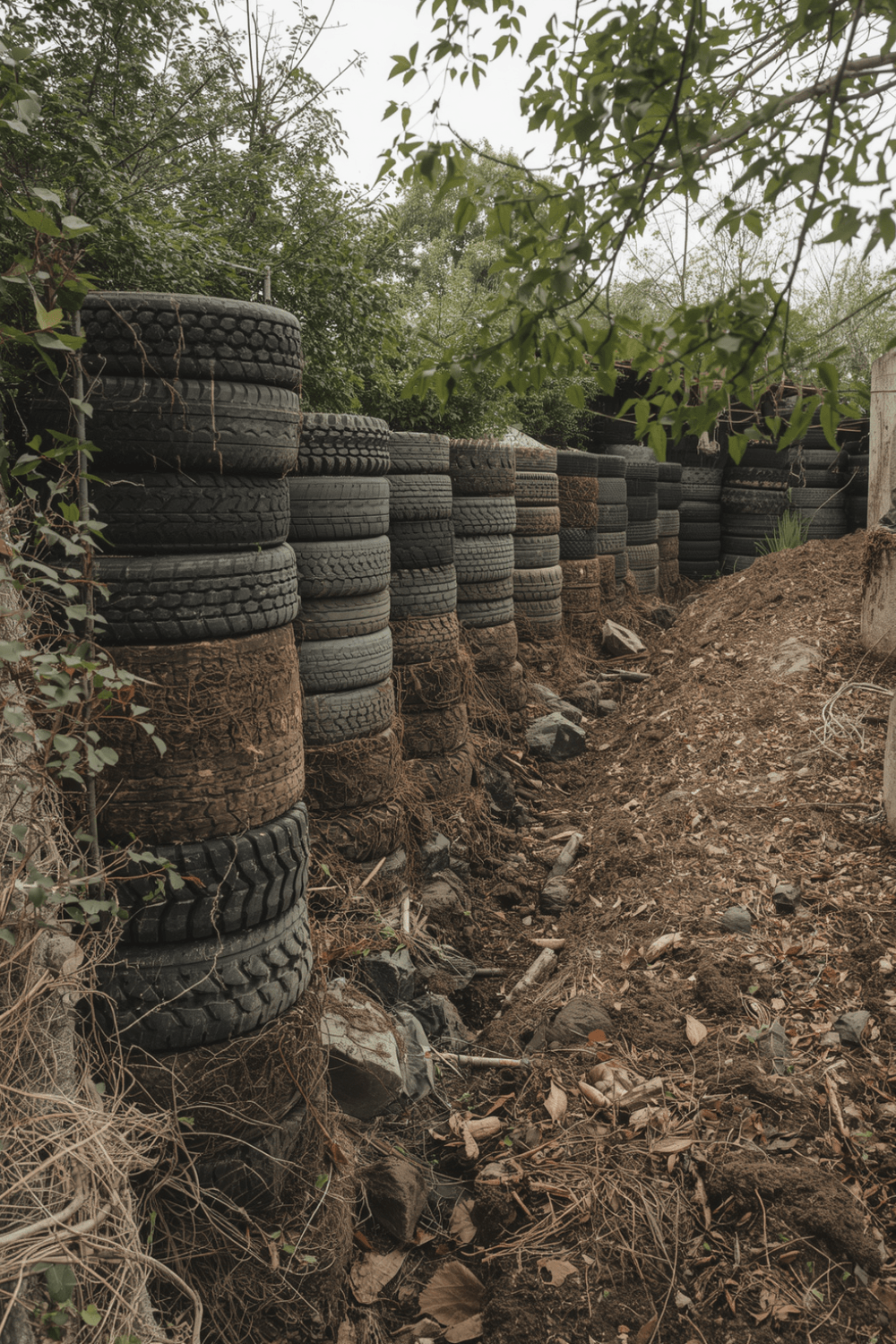
Stacked tires filled with compacted soil are a functional solution that’s been used in sustainable building for decades. Old tires are free from auto shops that often pay to dispose of them. A tire wall is load-bearing, handles pressure well, and can be covered with soil and planted over so you can’t see the tires at all.
It’s unconventional. Some people love the idea; others don’t. But it genuinely works.
16. Corten Steel Panels
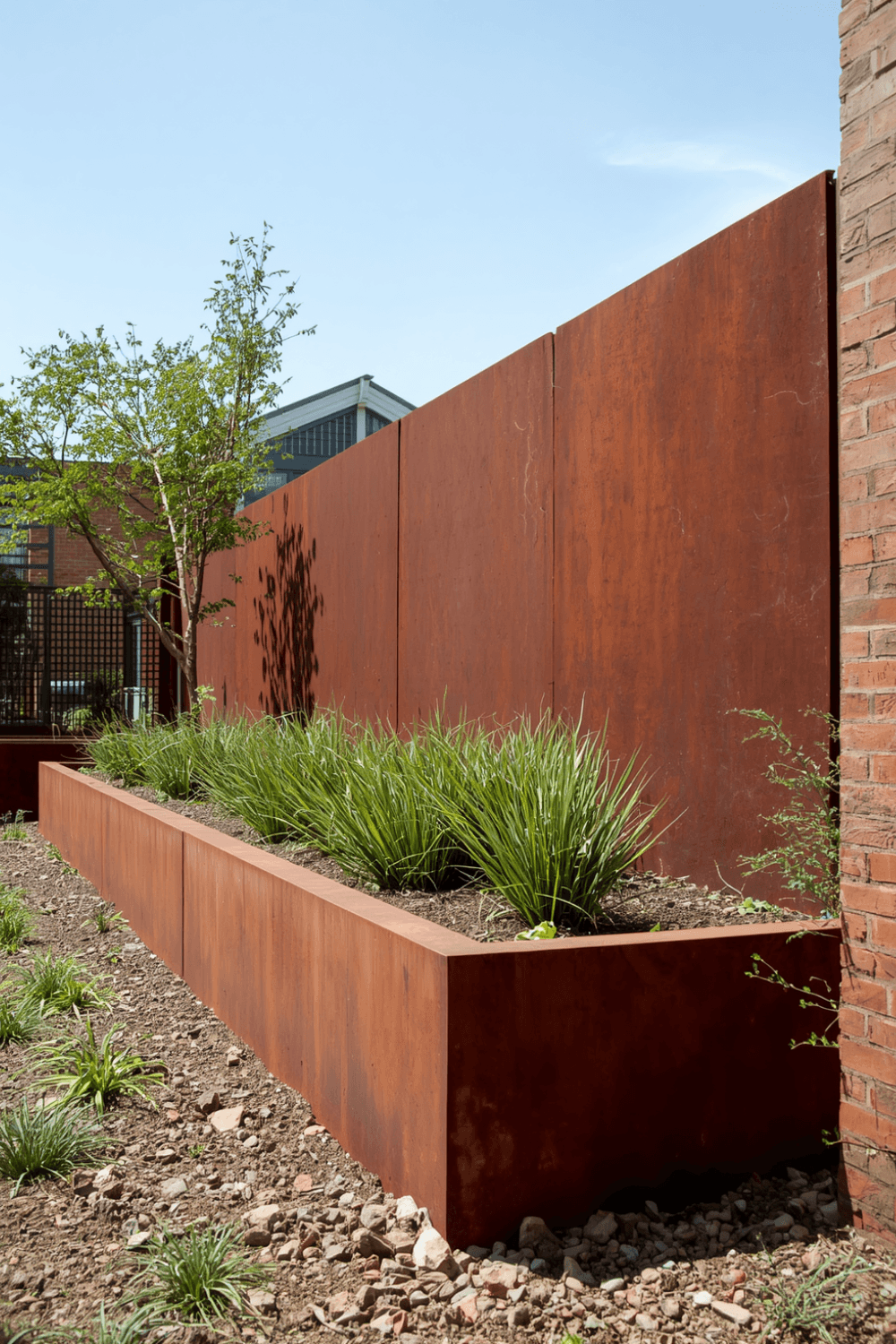
Corten (weathering steel) develops a rust-like patina that’s actually its protective coating — it looks intentional and stylish. Thin Corten panels used as retaining garden edging have a high-end modern look. Costs have come down as the material has become more popular. For small garden walls under 2 feet, this is a premium-looking option at a mid-range price.
17. Dry Stacked Slate Wall
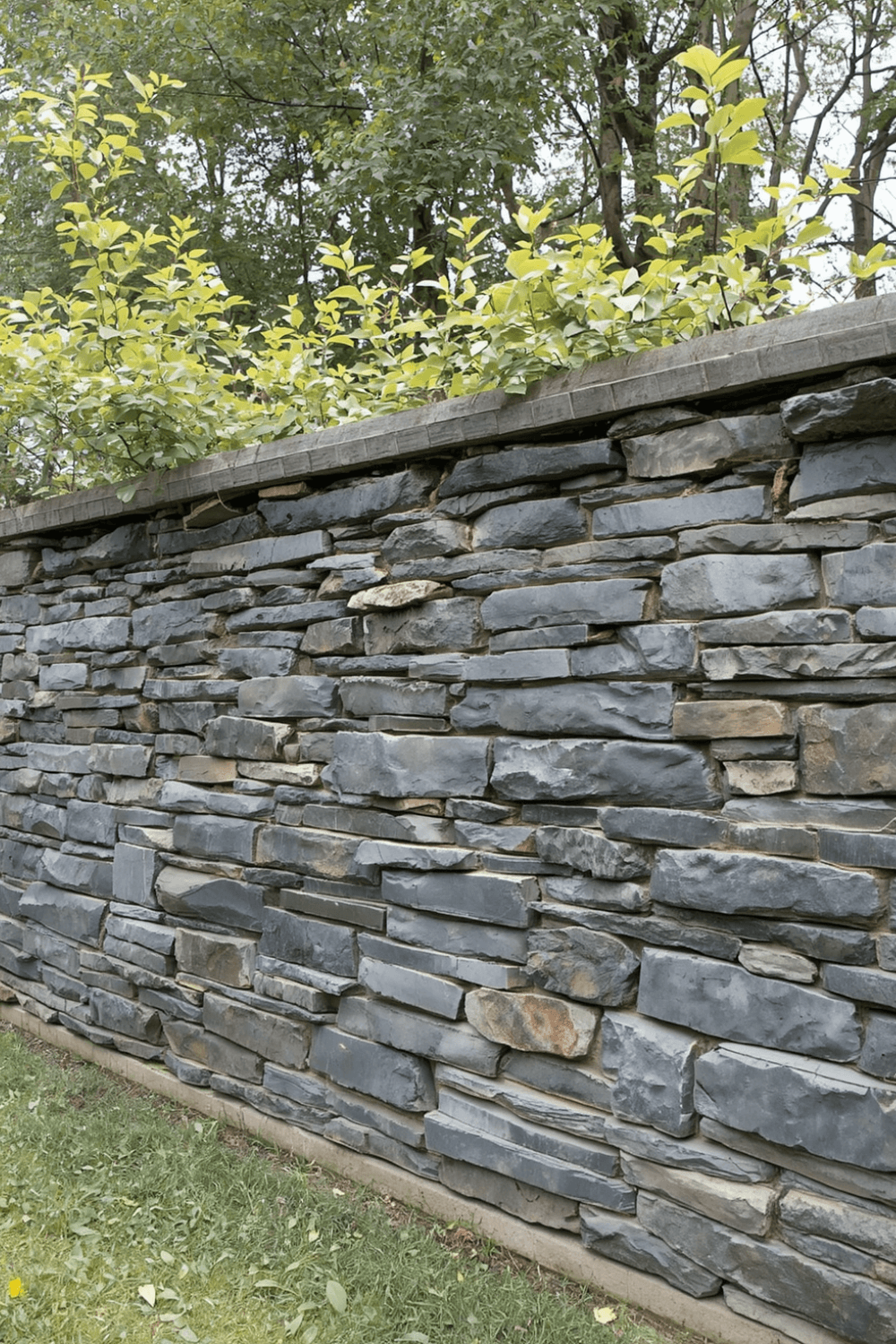
Slate splits cleanly into flat layers, which makes it excellent for dry-stacking. Slate has a refined, formal look compared to rough fieldstone. If you live in an area where slate is regionally available, it can be reasonably priced. The finished wall looks like something you’d see in an expensive English garden.
18. Deadwood and Log Wall
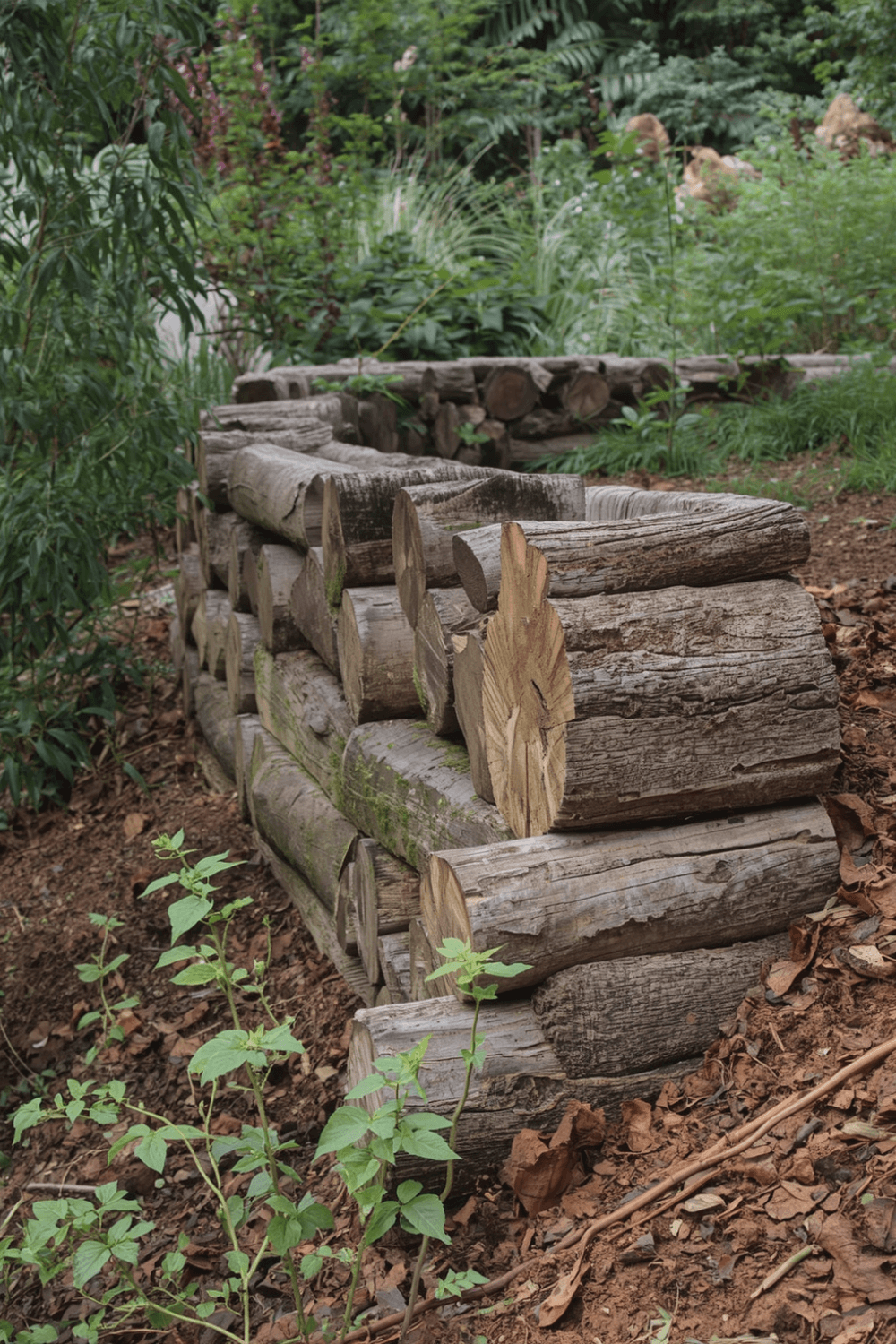
For very informal, natural settings — think woodland gardens or heavily planted areas — short logs stacked vertically into the ground work as an edging and low retaining wall. This is free if you have trees on your property. The look is rustic-naturalistic and blends into planted surroundings well. Not for structural slopes, but effective for shallow garden beds.
19. Concrete Bag Wall (Poured-in-Place with Forms)
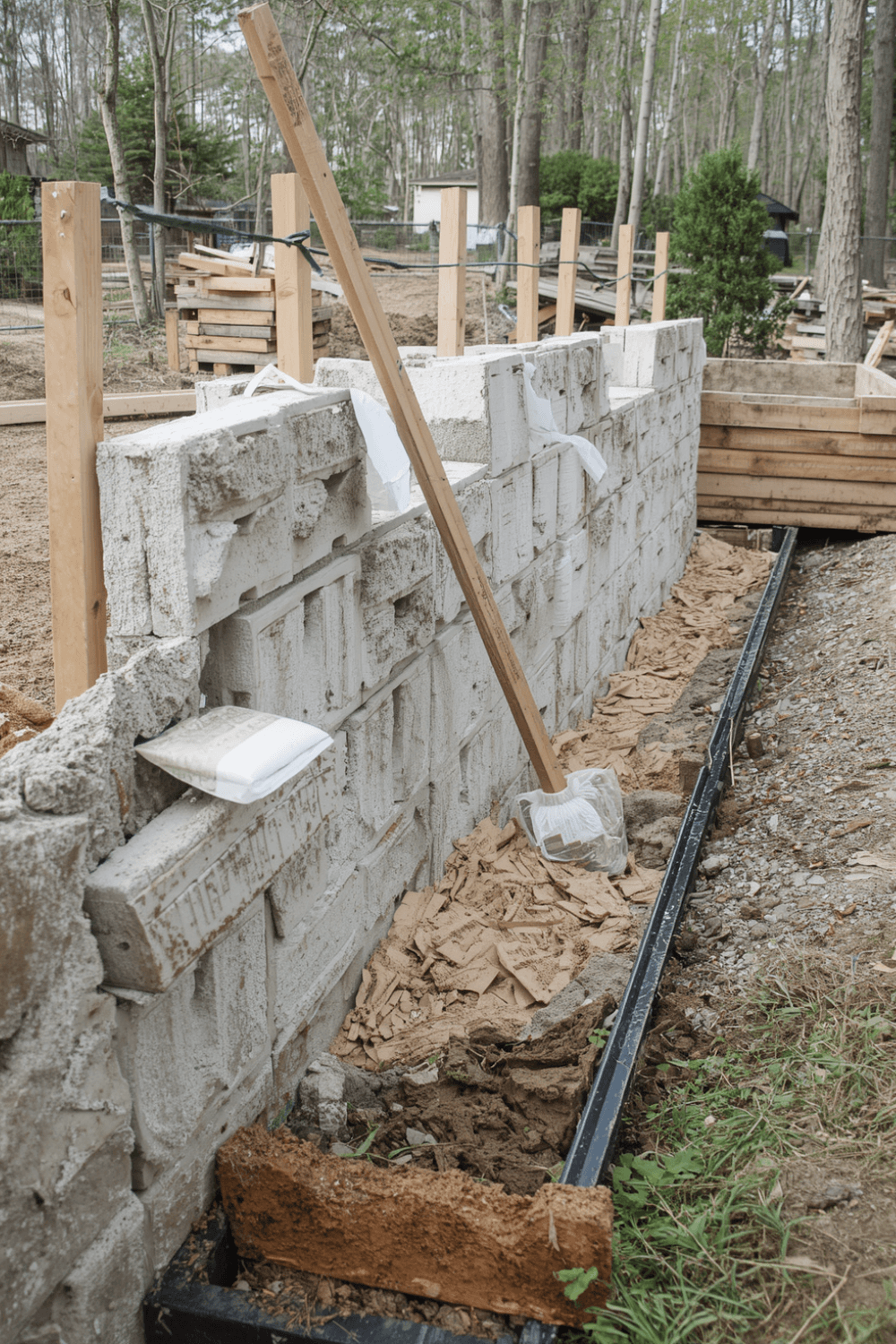
If you’re comfortable with basic concrete work, you can build forms from scrap lumber, fill them with bags of ready-mix concrete, and pour a solid wall on-site. Bags of ready-mix run $5–$7 at any hardware store. This takes more skill and time than block work but produces a solid, seamless wall.
20. Planted Stone Terrace Wall
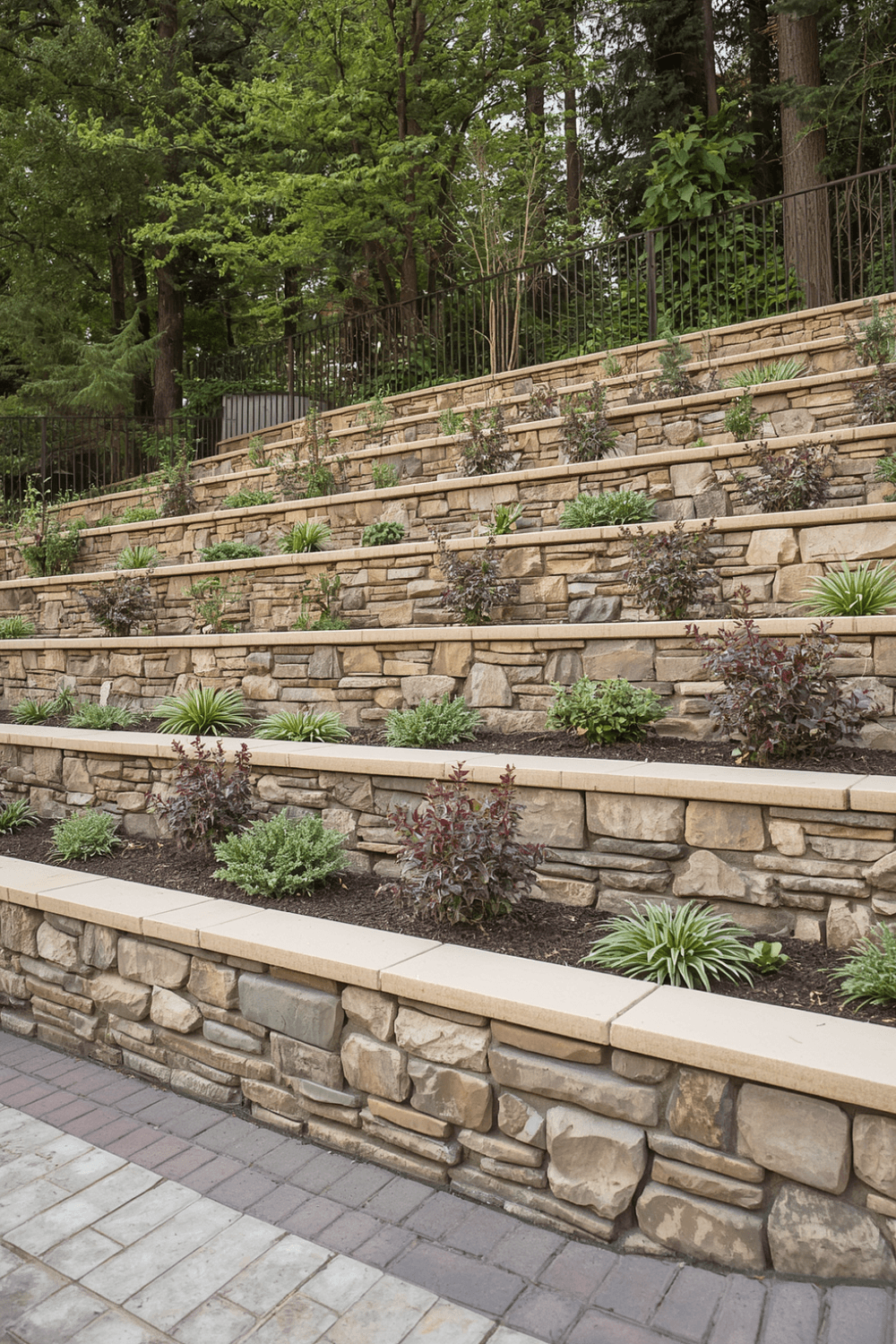
Instead of building a single taller wall, you can step the slope with multiple low stone rows and plant groundcovers, succulents, or perennials between them. This distributes the soil pressure across several small walls rather than one large one, which means each individual wall can be built lighter and cheaper.
The finished look is lush, layered, and professional. It’s also one of the most erosion-resistant approaches because the plant roots help hold the soil between the stone rows.
21. Stacked Sandbags with River Rock Face
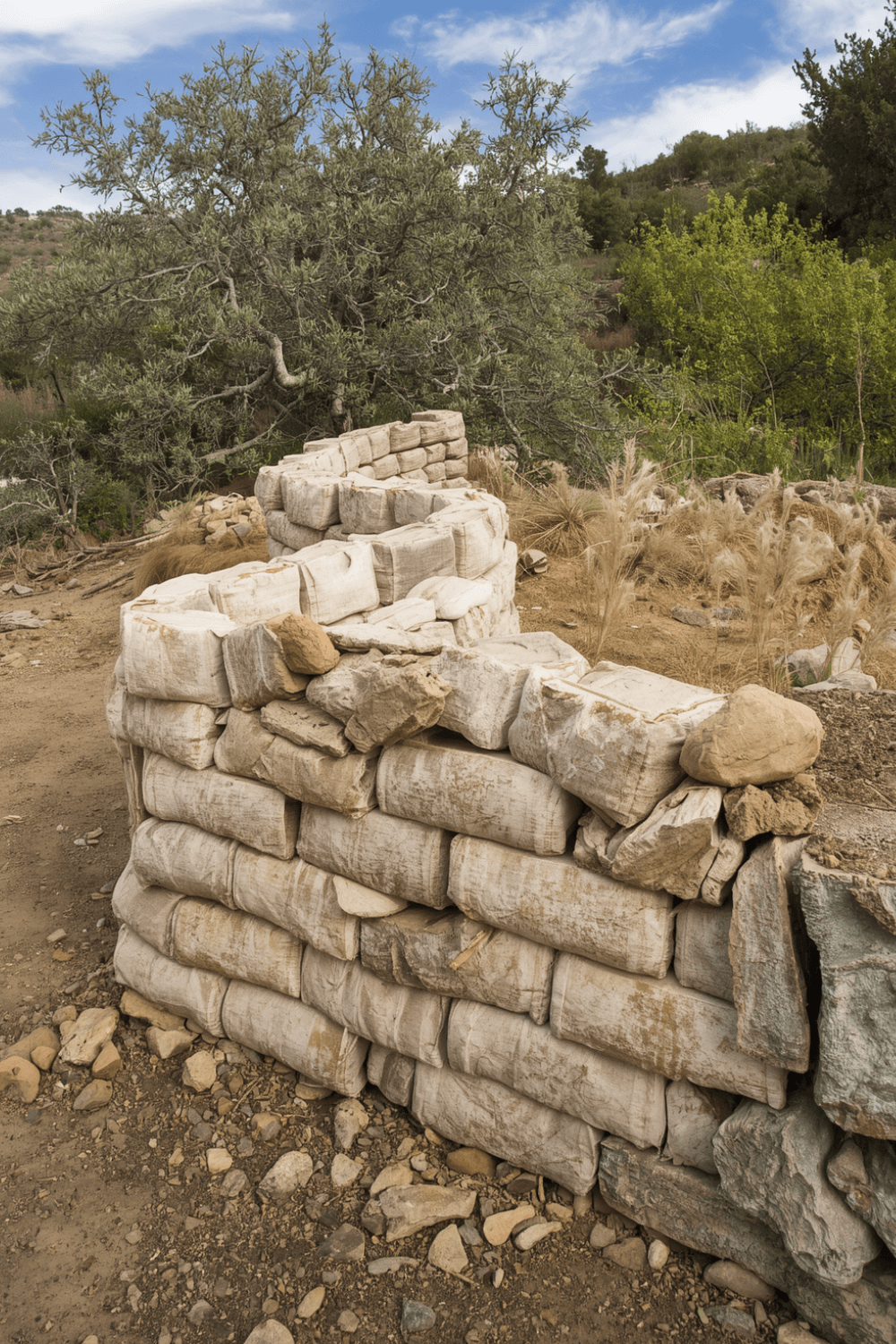
A hybrid approach: build the structural core with sandbags, then face the front of the wall with river rock set in mortar or just stacked tightly. The sandbags do the structural work; the rock gives you the aesthetic you want. This method is used a lot in California and the Southwest, where river rock is plentiful.
Small Retaining Wall Ideas for Garden Beds
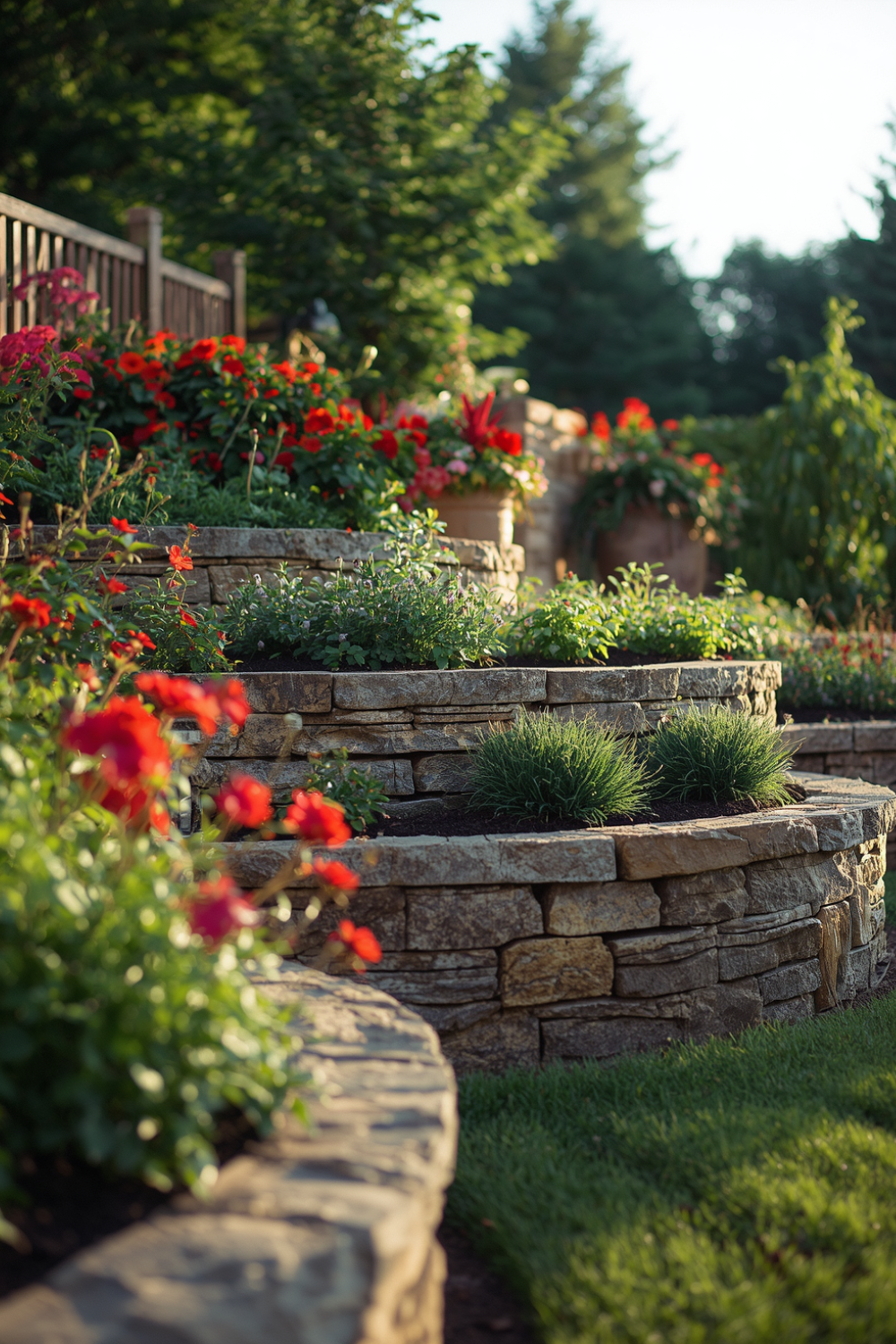
Not every retaining wall situation involves a major slope. Sometimes you just need to raise a garden bed, edge a flower border, or hold soil around a tree. For small retaining walls under 18 inches, your options open up significantly.
Some good small-scale choices:
Edging blocks: Small landscape edging blocks sold at hardware stores cost $1–$3 each and stack easily. They don’t require any construction skills.
Stacked brick: A single-row brick edge stacked 2–3 courses high contains garden bed soil beautifully and costs almost nothing if you source reclaimed brick.
Short timber borders: A single pressure-treated 4×4 staked into the ground creates a clean border for raised beds with minimal cost and effort.
Natural stone strips: Thin flat stones arranged vertically (soldier-course style) along a garden border create a casual, cottage-style edge.
For garden beds and ornamental landscaping, the priority is aesthetics rather than structural engineering. These lightweight options look great and require no permits, no footings, and no professional help.
How to Plan a Budget Retaining Wall: Key Things to Get Right
Building a cheap retaining wall that actually lasts requires getting a few things right from the start:
Drainage is non-negotiable. Water pressure behind a wall is the number-one cause of failure. Even a simple wall needs a gravel backfill and ideally a perforated drainpipe at the base to let water escape. Skip this and you’ll be rebuilding within a few years.
Height matters for permits. In most U.S. municipalities, walls over 3–4 feet require a permit and sometimes an engineer’s sign-off. Check your local codes before building anything taller.
Foundation depth affects stability. Bury the first course of your wall at least 6–12 inches below ground level. This prevents the base from shifting and keeps the whole structure stable.
Backfill with gravel, not just soil. Gravel drains fast and doesn’t expand when wet. Compacted clay behind a wall creates massive pressure when it rains. Always use crushed gravel or drain rock as backfill directly behind the wall.
Retaining Wall Ideas by Climate and Region
Cold Climate Retaining Walls (Freeze-Thaw Regions)
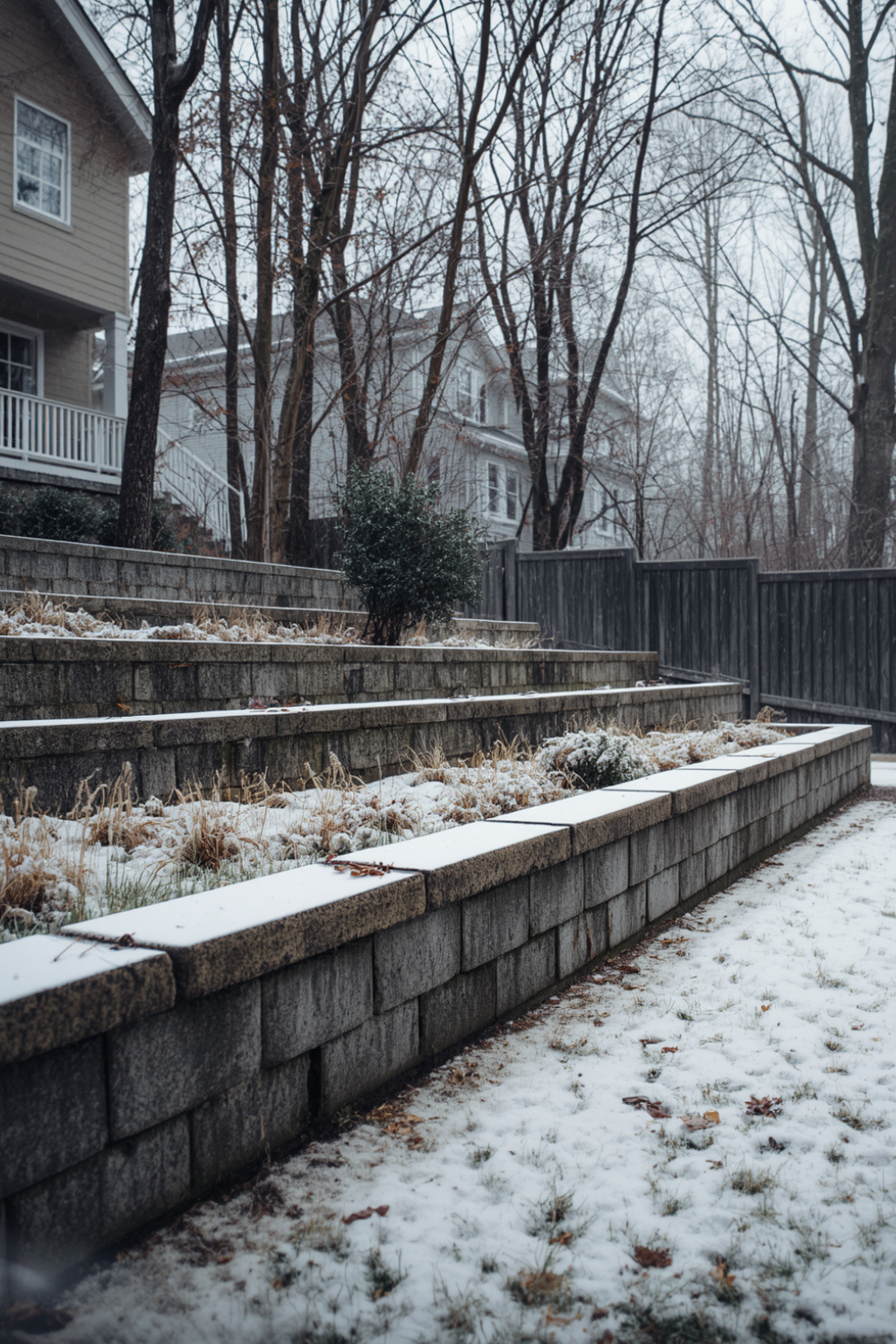
In areas with harsh winters, freeze-thaw cycles are the biggest threat to a retaining wall. Water that seeps into small cracks expands when it freezes, which slowly pushes joints apart over a few seasons. Concrete blocks and poured concrete handle freeze-thaw better than untreated timber, and a deeper gravel backfill matters even more here since it gives water somewhere to go before it freezes. If you’re building in a cold-winter state, skip anything that traps moisture against the wall face.
Wet Climate Retaining Walls
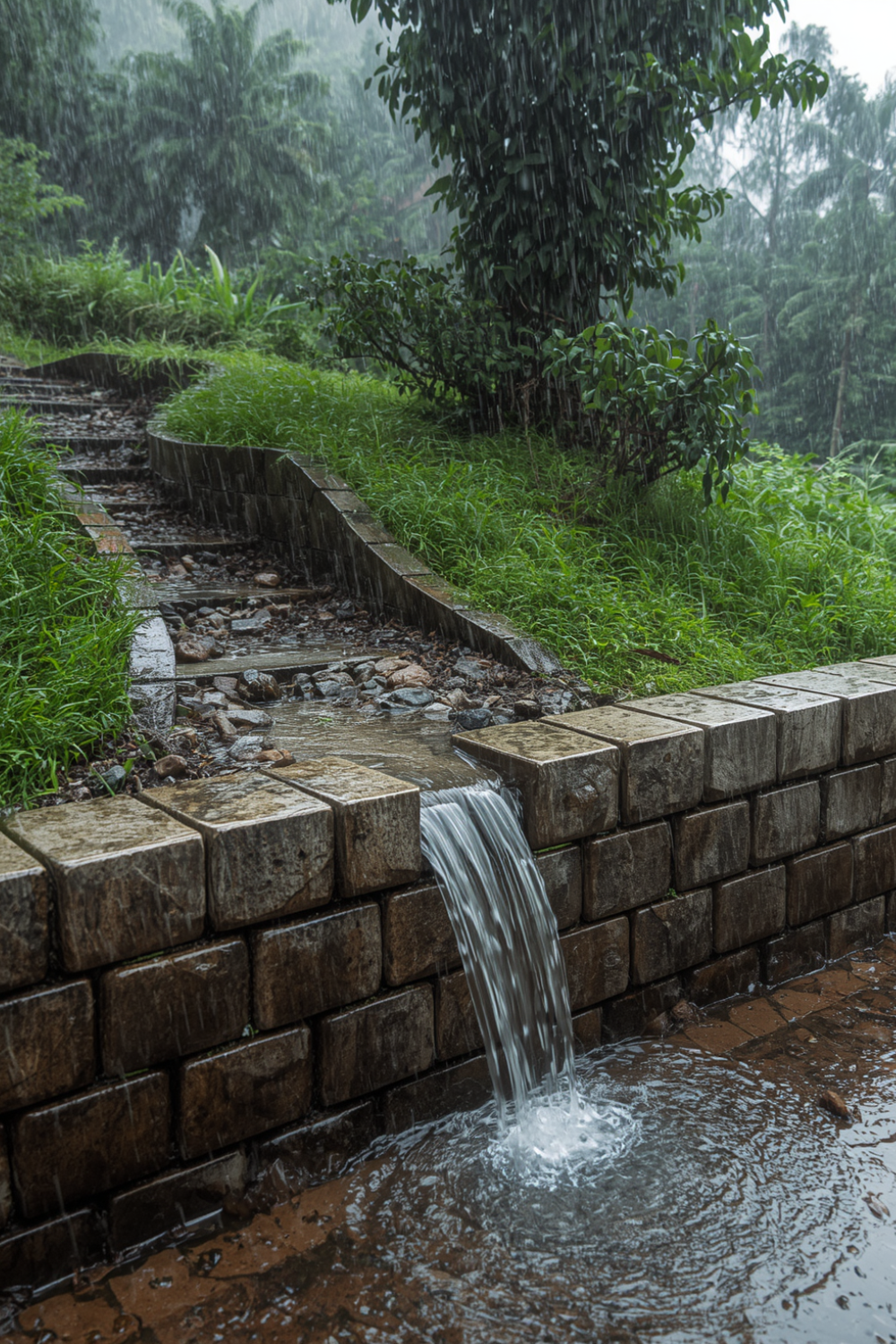
In consistently rainy regions, drainage isn’t optional, it’s the whole ballgame. Gabion baskets perform especially well here since water passes straight through the rock fill instead of building pressure behind a solid face. Whatever material you choose, add a perforated drain pipe at the base and make sure it actually has somewhere to drain to, not just a gravel pocket that fills up and stays full.
Dry Climate Retaining Walls
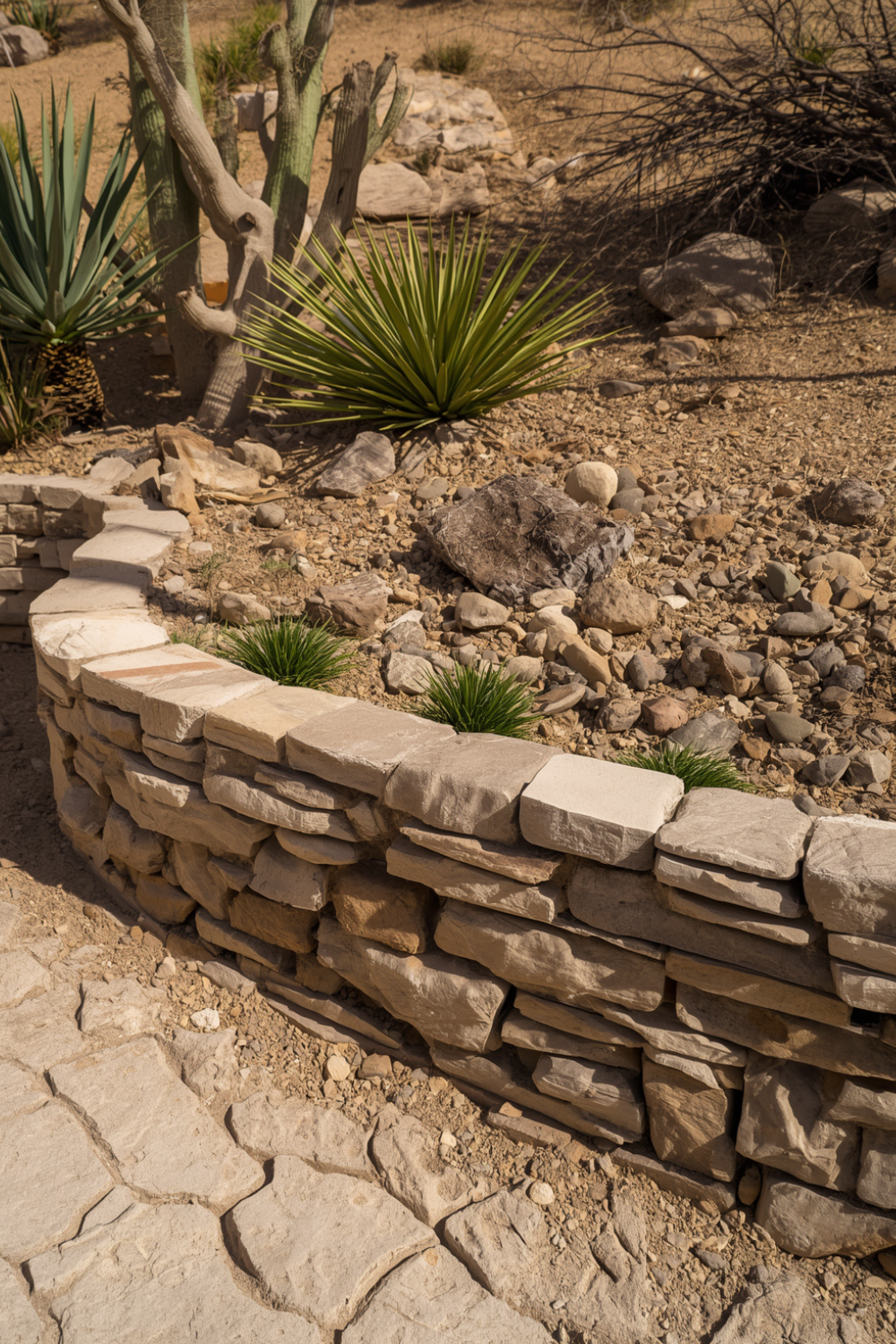
In hot, dry regions, wood tends to dry out, crack, and shrink faster than it would in a humid climate, so stone, concrete block, or boulder walls tend to outlast timber by a wide margin. Drainage still matters here too, since dry soil sheds water fast during the rare heavy rain, and a wall without proper backfill can get hit with a sudden surge of runoff.
Retaining Wall Maintenance: What to Check Every Year
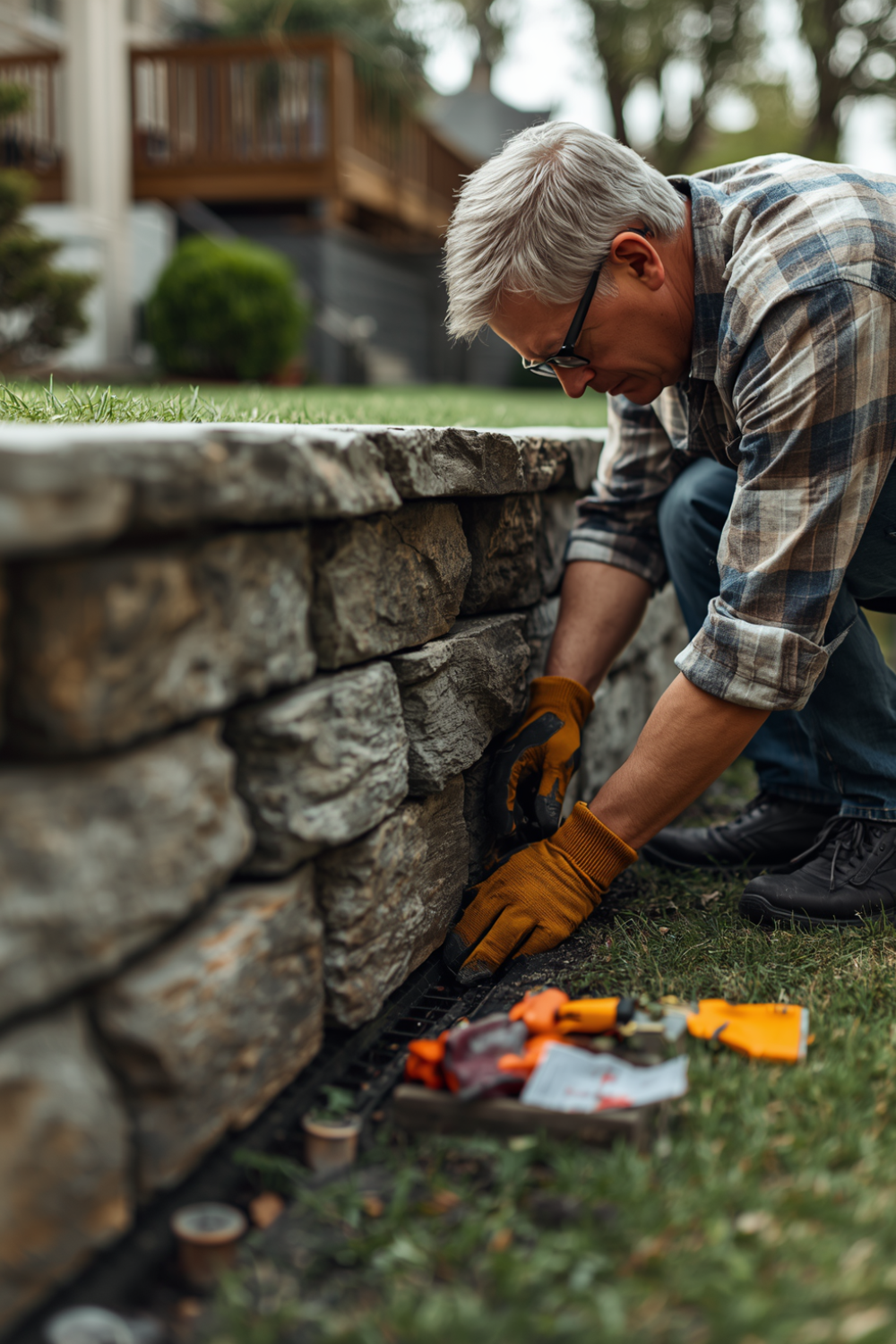
A cheap retaining wall stays cheap only if it’s maintained. A few minutes of checking each spring saves a full rebuild down the line:
- Look for bulging or leaning sections. Even a slight lean forward usually means water pressure is building up behind the wall, catch it early before it becomes a collapse.
- Clear the drain outlet. If your wall has a drain pipe, make sure it isn’t clogged with dirt or roots, a blocked drain defeats the whole point of having one.
- Check for gaps at the base. Erosion at the bottom of a wall is often the first sign the foundation is shifting.
- Reseal or restain wood walls every 2-3 years. Untreated exposure speeds up rot significantly, especially at ground contact points.
- Watch for plant roots. Aggressive roots from nearby trees can push joints apart over time, keep large trees a reasonable distance from any wall.
Frequently Asked Questions About Cheap Retaining Walls
What is the cheapest way to build a retaining wall?
Using landscape timbers or large rocks sourced locally (or free from excavation sites) is the cheapest approach. A timber wall under 3 feet can be built for $3–$8 per linear foot in materials. Fieldstone gathered from your property or a neighbor’s land costs nothing except labor.
How long do cheap retaining walls last?
Properly built walls using quality materials last 20–50 years regardless of material cost. A well-drained, correctly installed timber wall lasts 15–25 years. A stone or concrete block wall lasts much longer. The key is installation quality — drainage, proper base depth, and correct backfill matter far more than what the wall is made of.
Can I build a retaining wall without a professional?
Yes, for walls under 3 feet. Most DIY-friendly materials (timber, concrete blocks, fieldstone) are designed to be installed without professional help. Watch several tutorials before starting, focus on drainage, and take your time with the base course. For walls over 4 feet, consider consulting a professional or landscape engineer.
Do I need a permit for a retaining wall in the USA?
Permit requirements vary by state and municipality, but most places require permits for walls over 3–4 feet tall or walls within a certain distance of property lines. Check with your local building department before starting. Many small garden retaining walls fall below the permit threshold.
What’s the easiest retaining wall to build yourself?
Interlocking concrete block walls are probably the easiest. The blocks are designed so they self-align as you stack them, no mortar is needed, and they’re available at every major home improvement store in the U.S. with clear installation guides. Landscape timber walls are a close second.
Build the Wall Your Yard Actually Needs
Retaining walls don’t have to be a financial nightmare. The options above cover everything from completely free (fieldstone, pallets, tires, rubble) to mid-range materials that look high-end with the right design choices. Most of the walls in this list can be built on a weekend with basic tools and no prior construction experience.
Start by figuring out what your slope actually needs — is this a structural problem or an aesthetic one? Small garden beds and decorative borders are very different from a serious slope with active erosion. Once you understand the function, picking the right cheap retaining wall idea becomes straightforward.
Pick a material that fits your budget and your yard’s style, get the drainage right, and build it once the right way. That’s cheaper than building it twice.
If you found this guide helpful, share it with someone whose yard could use a little work — or bookmark it for your next landscaping project.
Related reading: How to build raised garden beds on a slope | Best groundcover plants for retaining wall slopes | Backyard grading and drainage on a budget