Covered outdoor kitchen ideas make it easy to cook, eat, and host in any weather. A grill on an open patio is fun until the sky turns gray. One passing shower and the burgers are soggy, the guests are inside, and you are standing alone with a spatula.
A covered outdoor kitchen fixes that. It gives you shade in July, shelter in April, and a real reason to cook outside more often. It also protects your grill, cabinets, and appliances, which saves money over time.
Below you will find 30 design ideas, a quick guide to roof types, and answers to the questions homeowners ask most. Whether your yard is tiny or huge, you will find a layout that fits.
Before you start, take ten minutes to think about how you really cook. A weekend burger griller needs a different setup than someone who roasts, bakes pizza, and hosts twenty people. Let that answer guide every choice below, from roof type to counter length.
Outdoor Kitchen Pergola
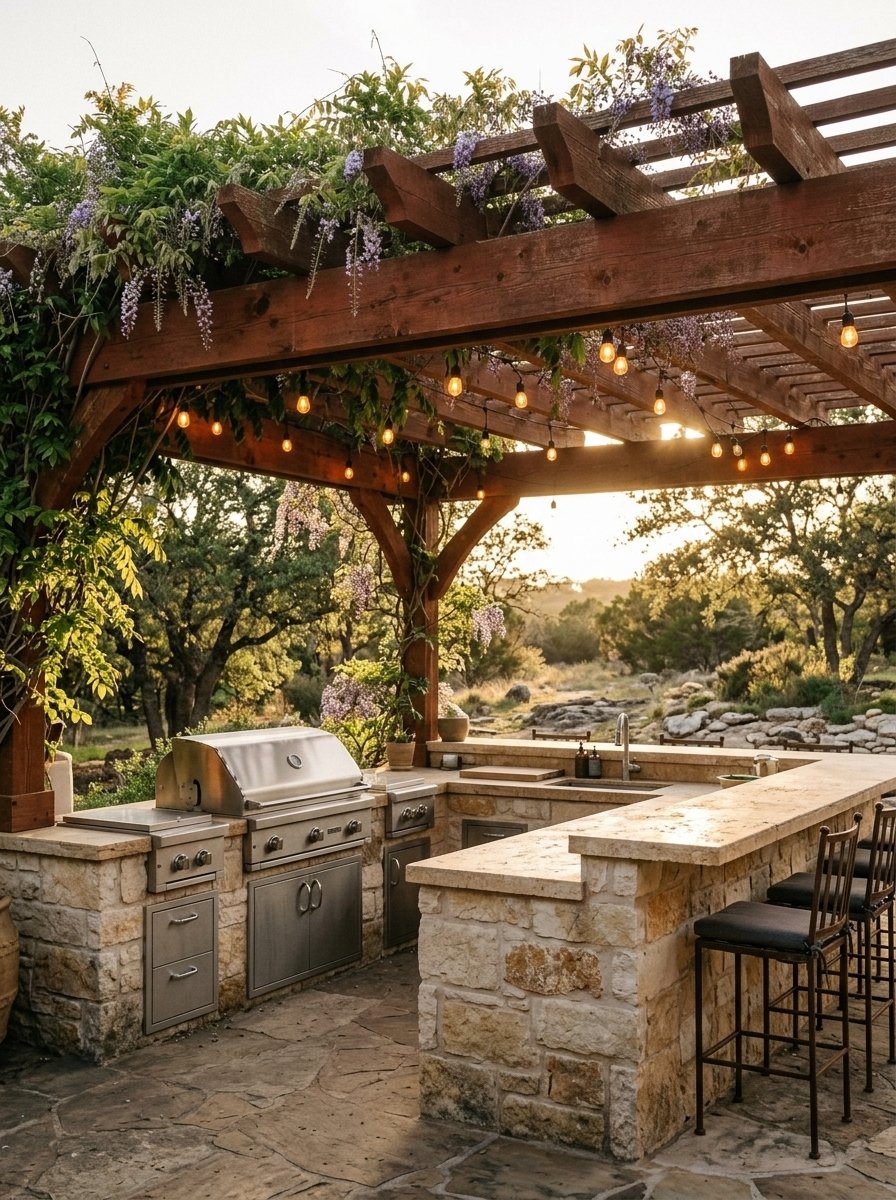
A pergola is the classic starting point. Its open slats filter sunlight, so the space feels airy instead of boxed in. Add a polycarbonate or louvered top if you want rain protection too. If you want more shade ideas for the yard, see our guide to backyard pergola ideas.
Place the grill at one end so smoke can drift out through the gaps. Cedar, white vinyl, and powder-coated aluminum all hold up well. String lights along the beams make evening cookouts feel special.
If you live in a windy area, anchor the posts into concrete footings rather than surface mounts. A pergola catches more wind than most people expect.
Covered Kitchen Dining
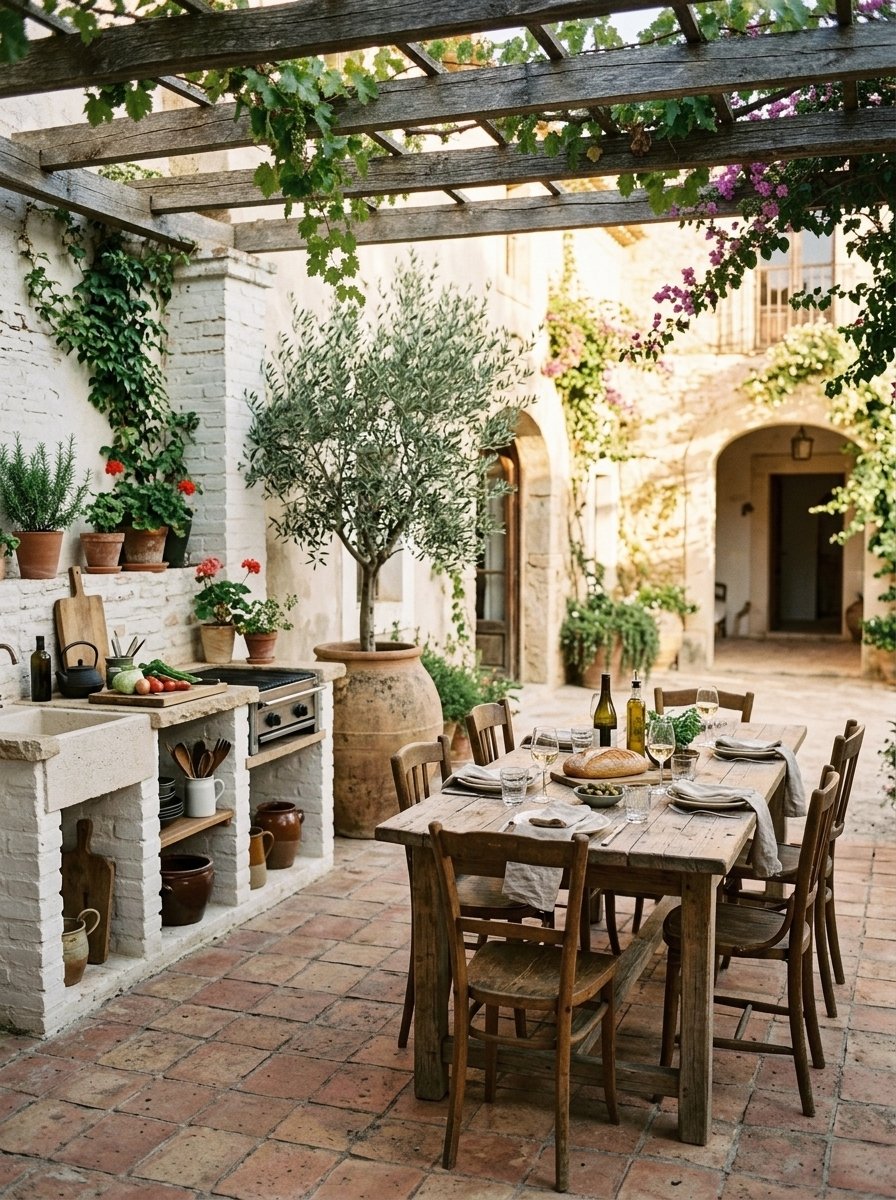
Cook and eat under one roof, and you stop carrying plates across the yard. Set a long dining table a few steps from the counter, with at least three feet of walking room behind each chair.
Bench seating along one side saves space and seats more people. A ceiling fan keeps the air moving, which helps on humid nights.
Pick wipe-clean placemats or solid-surface table tops. Sauce spills happen, and you will want cleanup to take two minutes, not twenty.
Covered Balcony Grill
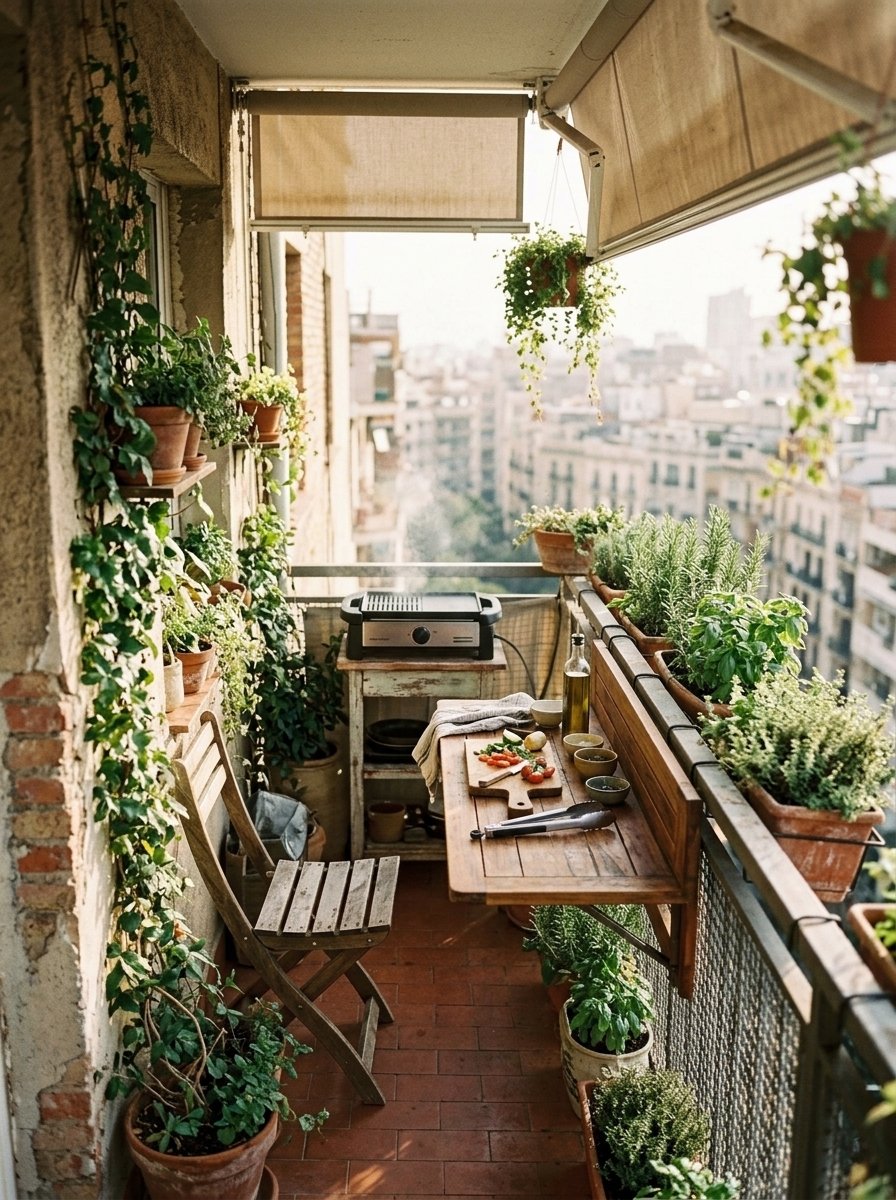
Small balconies can still handle a cooking zone. Tuck a compact grill or electric unit beside the wall, then cover the area with a retractable shade or a balcony roof panel.
Check your building rules first. Many apartments ban open-flame grills, so electric or induction models are often the safer pick. A narrow fold-down counter gives you prep space without crowding the floor.
Weight matters on balconies. Keep heavy stone or brick off the floor and choose lightweight materials like powder-coated aluminum or composite panels.
Outdoor Kitchen Skylight
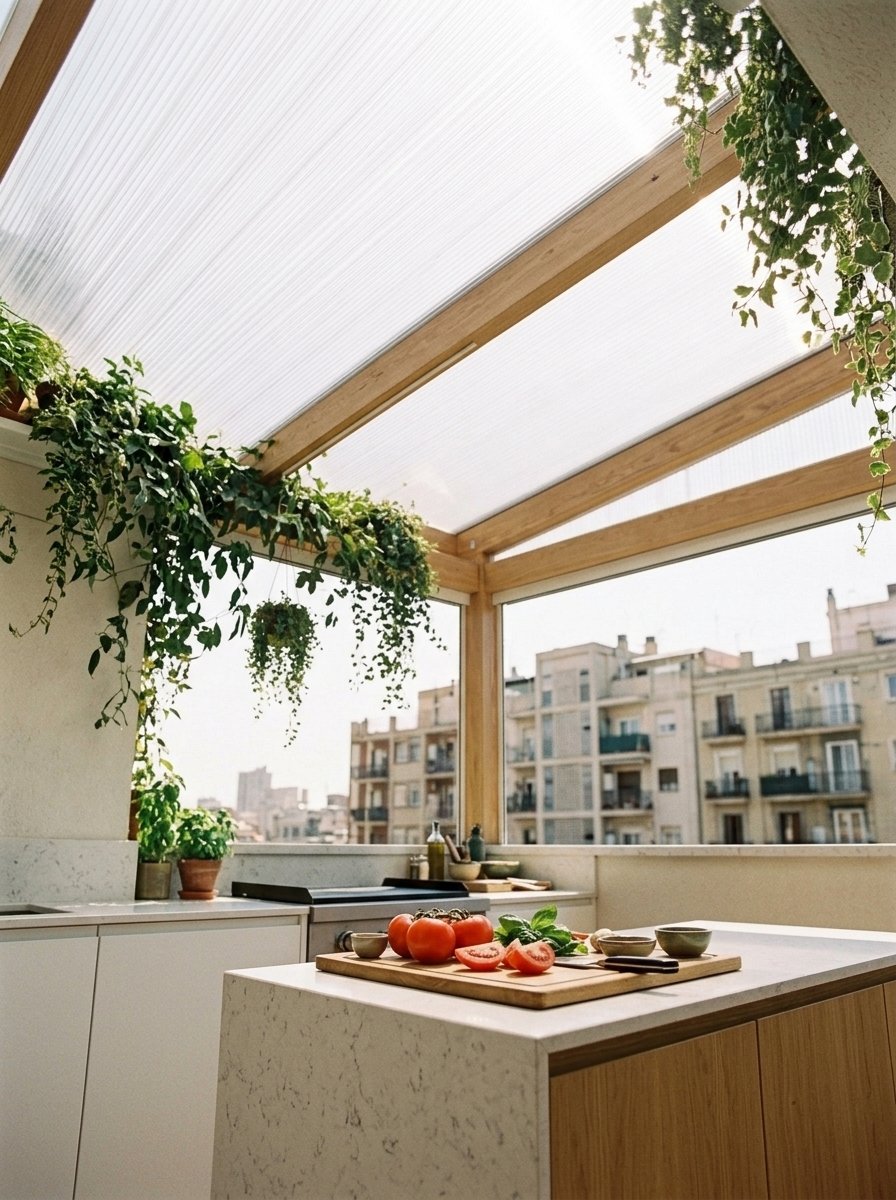
A solid roof can make a cooking area feel dim. Skylight panels fix that by letting daylight pour in while rain stays out. Tempered glass or twin-wall polycarbonate both work.
Place the panels above the prep counter so you can see what you are chopping. Tinted glass cuts heat and glare during peak afternoon sun.
Plan for cleaning too. Leaves and pollen settle on flat skylight panels, so a gentle slope and a yearly rinse keep them clear.
L-Shaped Patio Kitchen
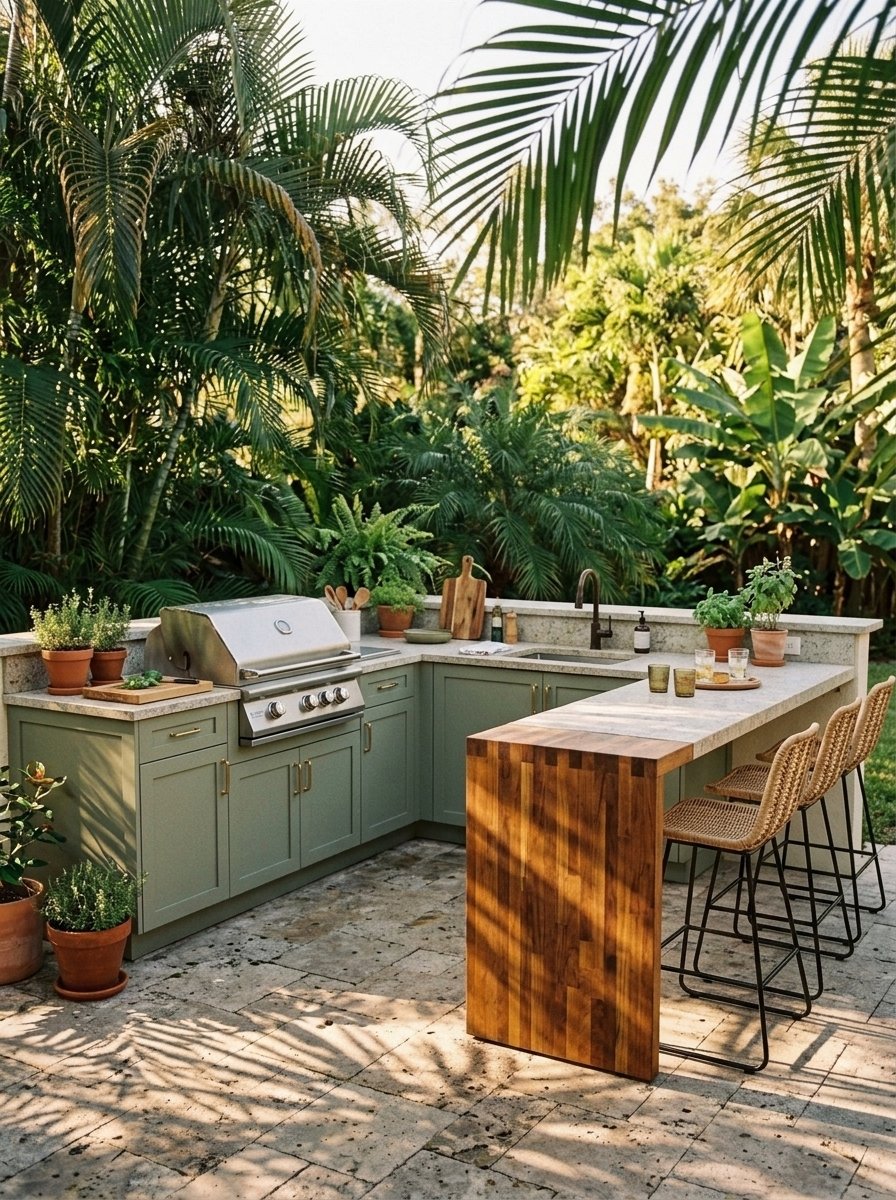
The L-shape is a favorite because it creates a natural work triangle between grill, sink, and fridge. One leg holds the cooking gear. The other leg becomes a bar or prep surface.
The corner can hold a storage cabinet or a trash pullout. Stools along the shorter leg let guests chat with the cook without standing in the way.
Keep the grill on the leg closest to open air. That way smoke moves away from the seating area instead of toward your guests.
Outdoor Grill With Pergola
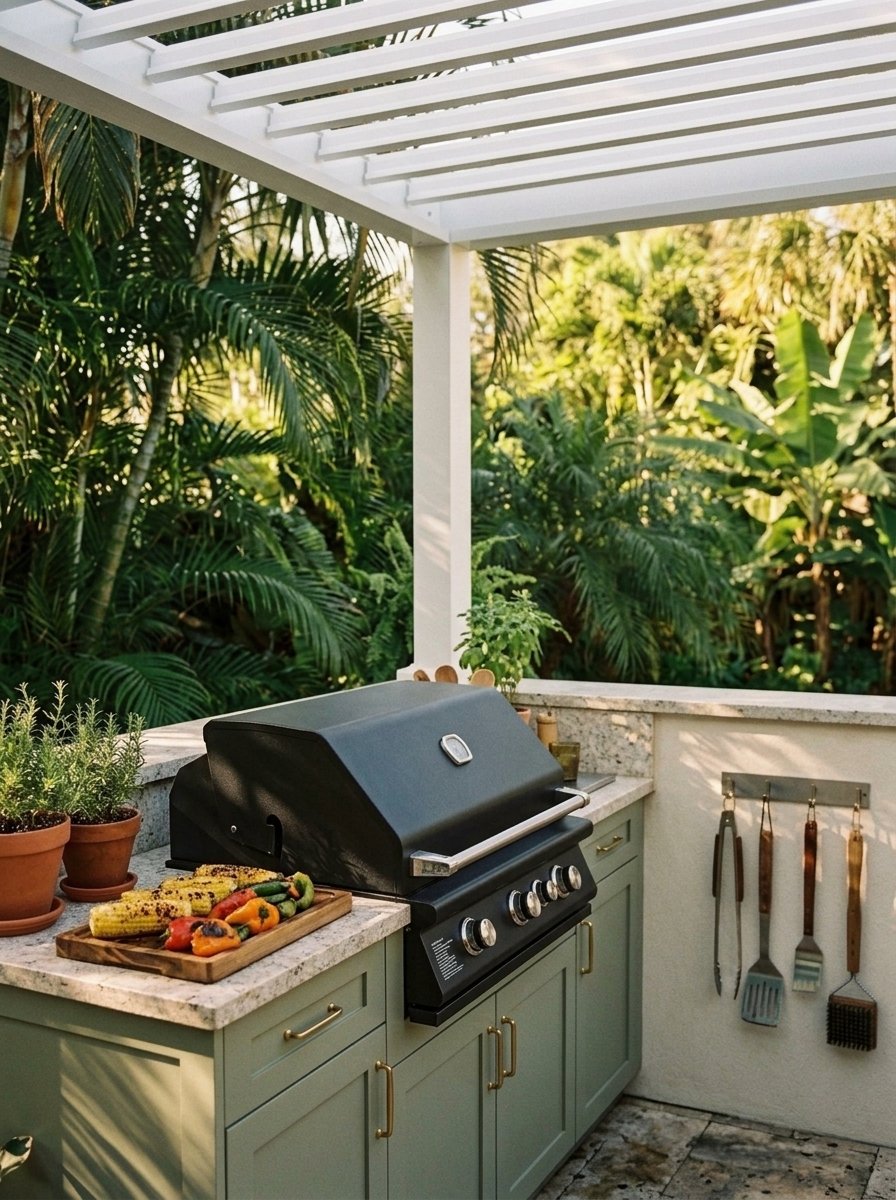
If you only need a grill station, you do not have to build a full kitchen. Place a built-in or freestanding grill in the center of a small pergola, with two side counters for plates and tools.
Keep a safe gap between the grill top and any wood above it. Follow the manufacturer’s clearance guide, review basic fire safety guidelines, and consider a metal or noncombustible panel directly overhead.
A small side table with a heat-safe top gives you a spot for hot trays. It saves you from balancing everything on the grill lid.
Outdoor Kitchen Awning
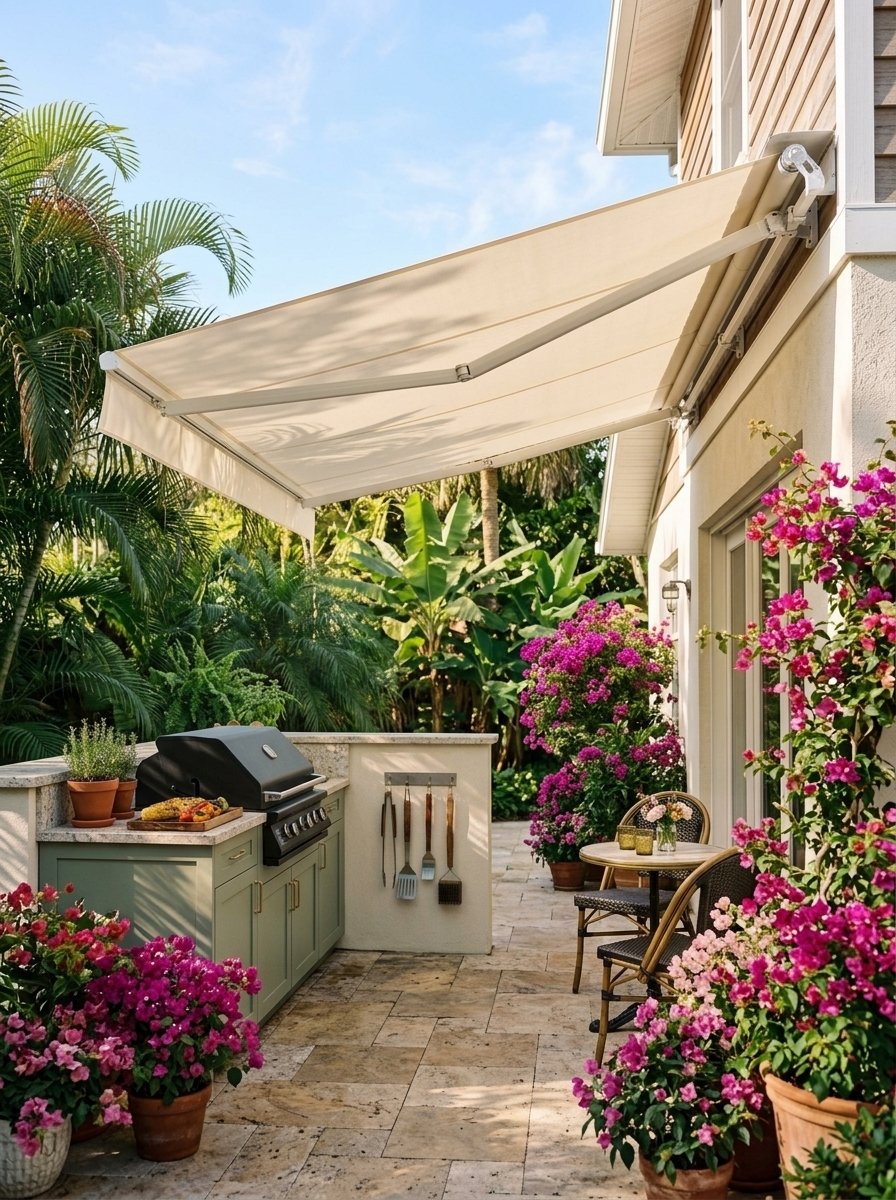
Awnings are flexible. A retractable fabric model gives shade on sunny days and folds away when you want open sky. Motorized versions often include wind and rain sensors.
Choose solution-dyed acrylic fabric, which resists fading better than basic canvas. Mount it to solid framing, not just siding, so it can handle wind load.
Retract the awning before storms or strong gusts. Even sturdy models can bend if left out in high wind.
Semi-Shaded Kitchenette
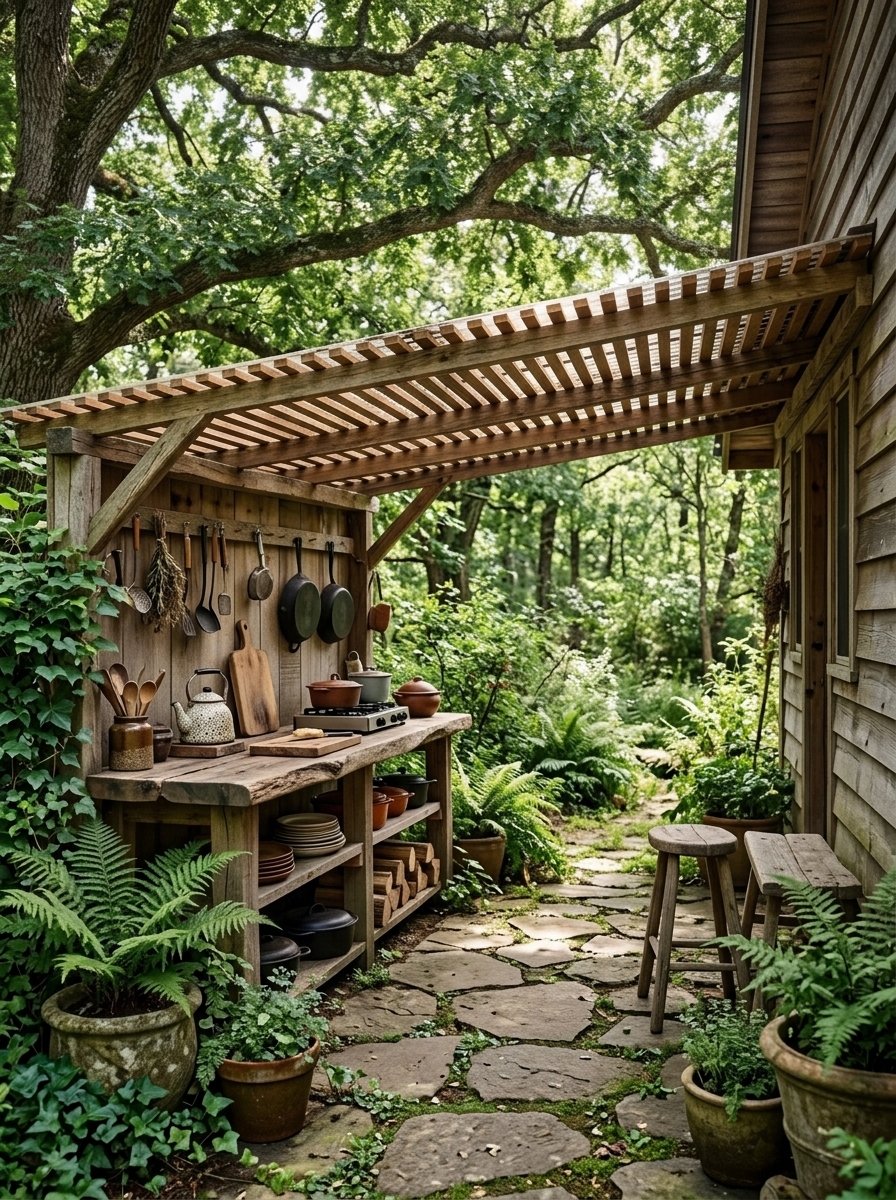
Not every kitchen needs a full roof. A semi-shaded setup covers the prep and seating zones and leaves the grill partly open for airflow. It feels relaxed and costs less to build.
Shade sails, slatted overheads, or a half-roof extension all work here. Sketch the sun path first so the shade lands where you actually stand.
This layout is great for gardens with mature trees. Let the natural canopy handle part of the shade and add structure only where you need it.
Vaulted Roof
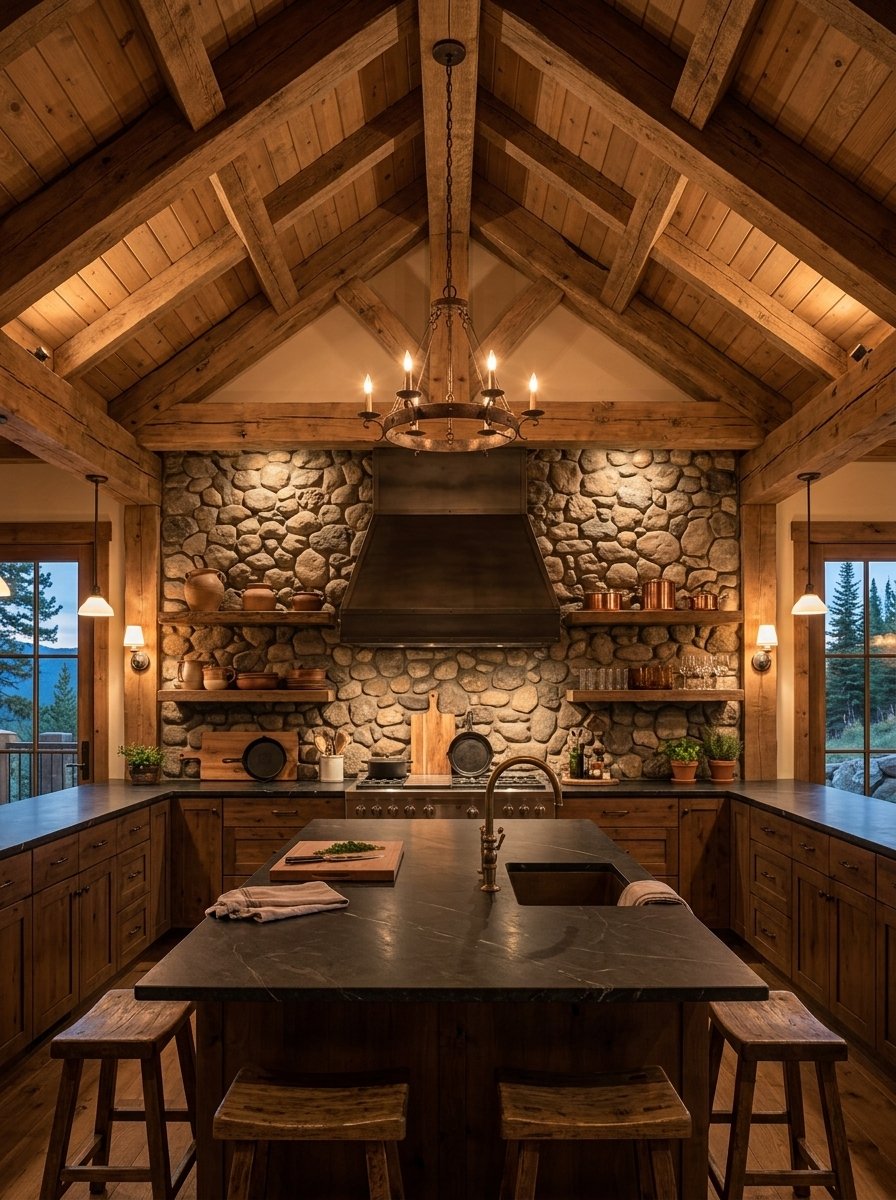
A vaulted ceiling adds height, and height helps with heat and smoke. Warm air rises into the peak instead of sitting at head level.
Exposed beams under the vault give a lodge-like look. Pair them with a stone counter and black hardware for a bold, grounded style.
A ceiling fan or a pair of them helps move heat out in summer. Choose outdoor-rated blades, since indoor ones warp in damp air.
Transitional-Style Kitchen
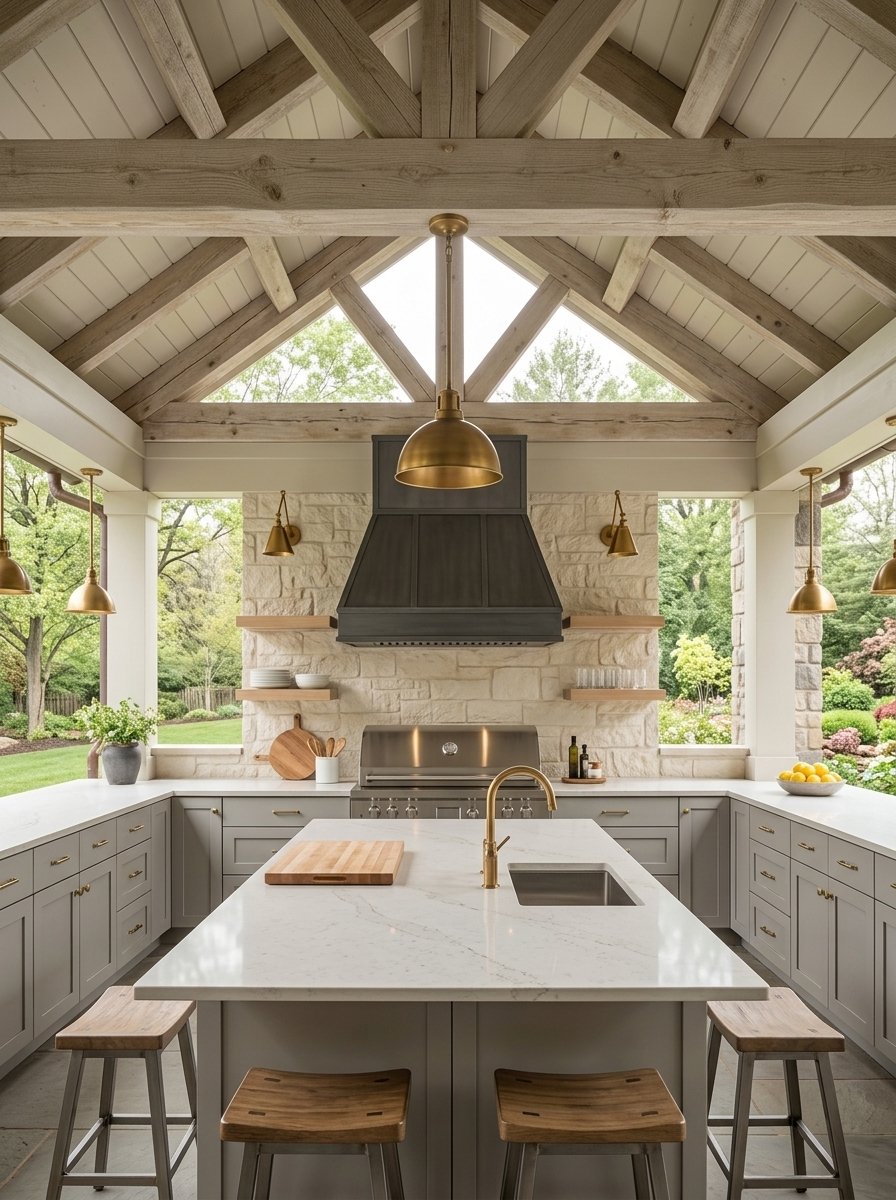
Transitional design blends traditional warmth with clean modern lines. Think shaker-style cabinet doors in stainless or marine-grade polymer, simple pendant lights, and a neutral palette.
This style suits homeowners who want something timeless that will not look dated in ten years. Keep finishes cohesive, with two or three materials at most.
Add one warm accent, such as a brass fixture or a wood-tone shelf. It softens the look without making the space feel busy.
Outdoor Kitchen With Roof
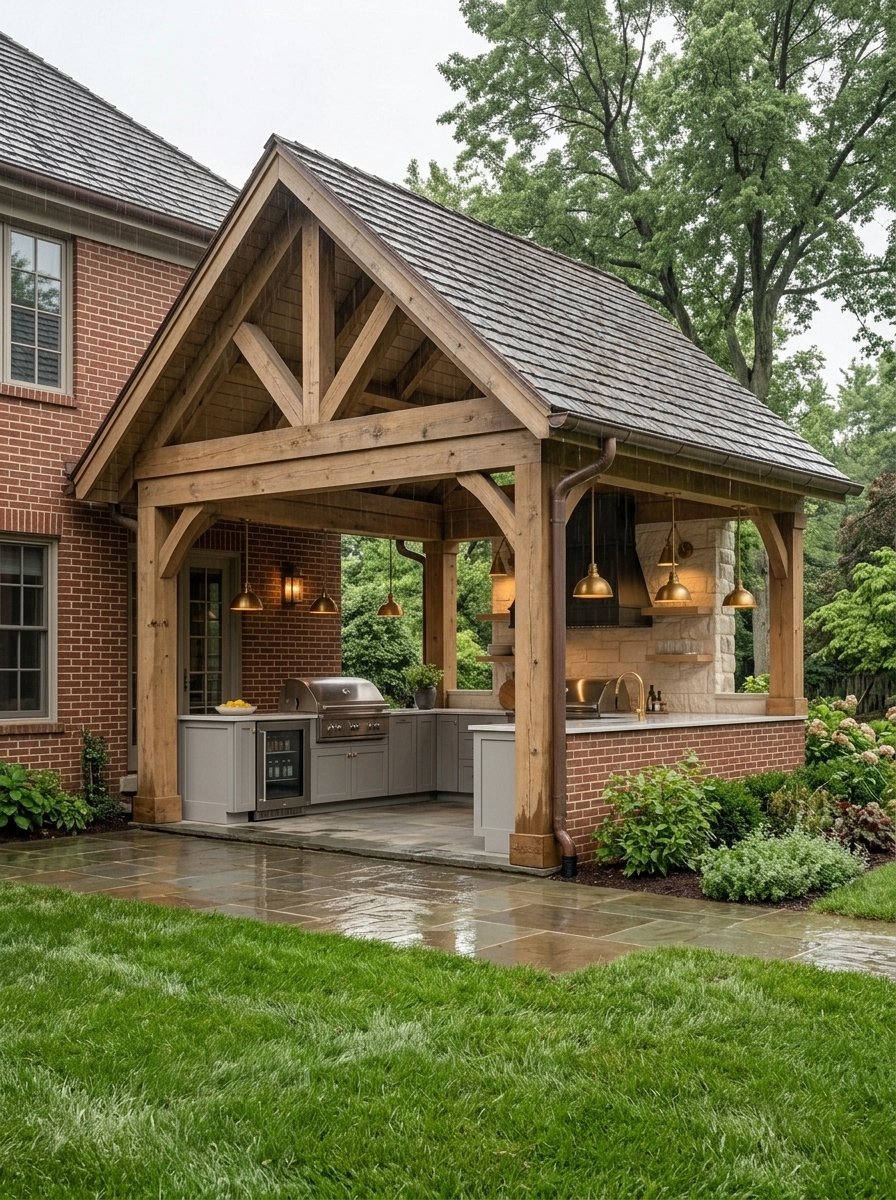
A true roofed kitchen gives you the most protection. It can be an extension of your house roofline or a separate structure with its own posts.
Matching the shingles and trim to your home makes it look original, not bolted on. Add gutters and a downspout so runoff does not pool on your patio.
Ask your local building department about setbacks. A permanent roof often has to sit a set distance from the property line.
Covered Kitchen Fireplace
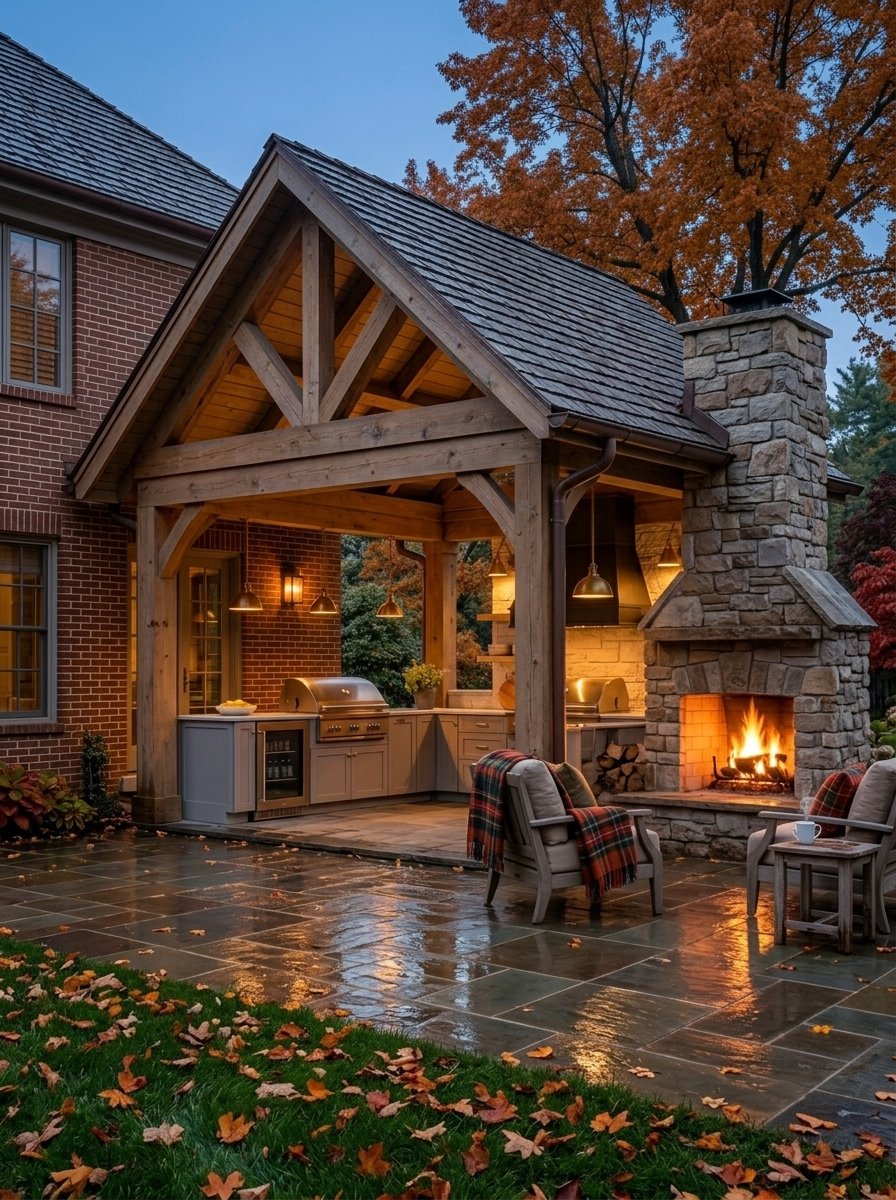
Place a fireplace next to the cooking zone and the space becomes a year-round retreat. Guests can warm up after dinner while the cook finishes dessert.
Vent requirements matter here. Use a chimney that meets local code and keep combustible materials well away from the firebox. A professional mason or installer is worth the fee for this one.
Keep a small fire extinguisher within reach of the cooking area. It is a cheap safety habit that pays off if something goes wrong.
Rustic Outdoor Kitchen Roof
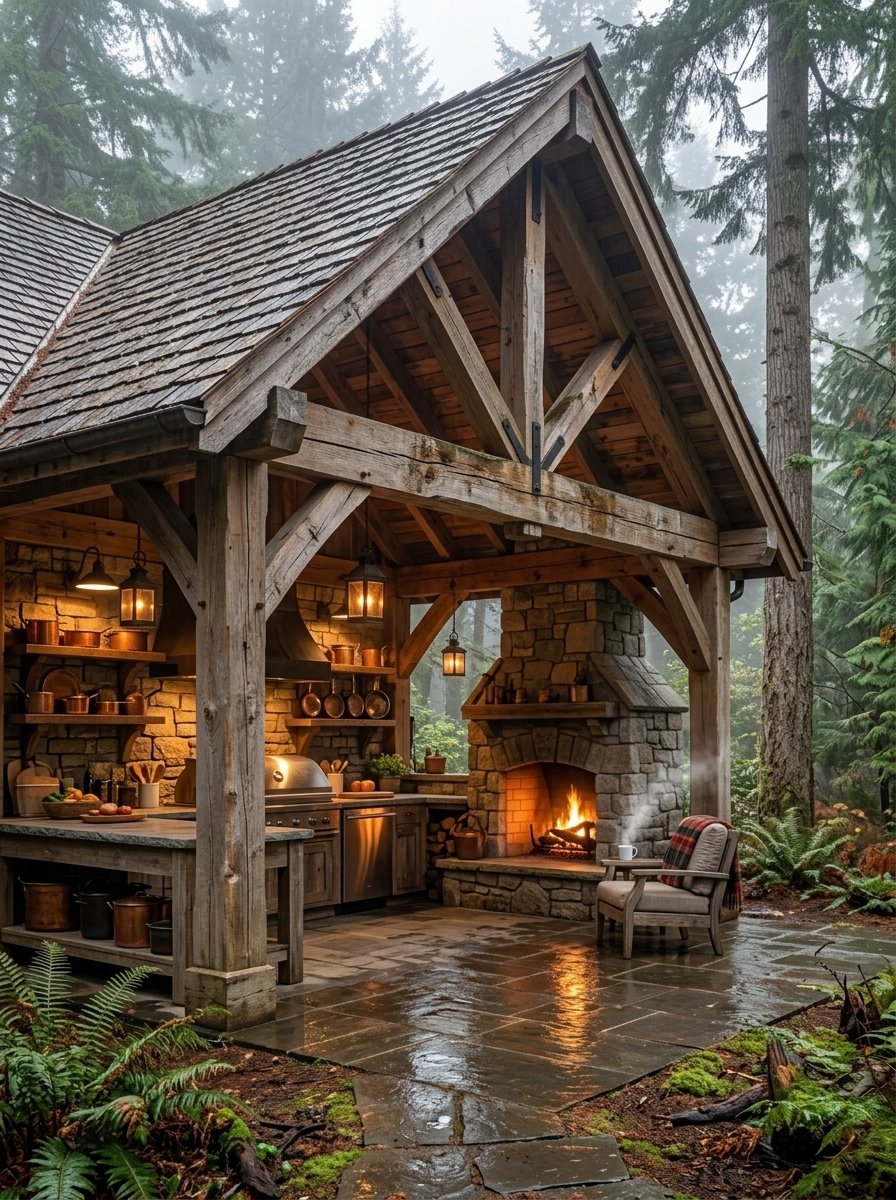
Reclaimed timber beams, a cedar shingle roof, and a stacked stone backsplash create a cabin feel in the backyard. Rough textures hide everyday wear, which is helpful outdoors.
Seal the wood every couple of years. A matte black faucet and wrought iron lanterns finish the look without trying too hard.
Open shelving made from thick timber planks fits this look well. Store your everyday plates and tools there for easy reach.
Screened-In Porch Kitchen
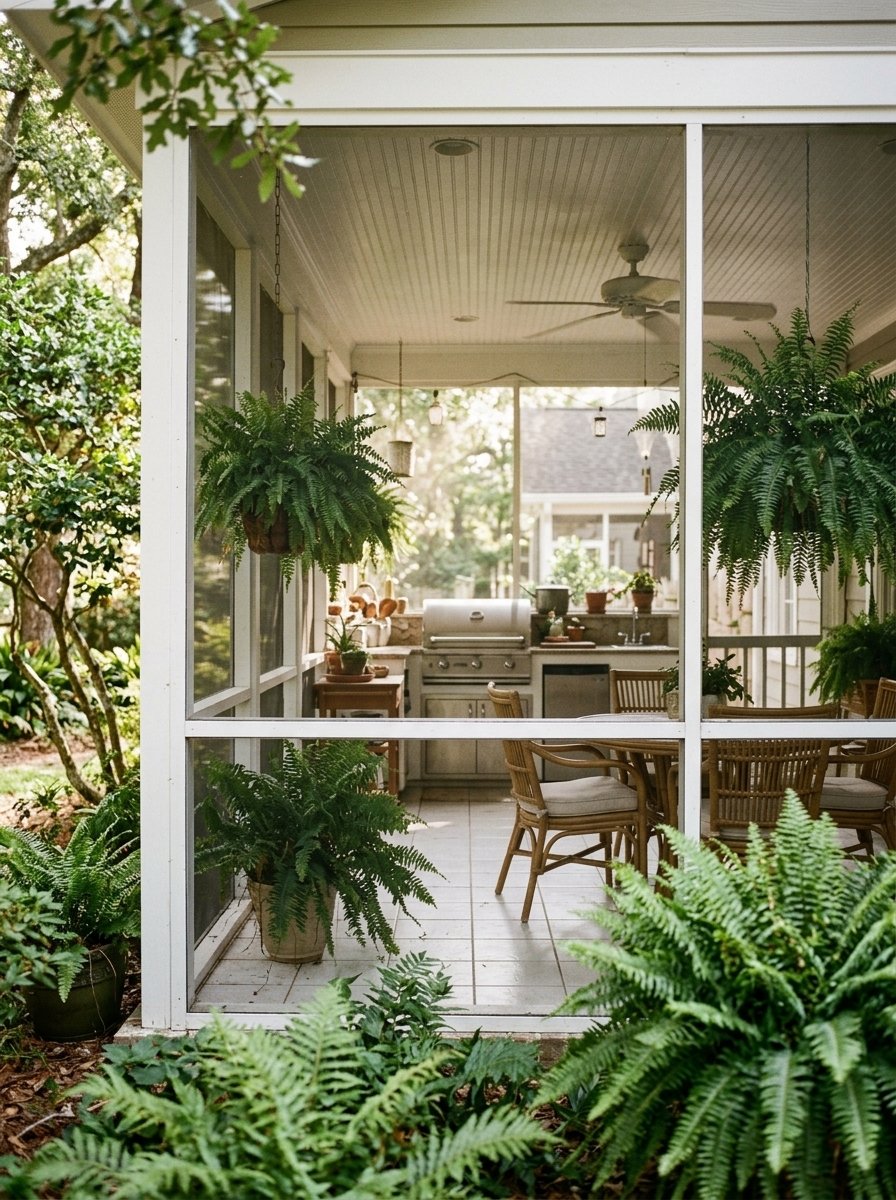
Bugs ruin more dinners than rain does. A screened porch keeps mosquitoes and flies out while you enjoy the breeze.
Keep the cooking gear near an open vent or a screen section for ventilation. Use durable, easy-to-clean flooring such as porcelain tile, since porch floors see a lot of spills.
Add retractable or roll-down screens if you want to open the porch fully on mild days and close it when insects arrive.
Covered Patio Pizza Kitchen
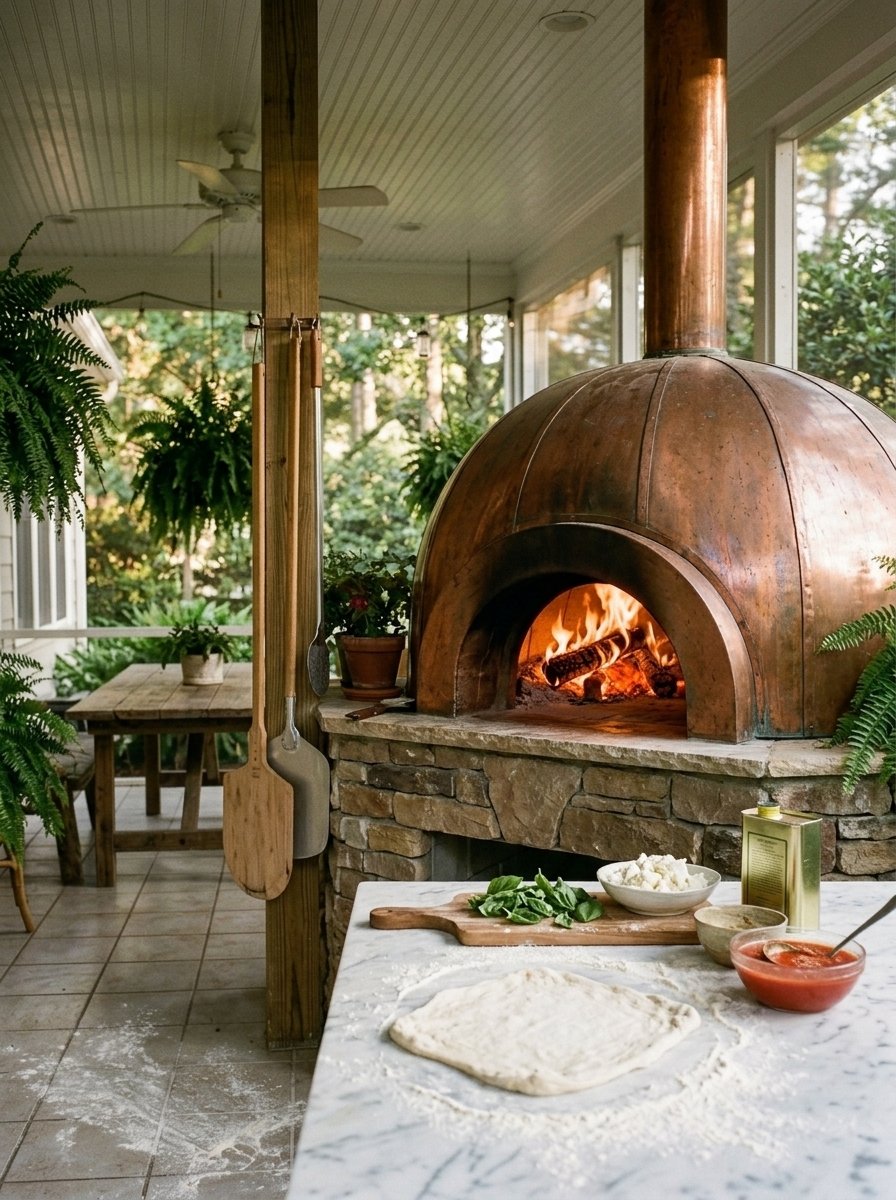
A pizza oven turns a patio into a destination. Wood-fired and gas ovens both fit under a roof as long as you maintain proper clearances and a safe chimney path.
Add a marble or granite landing counter beside the oven for dough work. Hooks for peels and a small shelf for toppings keep things within reach.
Let the oven cool fully before covering it. Trapped heat and moisture can damage the dome over time.
Outdoor Kitchen Pavilion
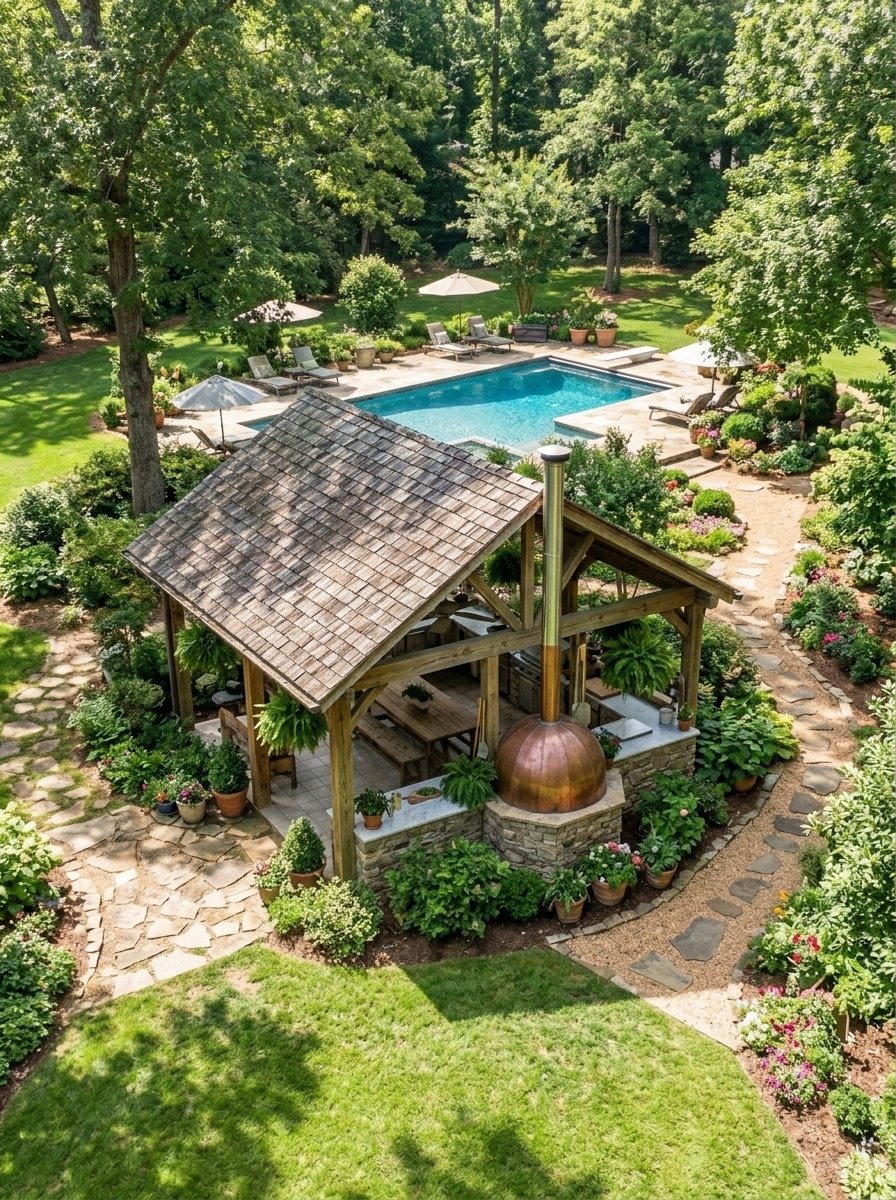
A pavilion is a freestanding structure with a solid roof and open sides. It works well when your kitchen sits away from the house, such as near a pool or garden.
Six to eight posts support the roof, and you can run electrical and gas lines through a protected conduit. Build the footings deep enough for your region’s frost line.
A hip roof or a pitched roof with deep overhangs gives better rain coverage than a flat one. Plan for good drainage on every side.
Dark Wood Ceiling
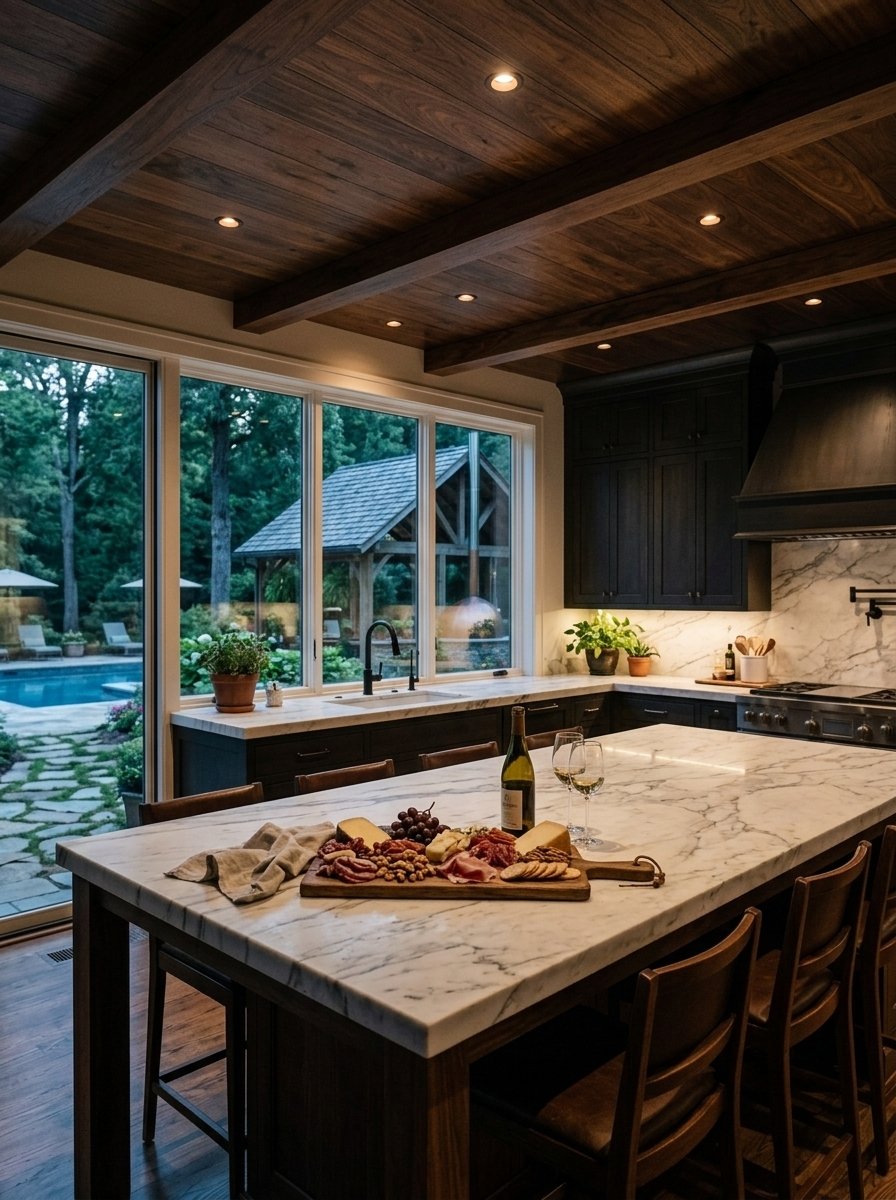
A dark stained ceiling makes the whole room feel cozy and expensive. Walnut, espresso, and charcoal tones all pair beautifully with light stone counters.
Contrast is the trick. Keep walls and cabinets lighter so the space does not feel heavy. Use recessed lighting to bounce light back down.
Choose a stain with UV protection. Dark finishes show fading faster, so a quality sealer keeps the color rich.
Indoor-Outdoor Kitchen
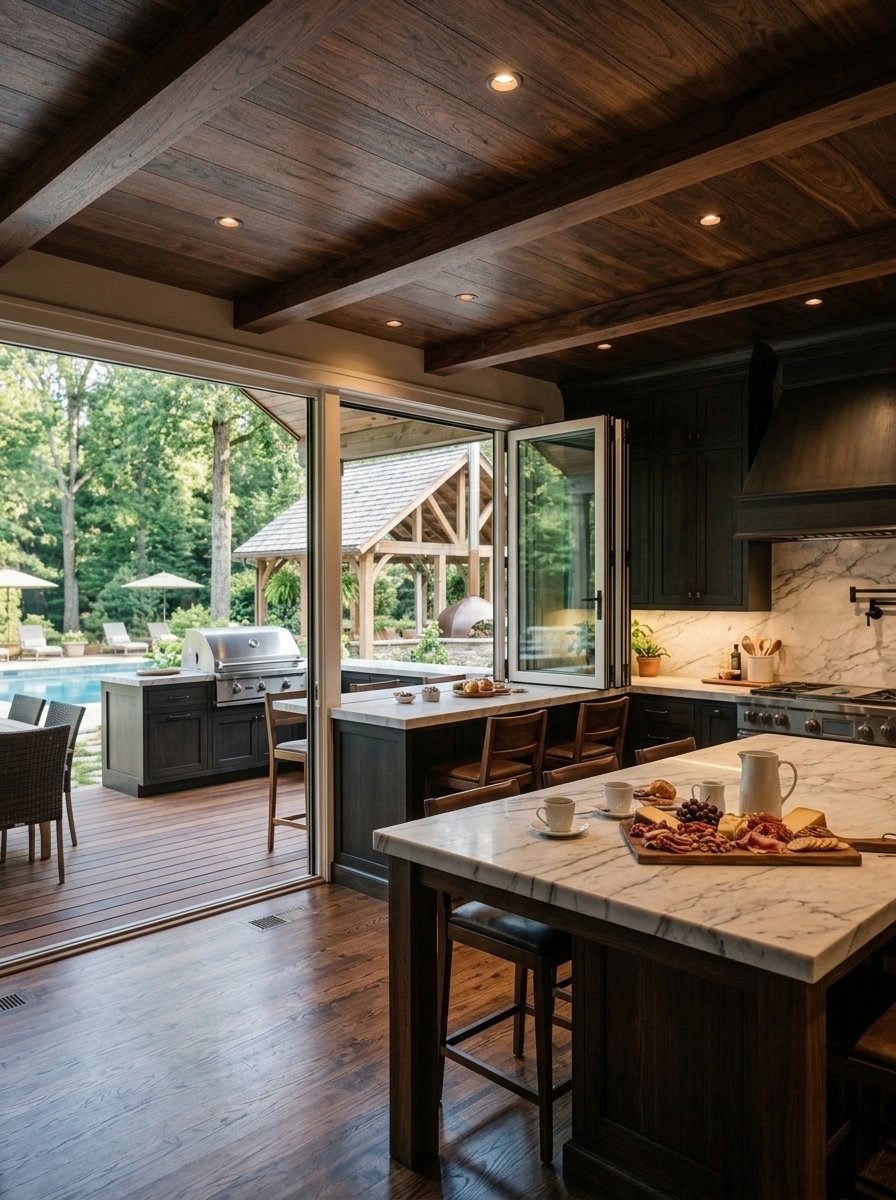
Sliding or bi-fold glass doors can connect your indoor kitchen straight to an outdoor cooking zone. The two spaces become one big entertaining area.
Match the flooring on both sides, or use a similar tone, to make the transition smooth. A pass-through window with a counter ledge is a clever detail.
Keep one clear path between the two kitchens. You will be carrying hot dishes, and a straight route makes it safer.
Covered Stone Kitchen
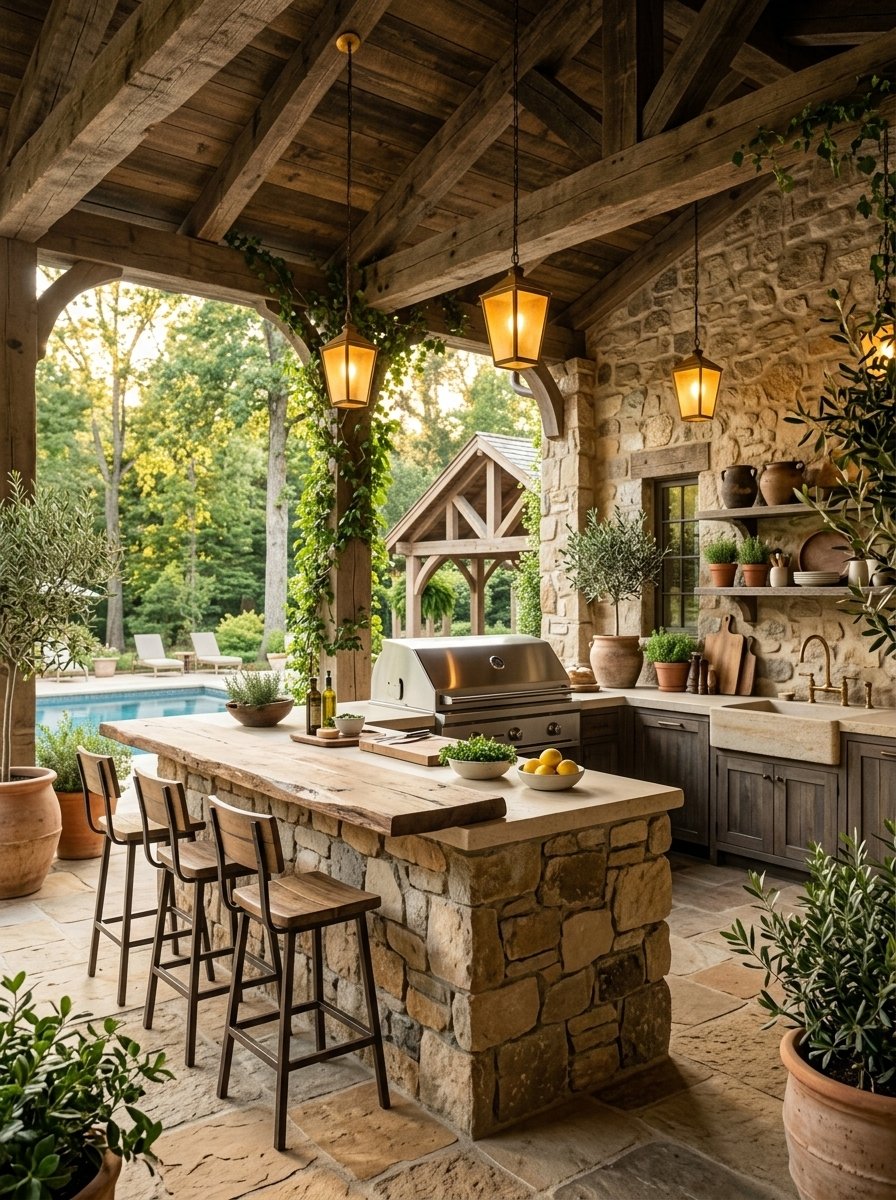
Natural stone, such as limestone, slate, or fieldstone, brings texture and permanence. It handles heat and weather better than many man-made options.
Sealed stone resists stains from sauces and oils. Use stone veneer on the island if full stone feels too costly.
Mix in a warm wood shelf or a wooden bar top. It breaks up the stone and keeps the space from feeling cold.
Covered Patio Kitchen
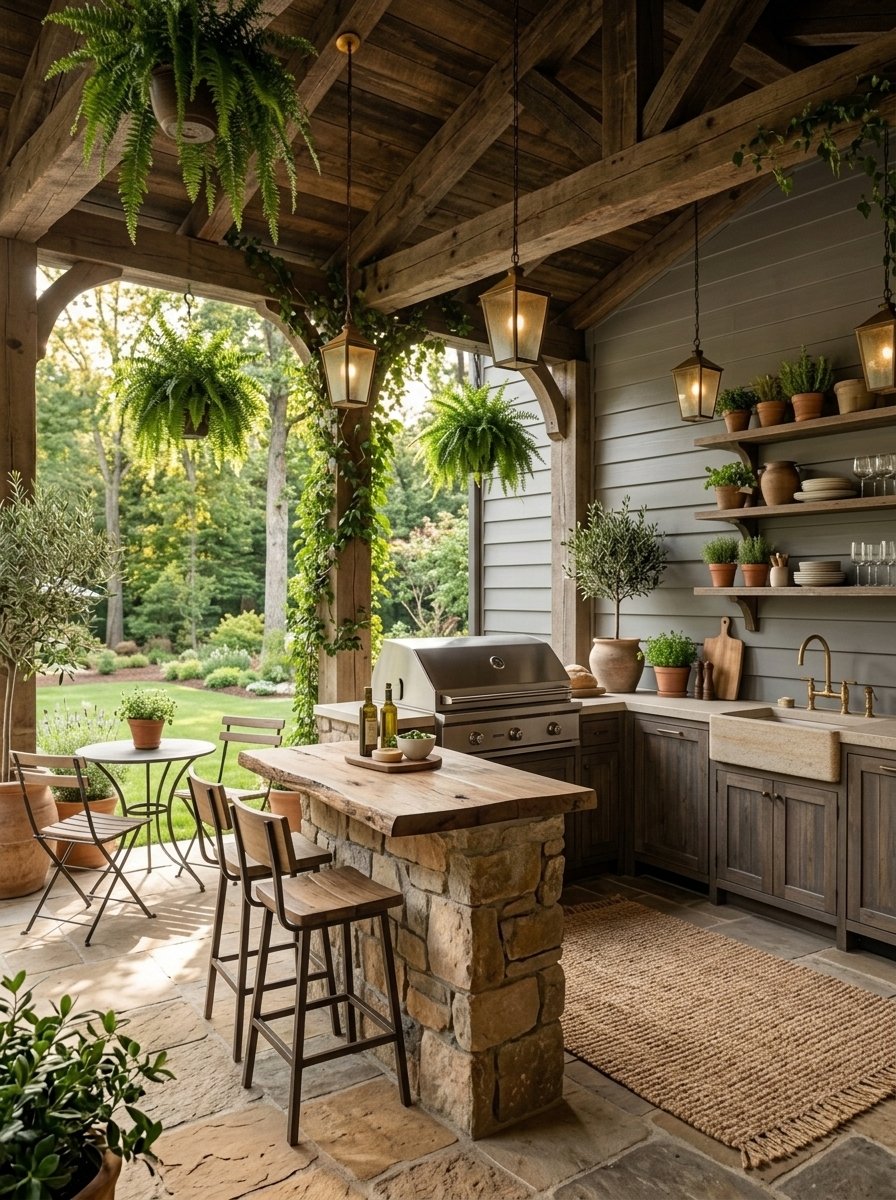
If you already have a covered patio, you are halfway done. Slide the kitchen against the house wall to share plumbing and power with minimal extra work. For styling the rest of the space, browse these small patio decor ideas.
Leave room for a clear walkway and a dining spot. Use a compact island if the patio is under 200 square feet.
A rug rated for outdoor use under the dining spot defines the zone and adds comfort underfoot.
Mixed Roofing
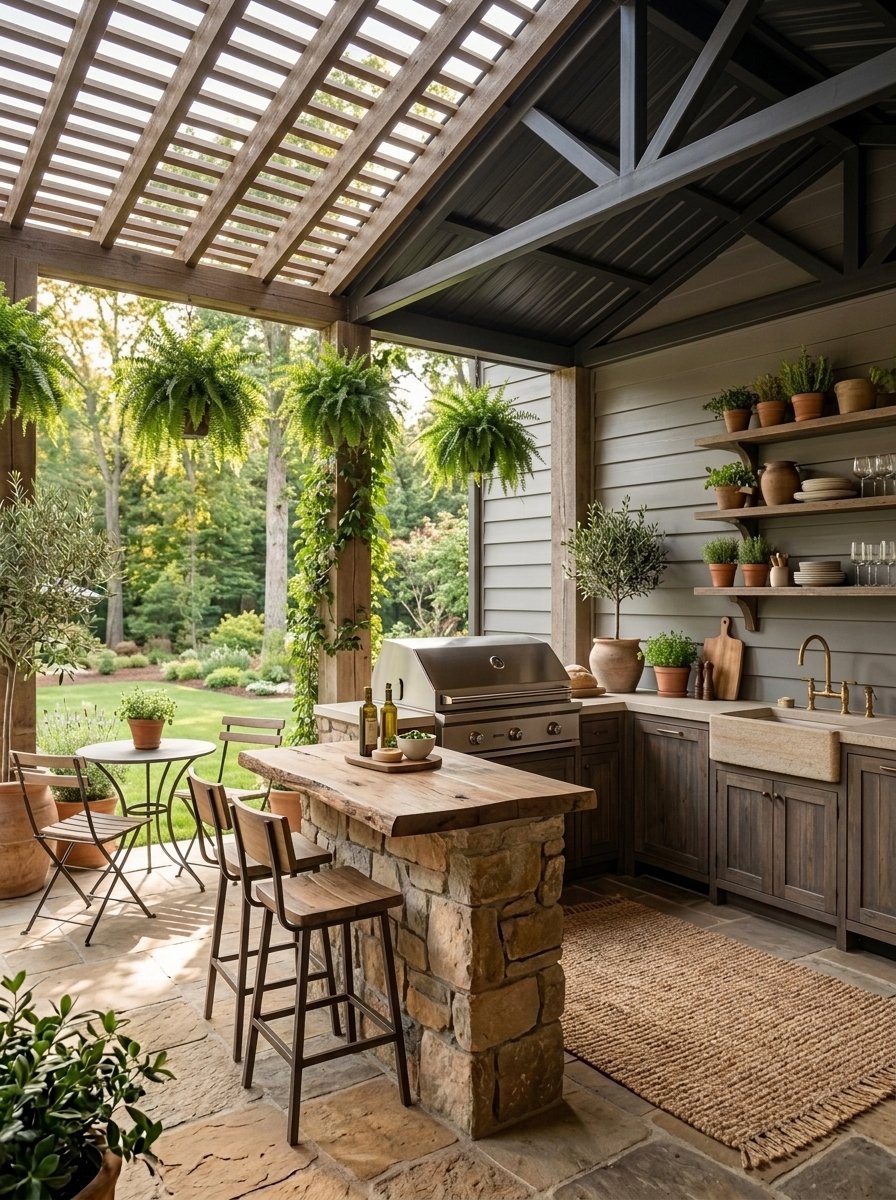
Combining roof types gives you the best of each. For example, a solid roof over the cooking zone with a slatted pergola over the dining area.
This approach manages heat, light, and rain in different places. It also adds visual interest from above and below.
Keep the colors consistent across both roofs. A shared stain or paint color ties everything together.
Outdoor Kitchen Pendants
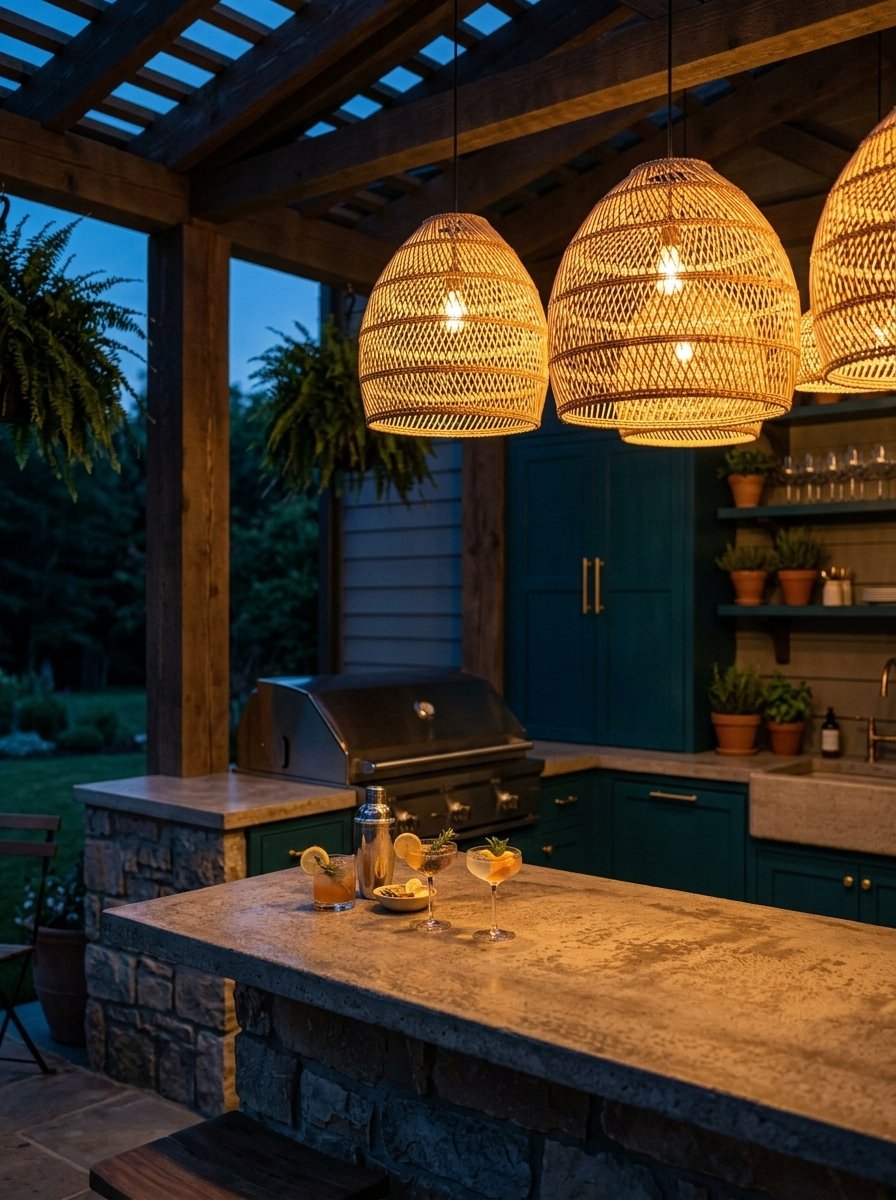
Lighting changes everything after sunset. Pendant lights above the counter add warmth and task light at the same time.
Choose fixtures rated for damp or wet locations. Woven rattan, galvanized metal, and glass globes are popular, and warm 2700K bulbs keep the mood inviting.
Hang pendants about 30 to 36 inches above the counter. Any higher and they lose their glow, any lower and they block views.
Covered Pool Patio Kitchen
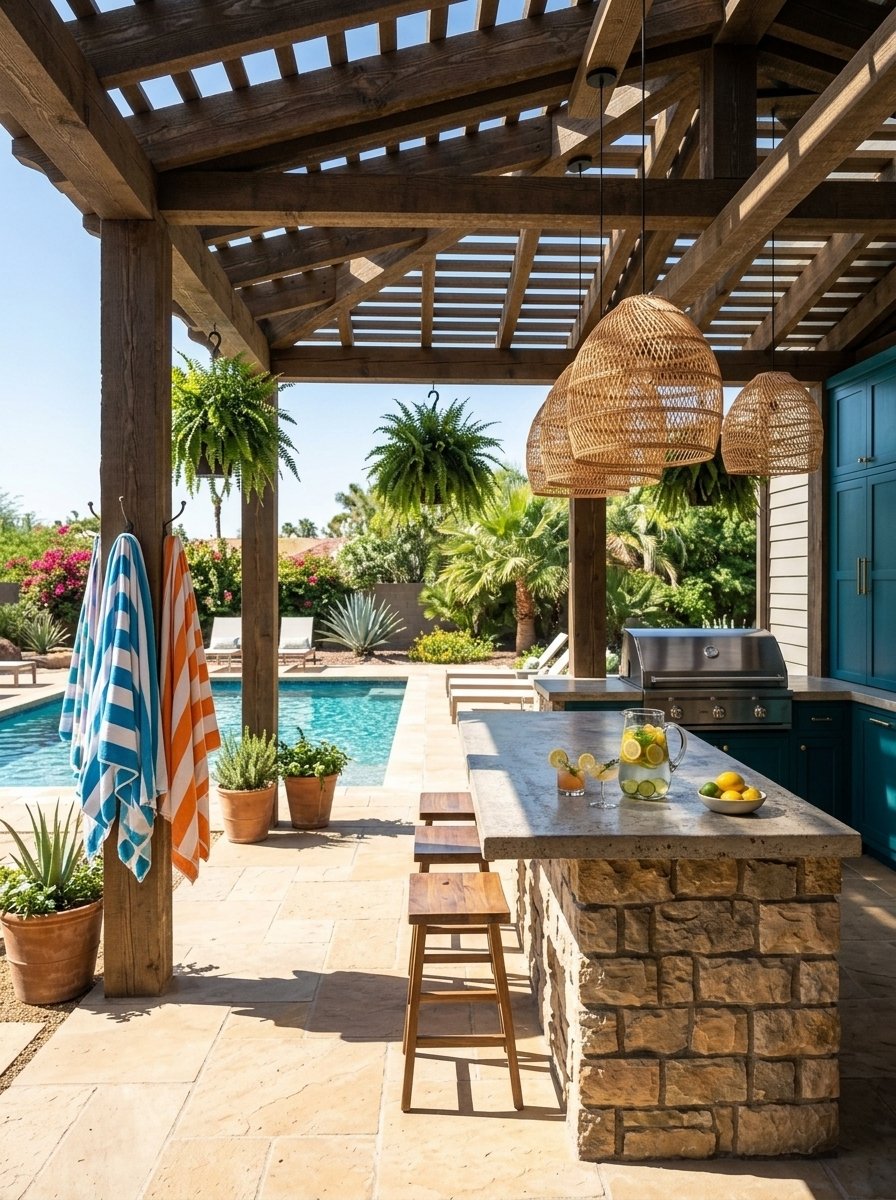
A kitchen near the pool keeps wet swimmers out of your house. A bar counter facing the water doubles as a snack spot.
Use slip-resistant flooring and keep electrical outlets protected by GFCI. Stainless steel near chlorinated or salt water should be a marine grade such as 316.
Add a towel hook and a small covered bin near the entry. It keeps wet footprints and trash away from the cooking zone.
Cabana Kitchenette
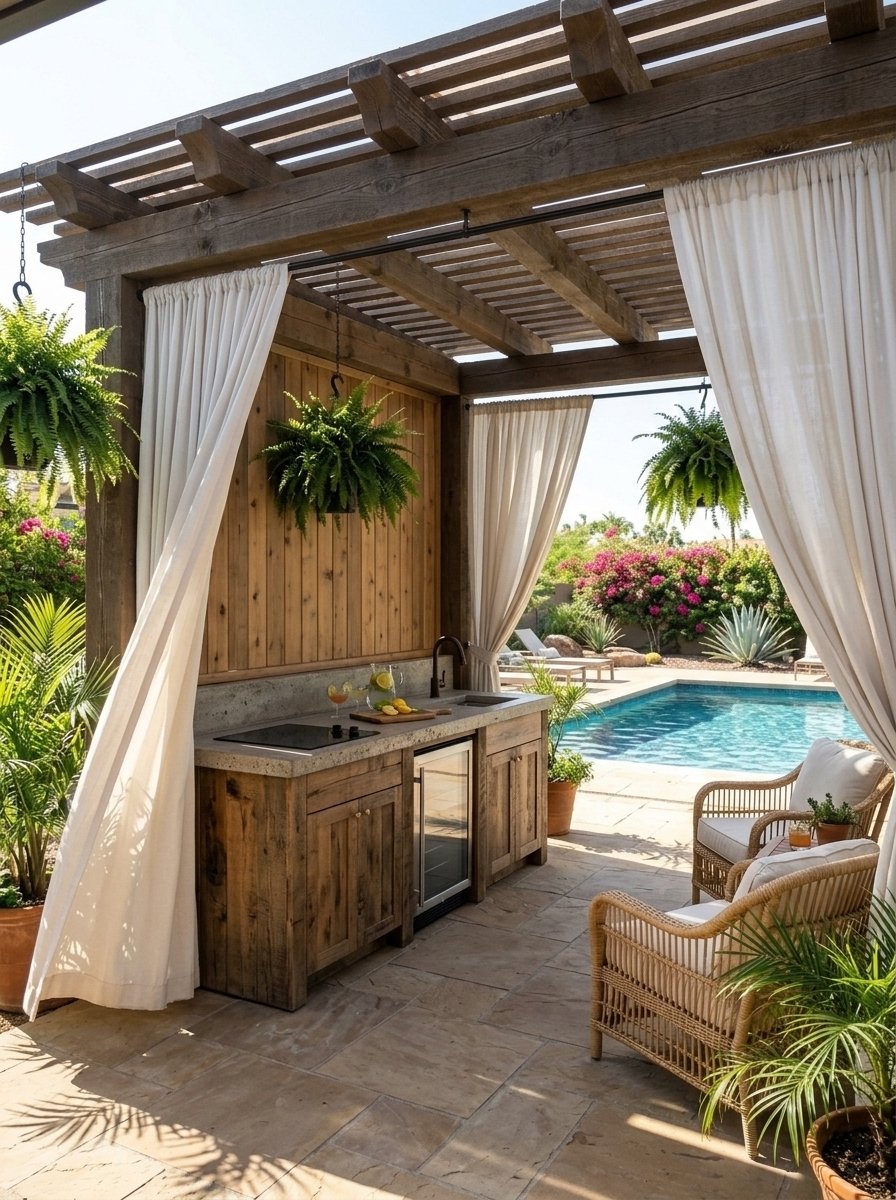
A small cabana can hold a mini fridge, sink, and a two-burner cooktop. It is ideal for smaller yards or poolside use.
Curtains on the sides give shade and privacy. A fabric canopy keeps the budget down while still looking resort-like.
Choose outdoor fabrics labeled as fade and mildew resistant. Regular fabrics fall apart quickly in sun and humidity.
Outdoor Kitchen Fireplace
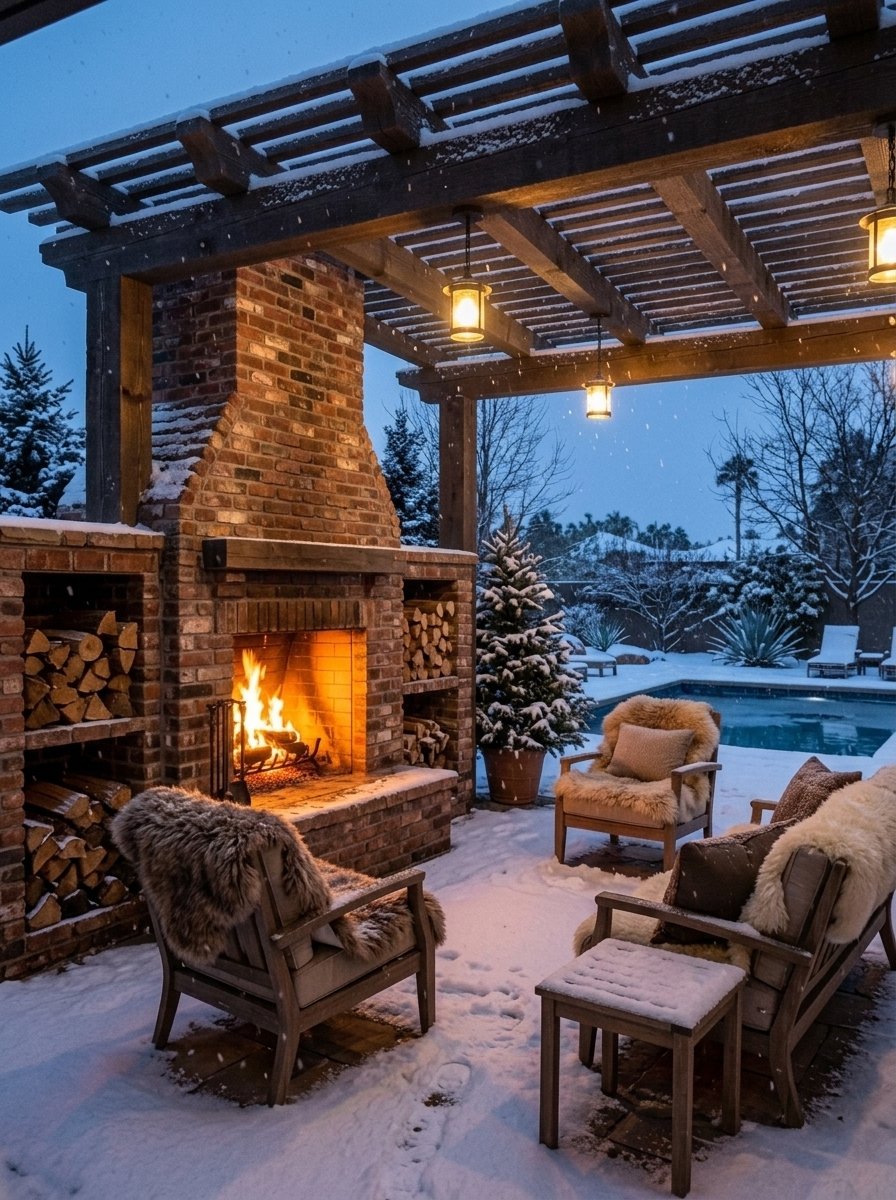
While a covered kitchen fireplace sits under a roof, this version often stands as a feature wall at the edge of the cooking zone. It frames the space and adds a gathering point.
Brick, stucco, and concrete all work. Add built-in niches for firewood to keep the design tidy.
Face the seating toward the fire and away from the grill. Guests get warmth, and the cook keeps a clear working area.
Covered Outdoor Grill Nook
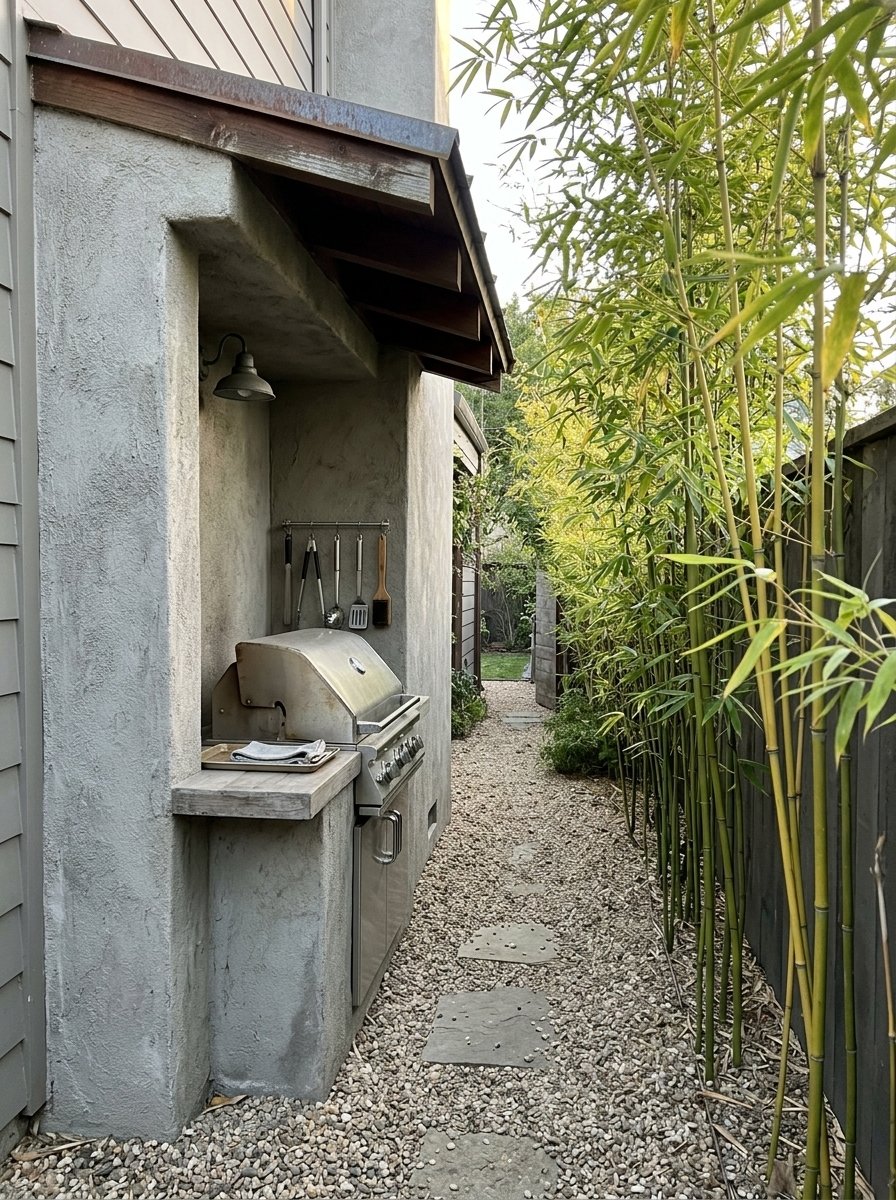
A grill nook is the smallest idea on this list and one of the smartest. Recess the grill into a niche with a short roof overhang, and you get protection with a tiny footprint.
Add a side shelf, a few hooks, and a task light. It works well on narrow side yards and townhome patios.
If space is tight, pick a grill with a fold-down side shelf. You get extra prep room only when you need it.
Modern Flat-Roof Kitchen
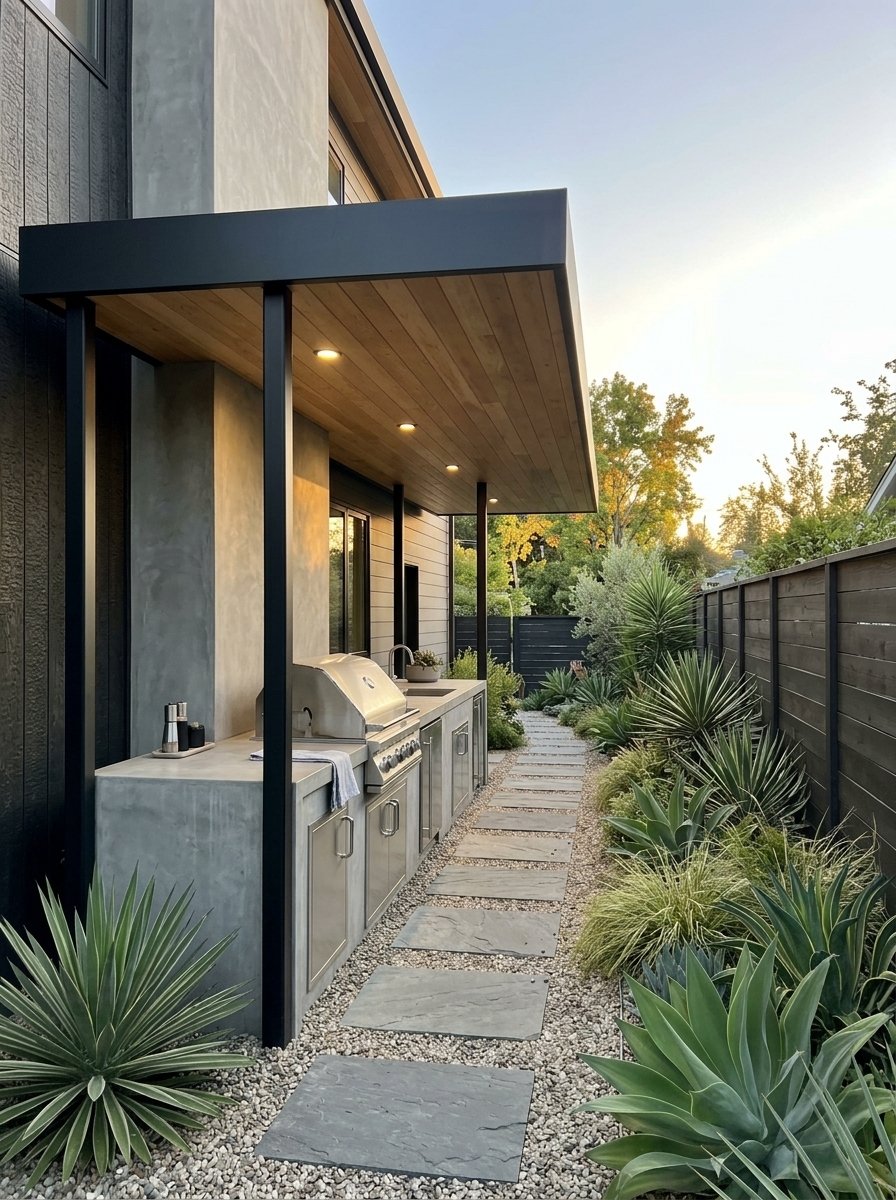
A flat or low-slope roof gives a sleek, architectural look that pairs well with contemporary homes. Think matte black steel posts, a slim fascia, and a long linear island.
Keep a gentle slope toward one side, even if it looks flat, so rain drains away. Recessed downlights in the ceiling keep the lines clean and the mood calm.
Farmhouse Covered Kitchen
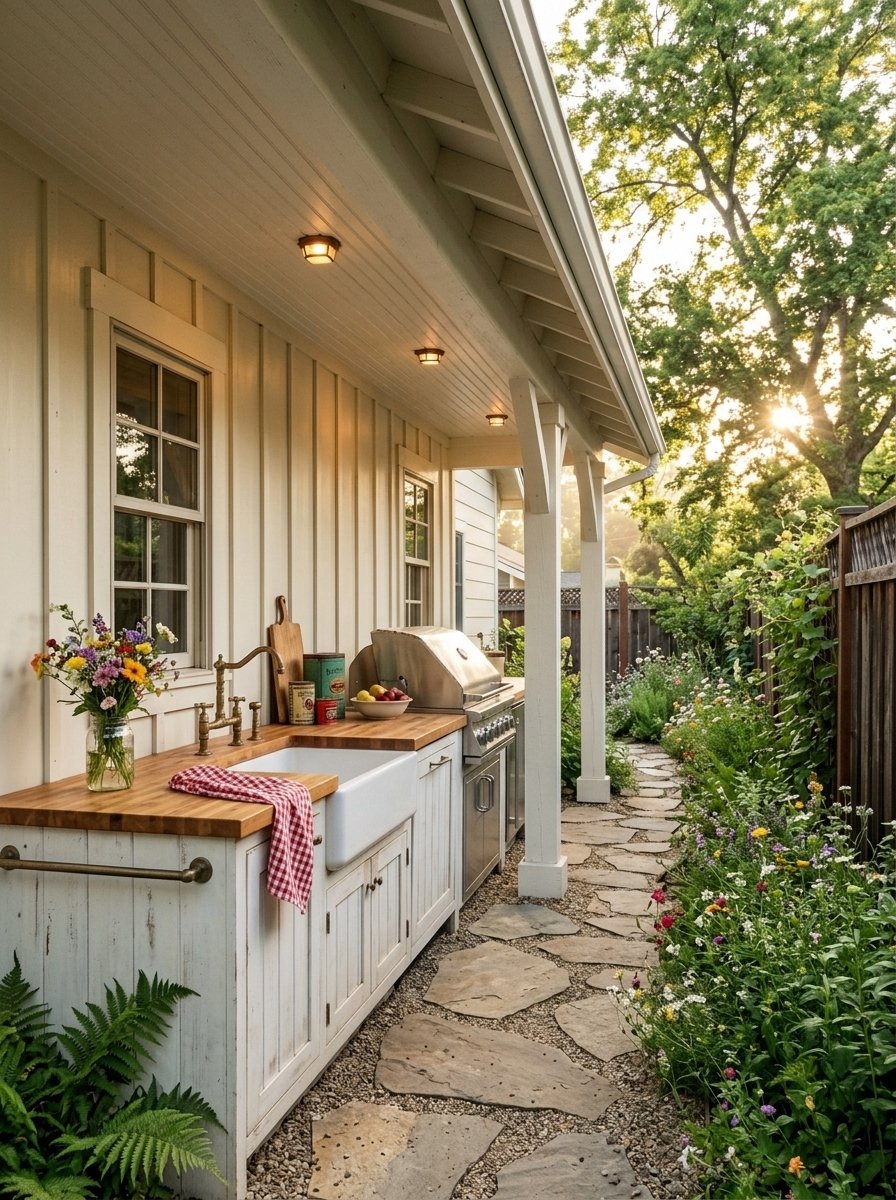
A gabled roof, white-painted posts, and a butcher-block counter create a warm, welcoming farmhouse feel. Add a deep apron-front sink and open shelves for a lived-in charm.
Beadboard on the ceiling is a classic detail. Use a rust-resistant finish on any metal accents, such as lantern lights or cabinet pulls.
Gazebo Kitchen
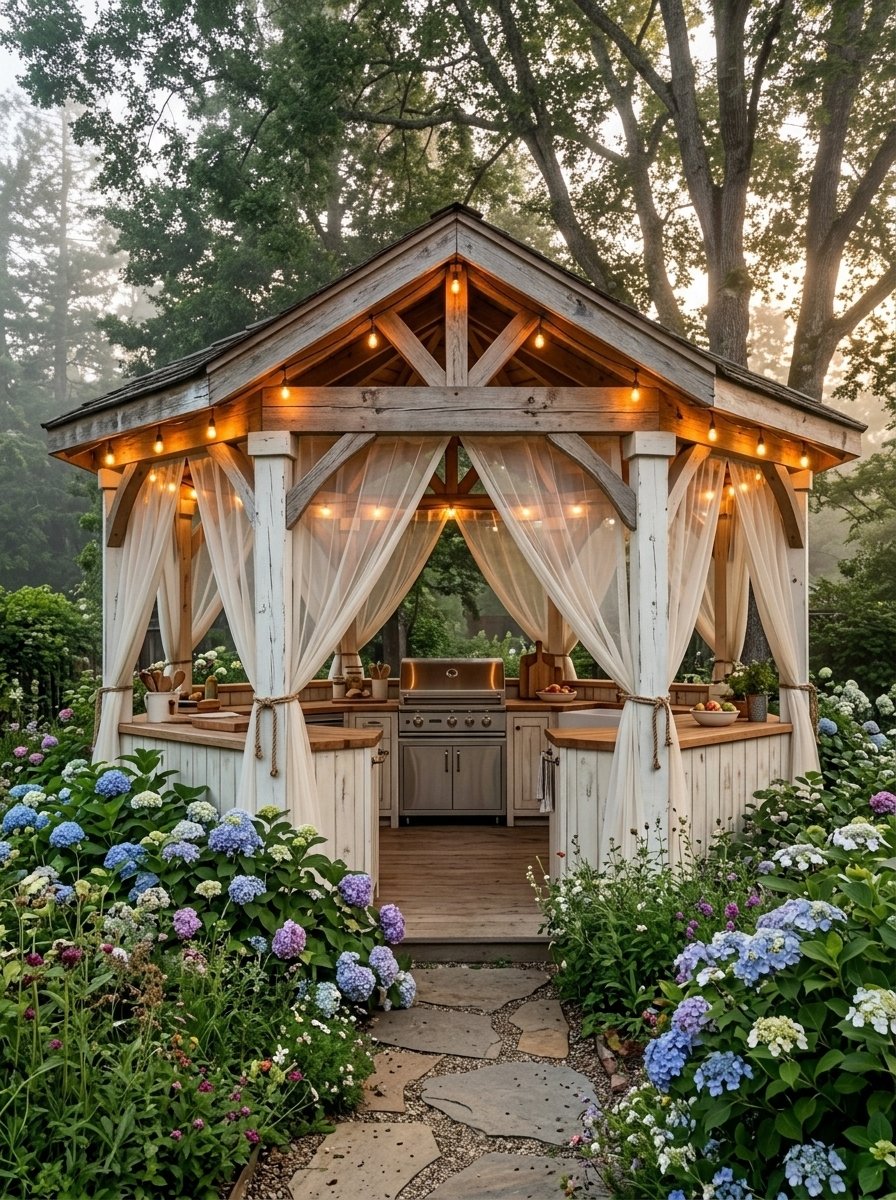
A gazebo gives you a defined, almost room-like space in the middle of the yard. Its six or eight sides make it easy to wrap counters around the edge and leave the center open for guests.
Choose a model with a vented roof peak so heat and smoke can escape. Mosquito netting panels can turn it into a bug-free retreat on summer evenings.
Budget-Friendly Covered Outdoor Kitchen Ideas
If money is tight, start with a shade sail, a simple pergola, or an awning. These covered outdoor kitchen ideas cost less than a full roof and still protect your cooking zone from sun and light rain.
Small-Space Covered Outdoor Kitchen Ideas
Tiny patios and balconies work well with a grill nook, a cabana kitchenette, or a compact L-shape. Pick one covered outdoor kitchen idea that fits your footprint, then add vertical storage to save floor space.
Covered Outdoor Kitchen Ideas for Hot Climates
Heat changes your priorities. Choose vented roofs, reflective colors, and ceiling fans so your covered outdoor kitchen stays comfortable in July.
Ways to Cover an Outdoor Kitchen
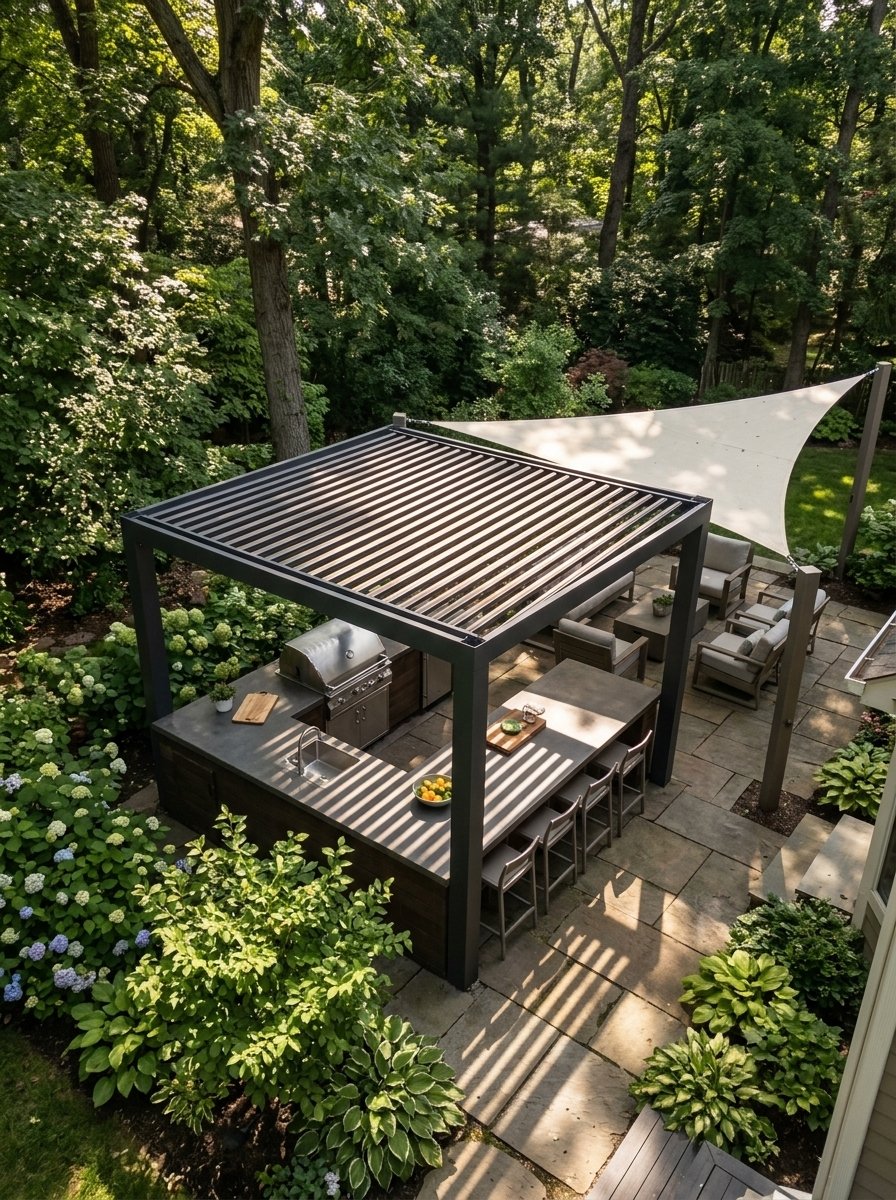
Choosing the cover is as important as choosing the layout when you plan covered outdoor kitchen ideas. Here is a quick comparison of the most common options.
| Cover type | Best for | Rain protection | Typical upkeep |
|---|---|---|---|
| Pergola (open slats) | Shade and style | Low | Stain or paint every few years |
| Louvered pergola | Adjustable control | High when closed | Clean tracks and motor |
| Solid roof | Year-round use | High | Gutters and shingle checks |
| Retractable awning | Flexible shade | Medium | Clean fabric, check arms |
| Pavilion | Standalone kitchens | High | Seal wood, inspect posts |
| Shade sail | Budget shade | Low to medium | Retension each season |
| Screened porch | Bug-free dining | High | Replace torn screens |
Quick tip: Match the cover to your climate. Rainy regions need solid or louvered tops. Hot, dry areas can do well with slatted shade.
Ventilation matters
Grills produce smoke, heat, and grease vapor. Keep at least one side open or install a vent hood rated for outdoor use. Never use a gas grill in an enclosed space without proper ventilation, since carbon monoxide can build up quickly.
Lighting, power, and plumbing
Plan these before you pour concrete or hang a roof. Run outdoor-rated electrical lines with GFCI protection, and place outlets at counter height. If you want a sink, locate it near an existing water line to keep costs down. A licensed electrician and plumber can confirm everything meets local code.
Materials worth considering
- Cedar or redwood: Naturally resistant to rot, great for pergolas.
- Aluminum: Lightweight and rust-free, suited to modern builds.
- Metal roofing: Sheds rain and snow fast.
- Polycarbonate panels: Let light through while blocking rain.
- Stone and brick: Strong, heat tolerant, and long-lasting.
Cost and effort at a glance
Prices swing a lot by region and material, so this table compares options in relative terms instead of exact dollars.
| Cover type | Relative cost | DIY friendliness | Wind and storm handling |
|---|---|---|---|
| Shade sail | Low | High | Needs strong anchors |
| Open pergola | Low to medium | High | Good with deep footings |
| Retractable awning | Medium | Medium | Retract in high wind |
| Louvered pergola | Medium to high | Low | Strong when closed |
| Pavilion or gazebo | Medium to high | Medium | Strong with proper posts |
| Full solid roof | High | Low | Very strong |
Common mistakes to avoid
- Skipping ventilation. Smoke and heat linger under a low roof with no airflow.
- Ignoring the sun path. A cover on the wrong side leaves you in the glare at dinnertime.
- Using indoor materials. Standard cabinets swell and peel outdoors.
- Forgetting permits. Unpermitted roofs and gas lines can cause trouble at resale.
- Making the walkways too tight. Leave at least three feet of clear space around the cooking zone.
Quick planning checklist
- Measure your space and mark the layout with tape or chalk.
- Track the sun at morning, noon, and evening.
- Choose your cover type and roof material.
- Confirm permits and clearances with your local building office.
- Plan electrical, gas, and water lines before building.
- Pick weatherproof cabinets, counters, and appliances.
- Add layered lighting, from task lights to soft ambient glow.
Should you cover an outdoor kitchen?
Yes, in most cases. A cover protects your appliances, cabinets, and countertops from rain, UV rays, and falling debris. It also extends your usable season and keeps you comfortable while cooking.
The main downsides are cost and the need for good airflow. Expect a permanent roof to cost more than a pergola or awning, and check local permit rules before building. Many homeowners find the added comfort and protection pay off quickly.
Pros of covering your kitchen:
- Longer cooking season and fewer rainouts
- Shade that keeps you and your guests comfortable
- Better protection for appliances and cabinets
- A defined, inviting entertaining zone
Cons to consider:
- Higher upfront cost than an open patio
- Possible permit and inspection requirements
- Extra planning for smoke and ventilation
For most households that cook outdoors more than a few times a month, the benefits clearly outweigh the drawbacks. In short, covered outdoor kitchen ideas pay off for anyone who cooks outside often.
How do you protect an outdoor kitchen in winter?
In cold regions, a little prep goes a long way. Follow these steps before the first freeze:
- Shut off and drain water lines. Frozen pipes can crack. Blow out the lines if you can.
- Disconnect gas and store portable tanks. Keep propane cylinders upright and outside living spaces.
- Clean the grill and appliances. Grease and food residue attract pests.
- Cover the equipment. Use fitted, breathable covers, not plastic tarps that trap moisture.
- Empty cabinets of food. Rodents will find anything left behind.
- Clear snow from the roof. Heavy loads can stress thin structures.
- Seal stone and wood. A fresh coat before winter reduces moisture damage.
If you live in a mild climate, a weekly wipe-down and good covers are usually enough.
Can you DIY an outdoor kitchen awning?
Yes, a basic fixed awning is a manageable weekend project for someone with solid tool skills. Retractable and motorized models are better left to installers or installed from a kit.
Here is a simple path if you go the DIY route:
- Measure the space and confirm local permit rules.
- Locate wall studs or a ledger board for secure anchoring.
- Choose a slope of at least a few inches per foot so water drains.
- Use weather-rated lumber or aluminum framing.
- Attach UV-rated canvas or metal roofing panels.
- Seal all edges and fasteners to prevent leaks.
Safety note: Wind can lift a poorly anchored awning like a sail. When in doubt, hire a licensed contractor to review your plan.
Final Thoughts
The best covered outdoor kitchen ideas start with how you cook, how many people you host, and what the weather does in your area. Then pick the cover and layout that match. If you want to style the rest of your yard, take a look at these outdoor living room ideas.
You do not need a huge budget. A grill nook with a small roof beats a big open patio you never use. Pick the idea you like best, sketch it out, and start small. Your next cookout will thank you.
FAQs
What is the best roof for an outdoor kitchen?
A solid or louvered roof gives the best protection. Choose metal, shingle, or an adjustable louvered pergola depending on your climate and budget.
How much does a covered outdoor kitchen cost?
Costs vary widely, from a few thousand dollars for a basic setup to well over $20,000 for a custom build. Materials, appliances, and labor drive most of the price.
Do I need a permit to build a covered outdoor kitchen?
Often yes, especially for permanent roofs, gas lines, and electrical work. Call your local building department before you start.
How far should a grill be from a roof or wall?
Follow the manufacturer’s clearance guide. Built-in units usually need extra space from combustible materials, so confirm before you build.
Can I put a grill under a pergola?
Yes, if there is enough clearance and ventilation. Use a noncombustible panel overhead for added safety.
What countertop material works best outdoors?
Granite, concrete, and sealed porcelain slabs handle weather and heat well. Avoid soft or porous materials that stain easily.
How do I keep a covered outdoor kitchen from feeling dark?
Add skylight panels, light-colored finishes, and layered lighting. Keep one or two sides open to let daylight in.
Are covered outdoor kitchens a good investment?
They can add enjoyment and some resale appeal, especially in warm regions. Returns vary, so treat it as a lifestyle upgrade first.