A farmhouse living room feels like a deep breath. It is warm, grounded, and easy to live in. That is why the style has stayed popular for years while other trends came and went.
The look comes down to a few simple ideas: natural materials, soft colors, comfortable seating, and a little bit of character. You do not need a barn or a country property to pull it off. A city apartment or a suburban home can carry the style just as well.
In this guide, you will find 30 farmhouse living room ideas, from soft neutrals to bold modern twists. You will also find design tips, a quick comparison table, and answers to common questions. Use it to plan a full makeover or just pick up a few small updates.
Get Inspired By These Farmhouse Living Rooms
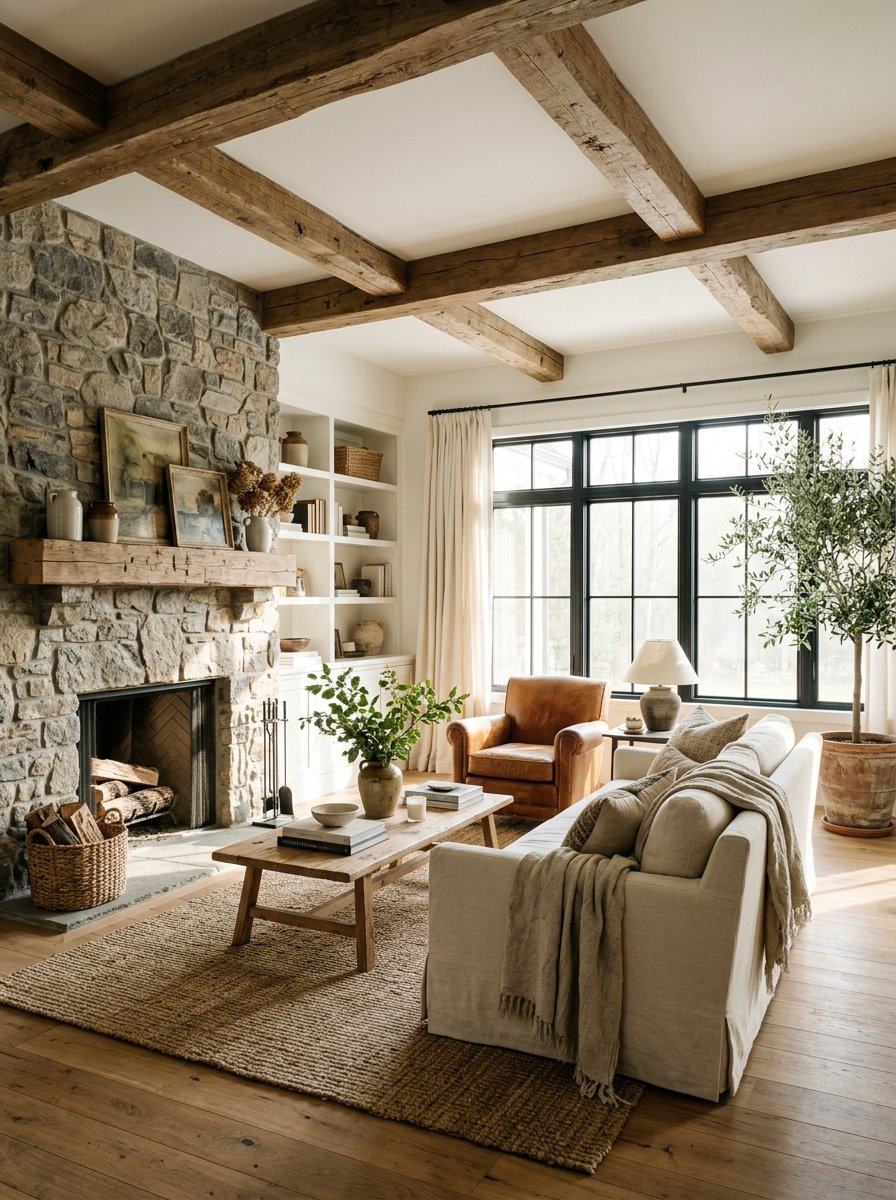
Before the ideas, here is what makes a living room read as “farmhouse.” Most rooms in this style share these features:
- Natural materials: wood, stone, linen, cotton, wool, and iron
- A soft color base: white, cream, greige, and warm gray
- Comfort first: deep sofas, layered throws, and plush rugs
- Honest details: shiplap, beams, and mantels that look built to last
- Collected decor: a few meaningful pieces instead of a crowded shelf
Keep these five points in mind as you scroll. Every idea below uses at least a few of them.
Quick Design Guide Before You Start
Exposed Beams, Please
Beams add instant architecture. They draw the eye up and make a ceiling feel purposeful. If your home already has them, keep the wood tone visible and paint the ceiling between them a soft white.
No beams? Faux box beams made from lightweight wood or high-density foam are a budget-friendly fix. Stain them to match your mantel or coffee table so the room feels planned, not patched.
How To Mix Modern Farmhouse With Other Styles
Farmhouse blends well with almost any style if you keep one rule: choose a dominant look and let the second style support it. A good split is about 70 percent farmhouse and 30 percent something else.
- With contemporary: add clean-lined sofas and streamlined lighting
- With coastal: bring in whitewashed wood, blue accents, and woven textures
- With midcentury: use tapered legs, walnut tones, and sculptural lamps
- With traditional: keep classic molding and add antique-style rugs
Repeat one color or material in both styles so the mix feels connected.
Farmhouse Style Elements At A Glance
| Element | Classic Farmhouse | Modern Farmhouse |
|---|---|---|
| Color palette | Cream, sage, muted blue | White, black, warm gray |
| Wood tone | Aged, distressed | Light oak or clean walnut |
| Metal finish | Oil-rubbed bronze | Matte black, brushed brass |
| Furniture lines | Rounded, vintage | Straight, simple |
| Decor feel | Collected, nostalgic | Edited, minimal |
30 Farmhouse Living Room Ideas
1. Soft-Neutral Sanctuary
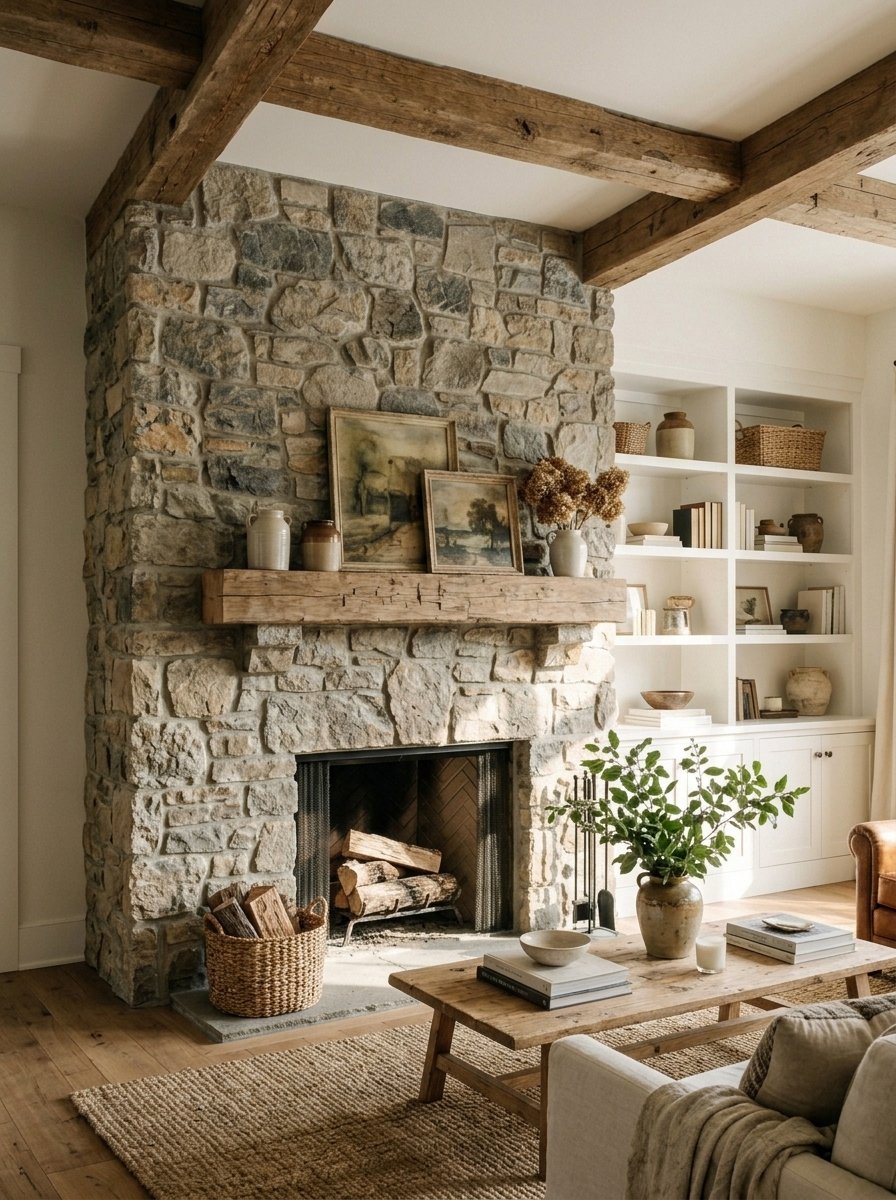
Think cream walls, an oatmeal sofa, and a jute rug. When every color sits close together, the room feels quiet and wide open. It is a good fit for small spaces because nothing competes for attention.
Try this: Use at least three textures, such as linen, wool, and rattan, so the neutral palette does not fall flat.
2. Warm Leather & Clean Lines
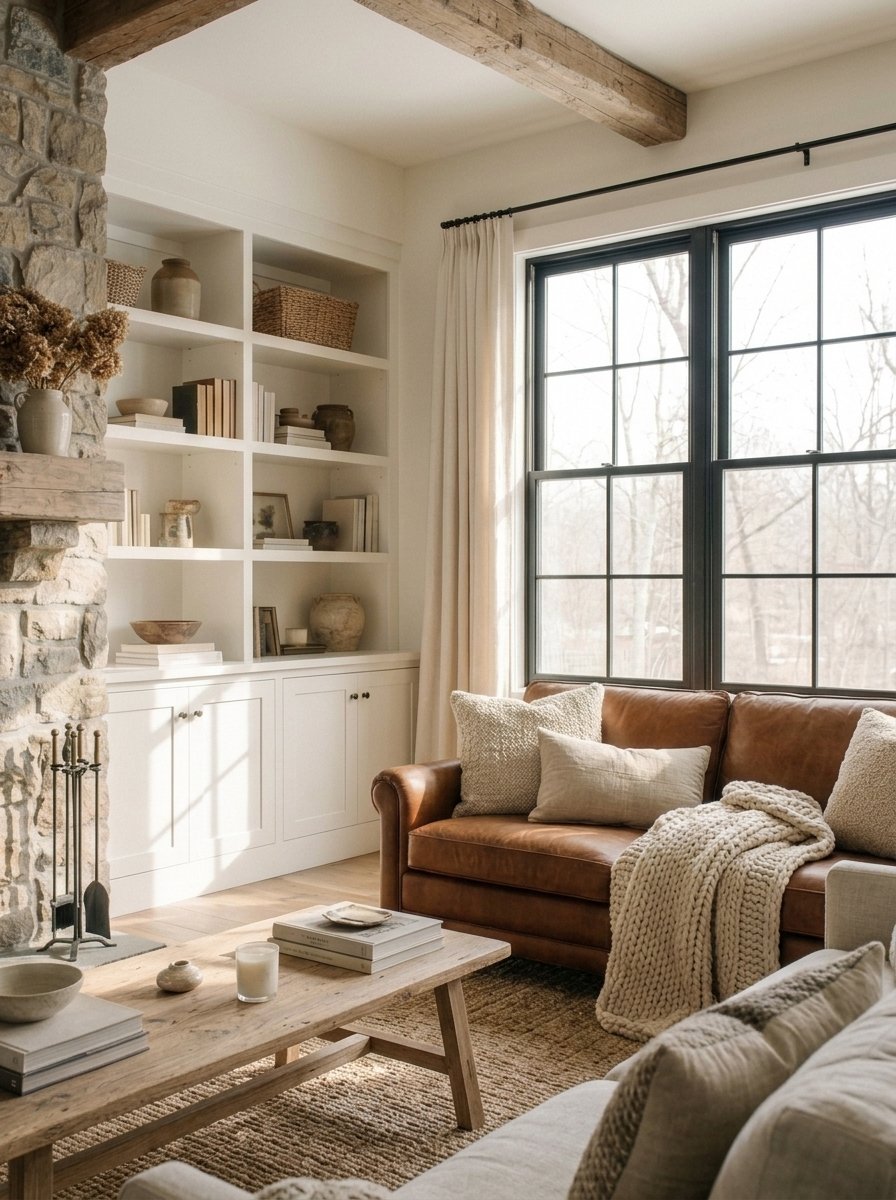
A cognac leather sofa brings richness to a pale farmhouse room. Pair it with simple wood tables and a white wall to keep the look fresh instead of heavy. Leather also ages well, which suits the style’s long-lasting spirit.
Try this: Soften the leather with a chunky knit throw and two cream pillows.
3. Classic Farmhouse, Refined

This version keeps the familiar pieces, like a slipcovered sofa and a wood mantel, but trims the clutter. Fewer accessories and more breathing room make the room feel polished without losing its charm.
Try this: Limit your mantel to three items: one tall, one medium, and one low.
4. Stone, Texture, and Height
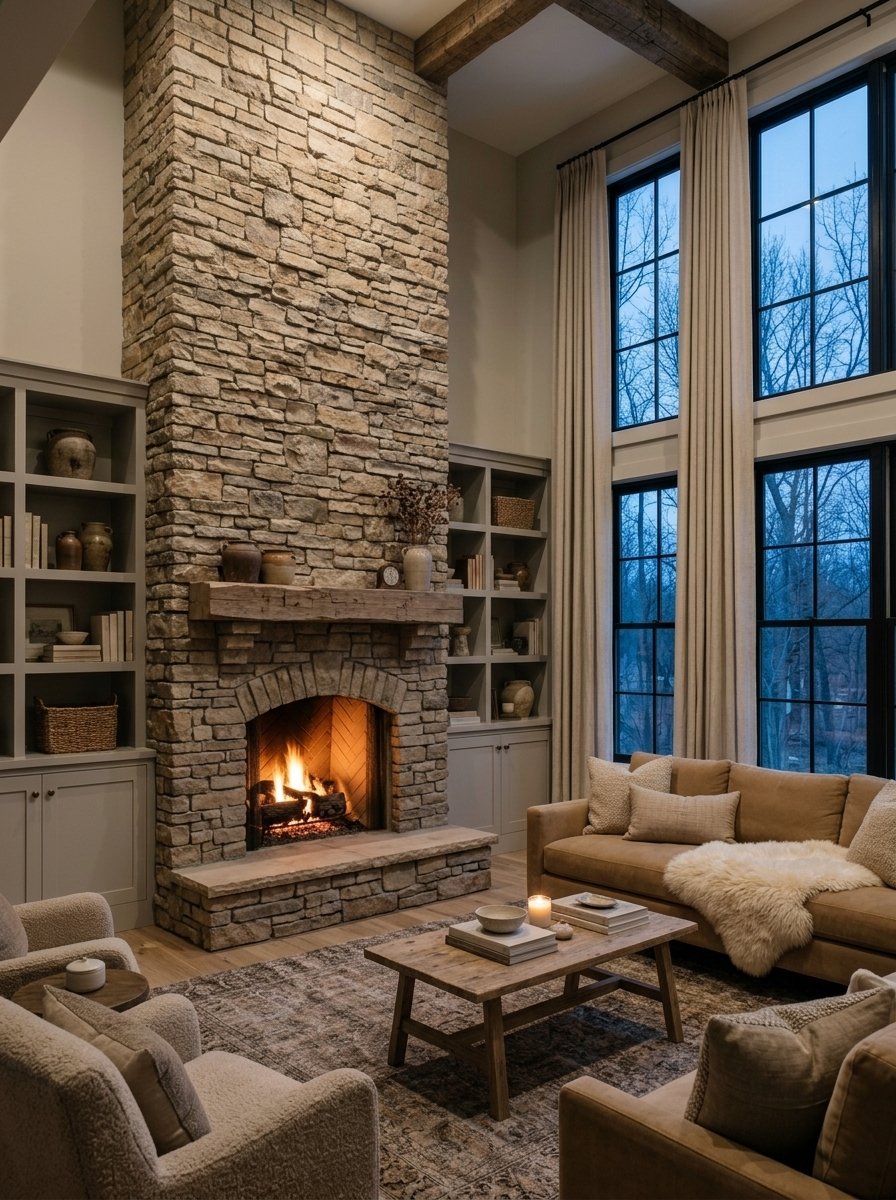
A floor-to-ceiling stone fireplace turns the whole wall into a focal point. The rough surface adds depth, and the height makes the room feel taller. Keep the furniture simple so the stone leads.
Try this: Choose a mantel in a warm wood tone to bridge the stone and the rest of the room.
5. Collected & Cozy Layers
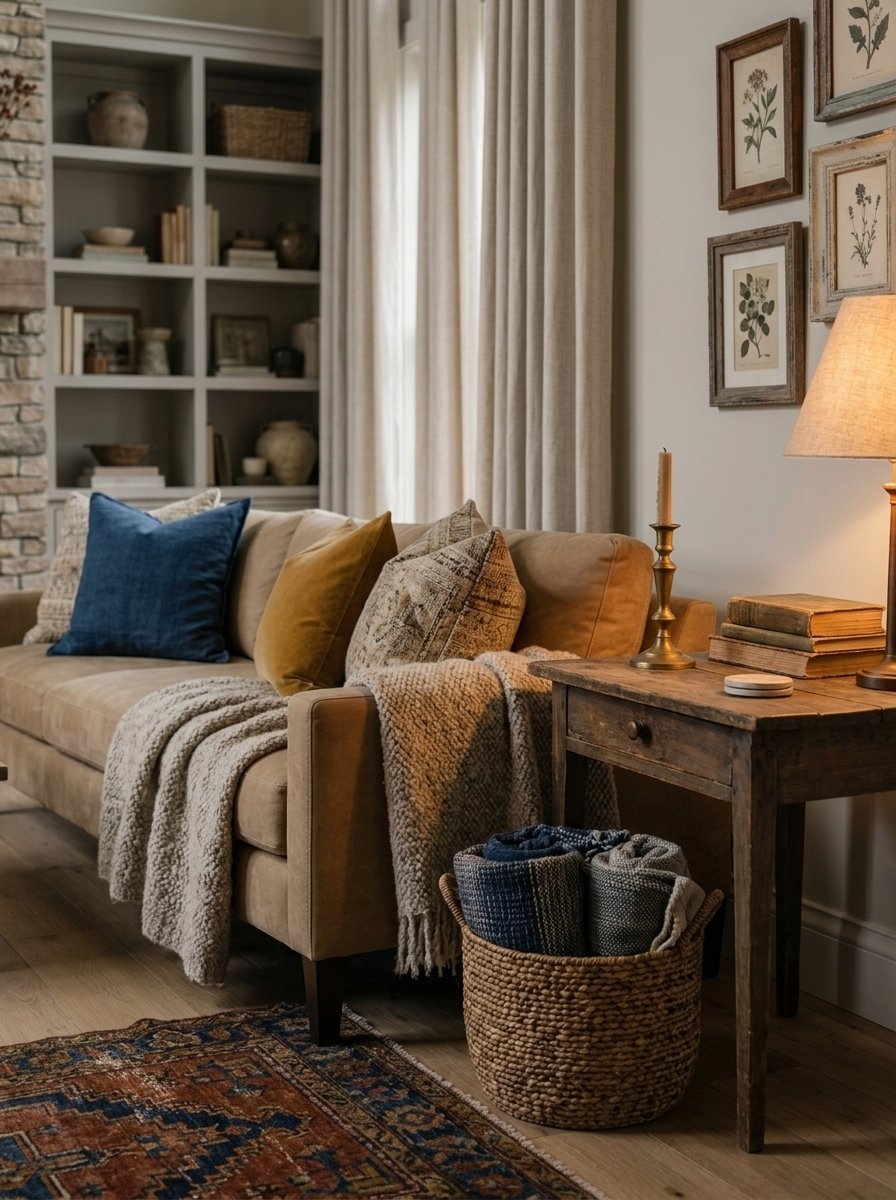
This room looks like it grew over time. Mixed pillows, a vintage rug, a woven basket, and a few framed pieces all sit together without matching exactly. The trick is a shared color thread running through everything.
Try this: Pick two accent colors and repeat each at least three times around the room.
6. Bright, Open Farmhouse Flow

Large windows, white walls, and a light floor let natural light move freely. Furniture is placed to keep pathways clear, so the room feels connected to the spaces around it.
Try this: Choose sheer linen curtains and hang them close to the ceiling to stretch the window height.
7. Neutral Done the Right Way

Neutral rooms fail when everything is the same shade and the same texture. Here, the fix is contrast in tone: ivory next to taupe next to charcoal, plus matte and slightly glossy finishes.
Try this: Add one dark element, such as a black frame or iron lamp, to anchor the lighter pieces.
8. Farmhouse with a Pattern Play
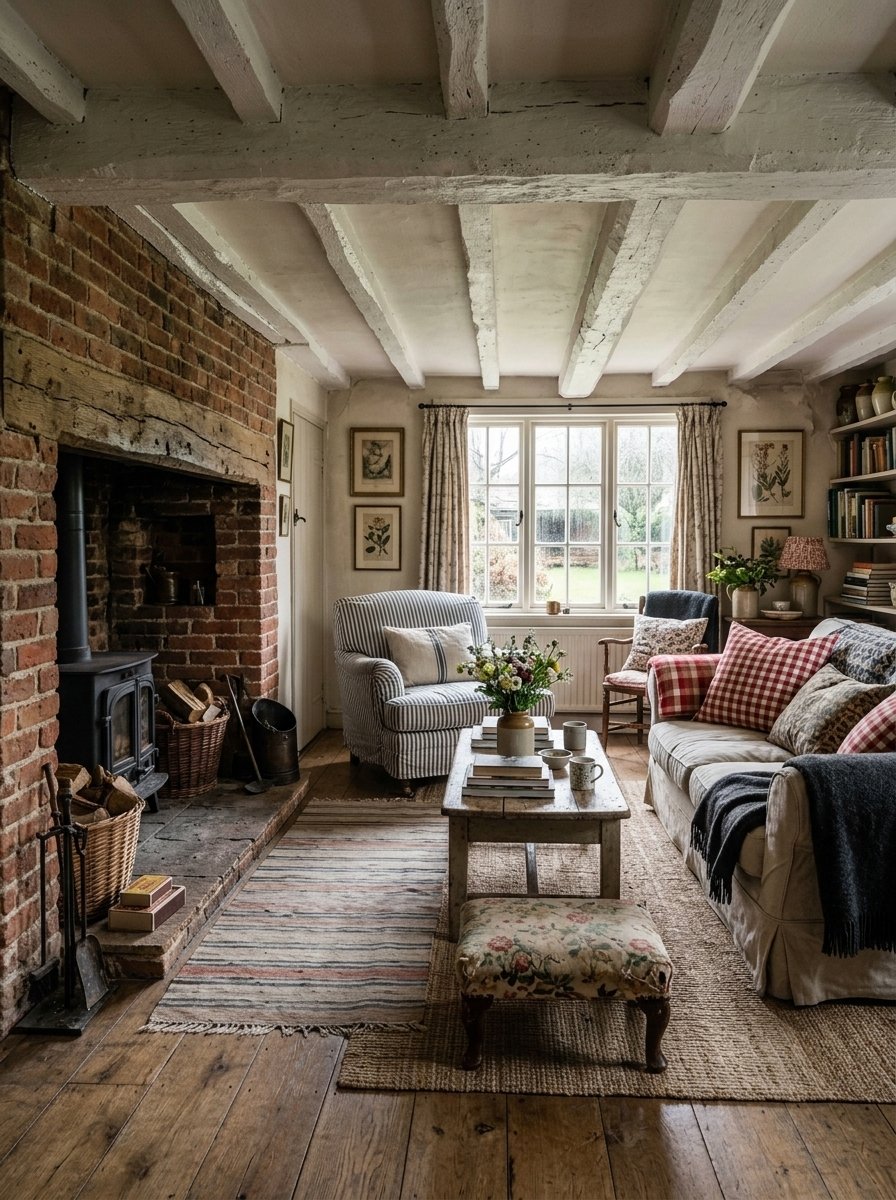
Pattern keeps a farmhouse room from feeling too plain. Buffalo check, ticking stripes, and small florals all fit the style. Vary the scale: one large pattern, one medium, and one small.
Try this: Keep the sofa solid and put the pattern in pillows, a chair, or the rug.
9. Polished Rustic Balance
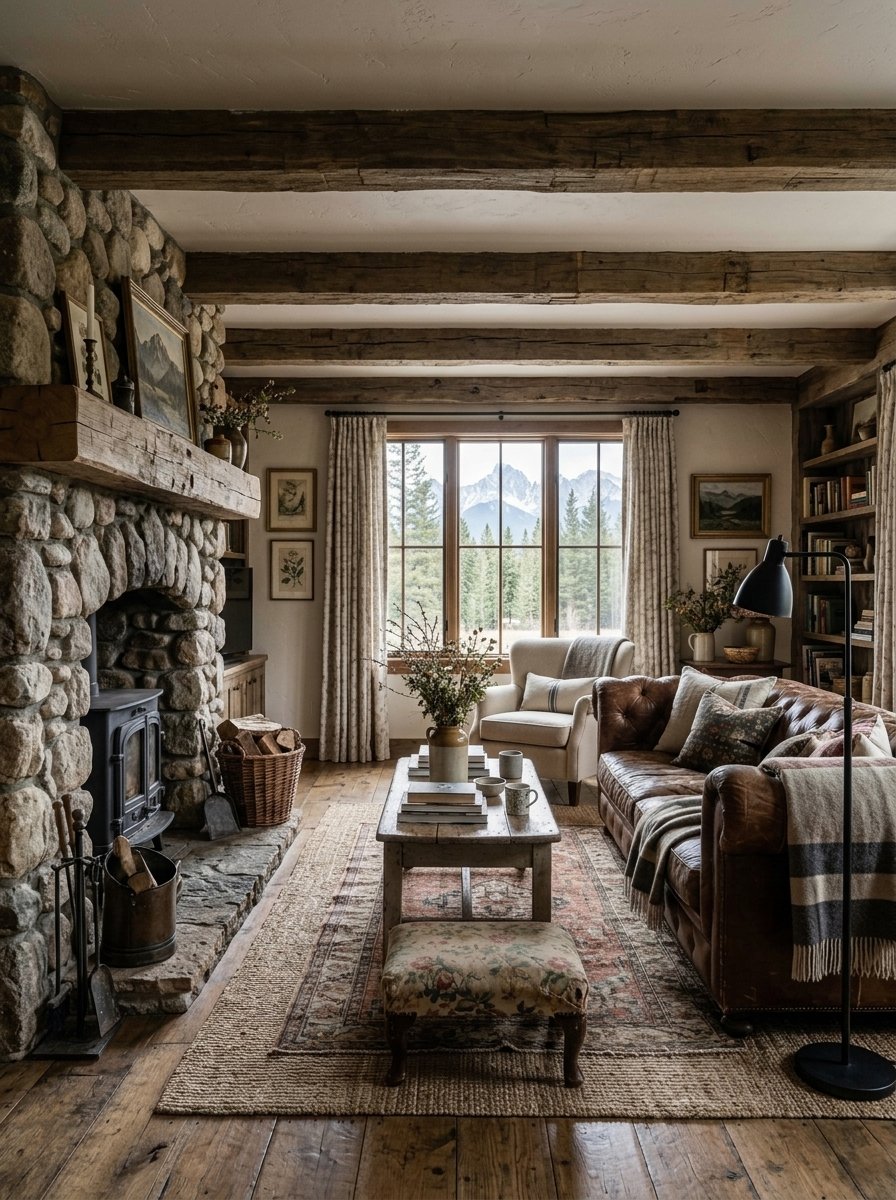
Raw wood and clean upholstery work well together when the proportions are right. A reclaimed coffee table can sit next to a tailored sofa and look intentional. The polish comes from tidy edges and matching metal finishes.
Try this: Stick to one metal finish throughout, such as aged brass or matte black.
10. Architectural Farmhouse Statement
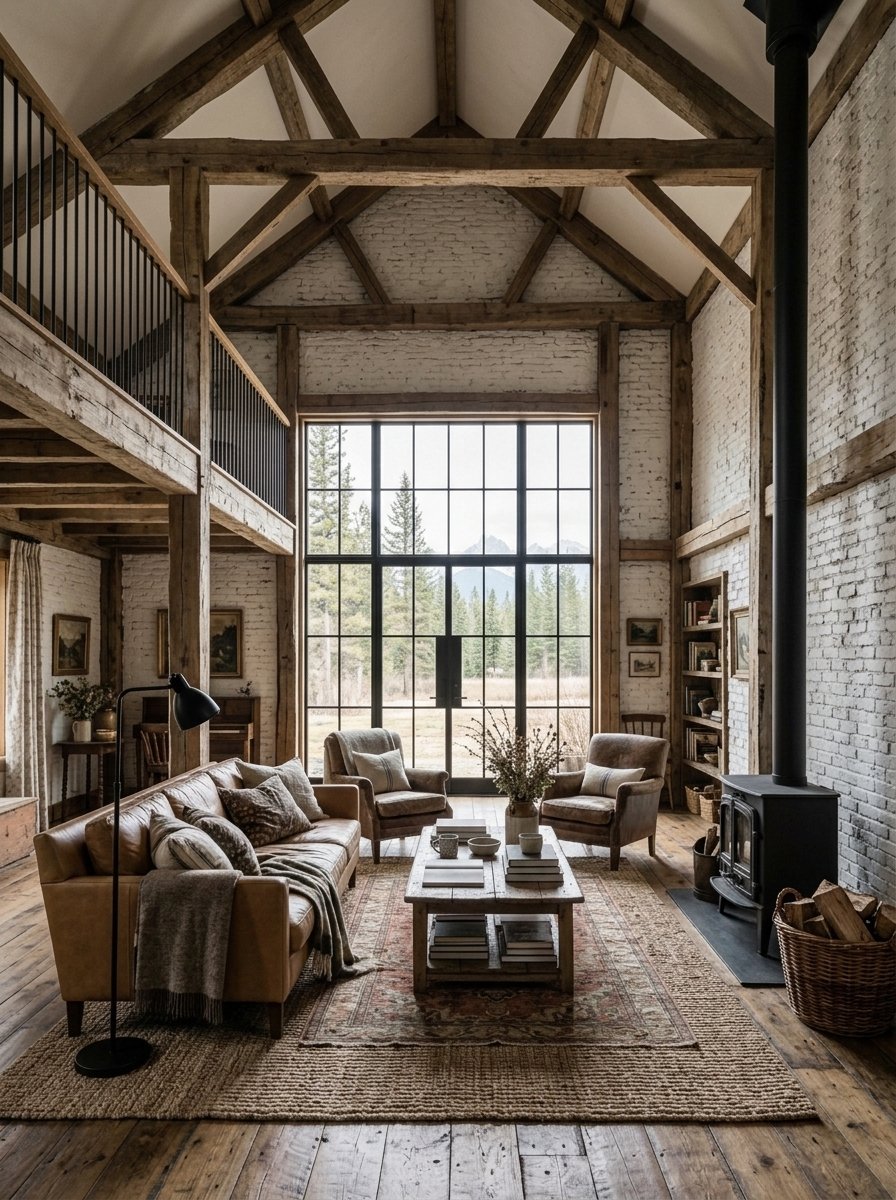
Strong architecture can carry a room by itself. Think vaulted ceilings, paneled walls, or a wall of arched windows. In this setup, decor plays a supporting role.
Try this: Paint paneling the same color as the wall for a rich, tone-on-tone effect.
11. Elevated Farmhouse Elegance

Add a few refined touches, like a crystal-free but graceful chandelier, upholstered chairs with tailored skirts, or a marble-topped side table. The room stays relaxed but feels more formal.
Try this: Choose a statement mirror with a slim wood or metal frame above the sofa or mantel.
12. Symmetry with a Soft Touch

Matching sofas, twin lamps, and a centered fireplace create calm through balance. To keep it from feeling stiff, soften the layout with curved pillows, a round ottoman, and a loose, organic arrangement of branches or greenery.
Try this: Break the symmetry slightly by using different pillow patterns on each side.
13. Comfort-First Farmhouse Living
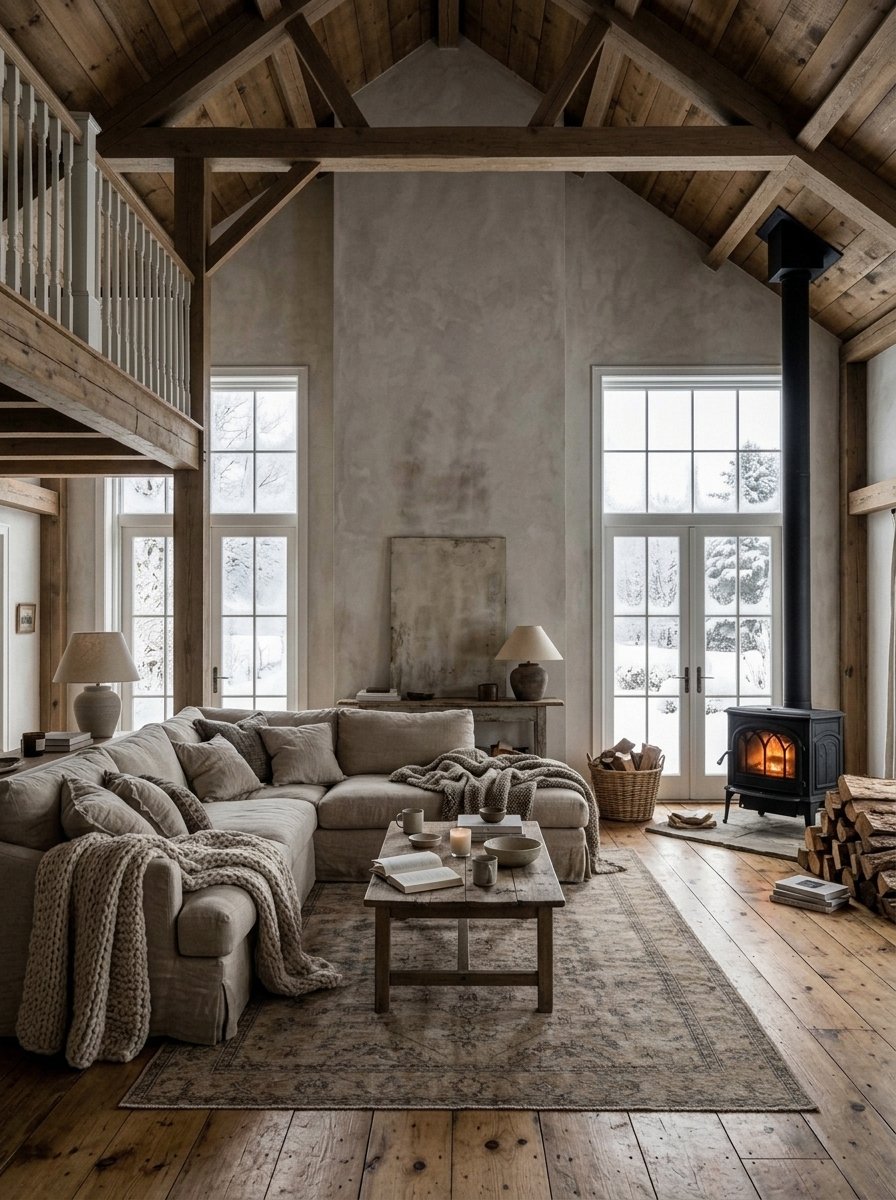
If your family really uses the room, comfort should lead. Deep seating, washable slipcovers, and sturdy side tables make daily life easier. A farmhouse room should be lived in, not just looked at.
Try this: Choose performance fabrics for the sofa if you have kids or pets.
14. Open-Concept Ease
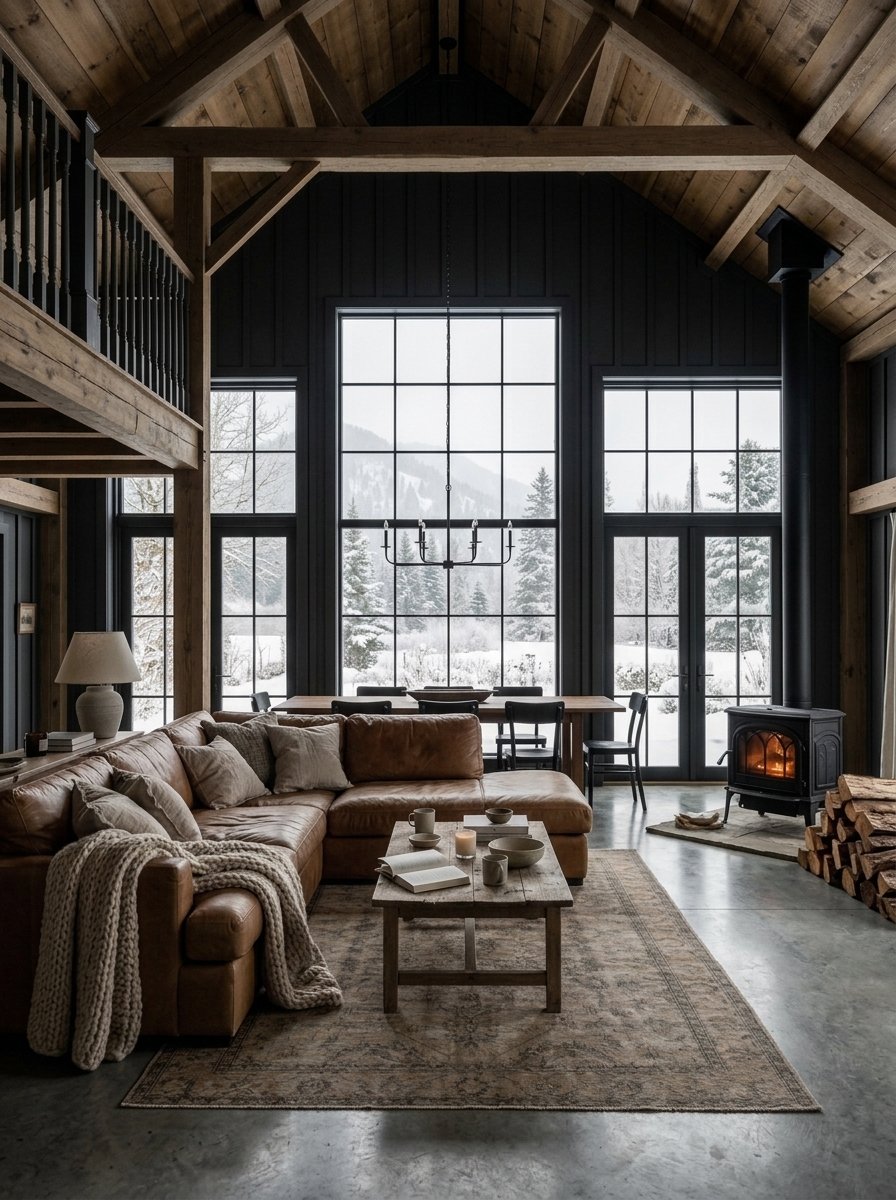
In an open plan, the living room needs gentle boundaries. A large area rug defines the seating zone, while a sofa back can mark the line between living and dining spaces. Repeat wood tones and metal finishes across both areas.
Try this: Make sure the rug is large enough that at least the front legs of every seat rest on it.
15. Light, Layered, and Thoughtful

Layering is what makes a light room feel rich. Start with a base of whites and creams, then add woven shades, a sheepskin throw, and a few ceramic pieces. Nothing is loud, but there is plenty to look at up close.
Try this: Mix at least two types of white so the room looks warm instead of stark.
16. Modern Farmhouse Flow, Refine

This idea is about movement. Furniture sits at gentle angles, sightlines stay open, and the eye travels from the window to the fireplace to the art without getting stuck. A well-edited room has a rhythm.
Try this: Walk through the room and remove any piece that blocks a natural path.
17. Rustic Charm with Breathing Room

Rustic pieces like a reclaimed wood console or a hand-hewn bench look best with space around them. Leave empty wall areas and clear surfaces so each object can be seen and appreciated.
Try this: Follow the one-in, one-out rule for decor to keep the room from filling up again.
18. Soft Neutrals, Strong Details
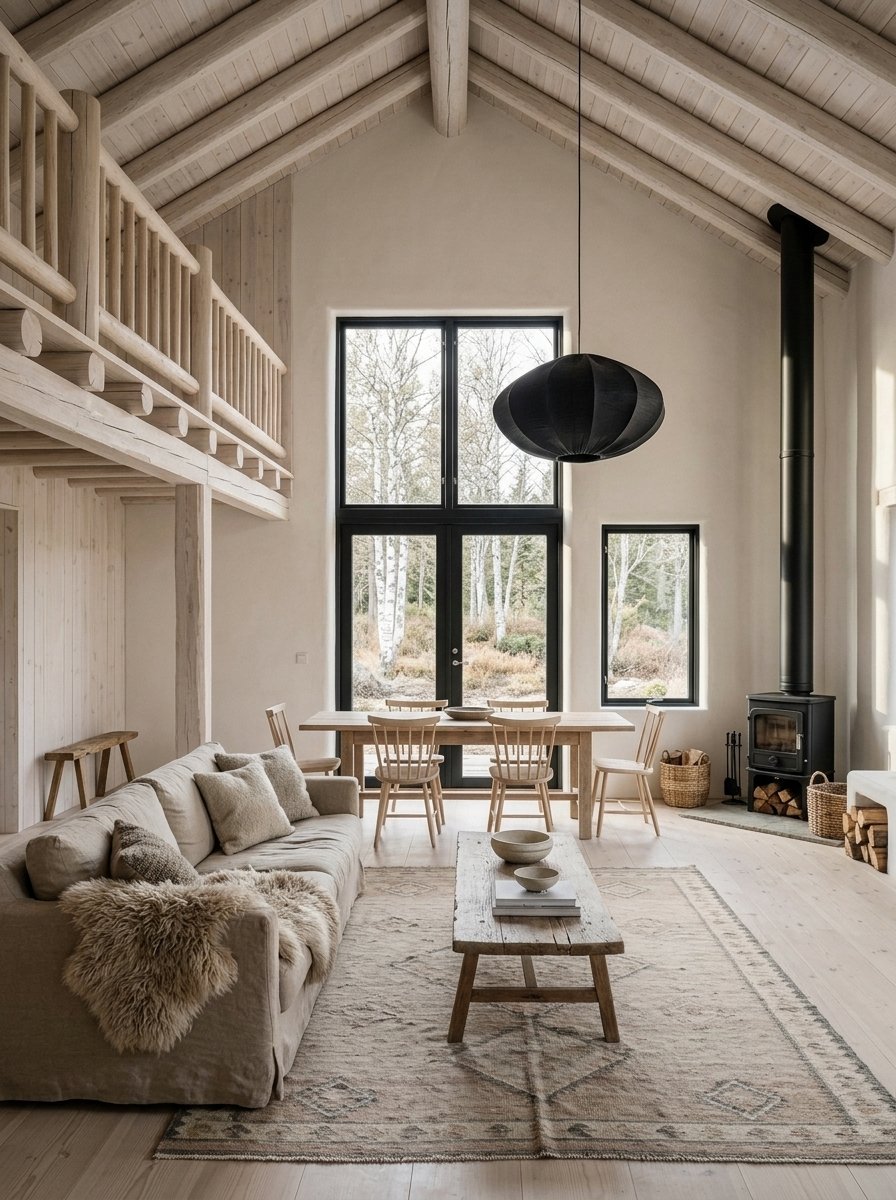
Keep walls and large furniture soft, then let the small details do the talking. Black window frames, bold hardware, and sculptural lamps give a neutral room a clear point of view.
Try this: Update cabinet pulls, curtain rods, and light fixtures to the same dark finish.
19. Cozy Farmhouse Calm

Low lighting, warm throws, and a fire in the hearth make this room made for slow evenings. Wall colors lean toward greige, soft sage, or warm white. The goal is a place that helps you unwind.
Try this: Use warm-white bulbs (2700K) and dimmers to control the mood.
20. Architectural Farmhouse with Edge

Add a little grit with steel-framed windows, a concrete hearth, or a blackened iron fireplace screen. The edge stops the room from becoming too sweet, and it pairs well with soft fabrics.
Try this: Balance hard materials with at least two soft ones, like boucle and wool.
21. Bold Farmhouse with a Modern Twist

Bold does not mean busy. A deep green or charcoal accent wall, a large abstract painting, or a vivid rug can lead a farmhouse room in a fresh direction. Keep the rest of the palette calm so the bold piece reads as a choice.
Try this: Test paint samples at different times of day before you commit to a dark shade.
22. Soft Farmhouse Simplicity
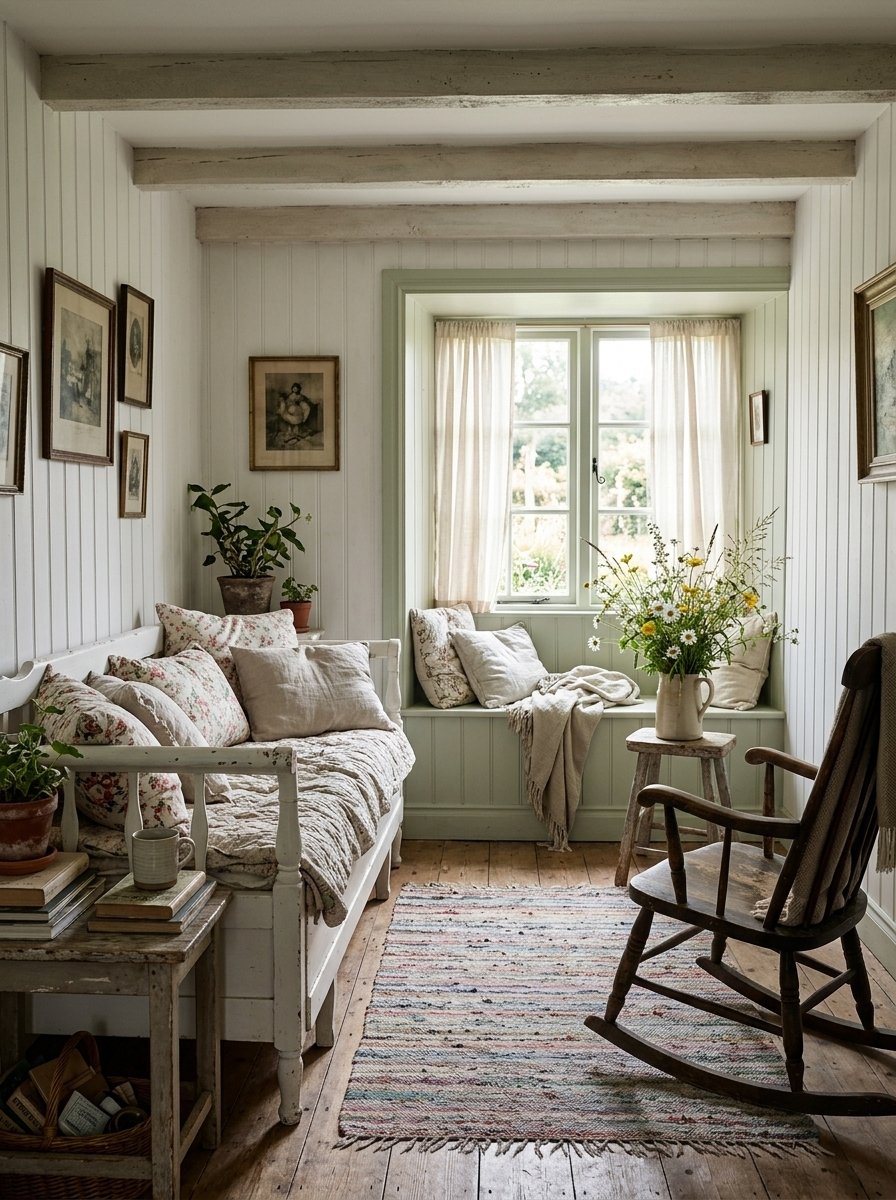
Simplicity here means fewer, better things: one sofa, two chairs, a coffee table, and a rug. White walls, pale wood, and soft linen keep the mood light and easy to maintain.
Try this: Pick one standout piece, like a vintage trunk or an antique bench, and keep everything else quiet.
23. Farmhouse Festive, Done Right
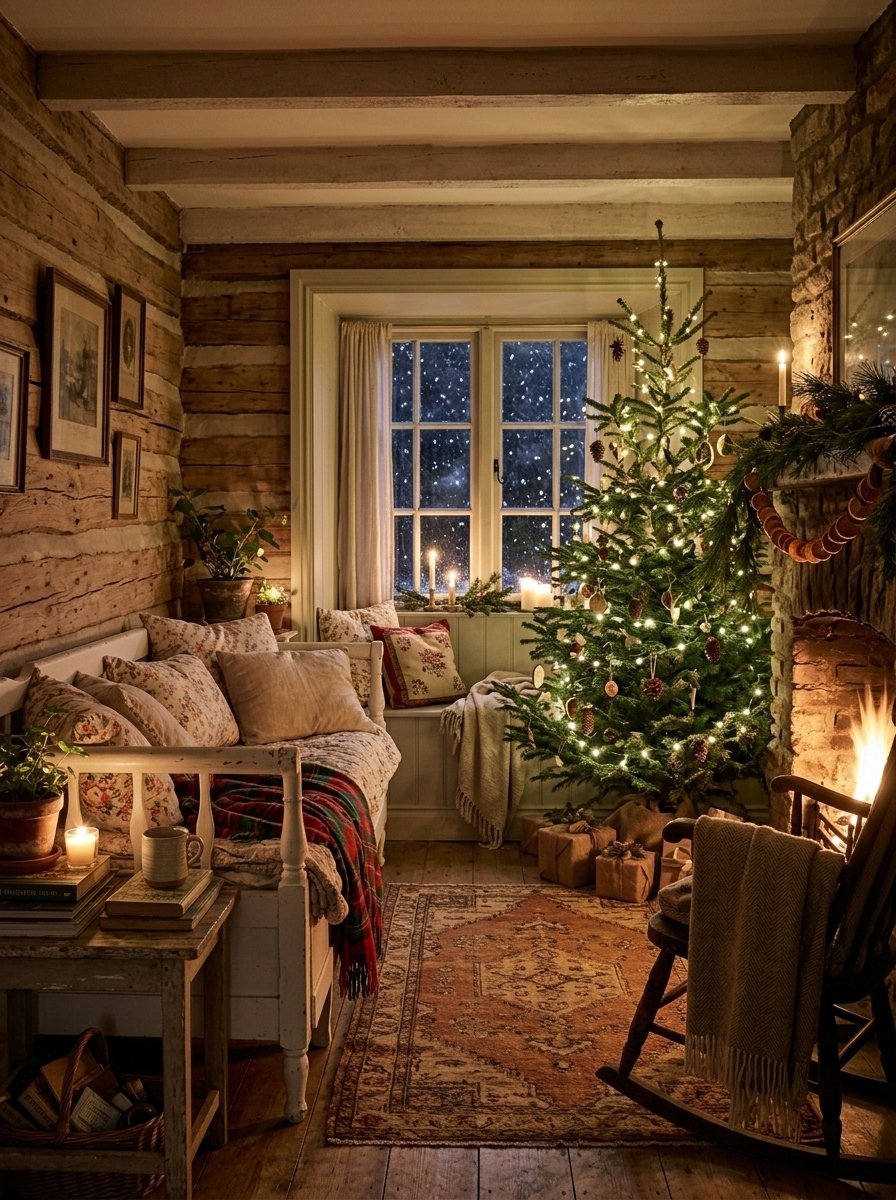
Farmhouse and holiday decor are a natural fit. Think evergreen garland on a beam or mantel, plaid blankets, wooden bead strands, and candles. The trick is restraint: let natural elements do most of the work.
Try this: Choose a tight palette of two or three colors, such as green, cream, and copper.
24. Grand-Scale Farmhouse Living
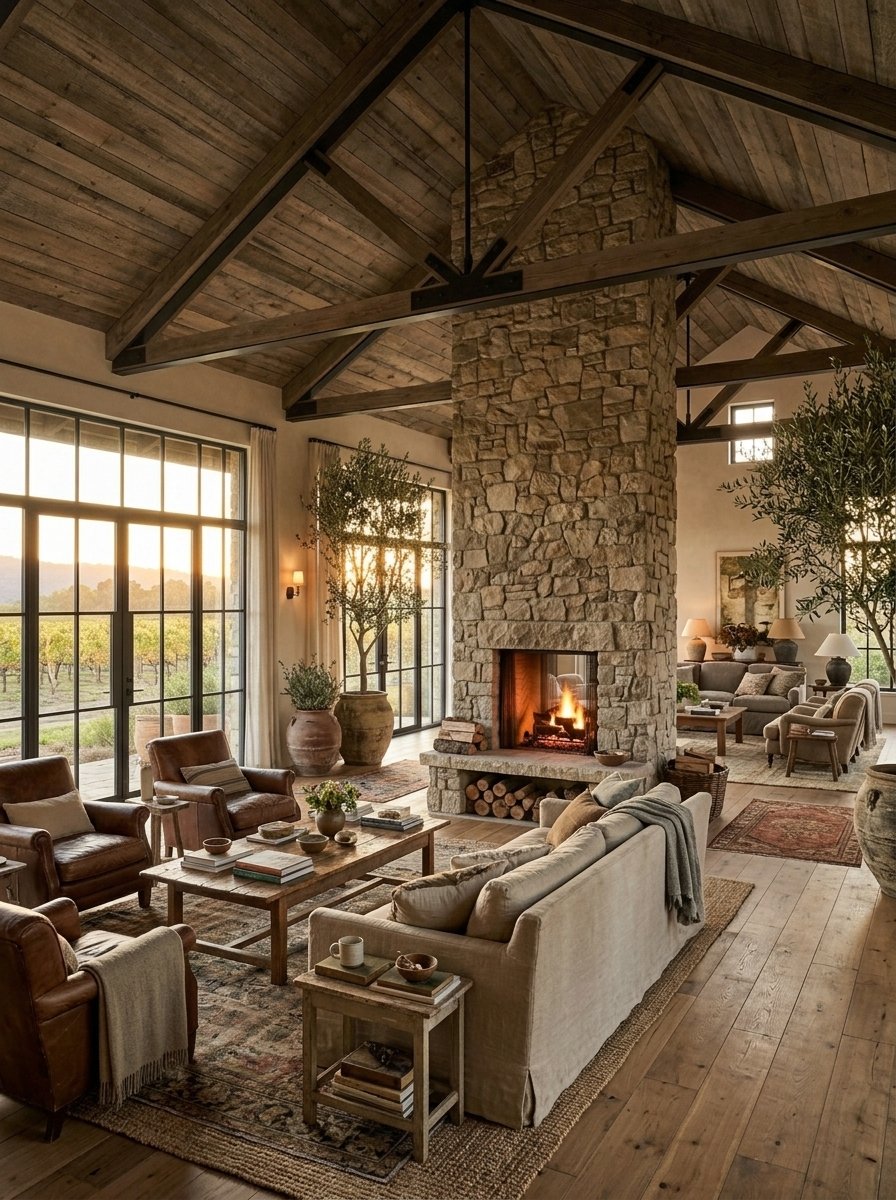
Big rooms need big moves. Use oversized rugs, tall drapery, large-scale art, and two seating groups so the space does not feel empty. Ceiling height is an asset, so lean into it with long light fixtures.
Try this: Place seating in conversation clusters of four to six people instead of pushing it all to the walls.
25. Cozy Farmhouse with Personality
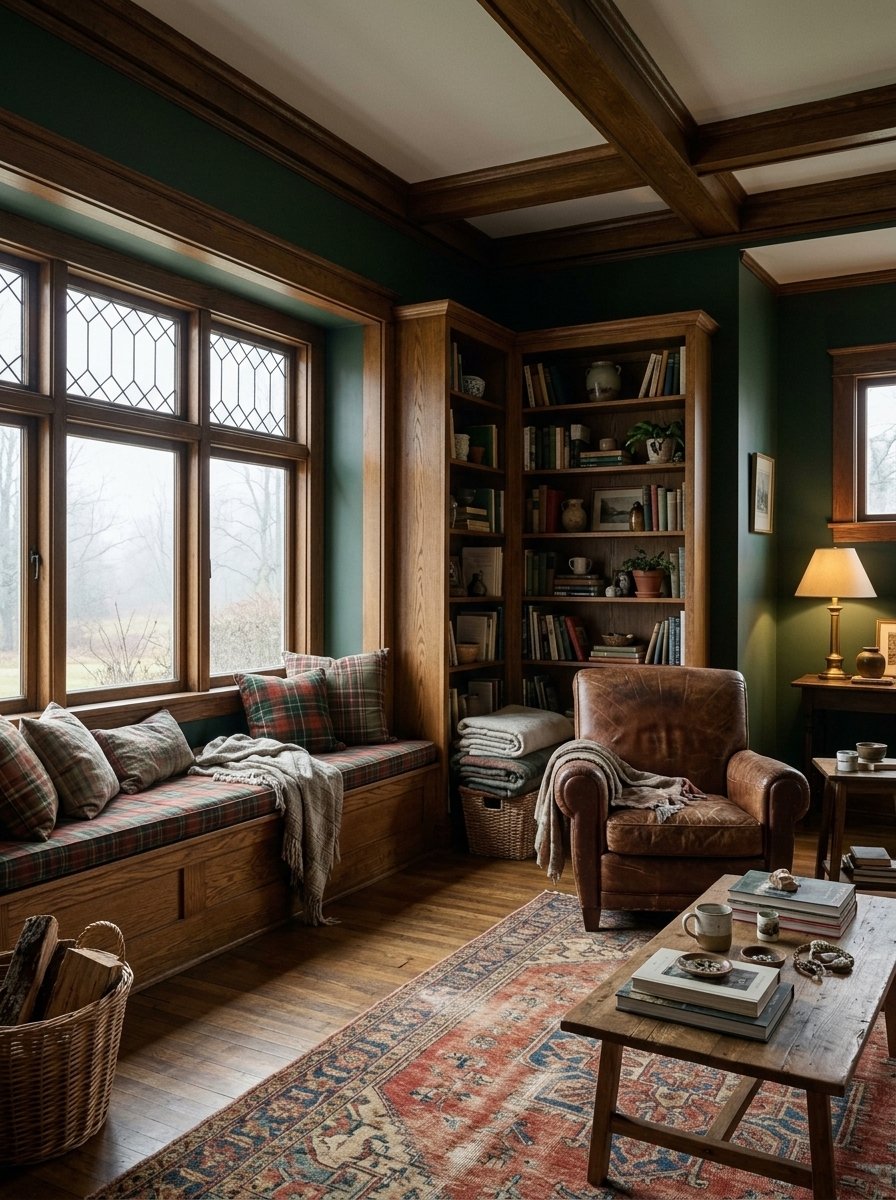
Personality comes from the things you love: travel finds, family photos, a bookcase that actually holds books. A farmhouse room provides the calm backdrop, and your story fills it in.
Try this: Group framed photos in a gallery wall with matching frames so the display looks curated.
26. Clean Lines, Natural Warmth

This is where farmhouse meets modern minimalism. Furniture has simple shapes, the palette stays soft, and natural wood supplies the warmth. It is a restful look that works well in newer homes.
Try this: Choose a coffee table with a visible grain, such as oak or walnut, to stop the lines from feeling cold.
27. Modern Farmhouse with Statement Lighting

A single large fixture can change the entire character of a room. An oversized iron lantern, a wood-bead chandelier, or a pair of sculptural pendants adds drama and warmth at the same time.
Try this: Hang the fixture so the bottom sits about 7 feet above the floor in open areas, and size it to roughly half the width of your seating area.
28. Layered Lighting for Every Mood

Good farmhouse rooms never rely on a single overhead light. Combine ambient, task, and accent lighting: a ceiling fixture, a reading lamp, and a small picture light. This gives you flexibility from morning to night.
Try this: Place at least three light sources at different heights in the room.
29. Greenery and Natural Accents

Plants add life and soften hard lines. A tall olive tree, a bowl of lemons, or dried stems in a stoneware vase all suit the style. Natural accents tie the room to the outdoors.
Try this: Choose plants that fit your light conditions so they actually thrive.
30. A Timeless Finish with Quality Pieces

The most lasting farmhouse rooms are built on well-made basics. A solid wood table, a sofa with a strong frame, and natural fiber rugs outlive trends. Buy fewer items, but buy them to keep.
Try this: Invest in the sofa and coffee table first, then build the decor slowly around them.
Farmhouse Living Room Color Palettes
| Palette | Colors | Mood | Best For |
|---|---|---|---|
| Soft Neutral | Cream, oatmeal, taupe | Calm, airy | Small rooms |
| Crisp Contrast | White, black, natural wood | Clean, modern | Open-concept homes |
| Earthy Warm | Terracotta, camel, olive | Cozy, grounded | Rooms with fireplaces |
| Muted Cool | Sage, dusty blue, gray | Relaxed, fresh | Sunny rooms |
| Moody Deep | Charcoal, forest green, walnut | Dramatic, rich | Large or low-light rooms |
Smart Buying Tips for a Farmhouse Living Room
Buying well saves money and keeps the room looking good for years. Use this short checklist:
- Start with the sofa. Check the frame, cushion fill, and fabric durability.
- Measure twice. Leave about 18 inches between the sofa and coffee table.
- Choose a rug early. It sets the palette and the scale.
- Mix old and new. Thrift or vintage finds add depth that new pieces cannot.
- Edit before you add. Remove what does not work before shopping for more.
Common Farmhouse Living Room Mistakes To Avoid
- Too much shiplap and signage: a few accents are charming, but a whole wall of “Gather” signs feels dated.
- Matching everything: a matched set looks flat. Mix pieces instead.
- Ignoring scale: small rugs and tiny art get lost in a living room.
- Skipping lighting layers: one overhead light creates a harsh feel.
- Forgetting comfort: pretty but stiff seating will go unused.
Conclusion
A farmhouse living room does not rely on one perfect piece. It comes from good proportions, natural materials, soft colors, and comfort that you can feel the moment you walk in. Whether you love the quiet of a neutral room or the confidence of a bold modern twist, the ideas above give you plenty of room to make the style your own.
Start small. Swap a light fixture, add a layered rug, or bring in a few natural textures. Then build from there. Over time, the room will feel less like a trend and more like home.
FAQs
What defines a farmhouse living room?
It combines natural materials, soft neutral colors, cozy seating, and simple, honest details like beams, stone, and wood.
What is the difference between farmhouse and modern farmhouse style?
Classic farmhouse is more rustic and nostalgic, while modern farmhouse uses cleaner lines, brighter whites, and black or brass accents.
What colors work best in a farmhouse living room?
White, cream, greige, sage, and soft blue are the most popular, often paired with natural wood and black accents.
Is farmhouse style still in trend?
Yes, it has evolved into a softer, more edited look that focuses on warmth, texture, and quality over heavy rustic decor.
How do I make a farmhouse living room feel cozy?
Layer textures like wool, linen, and sheepskin, use warm lighting, and choose deep, comfortable seating.
Can I do farmhouse style in a small living room?
Yes, stick to light colors, use fewer but well-scaled pieces, and add mirrors and sheer curtains to increase brightness.
What flooring suits a farmhouse living room?
Wide-plank hardwood in oak or walnut tones is the best match, though warm-toned luxury vinyl or tile also works.
How can I add farmhouse style on a budget?
Paint walls a warm white, thrift wood furniture, add faux beams, and use natural textiles like jute and cotton.