
Front walkway ideas can change the whole look of your home. The path to your door is the first thing guests step on, and it is one of the first things they notice. A well-designed walkway welcomes people, guides them safely, and adds real curb appeal. Better yet, many upgrades fit into a weekend and a modest budget.
A beautiful front walkway can completely transform the appearance of your home, creating a welcoming entrance while adding charm, style, and curb appeal. Whether you prefer a modern concrete pathway, elegant stone pavers, natural stepping stones, or a classic brick walkway, the right design can make your outdoor space look more attractive and inviting. With thoughtful landscaping, decorative lighting, beautiful plants, and carefully selected materials, you can turn an ordinary front walkway into a stunning feature that complements your home’s architecture.
Choosing the perfect front walkway design is also about balancing beauty, functionality, and durability. A well-designed pathway should provide a comfortable and safe route to your front door while blending naturally with your garden and surrounding landscape. From simple budget-friendly ideas to luxurious modern walkway designs, there are plenty of creative ways to enhance your home’s exterior. Explore these front walkway ideas to find inspiration and create an entrance that leaves a lasting first impression.
How to Plan Your Front Walkway Ideas
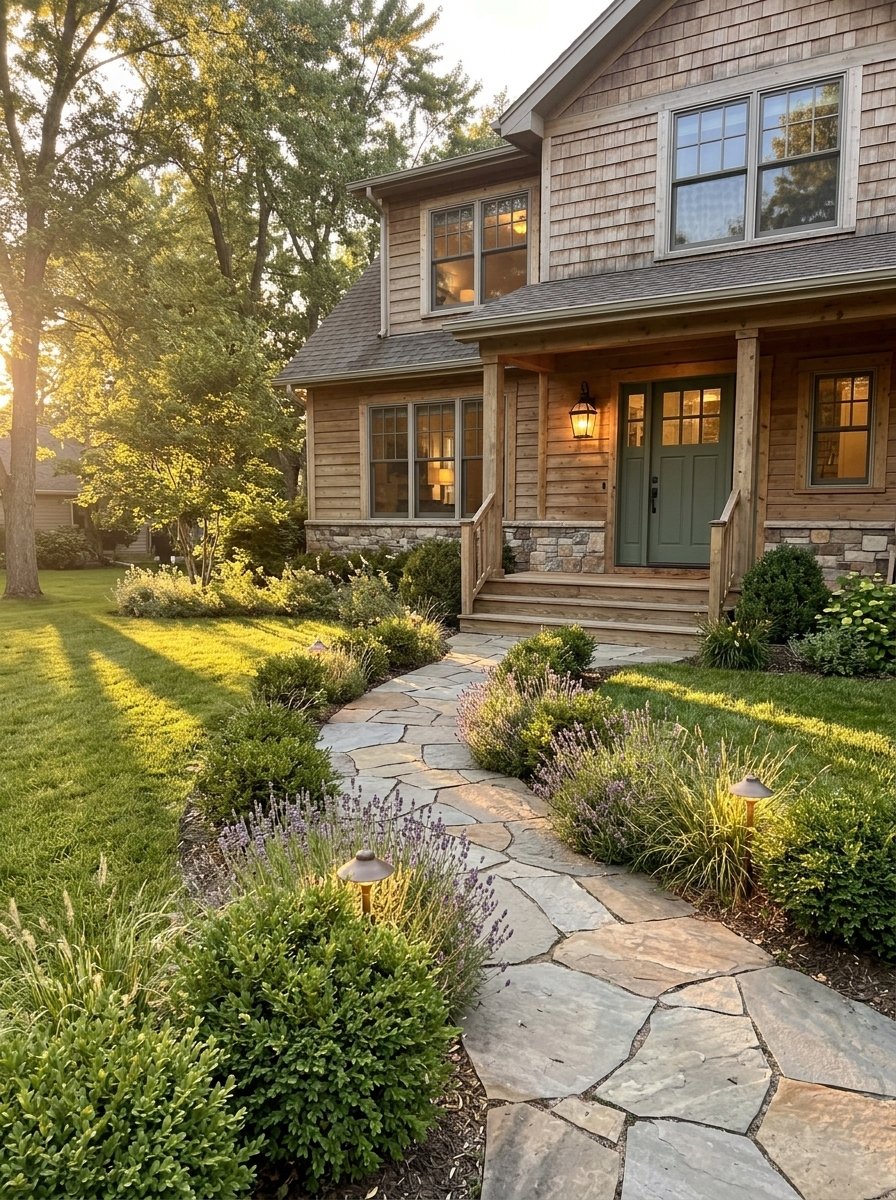
Great front walkway ideas start with a plan. Before you buy materials, think about how people will use the path and how it fits your home.
- Choose the width. A width of about 3 feet works for one person, while about 4 feet lets two people walk side by side.
- Plan the route. The most direct path feels natural, but curved paths feel softer.
- Think about slope and drainage. Water should flow away from the house, not toward it.
- Match your home’s style. A modern home suits clean lines, while a cottage suits soft curves and natural stone.
- Consider safety. Choose slip-resistant surfaces, and avoid uneven edges that could trip people.
- Plan for lighting. Good lighting also makes the path safe after dark.
Also, check your local rules before you try any front walkway ideas. Some areas have guidelines for walkways, drainage, or work near utility lines. Because rules vary, a quick call to your local office can save trouble later.
Front Walkway Ideas: Materials at a Glance
Material shapes the look, cost, and upkeep of a path. Here is a quick comparison.
- Brick. It looks classic and warm, but it needs a stable base to stay even.
- Natural stone and flagstone. These are beautiful and unique, though often more costly.
- Concrete pavers. They are affordable and versatile, with many shapes and colors.
- Poured concrete. It is smooth, durable, and low maintenance.
- Gravel. It is budget-friendly and easy to install, yet it shifts over time.
- Wood. It feels warm and natural, but it needs sealing in wet climates.
In short, choose the material that suits your climate, budget, and style.
Front Walkway Ideas by Material
The material often sets the whole mood. These six front walkway ideas show what each one can do.
1. Classic Brick Walkway
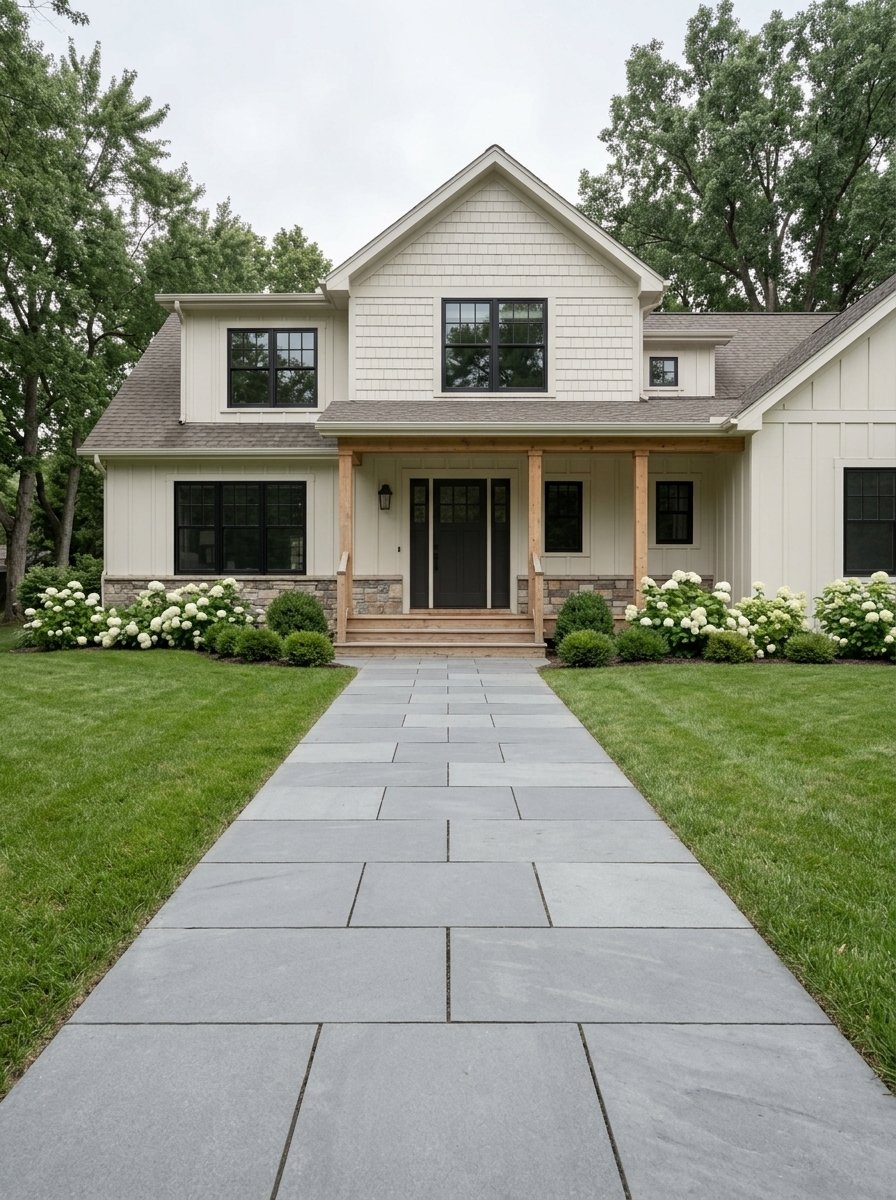
A classic brick walkway feels warm, welcoming, and timeless. First, lay the bricks in a herringbone, basket weave, or running bond pattern for extra charm. Red and brown tones suit traditional homes, while softer gray or tan blends work with modern styles. Because bricks are small, a good base is important. As a result, the path stays level for years.
2. Stone Paver Walkway
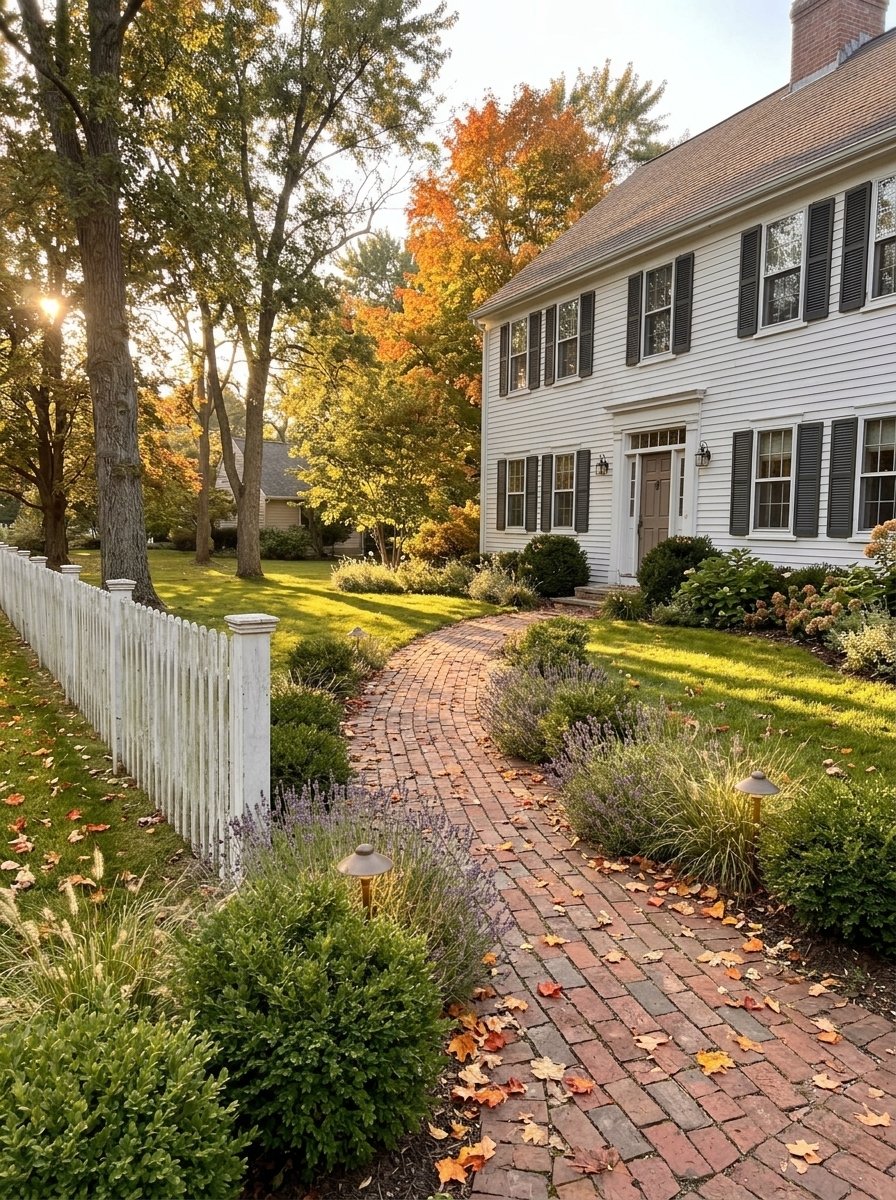
First, stone pavers give a clean, finished look. They come in many sizes and shapes, from large squares to small cobbles. Set them tightly with narrow joints for a formal feel, or leave wider gaps with moss for a relaxed look. Since pavers are durable, they stand up to years of foot traffic. Also, choose a slip-resistant finish for wet weather.
3. Colorful Flagstone Walkway
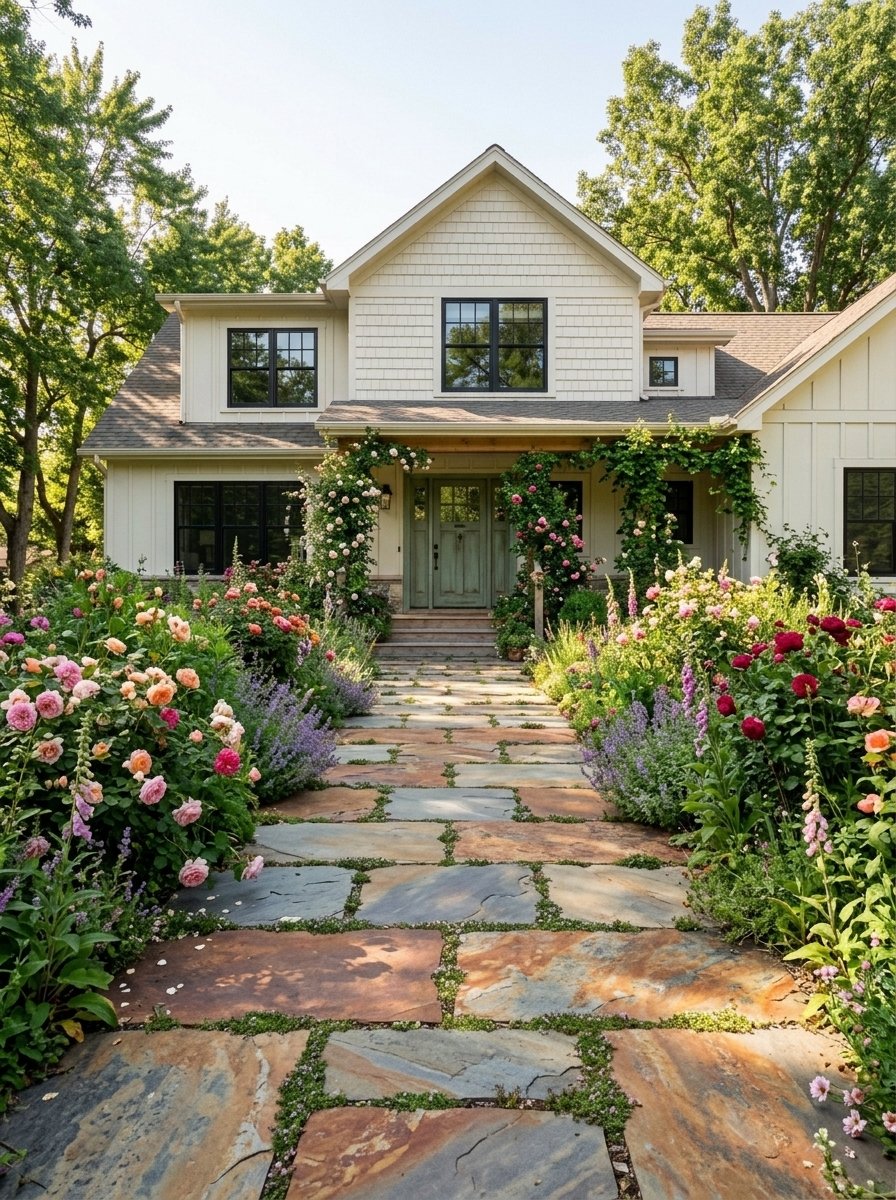
First, flagstone brings natural color and texture. Shades of rust, blue, gray, and gold create a path that looks like art. Irregular shapes fit together like a puzzle. Because every stone is different, no two walkways look the same. In addition, flagstone suits cottage gardens and rustic homes especially well.
4. Wide Flagstone Walkway
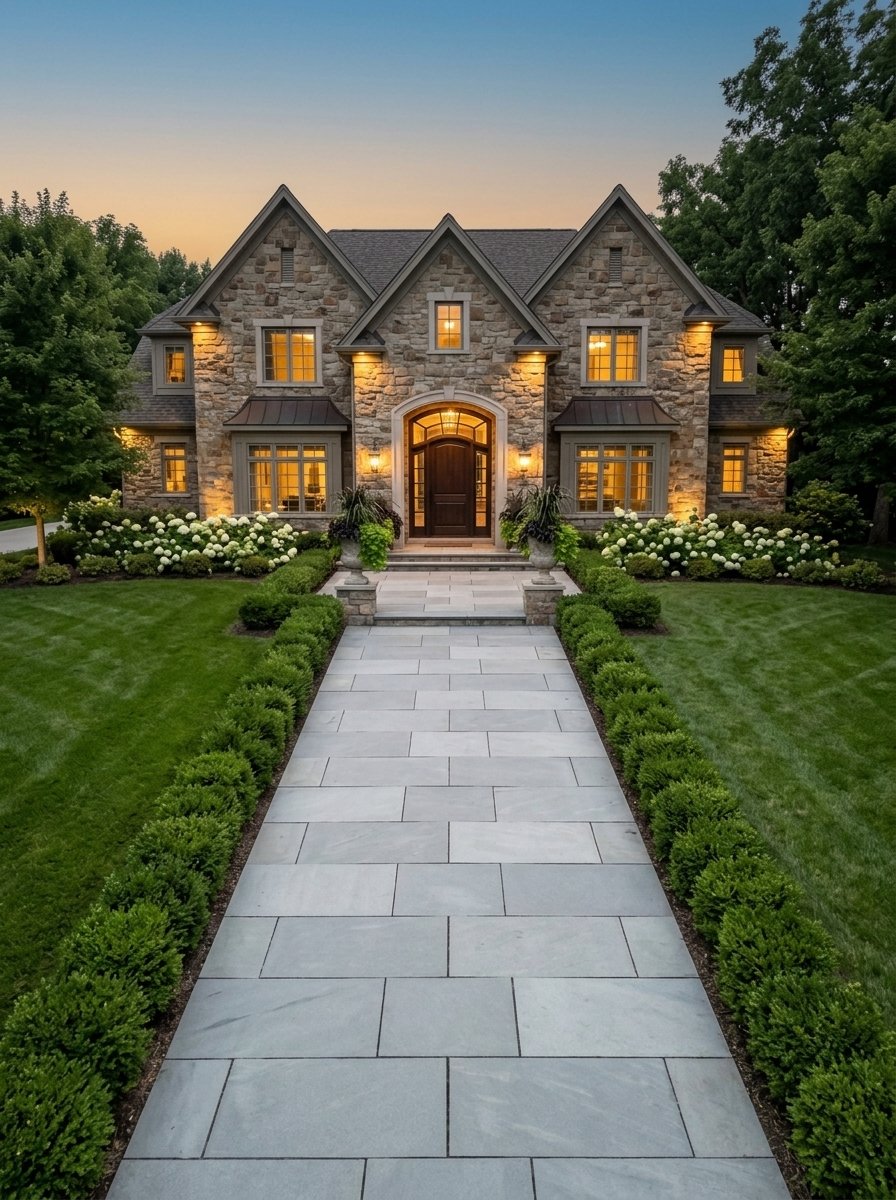
A wide flagstone path feels generous and grand. Make it 5 feet wide or more, so guests can walk comfortably. Also, large slabs create a bold, clean look with fewer joints. Because the path is spacious, it gives the entry a stately feel. Then add low plants along both sides to soften the edges.
5. Cement Front Walkway
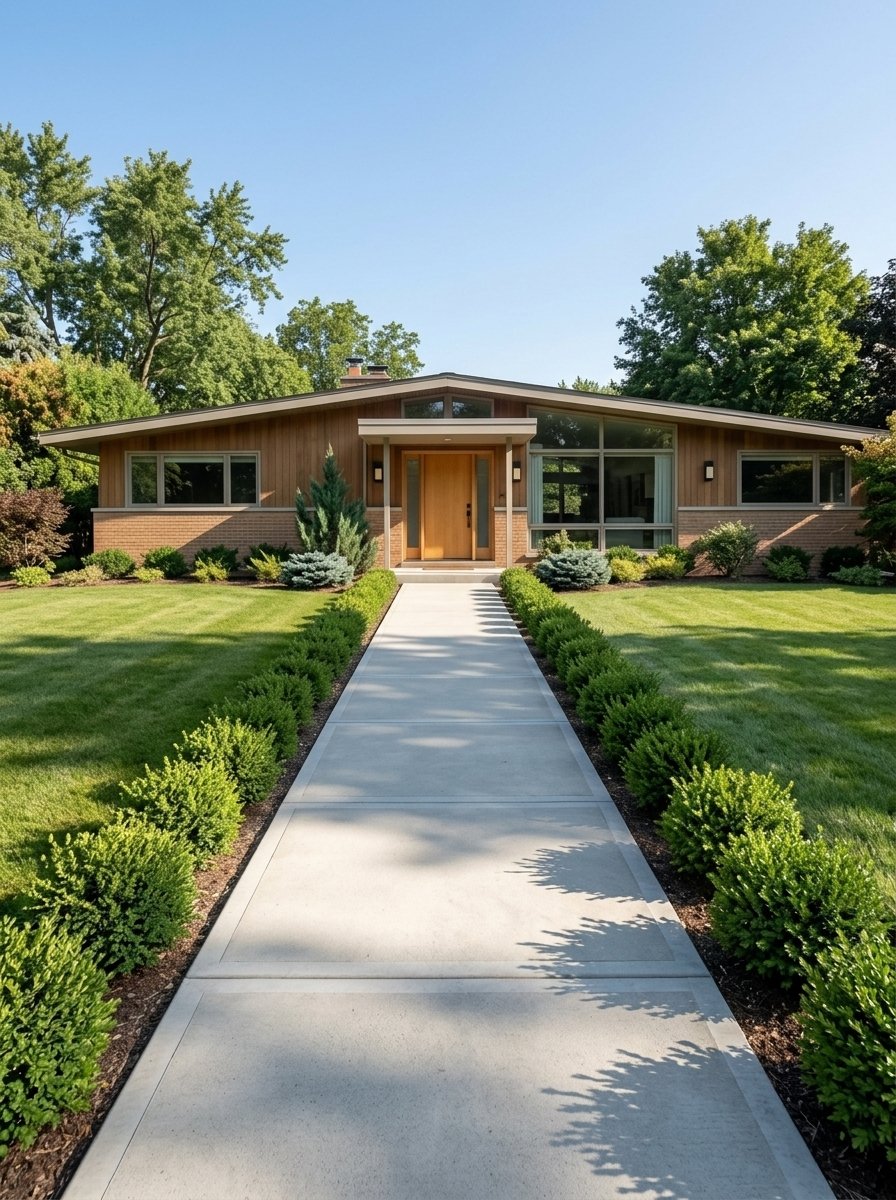
A cement walkway is simple, durable, and easy to maintain. A broom finish adds grip, while a stamped pattern can mimic stone or brick. Then add color or exposed aggregate for extra style. Since concrete lasts a long time, it is a practical choice. However, plan control joints, so the slab can expand and contract without cracking.
6. Stepped Wood Walkway
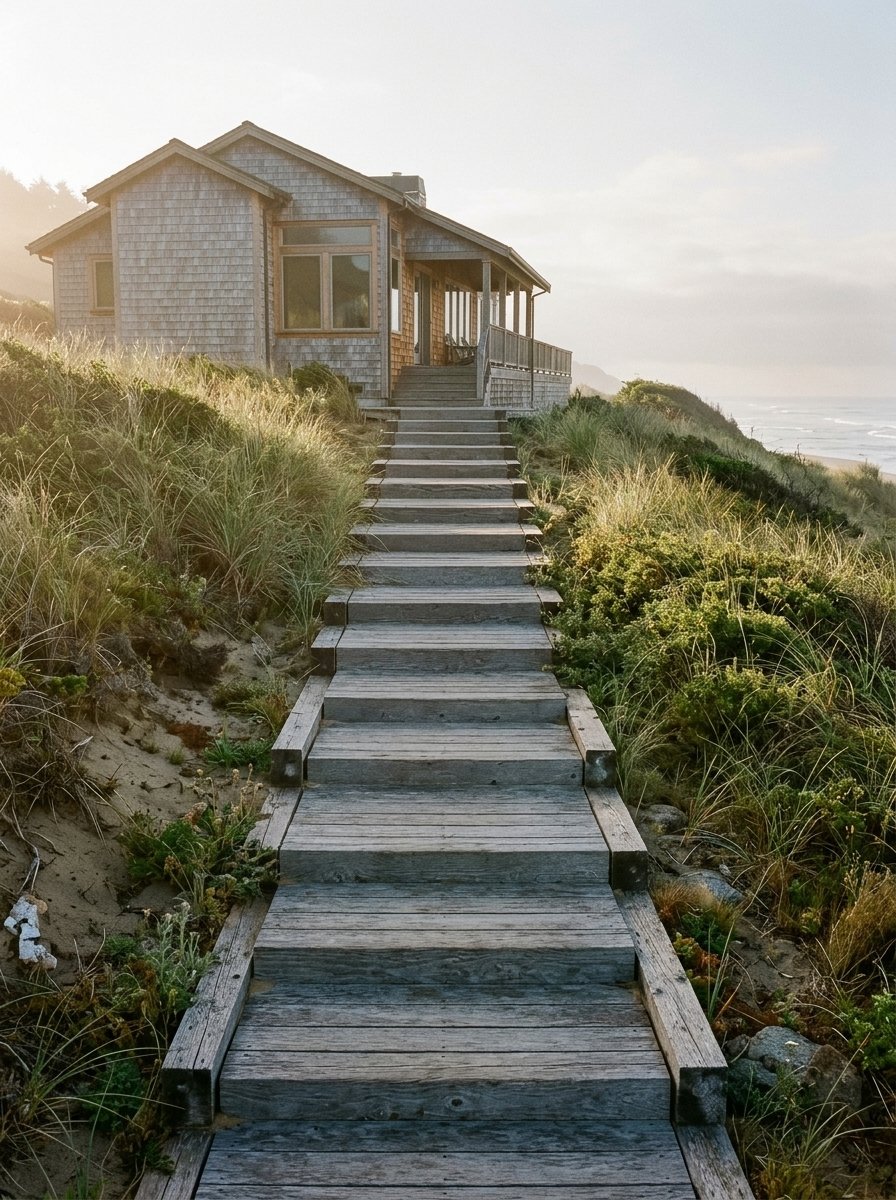
A stepped wood walkway works well on a slope. First, build wide wooden treads that climb the hill like a staircase. Use rot-resistant wood, such as cedar or treated lumber, and seal it regularly. Because wood can be slippery when wet, add a textured finish or grit strips. This design suits cabins, coastal homes, and sloped yards.
Front Walkway Ideas by Style
Style ties the walkway to the home. These eight front walkway ideas match different architecture and moods.
7. Modern Front Walkway
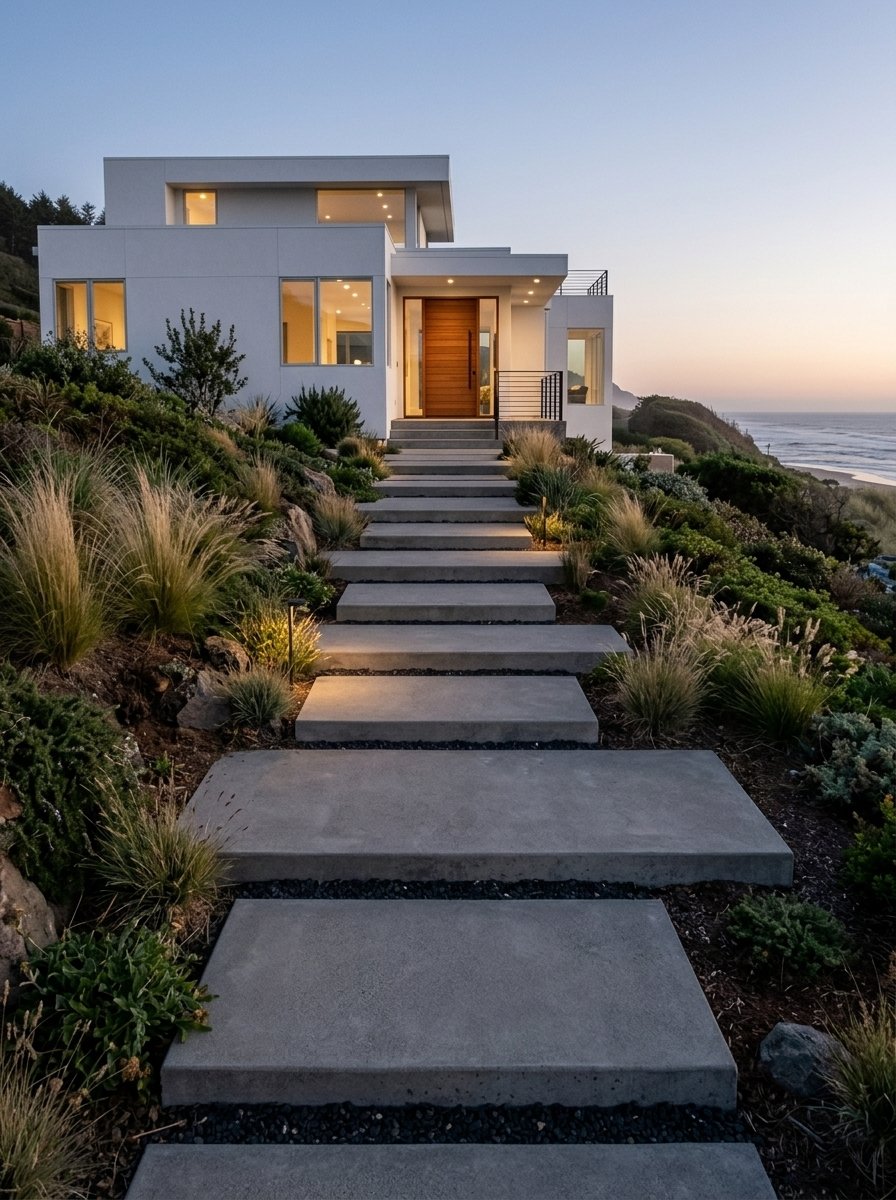
A modern walkway uses clean lines and simple geometry. Large rectangular concrete slabs with narrow gaps of gravel or grass look sleek. Next, keep plants minimal and structured, such as ornamental grasses. Since modern design values simplicity, avoid clutter along the path. Finally, subtle low lights add drama after dark.
8. Contemporary Stepped Walkway
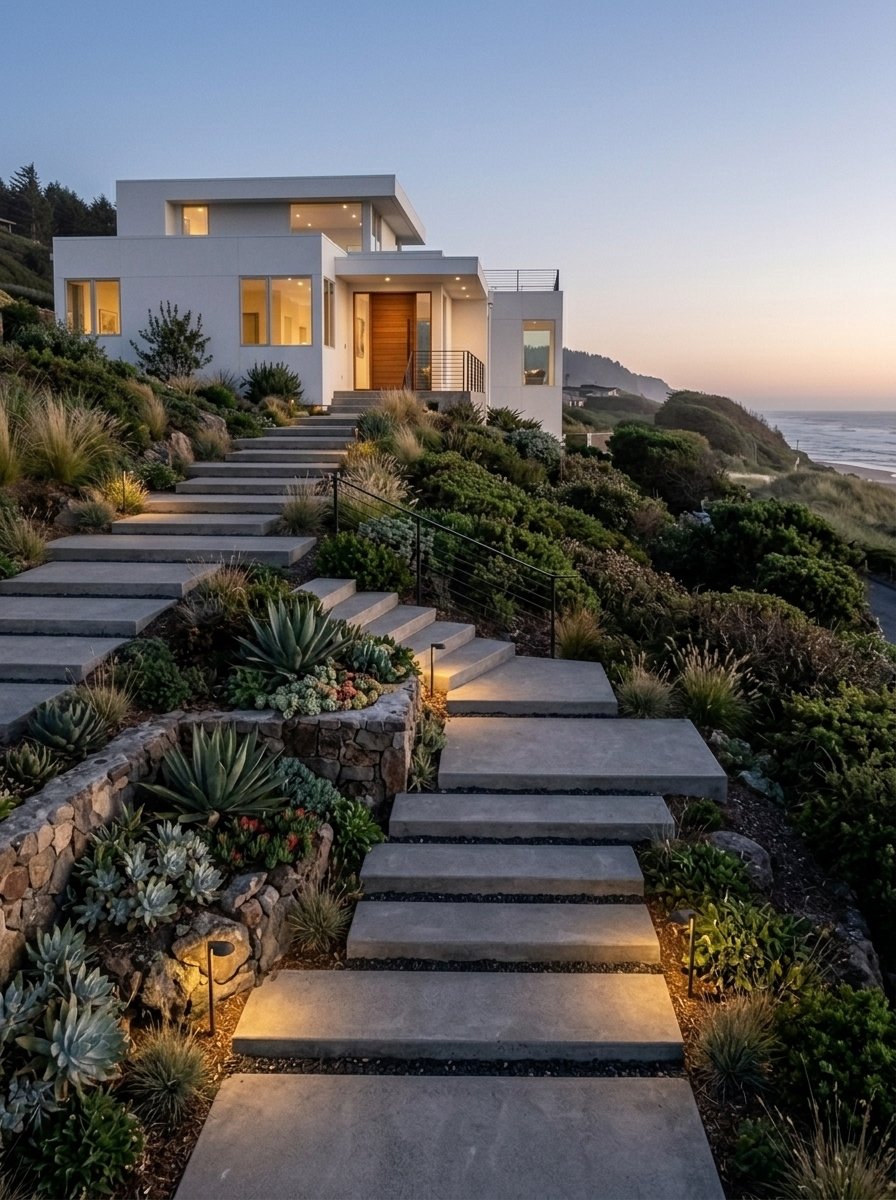
A contemporary stepped walkway turns a slope into a feature. First, use wide, low steps in concrete or stone, with planters or lights tucked in. Gentle landings every few steps make the climb easy. Because the steps are shallow, the path feels comfortable and elegant. Also, add a simple metal handrail if the slope is steep.
9. Midcentury Modern Walkway
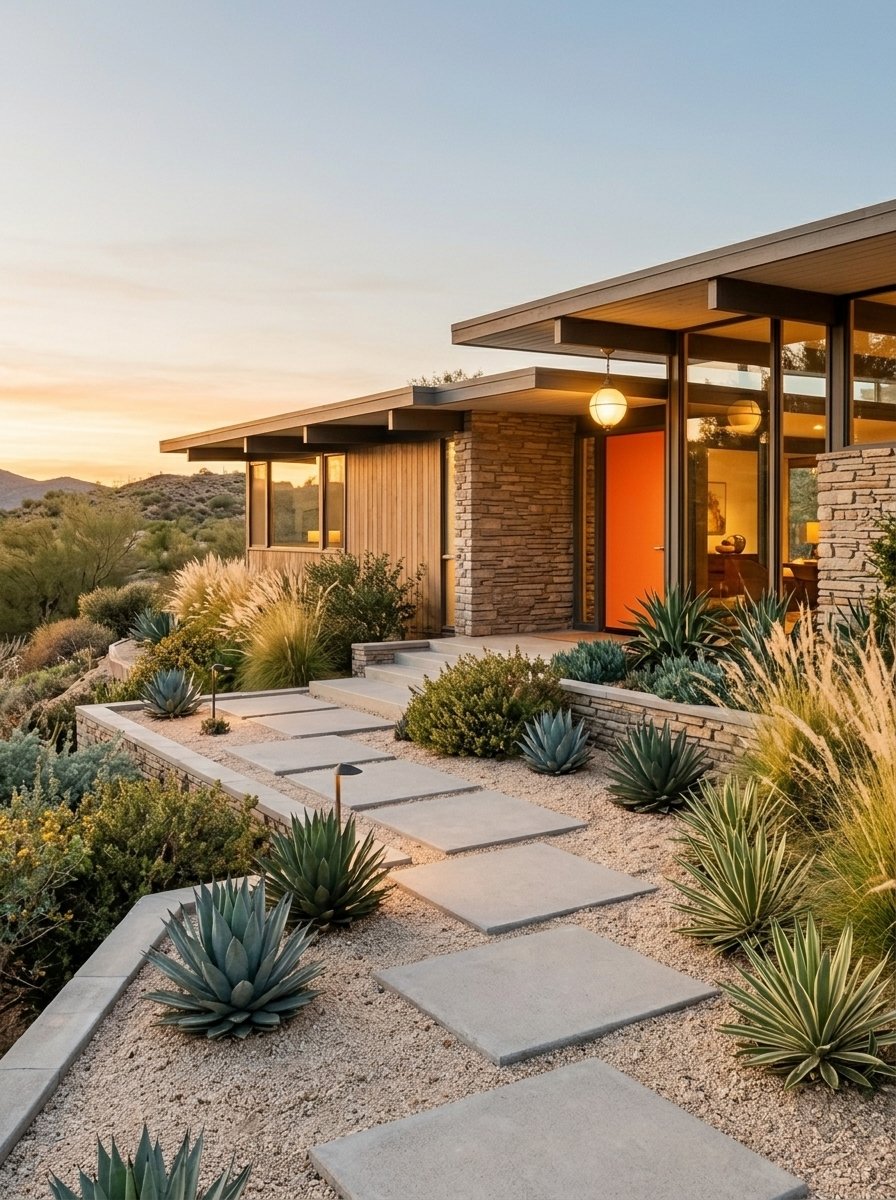
Midcentury modern walkways celebrate geometry and nature. First, try square concrete stepping pads set in gravel or low groundcover. Next, add sculptural plants, such as agave or ornamental grasses. A vintage-style lantern completes the look. As a result, the path feels retro and fresh at once. This style suits homes with low rooflines and big windows.
10. Craftsman House Walkway
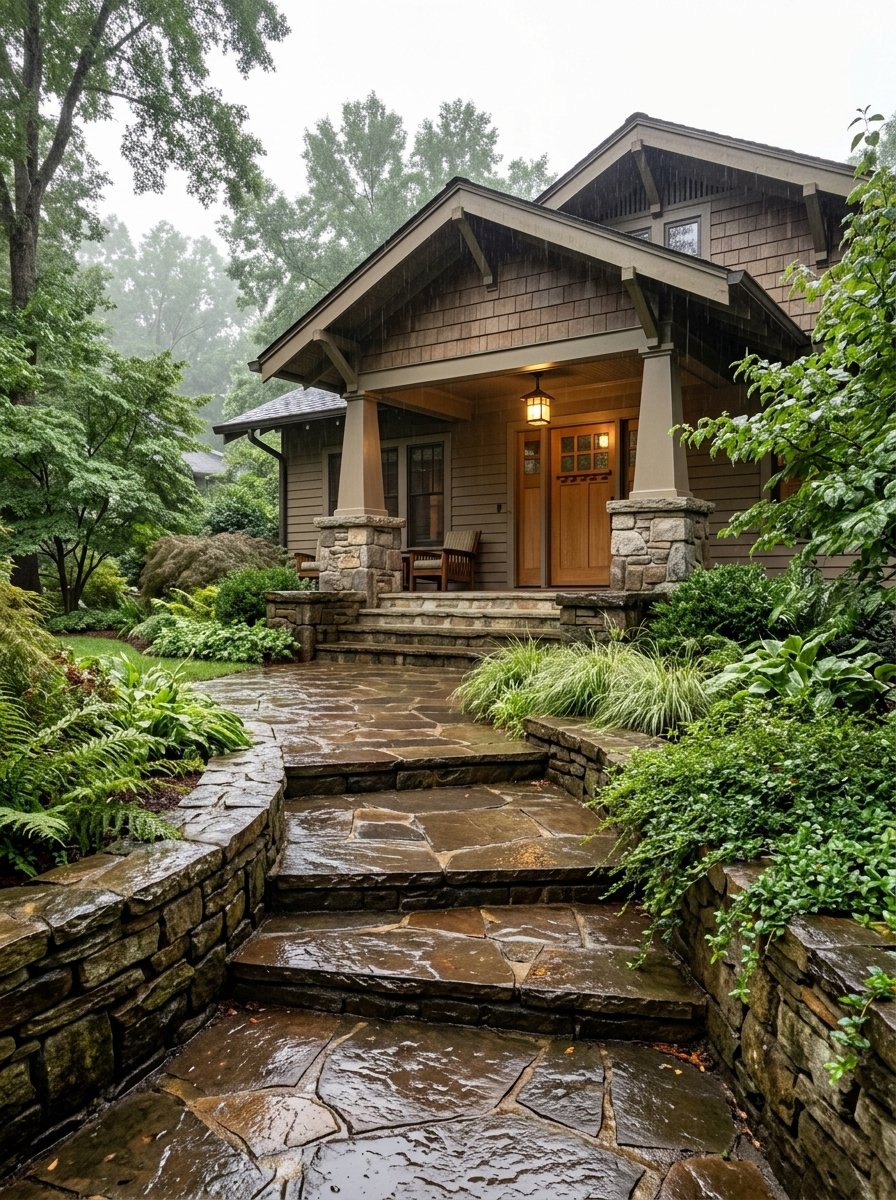
A craftsman walkway echoes the home’s handmade feel. First, use natural stone, brick, or concrete with a simple, sturdy pattern. Then frame the path with low stone walls or foundation plantings. Because craftsman homes have strong horizontal lines, a path with a gentle curve softens them. Finally, add a classic lantern near the door.
11. Rustic Front Walkway
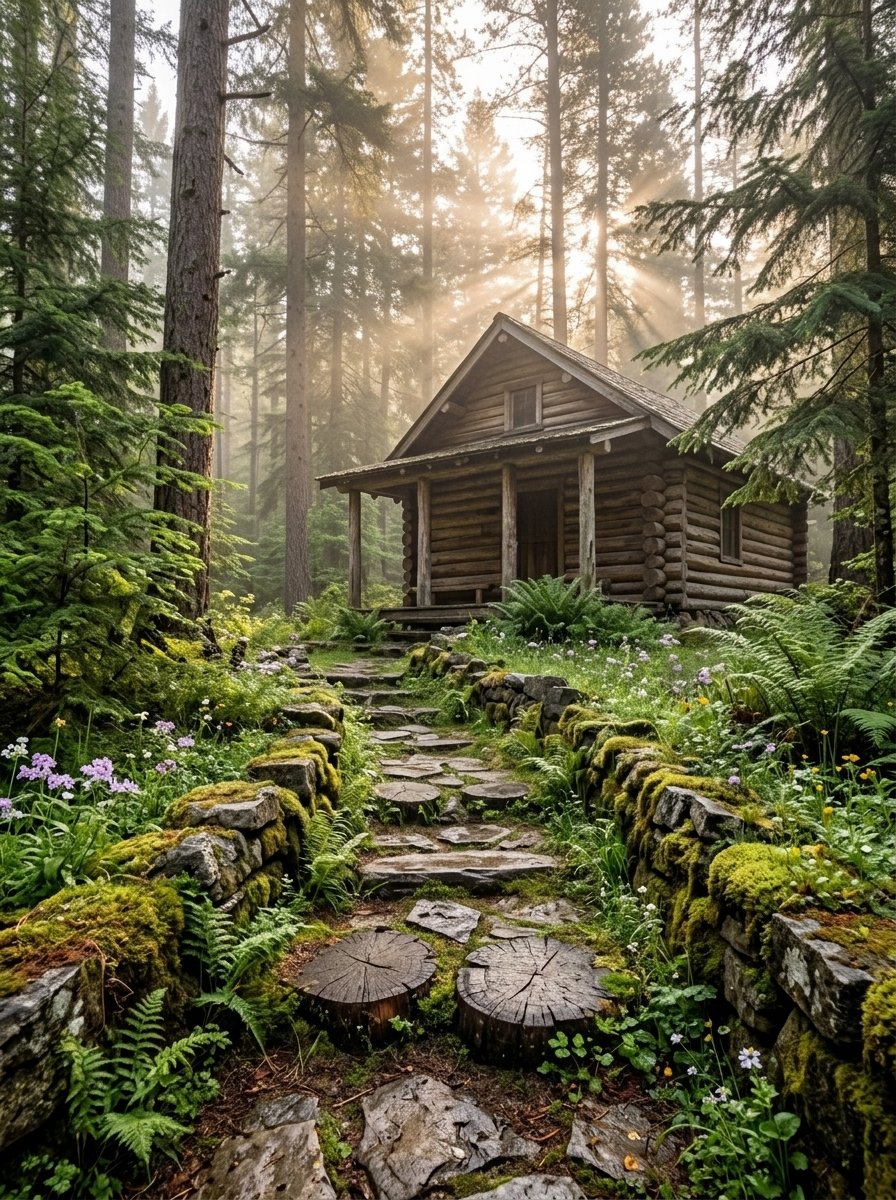
A rustic walkway feels natural and unpolished. First, combine irregular stones, wood rounds, or gravel with creeping groundcover. Then let moss or thyme soften the gaps. Because the look is relaxed, small imperfections add charm. This idea suits cabins, farmhouses, and country homes.
12. European-Style Walkway
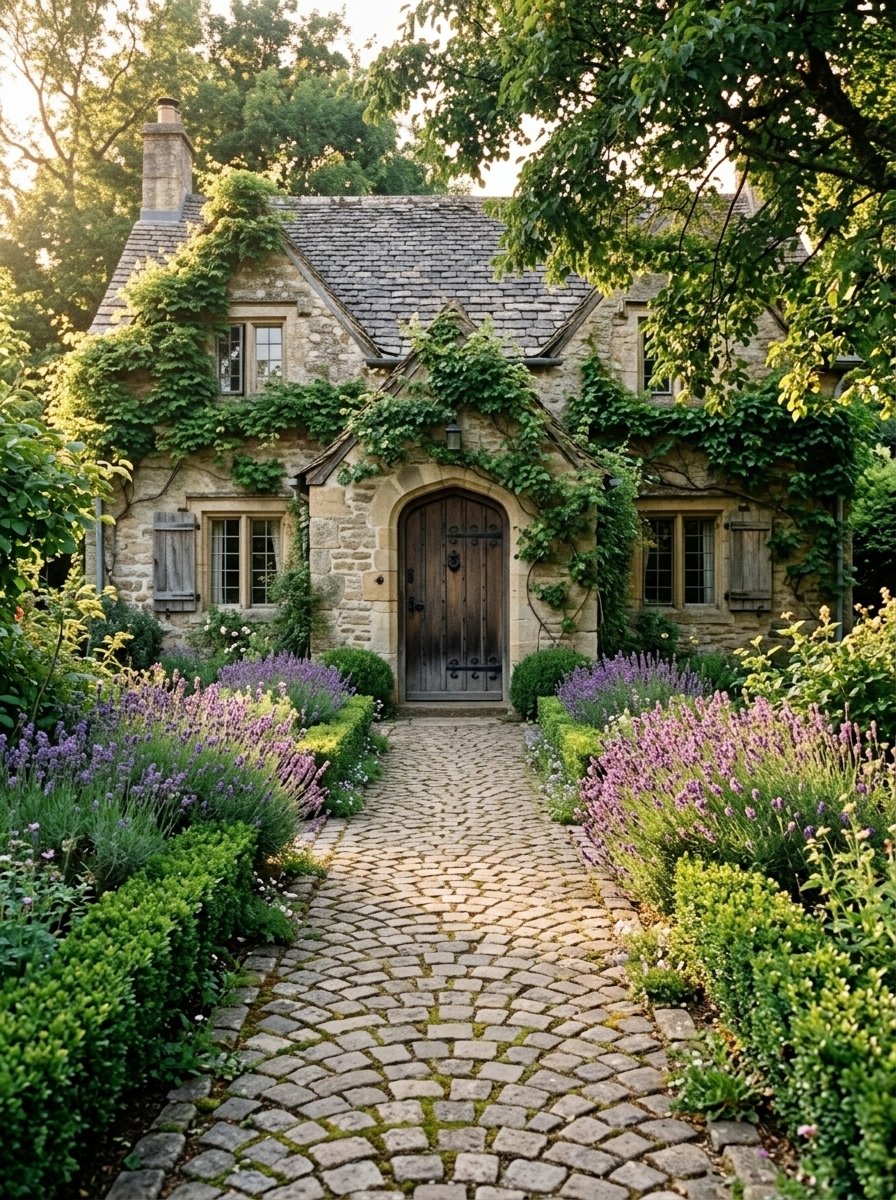
A European-style walkway draws on old-world charm. First, think cobblestones, clay pavers, or small stone setts in a curved or fan pattern. Then edge the path with boxwood or lavender. The tight pattern looks formal and refined. Because cobbles are small, a stable base is key. This look suits traditional and Tudor-style homes.
13. Desert Front Walkway
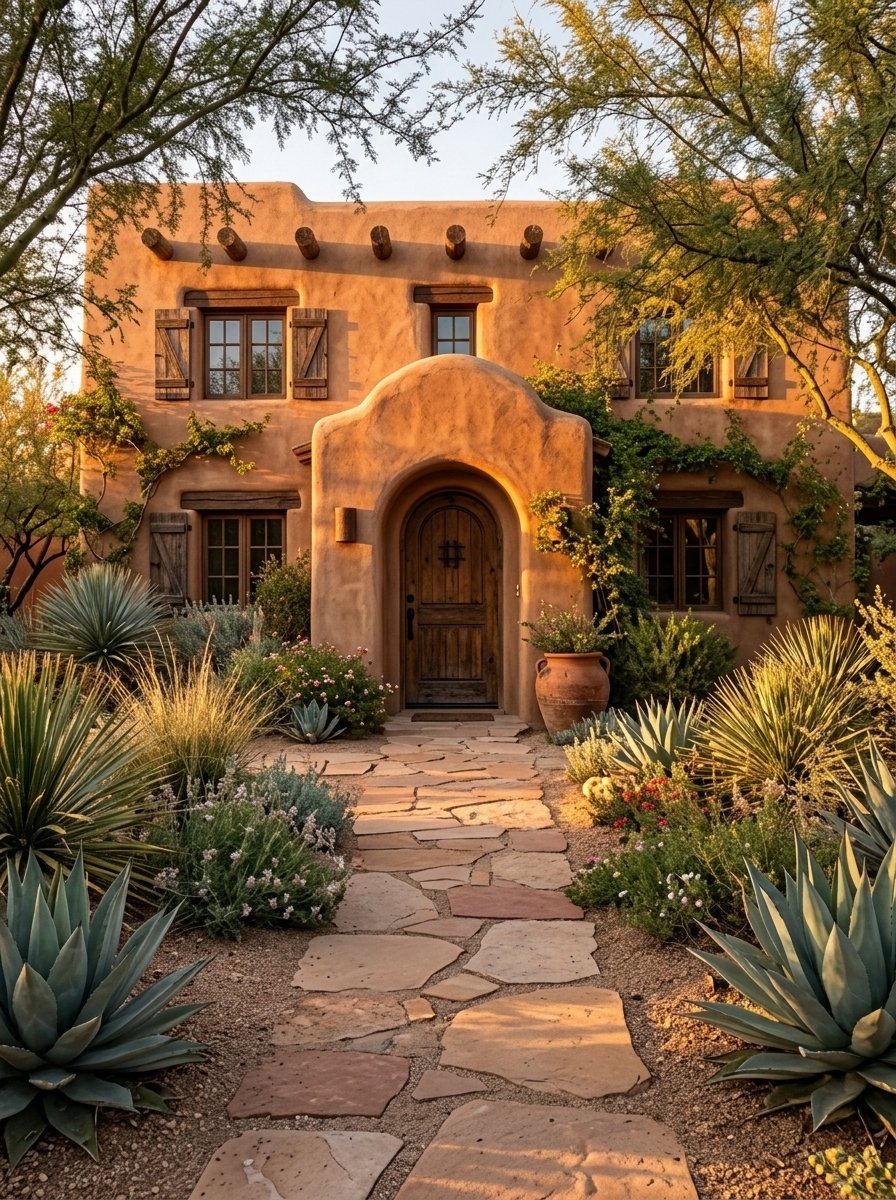
A desert walkway fits dry climates beautifully. First, use decomposed granite, flagstone, or pavers with gravel in between. Then add drought-tolerant plants, such as agave, yucca, and ornamental grasses. Because these plants need little water, the yard stays low maintenance. In addition, warm earth tones blend with the landscape.
14. Guest House Walkway
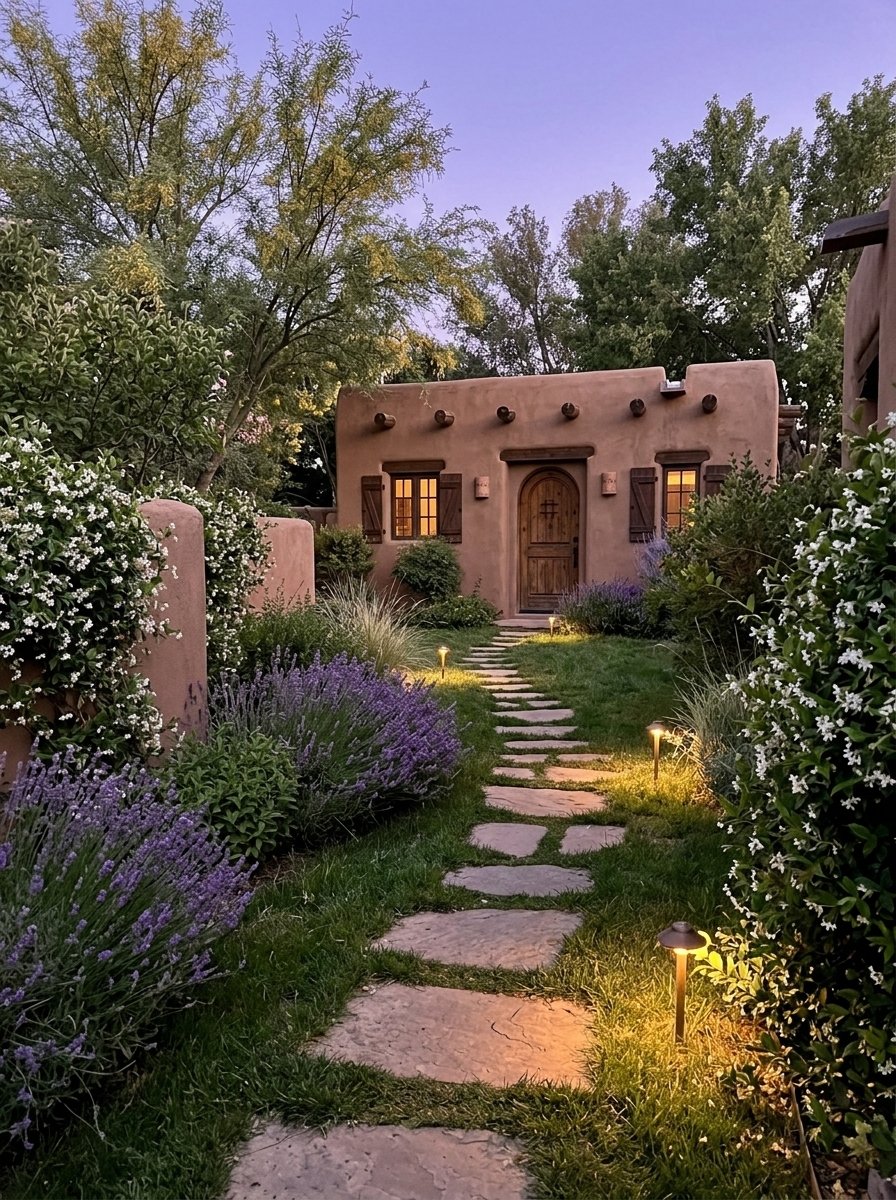
A walkway to a guest house should feel inviting and private. First, use a lightly curving path of stepping stones or pavers set in gravel or grass. Then add soft lighting and fragrant plants along the way. Because guests may arrive in the evening, safe lighting matters. As a result, the path feels like a quiet retreat.
Front Walkway Ideas by Shape and Layout
The shape of your path changes how the whole yard feels. These seven front walkway ideas show how layout can add charm and personality.
15. Curving Front Walkway
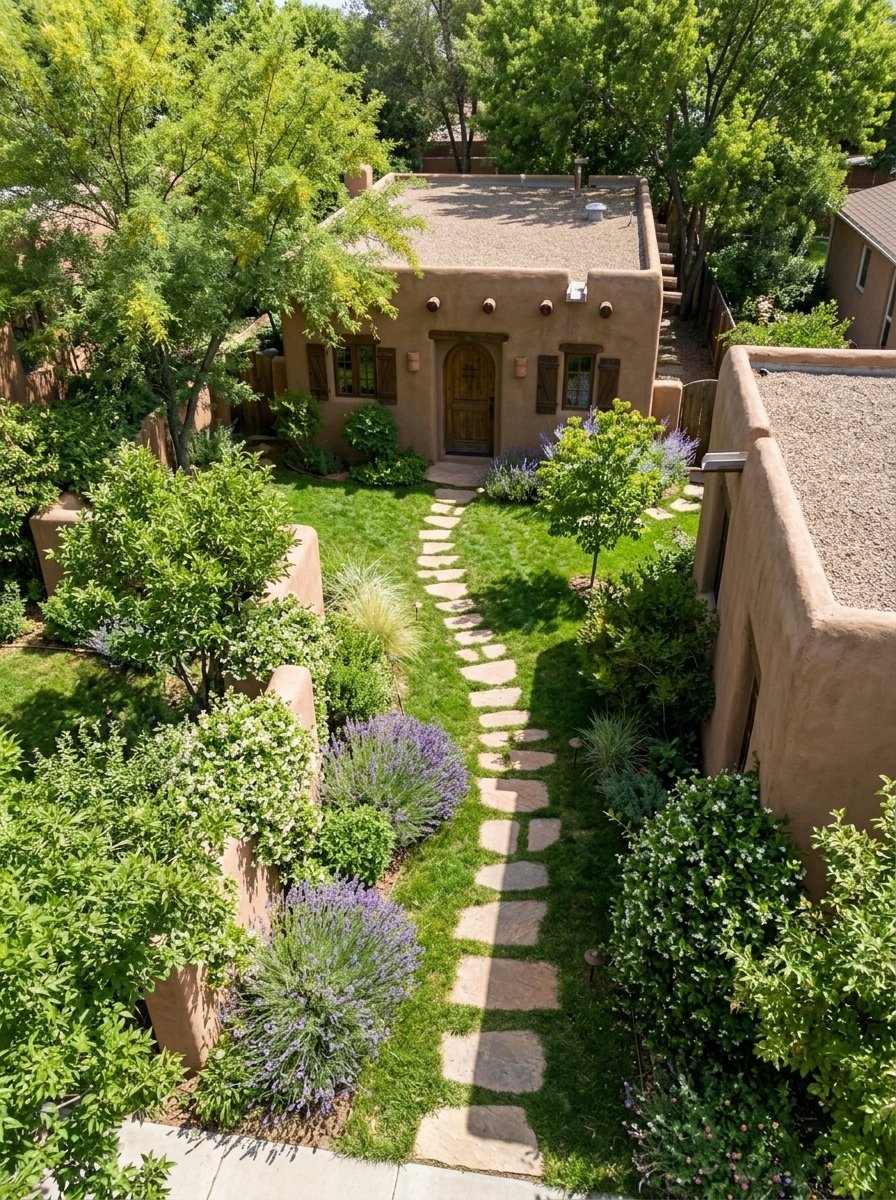
A curving walkway feels soft, natural, and inviting. Also, the gentle bend slows people down and reveals the home a little at a time. Edge the curve with plants, so it looks like it grew with the garden. Because curves are harder to lay out, mark the shape with a garden hose first. Then adjust until it looks right.
16. Asymmetrical Walkway
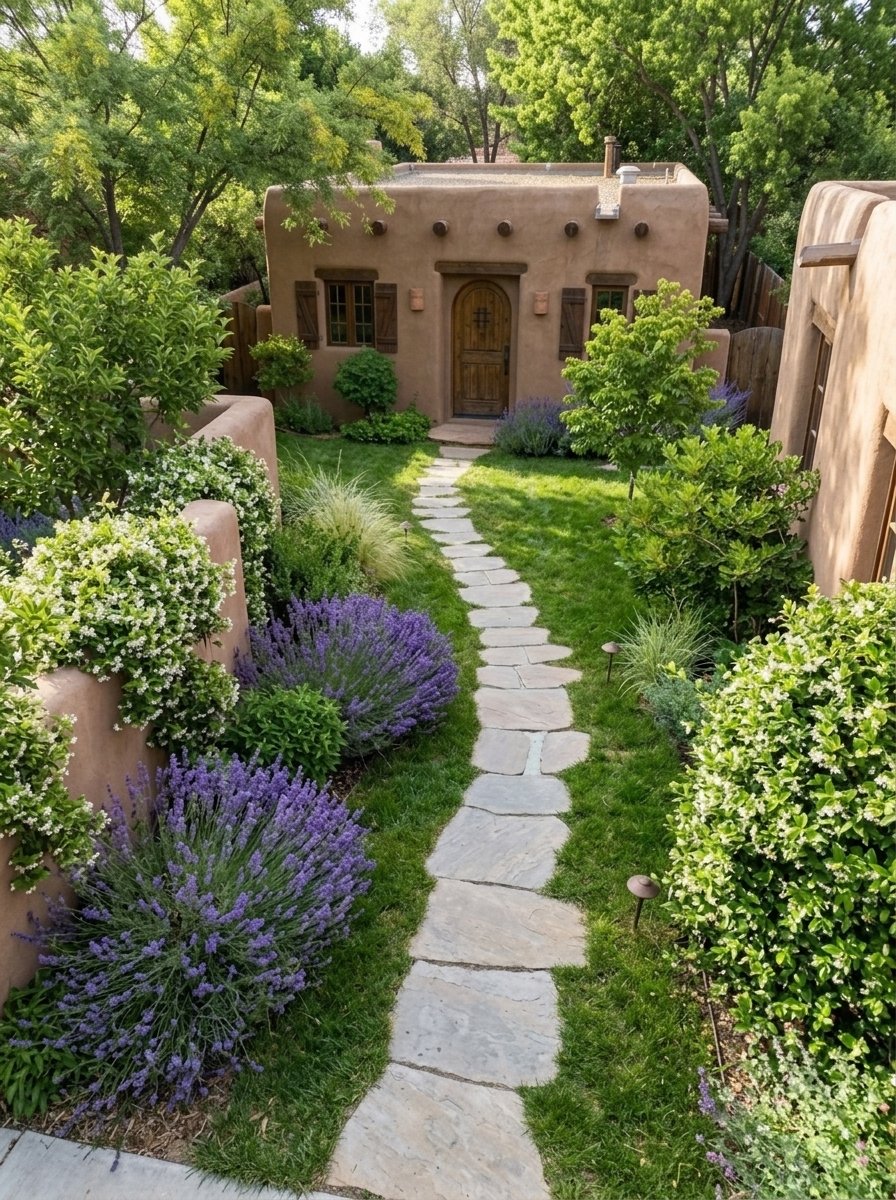
An asymmetrical walkway skips perfect balance and adds interest. For example, the path might start wide, narrow midway, or angle toward the door. Plants and lights on one side create a casual rhythm. Since the layout feels less formal, it suits modern and cottage homes. Meanwhile, a clear, safe surface keeps it practical.
17. Staggered Front Walkway
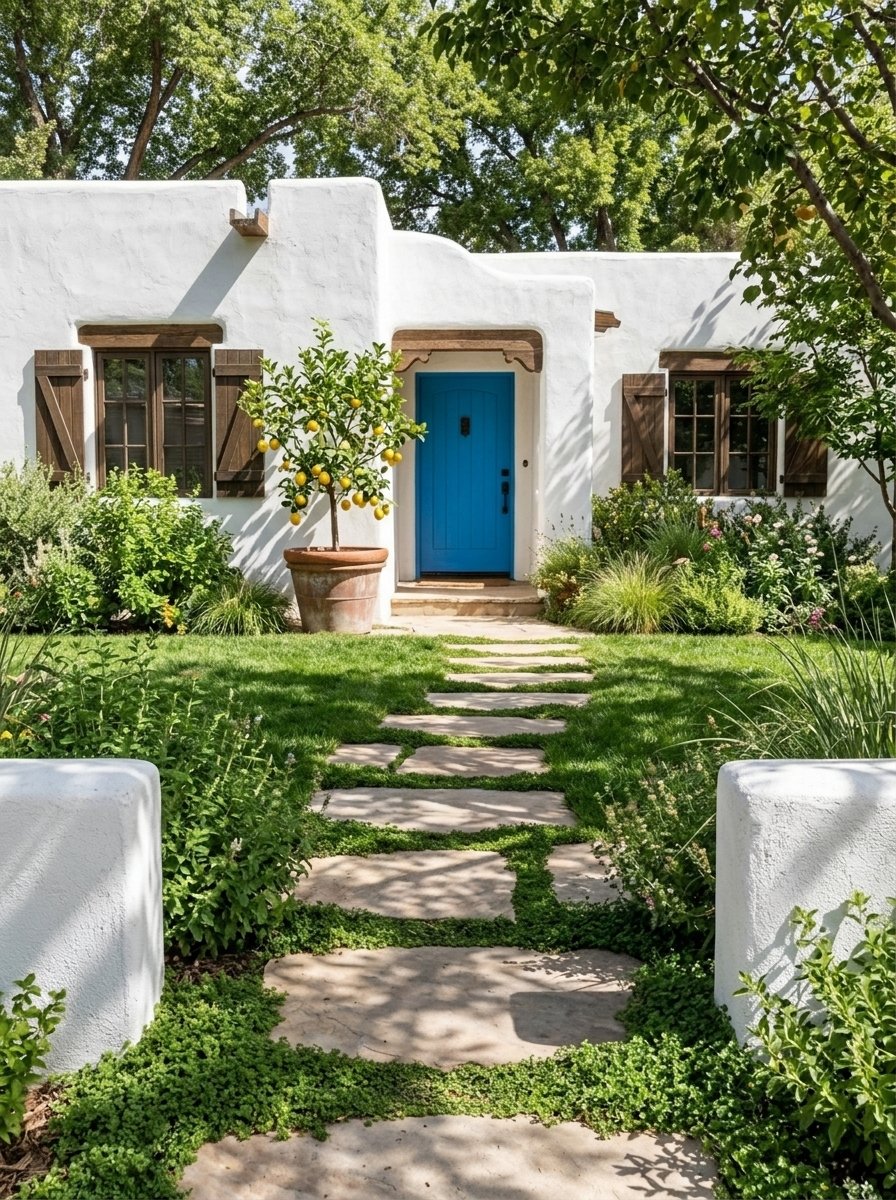
A staggered walkway uses stones or pavers set in an offset pattern. Also, large slabs placed at slight angles feel casual and artistic. Then fill the gaps with gravel, moss, or groundcover. Because the stones are separate, the path feels light and airy. In addition, staggering helps water drain easily between pieces.
18. Sidestepped Walkway
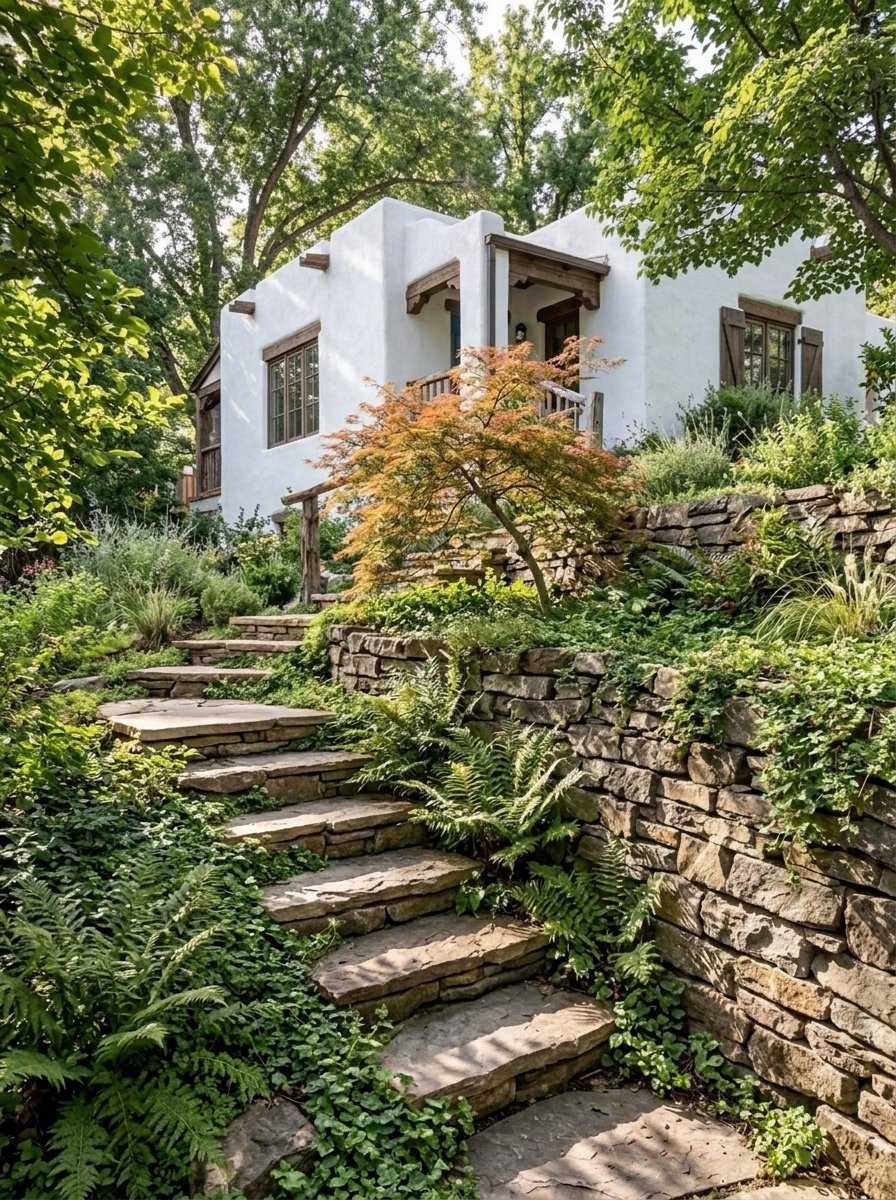
A sidestepped walkway shifts sideways as it moves toward the door. This design works well for sloped or narrow yards, where a straight path is not practical. Short landings give guests a place to pause. Since the path changes direction, it feels thoughtful and custom. Also, add lights at each turn for safety.
19. Simple Front Walkway
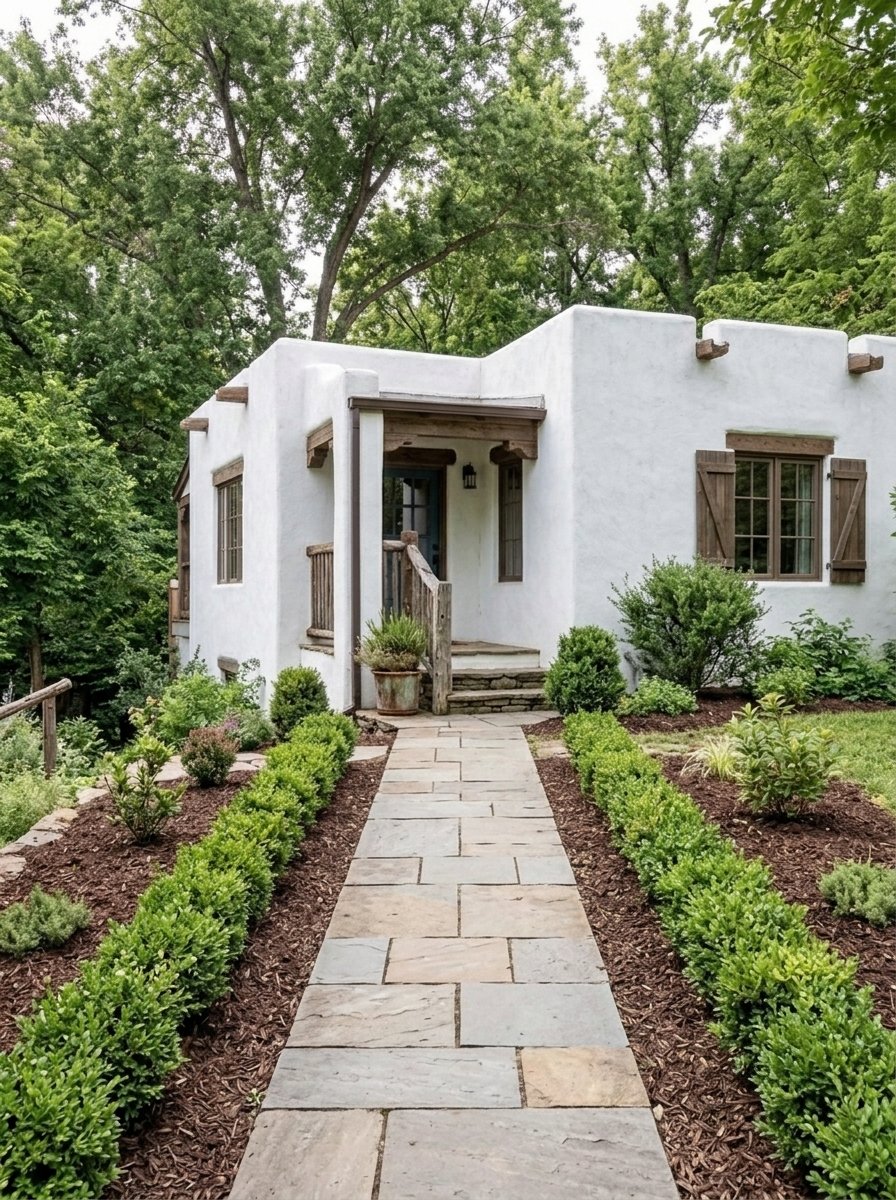
Sometimes simple is best. A straight, clean path of pavers or concrete leads directly to the door. Then add a border of low plants, and you are done. Since the design is straightforward, it is easy to build and maintain. This idea suits modern homes, small yards, and anyone who likes tidy lines.
20. Understated Walkway
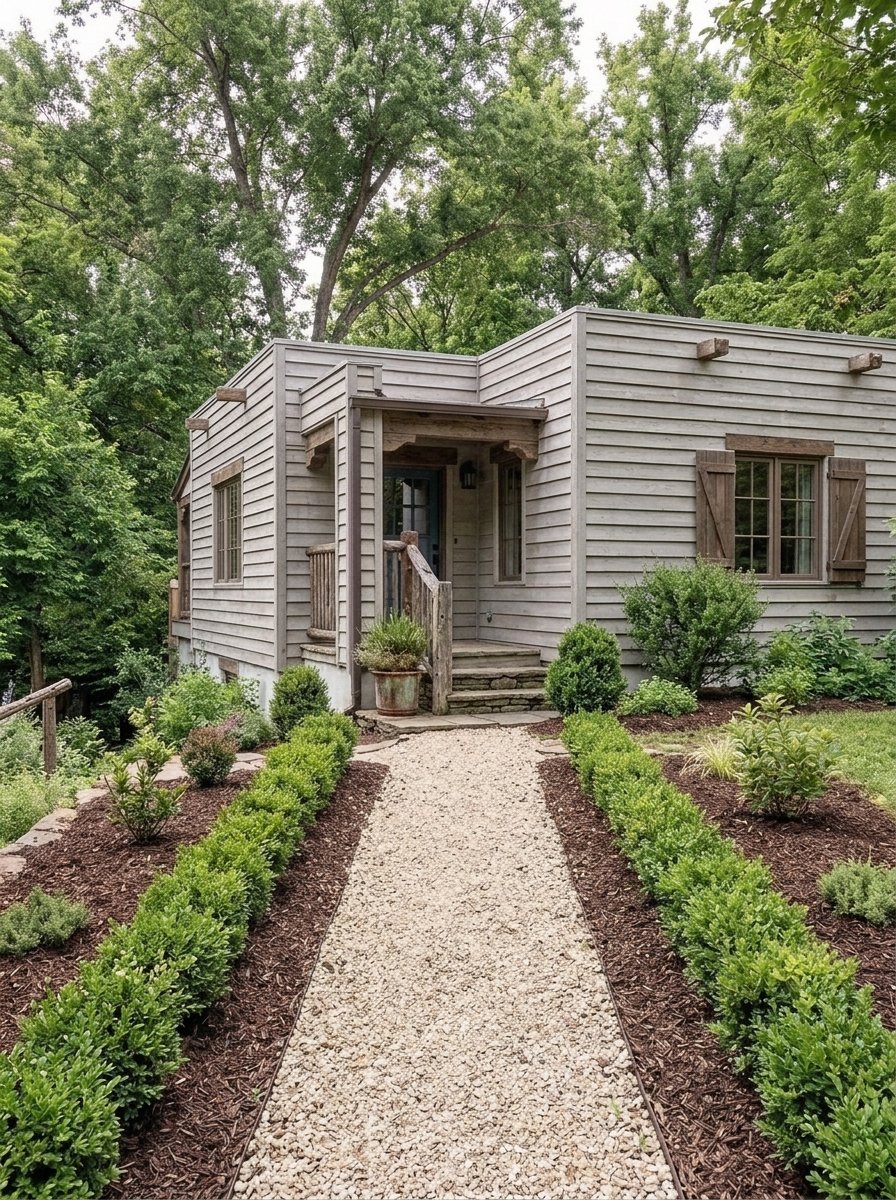
An understated walkway lets the house and garden take the spotlight. Use neutral materials, such as gray pavers or pale gravel. Keep plantings soft and green. Because the path blends in, the landscape feels calm and cohesive. As a result, the entry looks elegant without trying too hard.
21. Edged Front Walkway
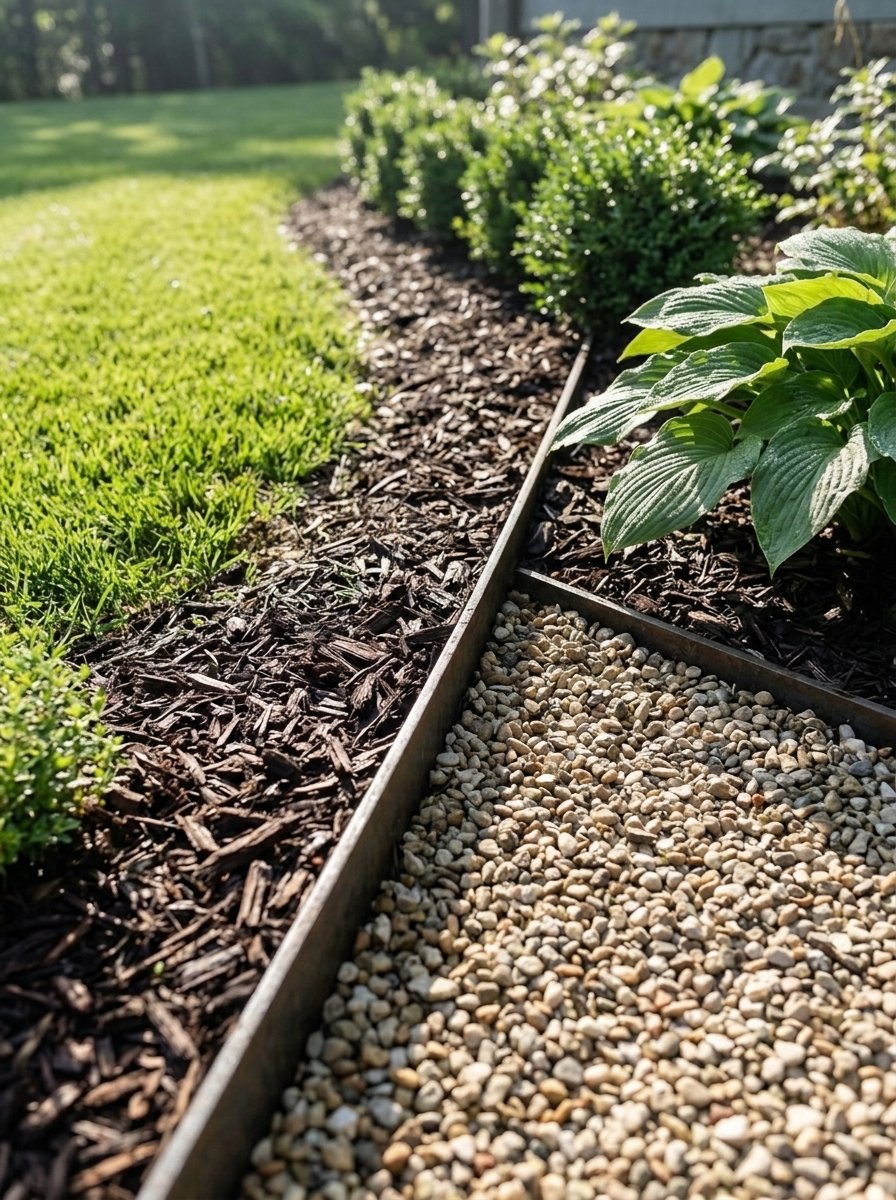
Crisp edging makes any path look finished. Metal, brick, or stone borders keep gravel and soil from spilling out. A clean edge also separates the path from the lawn and beds. Because edging is simple, it is an easy upgrade for an older walkway. In addition, it makes mowing and trimming much easier.
Front Walkway Ideas With Lighting, Plants, and Features
The finishing touches turn a path into a destination. These five front walkway ideas add light, greenery, and special features.
22. Landscaped Lighted Walkway
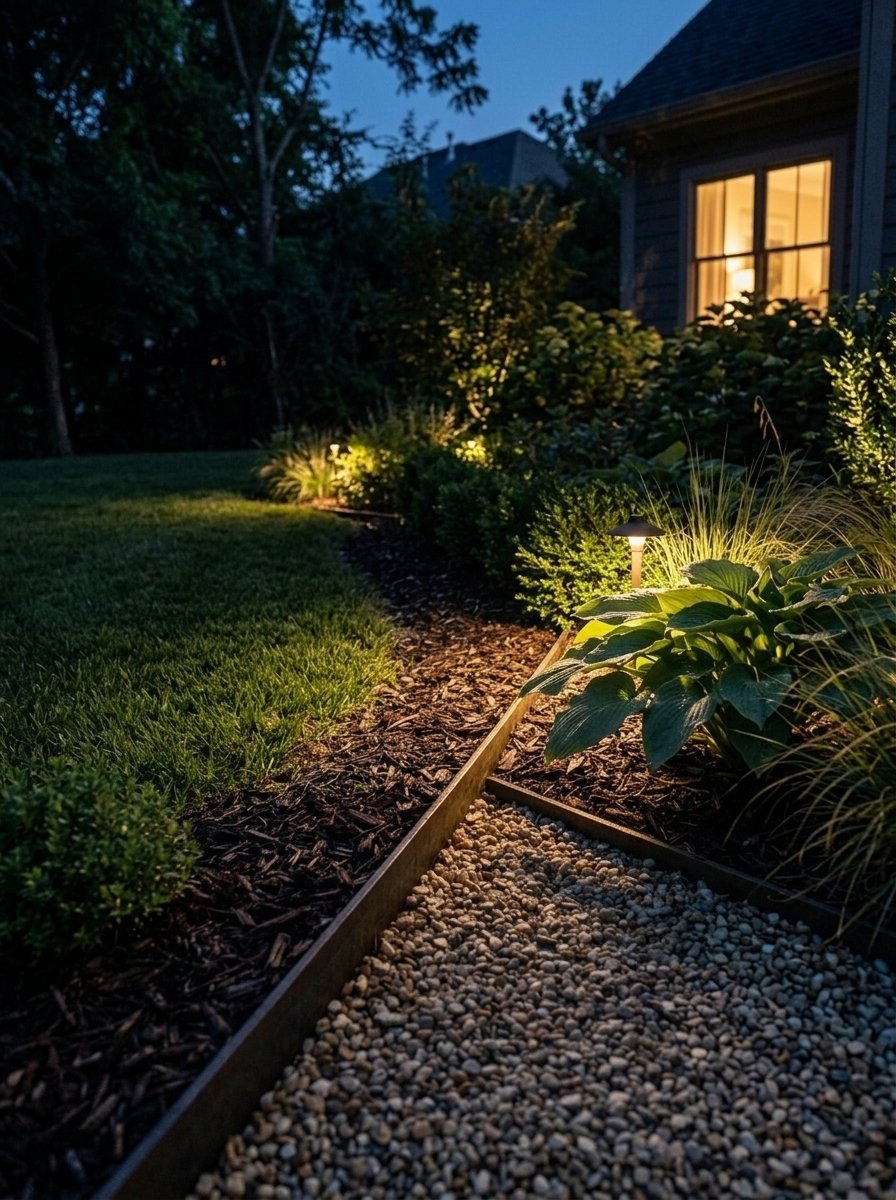
A landscaped lighted walkway blends plants with a soft glow. First, tuck path lights into flower beds, and let the light spill over leaves and blooms. The result feels like a garden at night. Because lights highlight plants, choose pretty textures, such as ornamental grasses or hostas. Also, warm bulbs feel more welcoming than cool ones.
23. Lighted Front Walkway
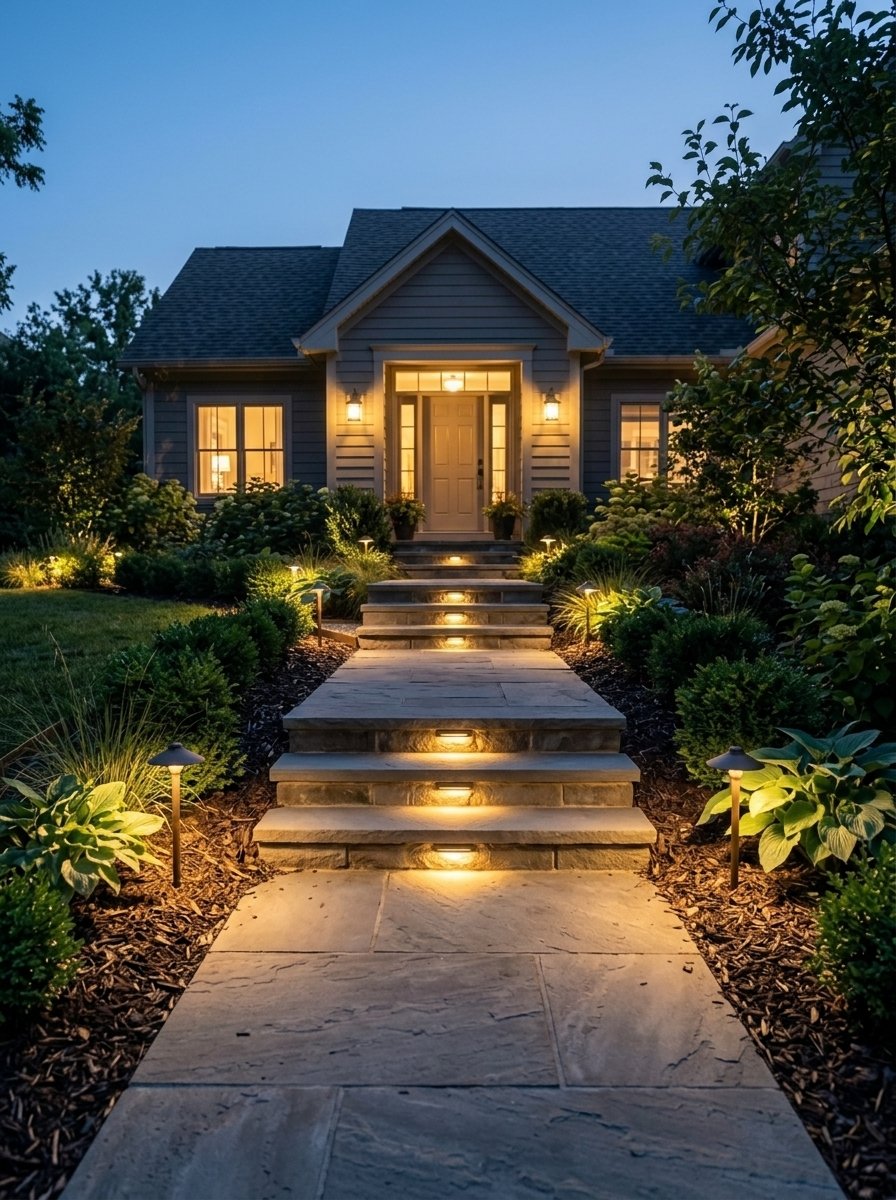
A lighted walkway improves safety and curb appeal at once. Low path lights, step lights, or small recessed lights guide guests to the door. Solar lights are easy to install, while low-voltage systems give steady brightness. Since good lighting helps prevent trips, focus on steps and turns. Moreover, a warm glow makes the home look cozy after dark.
24. Landscaped Front Walkway
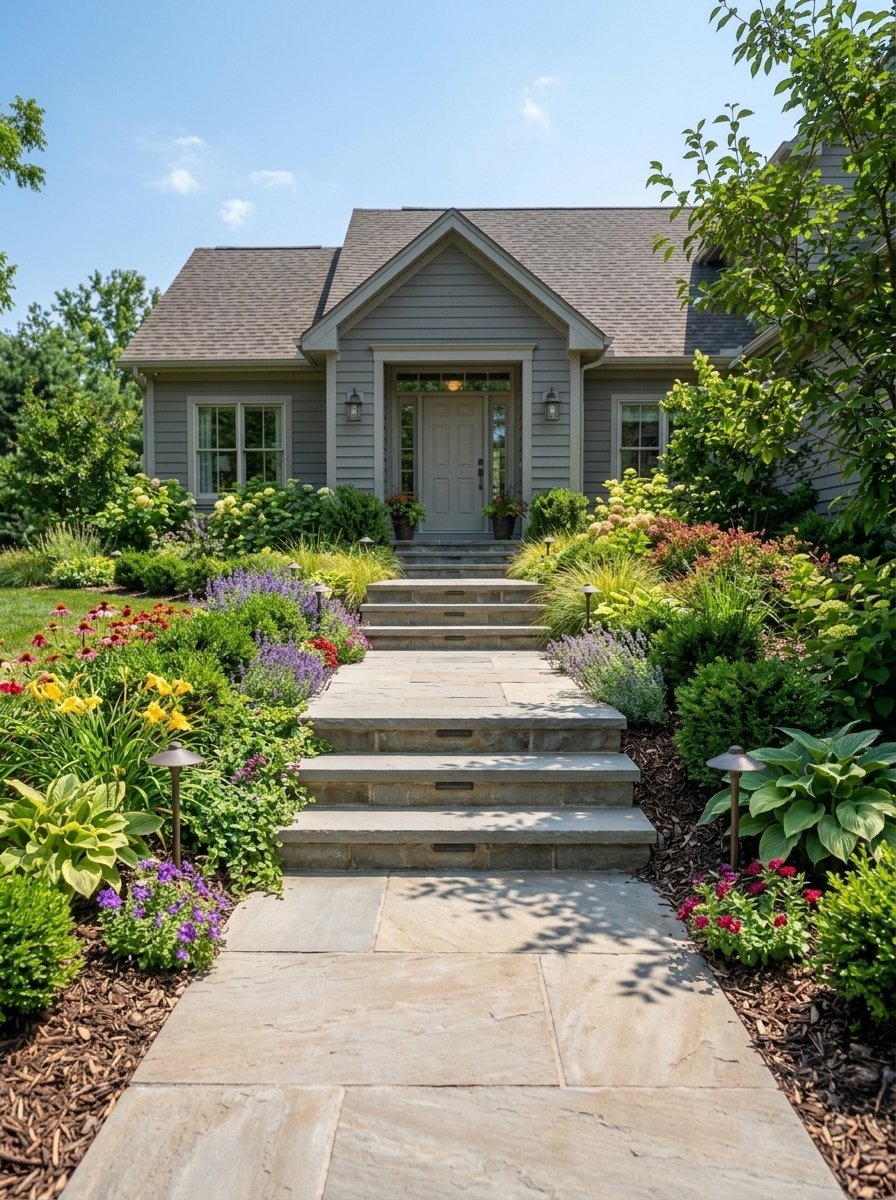
A landscaped walkway uses plants to frame the path. Layer tall grasses behind shorter flowers, and add a low border at the edge. Choose plants suited to your climate and light. Because plants soften hard surfaces, the path feels welcoming. Also, keep plants trimmed away from the walking surface, so guests do not brush against them.
25. Water Feature Walkway
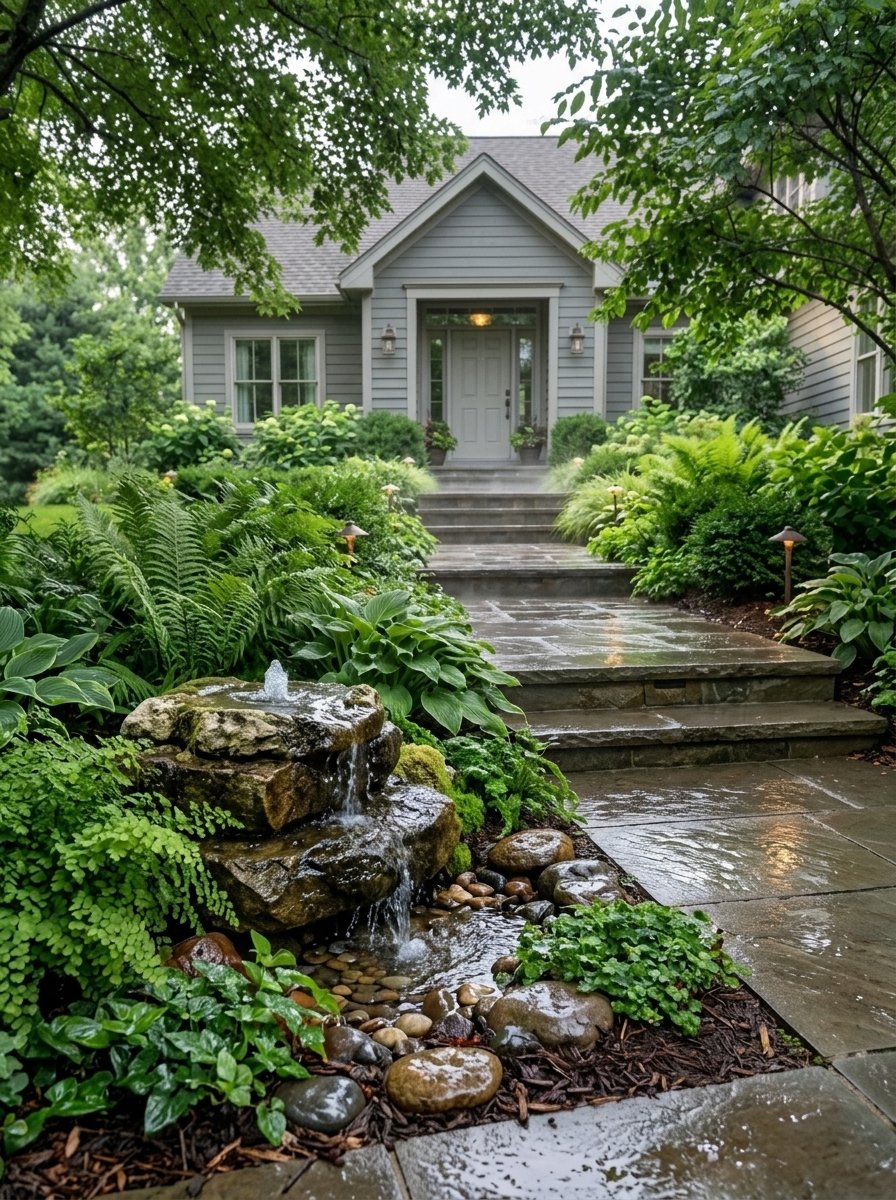
A water feature adds sound and charm to the entry. Place a small fountain or bubbling basin beside the path. Then surround it with ferns, stones, and soft lighting. Because moving water feels calming, guests relax as they walk. If you use electricity outdoors, plug into a GFCI outlet, and keep the feature safe for children.
26. Covered Front Walkway
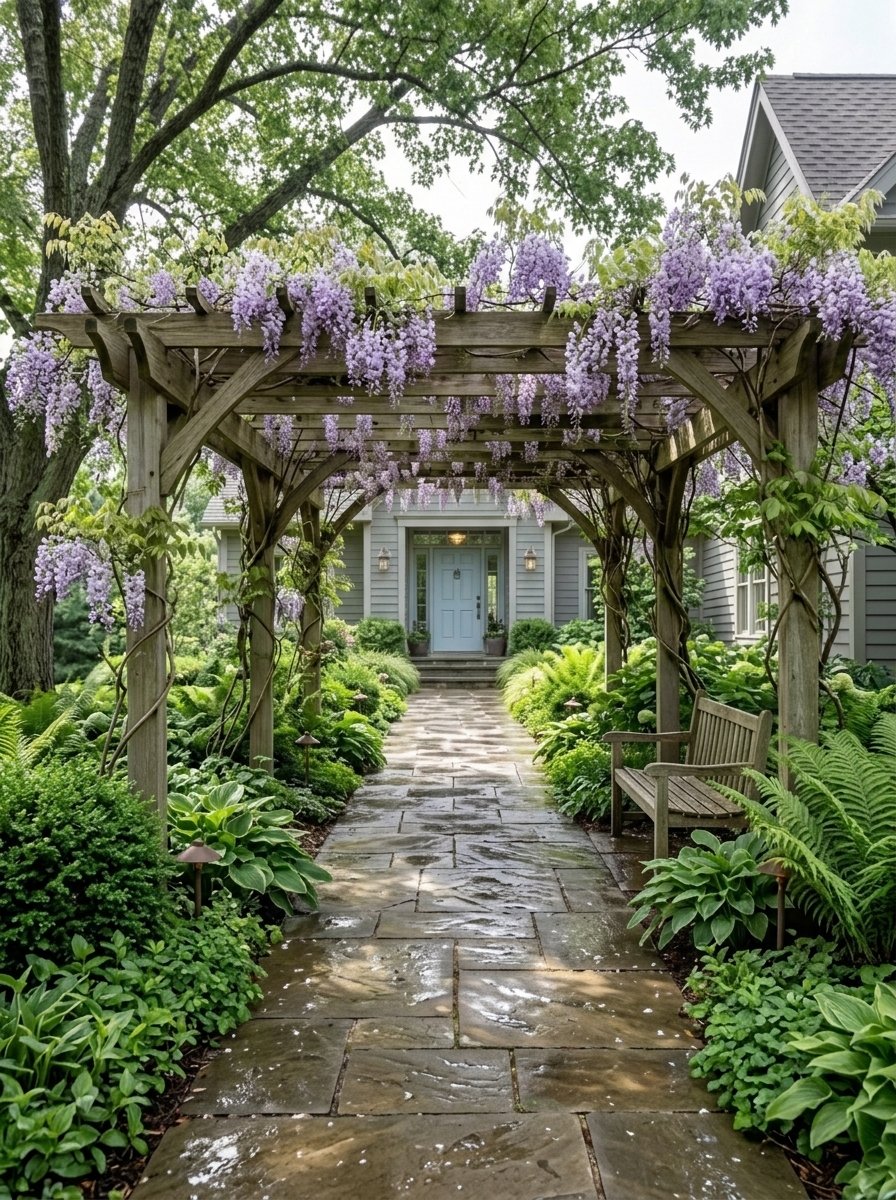
A covered walkway protects guests from rain and sun. A simple pergola, an arbor, or a roofed path leads to the door in style. Then add climbing vines for shade and fragrance. Since covered structures need solid footings, plan them carefully. Also, check local building rules, because many areas require permits for permanent covers.
Front Walkway Lighting Tips
Good lighting makes your front walkway ideas safe and beautiful. Keep these tips in mind.
- Light the steps first. Steps are the most common trip points.
- Use warm bulbs. Warm white feels inviting.
- Avoid glare. Shield lights, so they point down or across the path.
- Space lights evenly. Even spacing prevents dark patches.
- Choose weather-rated fixtures. Outdoor lights should handle rain and snow.
- Consider solar or low-voltage. Both are easier to install than line-voltage lighting.
Best Plants for Front Walkway Borders
Plants frame the walkway and soften hard edges. Choose plants that suit your climate, sun, and soil. A local nursery or extension office can help you decide.
- Lavender. It smells lovely, loves sun, and looks tidy.
- Boxwood. It makes a classic, formal border.
- Ornamental grasses. They add movement and texture.
- Hostas. They thrive in shade and offer bold leaves.
- Creeping thyme. It fills gaps between stones.
- Hydrangeas. They add big seasonal blooms near the door.
Also, keep tall or spiky plants away from the edge, so guests can walk comfortably.
Budget and DIY Tips for a Front Walkway
You can build a beautiful path without a huge spend. Here are a few ways to save.
- Start with gravel or stepping stones. They cost less than pavers and install quickly.
- Reuse materials. Reclaimed brick and salvaged stone add charm for less.
- Do the prep work yourself. Digging and leveling can save labor costs.
- Phase the project. Build the path first, and then add lights and plants later.
- Skip complex patterns. Simple layouts need fewer cuts and less time.
Before you dig, call 811 in the United States. It is a free service that helps you locate buried utility lines. Doing this protects you and keeps your project safe.
How to Maintain Your Front Walkway
A little care keeps your path looking new. First, sweep it regularly to remove dirt and leaves. Next, pull weeds from the joints, and top up sand or gravel as needed. Reseal concrete or stone every few years if recommended. In winter, clear snow promptly, and use de-icers that suit your material, since some products can damage pavers and concrete.
Common Front Walkway Mistakes to Avoid
Even great front walkway ideas can fail if you make a few common errors. Watch out for these.
- Skipping the base. Poor preparation leads to sinking and shifting.
- Ignoring drainage. Water pooling near the house can cause damage.
- Making the path too narrow. Cramped paths feel unwelcoming and awkward.
- Choosing slippery surfaces. Pick materials with good grip.
- Forgetting lighting. A dark walkway is unsafe and unattractive.
- Overdoing the design. Too many patterns and materials can look cluttered.
Frequently Asked Questions
What are the best front walkway ideas for curb appeal?
Brick, flagstone, and stone pavers all boost curb appeal. Also, add a gentle curve, soft lighting, and neat plants to complete the look.
How wide should a front walkway be?
A width of about 3 feet suits one person. However, a width of about 4 feet lets two people walk side by side, and wider paths feel more welcoming.
What is the cheapest material for front walkway ideas?
Gravel and simple stepping stones are usually the most affordable. Concrete pavers can also be budget-friendly.
Can I build a front walkway myself?
Many people can. Pavers, stepping stones, and gravel paths suit DIYers, while poured concrete and large structures are better for pros.
How do I keep a walkway from sinking?
First, prepare a deep, compacted gravel base, and then add a level sand layer. Good drainage also prevents shifting.
How do I light a front walkway?
Use low path lights, step lights, or solar lights. Also, place them evenly, and aim them downward to avoid glare.
Conclusion
Front walkway ideas can transform your entry and make your home feel welcoming. Whether you choose brick, flagstone, wood, or a simple gravel path, planning and a solid base make the difference. Then add lights and plants to finish the look. Soon, your path will be one of the best parts of your home.
Which of these front walkway ideas will you try first? Save your favorite, and share this guide with a friend who is planning a landscaping update.