My cousin redid her living room last year and I remember walking in thinking, “wait, this looks like a hotel but also somehow like she’s lived here for ten years.” That’s the whole trick with modern organic design. It’s polished without trying too hard, and warm without looking like clutter took over.
If your living room right now feels either too empty and cold, or too busy and chaotic, this style might be exactly what fixes it. Let’s get into how.
So What Does “Modern Organic” Actually Mean
Honestly, half the confusion around this term is that it sounds fancier than it is.
A modern organic living room is basically clean, modern furniture shapes paired with natural materials and earthy colors. Less glossy showroom, more “I want to fall asleep on that couch right now.”
Here’s roughly what goes into it:
- A calm, neutral base — walls, sofa, rug
- Natural textures like wood, linen, rattan, stone
- One or two earthy accent colors (sage, mustard, terracotta)
- Warm, soft lighting instead of that harsh overhead glow
Doesn’t sound complicated, right? The real skill is in the layering — getting it to look put-together instead of thrown together. Let’s go section by section.
Get Your Neutral Living Room Design Right First
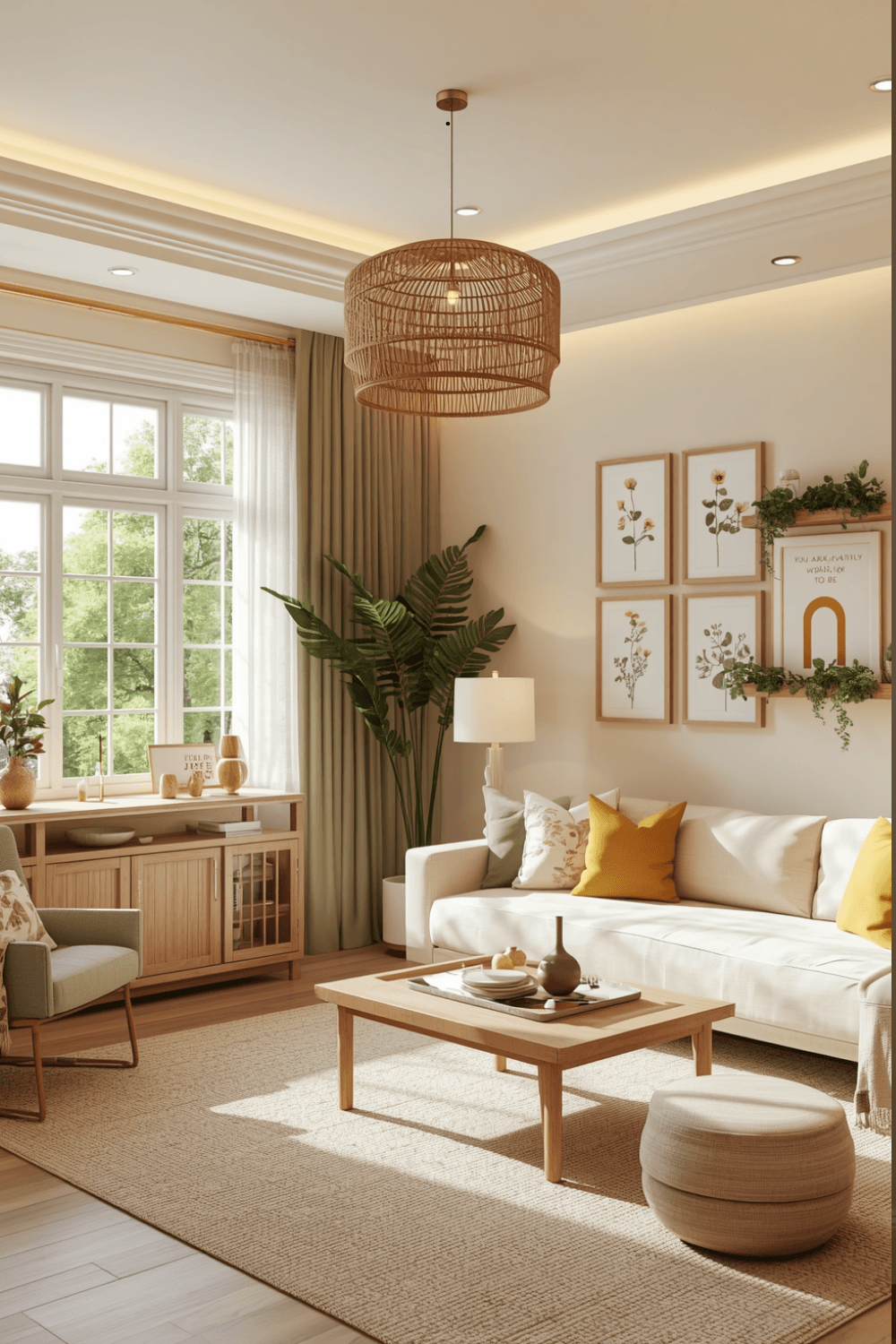
Every good organic-modern room starts out looking kind of plain. Weirdly, that’s a good sign.
A solid neutral living room design means the big stuff — walls, sofa, rug — stays calm. Cream, oat, warm greige, soft white. Nothing loud yet.
Why bother starting boring? Because your accent pieces need room to breathe. Throw color at everything and nothing actually stands out anymore.
Quick way to test it: could you add five different textures — wood, linen, wool, ceramic, rattan — to your current wall color without anything clashing? If yes, your base is solid.
Beige Doesn’t Have to Mean Boring
I get the eye-roll people give beige. It’s got a reputation for being the “safe, sad” color choice.
But beige living room ideas these days are nothing like that old builder-beige. The secret is variation — pair warm beige walls with a slightly darker jute rug, a creamy sofa, dark wood furniture. That contrast is what stops it from looking flat.
Cream Sectional Sofa — Is It Actually Practical
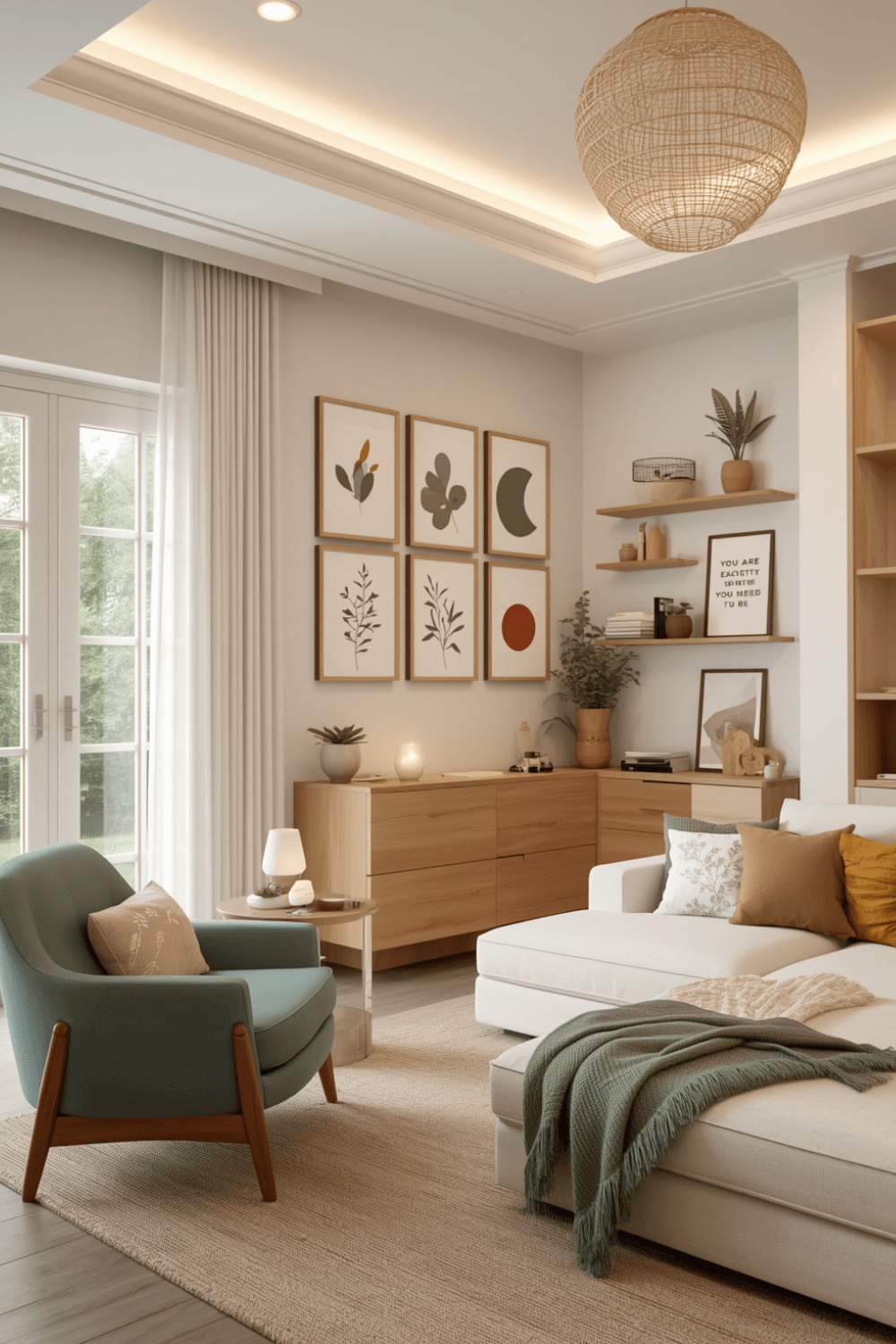
Let’s address the elephant in the room. A cream sectional sofa sounds like a nightmare if you’ve got kids, pets, or just… exist.
But fabric technology has genuinely improved. Performance weaves and stain-resistant options mean cream sofas aren’t the disaster they used to be.
A few things that help:
- Put a darker rug underneath to anchor it visually
- Throw in pillows in sage, rust, or mustard for contrast
- Add a chunky knit throw for that lived-in feel
Think of the cream sofa as your blank page — everything else gets to be a little louder because the sofa isn’t fighting for attention.
Natural Wood, and Lots of It
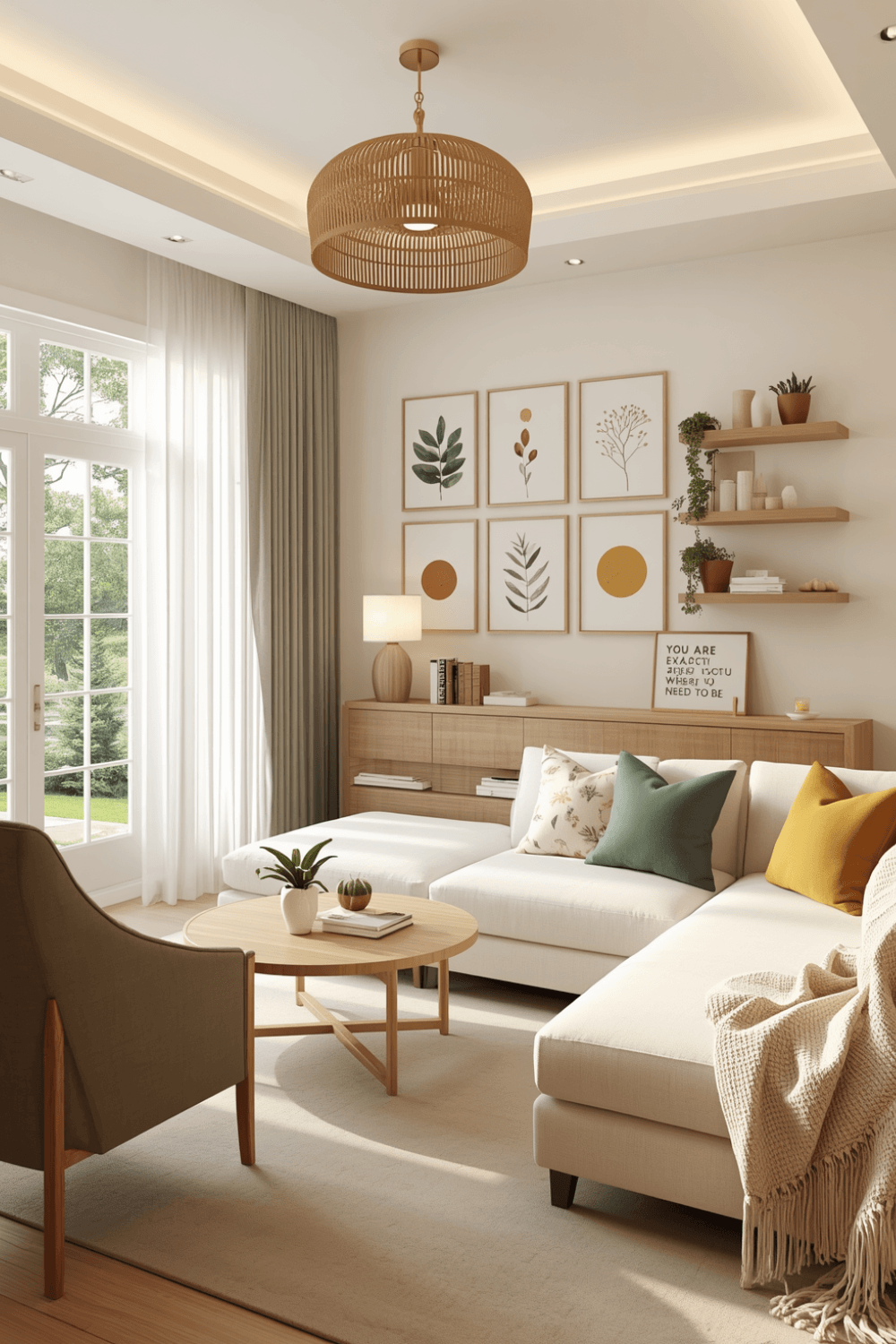
If organic modern design has one rule you can’t skip, it’s wood. Warm-toned, slightly imperfect wood — not that orange glossy stuff from twenty years ago.
A natural wood coffee table is probably the easiest place to start. Look for:
- Live-edge or rounded, organic shapes
- Light oak or walnut — pick based on what matches your floors
- Low, simple legs so it doesn’t feel heavy
After that, add wood in smaller doses. A console table, some picture frames, a wooden bowl, maybe a ladder shelf tucked in a corner. Repeating the same material across a few pieces is honestly what makes a room look intentional instead of random.
Now Bring In Some Color
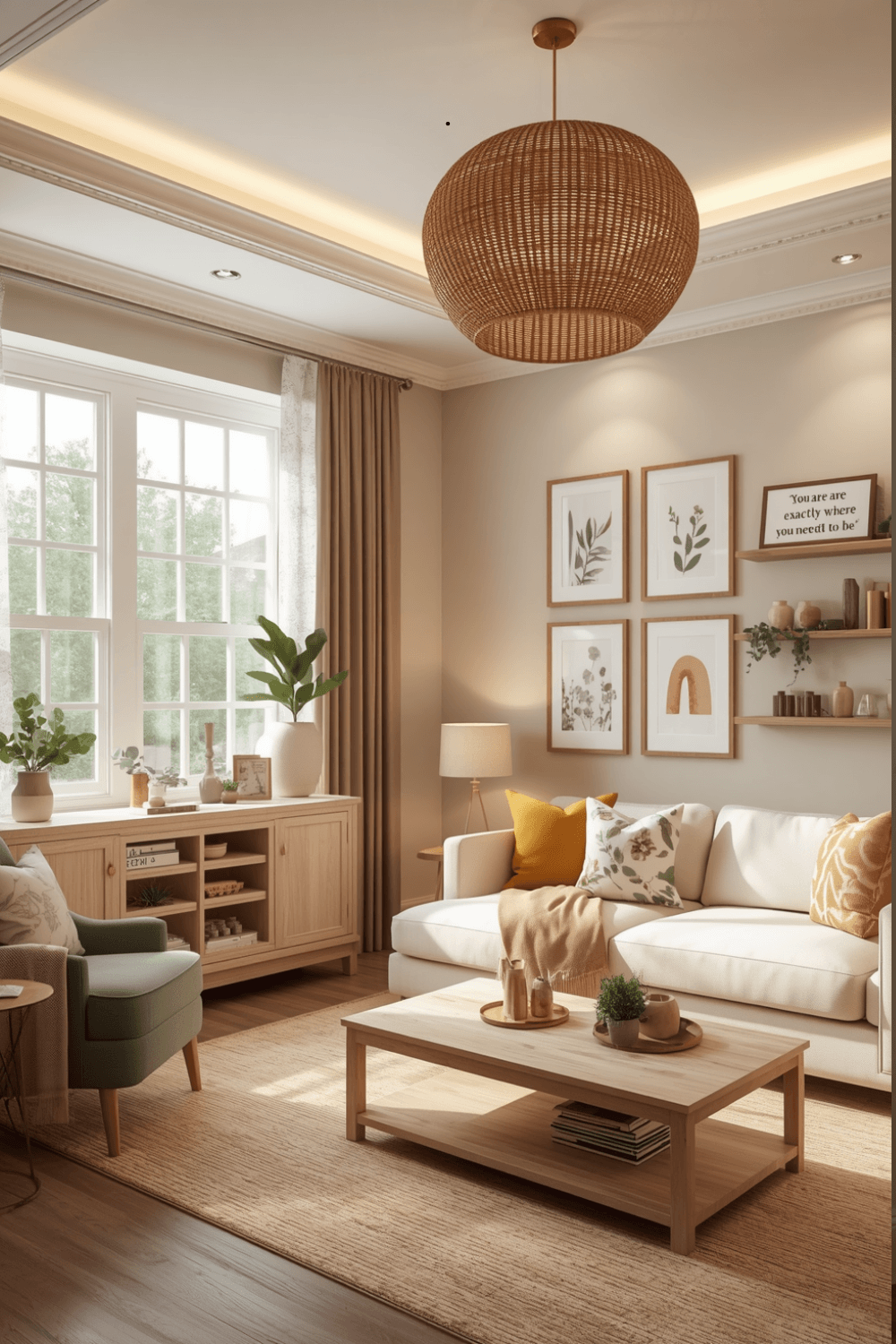
Here’s where your room finally gets a personality. All that neutral is beautiful, but leave it completely bare and it starts to feel flat.
Sage Green Accent Chair
A sage green accent chair has basically become the poster child of organic modern rooms lately. It’s earthy, it’s calming, and somehow it goes with almost every neutral tone you throw at it.
Other ways to work sage in without overdoing it:
- Throw pillows or a textured blanket
- A ceramic vase for your coffee table
- Soft sage linen curtains
One or two sage moments in a sage green living room is usually enough. Any more and it starts competing with itself.
A Little Mustard Yellow Never Hurts
Want something bolder? A mustard yellow living room touch — one pillow, a piece of wall art, maybe a small ottoman — brings warmth without going overboard.
Funny enough, mustard and sage actually look great together. If you’re stuck choosing between them, don’t. Use both, just sparingly.
Cream and Green: The Combo That Never Fails
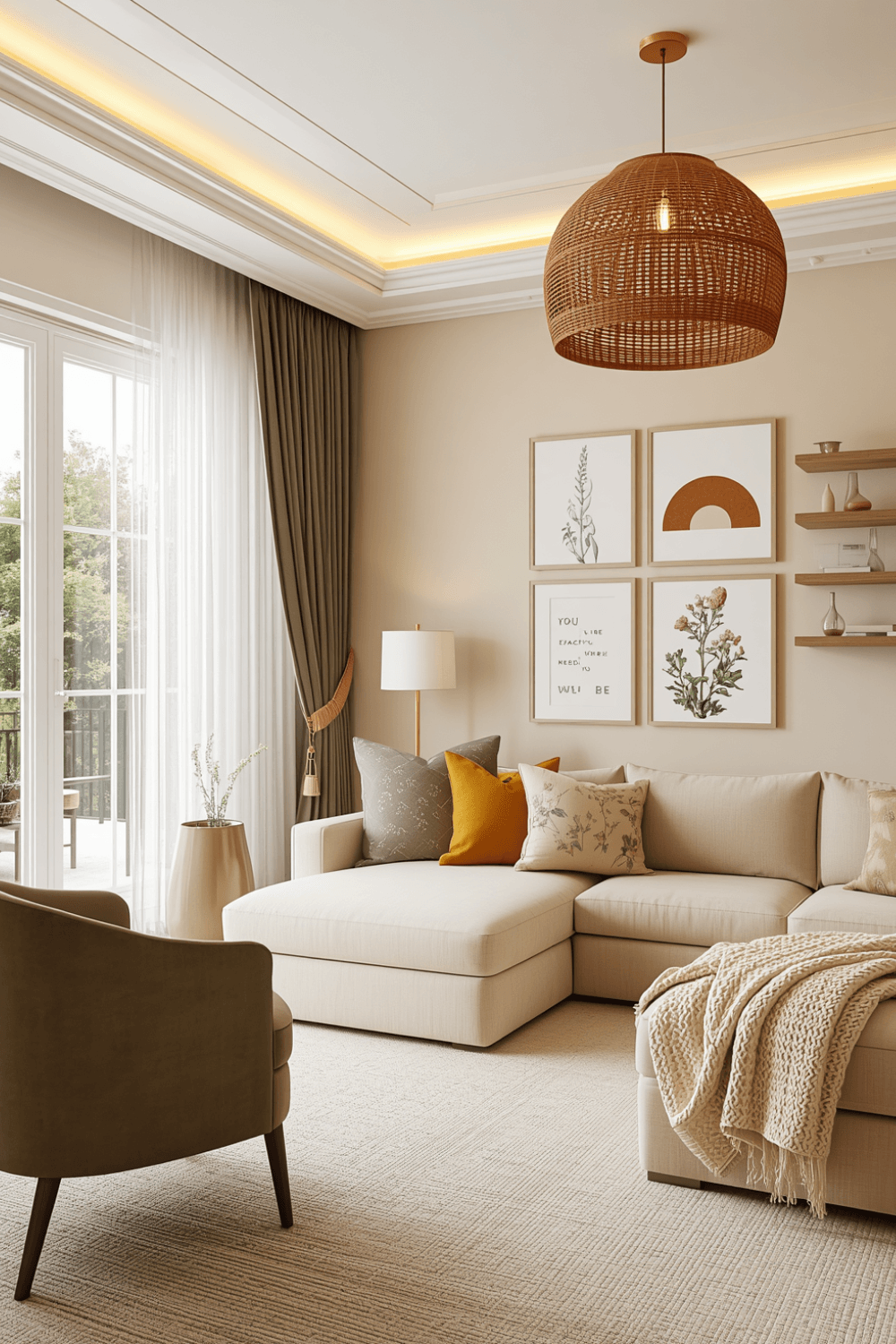
Can’t decide how bold to go? A cream and green living room is probably the safest, most timeless pairing in this entire style. Cream walls, cream sofa, green through plants, pillows, one statement chair. That’s it. It works every time, no overthinking required.
Let the Outdoors In
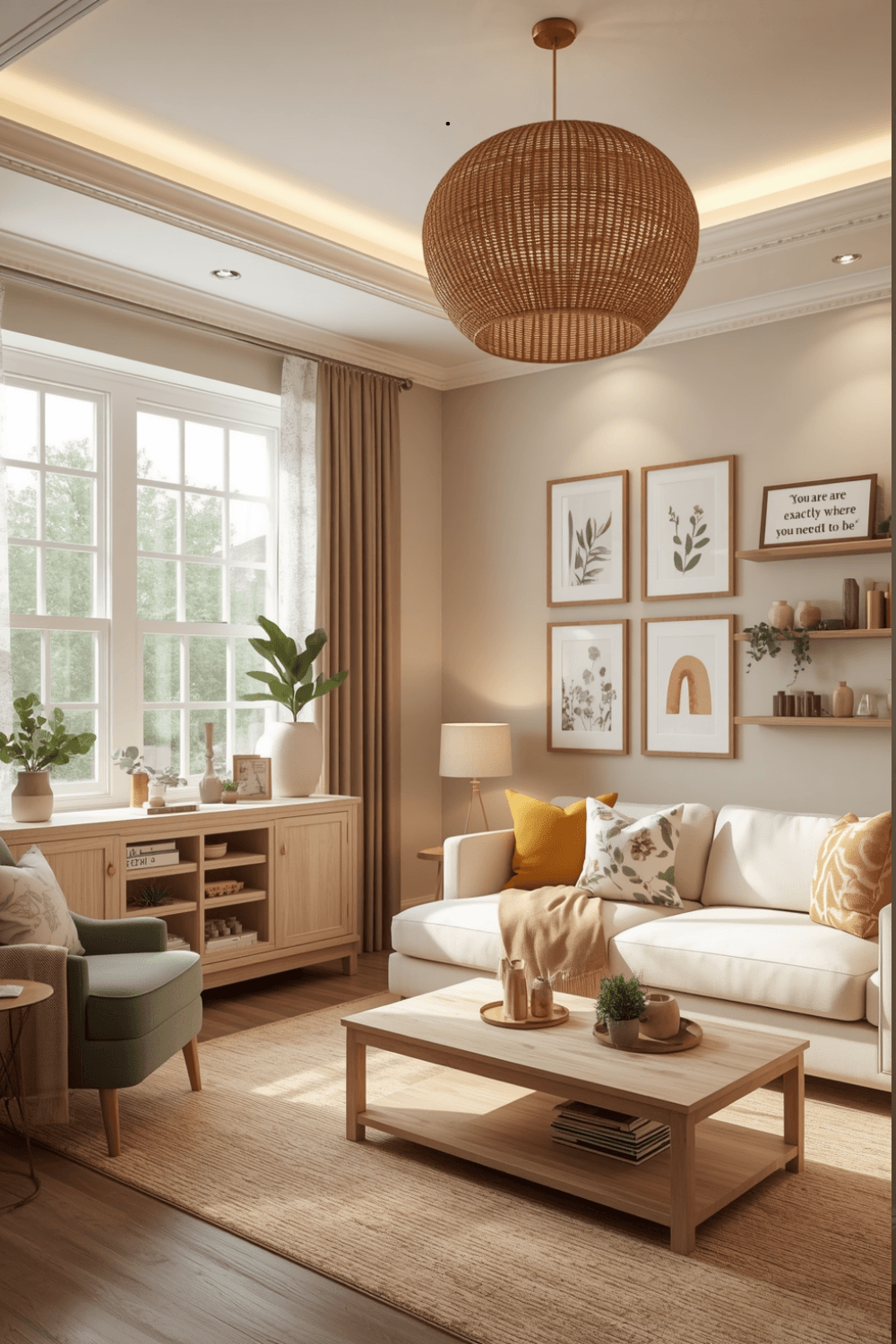
You really can’t do organic modern design without some kind of greenery. That’s kind of the whole point of the “organic” part.
Botanical Wall Art
Not everyone has the patience (or luck) to keep plants alive — myself included, I’ve killed more succulents than I’d like to admit. Botanical wall art ideas solve that problem:
- Framed pressed leaf prints
- Simple line-art florals
- A gallery wall mixing botanical prints with neutral photography
Botanical living room decor doesn’t have to mean actual plants everywhere. Sometimes a print does the same job.
Or Just Get Real Plants
If you’re ready to try the real thing:
- Start with one large floor plant — a fiddle leaf fig or rubber plant works well in an empty corner
- Add a trailing pothos somewhere on a shelf
- Group two or three small pots on your coffee table or console
Plants soften up hard edges in a way that prints just can’t fully replicate. There’s something about real greenery that makes a room feel actually alive.
Warm Lighting — The Part Everyone Forgets
I say this constantly and I’ll keep saying it: lighting can ruin or save a room faster than furniture ever will.
Warm living room lighting basically means layering at least three light sources:
- A floor lamp with a linen or rattan shade
- Table lamps placed at seating height, not just overhead
- Candles or a small lamp for that late-night, cozy glow
Stick with warm bulbs, around 2700K. Cool white light will undo everything cozy you just built — trust me, it’s the fastest way to make a warm room feel clinical again.
Small Living Room? This Style Still Works
Worried this whole look needs a huge house to pull off? It doesn’t.
Small living room styling with organic modern touches actually works in your favor — the neutral palette tends to make tight spaces feel more open, not smaller.
A few tips if your space is limited:
- Pick a smaller sectional or a loveseat instead of something oversized
- A round natural wood coffee table helps with flow and walking space
- Keep your color accents in one area instead of scattering them everywhere
Borrowing From Cozy Cottage Style
If you like the organic modern look but want it a touch warmer and softer, mixing in some cozy cottage living room elements works surprisingly well.
Think:
- A little more pattern — subtle plaids, woven textures
- Mixing vintage pieces with modern furniture
- Warmer wood tones, more layered textiles
People are calling this blend “modern cottage” now, and it fits right into that whole cozy neutral home decor wave everyone’s obsessed with lately.
Quick Checklist Before You Call It Done
- Neutral base on walls and the big furniture pieces
- At least two or three different textures — wood, linen, rattan, jute
- One or two accent colors, not more
- Minimum three warm light sources
- At least one plant or botanical touch
- Room doesn’t feel too matchy — a little imperfection is the goal
A Few Related Topics Worth Linking
If this is going on a blog, these would connect naturally:
- How to layer textures in a neutral living room
- Best indoor plants for low-light apartments
- Warm vs. cool lighting — how to choose
Final Thoughts
A modern organic living room doesn’t need a full furniture overhaul. It just needs a calm neutral base, some real texture, and one or two colors that actually mean something to you.
The one thing to remember: start neutral, add natural materials, then let sage or mustard or whatever speaks to you do the talking. Less really does more here.
So what’s first — the wood coffee table, that sage chair you’ve been eyeing, or just swapping your bulbs for something warmer tonight? Pick one and start. The rest tends to fall into place on its own.
Frequently Asked Questions
1. What colors define a modern organic living room?
Warm neutrals like cream, beige, and greige make up the base, with earthy accents like sage green or mustard yellow layered on top. It feels calm without being boring.
2. Is a cream sectional sofa practical for families?
It’s more practical than people think, especially with today’s stain-resistant fabrics. Pair it with a darker rug and washable pillows and it holds up fine.
3. How do I add color without ruining the neutral look?
Pick one or maybe two accent colors and repeat them in small doses — a chair, a few pillows, a vase. That’s it. More than that and things start feeling messy.
4. Can small living rooms pull off this style?
Yes, actually really well. The neutral palette tends to open up small spaces instead of shrinking them. Just watch your furniture scale and keep colors in one zone.
5. Do I need real plants for this to work?
Not at all. Botanical prints or dried arrangements do a similar job if you don’t have the time or patience for real plants.
6. What kind of coffee table fits this style?
A natural wood one with a rounded or live-edge shape works best. Light oak or warm walnut usually blends in nicely with neutral rooms.
7. How is this different from Scandinavian design?
They’re cousins, really. Modern organic tends to lean warmer and more textured, while Scandinavian design usually stays lighter and cooler. Both love natural materials though.