Ever walk into a foyer that feels calm the second you cross the threshold, nothing loud, nothing cluttered, just a few well-chosen pieces doing all the work? That’s the specific feeling good modern foyer ideas built on a Japandi foundation are designed to create, and it’s a lot more deliberate than it looks from the outside. It’s not an accident that a room can feel that settled the moment you walk in. Someone made a series of small, quiet decisions to get there.
Japandi, that blend of Japanese minimalism and Scandinavian warmth, translates beautifully into a foyer, since both traditions value restraint and natural materials over decoration for its own sake. Neither philosophy is chasing a trend, which is part of why the combination holds up so well over time. Let’s go through how to bring that calm, warm-minimalist feeling into the one space every guest experiences first, before they’ve even had a chance to form an opinion about the rest of your home.
Why Japandi Works So Well in a Foyer
A foyer is often small and transitional, which makes it the perfect testing ground for a design philosophy built on doing more with less. There’s simply nowhere for clutter to hide in a room this size, which means Japandi’s core principle, natural materials, quiet color, genuine restraint, actually gets easier to execute here than in a larger, more forgiving room.
Good modern foyer ideas built on this foundation prioritize a few substantial, well-made pieces over filling every available surface, letting the natural wood and simple lines carry the whole design rather than leaning on decorative objects to do the visual work. The empty space between those pieces matters just as much as the pieces themselves, which is a strange thing to say out loud but becomes obvious the moment you actually stand in a room designed this way.
Style Foundations
1. Japandi Entryway Design
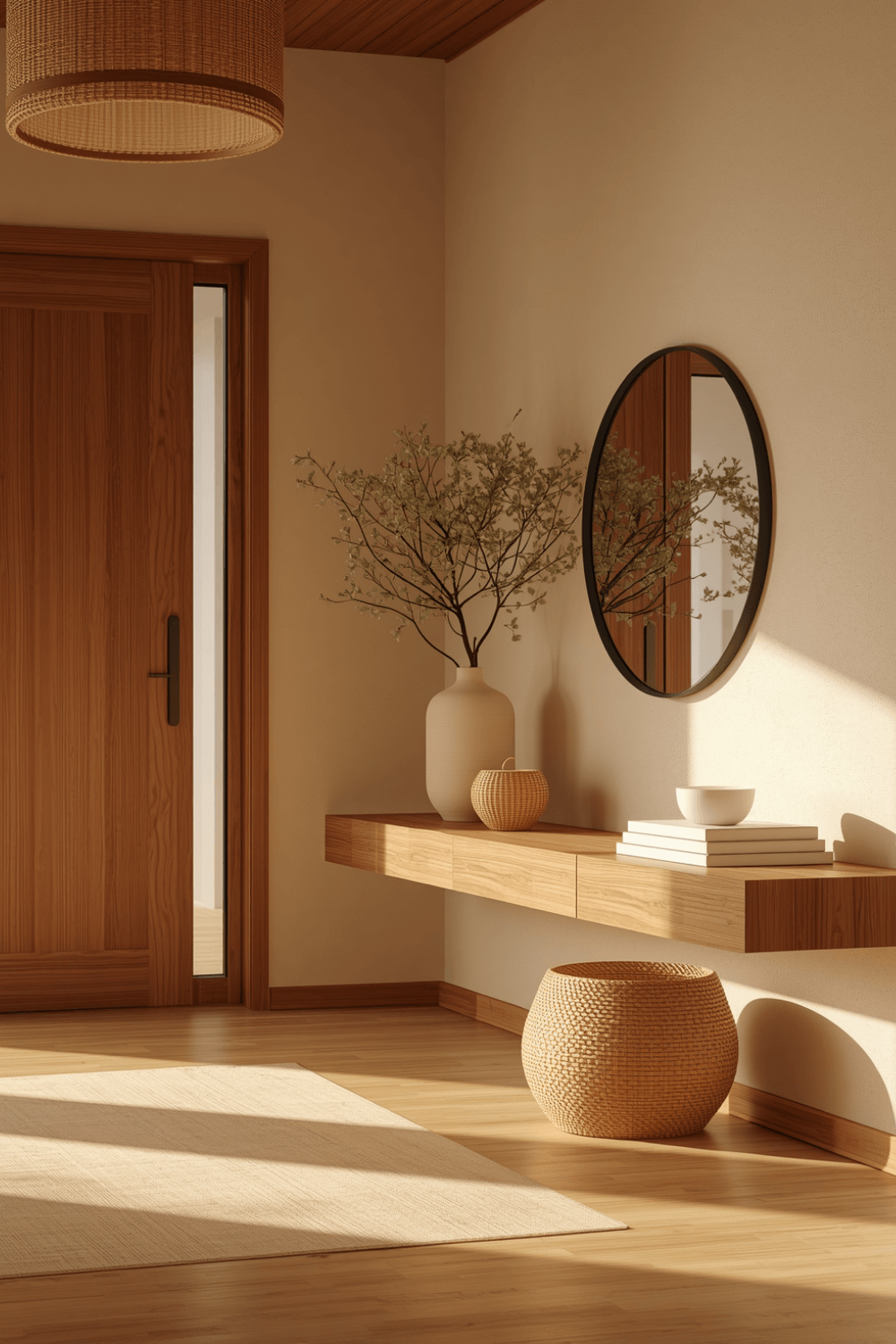
Japandi entryway design leans on natural wood tones, simple furniture silhouettes, and a genuinely restrained amount of decor, one console, one mirror, rather than a busier, more layered look that tries to do everything at once. The empty space itself is part of the design, not a gap waiting to be filled with more stuff.
2. Japandi Home Decor Beyond the Entryway
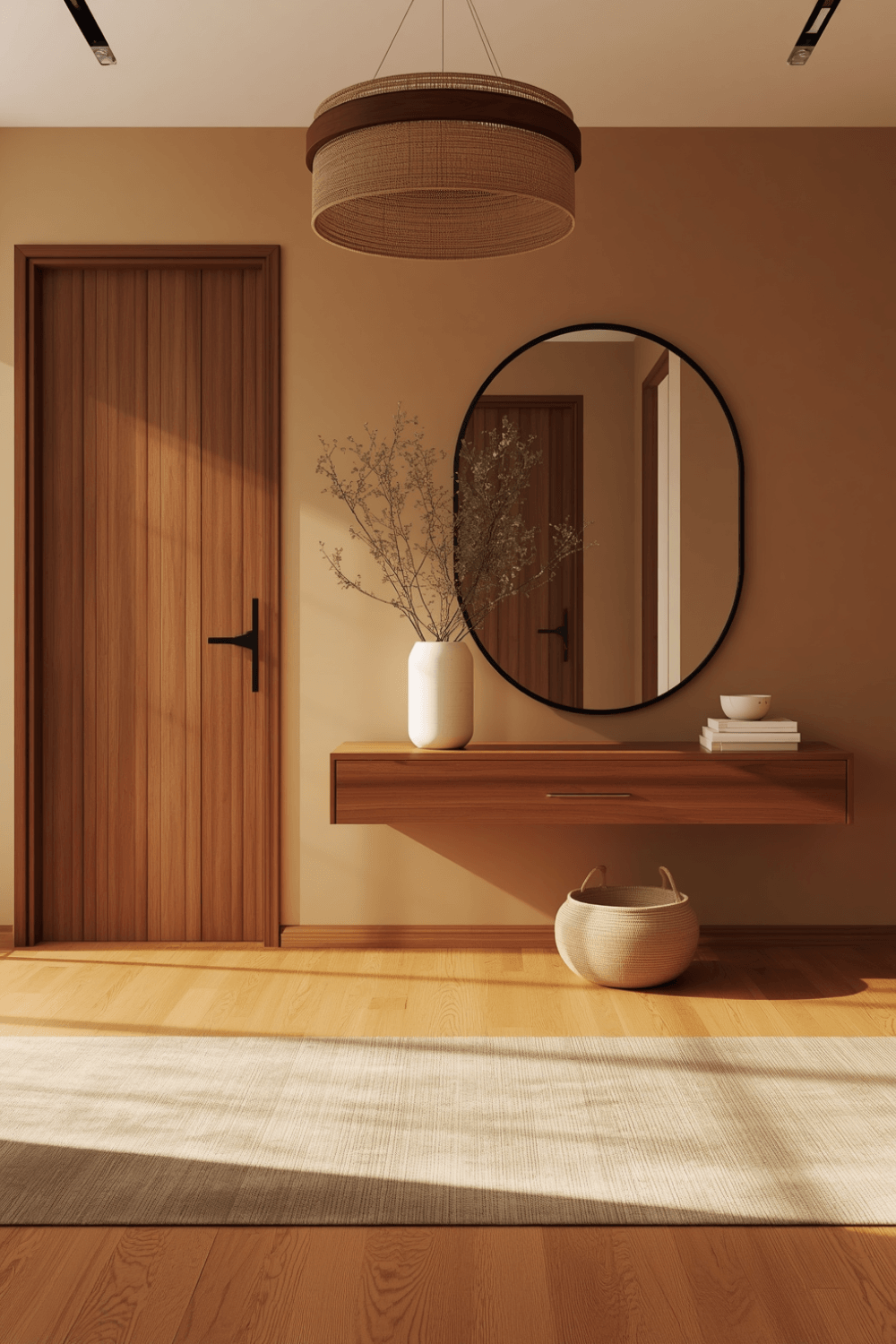
Japandi home decor principles applied consistently from the foyer into adjoining rooms help the whole home feel cohesive, muted earthy tones, functional furniture, carried through rather than isolated to just the entry point and abandoned the moment you step past it into a completely different aesthetic.
3. Warm Minimalist Entryway
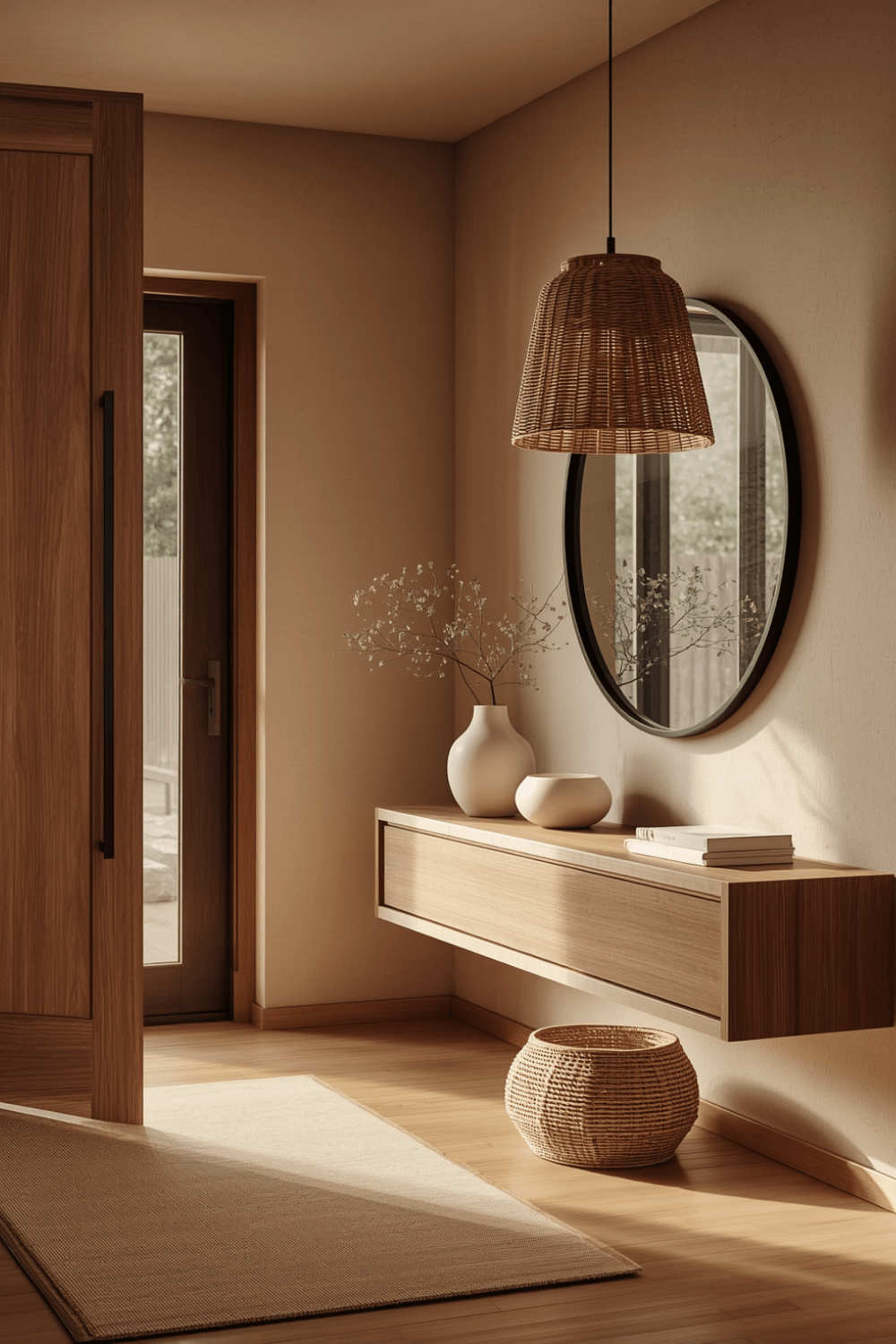
A warm minimalist entryway takes the restraint of straight minimalism and adds genuine warmth back in through natural wood and soft textiles, avoiding the cold, sterile feeling that minimalism can sometimes create in a small, high-traffic space that people actually pass through constantly, not just admire from a doorway.
4. Organic Modern Entryway
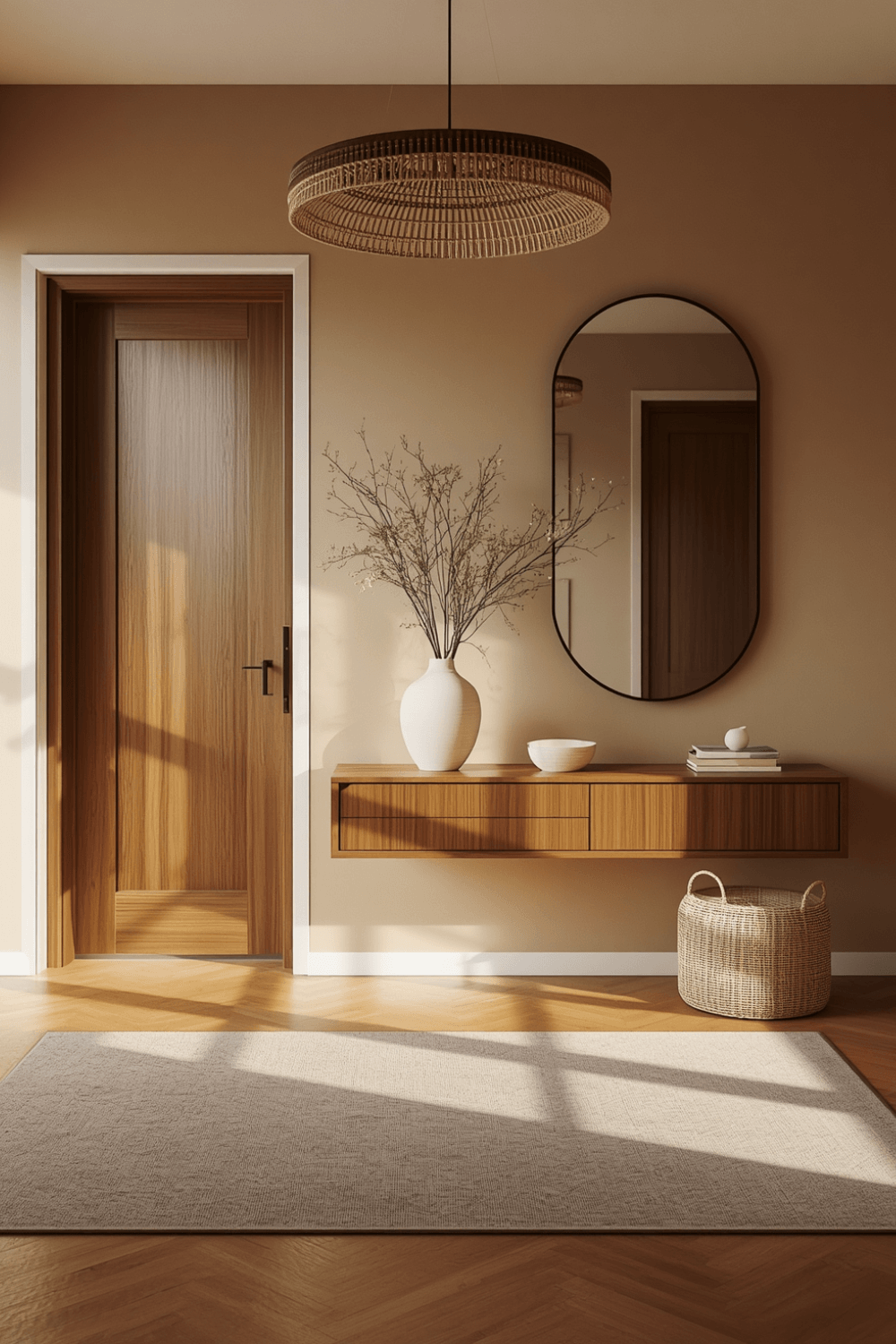
An organic modern entryway softens Japandi’s clean lines further still, curved mirror shapes, rounded furniture edges, natural material texture, landing in a space that feels current but genuinely soft rather than sharp or severe. It’s modern without the edges that sometimes make modern design feel a little unwelcoming.
5. Organic Modern Decor
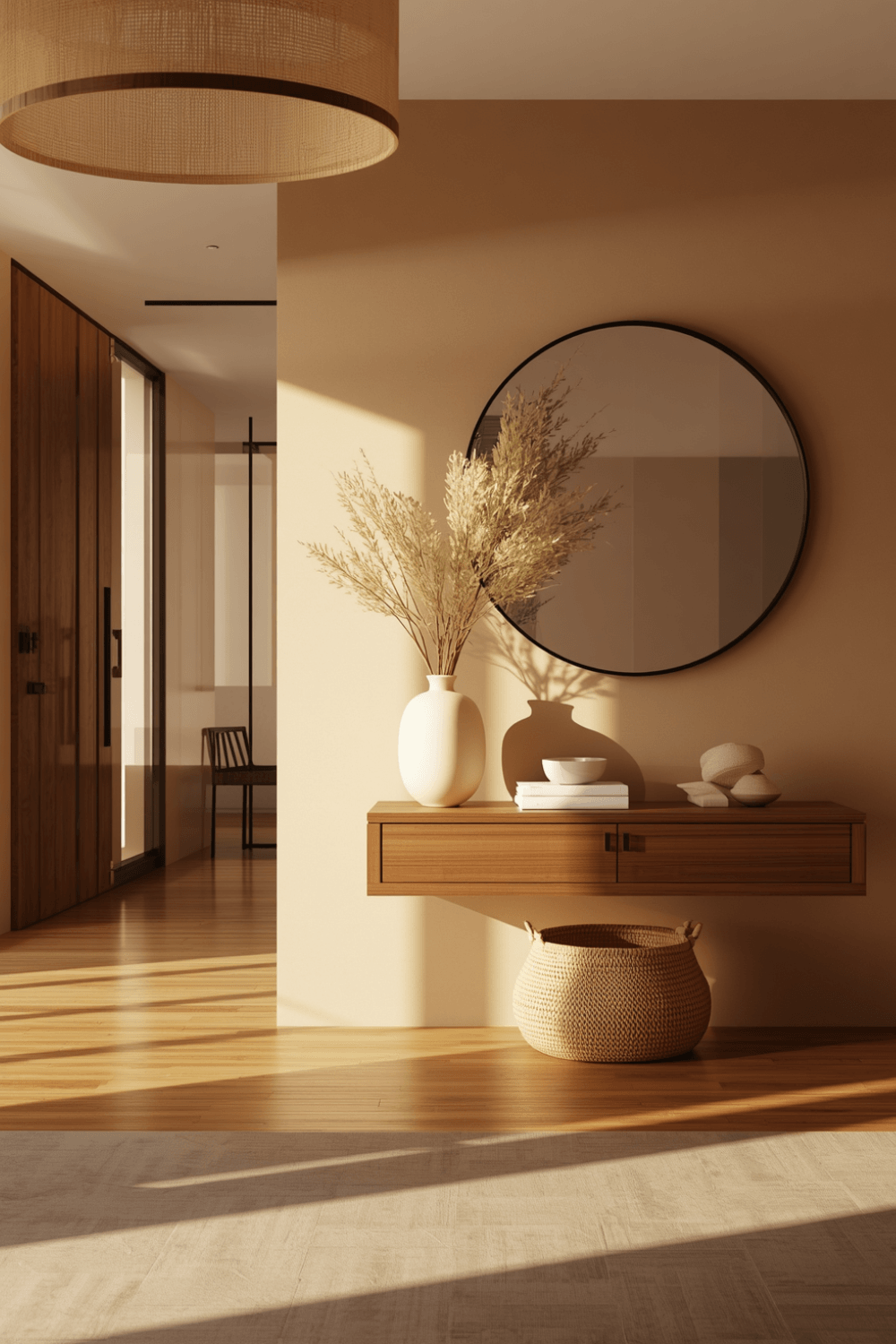
Organic modern decor throughout a foyer and beyond leans on curved silhouettes and natural materials, rattan, wood, stone, creating a softened, less rigid version of the broader modern aesthetic that still reads as intentional rather than accidentally mismatched.
Furniture Pieces
6. Entryway Console Table
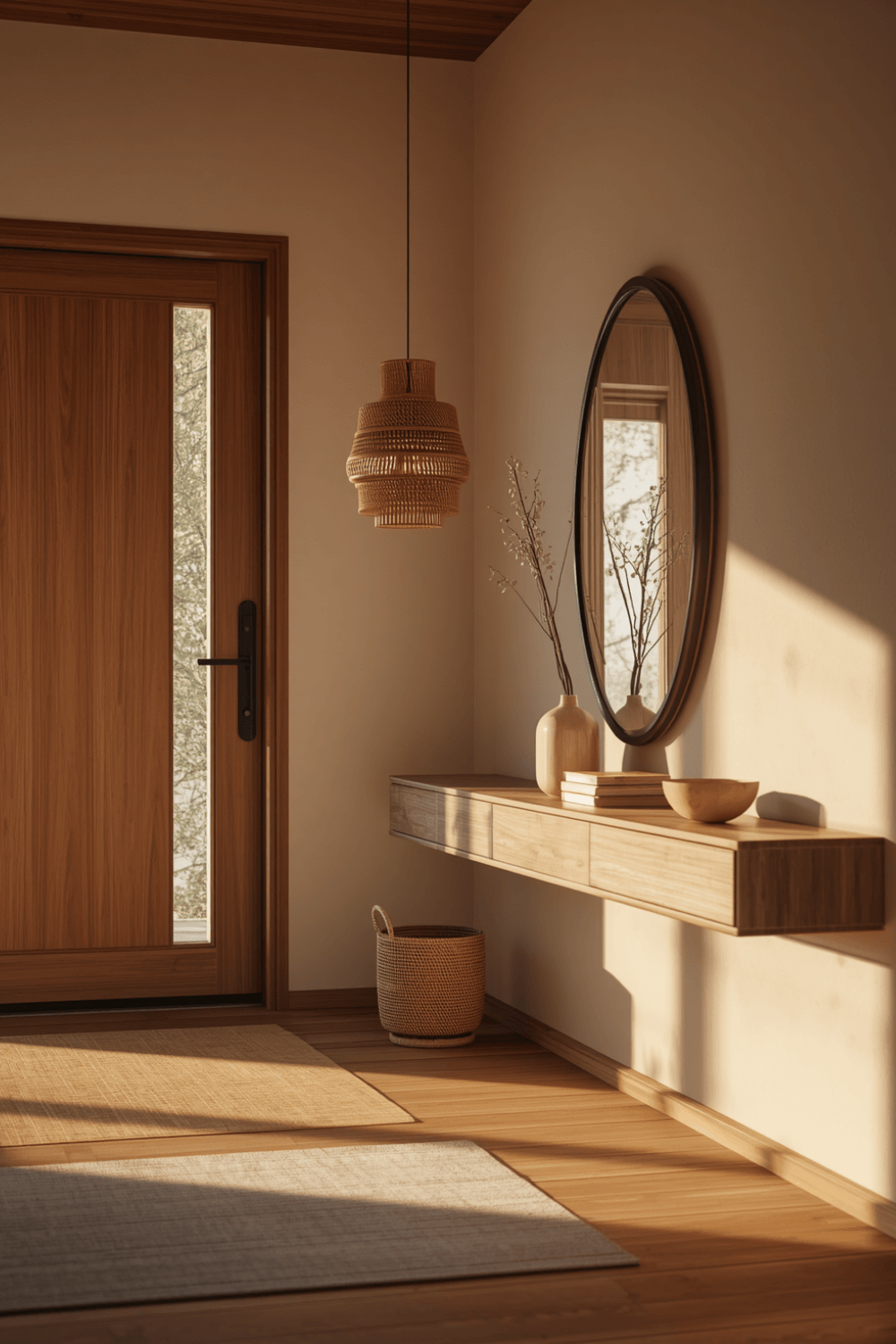
An entryway console table within a Japandi-inspired scheme should be simple and low-profile, giving you a surface for keys and mail without overwhelming the small space with a bulky or heavily detailed piece that fights for attention the moment someone walks in.
7. Floating Console Table
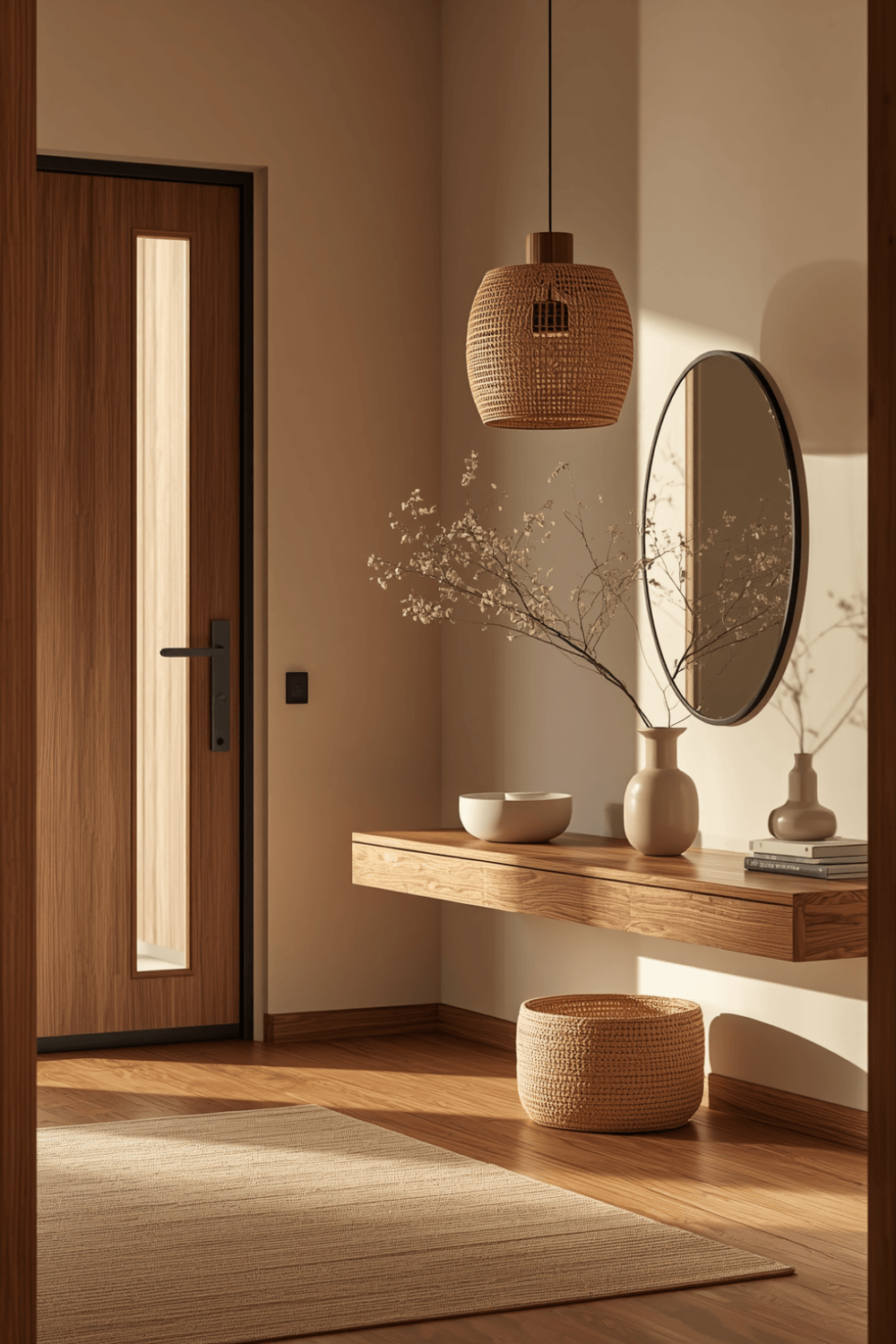
A floating console table keeps a Japandi foyer feeling genuinely open, since the visible floor space beneath it reinforces the sense of restraint and calm that the whole style is built around. There’s something about seeing the floor continue uninterrupted that makes even a tiny entryway read as more spacious than it technically is.
8. Wooden Entryway Table
A wooden entryway table in a warm, natural tone, oak, ash, light walnut, anchors the Japandi feeling more than almost any other single piece, since wood is really the material doing most of the warmth work in this style. Everything else, the neutral walls, the simple mirror, exists to let that wood tone actually be seen clearly.
9. Walnut Entryway Design
A walnut entryway design brings a slightly richer, deeper wood tone into the Japandi mix, working especially well when the rest of the space stays quite pared back, letting the walnut’s natural grain be the room’s clear focal point rather than one competing element among several.
10. Natural Wood Entryway
A natural wood entryway more broadly leans on unfinished or lightly finished timber throughout, a bench, a shelf, a console, letting the wood’s genuine texture and grain carry the visual interest instead of paint or pattern doing that job instead.
Mirrors
Entryway Mirror Ideas
Entryway mirror ideas within a Japandi or organic modern foyer favor simple frames or entirely frameless designs, letting the mirror function practically, checking an outfit, bouncing light around a dim corner, without adding unnecessary visual weight to a space that’s already trying to stay quiet.
Oval Mirror Entryway
An oval mirror entryway brings the organic, curved quality this style favors, softening the room’s overall geometry compared to a standard rectangular mirror and echoing the same rounded sensibility found in organic modern furniture elsewhere in the home.
Color and Restraint
Neutral Entryway Decor
Neutral entryway decor supports the Japandi foundation perfectly, warm white, soft taupe, oatmeal, giving the wood tones room to stand out clearly rather than competing with a busier color scheme that would pull focus away from the material itself.
Minimalist Foyer Decor
Minimalist foyer decor takes the restraint principle to its logical conclusion, one console, one mirror, maybe a single plant, and genuinely nothing more, letting the architecture and materials speak entirely for themselves without any additional narration.
Warmth and Comfort
Cozy Foyer Decor
Cozy foyer decor within a Japandi scheme adds warmth through texture rather than clutter, a woven jute rug, a soft throw draped over a bench, small details that keep the minimal approach from feeling cold or unwelcoming, since restraint and warmth aren’t actually opposites here even though they might sound like it.
Hallway Continuity
Modern Hallway Decor
Modern hallway decor that flows from a Japandi foyer benefits from carrying the same wood tone and restrained styling into the connecting space, so the transition feels like one continuous, considered design rather than an abrupt shift that makes a guest feel like they’ve walked into a completely different house halfway down the hall.
Going Bigger
Luxury Entryway Ideas
Luxury entryway ideas within a Japandi-inspired approach come down to material quality above all else: solid wood rather than veneer, a well-crafted mirror frame, and genuinely restrained styling that lets those quality choices actually be noticed instead of getting buried under decorative clutter.
Quick Recap: Modern Foyer Ideas Worth Prioritizing
If you’re short on time, here’s the shortlist:
- Choose one substantial, natural wood piece, a console or bench, as your foyer’s anchor, and let it do most of the visual work.
- Keep the color palette warm and neutral, letting the wood tone stand out clearly rather than competing with anything busier.
- Consider a floating console or an organic, curved mirror shape for a softer, more current feel that echoes throughout the rest of the space.
- Add warmth through texture, a rug, a throw, rather than additional decorative objects that would undercut the room’s restraint.
- Extend the same wood tone and restrained styling into an adjoining hallway for a cohesive first impression from the moment someone steps inside.
Internal Linking Suggestions
If you’re building out related content on the site, these topics would connect naturally with this post:
- Luxury hallway ceiling design ideas
- How to choose hardware finishes that complement natural wood
- Organic living room ideas rooted in nature
Final Thoughts
Modern foyer ideas built on a Japandi foundation prove that a small space genuinely benefits from restraint, one well-made wood piece, a simple mirror, and a warm neutral palette do more for the room than a crowded display ever could manage. Let natural materials and quiet color carry the design, and resist the urge to fill every remaining surface just because it’s technically available.
Look at your current foyer this week. If it’s feeling cluttered or overly busy, removing rather than adding might be the change that finally gives the space the calm, considered feeling you’re actually after, and it’s usually a lot easier than starting over from scratch.
Frequently Asked Questions
What makes Japandi different from standard minimalism? Japandi combines minimalist restraint with genuine warmth, natural wood, soft textiles, muted earthy tones, rather than the starker, sometimes colder feeling that pure minimalism can create on its own without that warmth layered back in.
Is a floating console practical for a small foyer? Yes, it keeps the space feeling open and makes cleaning the floor easier, while still providing the surface function of a standard console table for keys, mail, and small decor without sacrificing anything practical.
What wood tone works best for a Japandi entryway? Light to medium warm tones like oak, ash, or light walnut are most common, though a richer walnut can work beautifully as a focal piece when the rest of the space stays genuinely pared back around it.
Should an entryway mirror be round or rectangular for this style? An oval or round mirror tends to suit organic modern and Japandi styling particularly well, softening the room’s geometry, though a simple rectangular frame can work too if kept minimal and unfussy.
How do I keep a minimalist foyer from feeling cold? Add warmth through natural wood tones, soft textiles like a jute rug or a folded throw, and warm ambient lighting, all of which soften minimalism’s restraint without adding visual clutter back into the equation.
Can this style work in a very small entryway? Yes, and it often works especially well there, since Japandi’s emphasis on restraint means fewer pieces are needed overall, which naturally suits a compact space better than a busier, more layered design approach would.