
A mid century modern dining room mixes clean lines, warm wood, and playful color into a space that never feels dated. The style grew in the 1940s through the 1960s, yet it still feels fresh today. It suits big homes and small apartments, and it works with both new and vintage pieces. Best of all, you can get the look with just a few smart choices.
Looking for inspiration to create a dining space that feels stylish, welcoming, and timeless? Mid Century Modern Dining Rooms are a beautiful way to bring together classic design, natural materials, clean lines, and warm colors. Inspired by the iconic designs of the 1950s and 1960s, this decorating style combines simplicity with personality, making it perfect for both modern homes and traditional interiors. Think elegant wooden dining tables, sculptural chairs, tapered furniture legs, geometric patterns, globe pendant lights, and beautiful natural wood finishes. Whether you love rich walnut furniture, light oak tones, earthy color palettes, or a mix of vintage and contemporary pieces, mid-century modern design offers plenty of ways to create a dining room that feels effortlessly elegant.
Below, you will find 38 mid century modern dining room ideas for every taste. Some are bold and colorful, while others are calm and minimal. First, browse the groups to find what speaks to you. Then use the tips to bring the style home.
What Defines a Mid Century Modern Dining Room
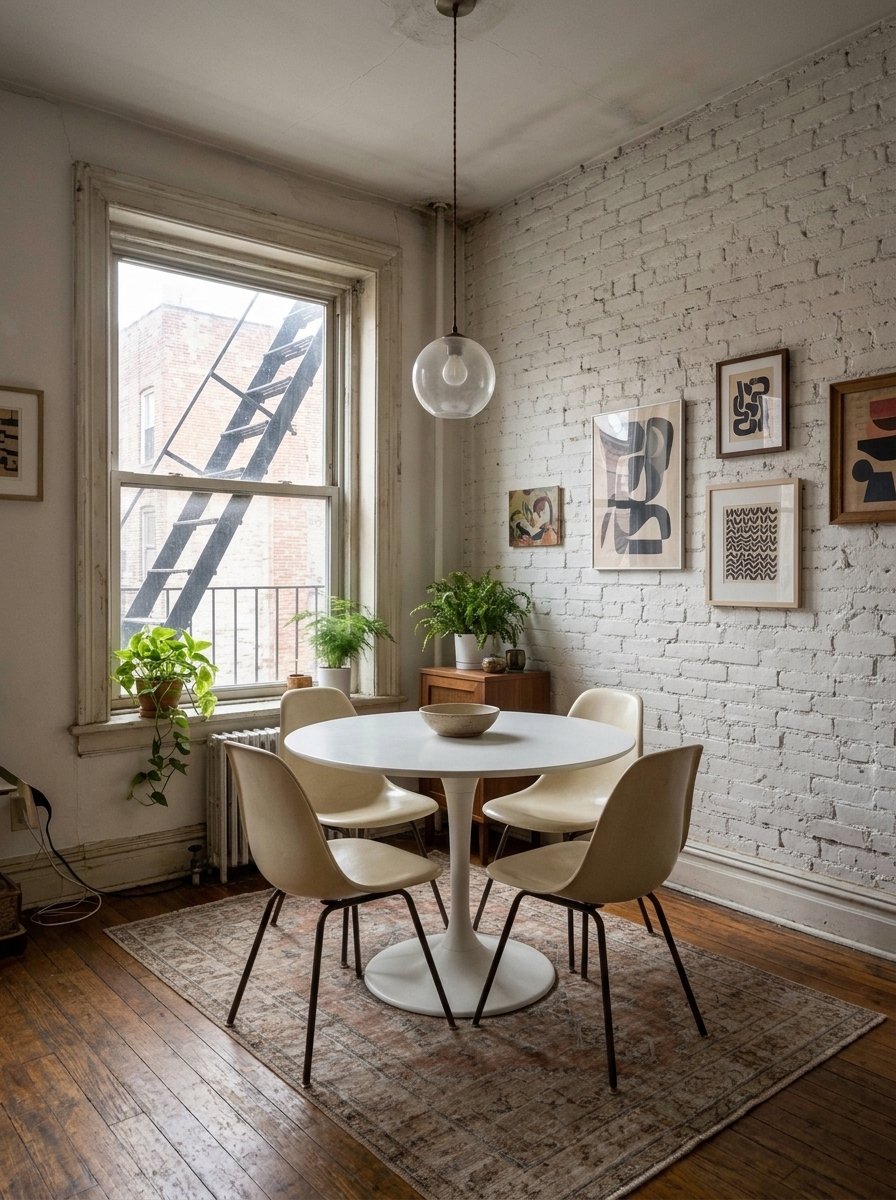
Midcentury design values simple shapes, honest materials, and function. Think tapered legs, organic curves, and warm wood tones. Most midcentury dining rooms share a few key traits:
- Clean, low-profile furniture. Pieces have slim lines and tapered legs.
- Warm wood. Walnut, teak, and oak add richness.
- Organic and geometric shapes. Round tables and curved chairs sit beside sharp angles.
- Statement lighting. Sputnik, globe, and sculptural pendants are classics.
- Pops of color. Orange, mustard, teal, and olive green bring energy.
- Mixed materials. Wood, metal, glass, and molded plastic often appear together.
Also, remember that midcentury style does not need a full set of vintage pieces. A few authentic or inspired items can set the tone. As a result, the room feels collected instead of themed.
Mid Century Modern Dining Room Furniture Ideas
Furniture sets the foundation. These seven ideas show how to choose tables, chairs, and storage.
1. Midcentury Dining Room Set
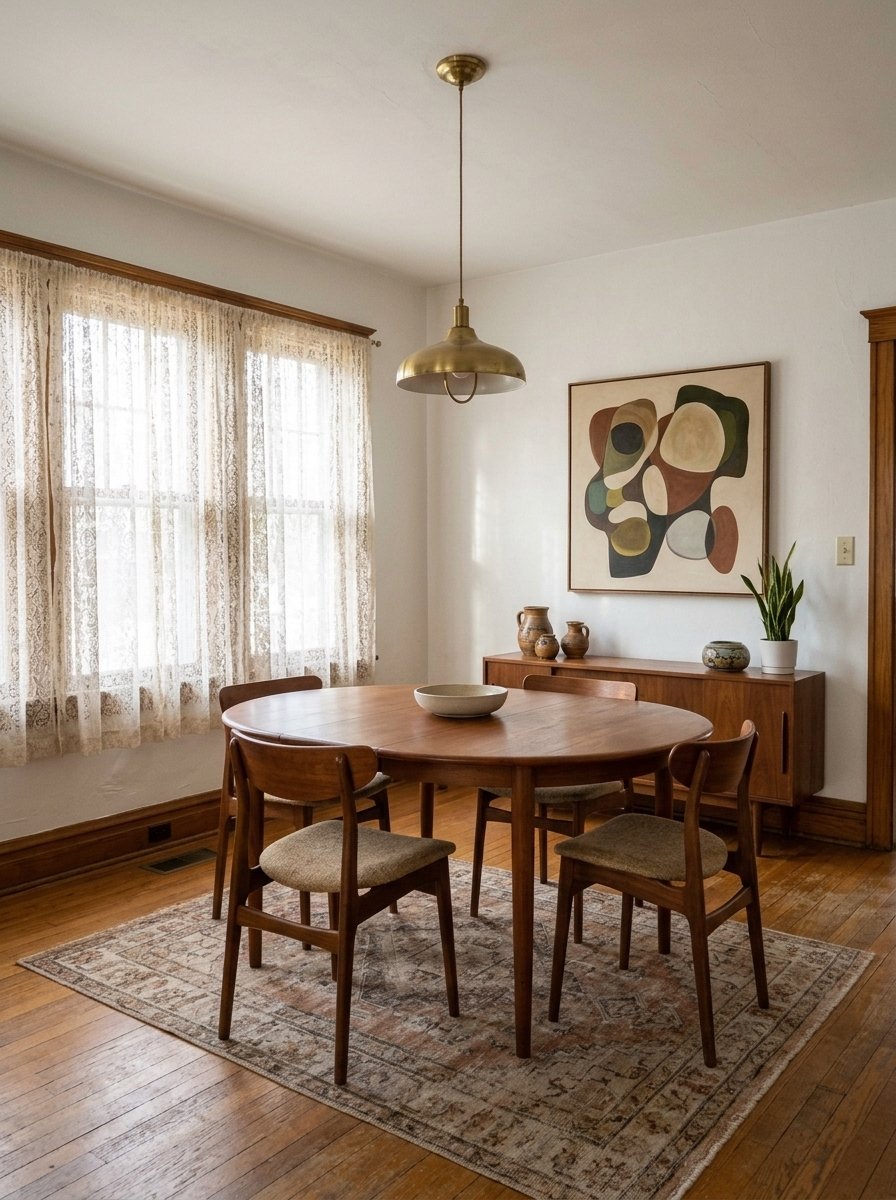
A matching midcentury dining set gives the room an instant style anchor. Look for a wood table with tapered legs and chairs with gently curved backs. Since the pieces are designed to work together, the look feels polished. Walnut and teak tones are classic. In addition, a set makes shopping easier.
2. Go With a Round Table
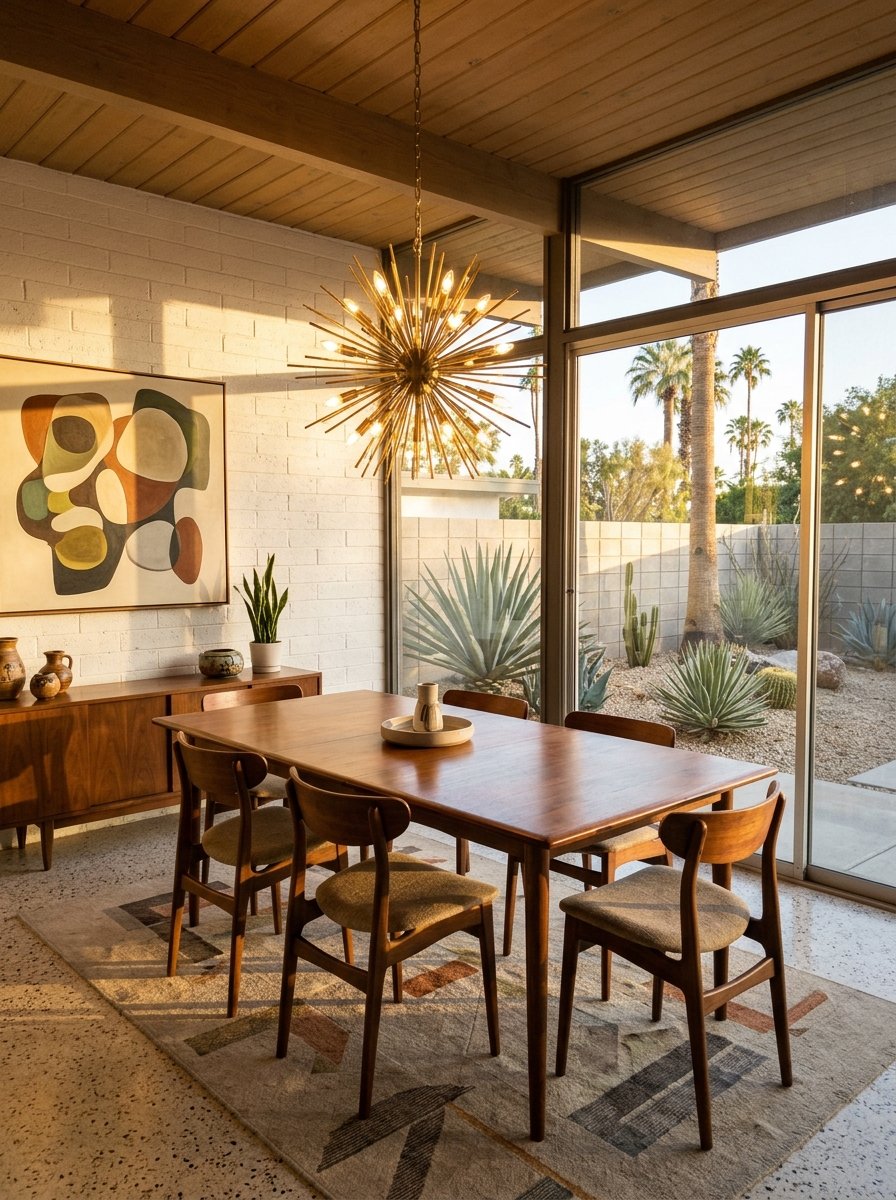
A round table feels friendly and works well in smaller rooms. The shape makes conversation easy, because everyone faces each other. A pedestal base leaves more legroom than four legs. Moreover, a tulip-style pedestal looks very midcentury. Pair it with simple chairs for a clean, balanced look.
3. Use Mismatched Chairs

Mismatched chairs add personality and a collected feel. Mix different shapes, but keep a common color or material. For example, use molded plastic chairs in different colors around a wood table. Because the chairs vary, the room feels lively. Also, repeat one detail, such as wooden legs, to tie them together.
4. Complement With a Buffet
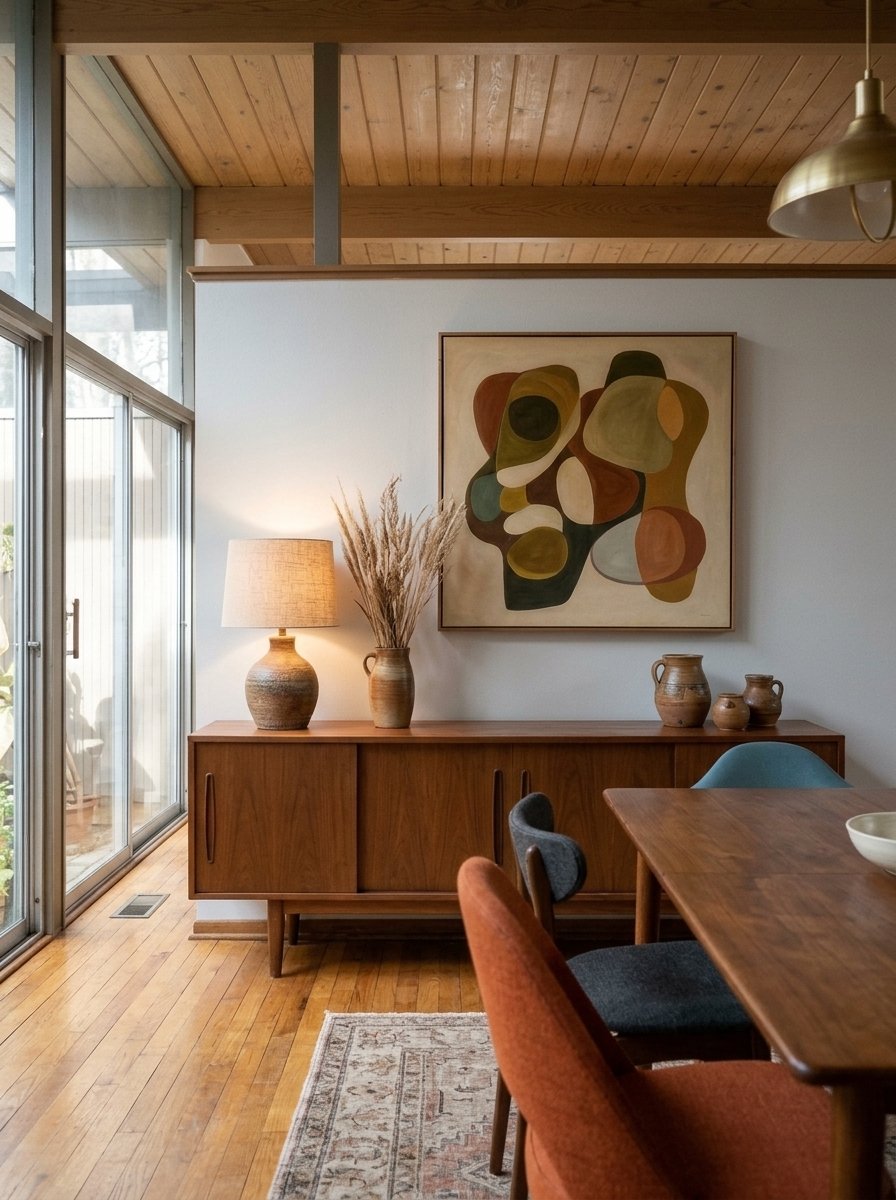
A low wood buffet is a midcentury classic. It adds storage and gives you a surface for lamps and art. Look for sliding doors, tapered legs, and warm walnut or teak. Since the buffet sits against a wall, it frames the dining area. Finally, add a lamp and a vase to finish the look.
5. Repurpose a Secretary Desk
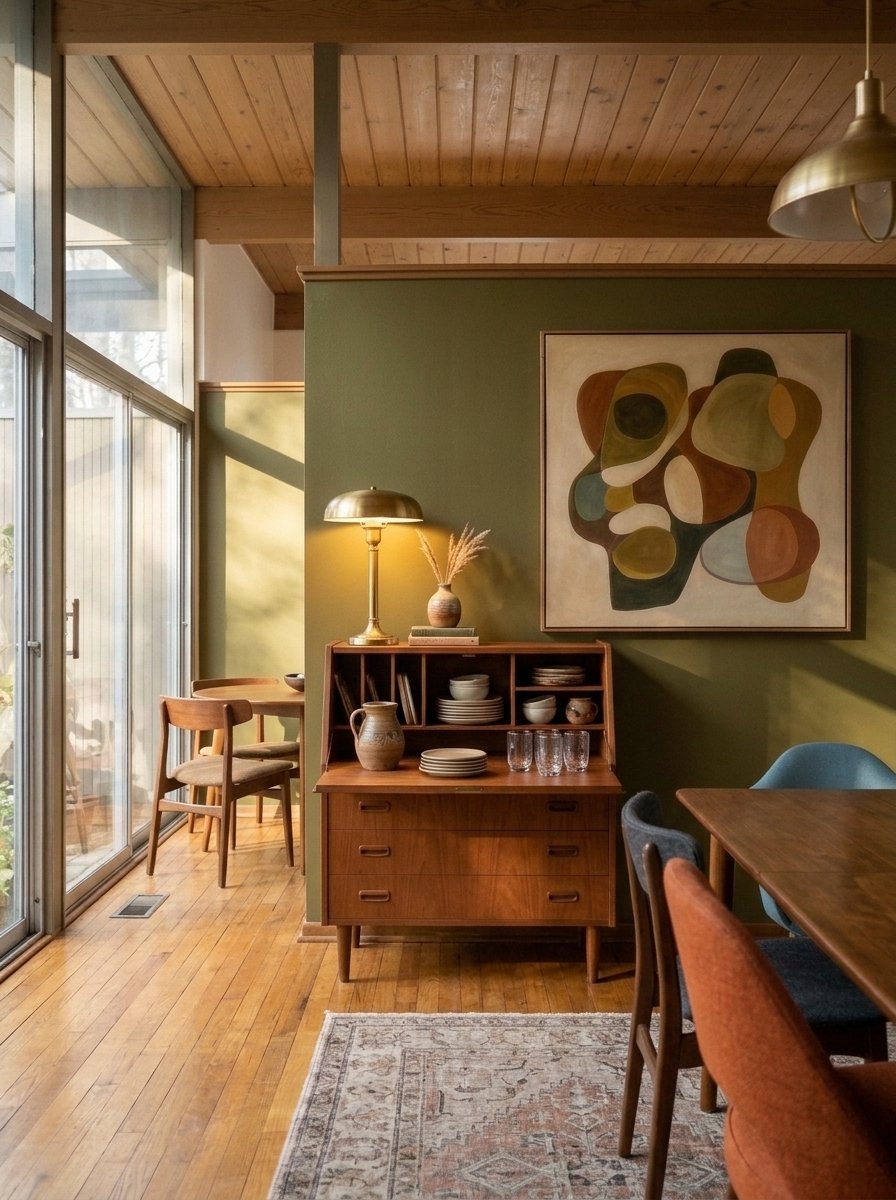
An old secretary desk can become a charming dining storage piece. Use the drop-front for serving or placing drinks. The cubbies and drawers hold linens and tableware. Because the desk is vintage, it adds character and history. Also, a coat of paint or fresh hardware can update it.
6. Choose Signature Pieces

A few signature pieces give a room its identity. Think of a sculptural chair, a statement lamp, or a distinctive sideboard. Because the pieces are memorable, the rest of the room can stay simple. Moreover, one or two quality items are better than many average ones. Start with what you love, and build around it.
7. Float the Table
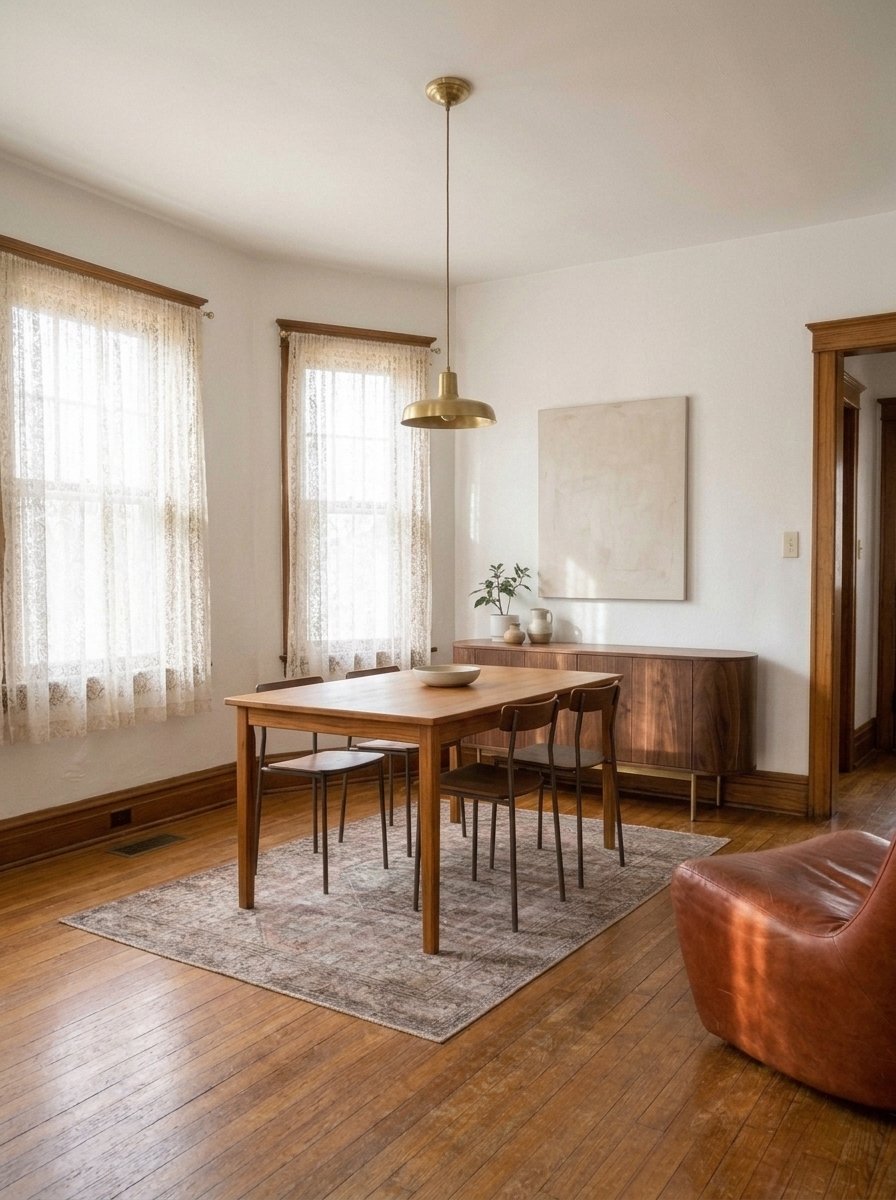
Floating the table means placing it away from walls, so it stands as a feature. Center the table in the room, and let the space flow around it. A rug underneath helps define the area. Since open space is a midcentury hallmark, the room feels airy. In addition, the table becomes the heart of the room.
Wood, Materials, and Finishes
Material is the soul of midcentury design. These five ideas show how to use wood and mixed finishes.
8. Highlight Natural Woods
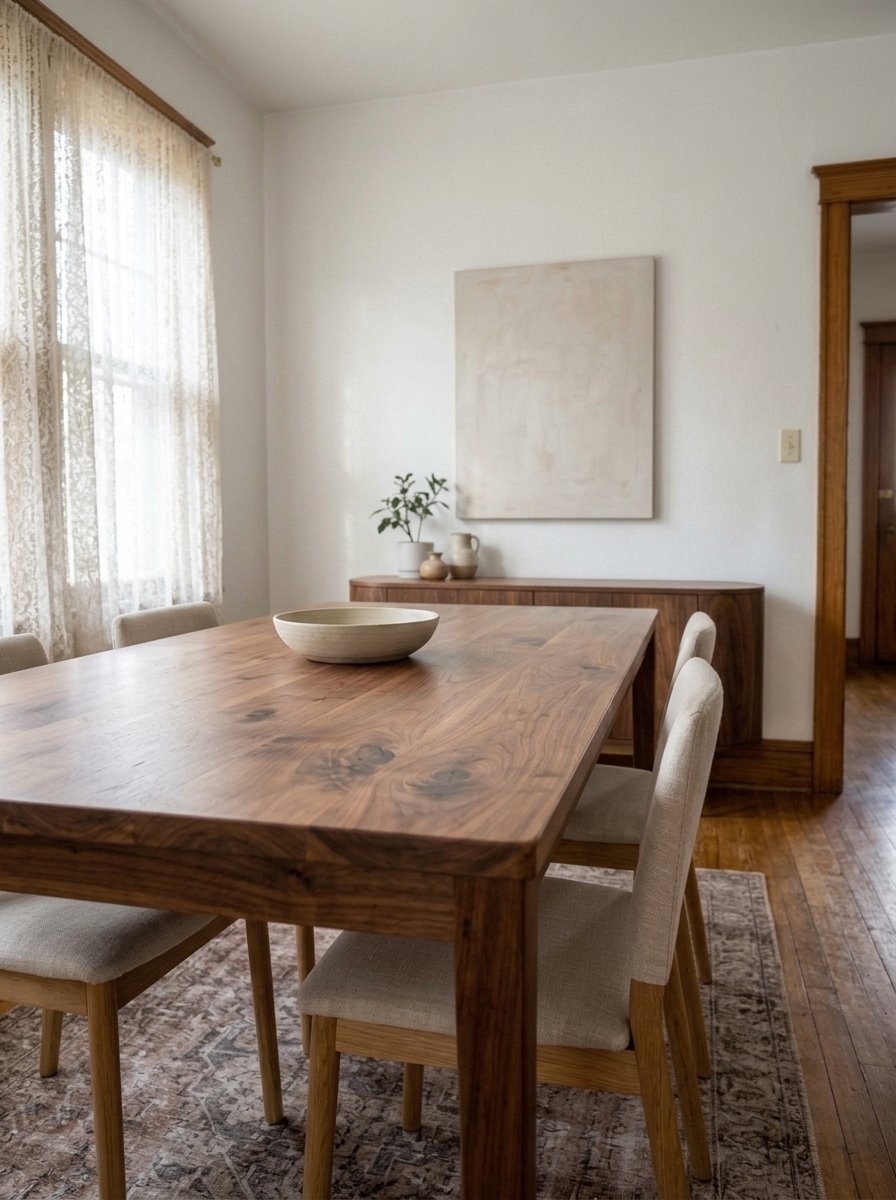
Natural wood is the star of a midcentury dining room. Walnut, teak, and oak show their grain beautifully. Let the wood shine by keeping surrounding colors simple. Because the wood tone is rich, it adds warmth to white or neutral walls. Also, a clear matte finish keeps the look natural.
9. Use Warm Wood
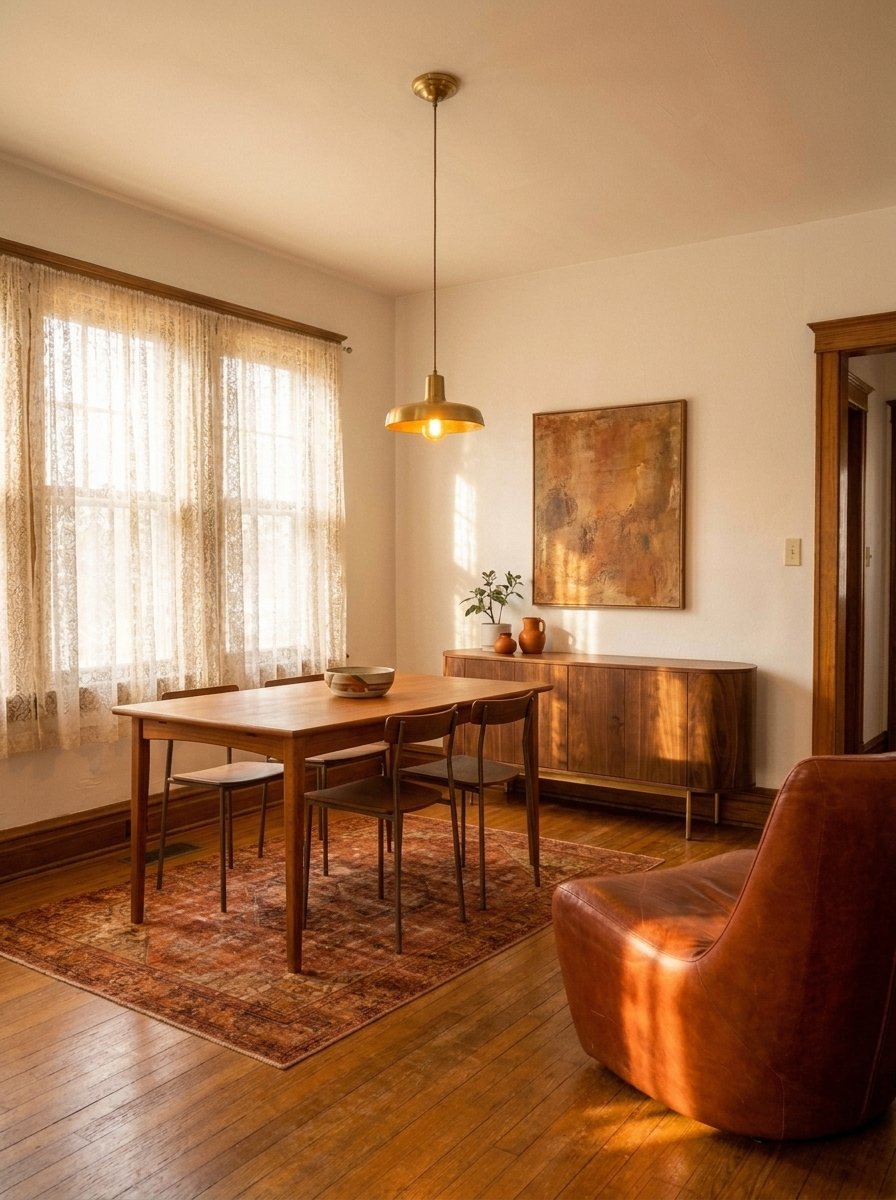
Warm wood tones create a cozy, inviting mood. Choose honey, amber, or teak finishes for the table and chairs. Layer in rust, mustard, and cream accents. Since warm tones feel friendly, the room welcomes guests. In addition, warm lighting makes the wood glow.
10. Add Vertical Wood Slats
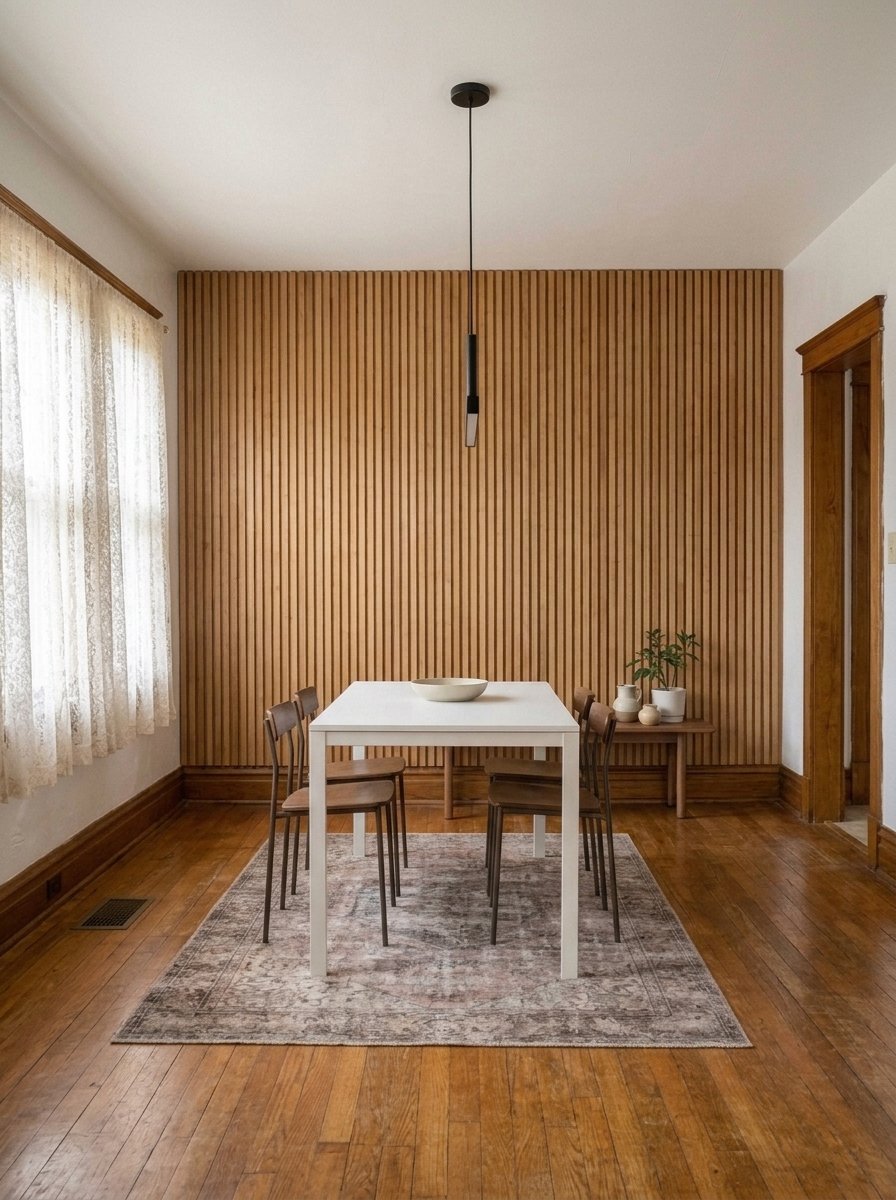
Vertical wood slats add texture and a signature midcentury look. Mount slim slats on a feature wall, or use them as a room divider. The vertical lines make the ceiling look taller. Because slats let light pass, they work well as partial screens. Also, slats look striking behind a buffet.
11. Accent With Wood

If you prefer a lighter look, use wood as an accent. Try a walnut frame on a mirror, a teak tray, or wooden chair legs. The wood adds warmth without dominating. Since a little wood goes a long way, you can pair it with painted furniture. As a result, the room feels balanced.
12. Vary Materials

Mixing materials adds depth. Combine a wood table with metal legs, glass shelving, and molded plastic chairs. The contrast keeps the room interesting. Because midcentury designers loved new materials, mixed finishes feel authentic. Also, aim for a balance of warm and cool materials.
Lighting, Art, and Decor Ideas
Lighting and decor finish the room. These seven ideas show how to add personality without clutter.
13. Hang a Period Pendant Light

A period pendant makes an instant statement. Look for globe, bubble, or sputnik shapes. Hang the pendant about 30 to 36 inches above the table for the best light. Because a pendant hangs in the center, it becomes the room’s jewelry. In addition, a dimmer lets you set the mood.
14. Hang a Shiny Brass Fixture

Brass adds a warm, glamorous glow. A brass chandelier or sputnik fixture catches the light and adds sparkle. The shiny finish contrasts nicely with matte wood. Since brass is bold, a single fixture is enough. Also, aged brass feels softer than polished brass.
15. Hang Midcentury Artwork

Midcentury artwork often uses abstract shapes and bold color. Hang a large abstract print or a geometric piece above the buffet. Because art sets the tone, choose pieces with colors from your palette. In addition, thin frames in wood or black keep the style clean.
16. Hang Colorful Wall Decor

Colorful wall decor adds energy. Try a bold wall plate collection, a graphic poster, or a retro starburst clock. The colors should repeat elsewhere in the room. Since bold decor draws the eye, it works well on a feature wall. Finally, group pieces for a stronger effect.
17. Choose Vintage Accents

Vintage accents give a room history and soul. Look for ceramic vases, teak bowls, and brass candlesticks. Flea markets and thrift stores often have great finds. Because each piece is unique, the room feels personal. Also, a few well-placed items are better than many.
18. Accent With Wallpaper

Midcentury wallpaper features bold geometric patterns and organic shapes. Use it on one wall for a bold look. Pick patterns with atomic shapes, leaves, or abstract lines. Since wallpaper adds color and texture, it saves you from buying lots of decor. In addition, peel-and-stick options suit renters.
19. Layer a Graphic Rug
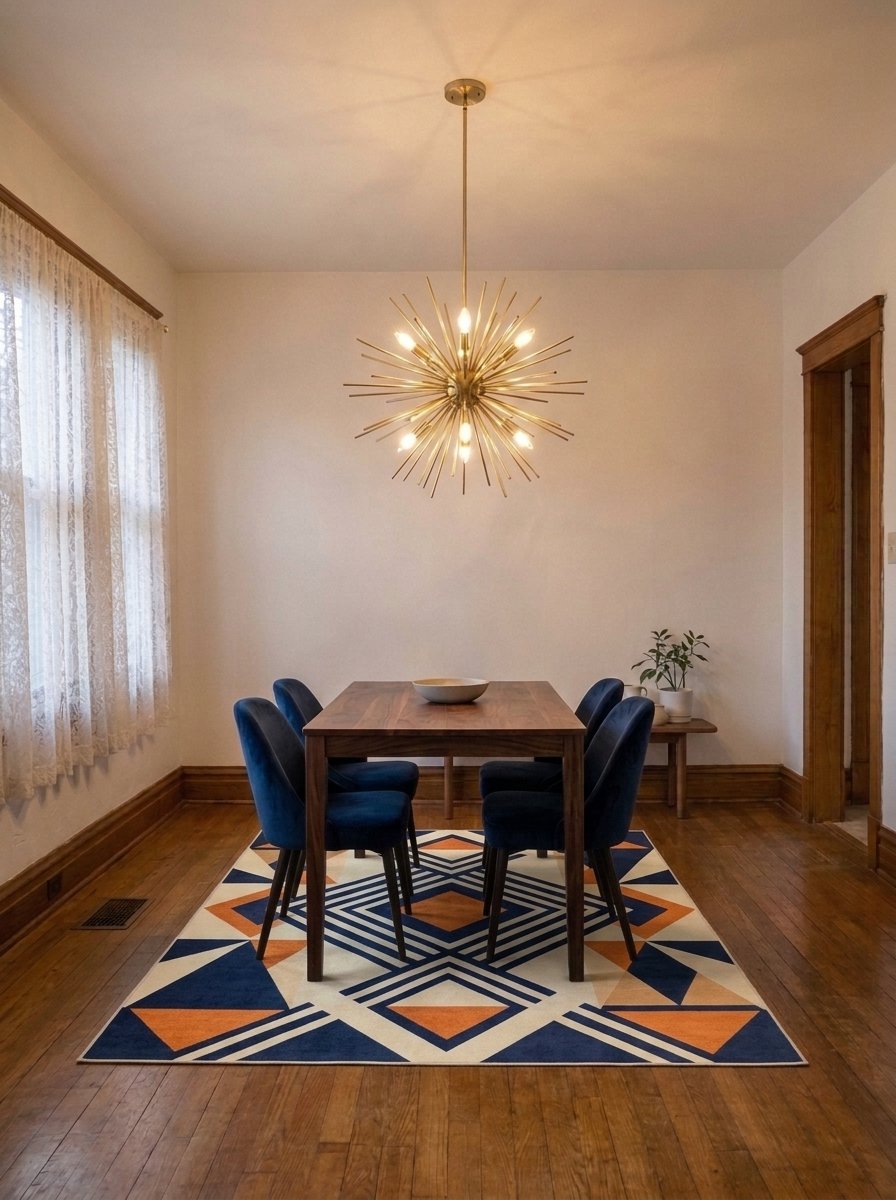
A graphic rug anchors the dining table and adds pattern. Choose a geometric design in a few colors that suit your palette. A low-pile rug works best under chairs, since they slide easily. Because the rug defines the dining area, it also helps in open-plan spaces. Also, choose a size that fits the table and chairs.
Mid Century Modern Dining Room Color Ideas
Color gives midcentury style its playful side. These six ideas show how to use blues, greens, orange, and neutrals.
20. Combine Blues and Greens
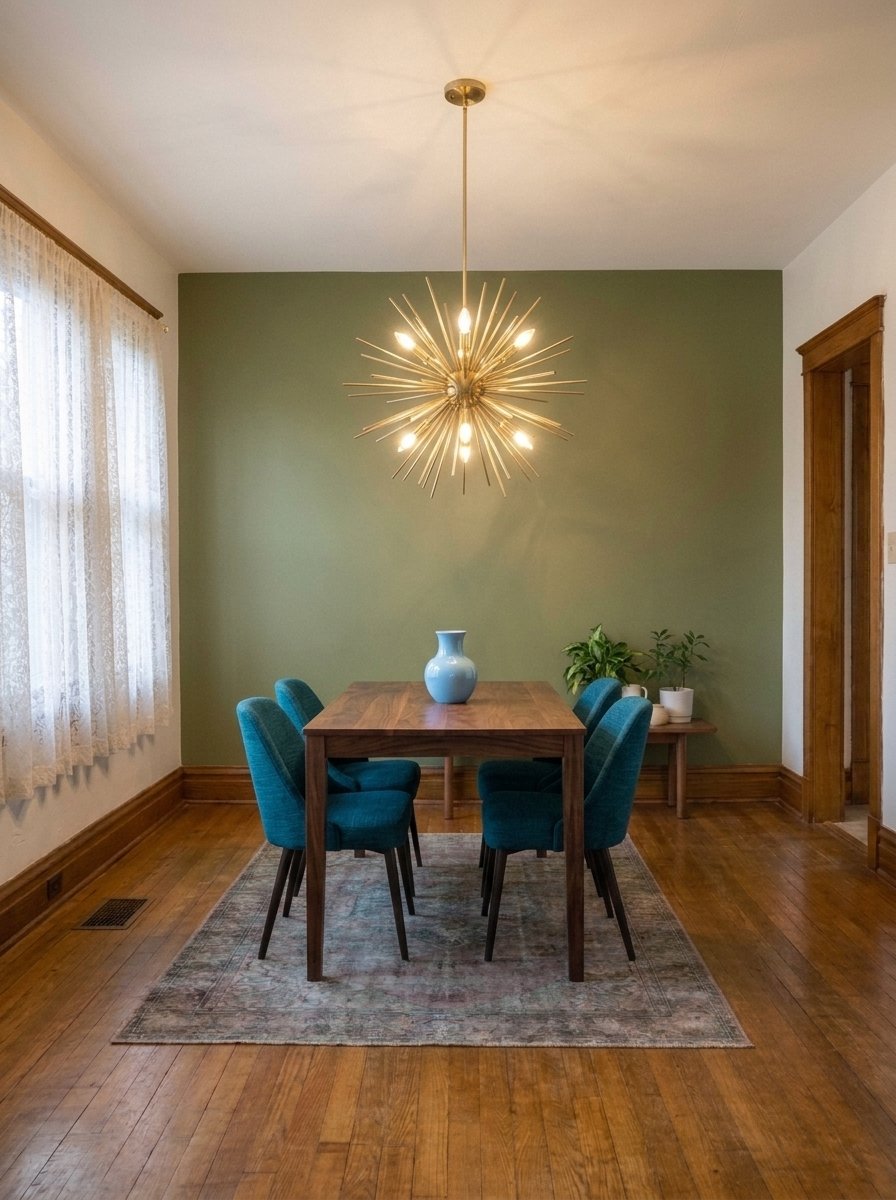
Blues and greens feel fresh and natural. Try teal chairs, an olive wall, and a sky-blue vase. The two colors sit close on the color wheel, so they blend easily. Because both are cool, balance them with warm wood. As a result, the room feels calm and lively at once.
21. Electrify With Orange

Orange is a midcentury signature color. A burnt orange chair, a bright orange vase, or an orange pendant adds instant energy. Warm wood tones make orange feel rich. Since orange is bold, a small dose goes a long way. Also, orange pops beautifully against white and teal.
22. Pair Brown and Green
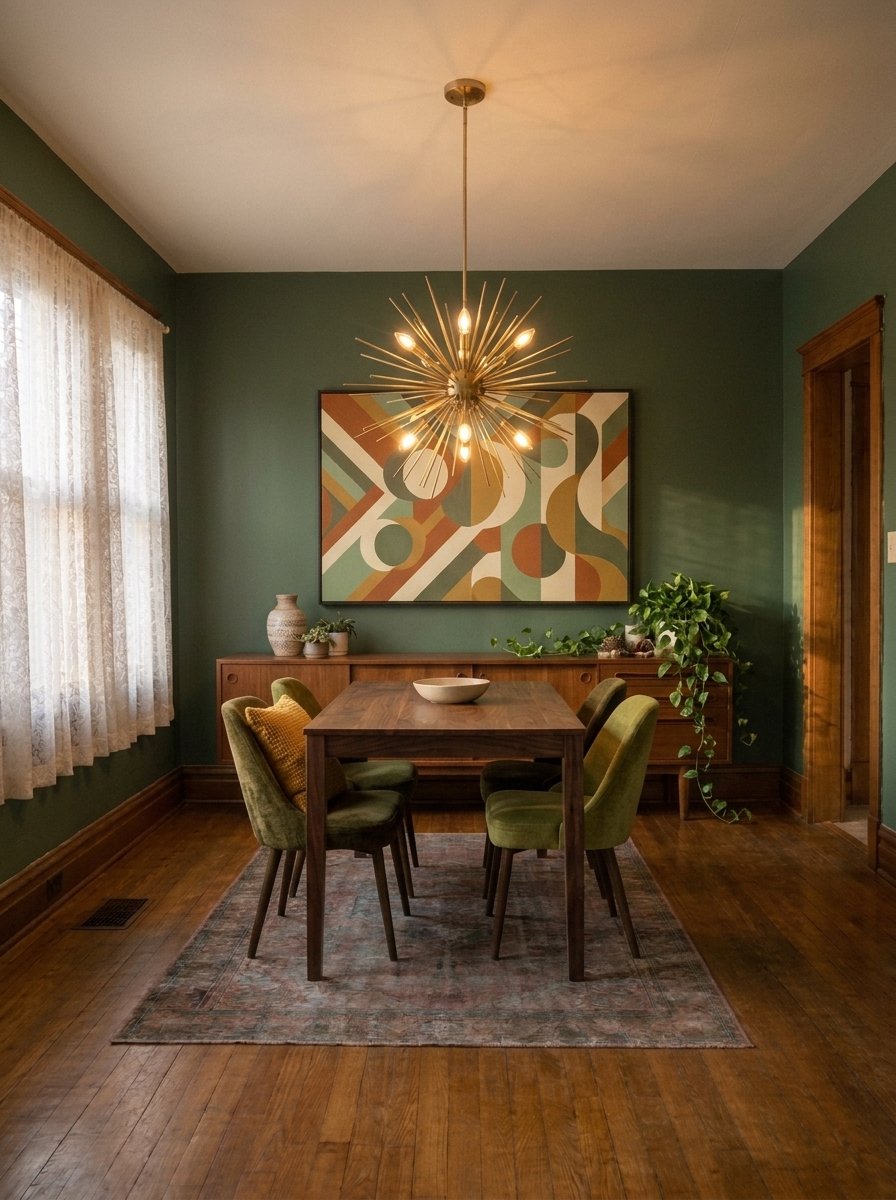
Brown and green feel earthy and warm. Think walnut furniture with olive or avocado green accents. The colors recall nature, so the room feels grounded. In addition, they suit vintage pieces beautifully. Add a touch of mustard for a classic 1960s palette.
23. Decorate With Green

Green can lift a dining room in many ways. Paint an accent wall in deep green, or add plants and green glassware. Large leafy plants suit the organic shapes of midcentury style. Because green is calming, it makes dinners feel relaxed. Also, plants bring life to wood and metal.
24. Stay Neutral
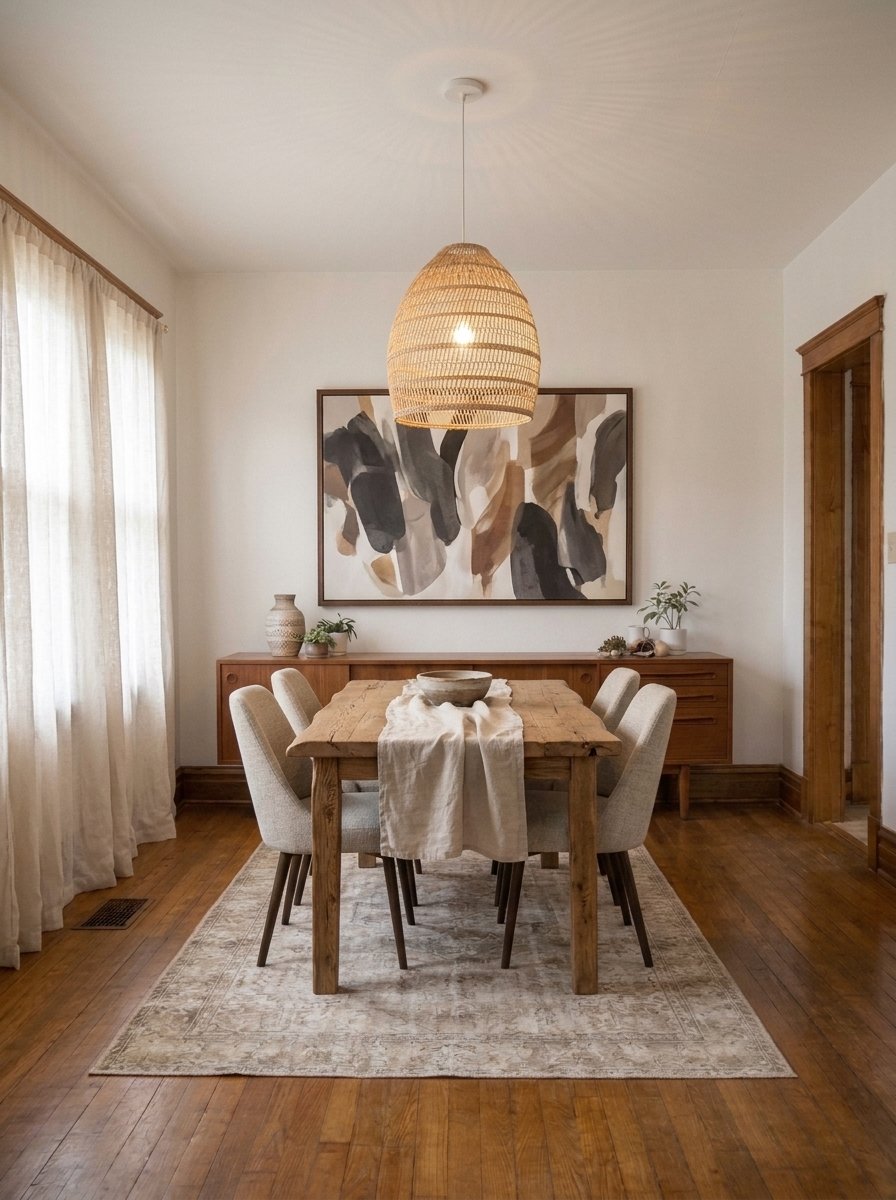
A neutral palette highlights shape and texture. Use white, cream, taupe, and wood tones. The calm backdrop lets furniture stand out. Because the colors are quiet, vary the textures for interest. For example, mix a linen runner with a rough wood table. Finally, add one bold piece of art for personality.
25. Be Bold
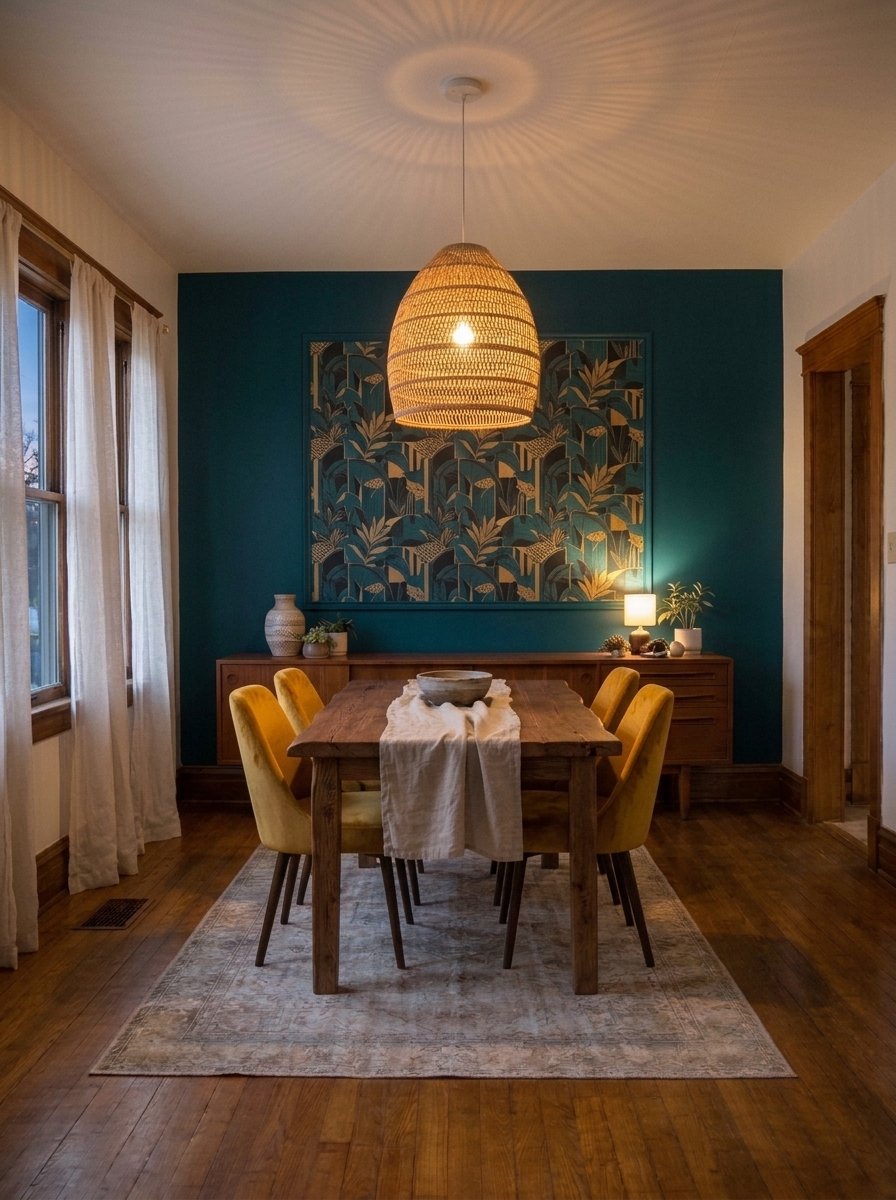
Bold color suits a midcentury dining room. Try a deep teal wall, a mustard chair, or a graphic wallpaper. The style has always embraced strong color. Since bold choices need balance, use wood and white to give the eye a break. As a result, the room feels vibrant, not chaotic.
Layout and Mood Ideas
Layout and mood decide how a room feels. These nine ideas range from sleek and minimal to warm and cozy.
26. Embrace Elegant Simplicity

Elegant simplicity is the heart of midcentury design. Choose a table, four chairs, and one statement light. Keep surfaces clear, and let the shapes speak. Because there is little clutter, the room feels calm and refined. Also, every piece should earn its place.
27. Keep It Minimal
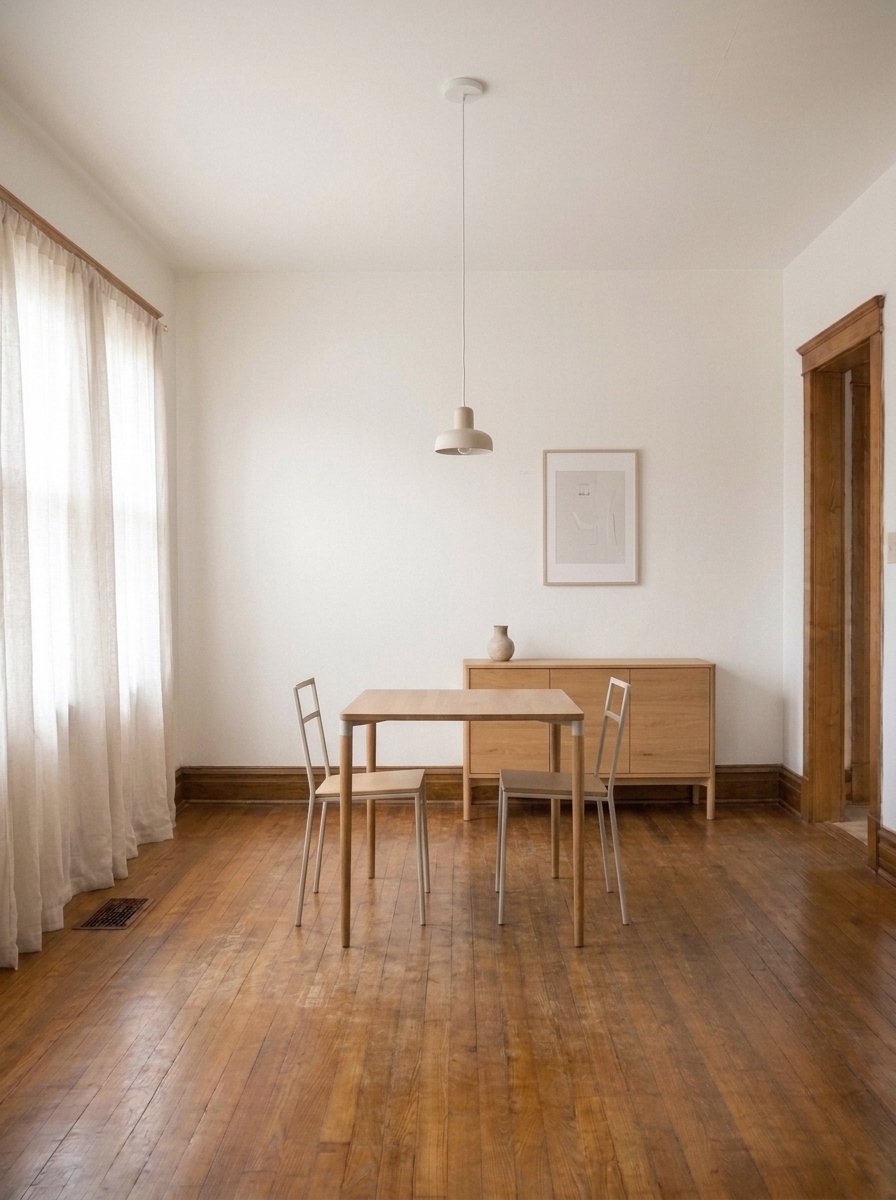
A minimal dining room uses only what you need. A table, chairs, and a low sideboard are enough. Skip extra decor, and keep floors clear. Since there are fewer pieces, cleaning is easy. In addition, the space feels larger, which suits small rooms.
28. Keep It Minimalist

A minimalist approach focuses on a quiet palette and clean lines. Use white walls, light wood, and one accent color. Pair it with Scandinavian-style chairs for a soft, modern feel. Because the look is calm, it suits busy homes. Also, hidden storage keeps surfaces clear.
29. Lighten Up

Light colors and airy materials make a dining room feel open. Use pale wood, white walls, and sheer curtains. Add mirrors to bounce light around. Because light colors reflect sun, small rooms feel larger. Meanwhile, a few dark accents add contrast.
30. Keep It Cozy
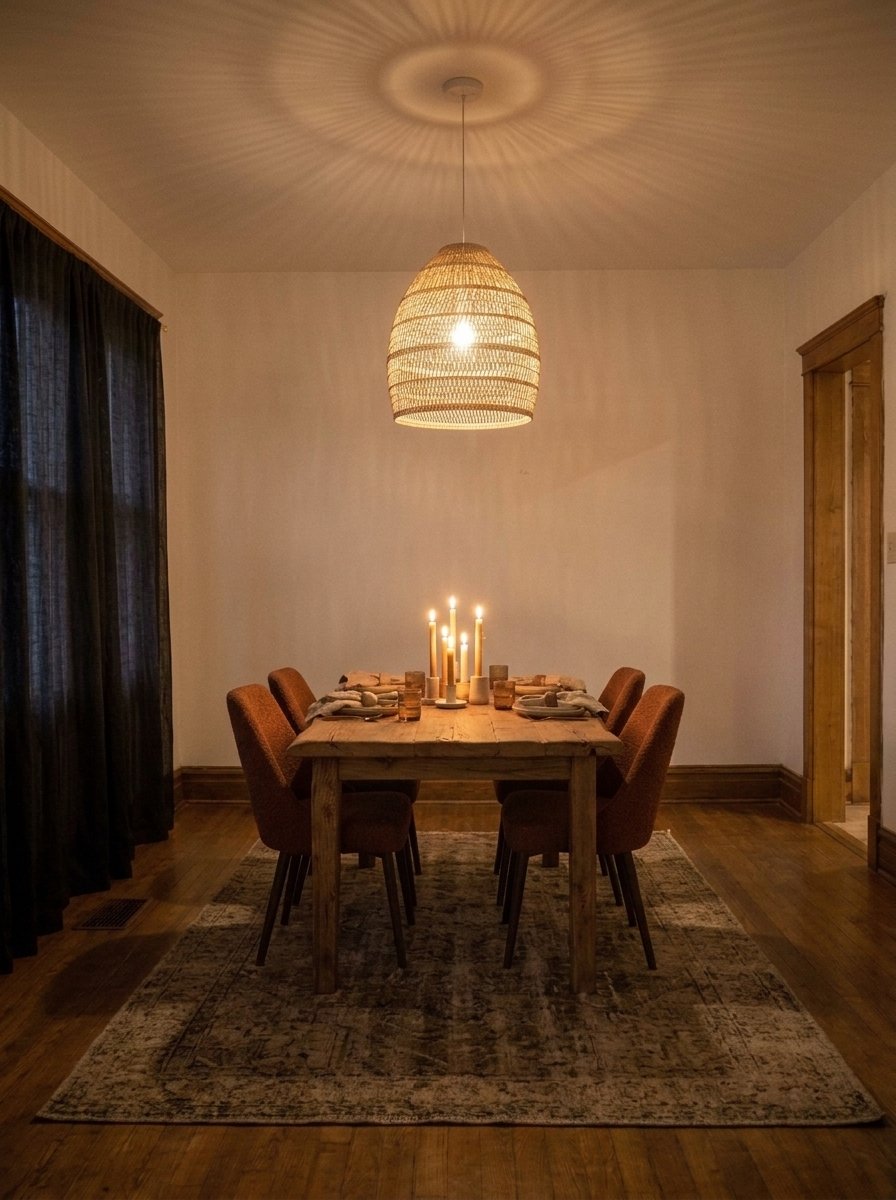
A cozy dining room feels warm and inviting. Use rich wood, soft textiles, and warm lighting. Add upholstered chairs and a thick rug. Since comfort keeps people at the table, choose seats with good support. In addition, candles or lamps create a gentle glow.
31. Use a Light Touch
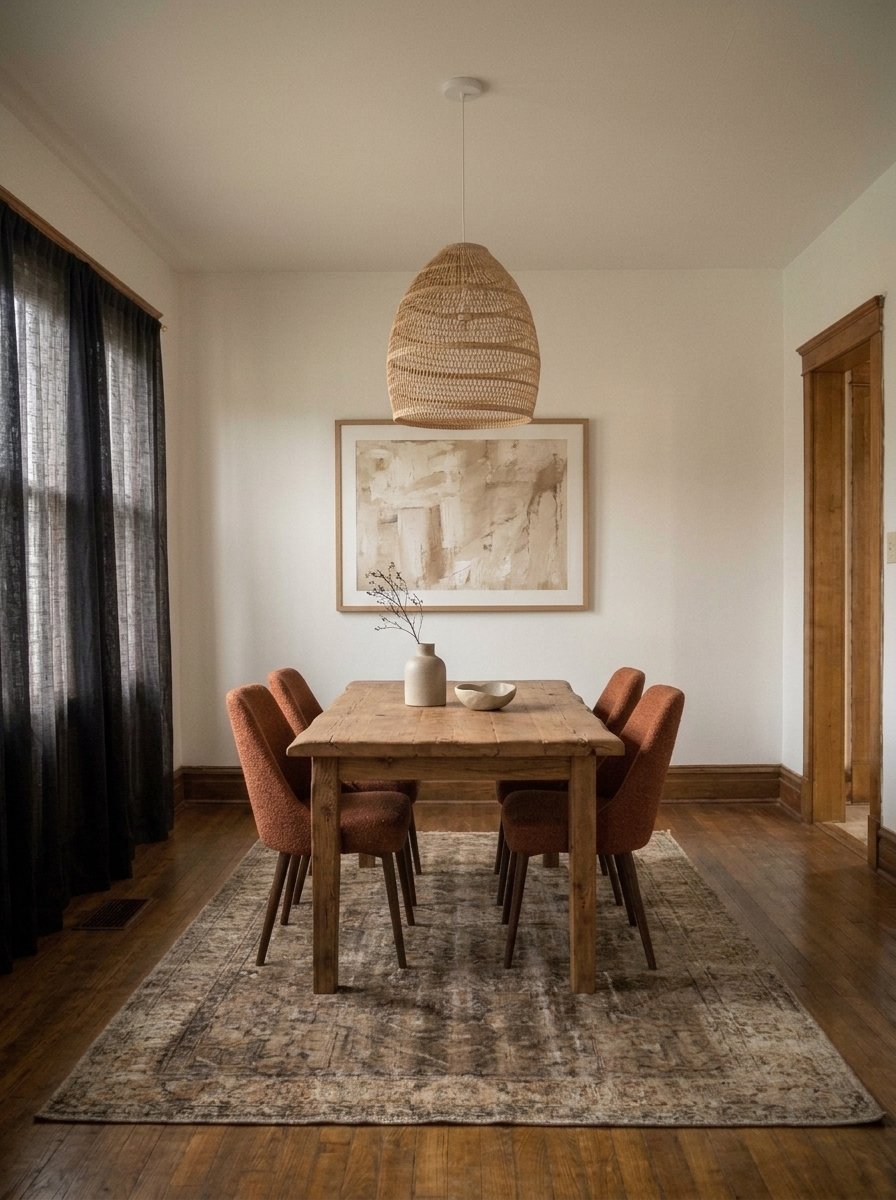
A light touch means decorating with restraint. Choose a few meaningful pieces, and leave space around them. A single piece of art, a simple vase, and a bowl are enough. Because less is displayed, each item stands out. As a result, the room feels curated and peaceful.
32. Create a Corner Nook
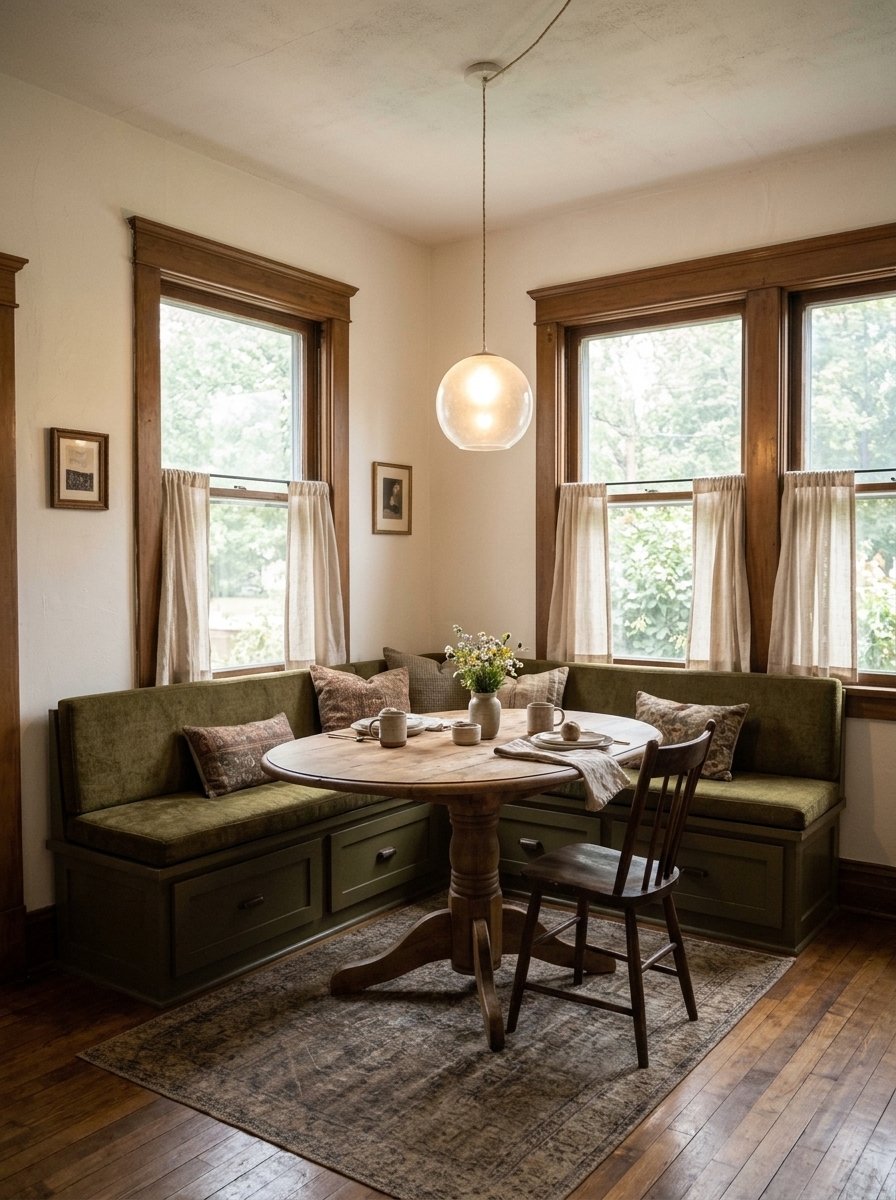
A corner nook makes the best use of small spaces. Place a banquette or built-in bench in the corner, and add a small table. The nook feels snug and works well for casual meals. Since it saves space, it suits apartments. Also, storage under the bench adds function.
33. Keep It Open
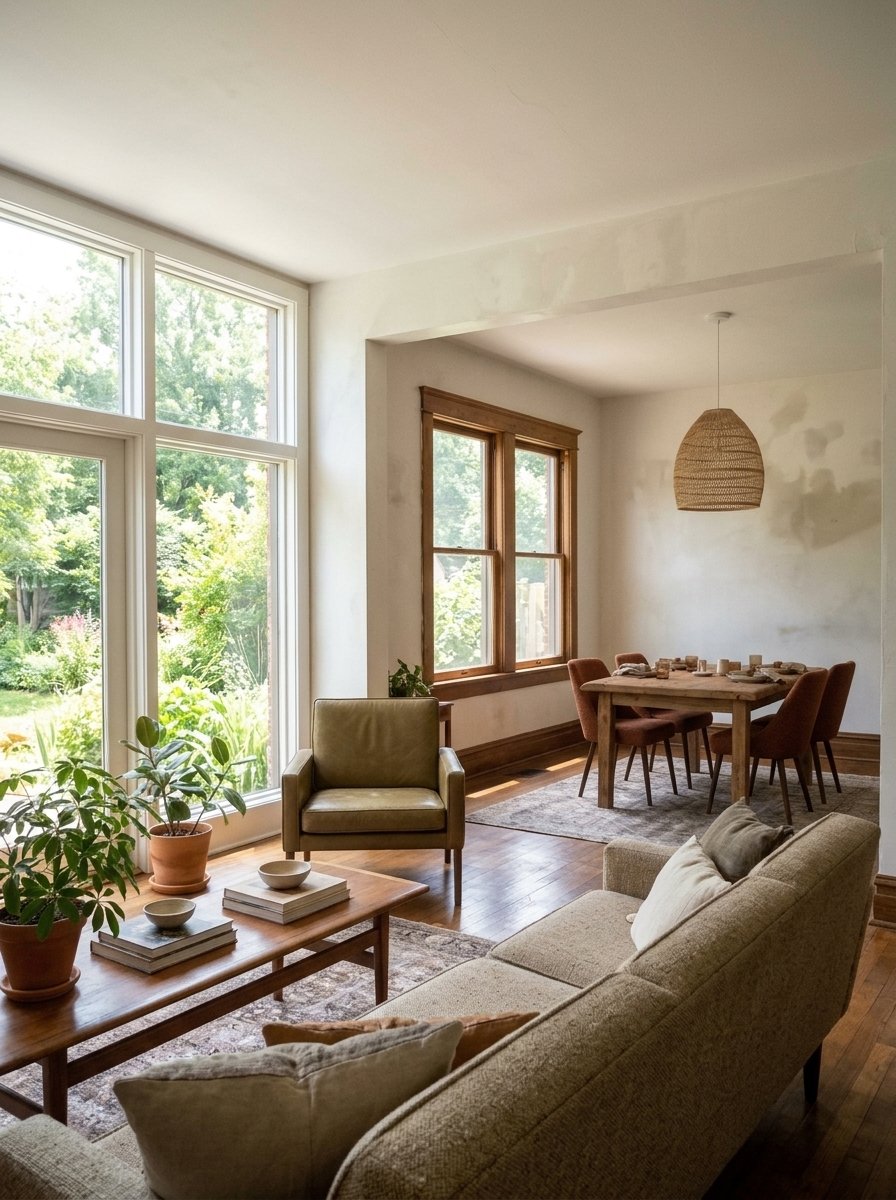
Open layouts suit midcentury homes. Let the dining area flow into the living room with minimal walls. Use a rug and a pendant to define the dining zone. Because the space is open, light moves freely. In addition, large windows connect the room to the outdoors.
34. Use the Sunroom

A sunroom makes a bright, cheerful dining space. Large windows flood the room with light. Pair a midcentury table with simple chairs and plants. Since sunrooms can heat up, choose light, breathable fabrics. Also, shades or sheer curtains help control glare.
Blending and Updating Mid Century Style
You do not need a pure midcentury house to enjoy the look. These four ideas show how to blend, update, and DIY.
35. Mix With Modern Farmhouse
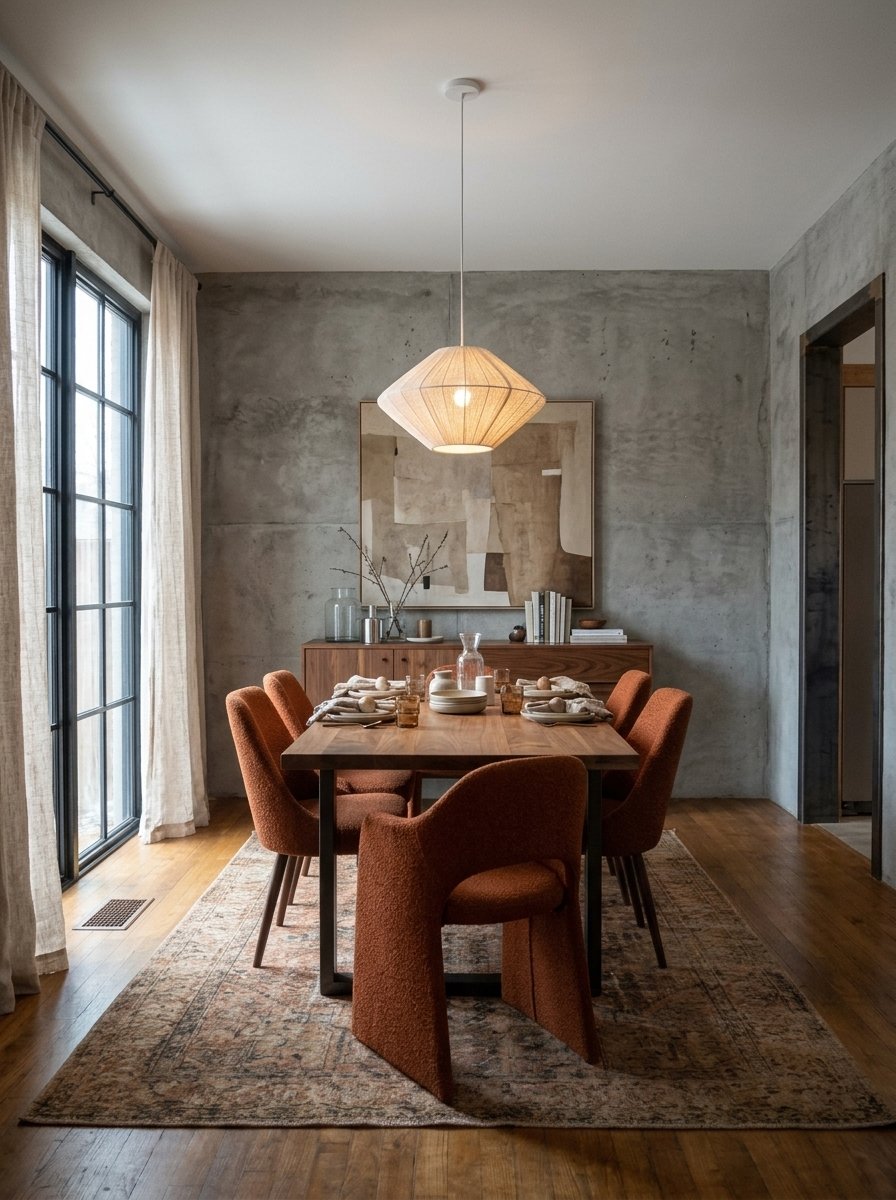
Midcentury and modern farmhouse styles pair nicely. Combine a tapered-leg table with a rustic bench and black metal lights. The mix of clean lines and cozy textures feels fresh. Because both styles value natural materials, they blend easily. As a result, the room feels warm and modern.
36. Warm a Contemporary Room
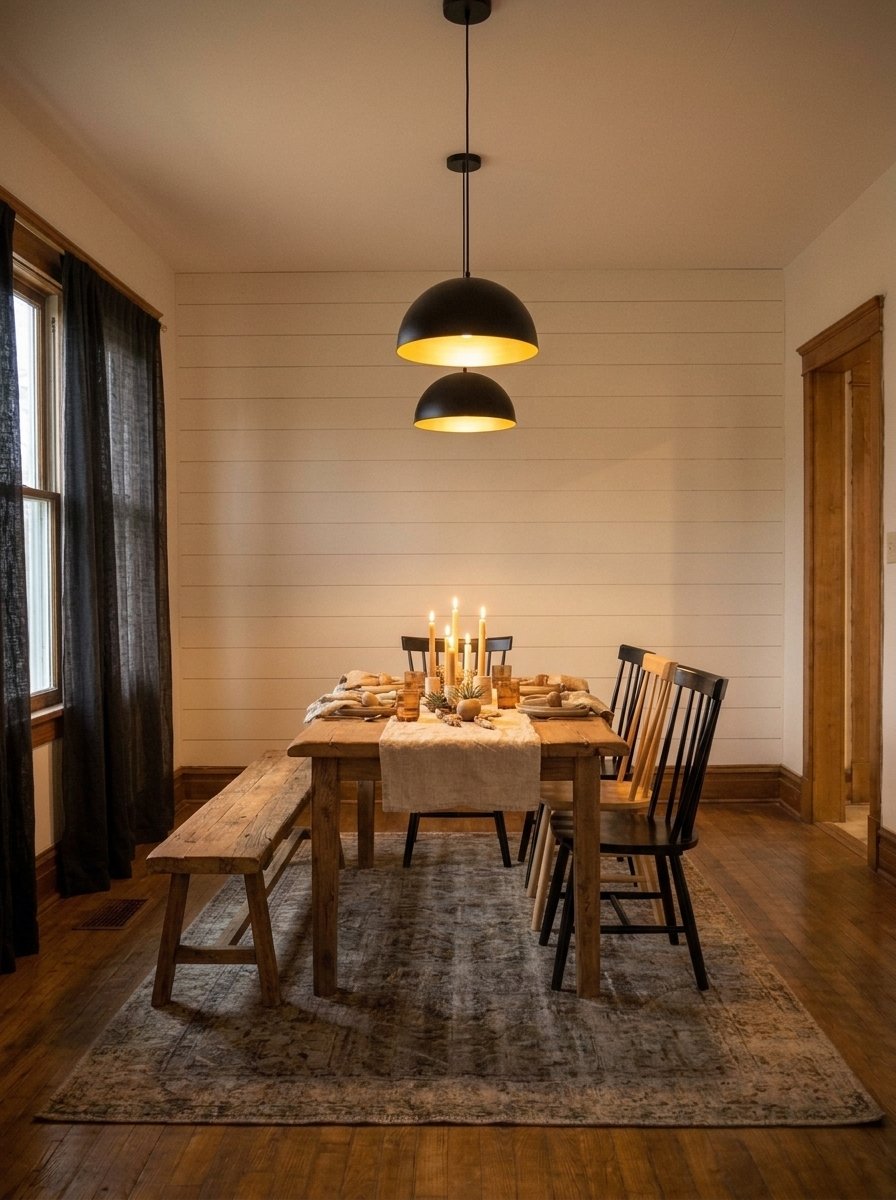
A contemporary room can feel cool or stark. Midcentury pieces add warmth and character. Try a walnut sideboard, a vintage rug, or a sculptural chair. Since the style is simple, it fits well with modern lines. In addition, warm wood balances cool metals and glass.
37. Renovate the Ranch House
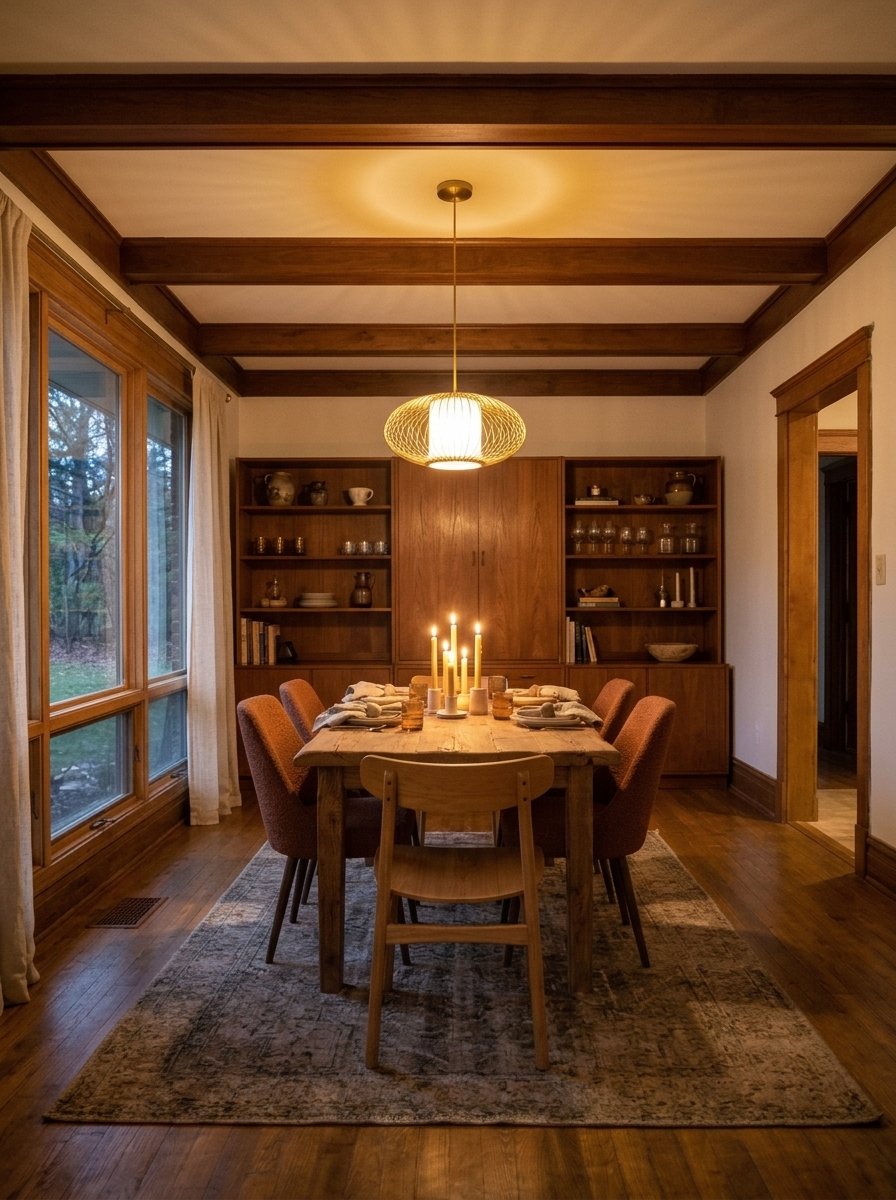
Midcentury ranch houses suit the style naturally. Open the dining area to the living room, expose beams, and add large windows. Refinish original wood floors, and keep built-ins when you can. Because the architecture already has midcentury bones, small touches go far. Before major changes, check local rules and consult a pro.
38. DIY It
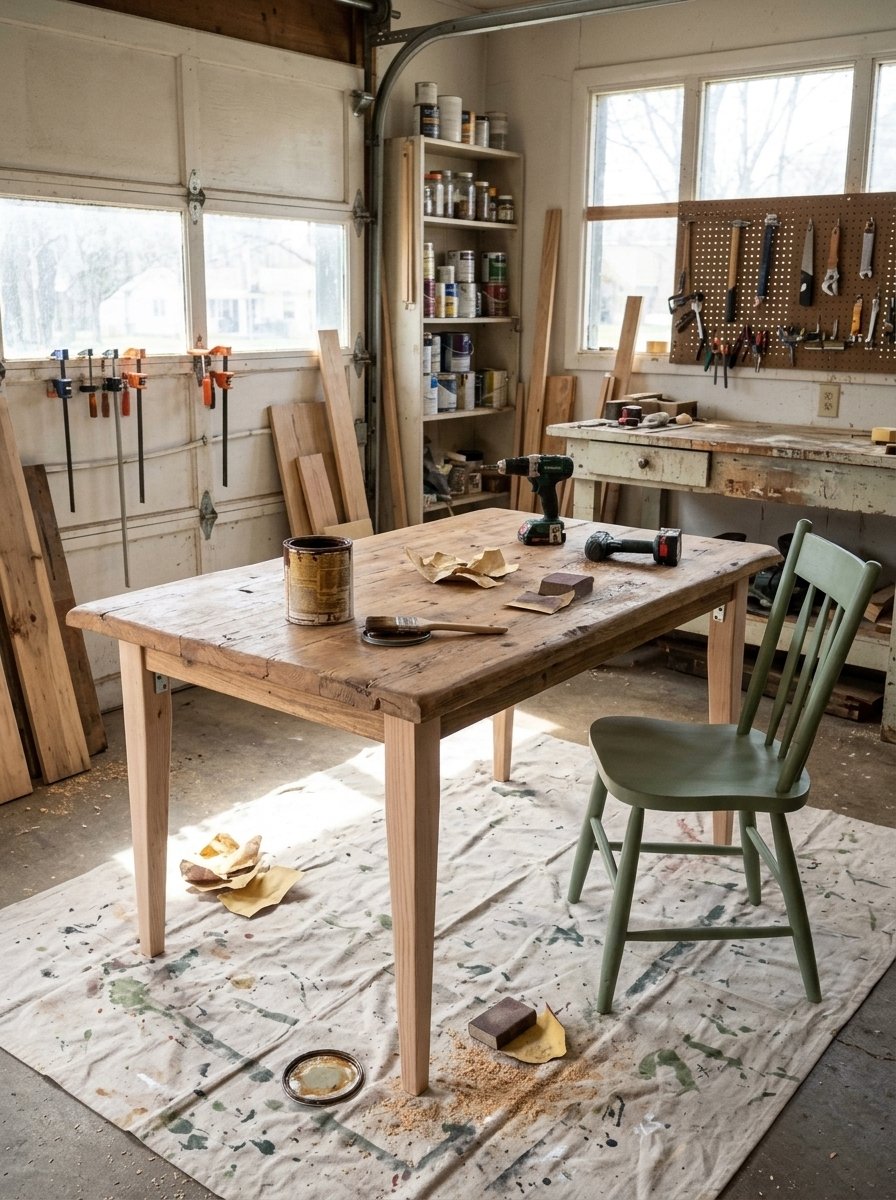
DIY projects make midcentury style affordable. Add tapered legs to a plain table, paint a vintage chair, or build a slatted wood panel. Sand, stain, and seal for a durable finish. Since furniture in this style is simple, it suits DIY builds. Also, thrifted pieces make great starting points.
Mid Century Modern Dining Room Lighting Guide
Lighting can make or break a dining room. Keep these tips in mind.
- Hang the pendant at the right height. About 30 to 36 inches above the table works for many rooms.
- Use warm bulbs. Warm white feels inviting and flatters wood.
- Add layers. Combine a pendant with a lamp on the buffet and wall lights.
- Install a dimmer. It lets you set the mood for any meal.
- Choose a size that fits. The fixture should be about two-thirds the width of the table.
Also, use a licensed electrician if you need to add or move wiring.
Table and Rug Size Guide
Good proportions keep a dining room comfortable.
- Space around the table. Leave about 36 inches around the table for chairs and walking.
- Rug size. Choose a rug that extends about 24 inches beyond the table on each side.
- Table height. Most dining tables stand about 29 to 30 inches tall.
- Seat height. Chairs usually have seats about 17 to 19 inches high.
- Round tables. A 48-inch round table often seats four to six people.
In addition, measure your room first. A table that is too big can make the room feel crowded.
Vintage vs. Reproduction Midcentury Furniture
You can mix vintage and new pieces. Here is a quick comparison.
- Vintage. It has authentic character and history. However, it can cost more and may need repairs.
- Reproduction. It is usually more affordable and easier to find. Also, it often comes with warranties.
- Mixed approach. Combine one or two vintage finds with new, inspired pieces for a balanced look.
Before you buy vintage, check joints, finishes, and stability. Because older pieces vary, inspect them in person when you can.
Budget Tips for a Mid Century Modern Dining Room
You can enjoy this style without a big spend. Try these ideas.
- Start with the lighting. A midcentury-style pendant changes the whole room.
- Shop thrift stores and flea markets. Look for wood chairs, ceramics, and brass accents.
- Paint a single wall. A bold color adds impact for little cost.
- Update hardware. New pulls on a buffet give it a fresh look.
- Refinish what you have. Sanding and staining can revive an old table.
- Build in stages. Add one new piece at a time as your budget allows.
Common Mid Century Modern Dining Room Mistakes
A few mistakes can make a room feel off. Watch out for these.
- Too much matching. A full matching set can look flat.
- Too many colors. Stick to three or four.
- Ignoring scale. A giant table or tiny pendant can throw off the balance.
- Skipping lighting. A bare bulb or dim light ruins the mood.
- Cluttered surfaces. Midcentury style values open space.
- Over-theming. Do not turn the room into a museum.
Frequently Asked Questions
What is a mid century modern dining room?
A mid century modern dining room uses design ideas from the 1940s through the 1960s. It features clean lines, warm wood, organic shapes, and bold accents.
What colors suit a mid century modern dining room?
Warm wood tones, orange, mustard, teal, olive green, and navy are classic choices. Neutrals such as white and cream also work well.
What lighting is best for a mid century modern dining room?
Globe, bubble, and sputnik pendants are popular. A brass fixture adds warmth. Hang the light about 30 to 36 inches above the table.
What wood is best for midcentury furniture?
Walnut and teak are the most classic. Oak and rosewood also appear in many vintage pieces. Choose the tone you love.
Can I mix midcentury with other styles?
Yes. Midcentury pairs well with modern farmhouse, Scandinavian, and contemporary styles. Keep the color palette consistent to unify the look.
How do I make a small midcentury dining room work?
Use a round table, slim-legged chairs, and light colors. Keep decor minimal, and use a mirror to add light.
Conclusion
A mid century modern dining room is timeless, warm, and full of personality. Whether you love a classic walnut set, a bold orange accent, or a calm minimal look, there is a style for you. Start with one strong piece, such as a pendant or a table. Then build around it with wood, color, and thoughtful decor.