Walk into almost any beautifully designed entryway you’ve admired online, and chances are a mirror is doing more work than you realized. It’s rarely just “a mirror” — it’s usually the whole reason the space feels finished.
I used to treat mirrors as an afterthought, something you hang up last if there’s wall space left over. Then I actually paid attention to how much a well-placed mirror changes a room — bouncing light, adding depth, giving your eye somewhere to land — and realized it deserves way more thought than a quick Target run.
If your entryway currently has a bare wall where a mirror should be, let’s fix that. These entryway mirror ideas go beyond “hang it and hope,” covering shape, placement, lighting, and the surrounding details that make the whole moment work.
Why a Mirror Does So Much Heavy Lifting in an Entryway
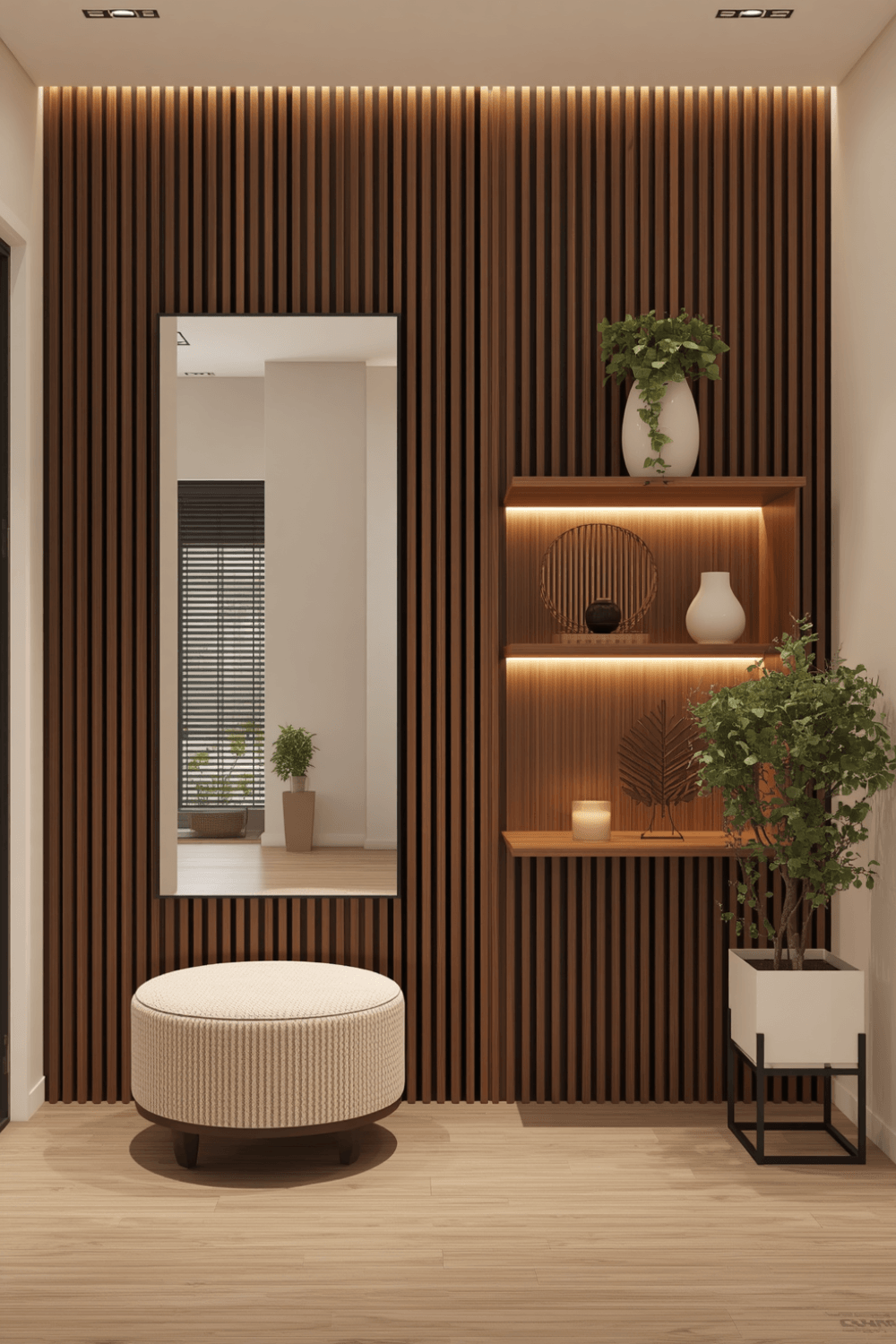
Here’s something worth understanding before you buy anything — a mirror in your entryway isn’t just functional, it’s genuinely one of the highest-impact design decisions you can make in that space.
Good entryway mirror ideas accomplish a few things at once:
- Bounce natural or artificial light deeper into what’s often a dim, narrow space
- Create visual depth, making even a small entryway feel more open
- Give guests (and you) a genuinely useful last-glance spot before heading out
Wood Slat Wall Mirror: A Combination That’s Everywhere Right Now
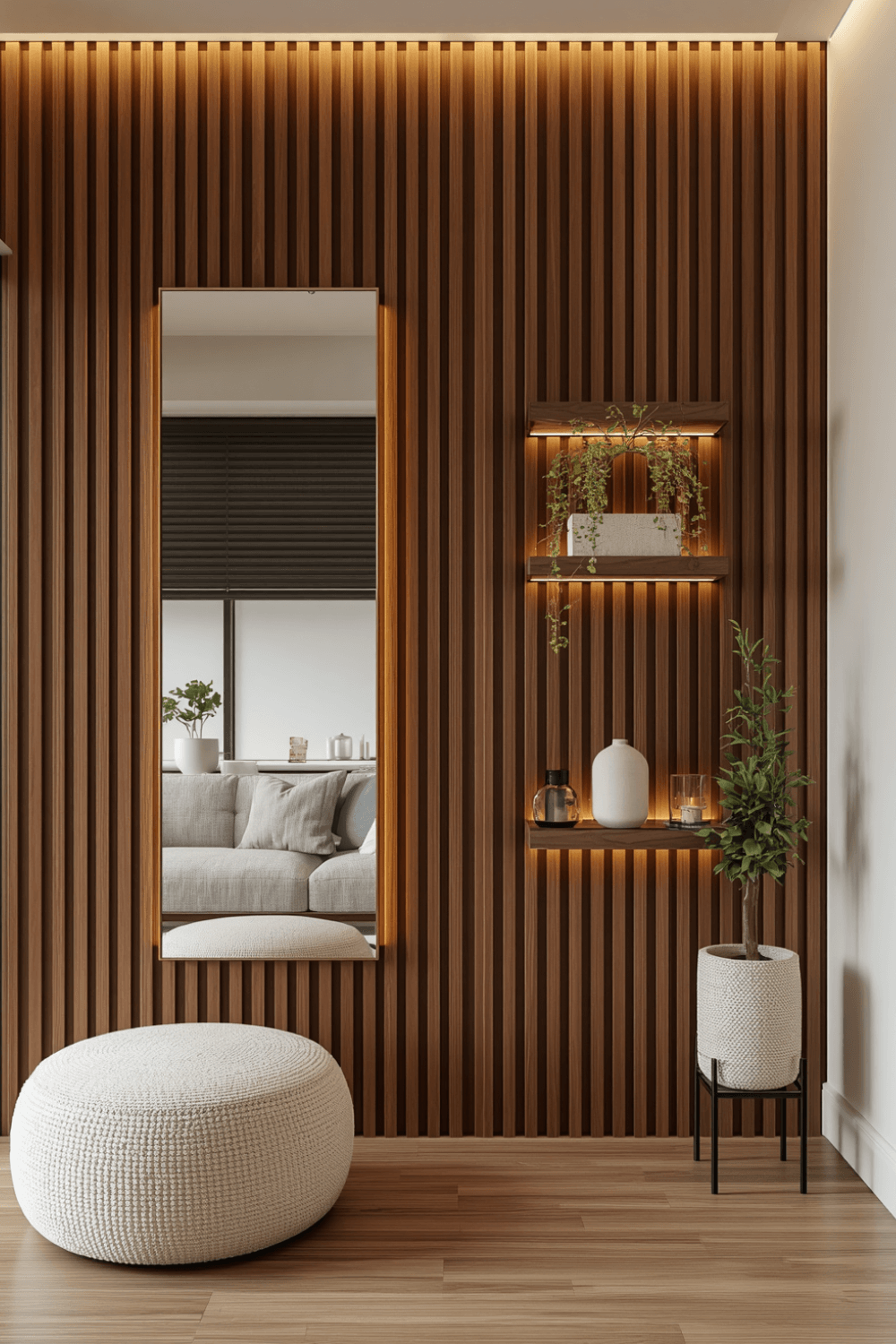
If there’s one pairing that’s dominating entryway design lately, it’s this one.
A wood slat wall mirror setup — a mirror mounted against a vertical wood slat accent wall adds texture and warmth that a plain painted wall simply can’t match. The mirror reflects the slat pattern too, which creates a genuinely striking doubled effect.
Why this combination works so well:
- The wood slats add architectural interest behind the mirror, not just beside it
- The mirror’s reflection doubles the texture, making the wall feel even more substantial
- It photographs beautifully from almost any angle, thanks to all that natural depth
Vertical Wood Paneling as Your Mirror’s Backdrop
Beyond slats specifically, vertical wood paneling more broadly creates a similar effect — clean, linear texture that gives a mirror something substantial to sit against.
Popular approaches:
- Full-height paneling — wood running floor to ceiling, mirror mounted partway up
- Partial accent panel — a defined rectangular wood section just behind the mirror
- Mixed-tone paneling — slightly varied wood tones for a more organic, collected look
Wood Slat Wall Design: Getting the Proportions Right
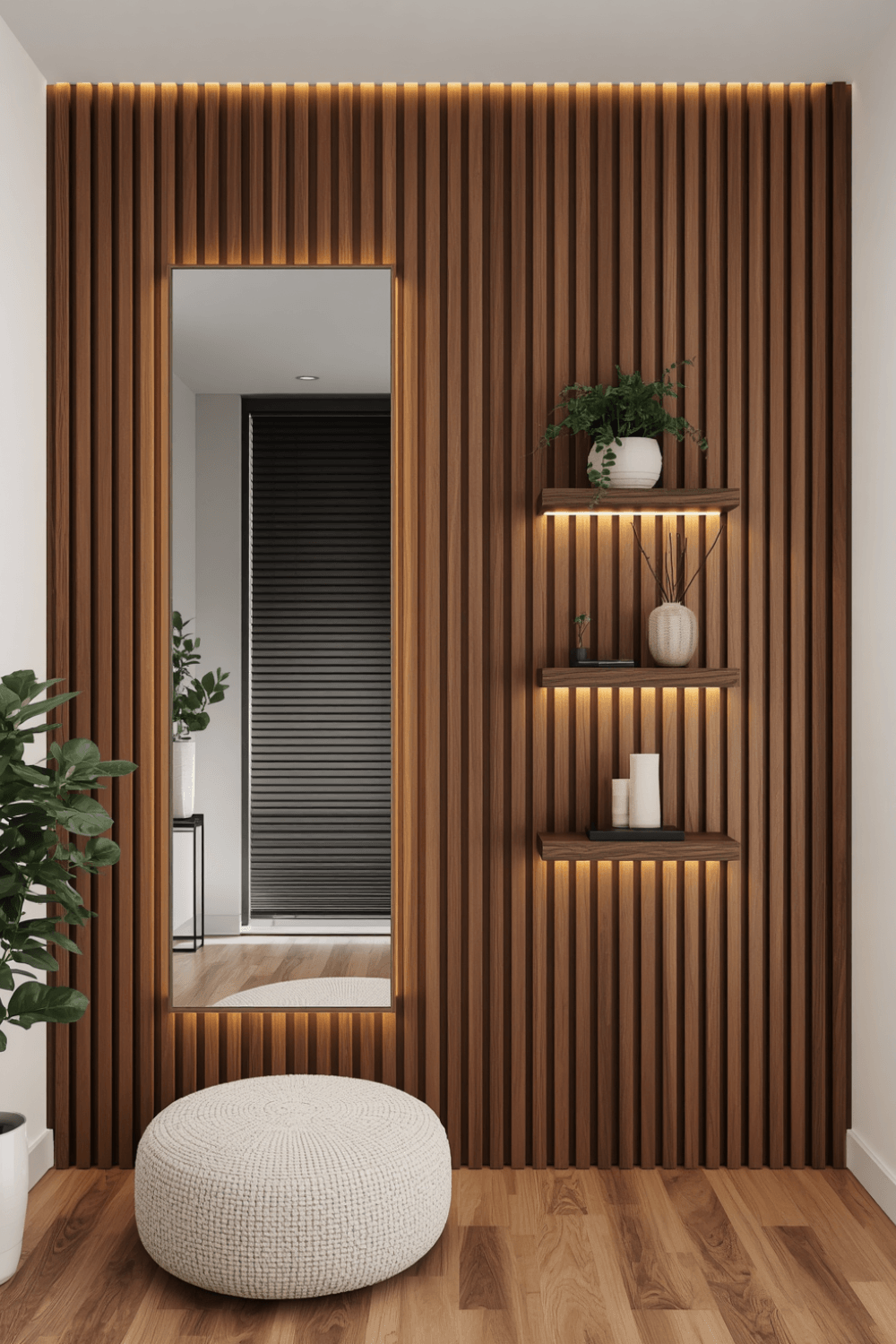
If you’re building a wood slat wall design from scratch, proportion matters more than people expect.
- Keep slat width consistent throughout — mixing random widths can look unintentional rather than designed
- Leave small, even gaps between slats rather than installing them flush together, which lets shadow and light play across the texture
- Stain or finish the wood before installation for a more even, professional-looking result
This level of attention to detail is genuinely what separates a wood slat wall that looks custom-built from one that looks like a weekend DIY gone slightly sideways.
LED Wood Wall Design for Dramatic Evening Lighting
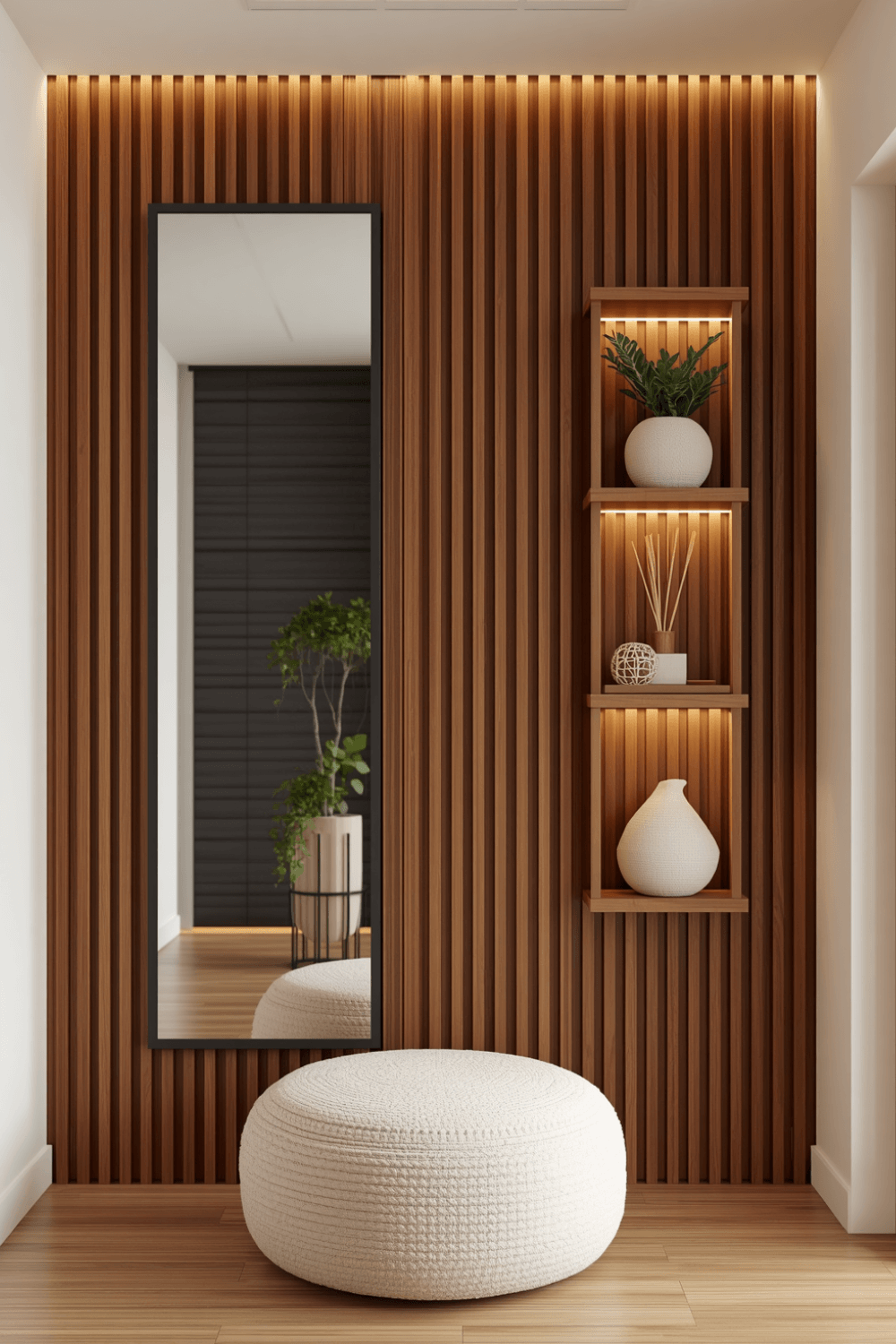
Here’s a detail that takes a wood slat wall from nice to genuinely stunning, especially once the sun goes down.
LED wood wall design involves running a warm LED strip along the edge of your wood paneling, often behind or around the mirror itself, creating a soft backlit glow.
Why this works so beautifully:
- It highlights the wood grain and texture in a way that flat daylight simply doesn’t
- The warm glow flatters the mirror’s reflection, making the whole wall feel like a genuine design feature
- It adds a layer of ambient lighting to a space that often relies on just one harsh overhead fixture
Choosing the Right Mirror Shape for Your Space
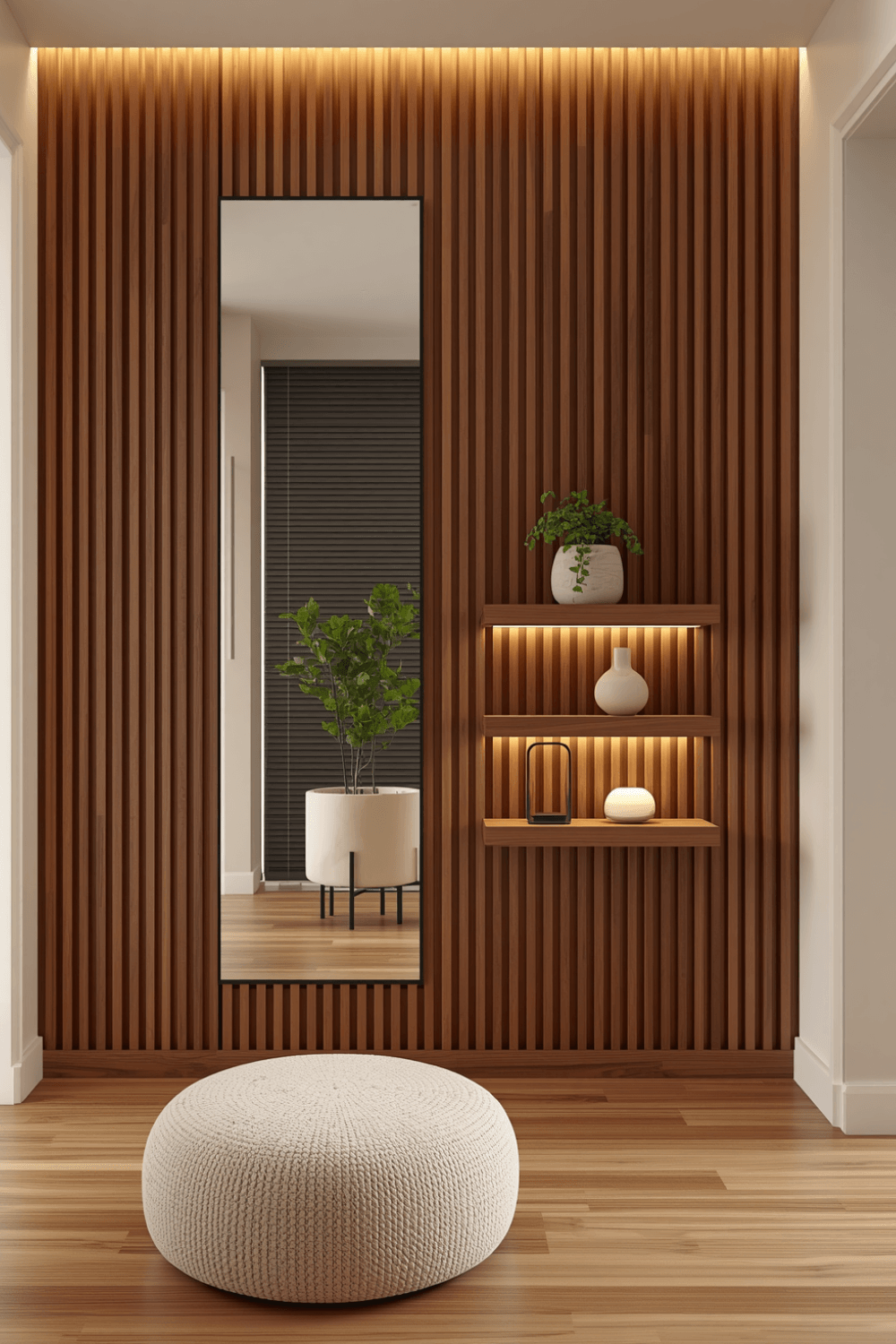
Beyond the wall treatment, the mirror’s actual shape genuinely changes the whole feel of the entryway.
Shapes worth considering:
- Arched — softens straight architectural lines, currently one of the most popular choices
- Round — feels modern and organic, works especially well in smaller spaces
- Rectangular — classic and versatile, pairs well with almost any wall treatment
- Irregular or organic — makes a genuine statement piece, best for entryways that can handle a bit of drama
Quick tip: Size matters more than shape in most cases. A too-small mirror in a large entryway looks a bit lost, so when in doubt, size up rather than down.
Luxury Foyer Mirror Details Worth the Investment
If you want your mirror to feel like a genuine statement piece rather than just a functional object, a few details push things toward luxury foyer mirror territory.
- A substantial frame — thick wood, black metal, or brushed brass rather than a thin, flimsy edge
- Integrated LED backlighting built directly into the frame
- Oversized proportions relative to the wall, making the mirror itself the focal point
Luxury entryway decor overall benefits from this kind of restraint-with-impact approach — one genuinely substantial piece rather than several smaller, less impactful items.
Modern Entryway Ideas Beyond Just the Mirror
A mirror rarely exists in total isolation, so it’s worth thinking about the surrounding elements that complete the look.
Modern entryway ideas that pair naturally with a statement mirror:
- A console table directly beneath, giving the mirror a clear anchor point
- Simple, clean-lined furniture that doesn’t compete visually with the mirror’s presence
- A restrained color palette so the mirror and wood wall genuinely stand out
Modern Console Decor to Complete the Vignette
Once your mirror is up, the console table beneath it deserves equal styling attention.
Modern console decor basics:
- A single vase or decorative object, not a cluttered row of items
- A small tray for keys and everyday essentials
- One meaningful piece — a small sculpture, a framed photo — rather than several competing for attention
A simple formula that works almost every time: one larger item, one smaller functional piece, and a touch of greenery. That’s genuinely enough.
Entryway Plant Decor and Indoor Plant Entryway Additions
Speaking of greenery, entryway plant decor adds life and softness that balances out all that clean wood and glass.
Indoor plant entryway ideas:
- A trailing plant on the console table, letting vines cascade naturally near the mirror’s edge
- A taller plant in the corner for height and visual balance against the mirror’s verticality
- Small potted plants grouped together if your console has the surface space
Practical tip: Most entryways don’t get fantastic natural light, so choose low-light-tolerant plants like pothos, snake plants, or ZZ plants. A high-quality faux plant works just as well if your entryway is genuinely dark.
Floating Shelf Decor Alongside Your Mirror
If your entryway has extra wall space, a floating shelf decor addition near (but not directly overlapping) your mirror adds another layer of styling opportunity.
- A slim shelf positioned beside the mirror for a small plant or candle
- A shelf above the mirror if ceiling height allows, styled with a few curated objects
- Keep it minimal — one or two items max, so it doesn’t compete with the mirror itself
Entryway Wall Decor Beyond the Mirror Alone
Not every entryway wall needs to be entirely about one statement mirror. Entryway wall decor can incorporate the mirror as part of a slightly larger moment.
- A small cluster of framed art alongside a smaller mirror, rather than one dominant piece
- A mix of the mirror with a wall sconce or two for added texture
- A single hook or small shelf nearby for genuinely functional storage
Modern Entryway Lighting to Flatter Your Mirror
Lighting genuinely determines how good your mirror and wood wall actually look, day or night.
Modern entryway lighting worth layering in:
- Wall sconces flanking the mirror for soft, even illumination
- A pendant light overhead if your entryway has the ceiling height for it
- The LED backlighting mentioned earlier, specifically for evening ambiance
Quick tip: Avoid lighting your mirror from directly overhead only, since this can create unflattering shadows. Side lighting (sconces) or backlighting genuinely works better for both function and mood.
Japandi Entryway Ideas for a Calmer Aesthetic
If a dramatic, backlit statement mirror feels like too much for your taste, Japandi entryway ideas offer a quieter, more restrained alternative.
- A simple, unadorned mirror in a natural wood or black frame
- Minimal surrounding decor — one plant, one small tray, nothing more
- Natural materials throughout, but used sparingly rather than layered heavily
This approach works especially well in smaller entryways, since there’s simply less visual competition for your eye’s attention.
Warm Minimalist Entryway Approaches
Warm minimalist entryway design brings the calm of minimalism without tipping into anything cold or stark.
- Warm wood tones instead of anything painted stark white
- Soft, ambient lighting rather than harsh overhead-only fixtures
- A few natural textures — a woven basket, a linen runner — to add warmth without clutter
This pairs beautifully with a wood slat mirror wall specifically, since the warmth of the wood naturally supports this softer, more restrained aesthetic.
Neutral Entryway Ideas as Your Flexible Base
Whatever direction you take with your mirror and wall treatment, neutral entryway ideas — cream walls, warm beige textiles — give you a flexible backdrop that works with almost any wood tone or mirror frame color.
Quick gut check: Could you add a wood slat wall, a black-framed mirror, and some greenery into your current entryway color without anything clashing? If yes, your neutral base is solid and ready to build on.
Small Entryway Design: Making the Mirror Work Harder
If your entryway is on the smaller side, your mirror genuinely needs to do more visual work than in a larger space.
Small entryway design tips specifically for mirror placement:
- Choose a larger mirror relative to the wall than you might in a bigger space, since it helps the room feel more open
- Position it directly across from any light source (a window or doorway) to maximize the bounced light effect
- Keep surrounding decor minimal so the mirror remains the clear focal point rather than competing with other elements
Modern Foyer Design and Contemporary Home Entryway Cohesion
At the end of the day, your mirror and wood wall should feel like a natural extension of your modern foyer design or contemporary home entryway as a whole, not an isolated decision.
- Repeat your wood tone in other nearby furniture (a console, a bench) for cohesion
- Keep your color palette consistent between the entryway and adjacent visible spaces
- Let the mirror and wall treatment set the tone for the rest of your home’s design language
Final Thoughts: Your Entryway Mirror Deserves More Than an Afterthought
At the end of the day, entryway mirror ideas aren’t just about picking something to check your outfit in on the way out the door. A well-chosen mirror, paired with the right wall treatment and lighting, genuinely transforms how your entire entrance feels.
Key takeaway: Start with the mirror’s shape and size, pair it with a textured backdrop like wood slats or paneling, then layer in warm lighting and a console below. That combination does more for your entryway than almost any other single design choice.
Frequently Asked Questions
1. What size mirror works best for an entryway?
As a general guideline, your mirror should feel proportional to the wall space available, with many designers sizing it to roughly two-thirds the width of the console table below. When in doubt, sizing up slightly tends to look more intentional than choosing something too small.
2. Does a wood slat wall require professional installation?
It depends on the complexity — many wood slat wall kits are designed for straightforward DIY installation over existing drywall, though a fully custom build with integrated LED lighting might benefit from professional help. Most homeowners can tackle a basic slat wall as a weekend project.
3. What mirror shape works best in a small entryway?
Round or arched mirrors tend to work particularly well in smaller spaces, since their softer lines feel less visually heavy than a large rectangular frame. That said, a well-sized rectangular mirror can work just as effectively if the proportions suit your wall.
4. How do I add LED lighting behind a mirror safely?
LED strip lighting is generally low-voltage and safe for DIY installation, often with adhesive backing for easy mounting behind a frame or along wall paneling edges. For anything more complex involving hardwiring, it’s worth consulting an electrician.
5. Can I use a mirror and plant together in a small entryway without it feeling cluttered?
Yes, as long as you keep the plant relatively small and positioned to one side rather than directly in front of the mirror. A single trailing plant on a console table usually adds warmth without competing with the mirror itself.
6. What’s the difference between a Japandi and a luxury-style entryway mirror?
A Japandi-style mirror tends to be simple, unadorned, and understated, fitting into a calmer, more minimal overall design. A luxury-style mirror usually features a more substantial frame, integrated lighting, and larger proportions, designed to be a genuine statement piece.