
Coastal living room ideas help you bring the calm of the shore into your home, even if you live miles from the water. Think soft blues, sandy neutrals, natural textures, and plenty of light. The goal is simple: a room that feels relaxed, bright, and easy to enjoy every day.
Below, you will find 40 coastal living room designs for every taste and budget. First, read the quick guide to coastal style. Then pick the ideas that fit your space.
What Defines a Coastal Living Room

A coastal living room feels like a breezy day by the water. A few key elements create that mood.
- A light, airy palette. White, sand, and soft blues form the base.
- Natural textures. Linen, jute, rattan, and wood add warmth and depth.
- Plenty of light. Sheer curtains and open views keep the room bright.
- Relaxed furniture. Slipcovered sofas and deep chairs invite you to sit and stay.
- Subtle beach touches. A few shells, paddles, or photos hint at the shore without feeling themed.
Also, coastal style is flexible. You can go boho, farmhouse, minimalist, or cottage, and still feel the sea breeze.
Coastal Color Palettes to Try
Color sets the mood, so choose a palette that suits the feeling you want.
- Blue and white: Fresh and classic. It feels clean and crisp.
- Navy and sandy beige: Grounded and timeless, with a tailored look.
- Pale blue and wood: Soft and calm, with natural warmth.
- Blue and green: Sea glass and dune grass, gentle and fresh.
- Blue and pink: Sunset-inspired and a little playful.
- All neutral with one blue accent: Quiet and understated.
Start with a neutral base, and add color in layers through pillows, art, and rugs.
Natural Materials That Say Coastal
Materials do a lot of the work in a coastal room. These ones carry the beachy feel.
- Rattan and wicker: Light, woven, and breezy.
- Jute and seagrass: Great for rugs and baskets.
- Linen and cotton: Soft, washable fabrics for sofas and drapes.
- Driftwood and weathered wood: Natural shapes with a worn charm.
- Glass and shells: Small accents that catch the light.
Mix a few of these, rather than using them all at once.
Easy Tips Before You Start
A few simple rules keep a coastal room fresh instead of cluttered.
- Start with a calm base. Paint walls white, sand, or soft blue.
- Layer blue. Use two or three shades in different places.
- Add texture. Combine smooth and rough materials.
- Go easy on nautical items. A few touches look better than a full theme.
- Choose durable fabrics. Sun and sand are tough on delicate materials.
- Keep window treatments light. Sheer or linen panels let in the glow.
Now, let’s get to the ideas.
Go Boho
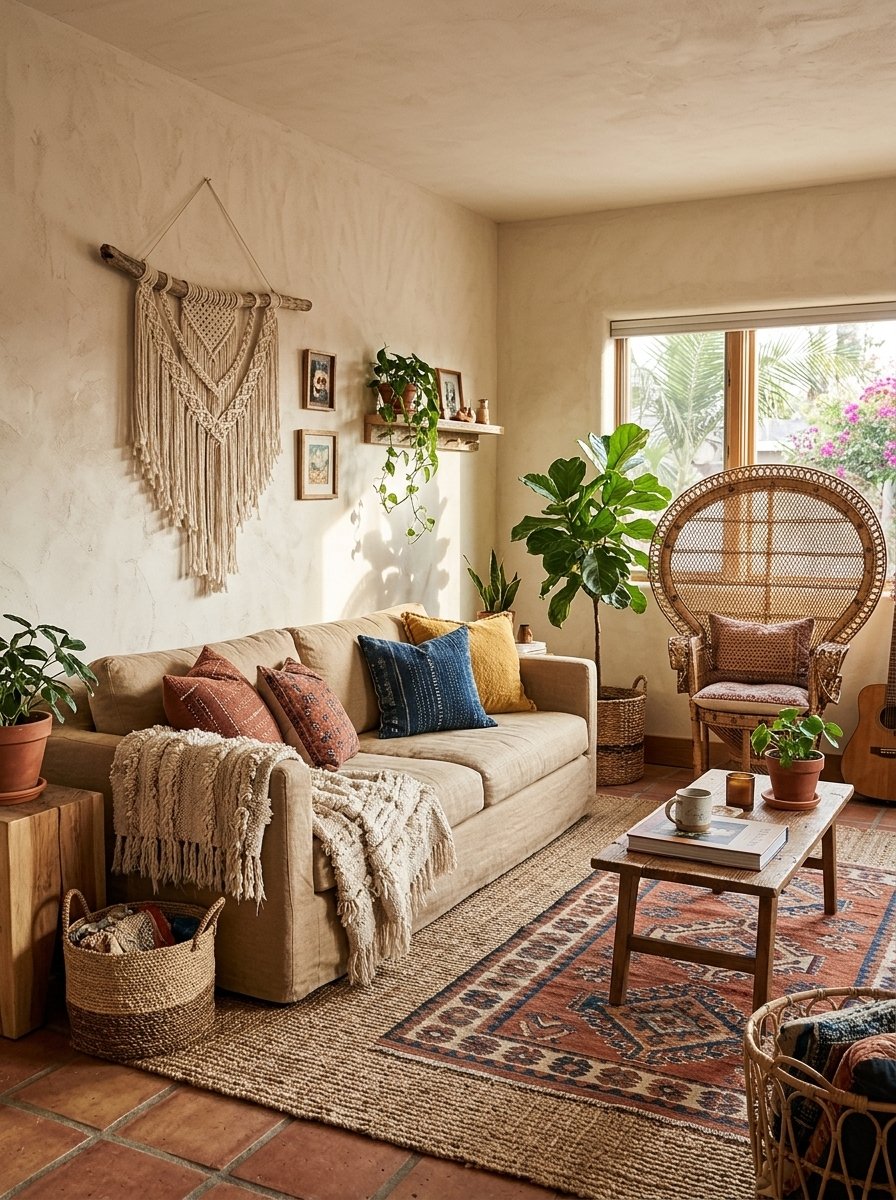
Go boho to give a coastal living room a free-spirited feel. Layer a jute rug with a patterned kilim, and add a rattan chair or a woven pouf. Macramé hangings and fringed throws bring in soft texture.
Keep the base light with white walls and a sandy sofa. Then add color through pillows in blues, terracotta, and mustard. The mix feels relaxed, warm, and a bit worldly, like a beach town you want to visit.
Incorporate Inky Blues
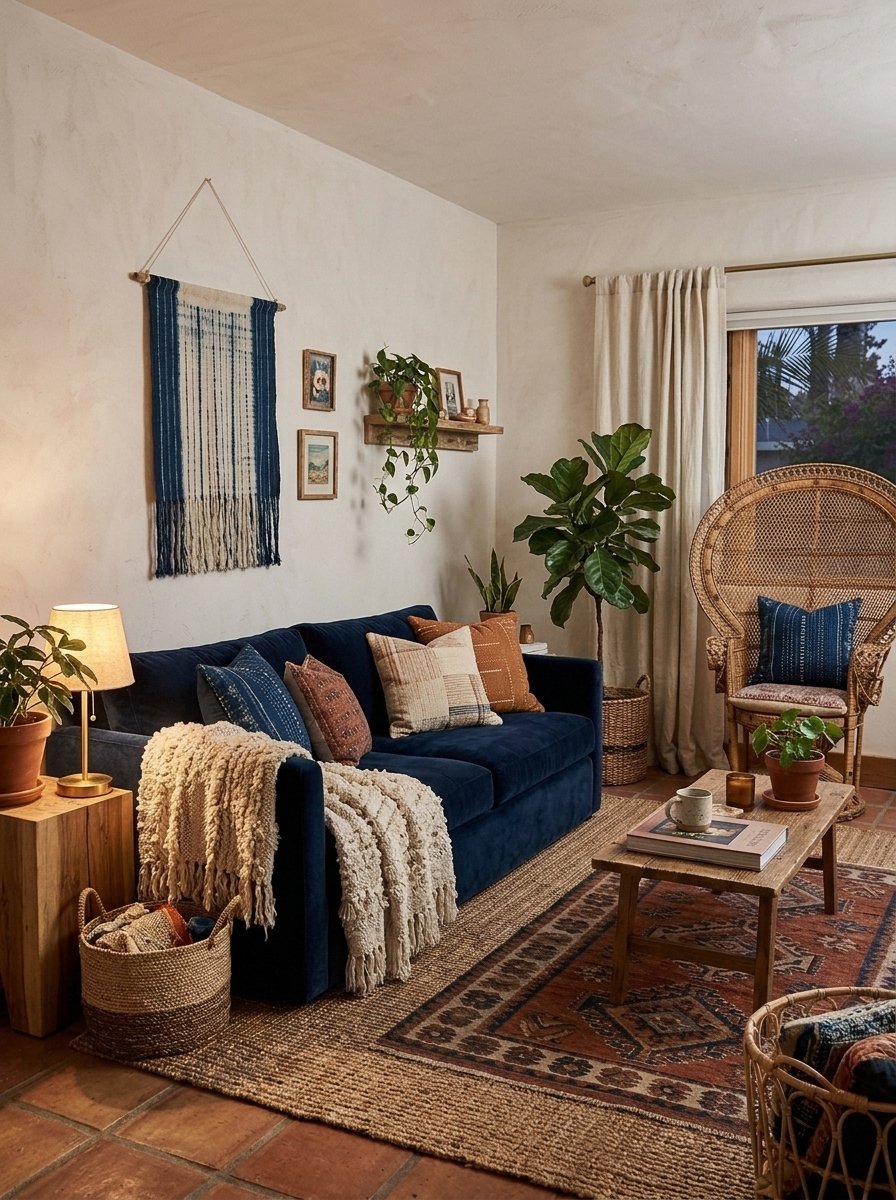
Incorporate inky blues for a deep, dramatic coastal look. Ink and midnight shades echo the ocean at dusk. Use them on an accent wall, a velvet sofa, or a large set of pillows.
Balance the dark tone with plenty of white and natural wood. Add woven baskets and linen curtains so the room stays breezy. A touch of brass in a lamp or frame adds a warm glow against the blue.
Add a Gallery Wall
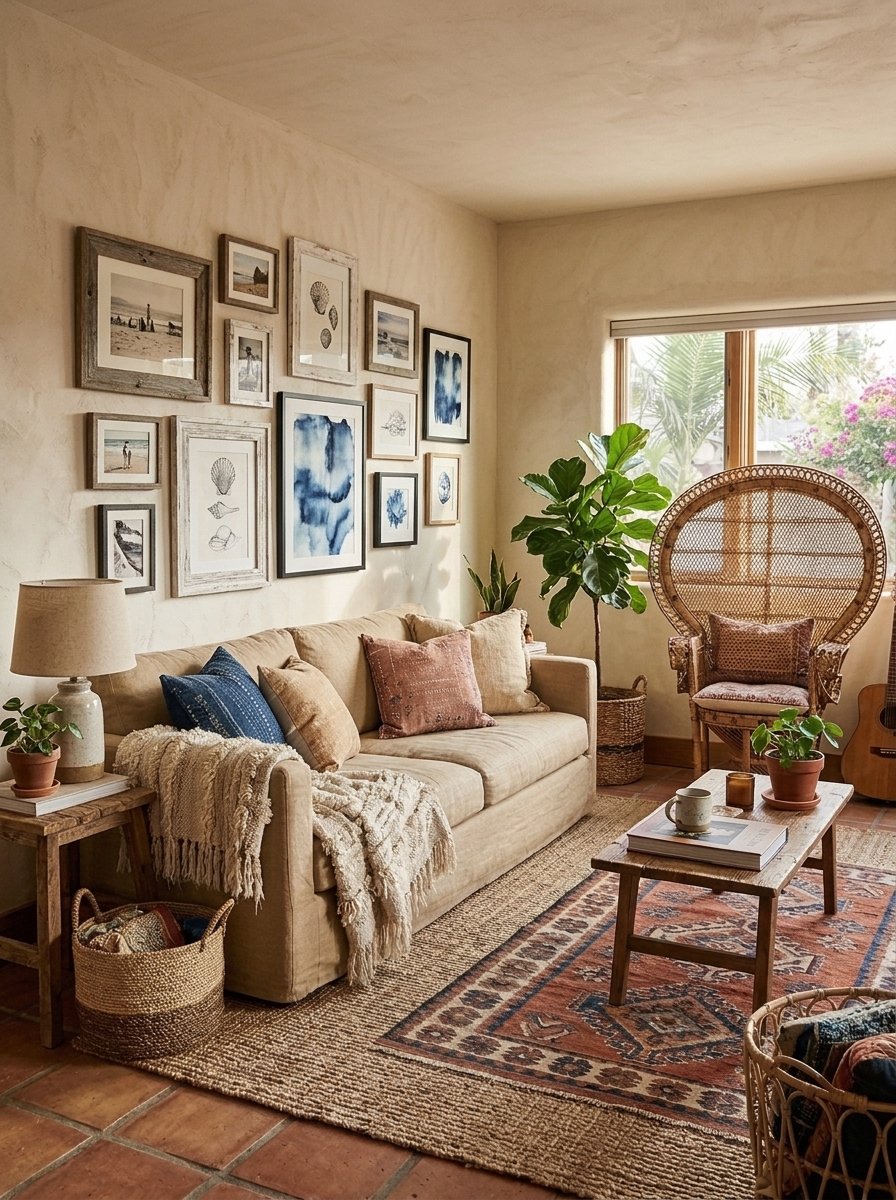
Add a gallery wall to bring story and color to a coastal living room. Mix framed beach photos, sketches of shells, and abstract blue prints. Frames in white, driftwood, and black add variety.
Lay the frames on the floor first, and arrange them until the balance feels right. Keep about 2 to 3 inches between frames for a tidy look. Hang the gallery above the sofa, and it becomes the room’s focal point.
Use Wavy Patterns
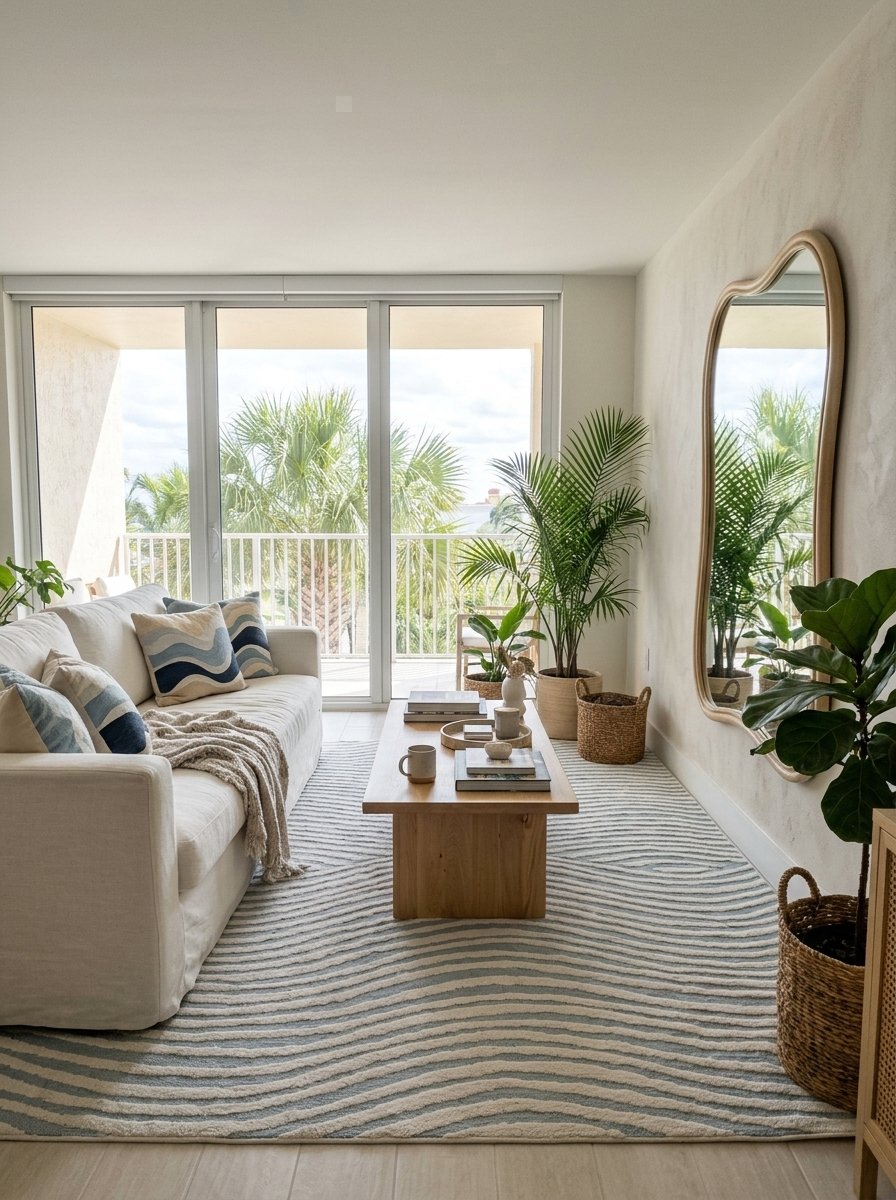
Use wavy patterns to bring the movement of the sea indoors. Look for wave-print pillows, a wavy-striped rug, or a curved wall mirror. Soft blues and whites suit this look best.
One or two wavy pieces are enough, since too many can feel busy. Pair them with solid colors and simple furniture. The gentle curves add rhythm and make the space feel lively but calm.
Draw Colors From the View
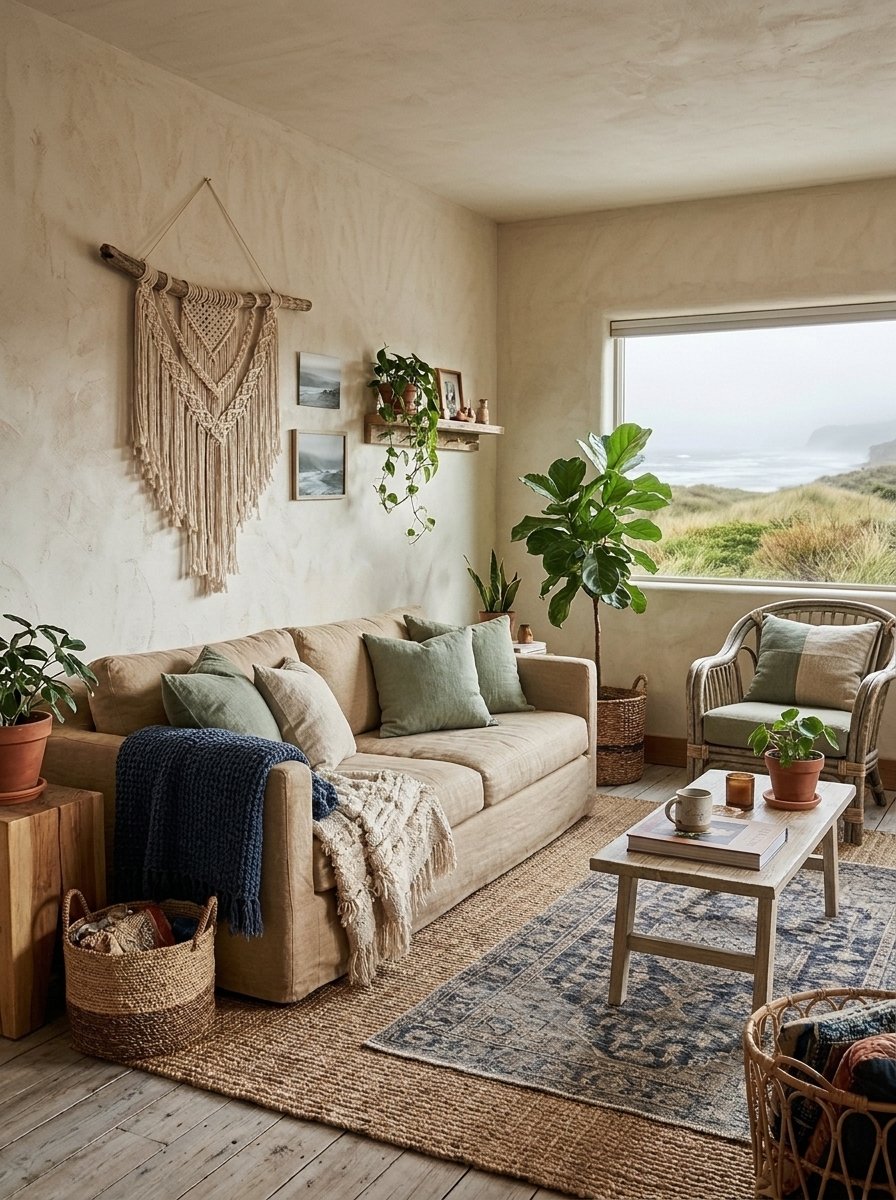
Draw colors from the view to make your living room feel like part of the landscape. If you see green dunes, use soft sage. If you see deep water, add navy. Sand and sky offer beige and pale blue.
Pull two or three shades from outside, and repeat them in pillows, art, and throws. This approach keeps the room cohesive and makes your windows feel like living art. It also works well in homes with garden or lake views.
Mix Navy and Sandy Beige
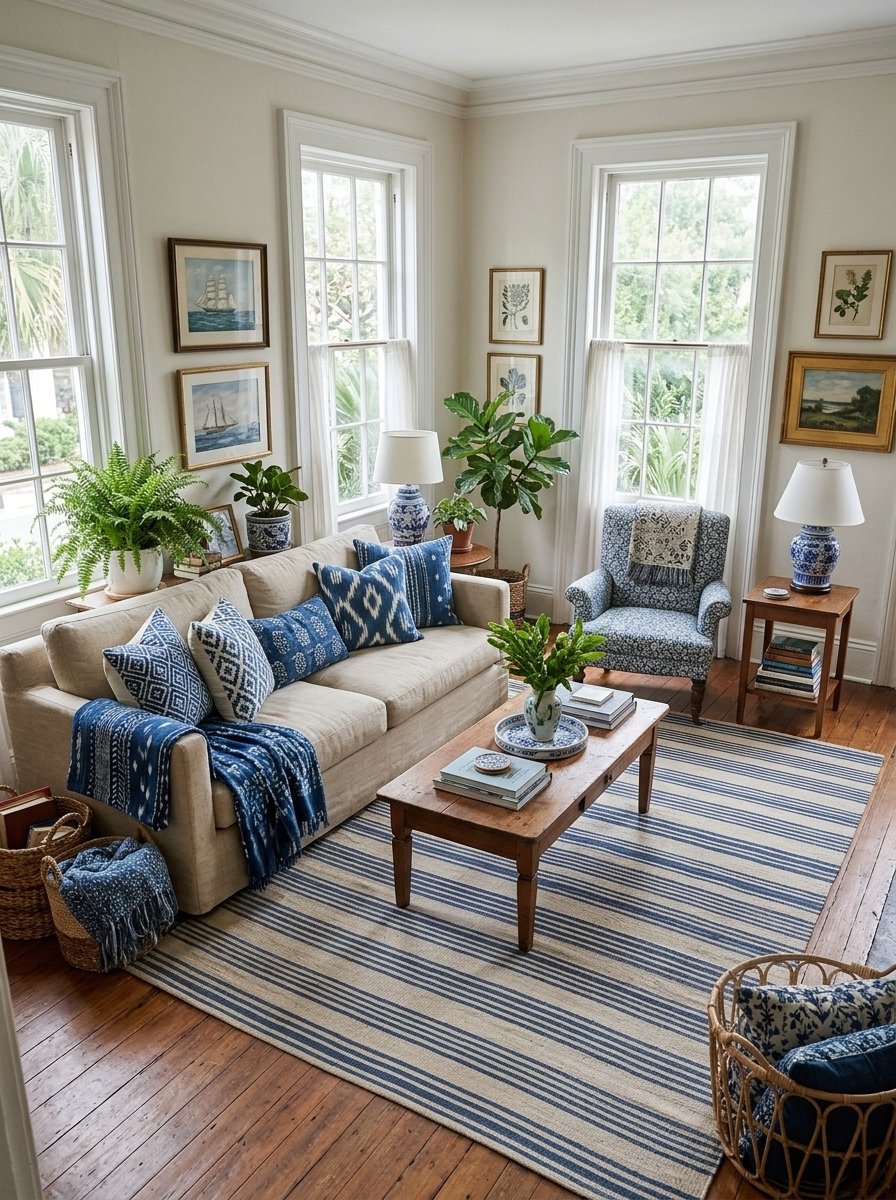
Mix navy and sandy beige for a classic, grounded palette. Navy adds depth, while beige keeps the room warm and soft. A beige sofa with navy pillows is an easy start.
Add white to keep things bright, and bring in rope or wood accents for texture. A navy rug under a beige sectional creates a strong base. The look feels timeless, tailored, and easy to live with.
Decorate With Patterns
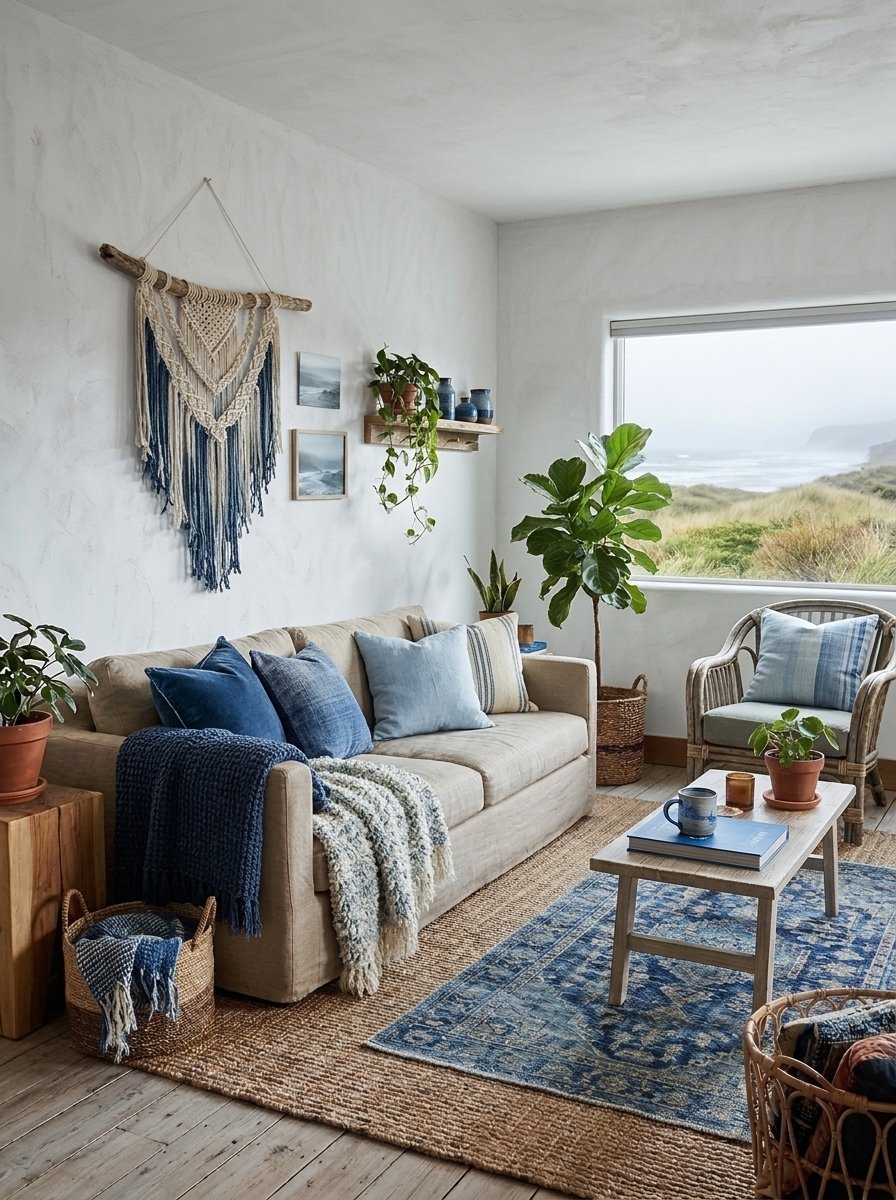
Decorate with patterns to add character to a coastal living room. Stripes, florals, and geometric prints all work when you keep the colors in the same family. Try a patterned rug, a printed armchair, and a few mixed pillows.
Vary the scale, using one large print, one medium print, and one small print. Stick to blues, whites, and sand so the patterns feel connected. This layered approach looks collected rather than matched.
Add Tonal Blues
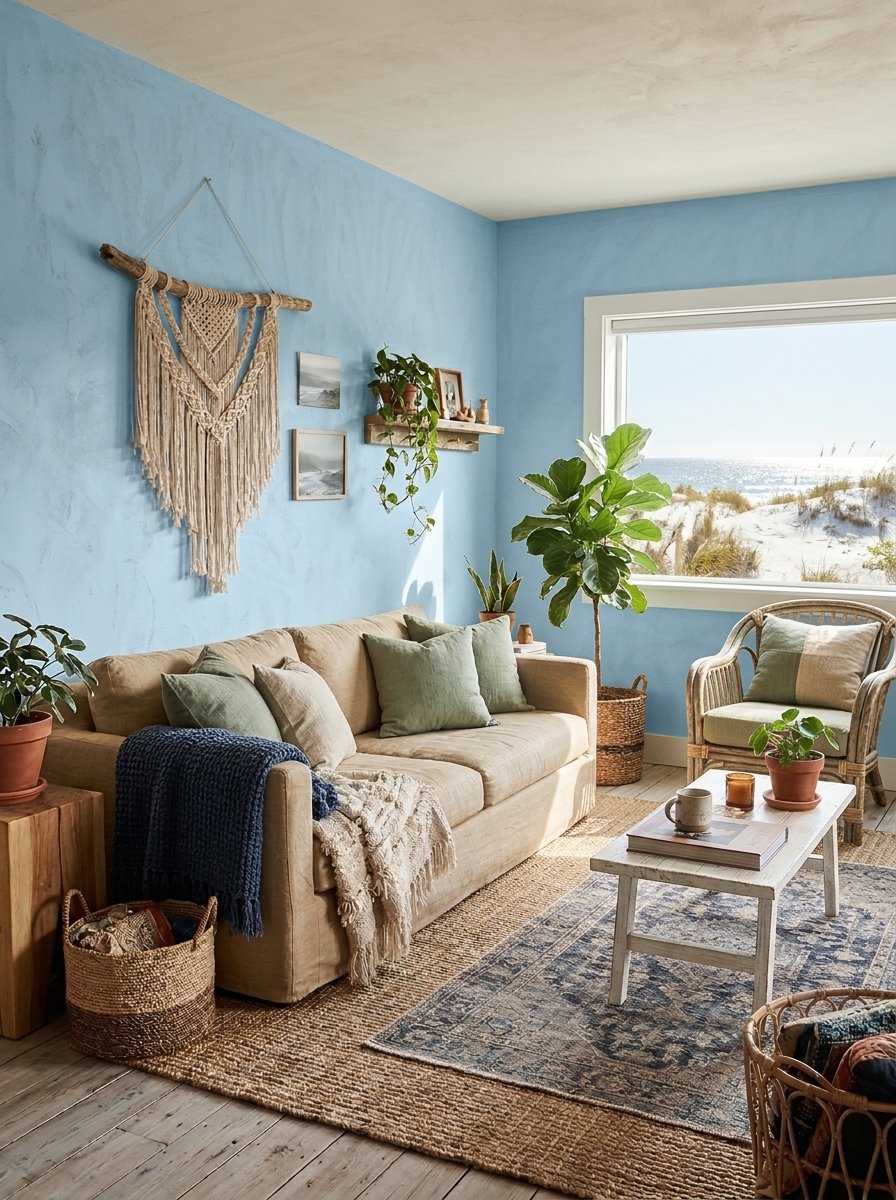
Add tonal blues for a calm, layered look. Use several shades of one color, from pale sky to deep denim, across walls, pillows, and art. The soft shifts feel like water meeting sky.
Use texture to keep the room from feeling flat. Combine linen, velvet, and woven fabrics in different blues. Add white and light wood to keep the space airy and fresh.
Paint Walls Sky Blue
Paint walls sky blue to make the room feel open and bright. A soft blue acts like a gentle backdrop that suits almost any coastal decor. It also reflects light, which helps in smaller rooms.
Choose a shade with a slight gray tint so it does not feel too sweet. Pair it with white trim and a sandy sofa. Test a sample on your wall first, since daylight can change how blue looks.
Layer With Eclectic Pieces
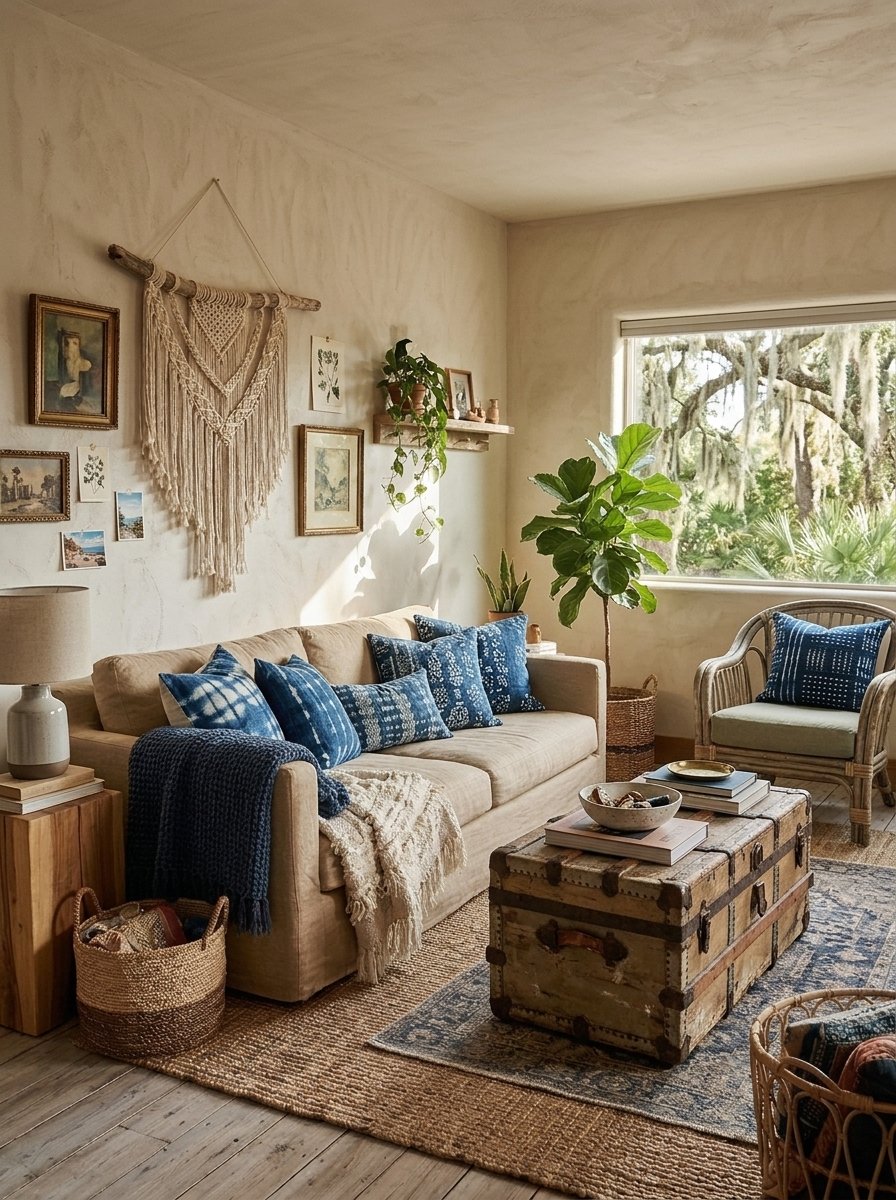
Layer with eclectic pieces to make a coastal living room feel personal. Mix a vintage trunk, a modern lamp, and a handmade bowl. A few travel finds add story and charm.
Keep the palette in blues, whites, and neutrals so the mix feels connected. Group items in odd numbers, and leave breathing room around them. The result looks collected over time rather than bought all at once.
Maximize Light and Views
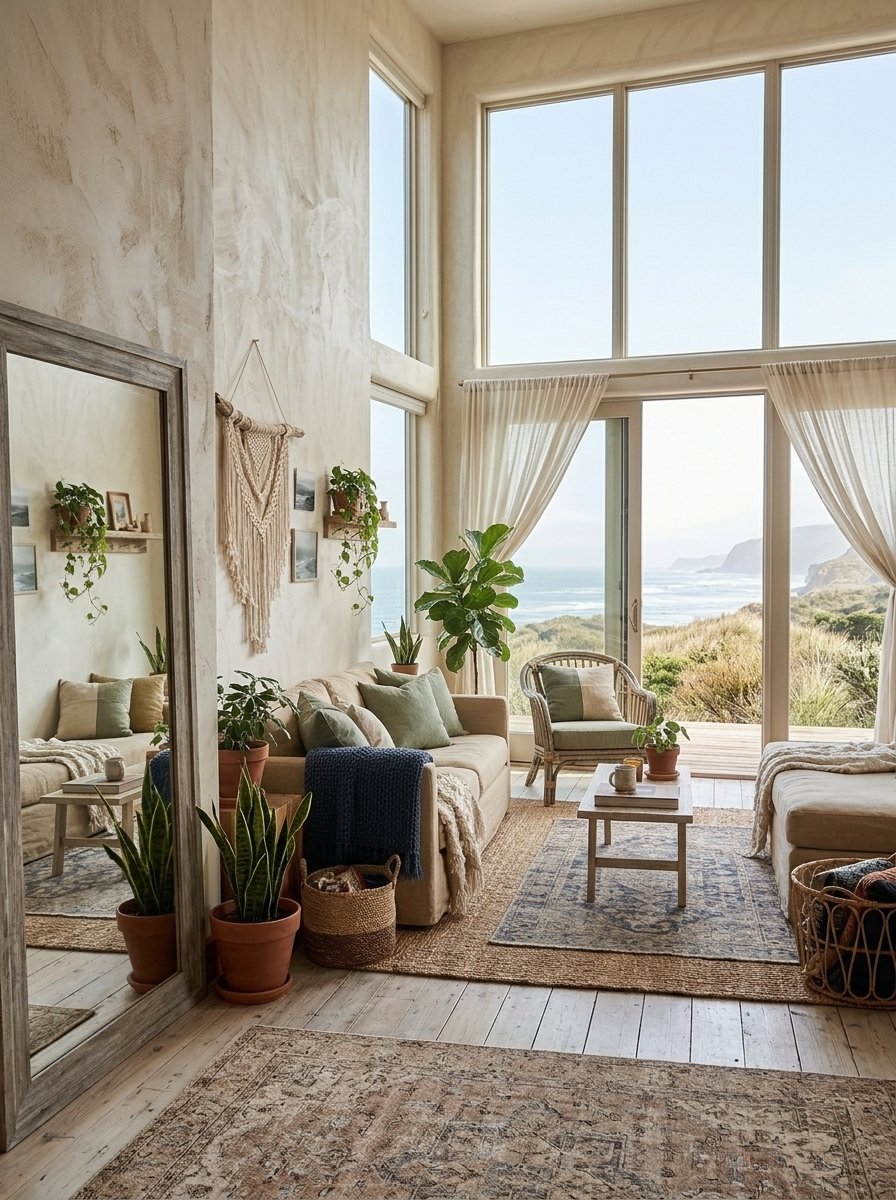
Maximize light and views to let the outdoors star in your living room. Use sheer curtains, or leave windows bare when privacy allows. Place seating so you can enjoy the view.
Keep furniture low near windows so you do not block the sightline. Add a large mirror opposite a window to bounce light around the room. Light colors on walls and floors help the space feel open and breezy.
Add Dramatic Lighting
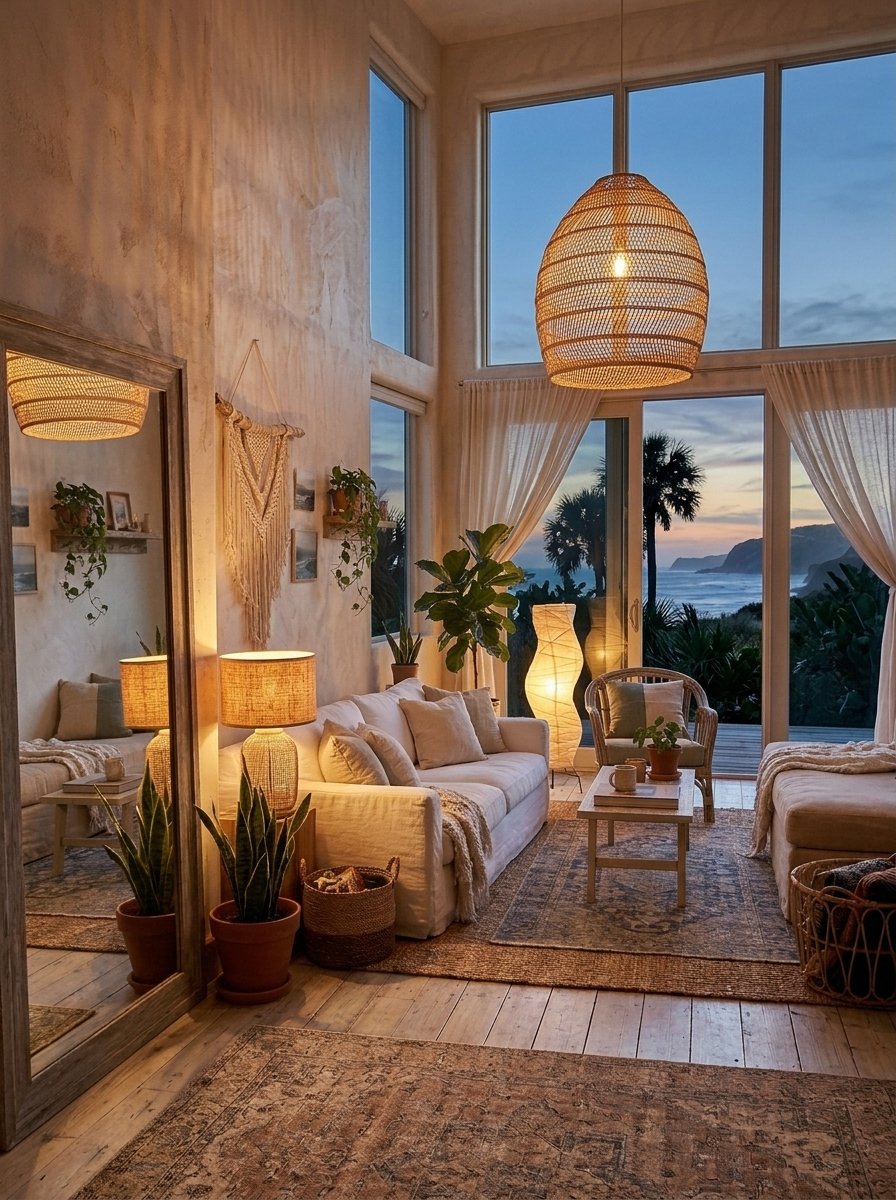
Add dramatic lighting to give a coastal living room evening glamour. A large woven pendant, a sculptural floor lamp, or a pair of oversized table lamps all make strong statements. Rattan and glass fixtures suit the beach mood.
Mix lighting levels, using overhead, task, and accent lights together. Choose warm bulbs for a cozy glow. A dimmer lets you move from bright afternoon to soft night with ease.
Mix With Midcentury Modern
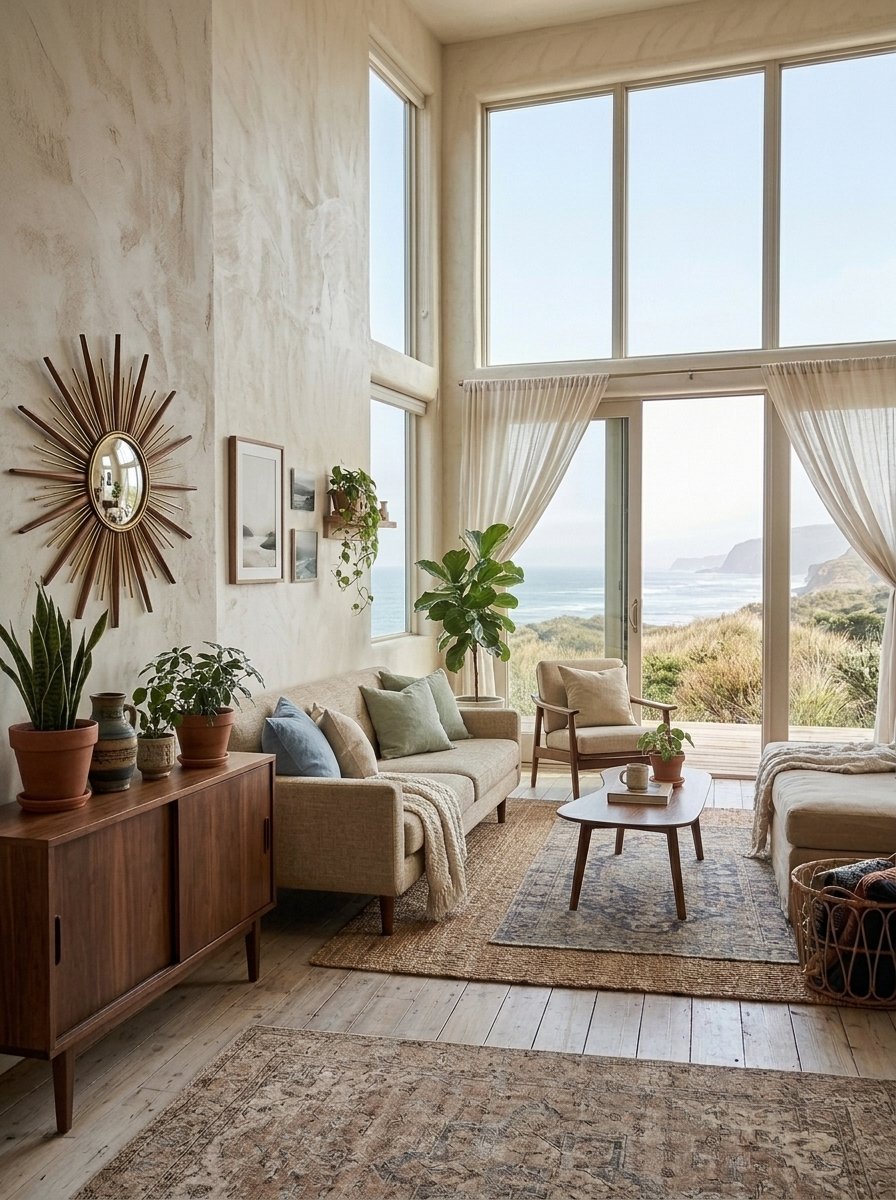
Mix with midcentury modern to give coastal style a sleek twist. Tapered legs, clean lines, and walnut finishes pair nicely with soft blues and sandy tones. A low-profile sofa and a sunburst mirror add retro charm.
Keep the coastal feel by adding linen, jute, and white. Avoid too many nautical items so the room stays fresh. The blend feels relaxed, stylish, and slightly retro.
Add Sailor Stripes
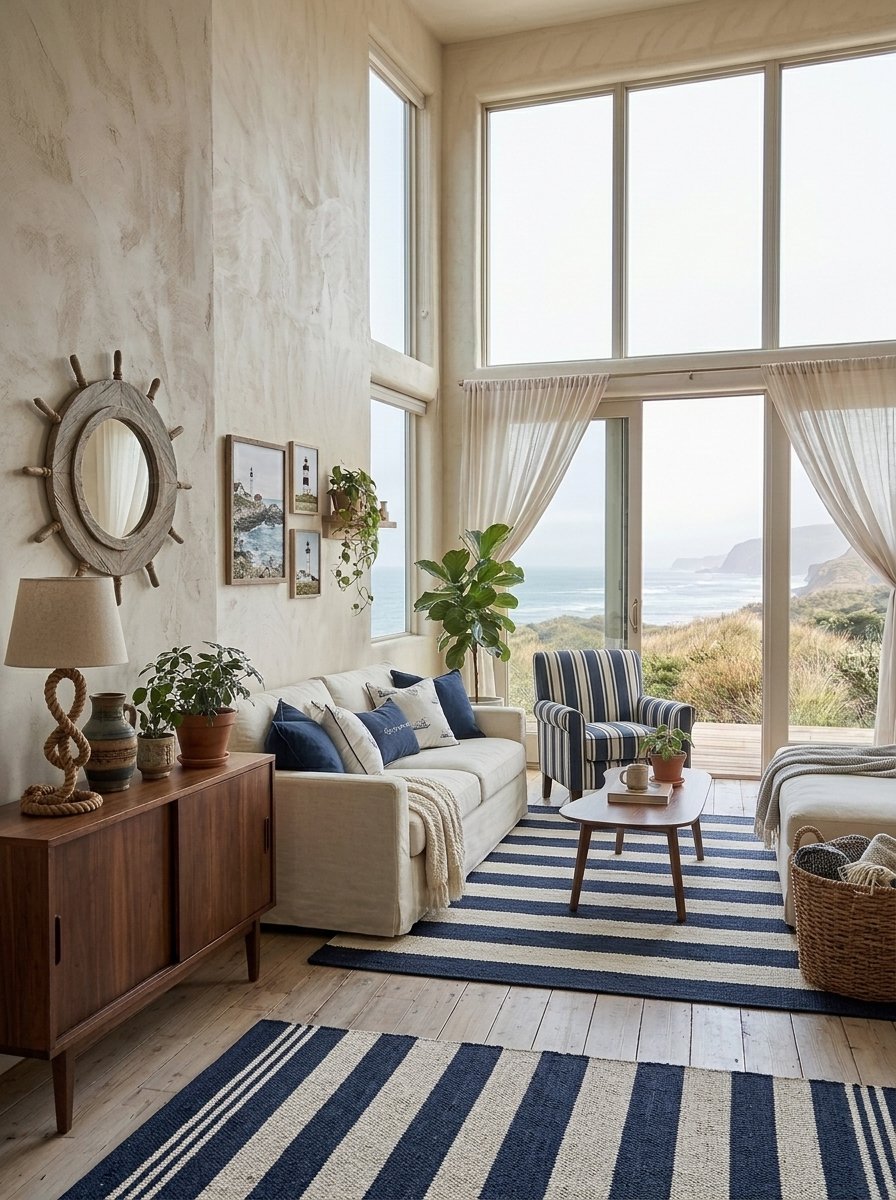
Add sailor stripes for a crisp, classic coastal look. Navy and white stripes on a rug, pillow, or armchair feel fresh and nautical. They suit both traditional and casual rooms.
Use stripes in moderation, one or two pieces at a time. Balance them with solid fabrics and natural textures like rope or wicker. A striped throw draped over a sofa is an easy place to start.
Use Pale Blues and Woods

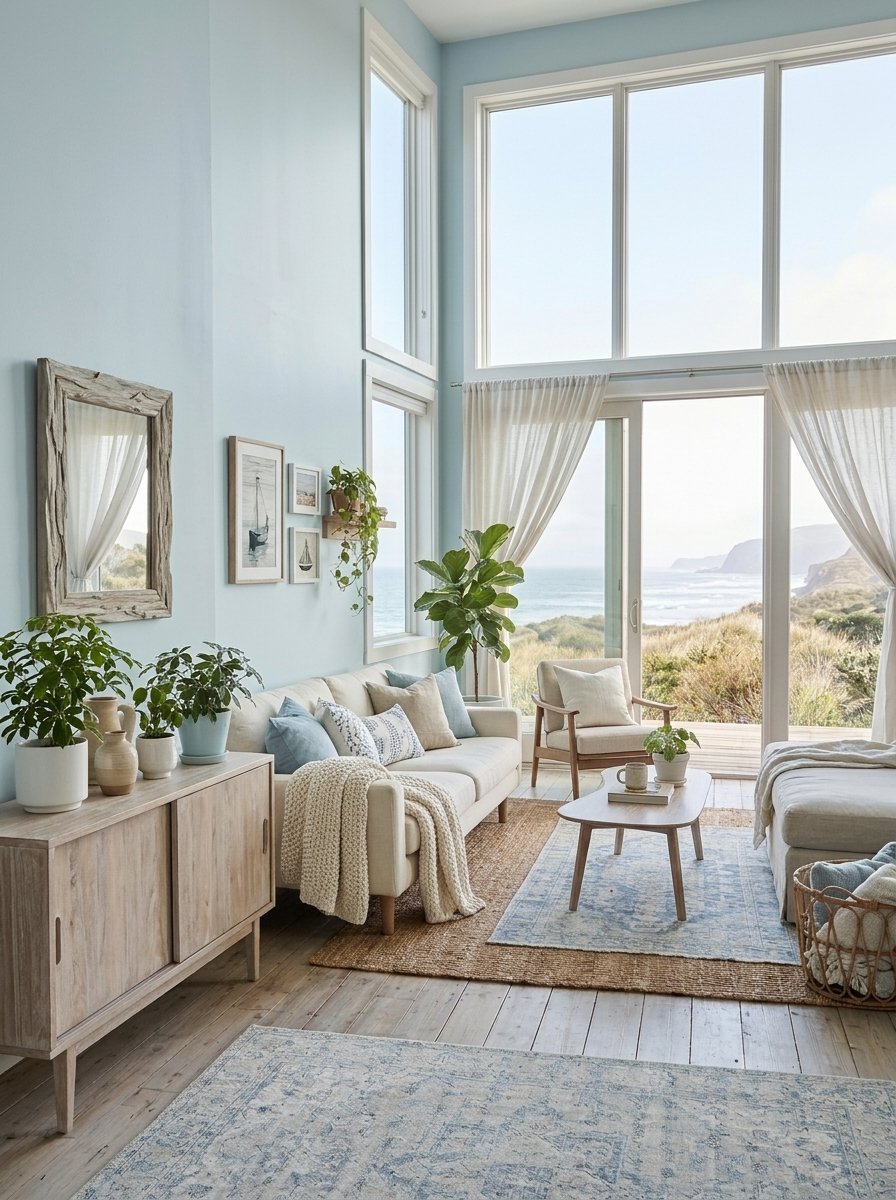
Use pale blues and woods for a soft, breezy palette. Light blue walls, pickled wood furniture, and white accents feel calm and fresh. Natural wood warms the cool color.
Choose woods with a light finish, such as ash, birch, or whitewashed oak. Add linen drapes and a woven rug for texture. The combination looks clean, gentle, and easy on the eyes.
Contrast With Dark Wood
Contrast with dark wood to ground a bright coastal room. A walnut coffee table or an espresso-stained bookcase adds depth against white walls and pale blue fabrics. The contrast keeps the room from feeling too sweet.
Repeat the dark wood in one or two other places, such as a picture frame or a lamp base. Keep the rest of the palette light. This balance feels sophisticated and anchored.
Upholster Armchairs in Blue

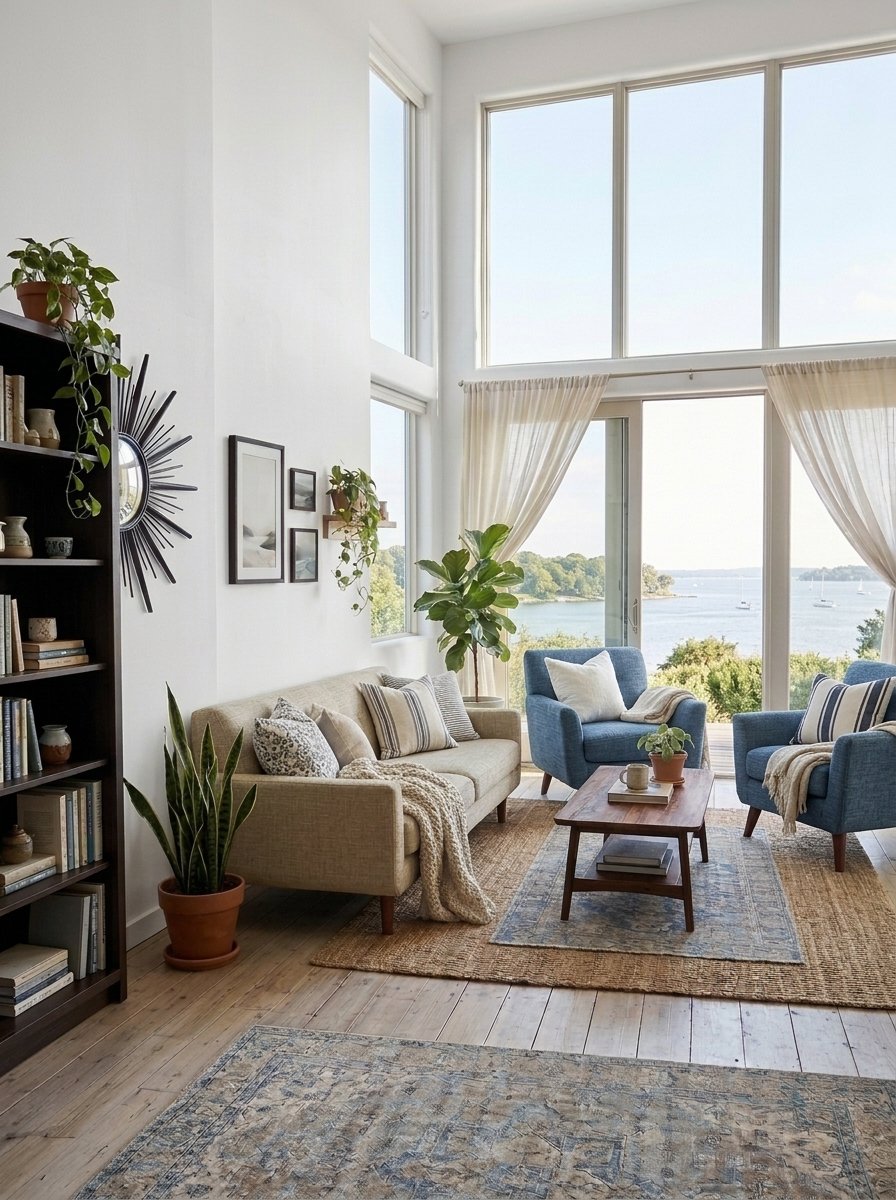
Upholster armchairs in blue to add a fresh pop of color. A pair of blue chairs facing a neutral sofa creates a cozy conversation area. Choose a performance fabric that stands up to sun and daily use.
Pick a shade that matches your other blues, such as navy or soft denim. Add white or striped pillows for contrast. Blue chairs are a bold yet simple way to refresh a room.
Mix With Earth Tones
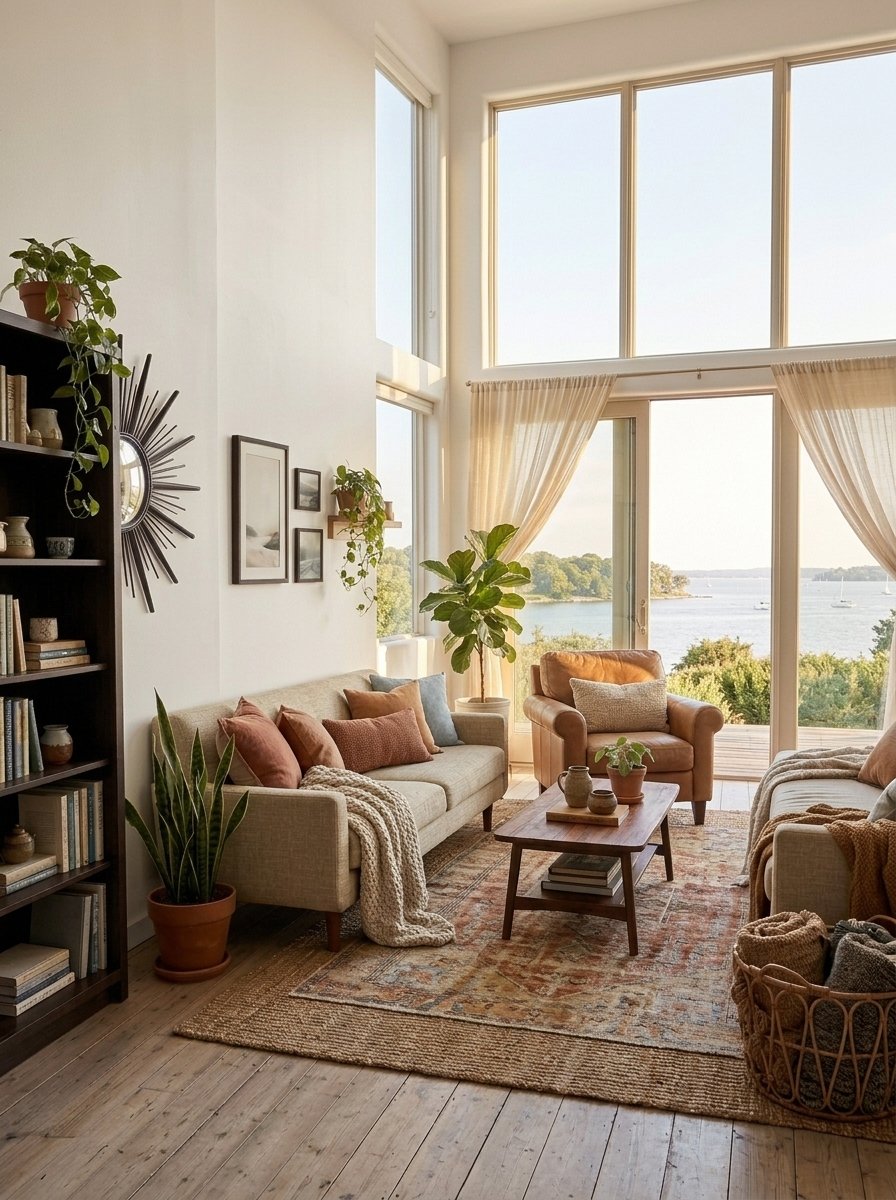
Mix with earth tones to warm up a coastal living room. Terracotta, clay, and caramel look great next to soft blues. They bring a sun-baked, desert-meets-ocean mood.
Use earth tones in pillows, pottery, and rugs. Keep the walls and sofa light so the colors stand out. A woven basket and dried grass add natural texture to the scheme.
Use Weathered Wood
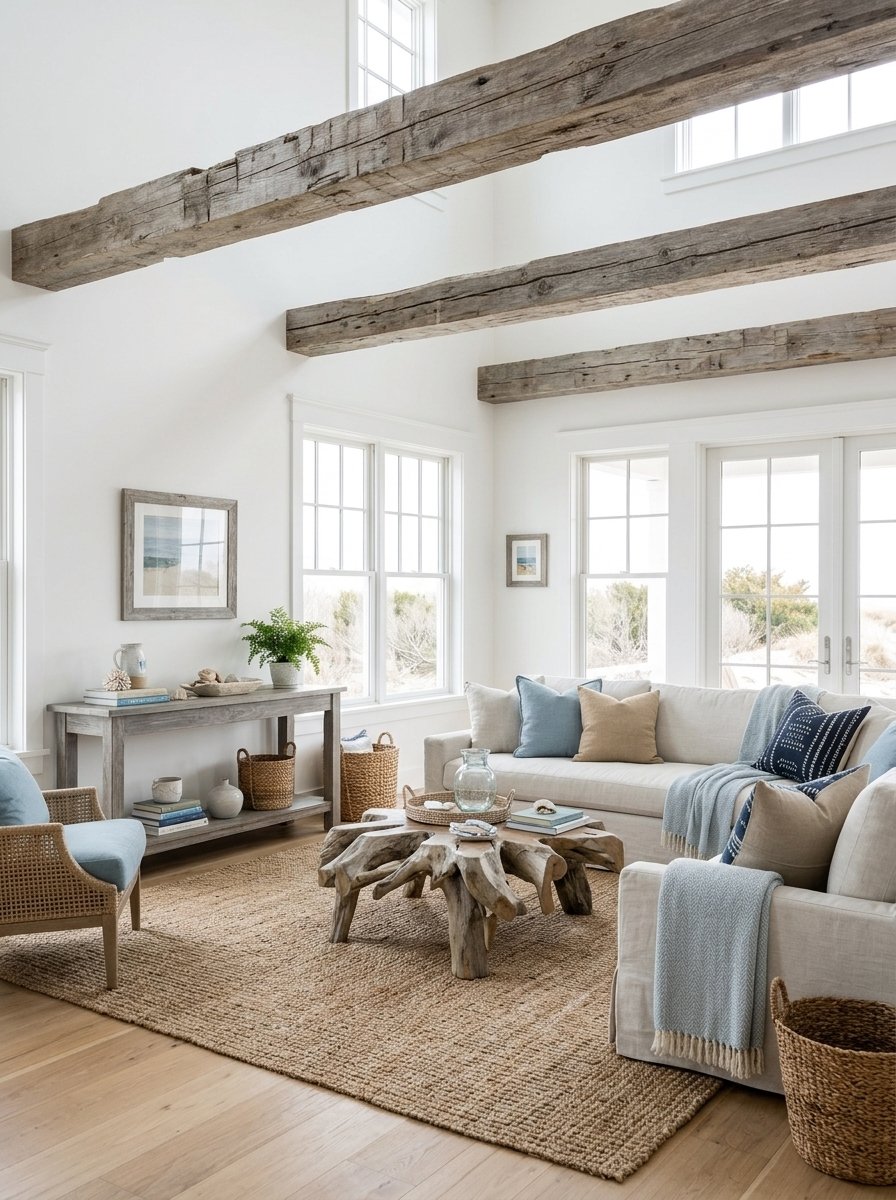
Use weathered wood to add the charm of an old beach house. A driftwood coffee table, a gray-washed console, or reclaimed beams all bring natural character. Their worn textures feel relaxed and honest.
Pair weathered pieces with crisp white and soft blue to keep the room fresh. Seal the wood so it stays smooth and splinter-free. Each piece tells a story, which makes the room feel lived in.
Style the Built-Ins
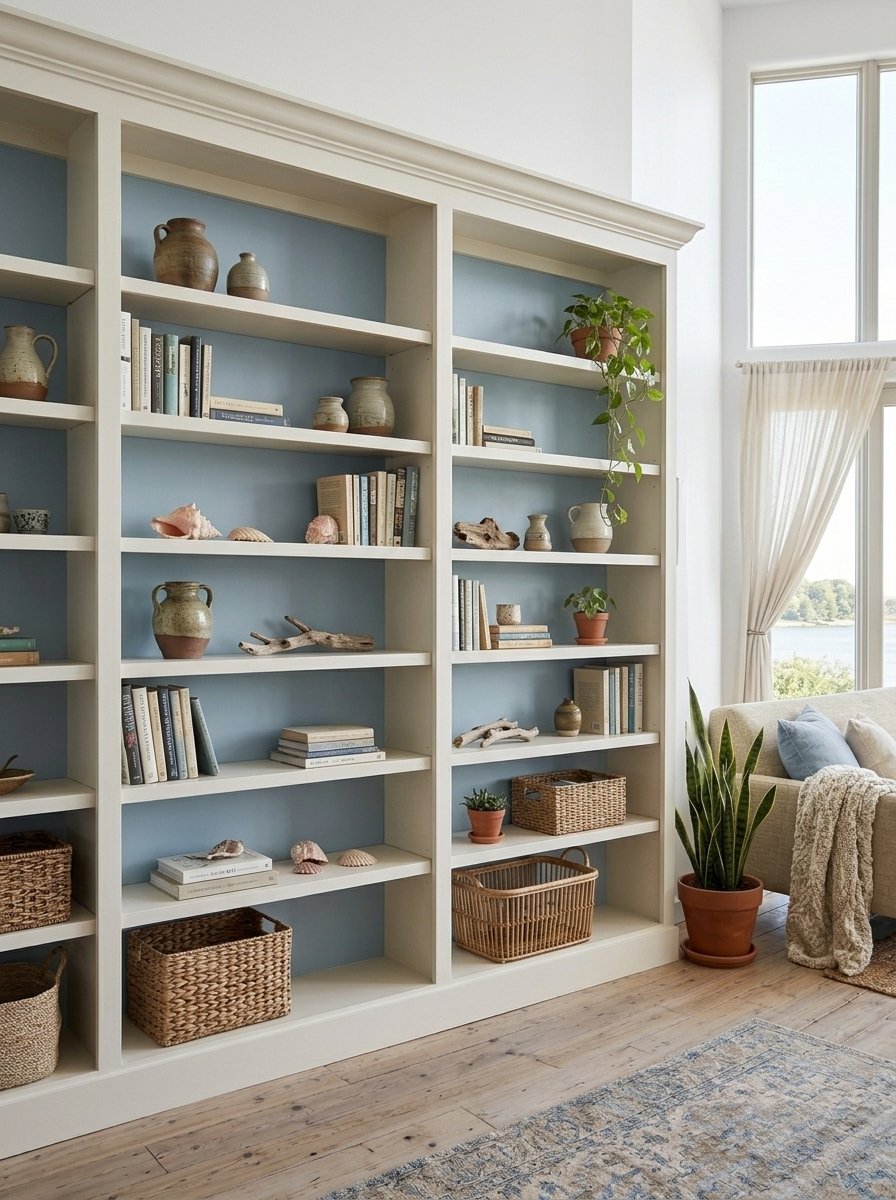
Style the built-ins to turn plain shelves into a coastal display. Paint the back panel a soft blue or sage for depth. Mix books, baskets, ceramics, and a few shells.
Leave some empty space so each item can breathe. Group objects by color or height for a tidy look. Add small plants or driftwood for a natural touch. Styled shelves make a strong focal point.
Display Vintage Paddles

Display vintage paddles for a nautical touch with real character. Hang a pair of wooden paddles above the sofa or mantel. Their worn finish adds history and a lake-house feel.
Group paddles of different lengths, or lean one against a wall. Pair them with woven baskets and plaid or striped throws. Check that wall hooks can hold the weight, since paddles can be heavier than they look.
Use Moody Blues
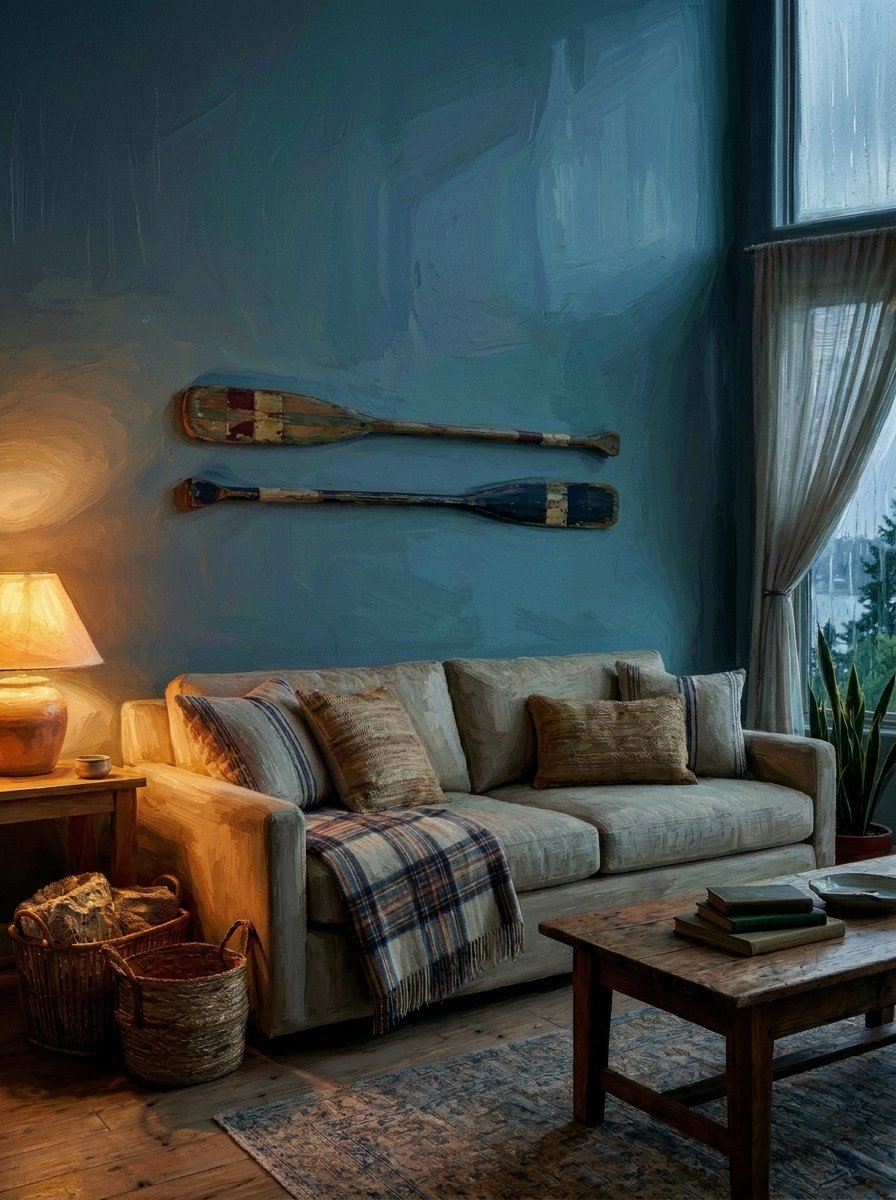
Use moody blues to give a coastal living room a cozy, dramatic mood. Deep teal, slate, and stormy navy look like the sea before a storm. They add richness without losing the coastal link.
Offset the dark colors with light linen, white trim, and warm lamp light. Add natural wood and woven baskets for texture. This style feels calm, bold, and perfect for evening gatherings.
Add Minimal Touches of Blue

Add minimal touches of blue for a light, understated coastal look. Keep walls and furniture neutral, and add blue in small doses, like a vase, a throw, or a piece of art. The restraint feels clean and calm.
Choose one blue and repeat it three or four times around the room. Add natural textures, such as jute and linen, for warmth. This approach suits anyone who wants a hint of the sea without a strong theme.
Try Coastal Minimalism
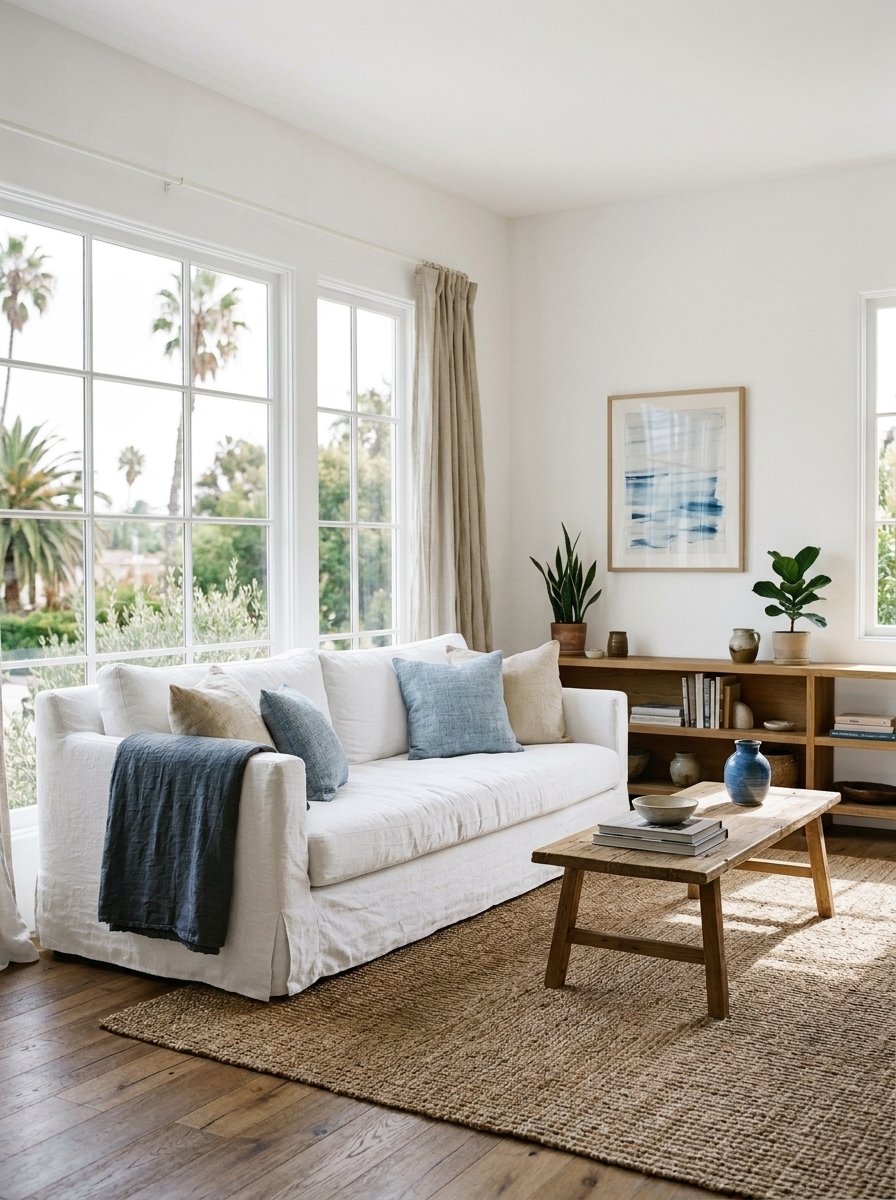
Try coastal minimalism for a quiet, uncluttered beach feel. Think white walls, a few well-chosen pieces, and natural materials. Clean lines and open space let light and air take center stage.
Choose a sofa in white or sand, a simple wood coffee table, and one statement piece of art. Skip heavy patterns and extra decor. The result feels serene, spacious, and easy to maintain.
Mix Blue and Pink
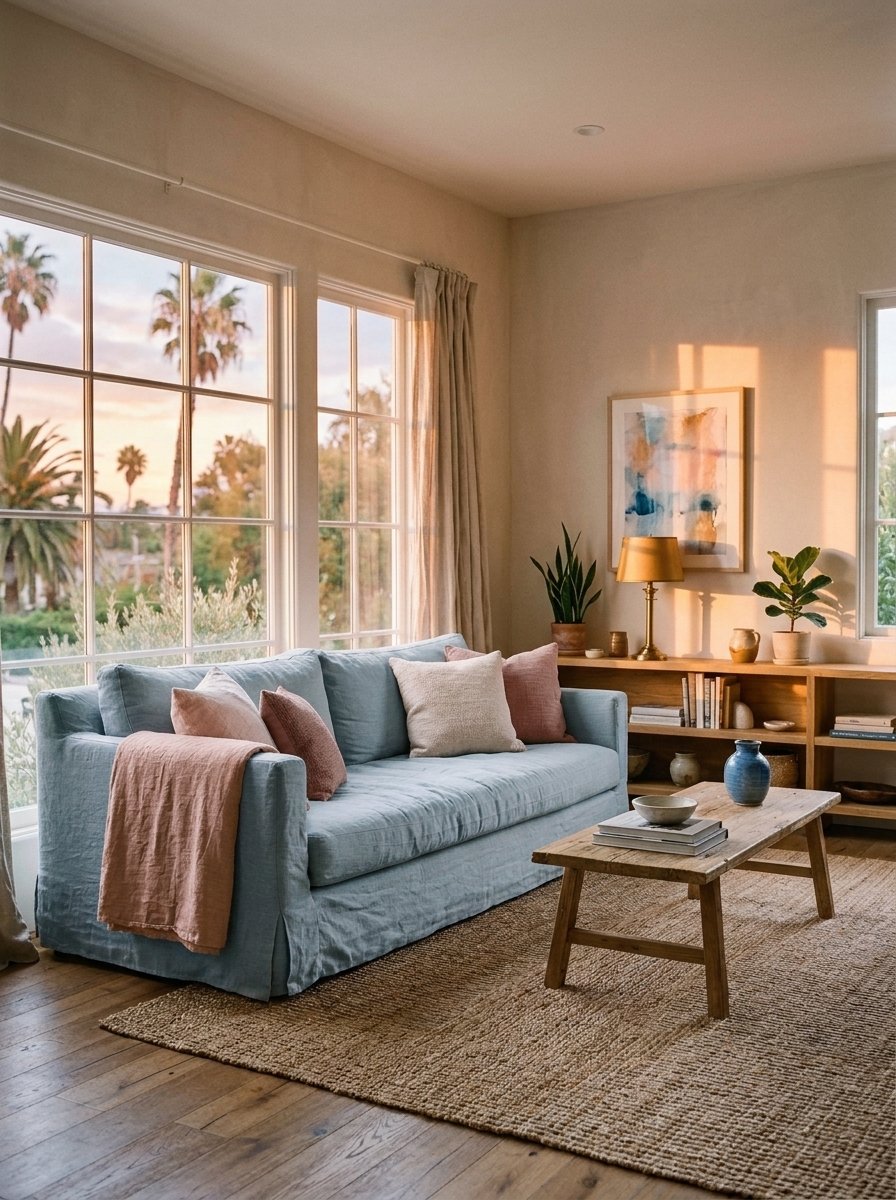
Mix blue and pink for a soft, playful coastal palette. Blush pink and pale blue remind us of sunset skies over the water. Together they feel gentle, fresh, and a little whimsical.
Use pink in pillows or a throw, and keep blue on the walls or sofa. Add white and natural wood to keep the look light. A touch of gold in a lamp or frame adds a sunny glow.
Try Coastal Farmhouse
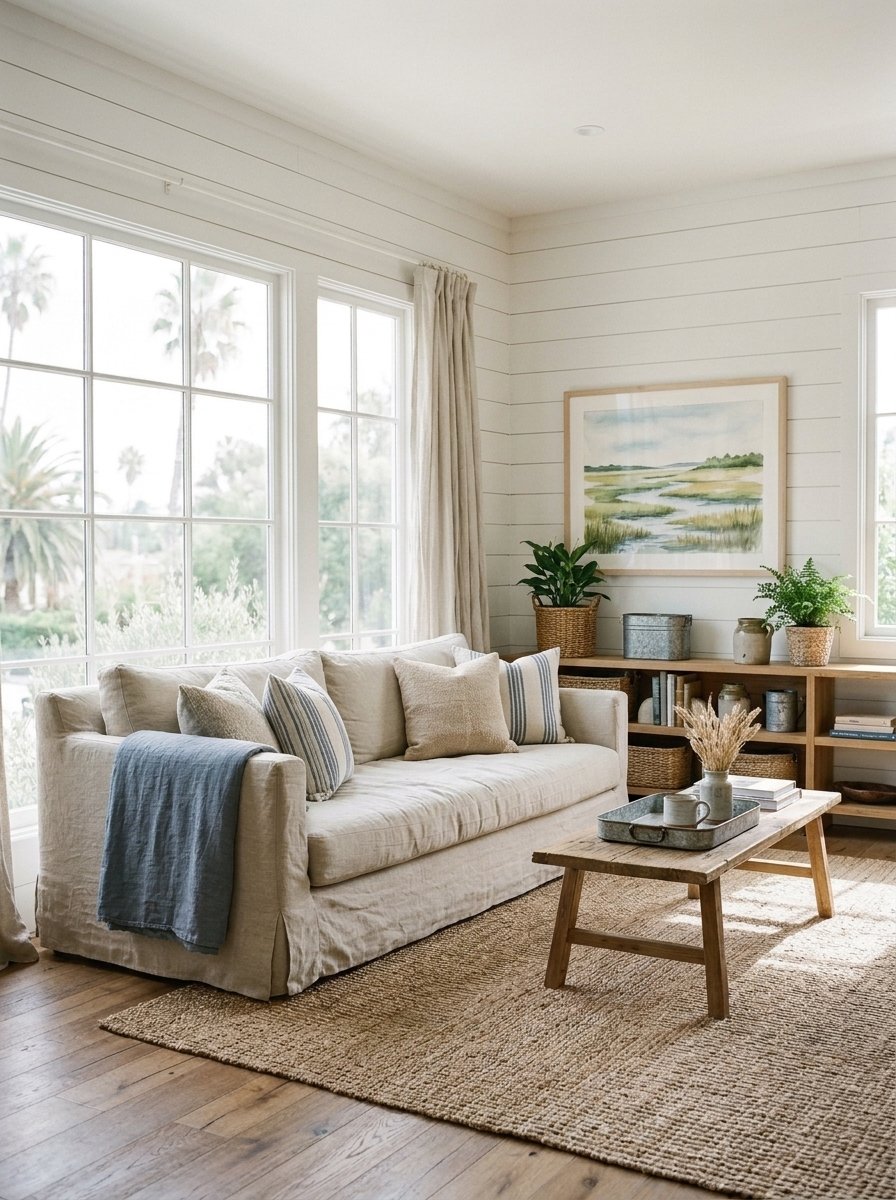
Try coastal farmhouse for a cozy mix of rustic and beachy. Shiplap walls, a slipcovered sofa, and a farmhouse table suit this style. White and soft blue keep the room airy.
Add woven baskets, galvanized metal, and linen curtains. Use wood in warm tones for balance. The look feels relaxed, welcoming, and perfect for a family home near the water.
Try Coastal Cottage Style
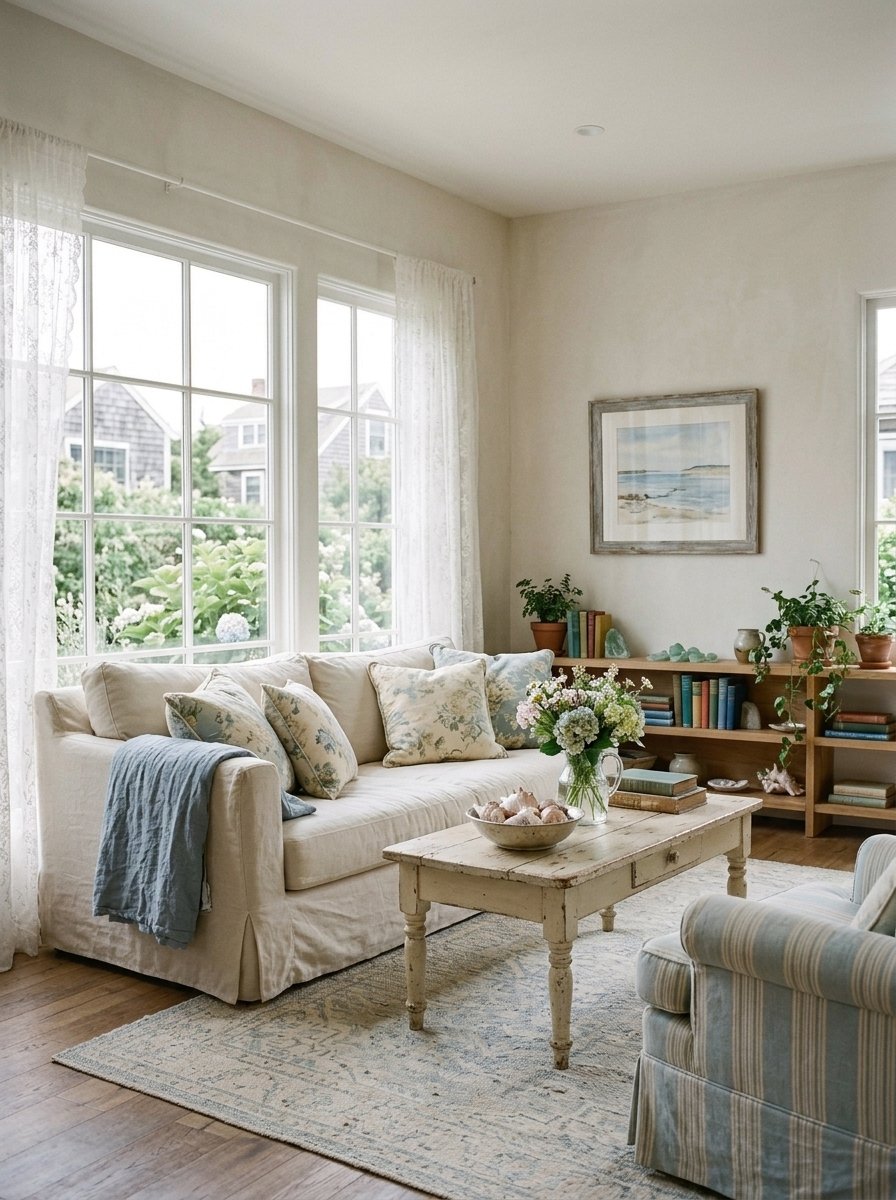
Try coastal cottage style for a charming, lived-in look. Think soft florals, painted wood, and vintage finds. Pale blue, cream, and seafoam create a gentle backdrop.
Mix a skirted armchair, a cottage-style coffee table, and lace or cotton curtains. Add a bowl of shells and fresh flowers for a homey touch. The style feels warm, nostalgic, and inviting.
Add Calming Beige Tones
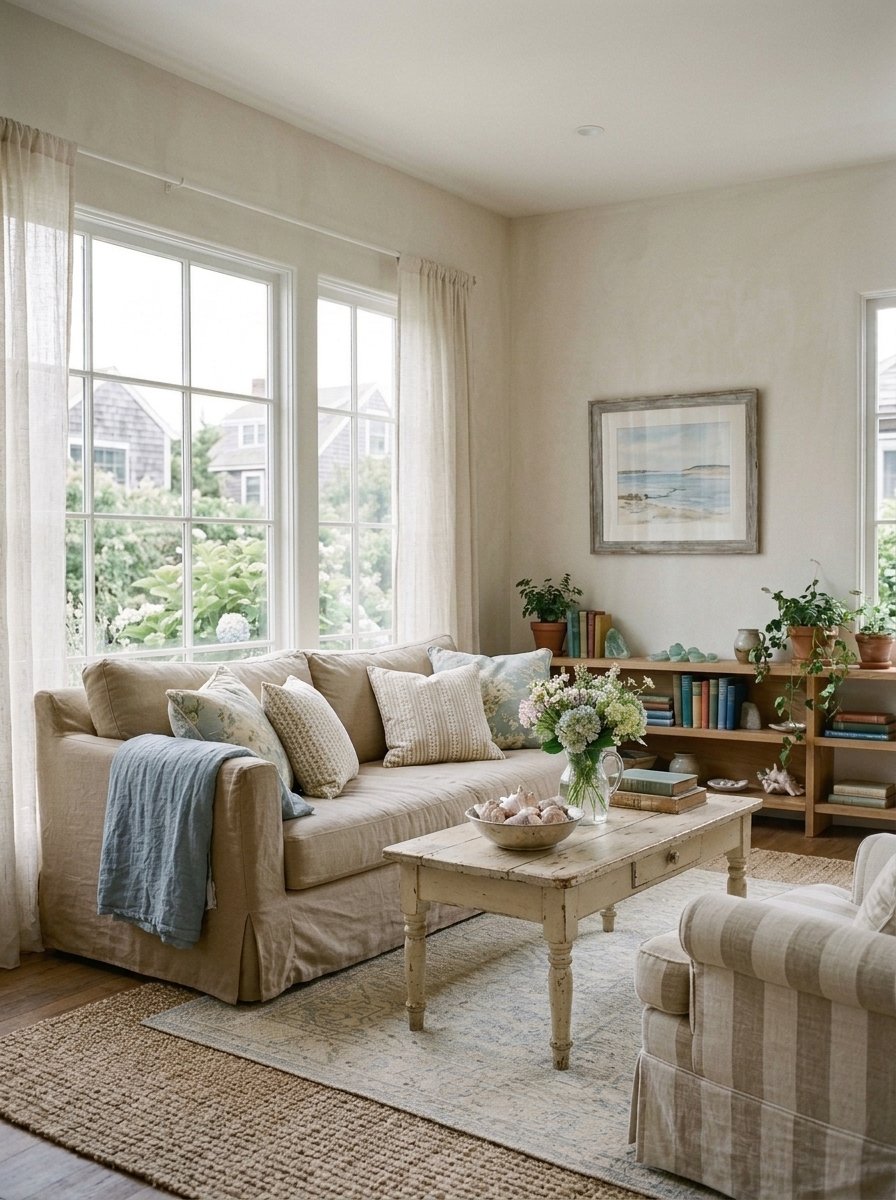
Add calming beige tones to create a soft, sandy base. Beige sofas, rugs, and drapes echo the beach and keep the room peaceful. They also pair well with every shade of blue.
Layer different beige textures, such as linen, wool, and jute, so the room stays interesting. Add white and a hint of blue for contrast. The result feels warm, quiet, and restful.
Mix Shades of Blue

Mix shades of blue to capture the many moods of the ocean. Combine navy, cobalt, teal, and light blue across pillows, art, and accessories. The variety feels natural and lively.
Keep walls and large furniture neutral so the blues stand out. Use a patterned rug to tie the shades together. Repeat each blue at least twice, so the room feels planned.
Mix in Some Green Tones

Mix in some green tones to bring the feel of sea glass and beach grass. Sage, seafoam, and eucalyptus pair beautifully with blue and beige. They add a fresh, garden-like touch.
Try a seafoam throw, a sage pillow, or a few potted plants. Keep the palette soft so it stays calm. Green also helps the room feel connected to nature outdoors.
Add Comfy Seating
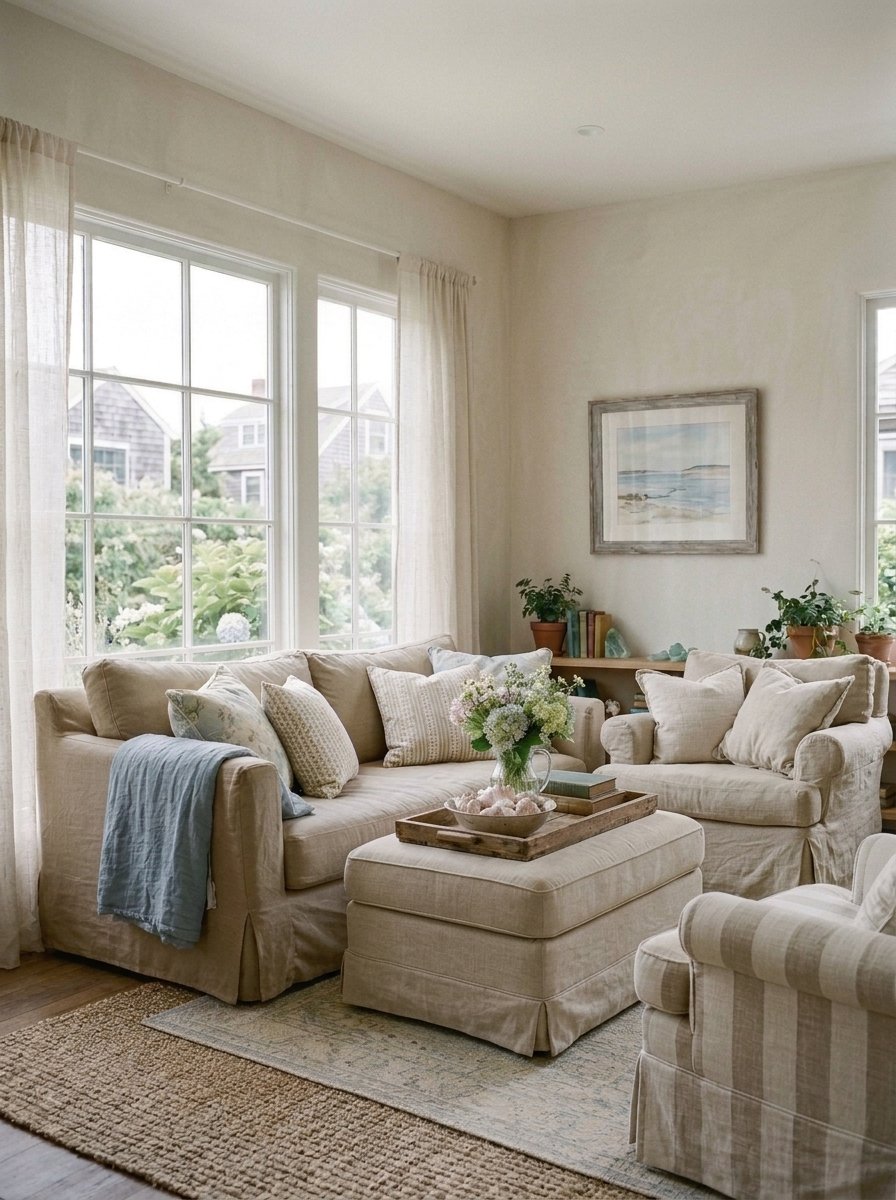
Add comfy seating to make a coastal living room feel truly relaxing. A deep sofa, oversized chairs, and a plush ottoman invite guests to stay awhile. Slipcovers in cotton or linen look breezy and are easy to wash.
Choose performance fabrics if you have kids or pets. Add pillows and a soft throw for extra comfort. A room that feels good will get used often.
Hang Coastal Photography

Hang coastal photography to bring the shoreline into your living room. Large prints of waves, dunes, or lighthouses make a strong focal point. Black-and-white photos feel classic, while color prints feel fresh.
Choose simple frames in white, black, or natural wood. Hang a single large print or a trio of smaller ones above the sofa. Make sure the photos match the room’s palette.
Try a Live Edge Table
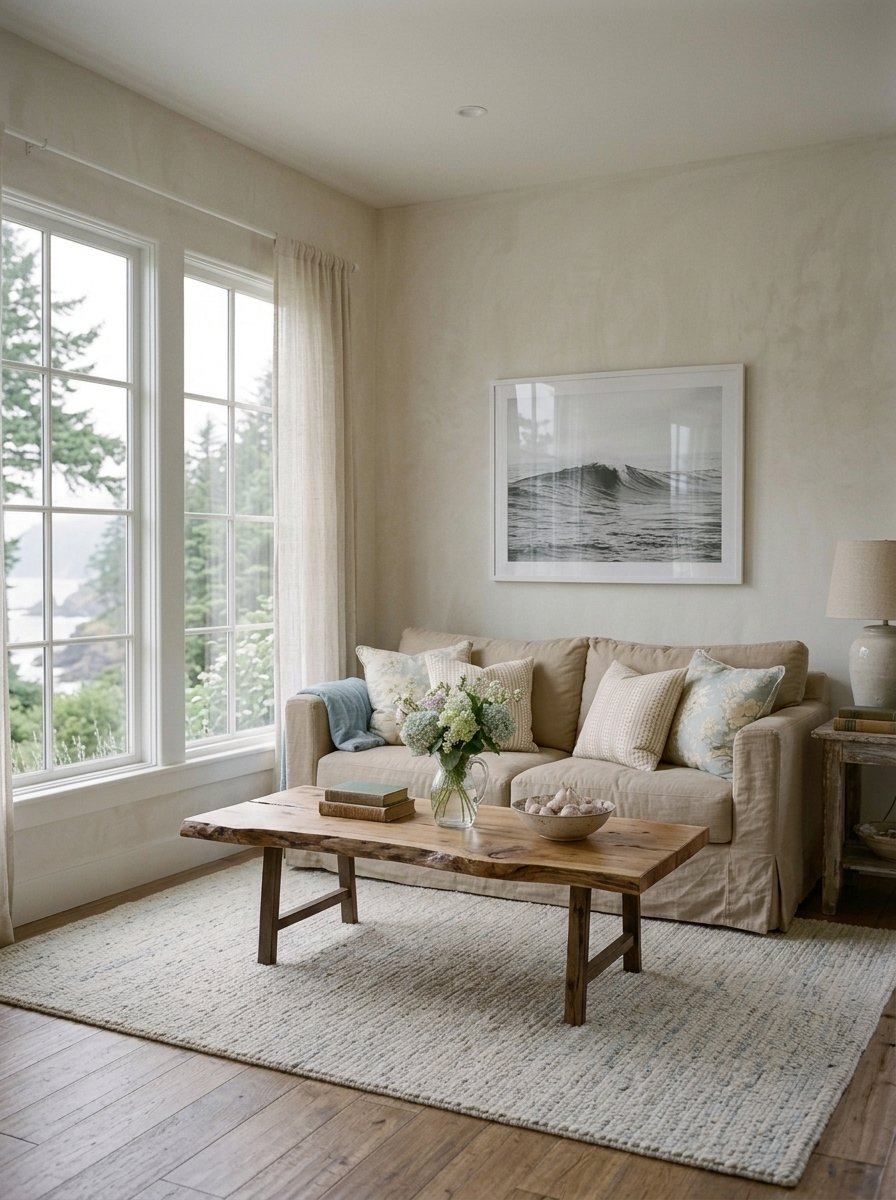
Try a live edge table to add natural drama to a coastal living room. The raw, organic edge looks like driftwood and brings texture. A live edge coffee table becomes a conversation piece.
Pair it with a simple sofa and soft blue pillows so the wood stands out. Choose a sealed finish that protects against spills. The mix of natural shape and soft color feels artful and warm.
Connect to the Outdoors

Connect to the outdoors by opening the living room to the patio or garden. Large sliding doors, French doors, or wide windows make the transition smooth. Matching colors inside and out make the space feel larger.
Use similar flooring or rugs near the doors. Add potted plants and outdoor-friendly furniture close by. This approach makes the whole home feel breezy and connected.
Mix Brick and Wood
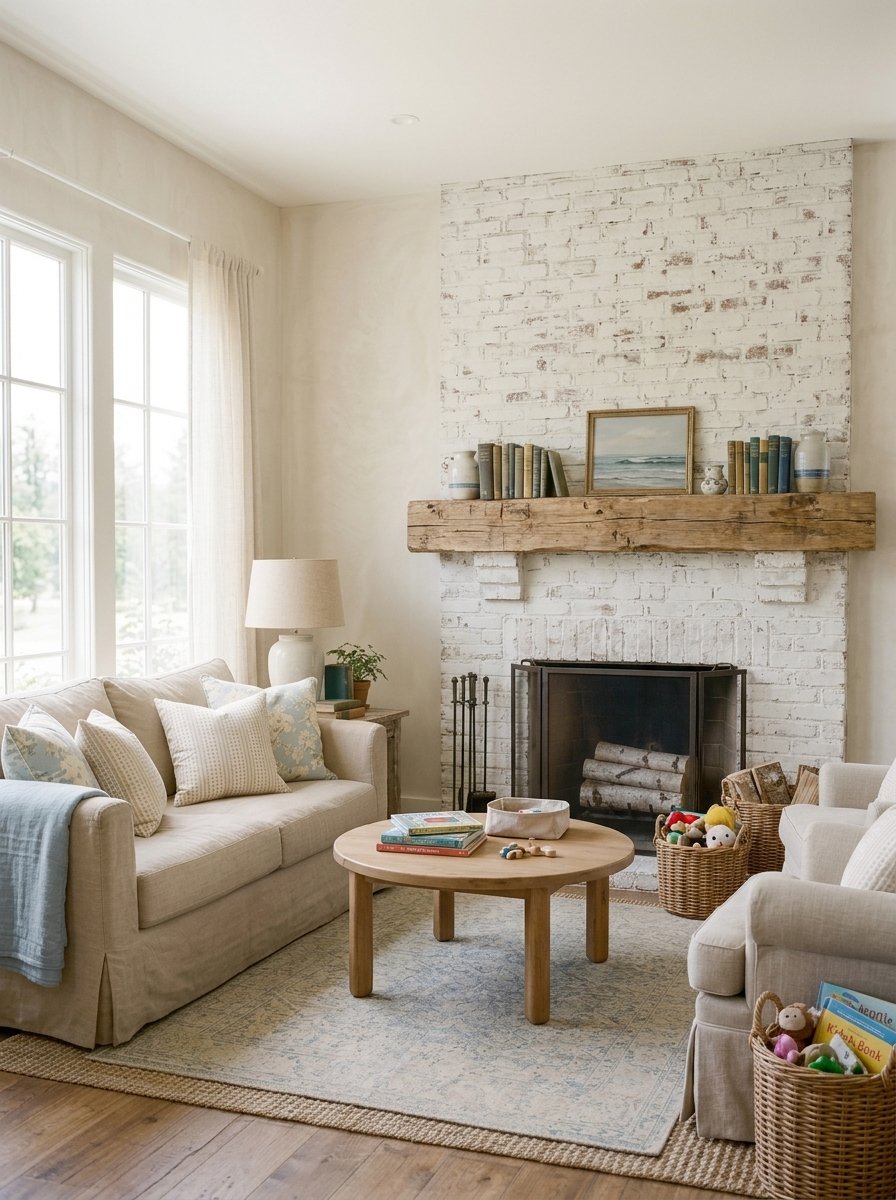
Mix brick and wood for a warm, textured coastal look. A painted white brick wall with a wood mantel feels fresh and rustic. Natural brick adds depth and color.
Pair the brick with blue accents and light linen fabrics to keep the coastal feel. Add a wood coffee table and a jute rug. The combo looks cozy, grounded, and full of character.
Make It Family-Friendly
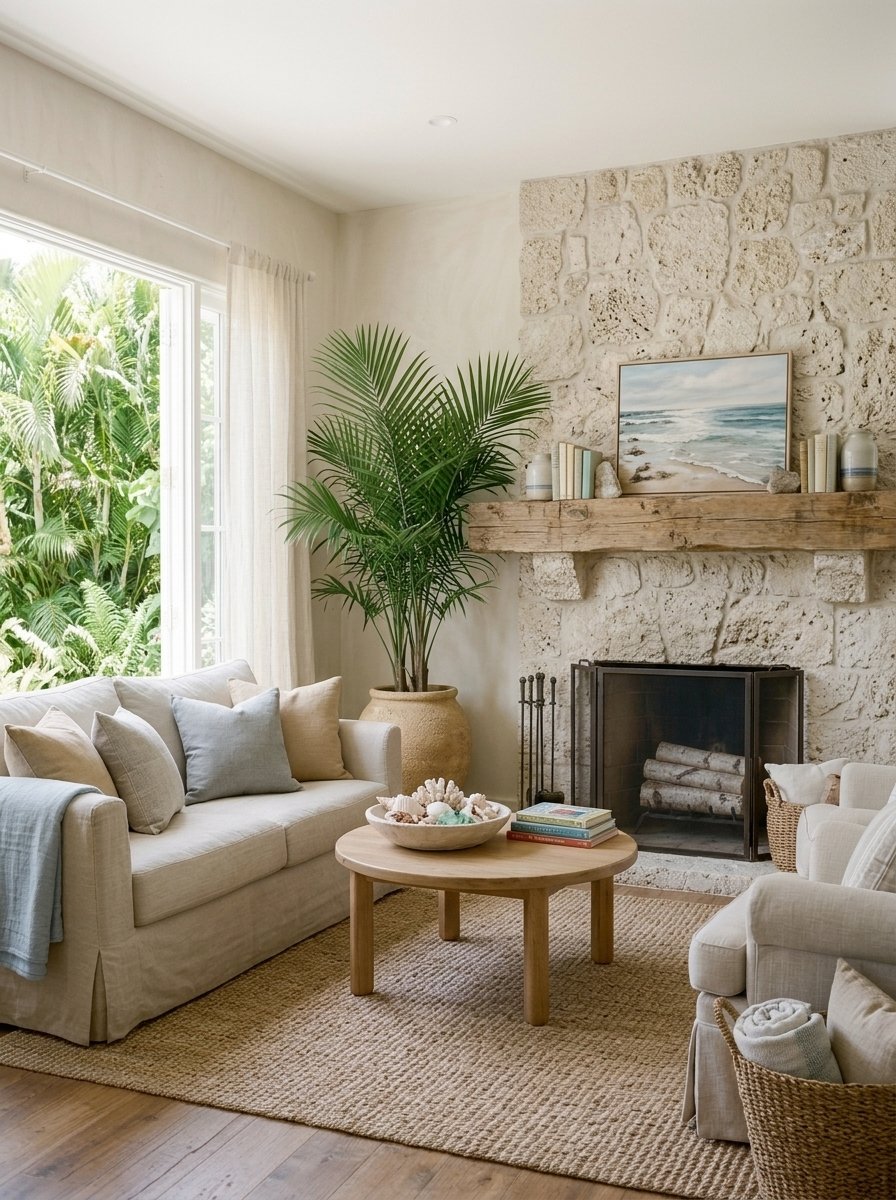
Make it family-friendly with durable, easy-care choices. Choose washable slipcovers, performance fabrics, and sturdy tables with rounded corners. Baskets hide toys, and a large rug adds a soft play spot.
Keep decor simple, and secure breakables on higher shelves. Light, sand-colored fabrics hide crumbs and sand better than dark ones. A coastal room can be pretty and practical at the same time.
Embrace the Outdoors
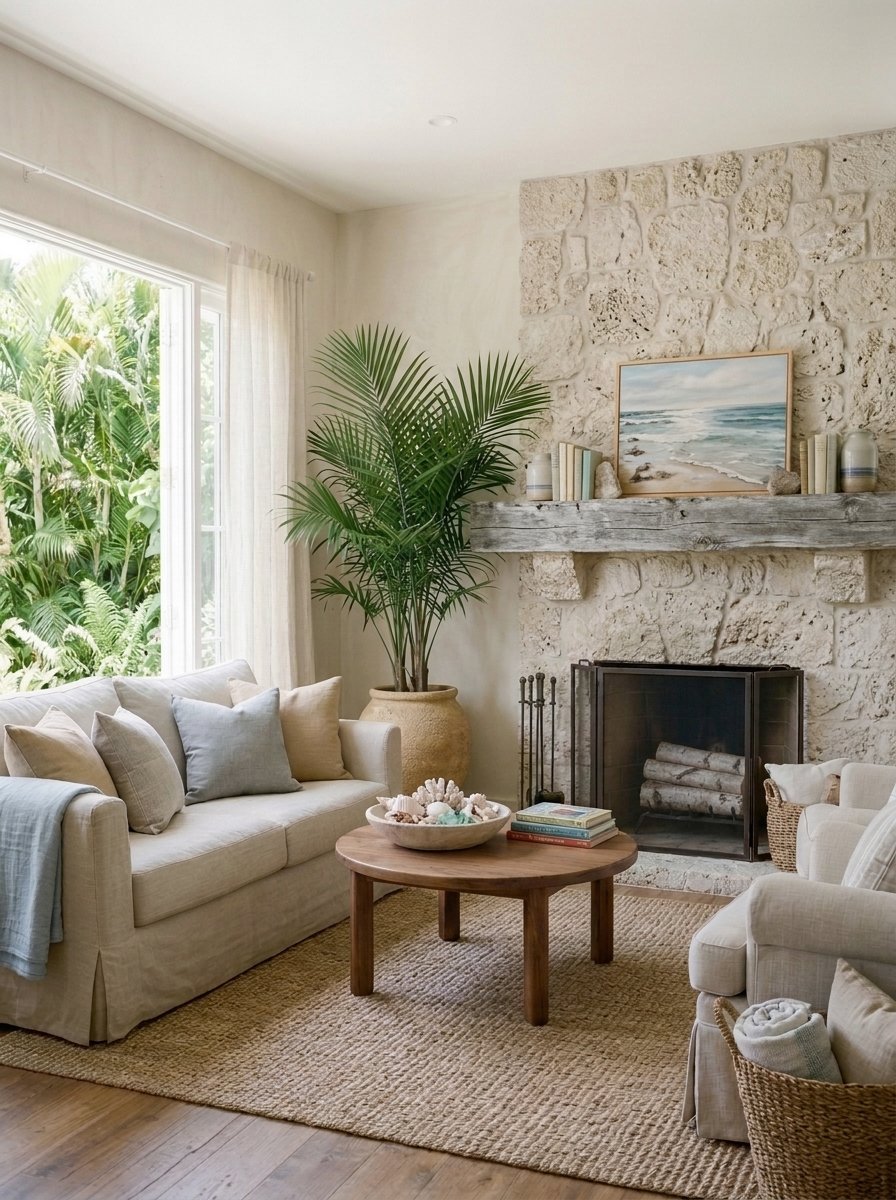
Embrace the outdoors by bringing natural elements inside. Use plants, woven baskets, stone, and shells to echo the landscape. A large fern or palm adds a fresh, tropical feel.
Choose natural fibers such as seagrass, jute, and cotton. Place pieces near windows to enjoy light and views. The more natural the materials, the more the room will feel like a day outdoors.
Use Contrasting Details
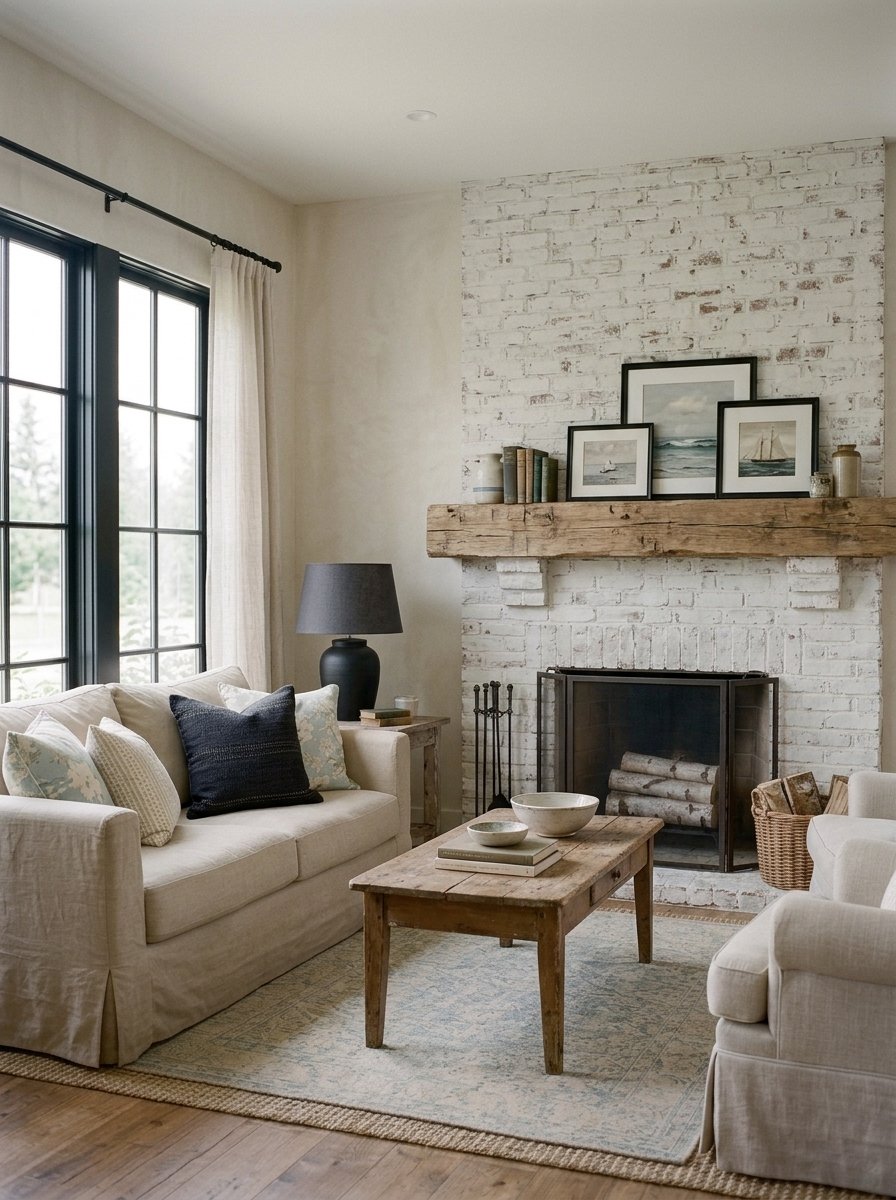
Use contrasting details to add punch to a soft coastal palette. Black frames, a dark lamp, or a bold pillow create sharp accents. These touches keep the room from feeling flat.
Keep contrast to a few spots, such as picture frames or window hardware. Repeat each contrasting color at least twice. This simple trick adds polish and visual interest.
Mix Materials
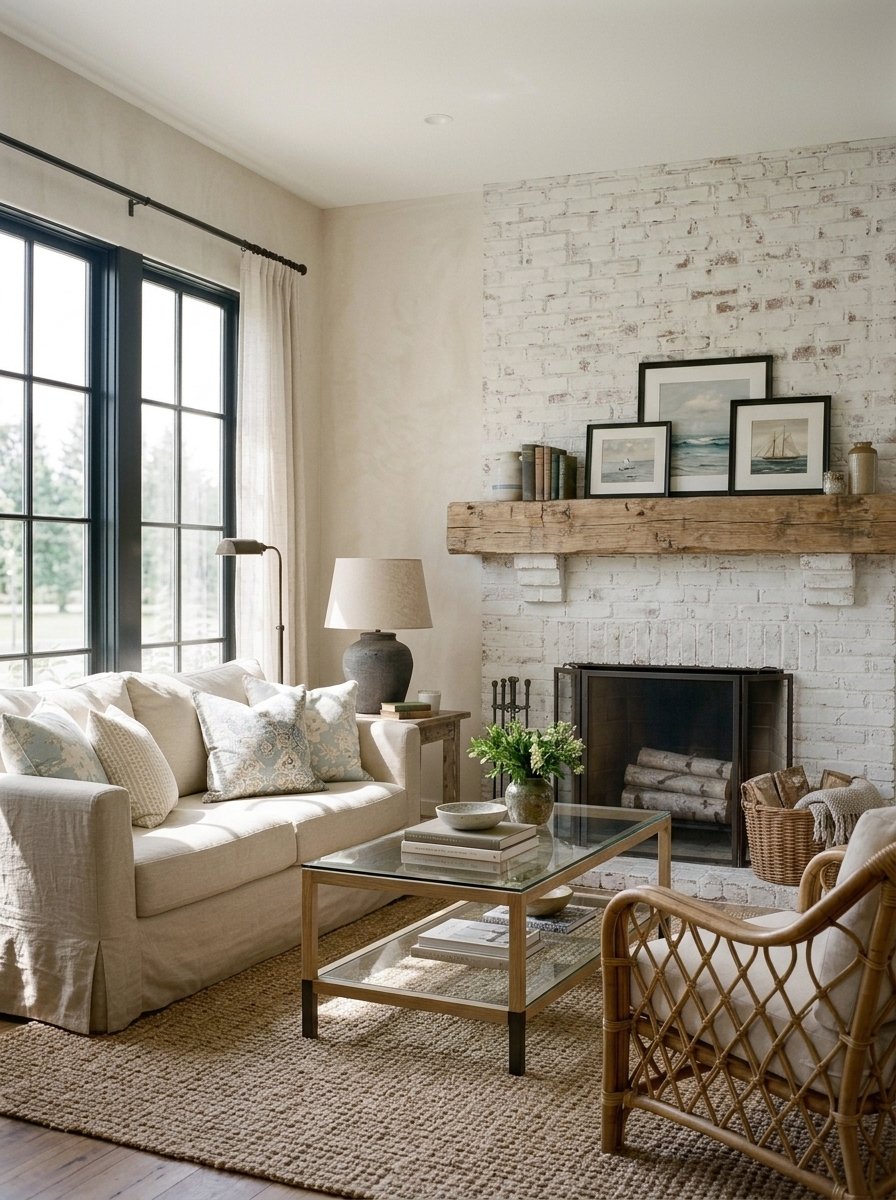
Mix materials to give a coastal living room depth and texture. Combine rattan, linen, glass, metal, and wood. The variety feels natural and keeps the room from looking flat.
Pair a smooth glass coffee table with a rough jute rug. Add a woven basket and a ceramic lamp. Each material should have a partner in the room, so the look feels balanced.
Vary Wood Tones

Vary wood tones to make the room feel collected and warm. Mix light oak, mid-tone walnut, and weathered gray wood in furniture and accents. Different tones add depth and prevent a matched-set look.
Keep a common undertone, such as warm or cool, so the woods blend. Repeat each tone in at least two places. White walls and soft blue fabrics let the wood take center stage.
Coastal Decor Must-Haves
A few key pieces make any living room feel coastal. Start with these.
- A natural fiber rug: Jute or seagrass adds instant texture.
- Linen curtains: Light panels let in the glow.
- A slipcovered sofa: It looks relaxed and is easy to wash.
- Woven baskets: They add storage and warmth.
- A large mirror: It bounces light and adds depth.
- A wood coffee table: It grounds the seating area.
Add shells, glass jars, or driftwood in small amounts for finishing touches.
How to Keep a Coastal Living Room Looking Fresh
Coastal rooms are light, so a little care goes a long way.
- Wash slipcovers and pillow covers. Follow the care labels.
- Rotate seasonal accents. Swap in lighter colors for summer and cozy textures for winter.
- Protect wood from sun. Use curtains or UV-blocking film on strong windows.
- Vacuum natural rugs. Jute and seagrass hold dust and sand.
- Edit your decor. Remove items that crowd shelves and tables.
Finally, bring in fresh flowers or greenery for an instant lift.
Common Coastal Decor Mistakes to Avoid
Coastal style can go wrong when it tries too hard. Watch out for these.
- Overdoing the nautical theme. Too many anchors, signs, and shells feel like a souvenir shop.
- Using only one color. Add layers of blue, white, and sand for depth.
- Skipping texture. Flat fabrics can make the room feel dull.
- Choosing heavy curtains. Dark drapes block light and weigh down the mood.
- Buying matching sets. Mix pieces so the room feels collected.
- Ignoring comfort. A pretty room should still feel good to sit in.
Frequently Asked Questions
What colors work best for a coastal living room?
White, sand, and soft blues form the classic base. Navy, seafoam, and sage add depth. You can also add blush pink or terracotta for warmth. Start with a neutral base, and layer in color through pillows and art.
What furniture suits a coastal living room?
Choose relaxed pieces, such as a slipcovered sofa, rattan chairs, and a wood coffee table. Light finishes and natural materials fit best. Keep the shapes simple and comfortable.
How can I make coastal decor feel less cliche?
Use subtle touches instead of obvious themes. Choose natural textures, soft colors, and a few meaningful accents. For example, hang a large photograph instead of a wall of anchors.
Can I use coastal style if I do not live near the beach?
Yes, you can. Coastal style is about mood, not location. Light colors, natural materials, and plenty of light create the feel anywhere.
What kind of rug works in a coastal living room?
Jute, sisal, and seagrass rugs are popular choices. They add texture and look casual. A flat-weave striped or patterned rug also works well, especially in blue and white.
Conclusion
Coastal living room ideas are all about creating a calm, bright space that feels easy and welcoming. You can go boho, farmhouse, minimalist, or cottage, and still capture the spirit of the shore. Start with a light base, add layers of blue and natural texture, and keep comfort at the center. Then enjoy your own day at the beach, right at home.